
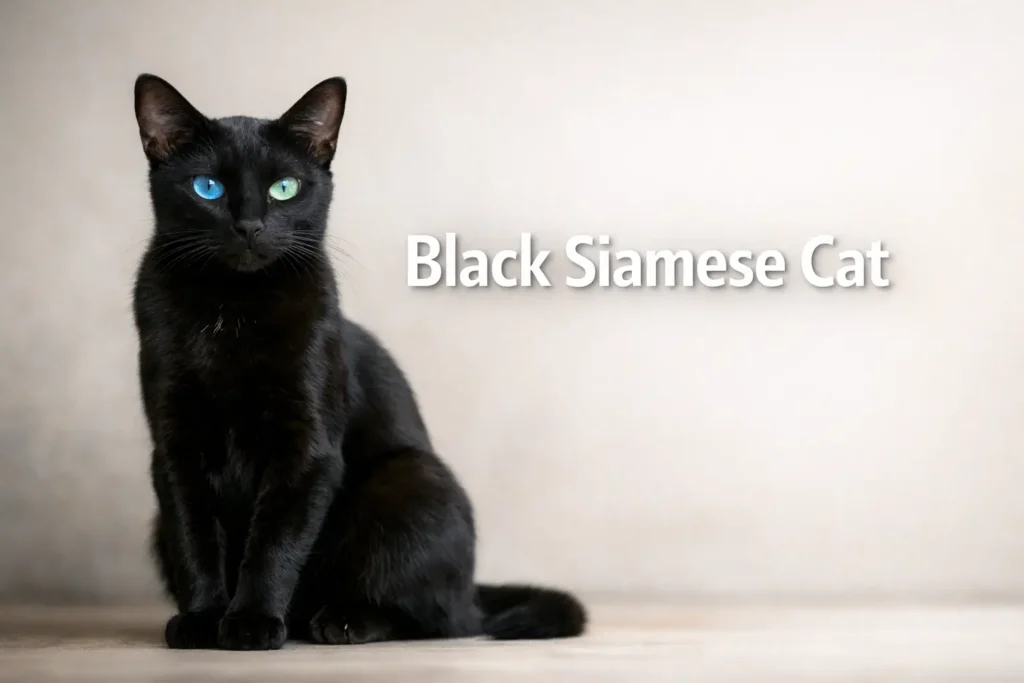
The idea of a black Siamese cat often sparks curiosity among cat lovers. Many people are drawn to the sleek beauty of black cats combined with the intelligence and charm of Siamese cats.
However, this combination is often misunderstood. True Siamese cats are known for their color-point patterns, so a fully black Siamese usually indicates a mix rather than a purebred. This leads to common questions about appearance, personality, and care.
New owners often make mistakes like underestimating their need for attention or misunderstanding their coat variations. Learning the basics early helps you raise a happy and well-adjusted cat.
Pet Care Insight
This guide is based on widely accepted pet care practices, veterinary guidance, and common experiences shared by responsible pet owners. The goal is to provide practical, easy-to-follow advice that helps owners keep their pets healthy, comfortable, and well cared for.
Pet Overview
Temperament
- Highly social and affectionate
- Very vocal and expressive
- Forms strong bonds with owners
- Intelligent and curious
Lifespan
- Typically lives 12–18 years
- Longer lifespan with proper care and diet
Physical Characteristics
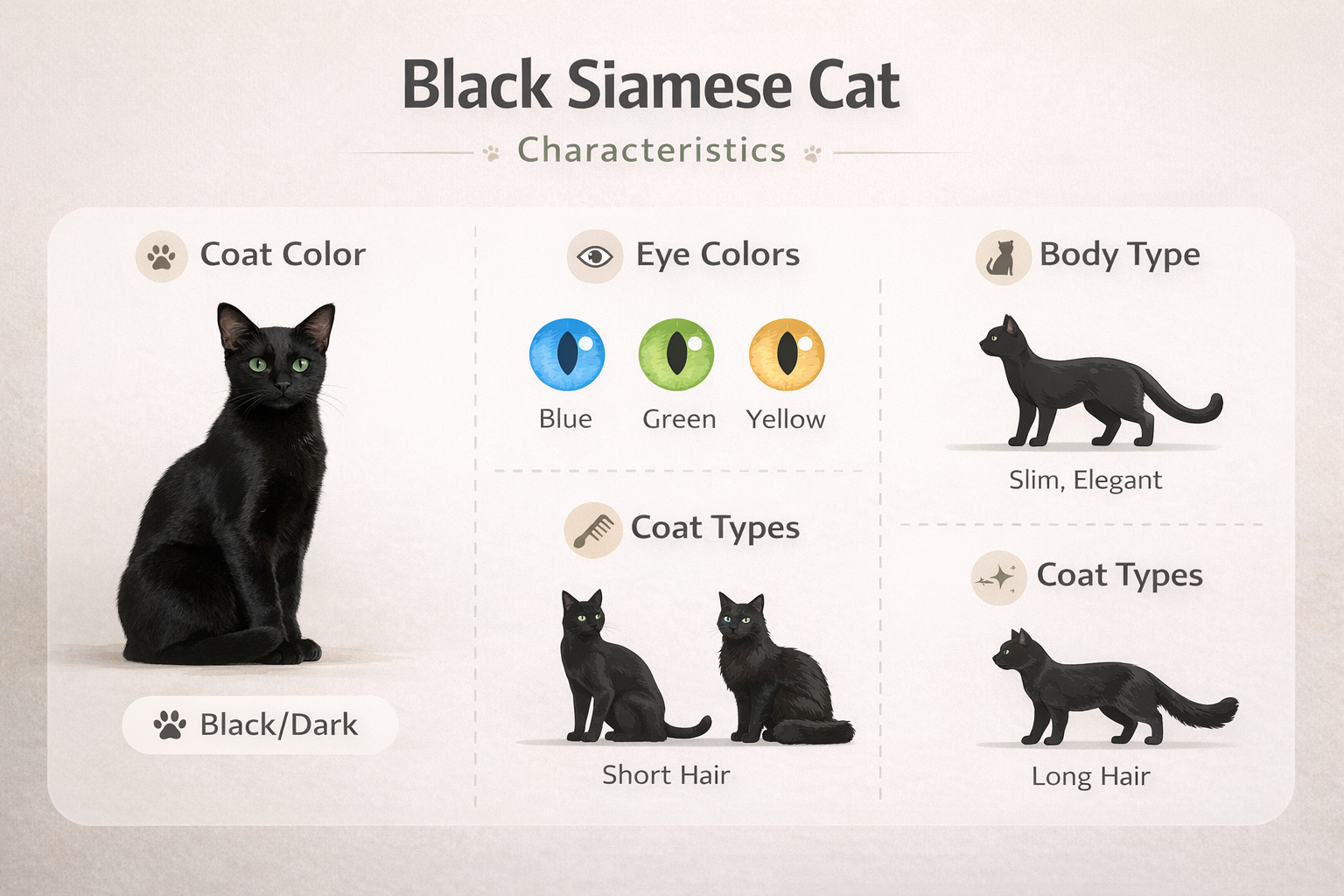
- Dark or nearly black coat (often from mixed genetics)
- May have blue, green, or yellow eyes
- Sleek body; sometimes long-haired in mixes
Family Suitability
- Great for families and individuals
- Enjoys interactive households
Activity Level
- Very active and playful
- Needs daily stimulation
Compatibility
- Generally good with children
- Can live with other pets if introduced early
Daily Care Essentials
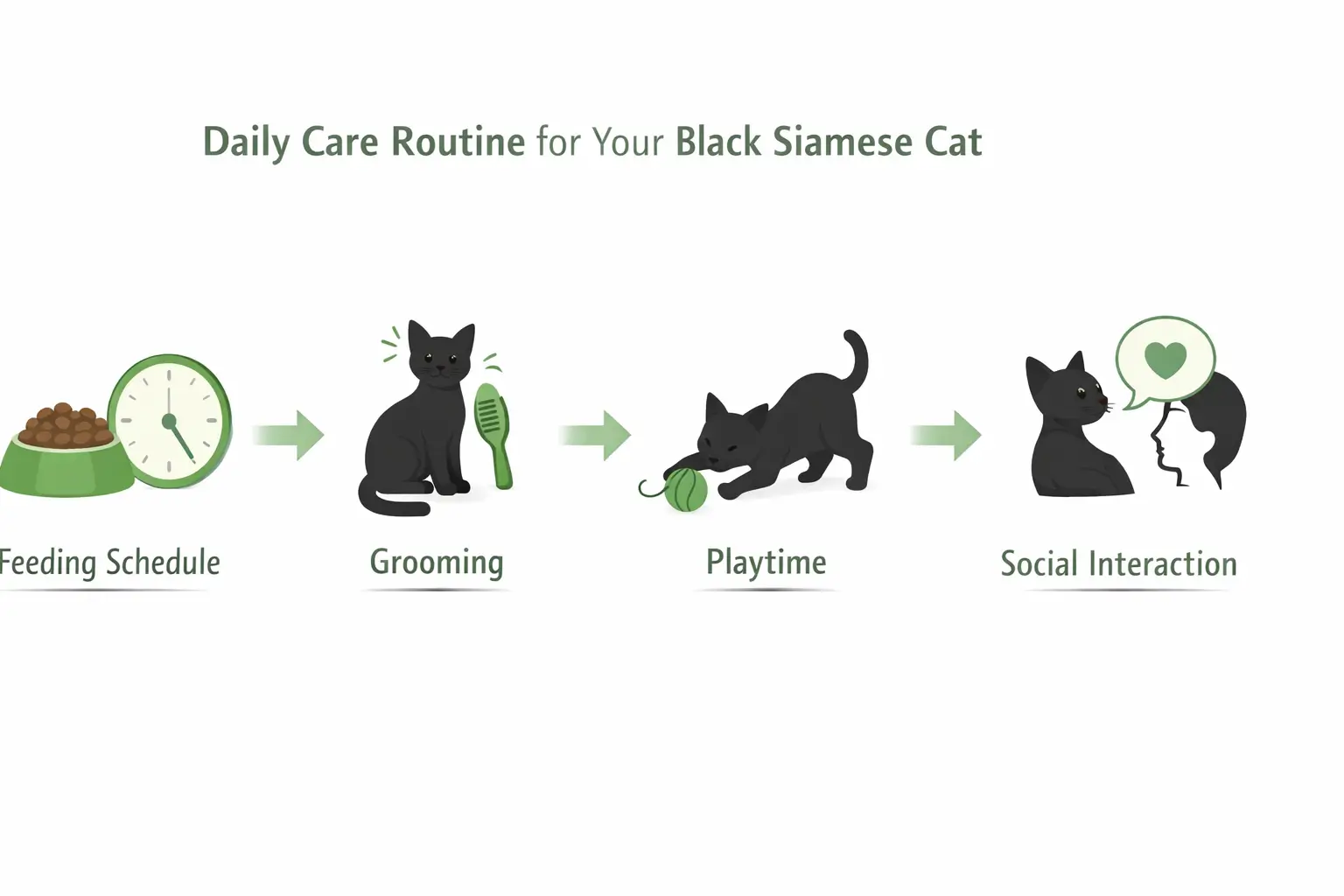
Feeding Routine
- Feed 2–3 times daily
- Maintain consistent feeding schedule
Grooming Basics
- Brush short hair weekly
- Brush long hair 2–3 times weekly
- Trim nails regularly
- Clean ears occasionally
Exercise Requirements
- Provide 20–30 minutes of daily play
- Use interactive toys
Social Interaction
- Needs regular human interaction
- Avoid long periods alone
Diet & Nutrition Guide
Feeding Schedule
- Kittens: 3–4 meals daily
- Adults: 2 meals daily
- Seniors: smaller, controlled portions
Nutritional Needs
- High protein diet
- Balanced fats and vitamins
- Fresh water always available
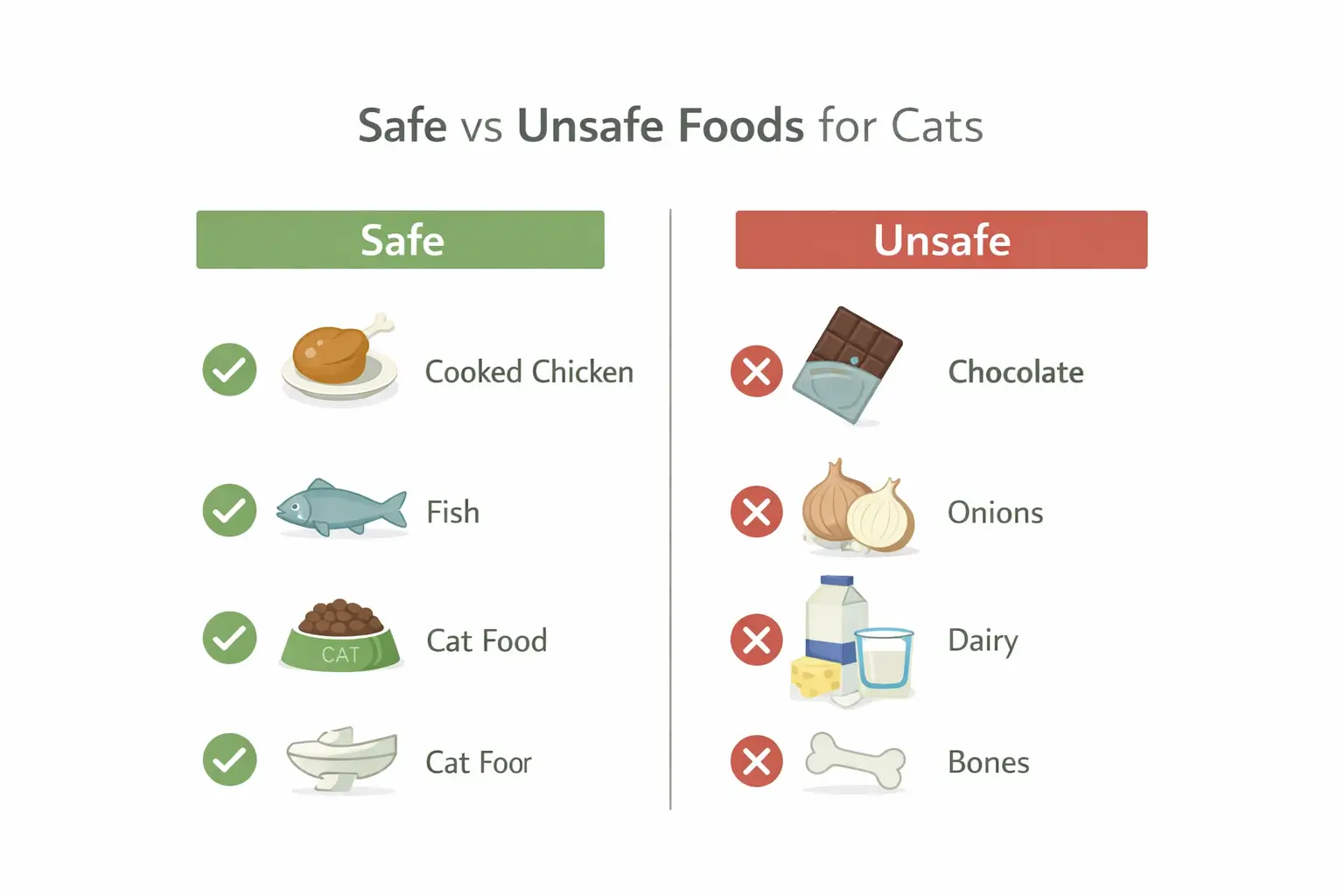
Safe Foods
- Cooked chicken or fish
- High-quality commercial cat food
Unsafe Foods
- Chocolate
- Onions and garlic
- Dairy products
- Bones
Exercise & Mental Stimulation
Daily Activity Needs
- Active play sessions every day
- Encourages healthy weight and mood
Playtime Ideas
- Feather toys
- Laser pointers
- Interactive chasing games
Mental Enrichment
- Puzzle feeders
- Window perches
- Rotating toys
Training & Behavior Guidance
Basic Training
- Easy to litter train
- Learns quickly with consistency
Socialization Tips
- Introduce to new people early
- Gradual introduction to other pets
Preventing Behavior Problems
- Provide daily stimulation
- Avoid boredom
Positive Reinforcement
- Use treats and praise
- Avoid punishment
Health & Climate Considerations
Common Health Concerns
- Dental problems
- Respiratory sensitivity
- Weight gain if inactive
Hot Weather Care
- Provide cool resting areas
- Ensure hydration
- Limit midday activity
Cold Weather Care
- Offer warm bedding
- Keep indoors during cold periods
Common Problems & Troubleshooting
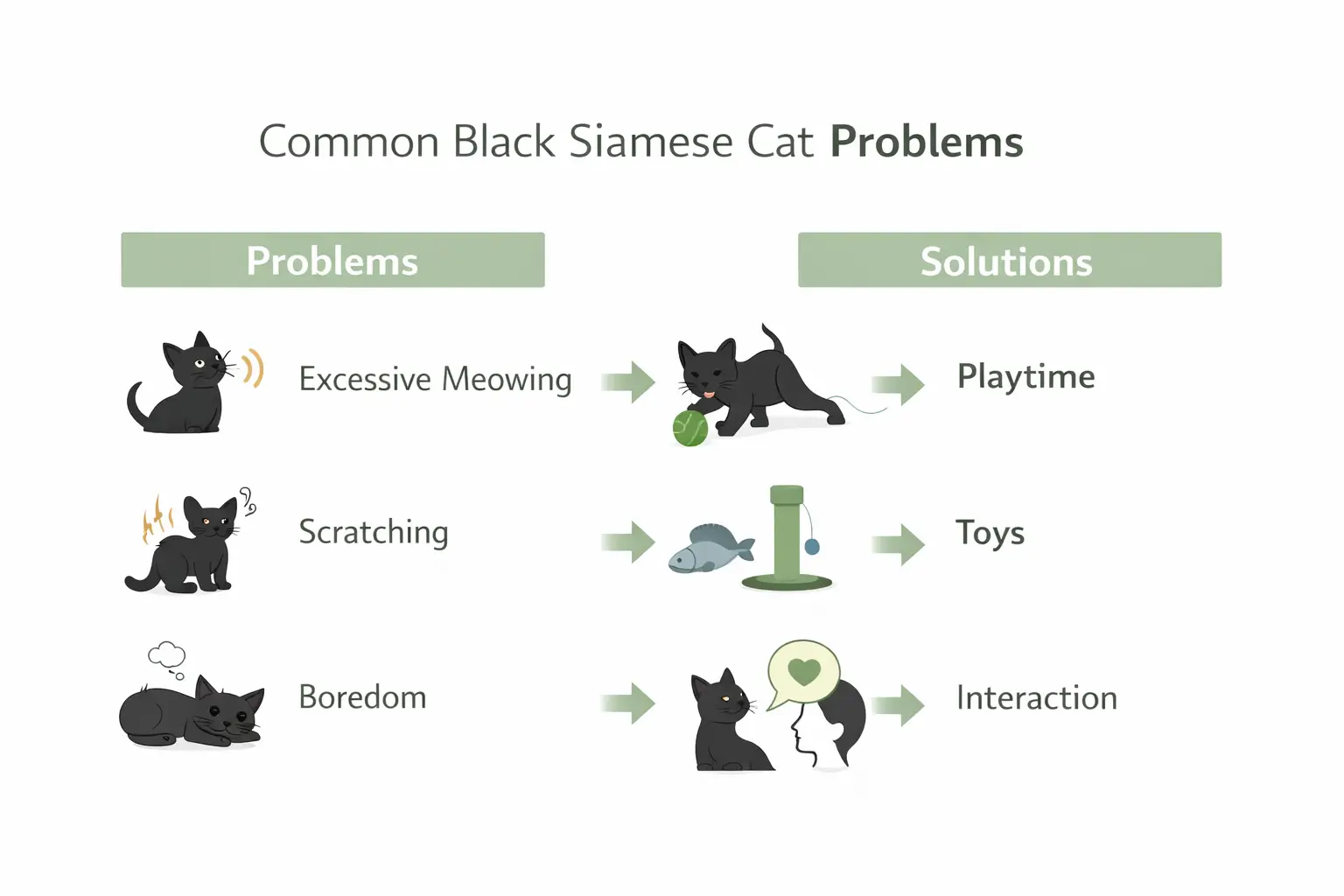
Excessive Meowing
- Cause: boredom or attention-seeking
- Solution: increase playtime and interaction
- Prevention: regular engagement
Destructive Behavior
- Cause: lack of activity
- Solution: provide toys and climbing areas
- Prevention: daily exercise
Shedding Issues
- Cause: seasonal changes or poor diet
- Solution: regular brushing
- Prevention: balanced nutrition
Weight Gain
- Cause: overfeeding
- Solution: portion control
- Prevention: structured feeding routine
Seasonal Pet Care Tips
Spring Care
- Monitor allergies
- Increase grooming
Summer Care
- Prevent overheating
- Keep water available
- Reduce heat exposure
Fall Care
- Maintain exercise routine
- Check for parasites
Winter Care
- Provide warmth
- Increase indoor activity
Additional Expert Tips
Common Owner Mistakes
- Ignoring their need for attention
- Overfeeding due to frequent meowing
Better Care Habits
- Maintain a consistent routine
- Provide vertical climbing spaces
Long-Term Considerations
- Regular vet checkups
- Monitor behavior and weight
Conclusion
Black Siamese cats are unique, intelligent, and highly social companions. While they may not always be purebred, they still carry many of the lovable traits of Siamese cats.
The key to proper care is understanding their need for interaction, maintaining a healthy diet, and providing daily mental stimulation.
Avoid common mistakes like neglecting playtime or leaving them alone too long. With the right approach, these cats can become deeply loyal and engaging pets.
Learn More: What Mammal Has the Most Teeth? Surprising Facts
FAQs
-
Is there such a thing as a black Siamese cat?
Most are mixes or dark variations, not purebred Siamese
-
What does a black Siamese cat look like?
Usually dark-coated with sleek fur and bright eyes
-
Are black Siamese cats friendly?
Yes, they are affectionate and social
-
How active are black Siamese cats?
Very active and need daily play
-
Can Siamese cats have black kittens?
Yes, especially when mixed with other breeds
-
Are Siamese cats hypoallergenic?
No cat is fully hypoallergenic, but some produce fewer allergens
-
Do black Siamese cats need special care?
No, standard cat care with extra attention and stimulation is enough.




One Response