
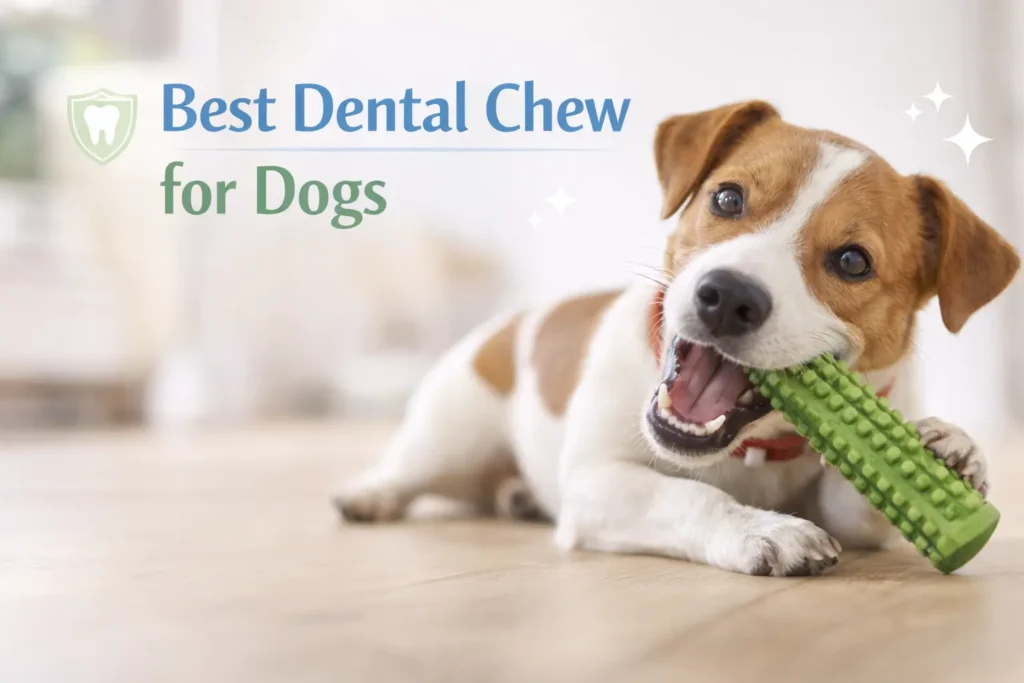
Dental health is one of the most overlooked parts of dog care. Many dogs develop plaque buildup, tartar, and bad breath long before owners realize something is wrong. Without proper dental care, these issues can progress into painful gum disease, infections, or even tooth loss.
Dental chews are one of the easiest ways to support your dog’s oral hygiene at home. They help scrape plaque from teeth, stimulate gums, and encourage healthy chewing behavior. However, not all dental chews are equally safe or effective, and choosing the wrong type can sometimes lead to digestive issues or dental damage.
Understanding how dental chews work—and how to use them correctly—helps owners make better decisions for their dog’s long-term health.
Pet Care Insight
Best dental chew for dogs guide is based on widely accepted pet care practices, veterinary guidance, and common experiences shared by responsible pet owners. The goal is to provide practical, easy-to-follow advice that helps owners keep their pets healthy, comfortable, and well cared for.
Understanding Dental Chews for Dogs
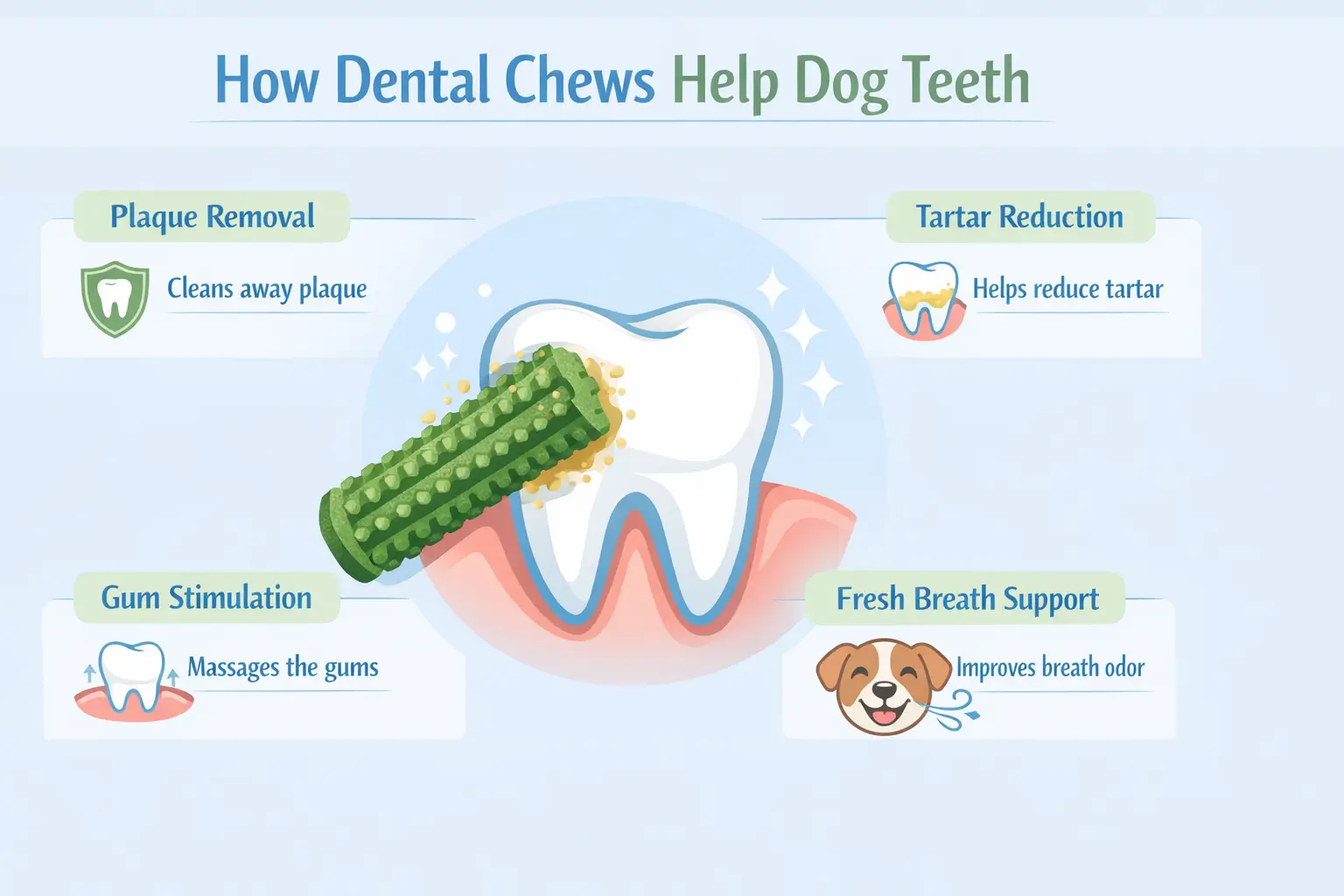
Dental chews are specially designed treats that help reduce plaque and tartar through mechanical chewing action. As dogs chew, the texture of the treat gently scrapes the tooth surface, helping remove buildup before it hardens into tartar.
Many dental chews are also formulated with ingredients that support oral health, such as enzymes that break down plaque or ingredients that help freshen breath.
Common benefits of dental chews include:
- reducing plaque buildup
- helping control bad breath
- encouraging natural chewing behavior
- supporting gum health
- providing mental stimulation
While dental chews are helpful, they are not a replacement for regular brushing or veterinary dental checkups. They should be viewed as part of a complete oral care routine.
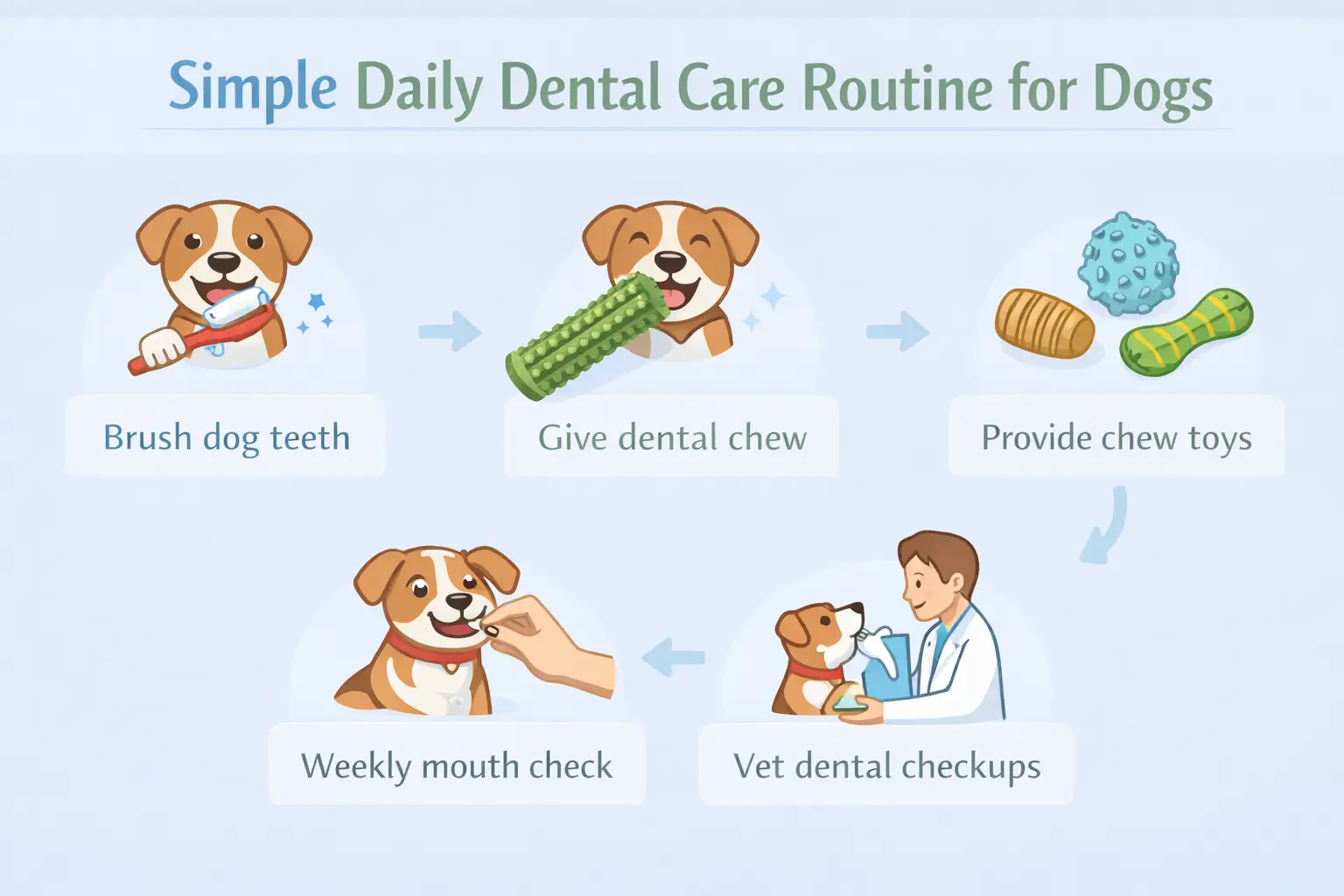
Daily Dental Care Essentials for Dogs
Maintaining your dog’s oral health requires consistent habits. Dental chews work best when combined with other dental care practices.
Core habits for healthy dog teeth
1. Daily or regular chewing opportunities
Chewing naturally helps clean teeth. Providing safe chew items can support oral hygiene.
Examples include:
- specially designed dental chews
- textured chew toys
- durable rubber toys for chewing
2. Routine tooth brushing
Brushing is still the most effective way to remove plaque.
Tips for brushing:
- use dog-safe toothpaste
- brush at least 3–4 times per week if possible
- focus on the outer surfaces of the teeth
- start slowly with puppies to build tolerance
3. Regular dental checks
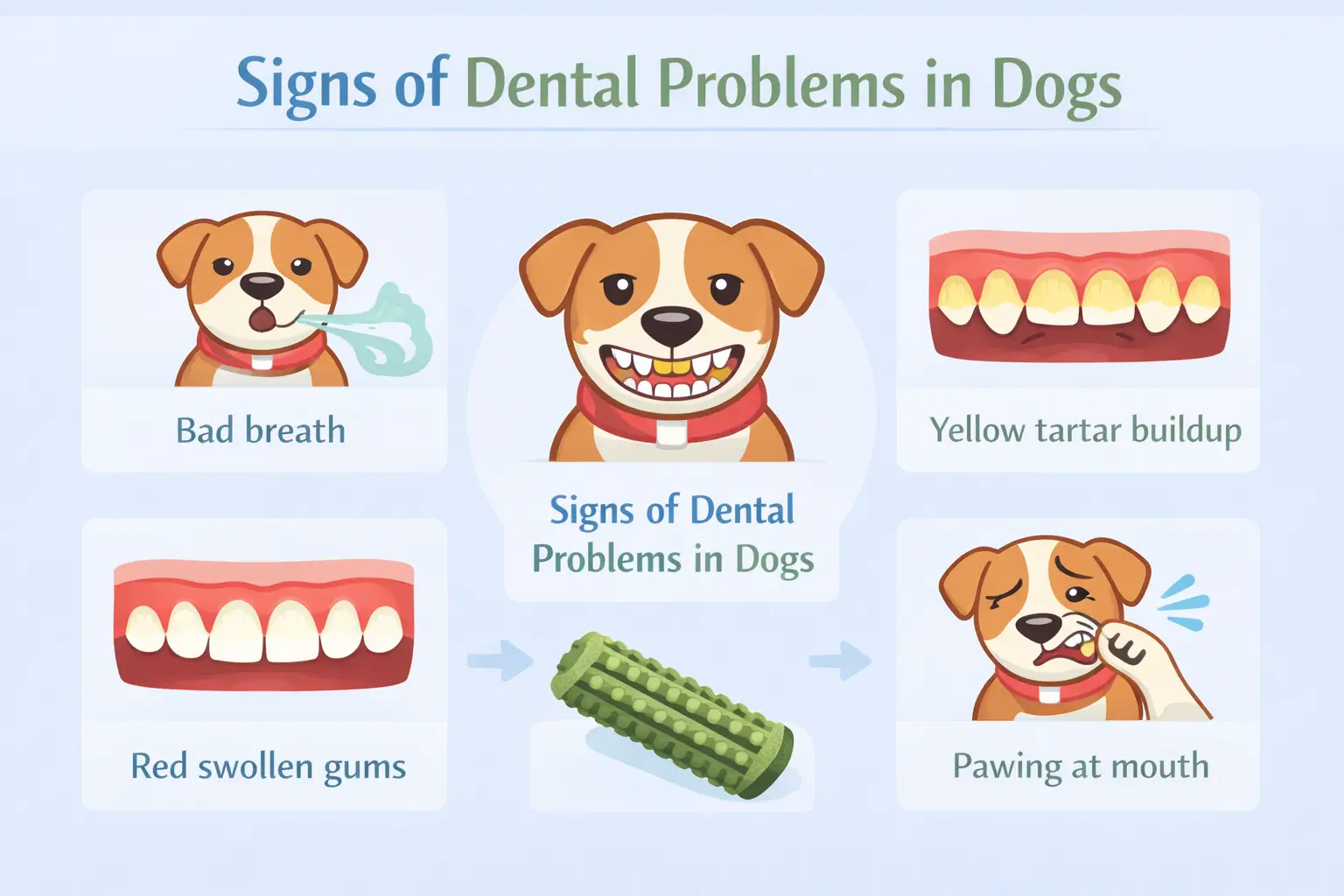
Check your dog’s mouth regularly for signs of problems:
- red or swollen gums
- persistent bad breath
- yellow or brown tartar buildup
- loose teeth
- reluctance to chew
If these signs appear, a veterinary dental exam may be necessary.
Diet & Nutrition and Their Role in Dental Health
What your dog eats plays a major role in oral health. Diet affects plaque formation, gum health, and breath quality.
Feeding considerations for healthy teeth
Balanced nutrition
A balanced diet supports healthy gums and strong teeth. Essential nutrients include:
- calcium
- phosphorus
- vitamin D
- omega fatty acids
Controlled treat intake
Too many soft treats can increase plaque buildup. Dental treats should be given in moderation and accounted for in your dog’s daily calorie intake.
Feeding guidance by life stage
Puppies
- introduce safe chew items early
- avoid very hard chews that could damage developing teeth
- encourage gentle chewing habits
Adult dogs
- maintain consistent dental routines
- provide daily chewing opportunities
- monitor breath and gum health
Senior dogs
- choose softer dental chews if teeth are worn or sensitive
- watch for tooth loss or gum disease
- increase veterinary dental checks
Exercise & Mental Stimulation Through Chewing
Chewing is a natural behavior that provides both mental and physical stimulation for dogs.
Dental chews serve two purposes:
- supporting oral health
- satisfying the dog’s natural chewing instinct
Dogs that do not receive appropriate chewing outlets may develop unwanted behaviors such as:
- furniture chewing
- destructive behavior
- excessive barking from boredom
Enrichment ideas using chewing
- rotate different chew toys weekly
- hide chew items in puzzle feeders
- offer supervised chew sessions after exercise
This helps keep dogs mentally engaged while supporting dental health.
Training & Behavior Guidance for Healthy Chewing
Teaching appropriate chewing habits is important, especially for puppies.
- How to encourage proper chewing
- Provide appropriate chew options
Dogs should always have access to safe items designed for chewing.
Redirect unwanted chewing
If a dog chews furniture or shoes:
- calmly remove the item
- replace it with a chew toy
- reward when the dog chooses the correct item
Supervise new chew items
Whenever introducing a new chew, observe your dog to ensure:
- they do not swallow large pieces
- the chew size is appropriate for their mouth
- chewing behavior remains safe
Health & Safety Considerations for Dental Chews
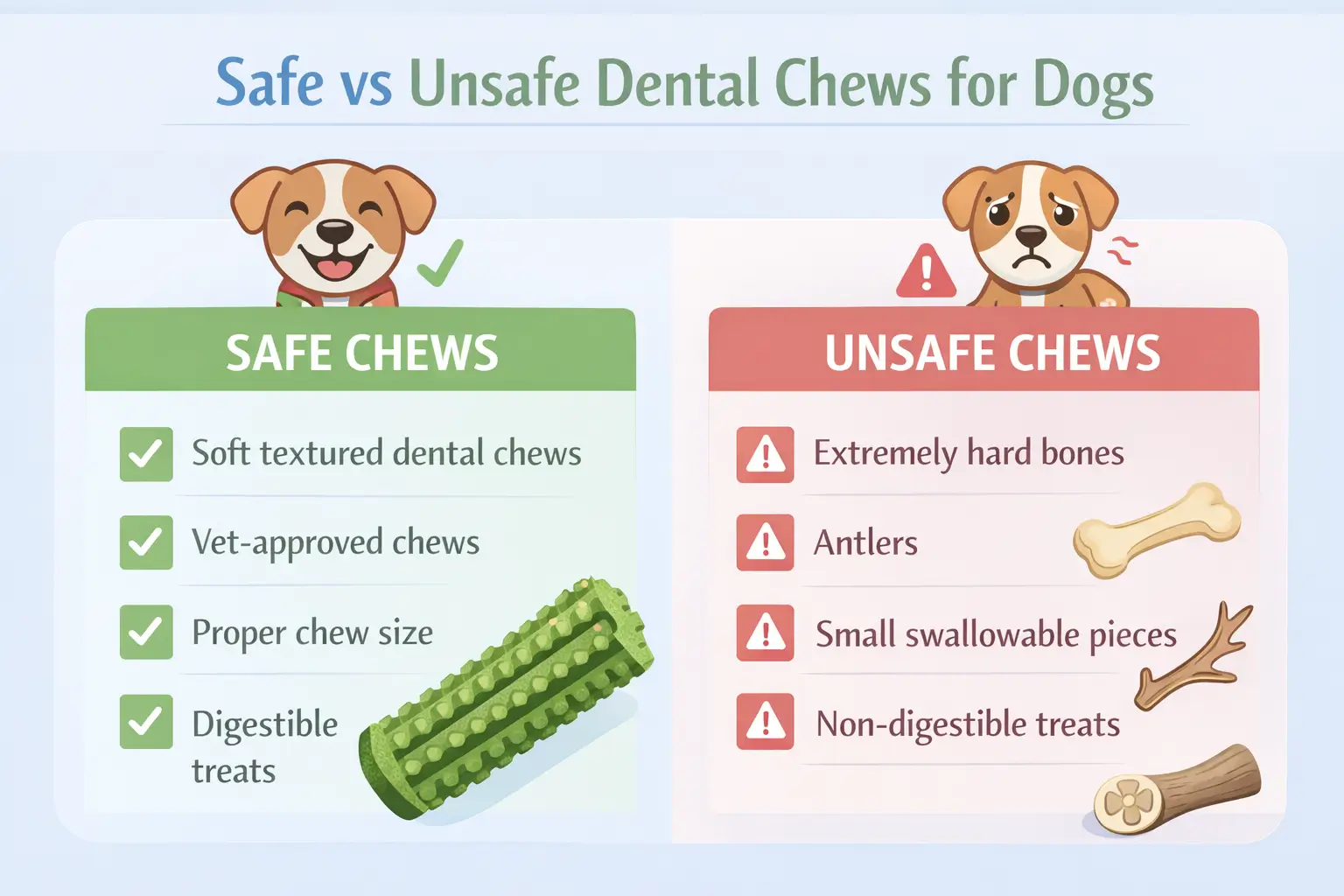
Not every dental chew is safe for every dog. Choosing the right texture, size, and ingredients is important.
Safety guidelines
Look for chews that are:
- appropriately sized for your dog
- digestible
- not excessively hard
- designed specifically for dogs
Some dental products have been reviewed by the Veterinary Oral Health Council, which evaluates whether certain products help reduce plaque or tartar.
Signs a chew may be too hard
Avoid chews that could break teeth. A common rule used by veterinarians:
If you cannot indent the chew with your fingernail, it may be too hard.
Dogs with special dietary needs
Dogs with allergies or sensitive stomachs may require:
- limited ingredient chews
- natural chew options
- grain-free formulas
Always introduce new treats gradually to monitor digestive tolerance.
Common Problems Owners Face With Dental Chews
Even helpful dental chews can cause issues if used incorrectly.
1. Dog swallows chews too quickly
Cause
Some dogs gulp treats instead of chewing them.
Solution
- choose larger chew sizes
- supervise chewing sessions
- use slower-consumption chew designs
Prevention
Select chews that require extended chewing.
2. Digestive upset after dental treats
Cause
New ingredients or rich treats.
Solution
- introduce dental chews slowly
- start with half portions
Prevention
Choose simple ingredient formulas.
3. Dog refuses dental chews
Cause
Some dogs are picky about flavor or texture.
Solution
- experiment with different chew shapes
- offer chews after exercise when dogs are more relaxed
Prevention
Introduce dental chews early during puppyhood.
4. Persistent bad breath despite dental chews
Cause
Underlying dental disease or infection.
Solution
Schedule a veterinary dental exam.
Prevention
Combine brushing, dental chews, and professional cleanings.
Seasonal Dental Care Tips for Dogs
Dental care should be consistent year-round, but seasonal changes can affect chewing habits.
Spring
- increased outdoor activity can mean more chewing opportunities
- monitor chewing of sticks or debris outdoors
Summer
- ensure fresh water is always available
- avoid chews that may soften or spoil in heat
Fall
- increased appetite in cooler months may increase treat consumption
- monitor treat calories
Winter
- indoor boredom can increase chewing behavior
- rotate toys and dental chews for enrichment
Additional Expert Tips for Better Dog Dental Health
-
Start dental care early
Puppies that become comfortable with brushing and chewing routines are easier to manage as adults.
-
Choose the right chew size
Chews should always match your dog’s size and chewing strength.
-
Avoid extremely hard items
Items like antlers or hard bones may increase the risk of broken teeth.
-
Create a dental routine
A simple weekly schedule might include:
- brushing teeth several times per week
- offering dental chews daily
- checking gums and teeth weekly
Consistency makes the biggest difference.
Conclusion
Dental chews can play a valuable role in maintaining your dog’s oral health when used correctly. They help reduce plaque, freshen breath, and satisfy natural chewing instincts, making them a helpful addition to your dog’s daily routine.
However, dental chews work best as part of a complete dental care plan, including regular brushing, safe chew toys, and veterinary dental checkups. Choosing appropriately sized chews, monitoring your dog during chewing, and introducing treats gradually can prevent common problems.
With consistent dental care habits, dog owners can help their pets maintain healthy teeth, comfortable gums, and fresher breath for many years.
FAQs About Dog Dental Chews
-
Are dental chews enough to keep a dog’s teeth clean?
Dental chews help reduce plaque but should be combined with brushing and veterinary dental exams for the best results.
-
How often should dogs have dental chews?
Most dogs can safely have dental chews once daily, but portion size and calorie intake should be considered.
-
Can puppies use dental chews?
Yes, but they should be puppy-specific chews designed for developing teeth. Avoid extremely hard chews.
-
Why does my dog still have bad breath after dental treats?
Persistent bad breath may indicate gum disease or infection. A veterinary dental exam may be necessary.
-
Can dental chews cause digestive problems?
Some dogs may experience mild digestive upset if new treats are introduced too quickly. Introduce dental chews gradually.
-
Are harder chews better for cleaning teeth?
Not necessarily. Extremely hard chews can break teeth. Safe dental chews should be firm but slightly flexible.




11 Responses