
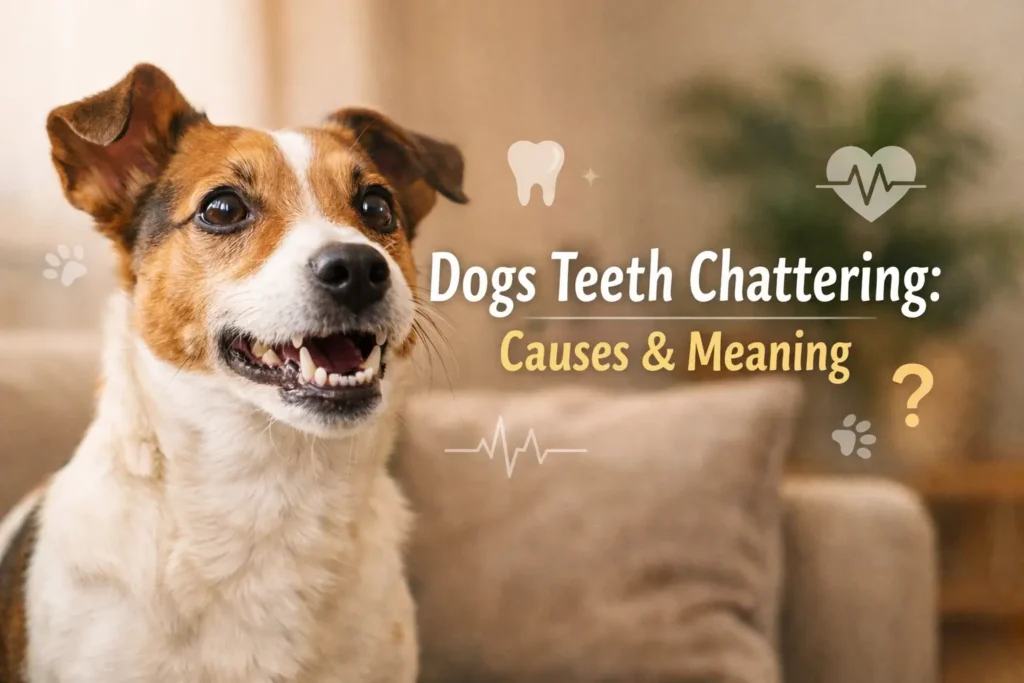
Many dog owners notice their pet’s teeth chattering or jaw clicking at some point. Sometimes it happens when a dog is excited, after licking something, or even while sleeping. Other times, dogs teeth chattering randomly can leave owners worried that something may be wrong.
While teeth chattering in dogs can be harmless in some situations, it may also signal pain, dental issues, neurological conditions, or stress. Understanding the cause is important so you can determine whether your dog simply needs reassurance — or a visit to the veterinarian.
This guide explains why dogs teeth chatter, what it means, and when you should be concerned, especially if it occurs in older dogs or happens suddenly.
Pet Care Insight
This guide is based on widely accepted pet care practices, veterinary guidance, and common experiences shared by responsible pet owners. The goal is to provide practical, easy-to-follow advice that helps owners keep their pets healthy, comfortable, and well cared for.
Pet Overview: Understanding Dog Behavior and Communication
Dogs communicate through body language, vocalizations, and physical reactions. Jaw chattering or teeth clicking is one of the lesser-known signals dogs may display.
Basic Dog Characteristics
- Temperament: Loyal, social, emotionally expressive
- Lifespan: Typically 10–15 years depending on breed
- Activity Level: Moderate to high depending on breed
- Communication: Uses body language, facial expressions, and vocal sounds
- Family Compatibility: Generally excellent with families when properly socialized
Dogs often show subtle signals when they feel excited, anxious, curious, or uncomfortable. Teeth chattering may simply be another way your dog expresses a reaction to its environment.
However, when dogs teeth chattering and shaking occur together, or when the behavior is persistent, it may signal a health concern.
Daily Care Essentials
Keeping your dog healthy helps prevent many conditions that could cause dog teeth chattering.
Core Care Needs
Feeding
- Feed balanced, high-quality dog food
- Follow portion guidelines based on weight and age
- Avoid sudden diet changes
Grooming
- Brush your dog’s teeth regularly
- Check gums and teeth for swelling or damage
- Maintain clean ears and coat
Exercise
- Most dogs need 30–60 minutes of activity daily
- Walks, play sessions, and enrichment games help reduce stress behaviors
Social Interaction
- Dogs are social animals that thrive on companionship
- Lack of stimulation may cause stress behaviors including dog mouth chattering
Routine care helps prevent dental disease, anxiety, and discomfort, which are some of the common reasons for teeth chattering.
Diet & Nutrition Guide
Proper nutrition plays a role in dental health, nerve function, and overall wellbeing, all of which can influence behaviors like jaw chattering.
Feeding Guidelines by Age
Puppies
- Feed 3–4 small meals per day
- Choose puppy-specific food rich in calcium and protein
Adult Dogs
- Usually 2 meals per day
- Maintain balanced protein, fat, and vitamins
Senior Dogs
- May require softer foods
- Monitor dental health carefully
- Adjust calories to prevent weight gain
Nutrients Important for Dental Health
- Calcium and phosphorus for strong teeth
- Omega-3 fatty acids for inflammation
- Vitamin D for bone health
Foods to Avoid
Never feed dogs:
- Chocolate
- Onions or garlic
- Grapes or raisins
- Xylitol sweeteners
- Hard bones that can crack teeth
Dental pain from damaged teeth or gum disease can cause dog teeth chattering and drooling, especially in older dogs.
Exercise & Mental Stimulation
Dogs that receive regular activity tend to display fewer stress-related behaviors.
Daily Exercise Ideas
- Walks or hikes
- Fetch games
- Tug-of-war
- Puzzle toys
- Scent games
Mental enrichment activities are especially helpful for dogs that chatter their teeth after smelling something interesting, as scent stimulation triggers strong reactions in dogs.
Training & Behavior Guidance
Many dogs chatter their teeth during excitement, anticipation, or stimulation.
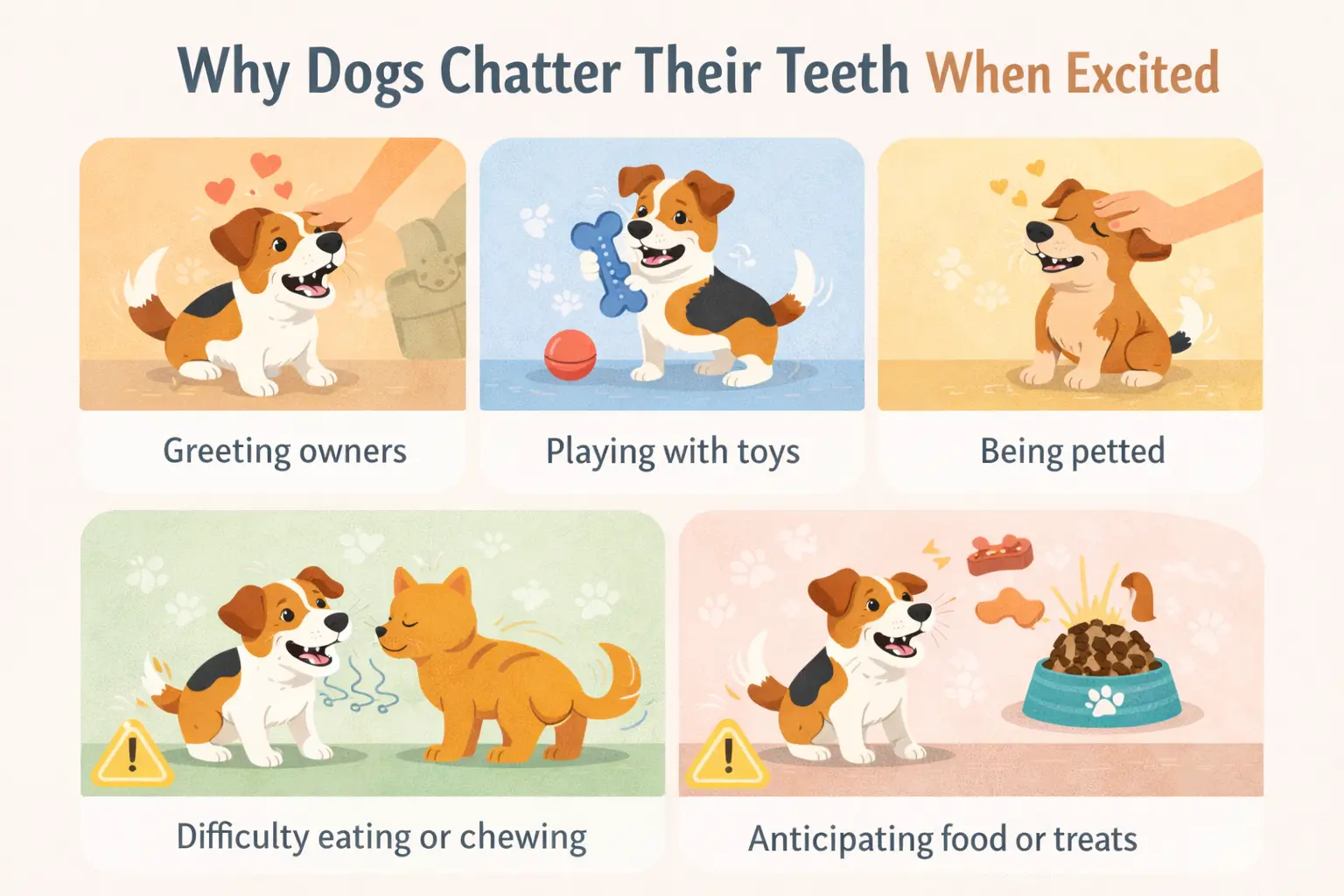
Common Situations Where Teeth Chattering Happens
- During play
- When smelling another animal
- When greeting owners
- When being petted
- During excitement
For example, some owners notice dog teeth chattering when petting or during play sessions.
How to Manage Excitement
- Use calm greetings
- Reward relaxed behavior
- Avoid overstimulating play
Training helps dogs regulate emotional responses, reducing behaviors like dog chattering teeth when excited.
Health & Climate Considerations
While excitement or scent stimulation can cause harmless chattering, health issues may also trigger it.
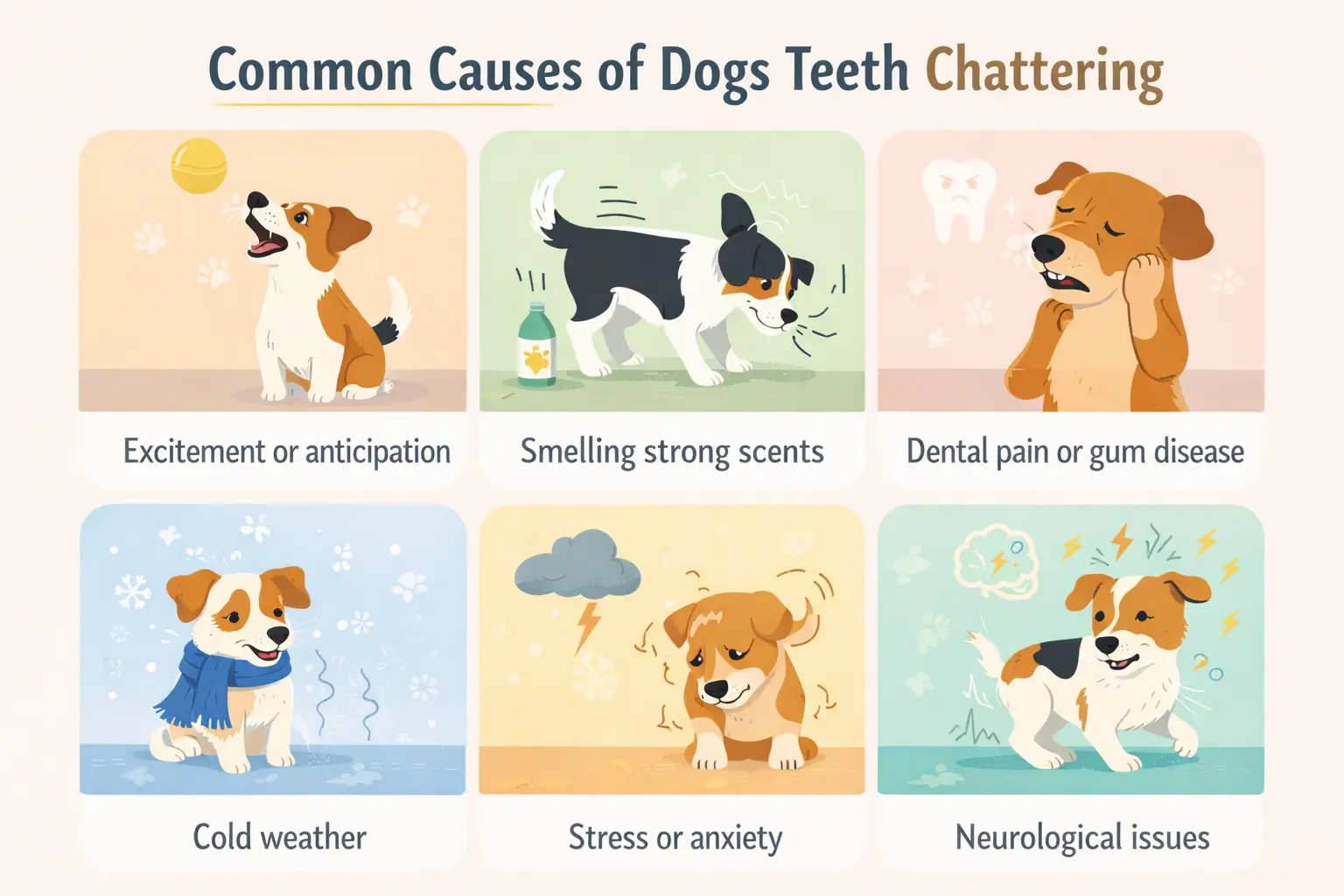
Common Medical Causes
1. Dental Disease
Dental problems are one of the most common reasons for dogs teeth chattering but not cold.
Possible symptoms:
- Bad breath
- Red gums
- Drooling
- Difficulty chewing
- Tooth loss
If your dog’s teeth are falling out or clicking, it may be due to periodontal disease.
2. Exposure to Cold
Dogs may chatter their teeth when cold, especially:
- Small breeds
- Short-haired dogs
- Older dogs
However, dogs teeth chattering not cold may indicate another cause.
3. Excitement or Anticipation
Some dogs chatter their teeth when highly stimulated.
Examples include:
- Seeing a favorite toy
- Greeting their owner
- Smelling other animals
Owners often ask: why does my dog chatter his teeth when excited?
In many cases, this behavior is harmless.
4. Scent Response (Flehmen-like behavior)
Dogs may chatter their teeth after licking or smelling something.
You might notice:
- dog teeth chattering after licking
- dogs teeth chattering after smelling
- lip curling or tongue flicking
This helps dogs process scent molecules more effectively.
5. Stress or Anxiety
Anxious dogs may show:
- trembling
- jaw chattering
- pacing
- whining
6. Neurological Issues
In rare cases, dog jaw chattering spasm can be linked to neurological problems such as:
- focal seizures
- nerve disorders
- brain inflammation
Signs of possible seizures include:
- repetitive jaw movement
- sudden teeth chattering
- staring episodes
- twitching
If you suspect focal seizures in dogs teeth chattering, contact a veterinarian immediately.
Common Problems & Troubleshooting
Here are some real situations dog owners encounter.
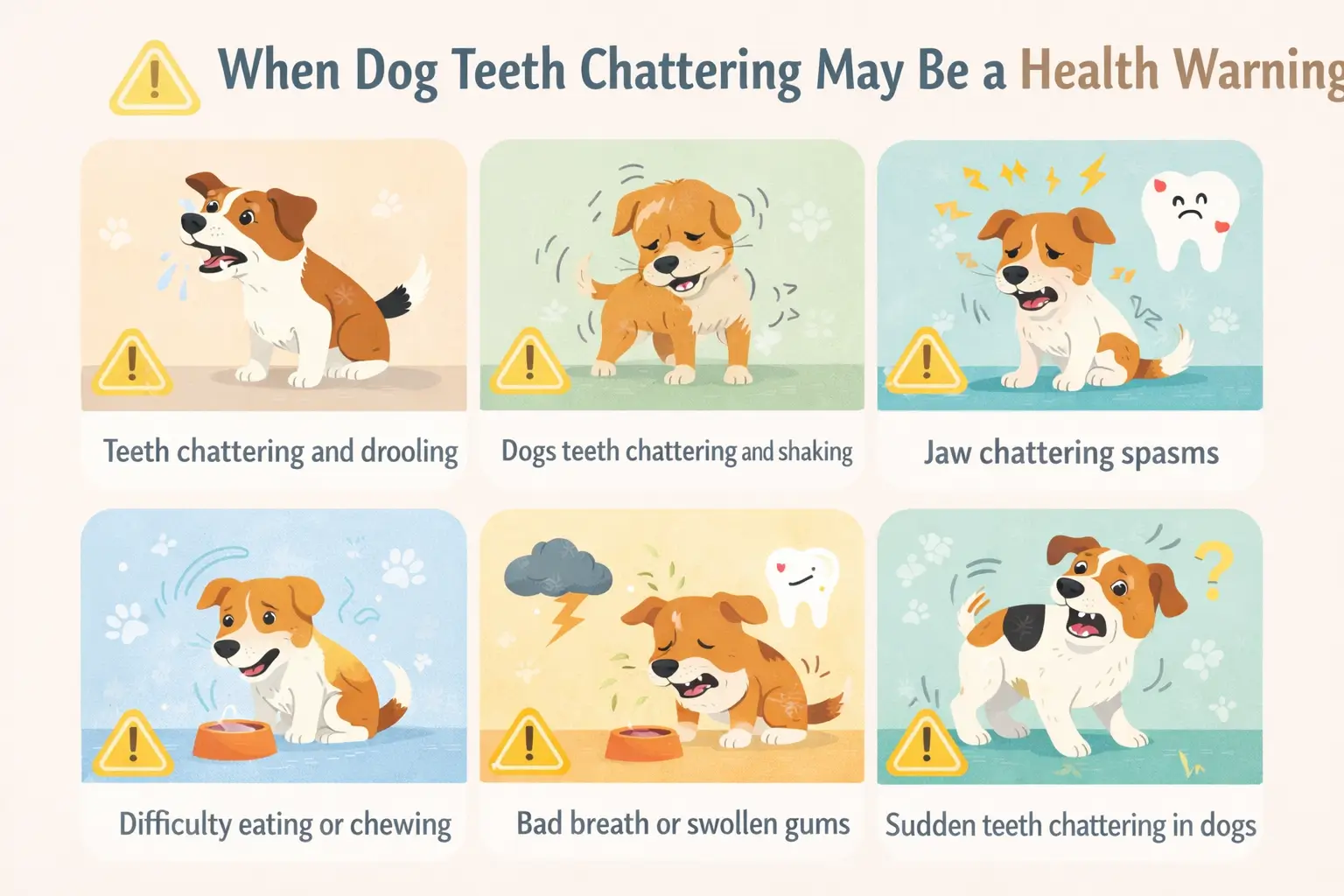
Problem: Sudden Teeth Chattering in Dogs
Possible Causes
- anxiety
- sudden cold exposure
- dental pain
- neurological issues
Solution
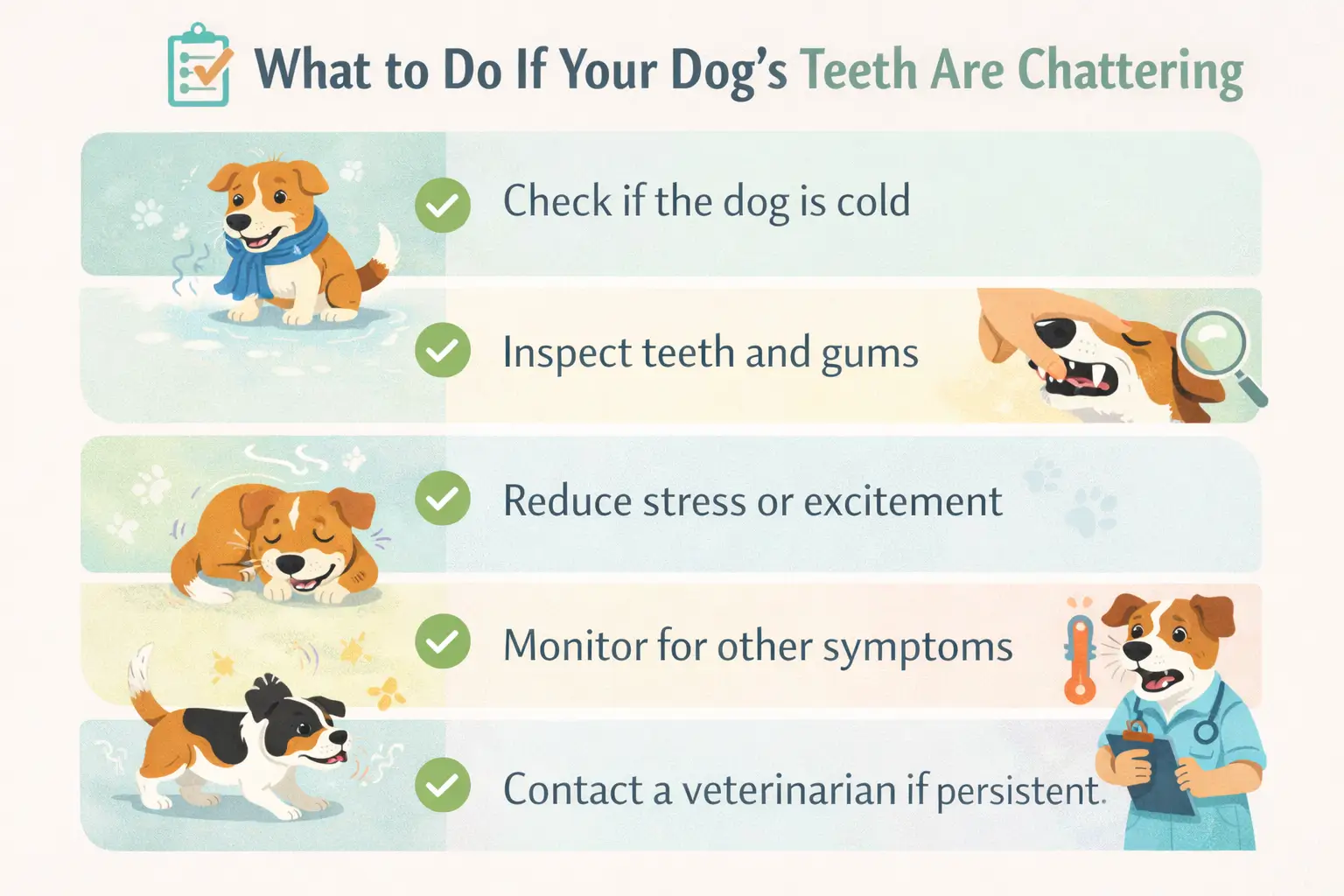
- observe for other symptoms
- check gums and teeth
- schedule vet exam if persistent
Problem: Older Dogs Teeth Chattering
Older dogs may develop jaw chattering due to:
- dental disease
- arthritis pain
- nerve issues
- cognitive decline
Treatment for older dog chattering teeth may include
- dental cleaning
- pain management
- anti-inflammatory medication
- neurological evaluation
Problem: Dogs Teeth Chattering and Drooling
This combination can indicate:
- oral pain
- nausea
- toxin exposure
- dental infection
What to do
- inspect mouth carefully
- prevent access to toxins
- seek veterinary care if symptoms continue
Problem: Dogs Teeth Chattering in Sleep
Occasional jaw movement during sleep may occur during dreaming.
However, frequent dog jaw chattering during sleep could signal neurological issues.
Monitor frequency and discuss with your vet if it occurs regularly.
Seasonal Pet Care Tips
Spring
- Watch for seasonal allergies
- Increased outdoor smells may trigger dogs teeth chattering after smelling
Summer
- Prevent overheating
- Provide fresh water at all times
Fall
- Increased wildlife scents may cause excitement-related chattering
Winter
- Small or senior dogs may chatter when cold
- Provide warm bedding and shelter
Additional Expert Tips
Check Dental Health Regularly
Healthy teeth prevent many problems associated with dog teeth clicking or chattering.
- Brush teeth 2–3 times per week
- Schedule annual dental exams
- Offer safe dental chews
Monitor Senior Dogs Closely
If you have a senior dog chattering teeth, watch for signs of pain or confusion.
Keep a Behavior Log
If your dog’s jaw chatters randomly, note:
- time of day
- environment
- activity before it happened
- other symptoms
This information helps veterinarians identify the cause.
Conclusion
Dogs teeth chattering
can happen for many reasons — from harmless excitement to underlying health concerns. Occasional chattering during play or scent exploration is often normal. However, persistent symptoms, especially in older dogs or when combined with drooling, shaking, or jaw spasms, should not be ignored.
Learn More: Calico Critters Persian Cat Triplets Guide: Names & Care Tips
FAQs
- Why are my dog’s teeth chattering when it’s not cold?
Teeth chattering without cold exposure may occur due to excitement, scent processing, dental pain, anxiety, or neurological issues. Observing other symptoms can help identify the cause.
- Why does my dog chatter his teeth after licking something?
Dogs sometimes chatter their teeth after licking strong scents. This behavior helps them analyze smells more deeply using scent-processing organs in the mouth.
- Is teeth chattering normal in older dogs?
Occasional chattering can occur in senior dogs, but older dogs teeth chattering frequently may indicate dental disease, pain, or neurological conditions.
- Can dog teeth chattering be a seizure?
Yes. In rare cases, focal seizures in dogs teeth chattering can occur. Signs may include jaw spasms, staring episodes, and repetitive movements.
- Why does my dog chatter his teeth when excited?
Some dogs show excitement through jaw chattering or teeth clicking, especially during play or greeting their owners.
- Why are my dog’s teeth chattering and drooling?
This combination can signal oral pain, dental infection, nausea, or toxin exposure and should be checked by a veterinarian.



4 Responses