
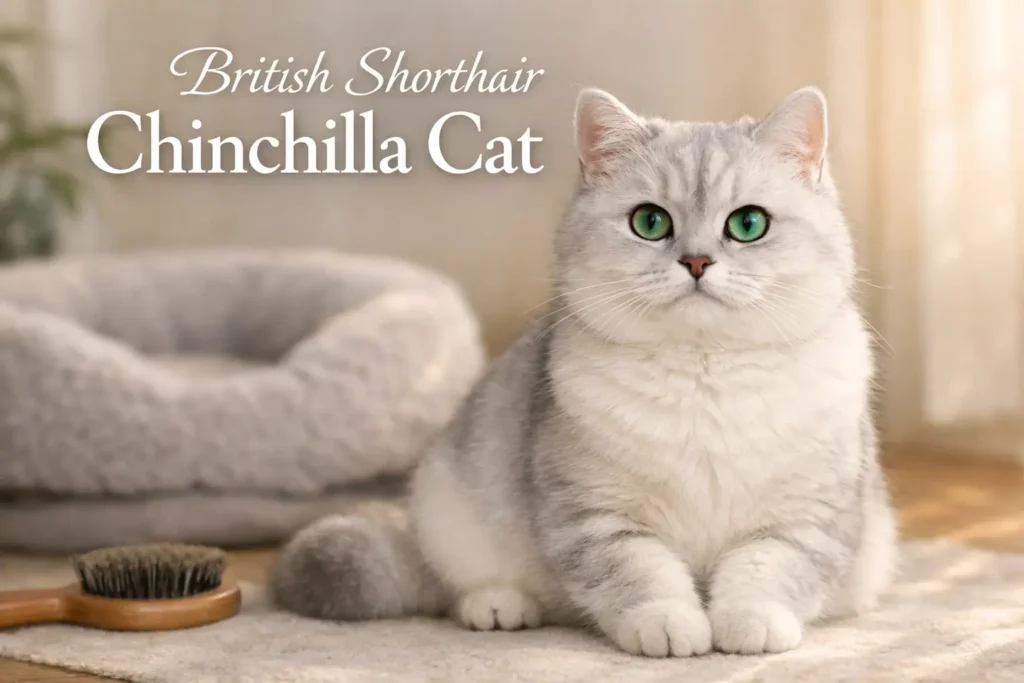
The British Shorthair Chinchilla cat is one of the most elegant and recognizable cat varieties in the world. With its plush coat, round face, and striking silver or golden shading, this cat has become increasingly popular among families and cat lovers.
Many new owners fall in love with the appearance of the silver chinchilla British Shorthair cat or the warm tones of the British Shorthair golden chinchilla cat, but caring for this breed involves more than just admiring its beauty. These cats have unique grooming needs, a calm personality, and specific lifestyle preferences that owners should understand before bringing one home.
Common mistakes new owners make include assuming this breed is completely low-maintenance or not providing enough mental stimulation for their naturally curious personality. With proper care, however, this breed can become a gentle, affectionate companion for many years.
Pet Care Insight
This guide is based on widely accepted pet care practices, veterinary guidance, and common experiences shared by responsible pet owners. The goal is to provide practical, easy-to-follow advice that helps owners keep their pets healthy, comfortable, and well cared for.
Pet Overview
The chinchilla British Shorthair is a variation of the classic British Shorthair breed known for its luxurious shaded coat. While many people recognize the famous British blue cat, the chinchilla variety stands out with its shimmering silver or golden fur.
Physical Characteristics
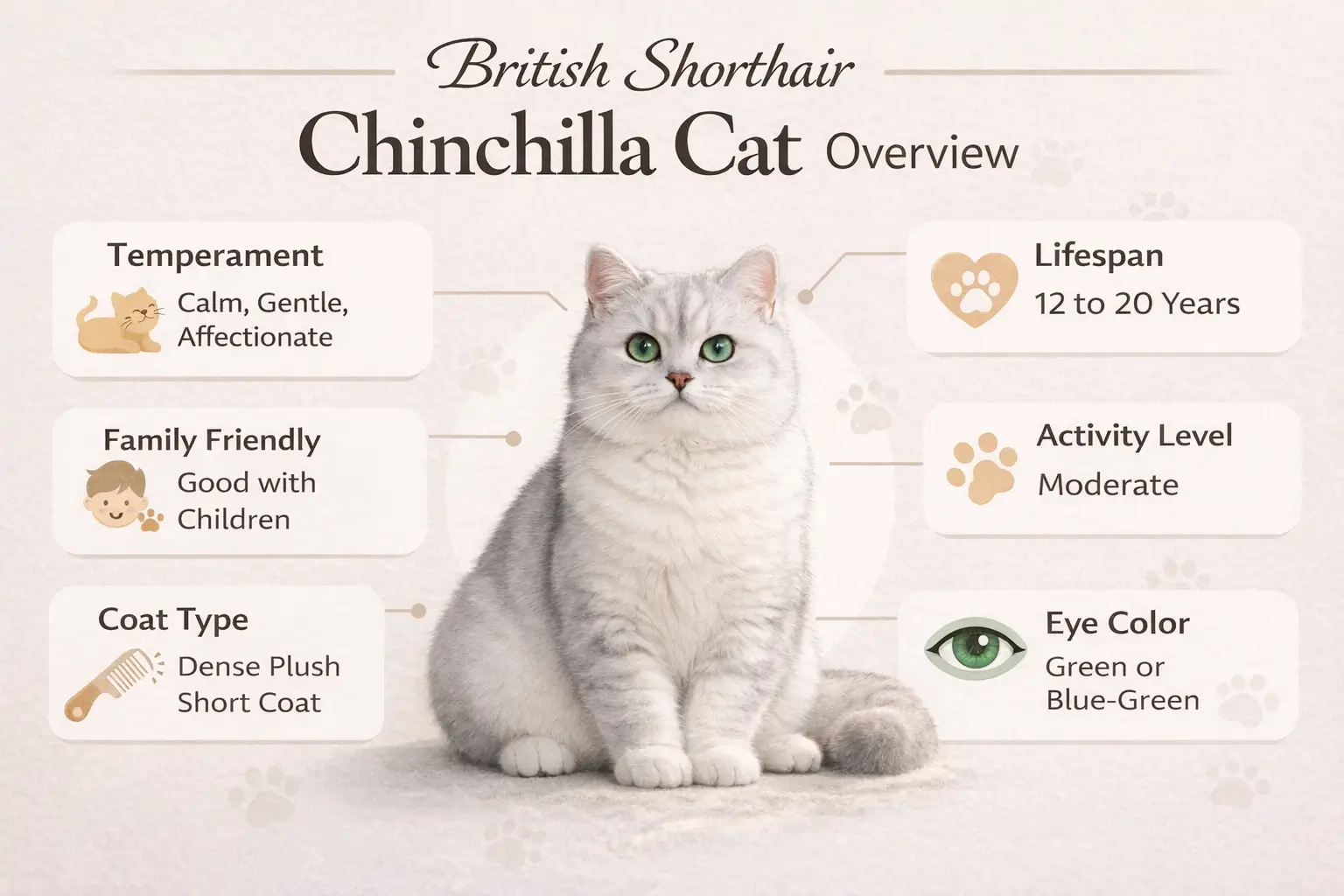
A typical British Shorthair chinchilla cat has several distinctive traits:
- Round face with full cheeks
- Large round eyes (often green or blue-green)
- Dense plush coat with silver or golden shading
- Stocky muscular body
- Short, thick legs
- Broad chest and strong build
Many people ask what does a British Shorthair cat look like. In general, they resemble a “teddy bear” cat with a plush coat and calm expression.
Common chinchilla variations include:
- Silver chinchilla British Shorthair
- Shaded silver British Shorthair
- Silver-shaded British Shorthair
- British Shorthair golden chinchilla
- British Shorthair black silver shaded
These belong to the wider range of British Shorthair colors and coat patterns.
Temperament
The breed is known for its relaxed personality.
Typical traits include:
- Calm and gentle
- Loyal but not overly demanding
- Quiet and observant
- Affectionate with family members
- Independent compared to many other breeds
Lifespan
The British Shorthair cat typically lives:
12–20 years with proper care
Good nutrition, regular veterinary visits, and indoor living can significantly increase lifespan.
Suitability for Families
This breed adapts well to different households.
They are generally:
- Good with children
- Comfortable with other calm pets
- Suitable for apartment living
- Ideal for owners who prefer a quieter cat
Daily Care Essentials
Caring for a British Shorthair kitten or adult cat is relatively straightforward when owners follow consistent routines.
Feeding Routine
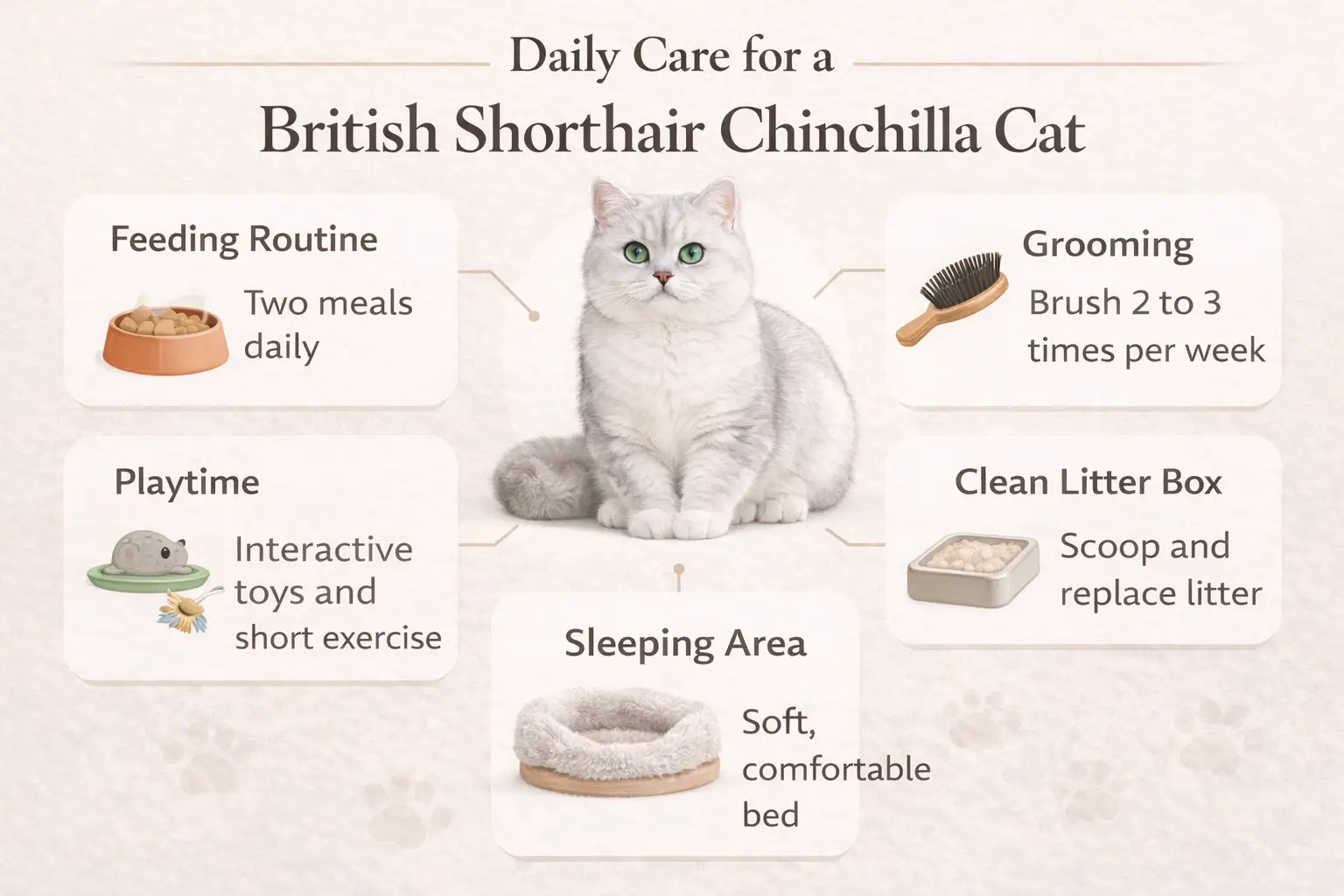
Most adult British Shorthairs should be fed:
- 2 meals per day
Kittens typically require:
- 3–4 smaller meals daily
Consistency helps maintain healthy digestion.
Grooming Basics
Although the coat is short, it is extremely dense.
Weekly grooming should include:
- Brushing the coat 2–3 times per week
- Removing loose hair
- Checking ears and eyes
- Trimming nails every few weeks
For silver chinchilla British Shorthair cats, brushing helps maintain the soft shaded coat and prevents matting.
Exercise Needs
This breed is moderately active but not hyperactive.
Daily activity should include:
- Interactive toys
- Light climbing
- Short play sessions
Social Interaction
Despite their independent nature, these cats still need daily interaction.
Owners should:
- Spend time playing or petting
- Provide comfortable resting spaces
- Offer window views or cat trees
Diet & Nutrition Guide
Nutrition plays a key role in maintaining the plush coat and overall health of a British Shorthair chinchilla.
Feeding Schedule
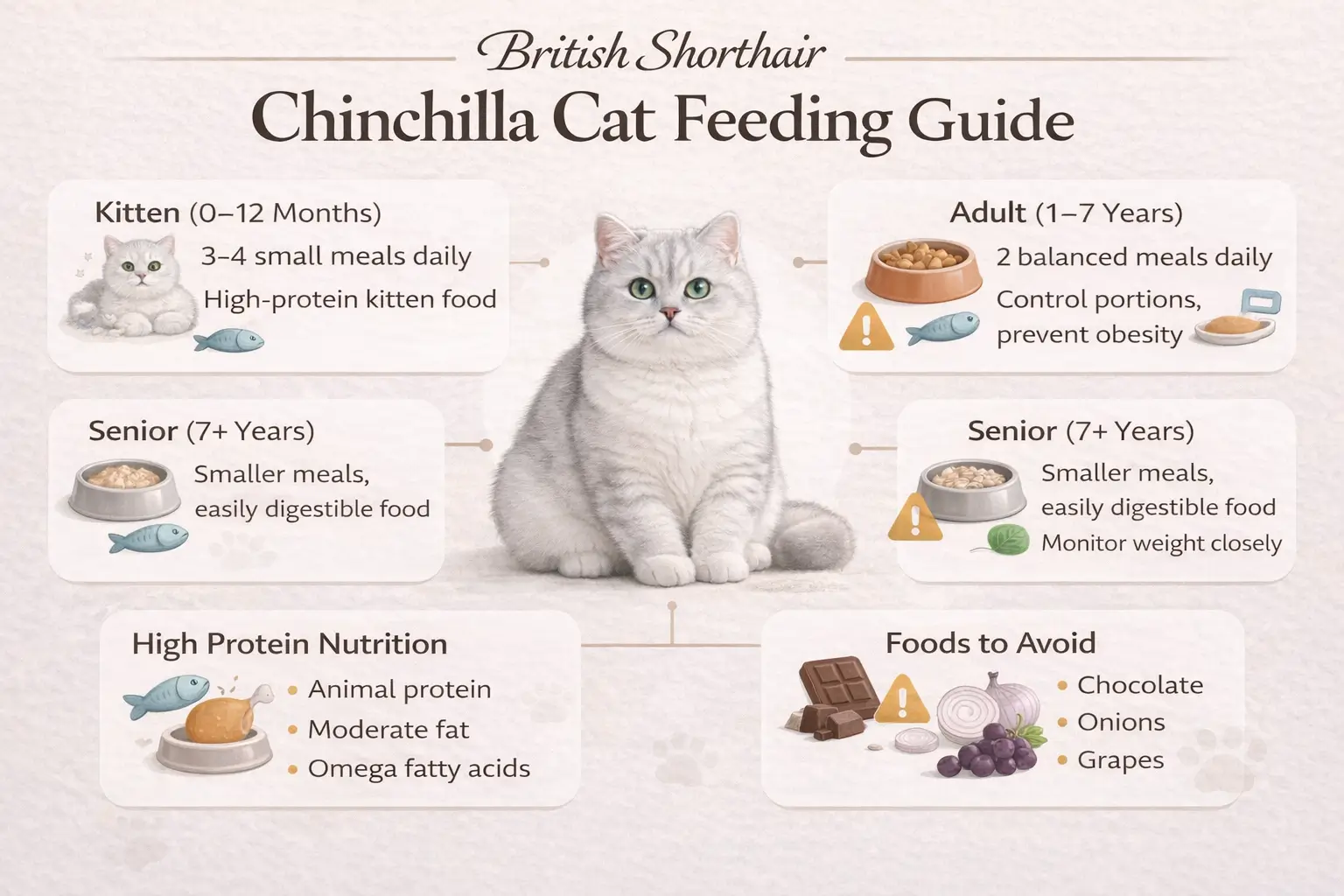
Kittens (0–12 months)
- 3–4 small meals daily
- High-protein kitten food
Adults (1–7 years)
- 2 balanced meals daily
- Portion control to prevent obesity
Senior Cats (7+ years)
- Smaller meals
- Easily digestible food
- Monitor weight closely
Nutritional Needs
A healthy diet should include:
- High-quality animal protein
- Moderate fat content
- Taurine for heart health
- Omega fatty acids for coat health
Safe Foods
Occasional safe treats include:
- Cooked chicken
- Cooked fish (boneless)
- Small pieces of cooked turkey
Foods to Avoid
Never feed cats:
- Chocolate
- Onions or garlic
- Grapes or raisins
- Alcohol
- Excess dairy
Exercise & Mental Stimulation
The British Shorthair cat is not extremely energetic, but mental stimulation is still important.
Daily Activity Needs
Most cats benefit from:
20–30 minutes of daily play
Play Ideas
Owners can try:
- Feather wand toys
- Laser pointer games
- Puzzle feeders
- Cat tunnels
- Interactive balls
Indoor Enrichment
Mental enrichment can include:
- Window perches
- Cat trees
- Puzzle toys
- Rotating toy selection
These activities help prevent boredom and weight gain.
Training & Behavior Guidance
Although cats are independent, British Shorthair kittens can learn basic behaviors with gentle training.
Litter Training
Most kittens learn quickly if owners:
- Use a clean litter box
- Place it in a quiet location
- Keep it accessible
Socialization
Early socialization helps kittens become confident adults.
Expose them gradually to:
- New people
- Household sounds
- Gentle handling
Preventing Behavior Problems
Owners should avoid:
- Leaving cats alone too long
- Lack of stimulation
- Sudden environmental changes
Provide scratching posts to prevent furniture damage.
Health & Climate Considerations
The British Shorthair is generally a robust breed but can be prone to certain conditions.
Common Health Concerns
Possible issues include:
- Obesity
- Dental disease
- Hypertrophic cardiomyopathy (heart condition)
- Polycystic kidney disease (rare but possible)
Regular veterinary checkups help detect problems early.
Heat Sensitivity
Due to their dense coat, British Shorthair cats may struggle with extreme heat.
In hot weather:
- Provide cool resting areas
- Ensure constant fresh water
- Avoid excessive play during hot hours
Cold Weather
These cats tolerate cooler temperatures better but should still live primarily indoors.
Common Problems & Troubleshooting
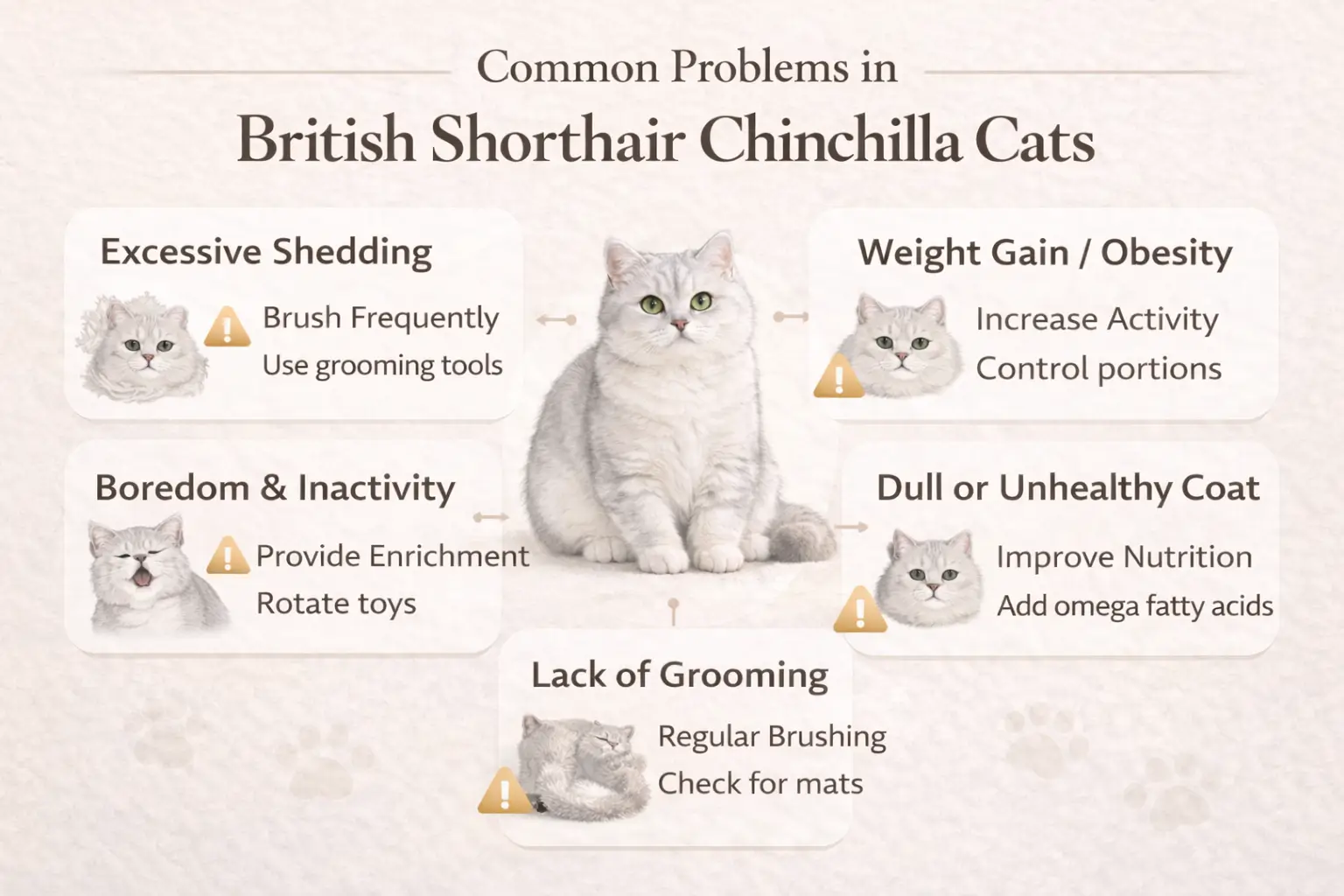
Problem: Excessive Shedding
Possible Cause
- Seasonal coat changes
Solution
- Brush more frequently
- Use grooming tools designed for dense coats
Prevention
- Maintain weekly grooming routine
Problem: Weight Gain
Possible Cause
- Low activity levels
- Overfeeding
Solution
- Reduce portion size
- Increase playtime
Prevention
- Monitor weight regularly
Problem: Boredom or Laziness
Possible Cause
- Lack of stimulation
Solution
- Introduce interactive toys
- Rotate toys weekly
Prevention
- Provide daily enrichment
Problem: Dull Coat
Possible Cause
- Poor nutrition
Solution
- Improve diet quality
- Add omega fatty acids (vet guidance)
Prevention
- Balanced high-protein diet
Seasonal Pet Care Tips
Spring
- Watch for seasonal shedding
- Increase grooming frequency
Summer
- Provide cool shaded resting areas
- Ensure constant hydration
- Limit play during heat waves
Fall
- Adjust feeding if activity levels change
- Check for parasites after outdoor exposure
Winter
- Encourage indoor play
- Maintain comfortable room temperatures
Additional Expert Tips
Many new owners misunderstand the needs of the chinchilla British Shorthair.
Helpful long-term care tips include:
- Avoid overfeeding this breed
- Maintain regular grooming even though the coat is short
- Provide comfortable sleeping areas
- Schedule annual veterinary exams
- Encourage gentle daily play
Another important tip: always research breed characteristics before adopting. Many people choose this cat for its appearance but overlook its calm, somewhat independent personality.
Conclusion
The British Shorthair chinchilla cat is a beautiful and affectionate companion known for its plush coat, gentle personality, and striking silver or golden shading. While this breed is relatively easy to care for, owners should pay attention to grooming, balanced nutrition, and regular playtime.
Avoid common mistakes such as overfeeding, neglecting grooming, or assuming the breed does not need stimulation. With consistent care and attention, these cats can live long, healthy lives and form strong bonds with their families.
For pet owners seeking a calm, elegant, and loyal feline companion, the chinchilla British Shorthair can be a truly rewarding addition to the home.
Learn More: Dogs Teeth Chattering: Causes, Meaning & When to Worry
Frequently Asked Questions
-
What is a chinchilla British Shorthair?
A chinchilla British Shorthair is a variation of the British Shorthair breed with a silver or golden shaded coat pattern. The fur is light at the base with darker tips, creating a shimmering appearance.
-
How can you tell if your cat is a British Shorthair?
Common identifying features include:
- Round face and cheeks
- Dense plush coat
- Stocky body shape
- Large round eyes
However, pedigree confirmation usually requires breeder documentation.
-
What colors do British Shorthair cats come in?
The breed comes in many coat colors, including:
- Blue
- Silver shaded
- Golden chinchilla
- Black silver shaded
- Cream
- Chocolate
- Tabby patterns
These variations make the colors of British Shorthair cats quite diverse.
-
Are British Shorthair cats good for apartments?
Yes. Their calm personality and moderate activity level make them well suited for apartment living as long as they receive regular play and attention.
-
How much exercise does a British Shorthair cat need?
Most adults need about 20–30 minutes of daily playtime to stay healthy and prevent weight gain.
-
Do British Shorthair cats require a lot of grooming?
Despite their thick coat, grooming needs are moderate. Brushing 2–3 times per week is usually enough.



6 Responses