
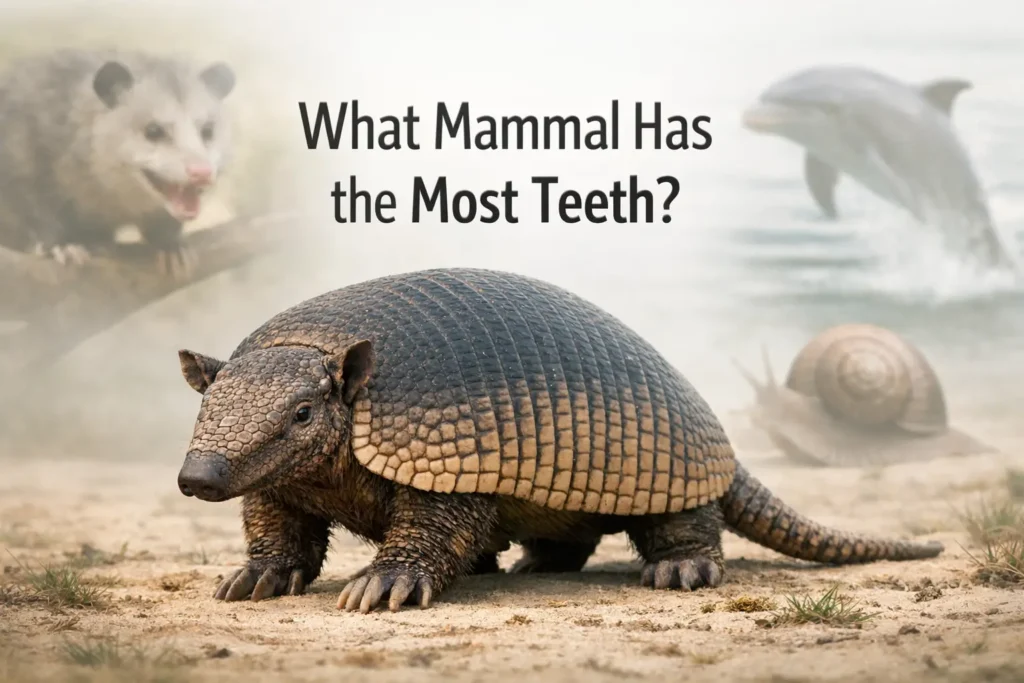
When people search “what mammal has the most teeth”, they’re often surprised by the answer—and even more surprised by how teeth shape an animal’s lifestyle, diet, and care needs. While most pet owners are familiar with dogs or cats having 30–42 teeth, some mammals have evolved far more specialized dental systems.
Understanding how teeth function in mammals isn’t just trivia—it can actually help pet owners better care for their own animals. Teeth reveal a lot about feeding habits, health risks, and behavior. One common mistake new pet owners make is underestimating dental care, which can lead to serious long-term issues.
In this guide, we’ll explore which mammal has the most teeth, compare it to other animals, and connect that knowledge to real, practical pet care insights.
Pet Care Insight
This guide is based on widely accepted pet care practices, veterinary guidance, and common experiences shared by responsible pet owners. The goal is to provide practical, easy-to-follow advice that helps owners keep their pets healthy, comfortable, and well cared for.
Pet Overview (Mammals With the Most Teeth)
Which Mammal Has the Most Teeth?
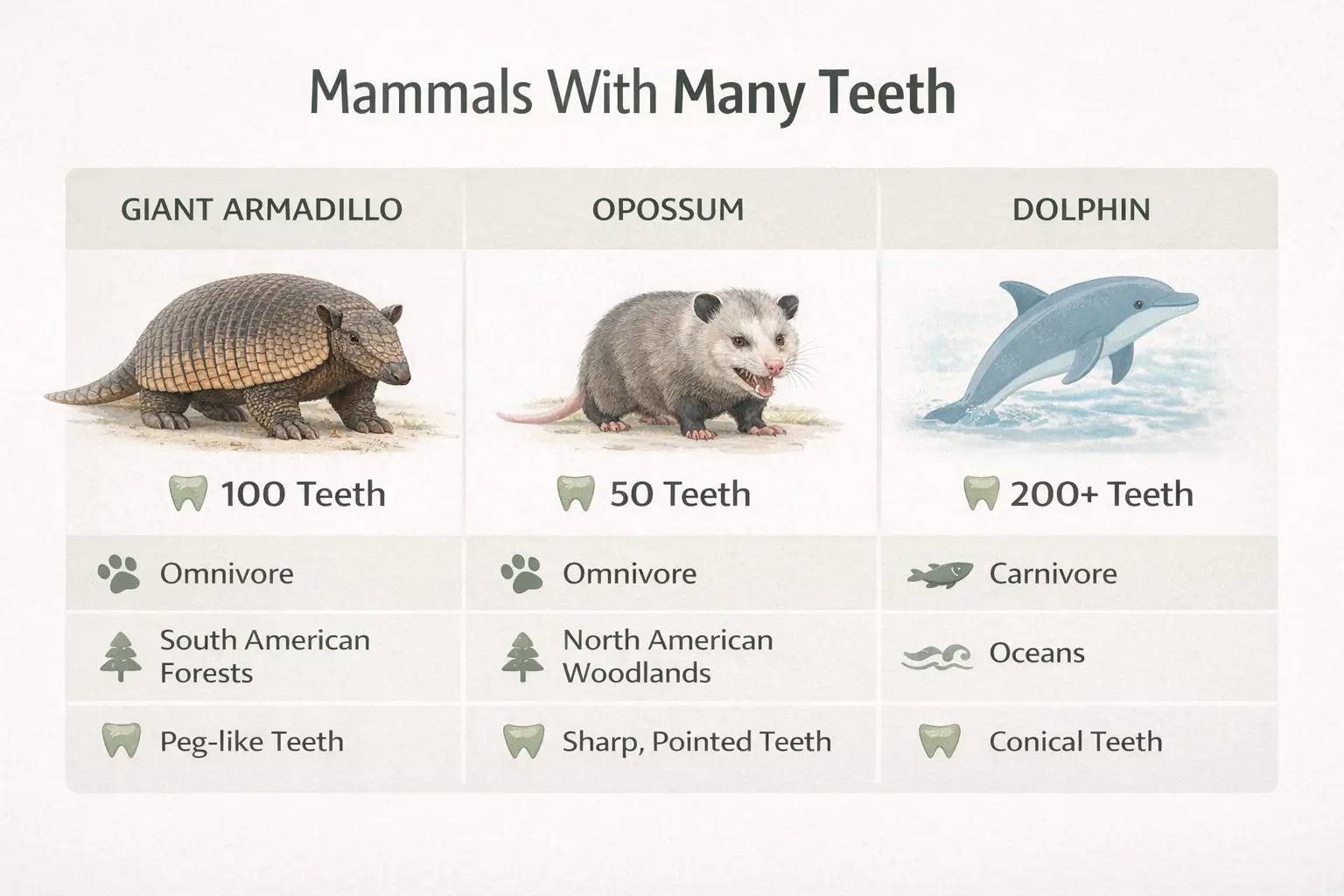
The mammal with the most teeth is the Giant Armadillo, with up to 100 teeth.
Key Characteristics
- Teeth count: 80–100 small, peg-like teeth
- Diet: Insects (especially ants and termites)
- Lifespan: 12–15 years in the wild
- Temperament: Solitary and nocturnal
- Habitat: South America
Why So Many Teeth?
Unlike carnivores or herbivores, armadillos don’t chew in the traditional sense. Their many simple teeth help them grind insects efficiently.
Other Notable Mammals With Many Teeth
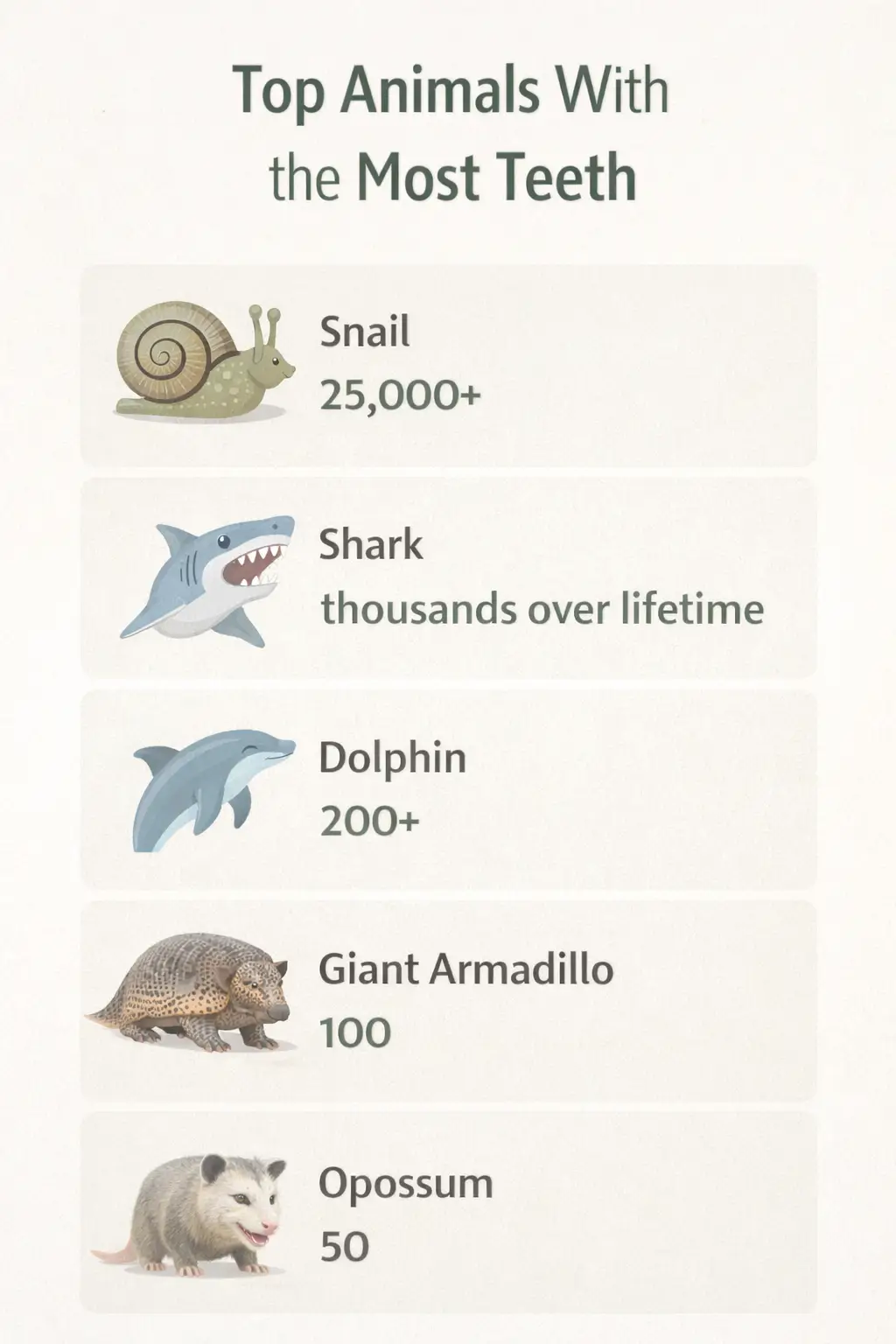
- Opossum – 50 teeth (highest in North America)
- Dolphins (some species) – up to 250 teeth (marine mammals)
Daily Care Essentials (Dental Focus for Pets)
Even though your pet likely doesn’t have 100 teeth, dental care is still critical.
Key Daily Habits
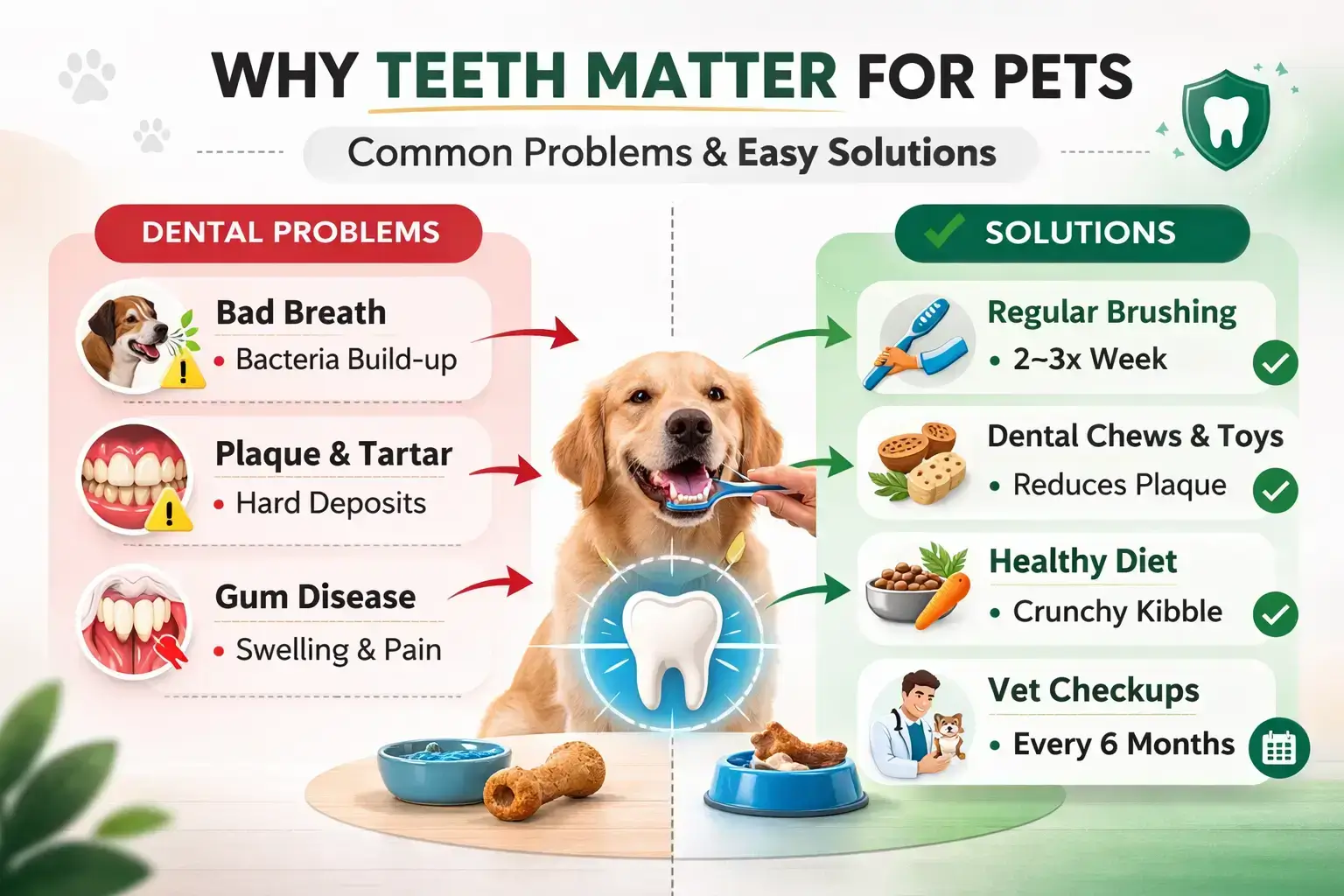
- Brush your pet’s teeth 2–3 times per week
- Provide chew toys or dental treats
- Monitor for bad breath or gum redness
- Schedule regular vet dental checkups
Why This Matters
Animals with many teeth (like armadillos or opossums) naturally process food differently—but domestic pets rely on owners to maintain dental health.
Diet & Nutrition Guide
Teeth and diet are deeply connected. Feeding the wrong diet can quickly lead to dental issues.
Feeding Basics
-
Dogs/Cats: Balanced commercial diet + occasional dental treats
-
Small mammals (rabbits, rodents): High-fiber foods to wear down teeth naturally
Age-Based Feeding
Young Pets:
- Soft but nutritious food
- Avoid hard chews too early
Adult Pets:
- Balanced diet with dental support
- Include crunchy kibble if appropriate
Senior Pets:
- Softer food if dental issues develop
- Regular dental exams become essential
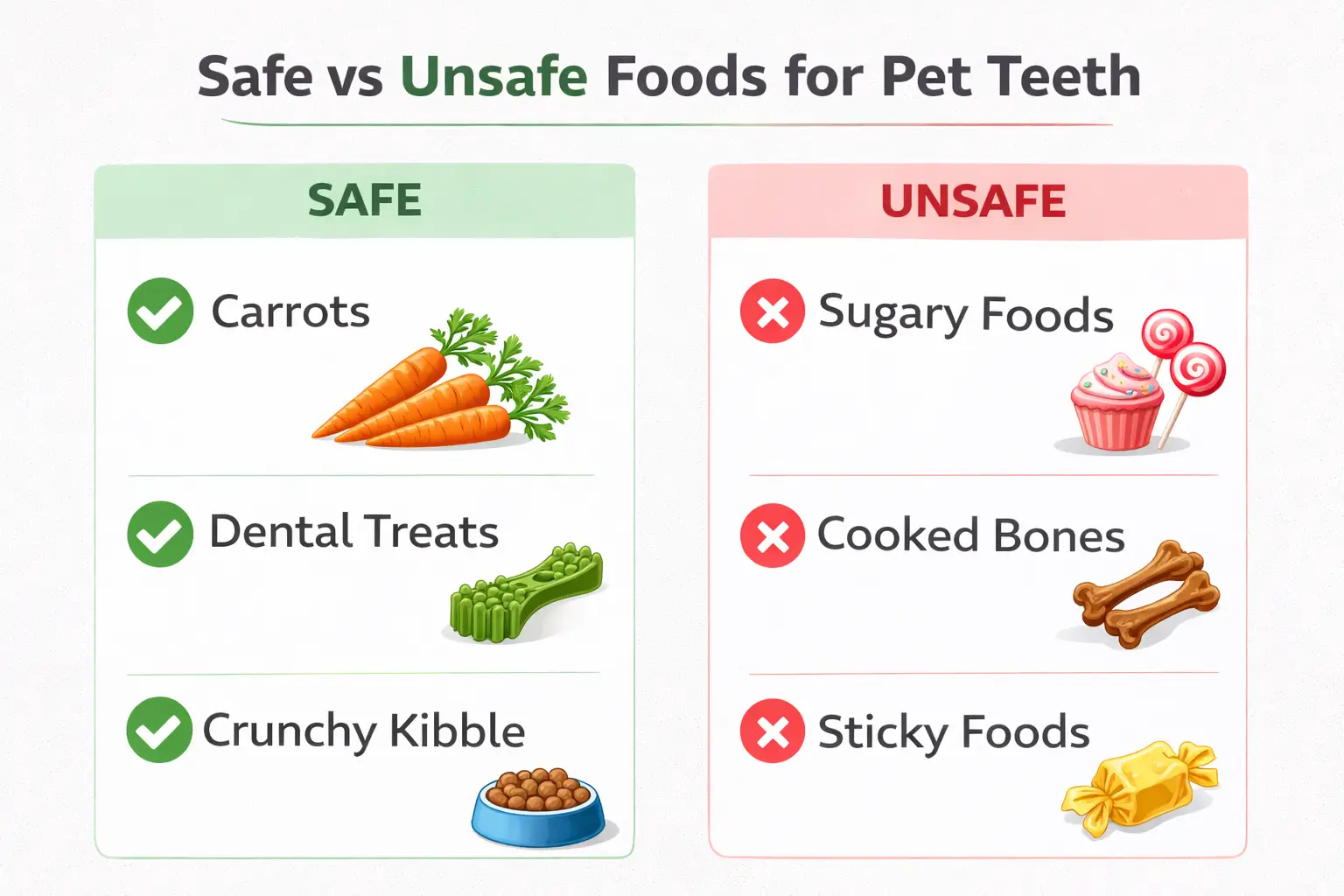
Safe vs Unsafe Foods
Safe:
- Carrots (for some pets)
- Dental chews
- Vet-approved treats
Unsafe:
- Sugary foods
- Cooked bones (can splinter)
- Sticky foods that cling to teeth
Exercise & Mental Stimulation
Animals with many teeth often use them actively—whether for grinding, catching prey, or exploring.
For Pets at Home
- Provide chew-based enrichment
- Rotate toys to prevent boredom
- Use food puzzles to encourage natural behaviors
Simple Activities
- Hide treats in toys
- Tug games (for dogs)
- Gnawing blocks (for rodents)
Training & Behavior Guidance
Teeth also influence behavior—especially biting or chewing.
Training Tips
- Teach bite inhibition early
- Redirect chewing to appropriate toys
- Reward calm, non-destructive behavior
Socialization
- Introduce pets to people and environments early
- Prevent fear-based biting
Health & Climate Considerations
Dental health is affected by environment and climate.
Key Factors
- Heat: Dehydration can worsen oral health
- Cold: Reduced activity may increase plaque buildup
- Humidity: Can encourage bacterial growth
Warning Signs of Dental Issues
- Bad breath
- Drooling
- Difficulty eating
- Swollen gums
Common Problems & Troubleshooting
Problem: Bad Breath
- Cause: Plaque buildup
- Solution: Regular brushing + dental treats
- Prevention: Weekly dental care routine
Problem: Excessive Chewing
- Cause: Boredom or teething
- Solution: Provide appropriate chew toys
- Prevention: Mental stimulation
Problem: Tooth Loss
- Cause: Poor diet or lack of care
- Solution: Vet visit immediately
- Prevention: Balanced diet + checkups
Seasonal Pet Care Tips
Spring
- Increase outdoor play
- Watch for allergies affecting gums
Summer
- Ensure hydration
- Avoid hot surfaces that reduce activity
Fall
- Adjust diet as activity changes
- Monitor chewing behavior
Winter
- Encourage indoor activity
- Maintain dental routines despite reduced exercise
Additional Expert Tips
- Start dental care early in life
- Never ignore mild symptoms—dental issues worsen quickly
- Use vet-approved products only
- Observe eating behavior—it often reveals hidden problems
Common Mistakes to Avoid
- Skipping dental care entirely
- Feeding only soft food
- Ignoring chewing needs
Conclusion
The answer to “what mammal has the most teeth” leads us to the fascinating giant armadillo—but the real takeaway for pet owners is much more practical.
Teeth play a crucial role in:
- diet
- behavior
- overall health
Whether your pet has 30 teeth or 50, proper dental care is essential. The most common mistakes—like ignoring brushing or feeding poor diets—can lead to long-term health problems.
Learn More: Roborovski Hamster Care Guide: Diet, Size, Lifespan & Tips
FAQs
-
What mammal has the most teeth in the world?
The giant armadillo holds the record among mammals, with up to 100 teeth.
-
Which land mammal has the most teeth in North America?
The opossum has the most, with 50 teeth.
-
Which animal has the most teeth: shark or snail?
Snails have the most teeth overall—thousands of microscopic teeth—far more than sharks.
-
What animal has 25,000 teeth?
Some snail species can have around 25,000 tiny teeth.
-
What sea mammal has the most teeth?
Certain dolphins can have over 200 teeth, making them the top marine mammals in this category.
-
What dinosaur has 500 teeth?
The dinosaur Nigersaurus is often called the “500 teeth dinosaur.”
-
Do any mammals have no teeth?
Yes, some mammals like anteaters lack teeth entirely and rely on long tongues to eat.




2 Responses