
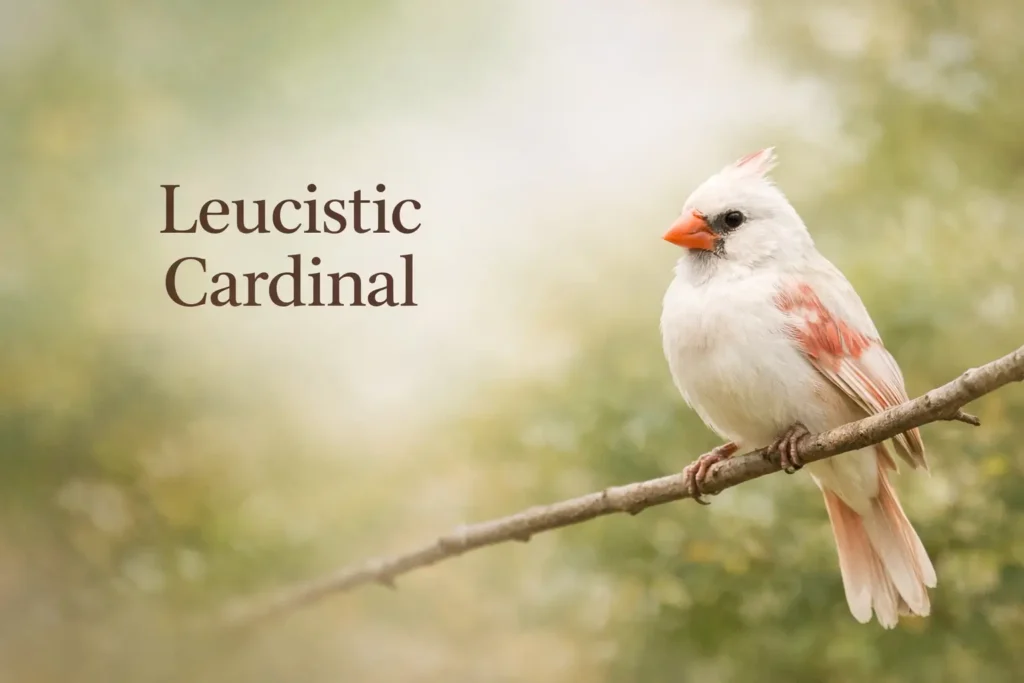
A leucistic cardinal is one of the rarest and most fascinating birds you might ever spot. Unlike the classic bright red northern cardinal, this bird appears white, pale cream, or patchy red-and-white due to a genetic condition called leucism.
This unique appearance makes people curious—not just about what it is, but what it means and how it survives in the wild. Many bird lovers even mistake it for an albino cardinal, which is a completely different condition.
Leucistic cardinals are not pets, but understanding them helps bird enthusiasts and backyard bird watchers care for wildlife responsibly and create bird-friendly environments.
Pet Care Insight
This guide is based on widely accepted pet care practices, birdwatching experience, and wildlife care recommendations. The goal is to provide practical, easy-to-follow advice for safely supporting birds in your environment.
Pet Overview
Physical Appearance Differences
Leucistic cardinals can look dramatically different from typical red cardinals:
- White or pale cream feathers
- Patches of red (partially leucistic cardinal)
- Normal eye color (unlike albino birds)
- Distinct crest like regular cardinals
A leucistic male cardinal may still show faint red coloring, while a leucistic female cardinal often appears softer in tone with light beige or white hues.
Temperament And Behavior
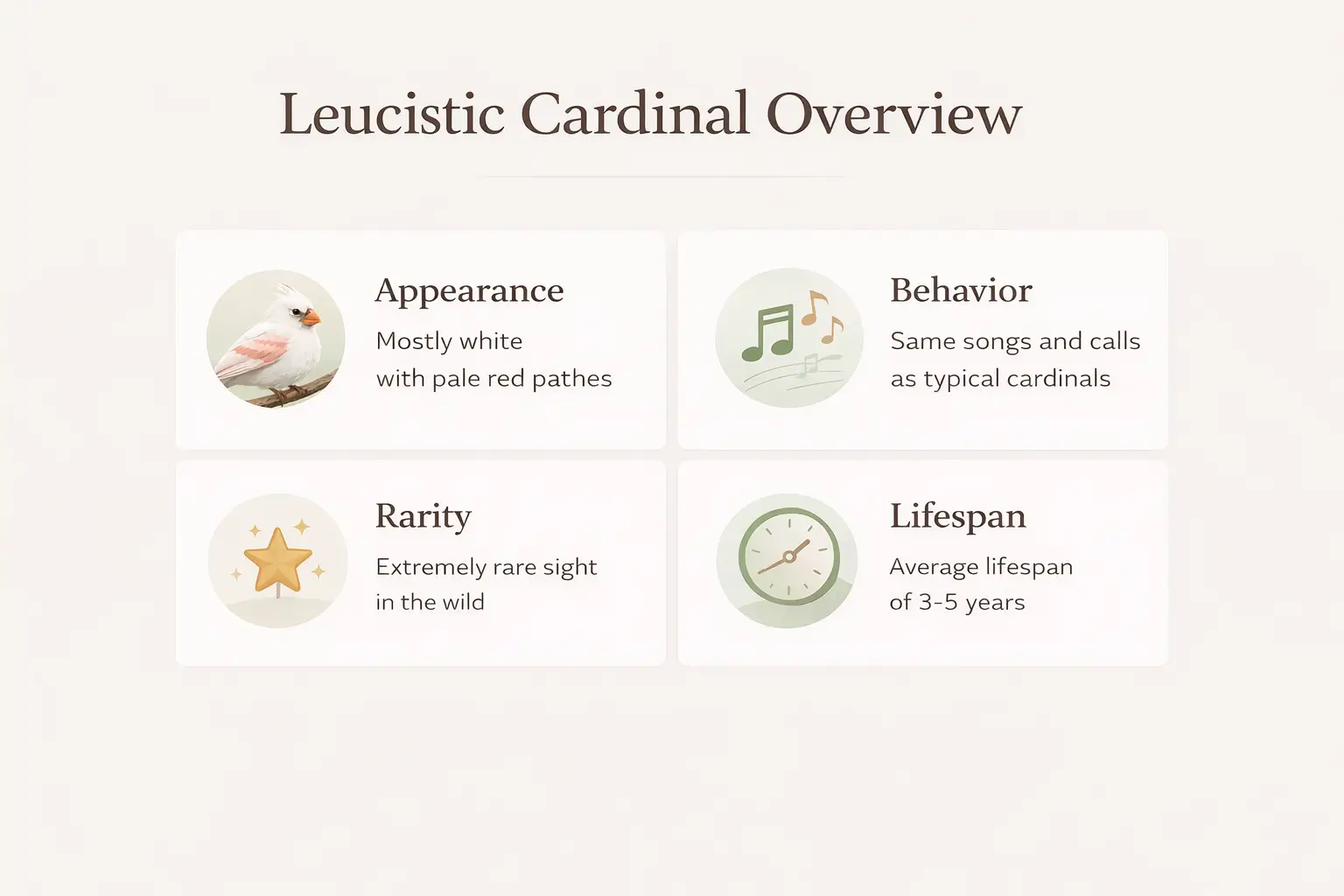
Despite their unusual appearance, their behavior is identical to normal northern cardinals:
- Calm and territorial
- Active during early morning and evening
- Known for their melodic whistle (leucistic cardinal call is the same as normal)
Lifespan And Survival
In the wild, cardinals typically live:
- 3–5 years on average
- Up to 10–15 years in ideal conditions
However, leucistic birds may face higher risks due to visibility to predators.
Family And Environment Suitability
Leucistic cardinals are:
- Safe around humans (wild birds)
- Non-aggressive toward people
- Ideal for backyard birdwatching environments
Daily Care Essentials (For Supporting Wild Cardinals)
Feeding Support Basics
If you want to attract or support a leucistic cardinal bird:
- Offer black oil sunflower seeds
- Provide safflower seeds (cardinal favorite)
- Add fresh water daily
Clean Feeding Areas
Keep feeders:
- Clean and mold-free
- Elevated to avoid predators
- Refilled regularly
Shelter And Safety
Provide:
- Dense shrubs or hedges
- Natural cover for nesting
- Quiet areas away from disturbances
Avoid Human Interference
Do not attempt to:
- Capture or domesticate
- Touch nests or chicks
- Feed processed human foods
Diet & Nutrition Guide
Natural Diet In The Wild
Leucistic northern cardinals eat the same as regular cardinals:
- Seeds (sunflower, millet)
- Fruits (berries)
- Insects (especially during breeding season)
Feeding Schedule Guidance
If feeding in your yard:
- Morning and late afternoon are peak feeding times
- Keep a consistent routine
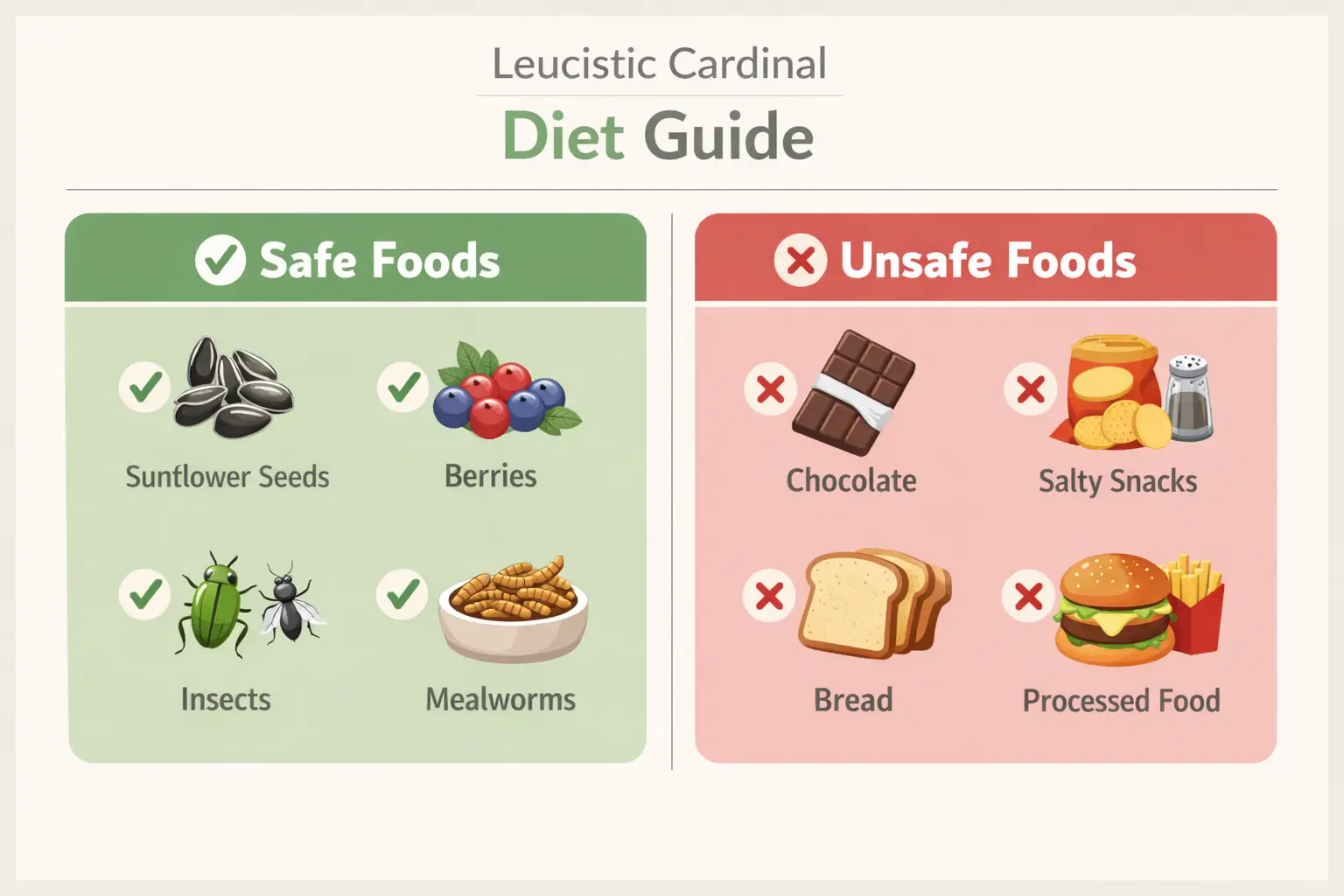
Safe Foods For Cardinals
- Sunflower seeds
- Cracked corn
- Fresh berries
- Mealworms
Unsafe Foods To Avoid
- Chocolate
- Salty snacks
- Bread (low nutrition)
- Processed human food
Juvenile Vs Adult Feeding Needs
- Young birds need more insects (protein-rich)
- Adults rely more on seeds and fruits
Exercise & Mental Stimulation
Natural Activity Patterns
Leucistic cardinals stay active by:
- Flying between trees
- Foraging on the ground
- Singing and defending territory
Encouraging Natural Behavior
You can support their activity by:
- Planting native shrubs
- Creating layered garden spaces
- Avoiding artificial distractions
Enrichment Through Habitat
Bird-friendly environments include:
- Bird baths
- Multiple feeding stations
- Natural perches
Training & Behavior Guidance
Understanding Wild Bird Behavior
You cannot train a leucistic cardinal, but you can:
- Observe behavior patterns
- Recognize feeding times
- Understand territorial singing
Socialization In Nature
Cardinals are:
- Often seen in pairs
- Protective of nesting areas
- Communicative through calls
Preventing Negative Interactions
Avoid:
- Loud disturbances
- Frequent human interference
- Removing natural habitat
Health & Climate Considerations
Seasonal Survival Challenges
Leucistic cardinals face extra risks:
- Higher visibility to predators
- Possible feather sensitivity
Heat Protection Tips
In hot climates:
- Provide shaded feeders
- Keep water fresh and cool
- Add shallow bird baths
Cold Weather Support
In winter:
- Offer high-energy foods (seeds)
- Keep feeders accessible
- Provide wind-protected areas
- Hydration Needs
Water is essential:
- Refresh daily
- Keep containers clean
- Ensure shallow depth
Common Problems & Troubleshooting
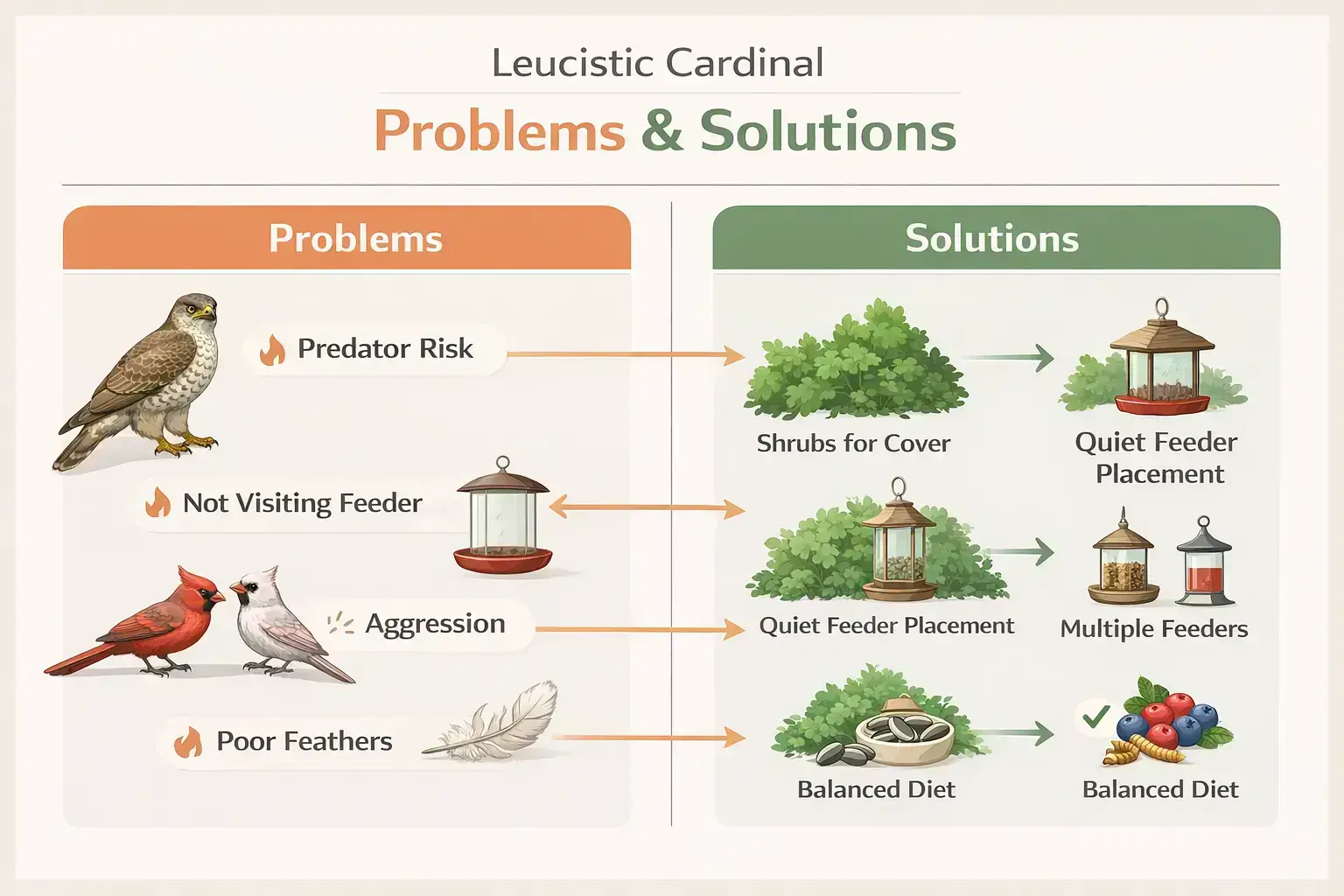
Problem: Bird Not Visiting Feeder
Cause:
-
Unsafe environment or noise
Solution:
-
Move feeder to a quiet area
Prevention:
-
Keep feeding consistent
Problem: Predator Threat
Cause:
-
Bright coloration (white leucistic cardinal stands out)
Solution:
-
Add shrubs for cover
Prevention:
-
Avoid open feeding zones
Problem: Aggressive Behavior
Cause:
-
Territorial instincts
Solution:
-
Add multiple feeders
Prevention:
-
Space out feeding stations
Problem: Poor Feather Condition
Cause:
-
Nutritional imbalance or environment
Solution:
-
Offer varied diet
Prevention:
-
Maintain clean feeding areas
Seasonal Pet Care Tips
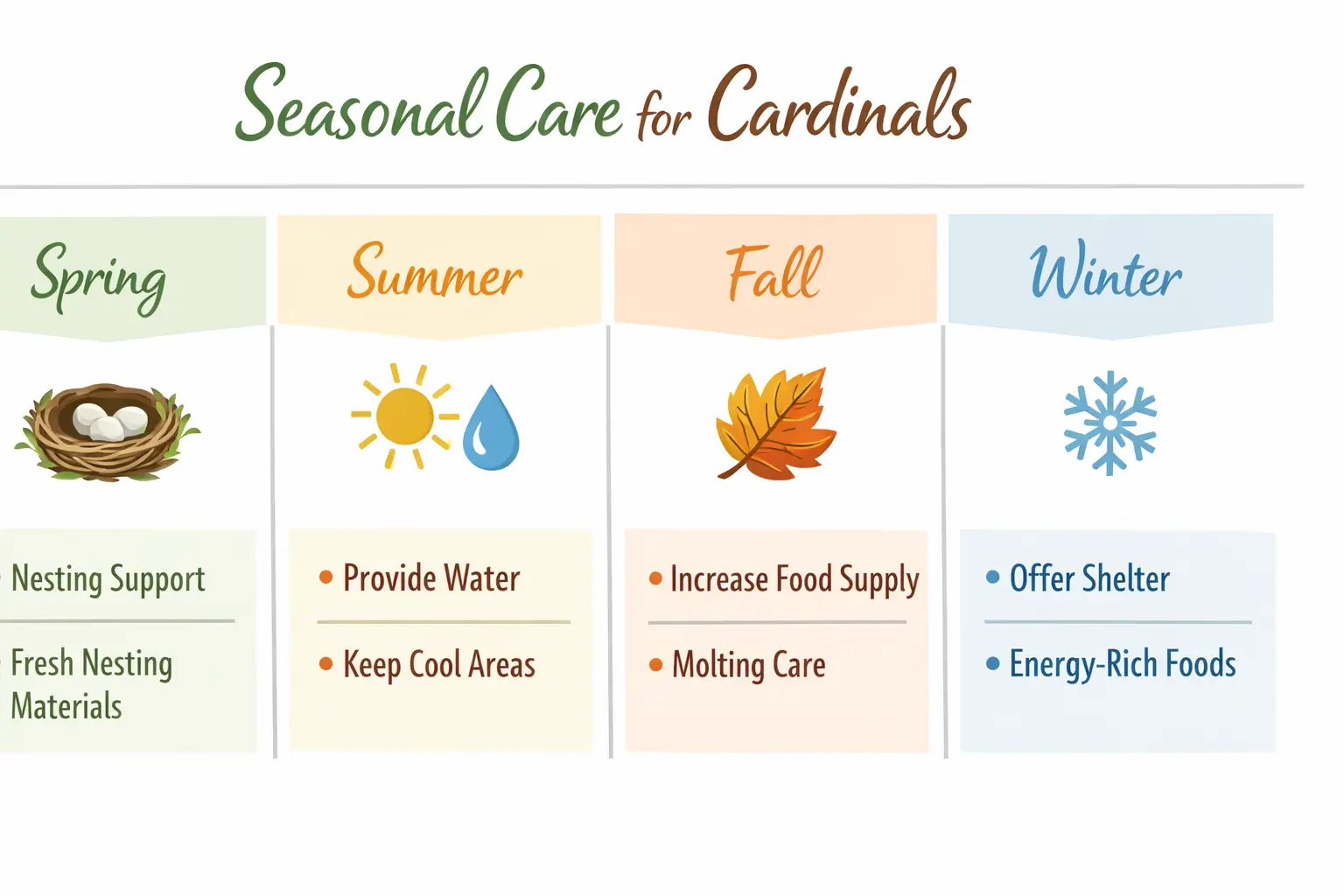
Spring Care Essentials
- Provide nesting materials
- Increase insect availability
- Minimize disturbance
Summer Care Essentials
- Ensure constant water supply
- Provide shade
- Watch for dehydration
Fall Care Essentials
- Increase food supply
- Prepare habitat for winter
- Maintain clean feeders
Winter Care Essentials
- High-fat seeds
- Ice-free water
- Shelter from wind
Additional Expert Tips
Understanding Leucistic Cardinal Meaning
Many people associate the white cardinal meaning with:
- Hope
- Spiritual messages
- Rare beauty in nature
While symbolic meanings vary, scientifically it simply reflects a pigment condition (leucistic color variation).
Albinism Vs Leucism Explained
- Leucism: Partial pigment loss (normal eyes)
- Albinism: Complete pigment loss (red/pink eyes)
This is why a leucistic albino cardinal is not the same thing.
How Rare Is A Leucistic Cardinal
They are extremely rare:
- Occur in a tiny percentage of birds
- Sightings are uncommon and special
Common Mistakes Bird Lovers Make
- Trying to capture the bird
- Feeding harmful foods
- Ignoring feeder hygiene
Conclusion
Leucistic cardinals are rare, beautiful variations of the northern cardinal that capture attention with their unusual white or patchy appearance. While they don’t require direct care like pets, responsible bird-friendly practices can help support their survival.
The most important things to remember:
- Provide safe food and clean water
- Create a protective natural habitat
- Avoid disturbing wild birds
By respecting their wild nature and supporting their environment, you can enjoy the presence of these unique birds while helping them thrive safely.
Learn More: White Siamese Cat Care Guide: Personality, Diet & Tips
FAQs
-
What is a leucistic cardinal?
A leucistic cardinal is a northern cardinal with partial pigment loss, giving it white or pale feathers instead of the usual red color.
-
How rare is a leucistic cardinal?
They are extremely rare and only appear in a small percentage of the cardinal population.
-
What is the difference between leucistic and albino cardinals?
Leucistic birds have normal eye color and partial pigment loss, while albino birds lack all pigment and have red or pink eyes.
-
Do leucistic cardinals behave differently?
No, their behavior, diet, and calls are the same as regular cardinals.
-
What does a white cardinal mean spiritually?
Many people see it as a symbol of hope, purity, or a spiritual message, though this is based on personal beliefs.
-
Can you keep a leucistic cardinal as a pet?
No, they are wild birds and should not be captured or domesticated.
-
How can I attract a leucistic cardinal to my yard?
Provide sunflower seeds, fresh water, and dense shrubs to create a safe and welcoming environment.




2 Responses