
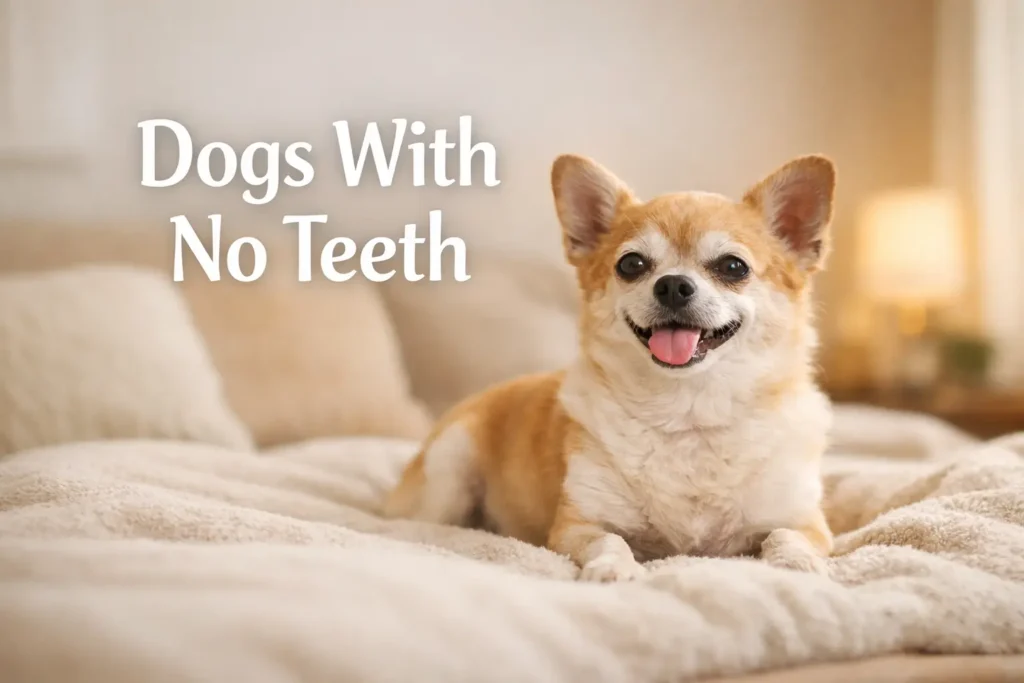
Dogs can live long, happy lives even without teeth. Whether due to age, dental disease, or surgery, many pet owners find themselves caring for a toothless dog and wondering how to adjust daily routines. The good news is that with the right care, dogs with no teeth can still eat well, play, and enjoy life just like any other dog.
What makes caring for a dog without teeth unique is the need to adjust feeding, comfort, and enrichment. Common mistakes include offering hard food, skipping oral hygiene, or assuming the dog is in pain all the time. With a few simple changes, your dog can thrive.
Pet Care Insight
This guide is based on widely accepted pet care practices, veterinary guidance, and common experiences shared by responsible pet owners. The goal is to provide practical, easy-to-follow advice that helps owners keep their pets healthy, comfortable, and well cared for.
Pet Overview
What Makes Toothless Dogs Unique
Dogs with no teeth are often senior pets or those who’ve had dental issues. Despite their appearance, including the classic dog with no teeth tongue sticking out, they usually adapt very well.
Temperament And Behavior
Most toothless dogs remain affectionate, playful, and social. In fact, many become more comfortable after painful teeth are removed.
Lifespan And Quality Of Life
The quality of life for dogs with no teeth is generally excellent when properly cared for. They can live just as long as dogs with teeth.
Physical Characteristics
You may notice:
- Tongue sticking out (common in dogs without front teeth)
- Softer jaw appearance
- Preference for softer textures
Family Suitability
Toothless dogs are great for families, seniors, and even homes with children—as long as feeding routines are adjusted.
Daily Care Essentials
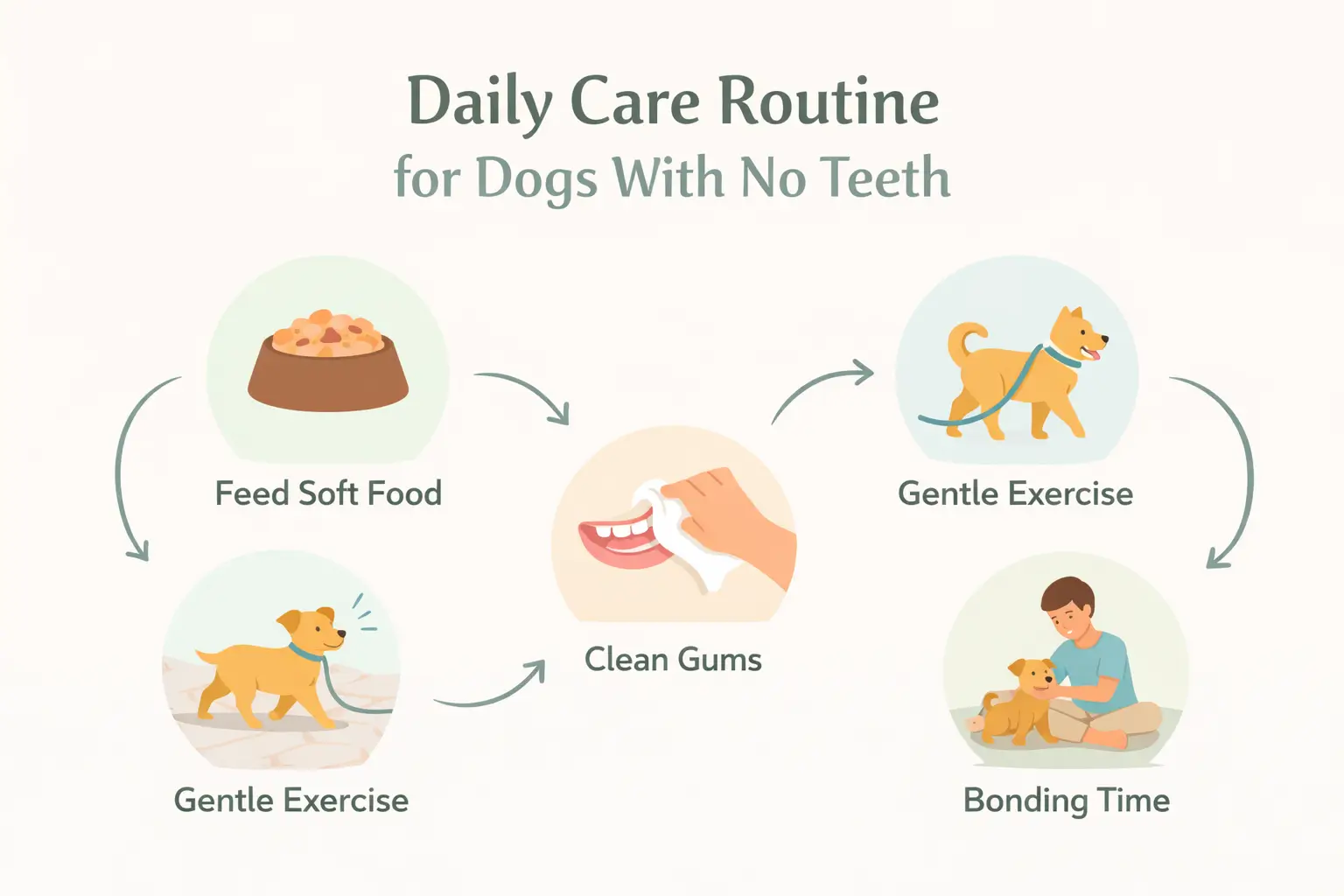
Feeding Routine Basics
Dogs with no teeth food should always be soft, moist, and easy to swallow.
Daily routine:
- Feed 2–3 small meals
- Use soft or mashed food
- Ensure constant access to fresh water
Grooming And Hygiene
Even without teeth, oral care matters:
- Wipe gums gently with a soft cloth
- Check for redness or swelling
- Keep mouth clean to avoid infections
Exercise Needs
Toothless dogs still need daily activity:
- Short walks
- Gentle play sessions
- Indoor movement for seniors
Social Interaction Needs
Dogs without teeth often crave attention:
- Spend time bonding daily
- Offer gentle affection
- Avoid rough play with other pets
Diet & Nutrition Guide
Feeding Schedule And Portions
- Puppies: Soft puppy food 3–4 times daily
- Adults: 2 meals daily
- Seniors: Smaller, more frequent meals
Portions depend on weight, age, and activity level.
Best Food Types For Dogs With No Teeth
Soft food for dogs with no teeth includes:
- Wet dog food
- Soaked kibble
- Mashed vegetables
- Soft meats like chicken or fish
Homemade Food Options
Homemade food for dogs with no teeth can be a great option:
Simple dog food recipe:
- Boiled chicken (shredded)
- Cooked rice or sweet potato
- Steamed carrots or pumpkin
Blend or mash for easy eating. Soft food for dogs with no teeth includes wet dog food, soaked kibble, mashed vegetables, and soft meats like chicken or fish. For a complete, filterable comparison of soft meals, feeding setups, and enrichment options, check out this toothless dog care lookup tool to plan routines that suit your dog’s exact needs. Homemade food for dogs with no teeth can be a great option, using boiled chicken, cooked rice, and steamed vegetables blended for easy eating. For more recipe ideas and senior-specific meal plans, browse this soft food database for toothless senior dogs for additional formulas.
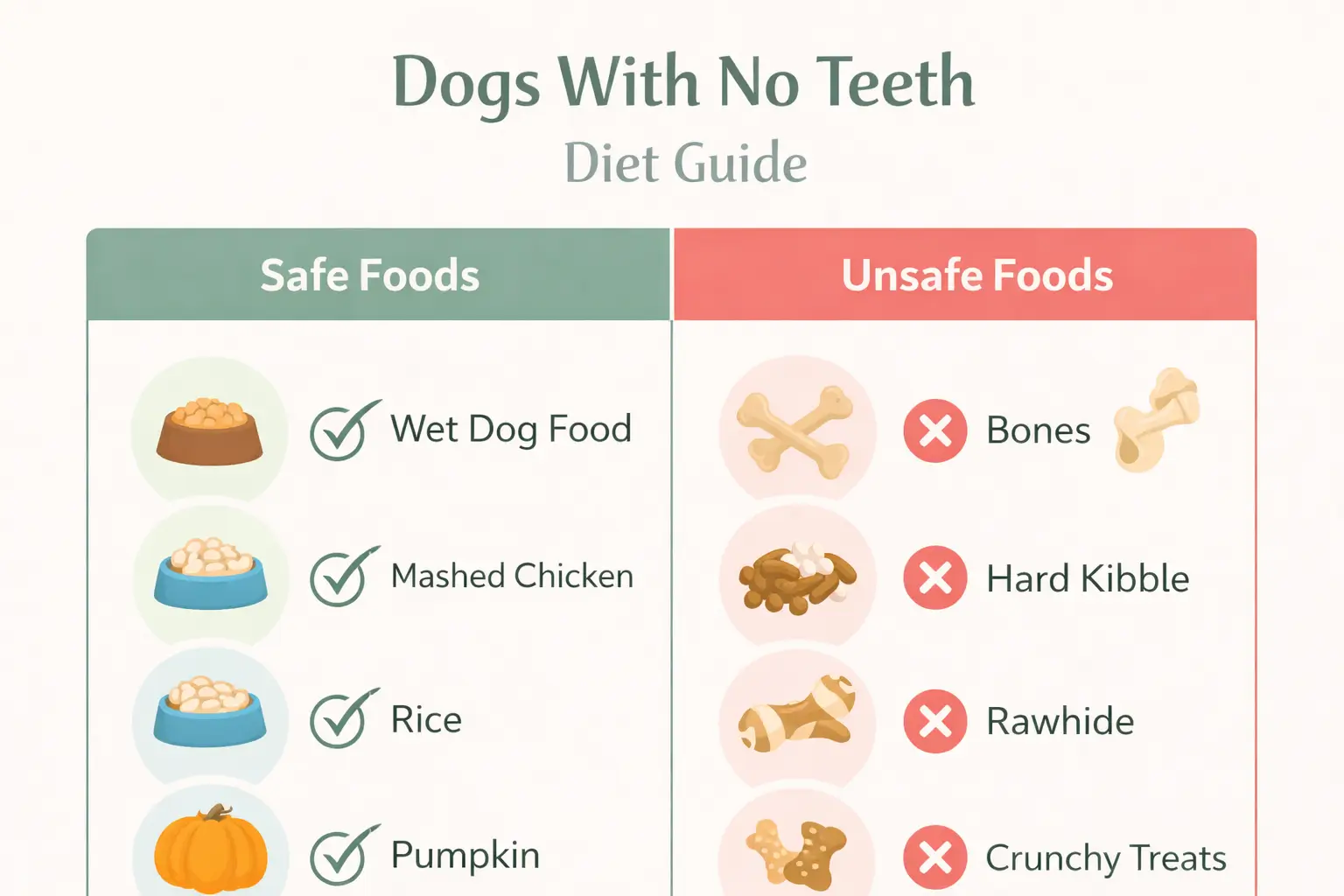
Safe Vs Unsafe Foods
Safe:
- Soft proteins (chicken, fish)
- Cooked vegetables
- Rice, oats
Safe options include soft proteins, cooked vegetables, and rice, while hard kibble, bones, and spicy foods should be avoided entirely. For a full side-by-side list, this toothless dog food database spreadsheet tracks safe and unsafe items in one sortable sheet.
Unsafe:
- Hard kibble (unless soaked)
- Bones or hard chews
- Spicy or salty foods
Treats For Dogs With No Teeth
Soft treats for dogs with no teeth:
- Mashed banana
- Soft commercial treats
- Homemade treats (oat + pumpkin mix)
Exercise & Mental Stimulation
Daily Activity Needs
Even toothless dogs need stimulation:
- 20–40 minutes of light activity daily
- Adjust based on age
Safe Play Ideas
- Gentle fetch with soft toys
- Slow tug (with supervision)
- Indoor obstacle walking
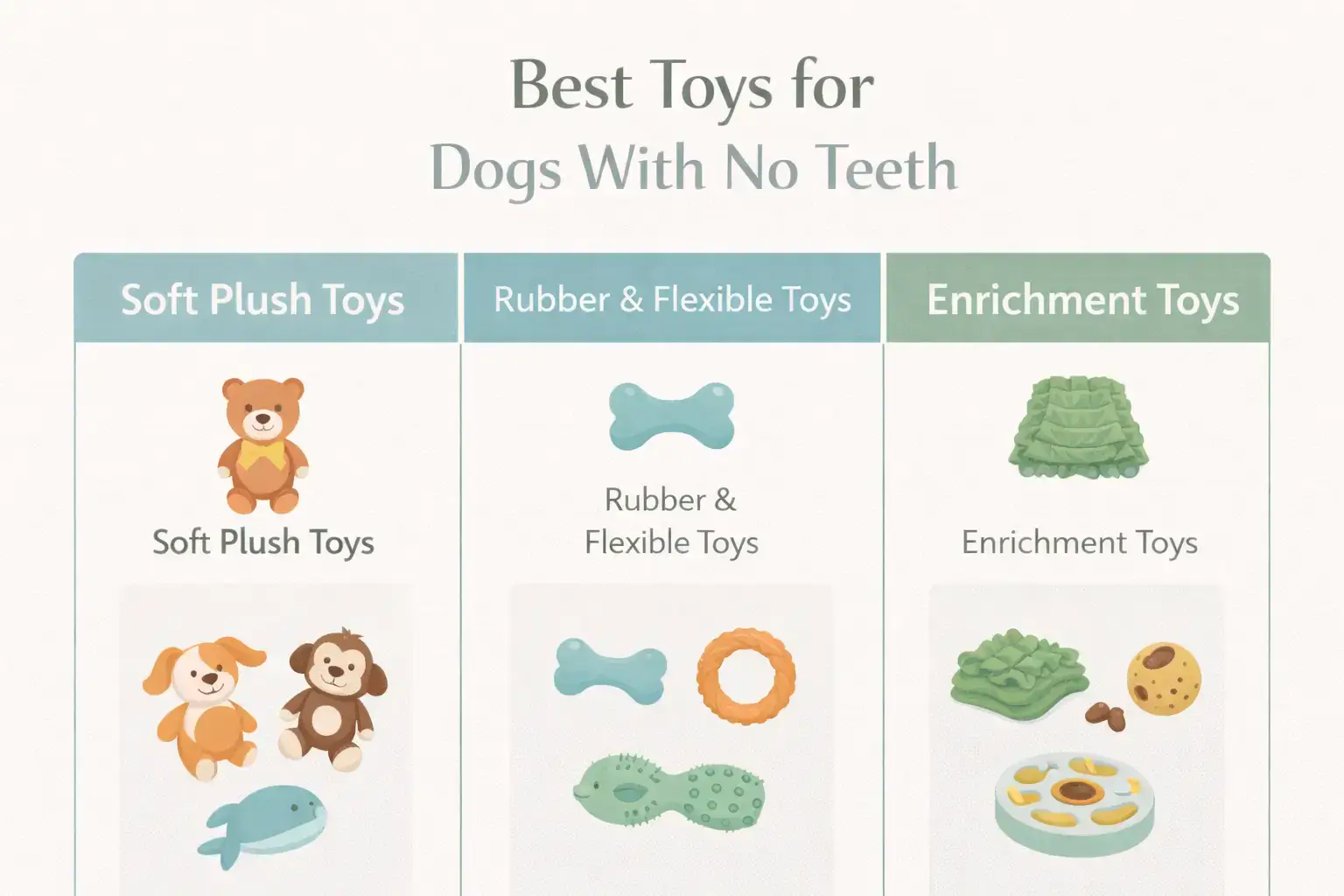
Toys For Dogs With No Teeth
Choose:
- Soft plush toys
- Rubber toys without hardness
- Snuffle mats for mental stimulation
Avoid:
- Hard chew toys
- Bones or rigid rubber items
Training & Behavior Guidance
Basic Training Tips
Toothless dogs respond well to:
- Positive reinforcement
- Soft treats as rewards
- Short training sessions
Socialization Advice
- Introduce slowly to other pets
- Avoid aggressive dogs
- Monitor playtime
Preventing Behavior Issues
Common issues:
- Food guarding (due to vulnerability)
- Anxiety in older dogs
Solutions:
- Feed in a calm environment
- Maintain routine
- Provide reassurance
Health & Climate Considerations
Oral And General Health
Even without teeth, watch for:
- Gum infections
- Bad breath
- Drooling
Hydration Needs
Soft diets may reduce water intake awareness, so:
- Always provide fresh water
- Add water to meals if needed
Hot Weather Care
Dogs with no teeth (often seniors) are sensitive to heat:
- Keep them cool
- Avoid midday walks
- Provide shaded rest areas
Cold Weather Care
- Keep them warm indoors
- Use bedding or blankets
- Limit exposure to cold surfaces
Common Problems & Troubleshooting
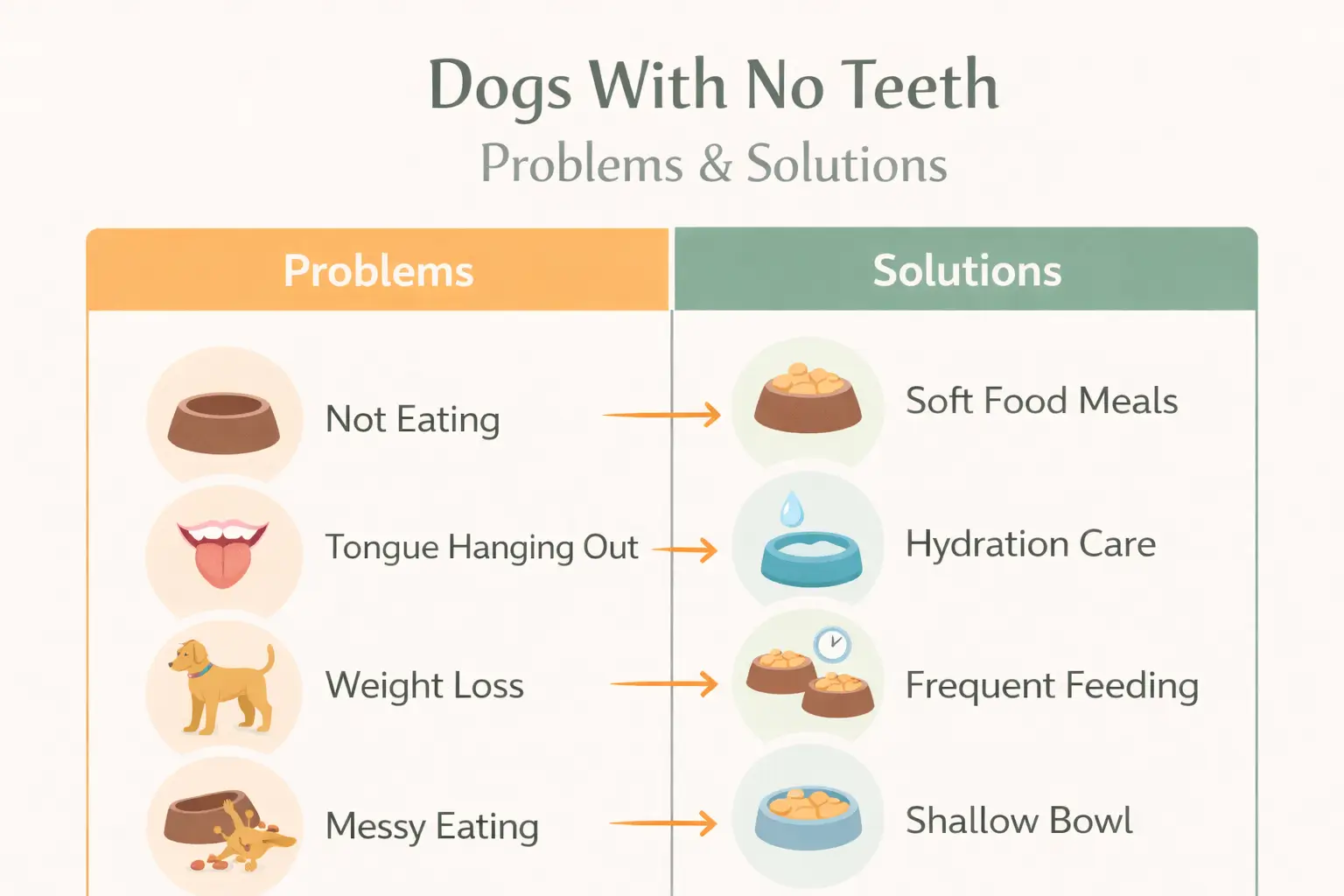
Eating Difficulties
Cause:
-
Food too hard
Solution:
-
Switch to soft or blended meals
Prevention:
-
Always test food texture
Tongue Hanging Out
(dog with tongue sticking out / dogs tongue out)
Cause:
-
Missing front teeth
Solution:
- Usually harmless
- Keep tongue moist
Prevention:
-
Ensure hydration
Weight Loss
Cause:
-
Not eating enough
Solution:
- Increase meal frequency
- Use calorie-dense soft foods
Prevention:
-
Monitor weight weekly
Messy Eating
Cause:
-
Lack of chewing control
Solution:
- Use shallow bowls
- Serve thicker food consistency
Prevention:
-
Choose proper feeding tools
Low Activity
Cause:
-
Age or discomfort
Solution:
- Encourage gentle play
- Check with vet
Prevention:
-
Maintain routine activity
Seasonal Pet Care Tips
Spring Care Tips
- Watch for allergies
- Increase outdoor time gradually
Summer Care Tips
- Prevent overheating
- Offer hydrating meals
Fall Care Tips
- Maintain routine exercise
- Prepare for colder weather
Winter Care Tips
- Keep warm indoors
- Use indoor enrichment toys
Additional Expert Tips
Common Owner Mistakes
- Feeding hard food
- Ignoring gum health
- Overfeeding soft treats
Simple Habits That Help
- Stick to routine
- Monitor eating behavior
- Keep meals soft and nutritious
Long-Term Care Advice
- Regular vet checkups
- Weight management
- Comfortable feeding setup
Conclusion
Dogs with no teeth can live happy, comfortable, and fulfilling lives with just a few adjustments. The most important things are providing soft, nutritious food, maintaining good hygiene, and ensuring emotional comfort. Many owners are surprised at how quickly their dogs adapt and even thrive without teeth.
Avoid common mistakes like feeding hard food or ignoring subtle health changes. With consistent care and attention, your toothless dog can enjoy excellent quality of life for years to come.
Learn More: Leucistic Cardinal Guide: Meaning, Rarity & Care Tips
FAQs
-
Can a dog live without teeth?
Yes, dogs can live perfectly fine without teeth and often feel better after dental removal.
-
What should I feed dogs with no teeth?
Soft food like wet dog food, mashed meals, or homemade blends works best.
-
Why do dogs with no teeth have their tongue out?
Without front teeth, the tongue lacks support and may stick out naturally.
-
Are treats safe for toothless dogs?
Yes, but only soft treats or homemade options that are easy to chew.
-
How do I help my dog eat without teeth?
Serve soft, moist food and use shallow bowls for easier access.
-
Do dogs with no teeth need toys?
Yes, but choose soft toys designed for gentle play and mental stimulation.
-
Is quality of life for dogs with no teeth good?
Absolutely. With proper care, they can live happy, healthy lives just like other dogs.



2 Responses