
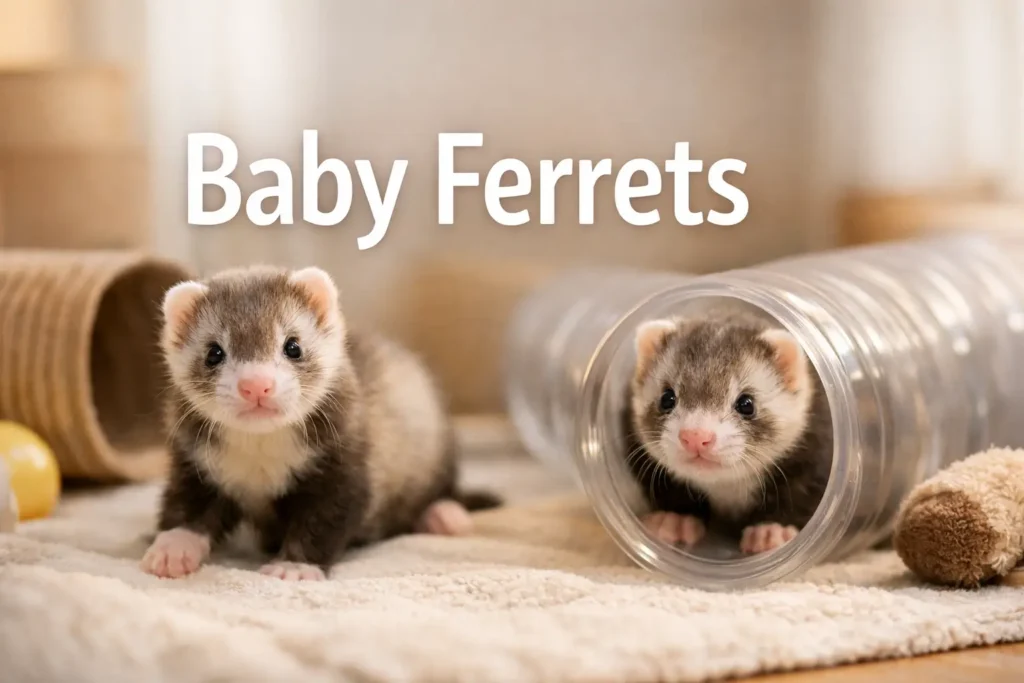
Baby ferrets are playful, curious, and incredibly entertaining pets that quickly win over new owners. Their energetic personalities and affectionate nature make them popular among small pet lovers. However, caring for baby ferrets requires more attention than many people expect. They have specific dietary needs, high energy levels, and unique behaviors that can surprise first-time owners.
Many beginners assume ferrets are low-maintenance like hamsters—but in reality, they require daily interaction, proper nutrition, and a safe environment. Understanding their needs early helps prevent common mistakes like improper feeding or lack of stimulation.
Pet Care Insight
This guide is based on widely accepted pet care practices, veterinary guidance, and common experiences shared by responsible pet owners. The goal is to provide practical, easy-to-follow advice that helps owners keep their pets healthy, comfortable, and well cared for.
Pet Overview
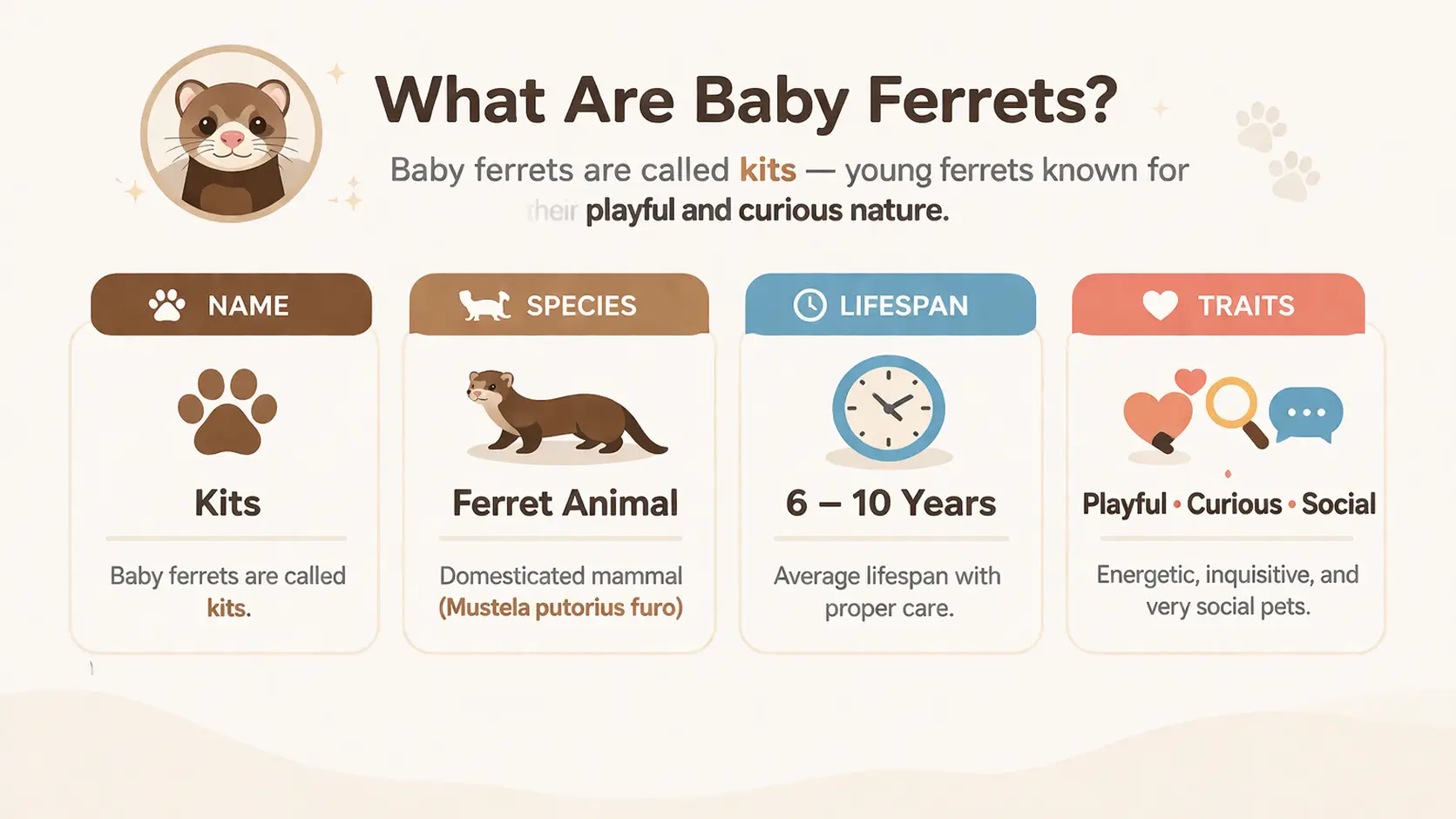
Baby ferrets, also called kits, are small carnivorous mammals known for their playful and mischievous nature. If you’re wondering what are baby ferrets called, the answer is “kits.”
Temperament And Personality
Baby ferrets are energetic, curious, and social. They love exploring, playing, and interacting with their owners. They can also be a bit mischievous and may get into small spaces.
Lifespan And Growth
A typical ferret lifespan ranges from 6 to 10 years. Baby ferrets grow quickly and reach adulthood within their first year.
Physical Appearance Details
If you’ve seen pictures of baby ferrets, you’ll notice their soft fur, small bodies, and bright eyes. They are born blind and deaf, and when do baby ferrets open their eyes? Usually around 3–4 weeks of age.
Family Suitability Factors
Ferrets can be good family pets but are better suited for older children who understand gentle handling. They require supervision around very young kids.
Activity Level Overview
Ferrets are highly active and need several hours of playtime daily. They sleep a lot (up to 18 hours), but when awake, they are full of energy.
Compatibility With Other Pets
They can live with other ferrets happily but may not get along with small pets like birds or rodents due to their natural hunting instincts.
Daily Care Essentials
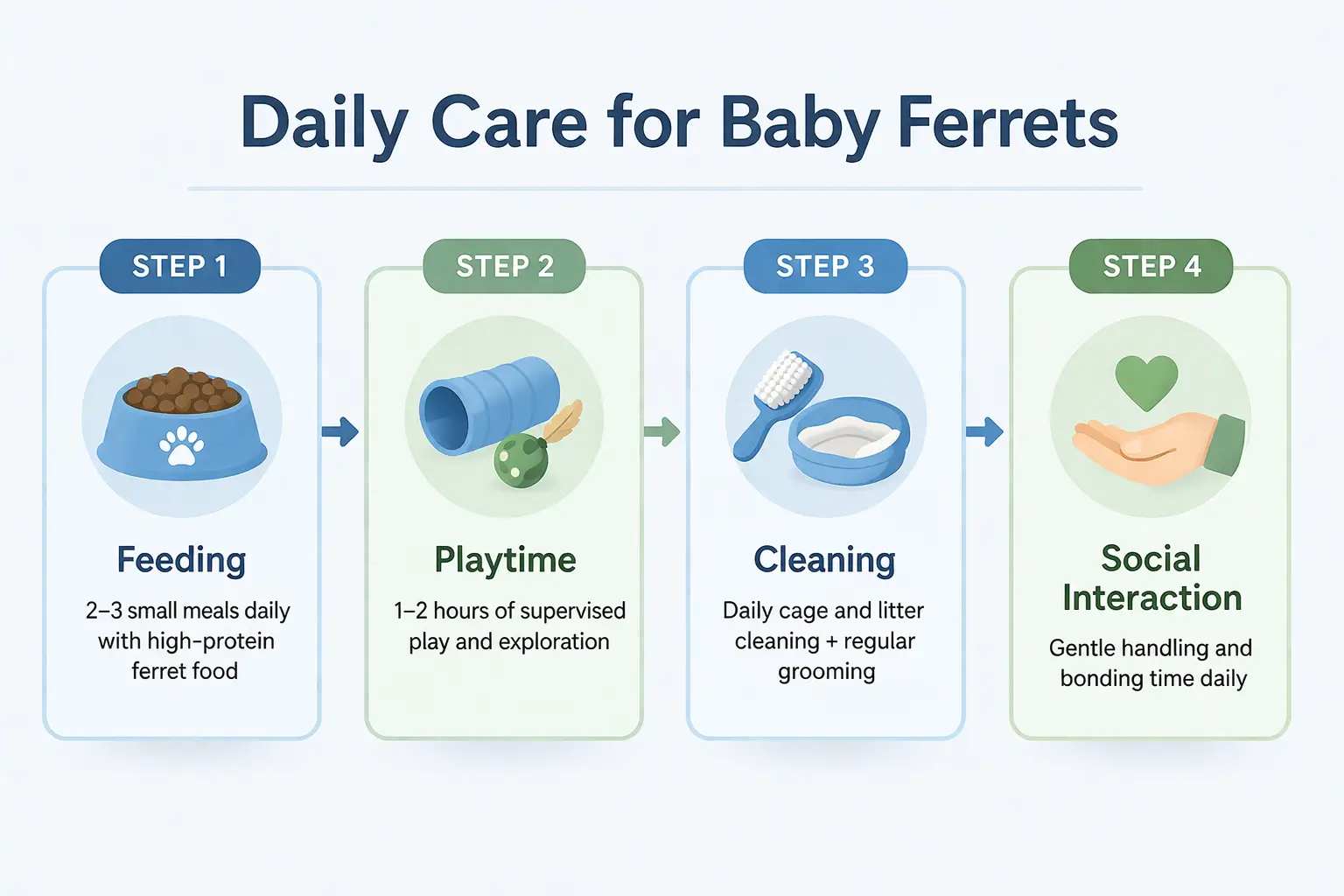
Caring for baby ferrets involves consistent routines and attention.
Feeding Routine Basics
Feed baby ferrets multiple small meals throughout the day. They have fast metabolisms and need frequent nutrition.
Grooming And Hygiene Care
Ferrets groom themselves, but occasional baths (once a month) and nail trimming are necessary. Clean their bedding regularly.
Exercise And Play Needs
Allow at least 2–4 hours of supervised playtime outside the cage daily. Ferrets love tunnels, toys, and exploring.
Social Interaction Importance
Ferrets are social animals and can become lonely or depressed if left alone too often. Daily interaction is essential.
Diet & Nutrition Guide

Understanding what do baby ferrets eat is critical for their health.
Baby Ferret Feeding Needs
Baby ferrets require a high-protein, meat-based diet. Their digestive systems are designed for animal protein.
Recommended foods include:
- High-quality ferret food
- Raw or cooked meat (chicken, turkey)
- Specialized baby food for ferrets
Adult Ferret Diet Needs
An adult ferret continues to need a protein-rich diet with minimal carbohydrates.
Senior Ferret Nutrition Changes
Older ferrets may require softer foods and adjusted portions depending on their health.
Safe Foods For Ferrets
- Chicken and turkey
- Lamb
- Eggs (occasionally)
- High-protein ferret kibble
Unsafe Foods To Avoid
- Chocolate
- Dairy products
- Fruits and sugary foods
- Grains and processed human food
Ferrets are obligate carnivores, so feeding them plant-based foods can lead to health issues.
Exercise & Mental Stimulation
Baby ferrets need both physical and mental engagement.
Daily Activity Requirements
At least 2–4 hours of activity outside their cage is essential for healthy development.
Indoor Play Ideas
- Tunnels and tubes
- Ball pits
- Hide-and-seek games
Enrichment Activities
Rotate toys regularly to keep them interested. Puzzle toys and scent-based games are great options.
Training & Behavior Guidance
Ferrets can be trained with patience and consistency.
Basic Training Techniques
- Use litter boxes in corners
- Reward good behavior with treats
- Keep training sessions short
Socialization Tips
Introduce them gently to new environments and people. Early socialization helps reduce fear and aggression.
Preventing Behavior Problems
Ferrets may nip during play. Redirect this behavior with toys and avoid rough handling.
Health & Climate Considerations
Ferrets are sensitive to environmental conditions.
Common Health Concerns
- Digestive issues
- Adrenal disease
- Dental problems
Regular vet visits are important for early detection.
Heat Sensitivity Care
Ferrets are prone to heat stress. Keep them in cool environments, especially in warmer regions.
Cold Weather Adjustments
While they tolerate mild cold, ensure they have warm bedding and a draft-free space.
Hydration Importance
Always provide fresh, clean water. Dehydration can occur quickly in ferrets.
Common Problems & Troubleshooting
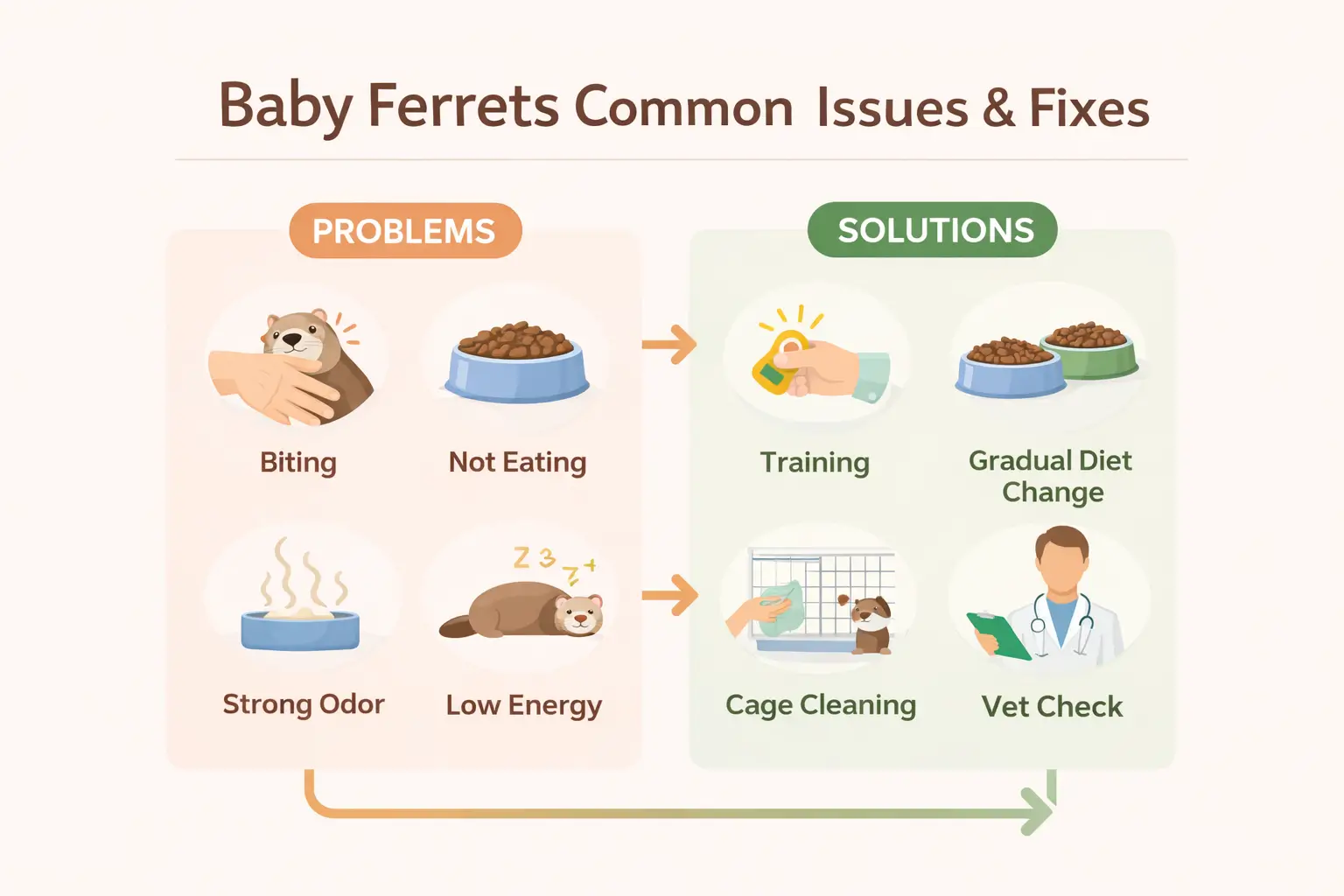
New owners often face similar challenges.
Biting During Play
- Cause: Overexcitement or lack of training
- Solution: Redirect to toys and avoid hand play
- Prevention: Early training and gentle interaction
Refusing To Eat
- Cause: Sudden diet change or stress
- Solution: Introduce new food gradually
- Prevention: Maintain consistent feeding routine
Strong Odor Issues
- Cause: Poor hygiene or dirty bedding
- Solution: Clean cage regularly
- Prevention: Weekly cleaning routine
Lethargy Or Low Energy
- Cause: Illness or lack of stimulation
- Solution: Check environment and consult a vet
- Prevention: Provide regular playtime and balanced diet
Seasonal Pet Care Tips
Spring Care Tips
- Watch for seasonal allergies
- Increase supervised outdoor exploration
Summer Safety Measures
- Keep environment cool
- Avoid direct heat exposure
- Provide extra water
Fall Routine Adjustments
- Maintain activity levels
- Monitor changes in appetite
Winter Care Essentials
- Provide warm bedding
- Increase indoor enrichment activities
Additional Expert Tips
- Always ferret-proof your home to prevent accidents
- Avoid feeding sugary treats
- Keep dangerous items out of reach
- Spend time bonding daily to build trust
- Monitor weight and eating habits regularly
Many new owners underestimate how curious ferrets are—they can squeeze into tiny spaces, so safety-proofing your home is essential.
Conclusion
Baby ferrets are rewarding but demanding pets that thrive with proper care, attention, and understanding. Their playful nature and strong personalities make them wonderful companions, but they require commitment, especially in terms of diet, exercise, and social interaction.
Avoid common mistakes like improper feeding, lack of stimulation, or ignoring early signs of health issues. With the right care approach, your ferret can live a happy, active, and healthy life.
Learn More: Persian Cat Tortoiseshell Care Guide & Personality
FAQs
-
What are baby ferrets called?
Baby ferrets are called kits.
-
What do baby ferrets eat?
They eat a high-protein, meat-based diet such as ferret food and cooked meats.
-
When do baby ferrets open their eyes?
They usually open their eyes at around 3–4 weeks old.
-
How long do ferrets live?
Ferrets typically live between 6 and 10 years.
-
How much exercise do ferrets need daily?
They need at least 2–4 hours of playtime outside their cage.
-
Are ferrets good pets for beginners?
They can be, but they require time, patience, and proper care knowledge.
-
Why is my ferret biting me?
It may be due to playfulness, fear, or lack of training. Gentle correction and redirection help reduce this behavior.




One Response