
Caring for a yellow quaker parrot can be an incredibly rewarding experience, especially for bird lovers who want a playful, intelligent, and talkative companion. These parrots stand out due to their bright coloration and charming personality, but they also require consistent care, mental stimulation, and attention.
Many new owners underestimate how social and active quaker parrots are. Without proper engagement, they can develop behavioral issues like screaming or feather plucking. Understanding their needs early helps you raise a happy, well-adjusted bird.
Pet Care Insight
This guide is based on widely accepted pet care practices, veterinary guidance, and common experiences shared by responsible pet owners. The goal is to provide practical, easy-to-follow advice that helps owners keep their pets healthy, comfortable, and well cared for.
Pet Overview
Temperament And Personality Traits
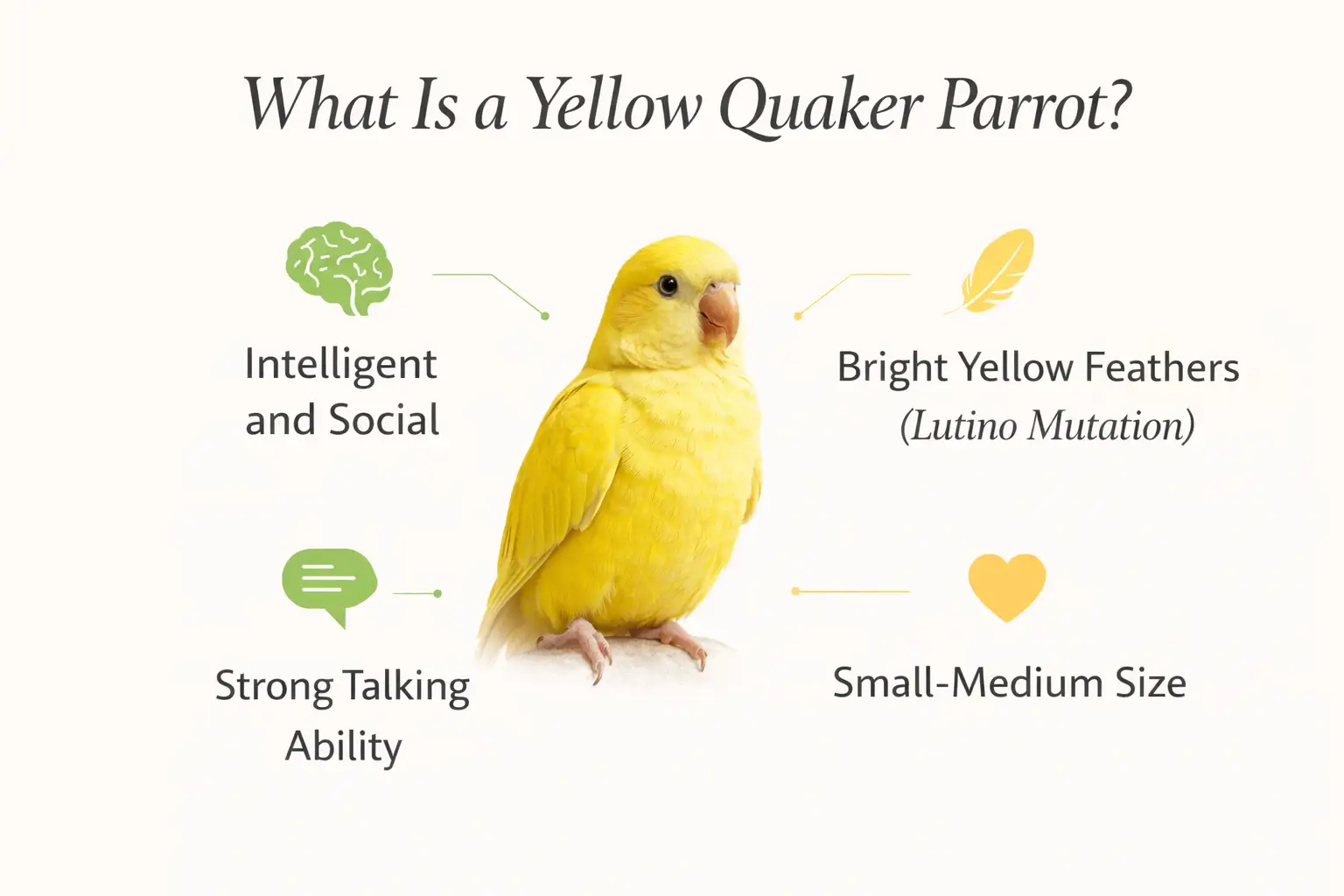
Yellow quaker parrots are known for their lively, curious, and affectionate nature. They often bond closely with their owners and enjoy interaction throughout the day. Their playful attitude makes them entertaining, but they can also be territorial if not properly trained.
Lifespan And Physical Features
These birds typically live between 20–30 years with proper care. They are small-to-medium parrots, usually around 11–12 inches long, with a sturdy build. The yellow coloration often comes from a lutino mutation, sometimes referred to as a yellow lutino quaker parrot.
Suitability For Families And Homes
They can be great family pets if introduced properly. However:
- Better suited for older children who understand gentle handling
- Can coexist with other birds if socialized early
- Require daily attention and are not ideal for owners with limited time
Activity Level And Social Needs
Quaker parrots are highly active and social birds. They need:
- Several hours of interaction daily
- Toys and climbing structures
- Mental challenges to stay engaged
Daily Care Essentials
Feeding Routine And Schedule
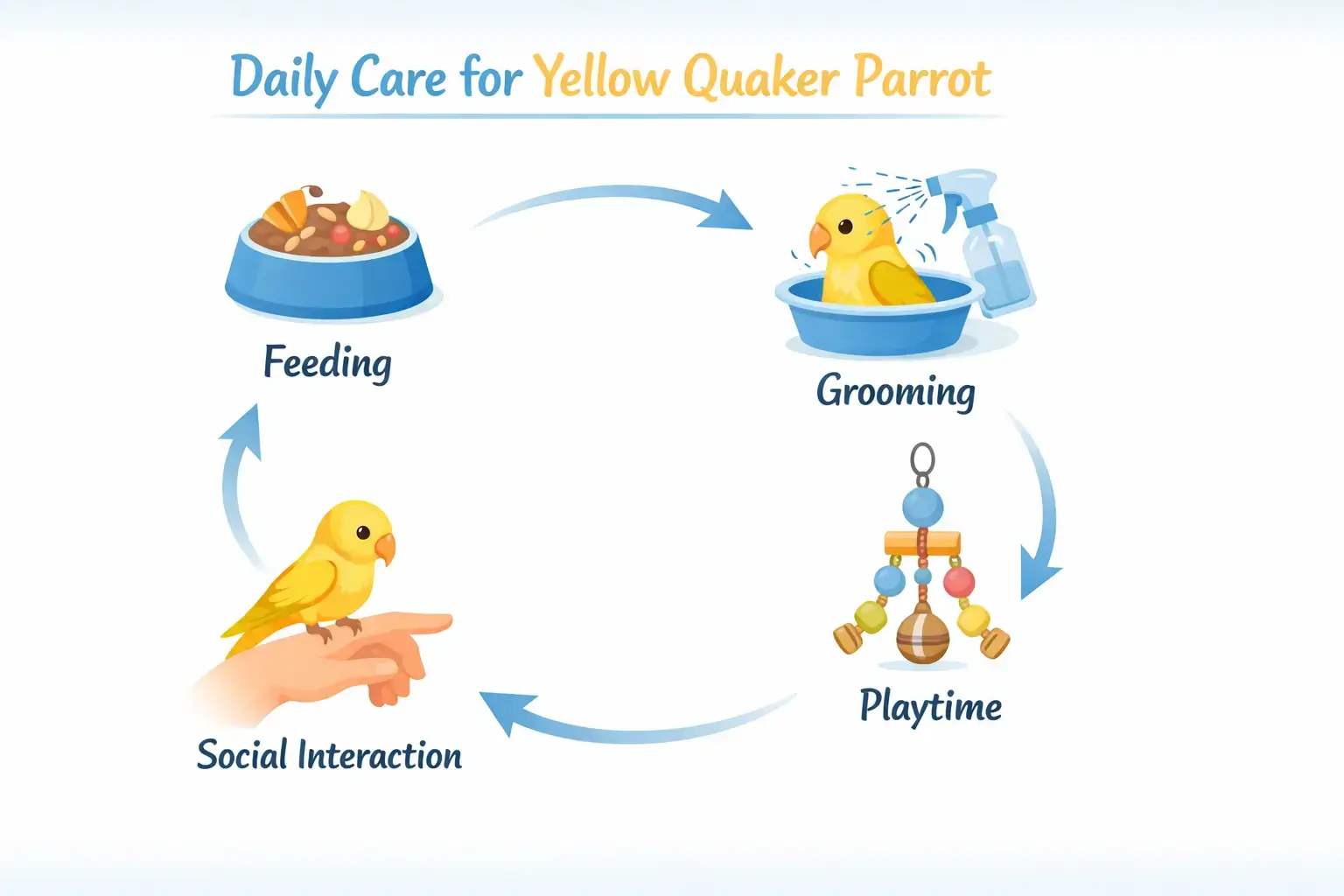
Feed your quaker parrot twice daily:
- Morning: fresh foods and pellets
- Evening: light feeding or treats
Always provide clean, fresh water.
Grooming And Hygiene Basics
Basic grooming includes:
- Weekly misting or bathing
- Nail trimming as needed
- Beak monitoring (usually self-maintained)
Cage Setup And Environment Needs
A proper setup includes:
- Spacious cage (minimum 18x18x24 inches)
- Multiple perches of different textures
- Safe chew toys and enrichment items
Social Interaction And Bonding
Daily interaction is essential. Spend time:
- Talking to your bird
- Allowing supervised out-of-cage time
- Training or playing
Diet & Nutrition Guide
Balanced Diet Requirements
A healthy diet includes:
- 60–70% high-quality pellets
- 20–30% fresh vegetables
- Small portions of fruits
- Occasional seeds as treats
Safe Foods For Quaker Parrots
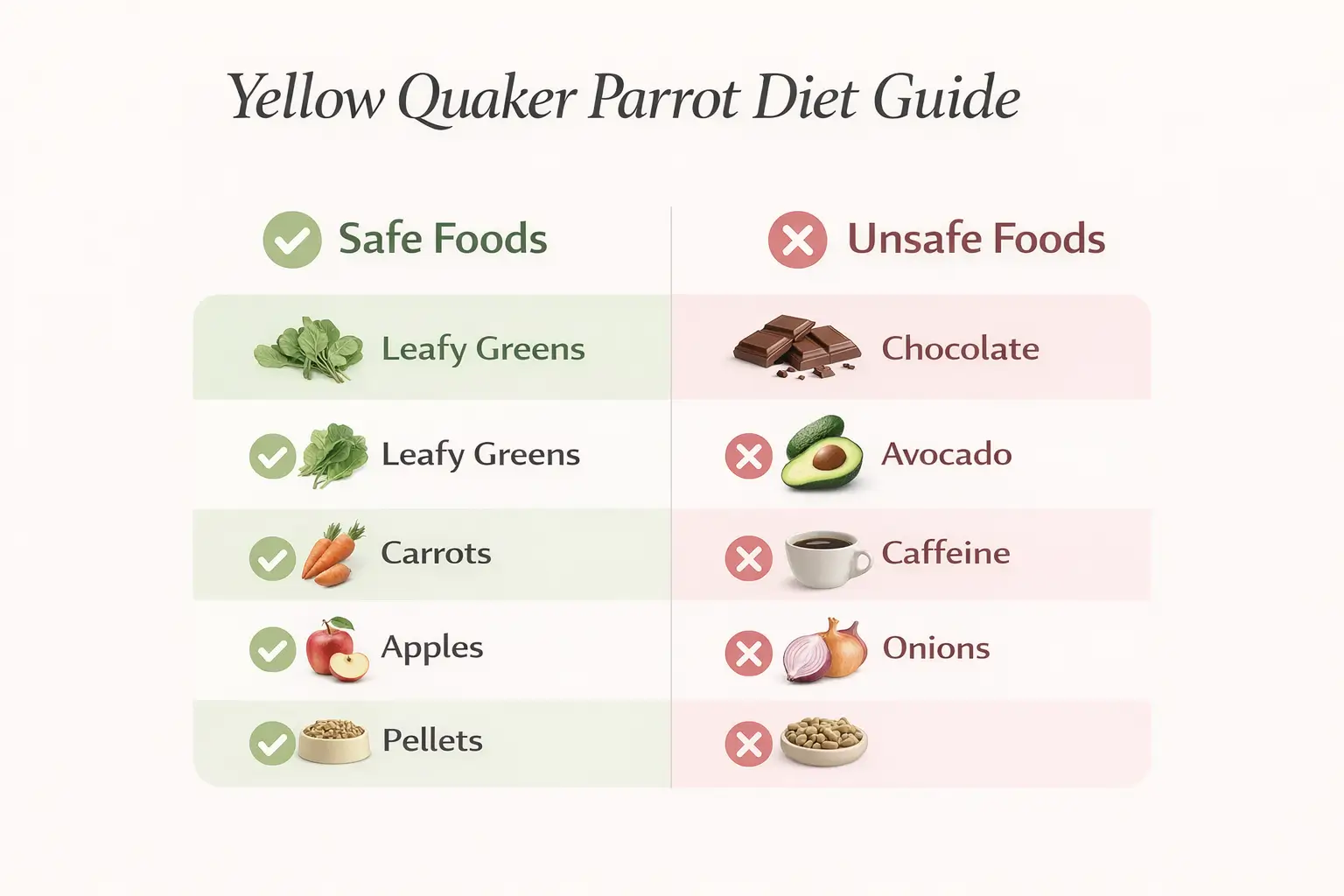
Safe options include:
- Leafy greens (spinach, kale)
- Carrots and broccoli
- Apples (without seeds)
- Cooked grains like rice
Foods To Avoid Completely
Never feed:
- Chocolate
- Avocado
- Caffeine
- Alcohol
- Onions and garlic
Feeding By Life Stage
- Baby yellow quaker parrot: Requires soft foods and frequent feeding
- Adult: Balanced pellet and veggie diet
- Senior: Softer foods and monitored portions
Exercise & Mental Stimulation
Daily Activity Requirements
Quaker parrots need at least 2–3 hours of activity outside the cage daily. This helps prevent boredom and behavioral issues.
Indoor Play Ideas And Enrichment
Try:
- Climbing ladders and swings
- Puzzle toys
- Foraging games (hide food in toys)
Mental Stimulation Techniques
- Teach new words or tricks
- Rotate toys regularly
- Provide safe objects to shred
Training & Behavior Guidance
Basic Training And Commands
Start with simple commands like:
- Step up
- Step down
- Recall training
Use positive reinforcement with treats and praise.
Socialization And Handling Tips
Expose your bird to:
- Different people
- New environments
- Gentle handling early on
This reduces fear and aggression.
Preventing Behavior Problems
Common prevention tips:
- Avoid reinforcing screaming
- Provide enough stimulation
- Maintain a consistent routine
Health & Climate Considerations
Common Health Concerns
Watch for:
- Feather plucking
- Respiratory issues
- Nutritional deficiencies
Early signs include lethargy, appetite loss, or changes in droppings.
Temperature And Climate Needs
Quaker parrots prefer:
- Moderate indoor temperatures (18–27°C)
- Avoid drafts and sudden temperature changes
Hydration And Air Quality
- Always provide fresh water
- Avoid smoke, strong perfumes, and chemicals
Common Problems & Troubleshooting
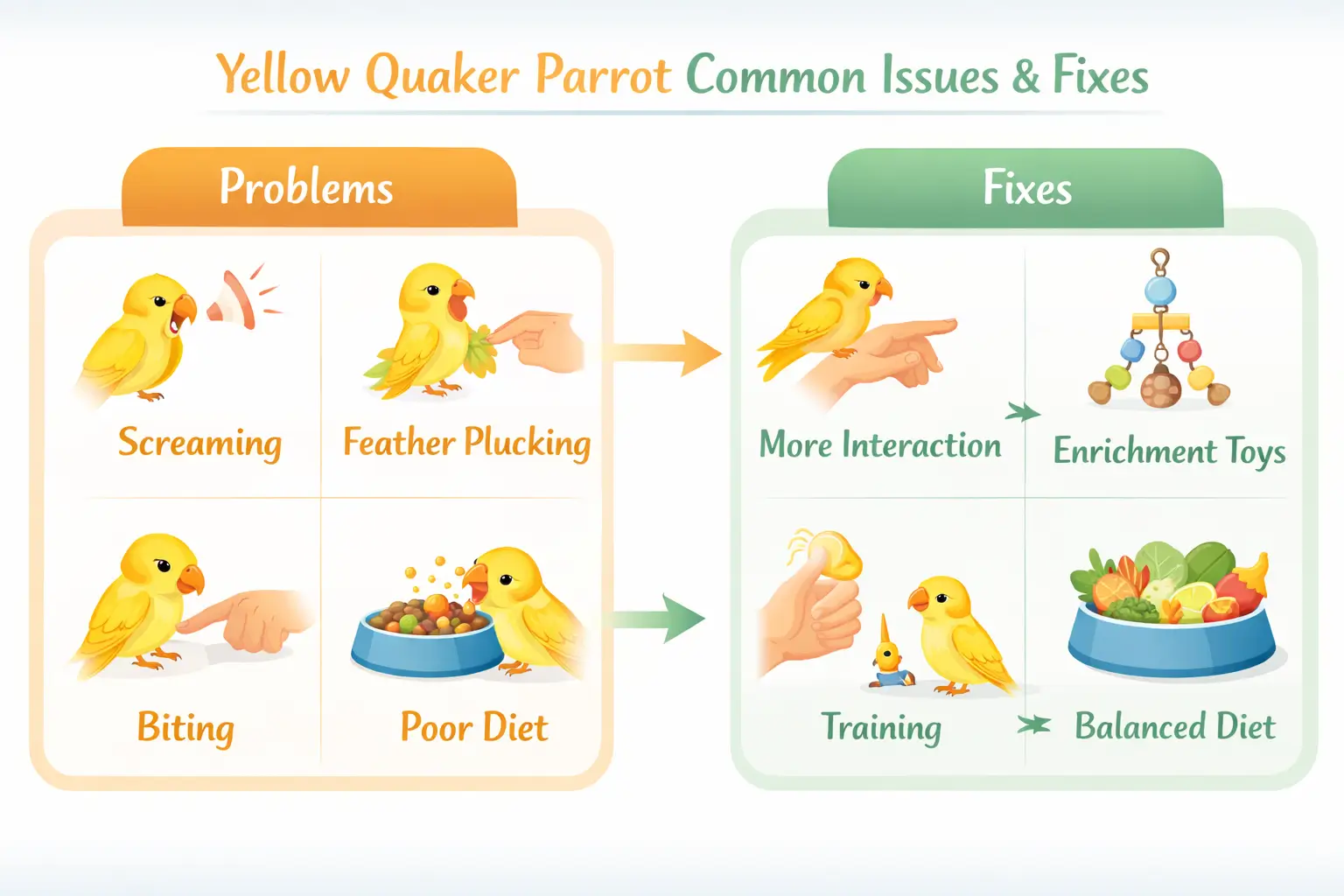
Excessive Screaming
Cause:
- Boredom or attention-seeking
Solution:
- Increase playtime
- Provide mental stimulation
Prevention:
- Establish routine interaction
Feather Plucking
Cause:
- Stress or lack of enrichment
Solution:
- Add toys and activities
- Consult a vet if severe
Prevention:
- Keep environment stimulating
Aggression Or Biting
Cause:
- Hormonal behavior or fear
Solution:
- Gentle training
- Avoid sudden movements
Prevention:
- Early socialization
Poor Eating Habits
Cause:
- Limited diet or stress
Solution:
- Introduce new foods gradually
Prevention:
- Offer variety from a young age
Seasonal Pet Care Tips
Spring Care Tips
- Increase activity and enrichment
- Watch for seasonal allergies
Summer Care Tips
- Keep bird cool and hydrated
- Avoid direct sunlight exposure
Fall Care Tips
- Adjust routine as daylight changes
- Monitor molting periods
Winter Care Tips
- Maintain warm indoor temperatures
- Increase indoor playtime
Additional Expert Tips
Common Mistakes New Owners Make
- Not providing enough interaction
- Feeding too many seeds
- Ignoring mental stimulation needs
Simple Habits For Better Health
- Daily cage cleaning
- Regular vet checkups
- Consistent routine
Long Term Care Considerations
- These birds can live decades
- Require lifelong commitment
- Emotional bonding is strong
Conclusion
Yellow quaker parrots are intelligent, affectionate, and highly interactive companions that thrive with proper care and attention. Their long lifespan and social nature make them a serious commitment, but also incredibly rewarding for dedicated owners.
To ensure a healthy and happy bird:
- Provide a balanced diet
- Maintain daily interaction
- Offer mental stimulation
- Monitor health regularly
Avoid common mistakes like neglecting social needs or feeding improper diets. With the right approach, your quaker parrot can become a loving and entertaining member of your household for many years.
Learn More: Russian Maine Coon Guide: Size, Care & Traits
FAQs
-
How long does a yellow quaker parrot live?
They typically live 20–30 years with proper care, diet, and regular veterinary attention.
-
Are yellow quaker parrots good talkers?
Yes, they are known for their strong talking ability and can learn many words and phrases.
-
How big do quaker parrots get?
They usually grow to about 11–12 inches in length with a sturdy, compact body.
-
Why are quaker parrots illegal in some places?
In some regions, they are restricted because they can form wild colonies that damage crops and infrastructure.
-
How much daily interaction do they need?
At least 2–3 hours of social interaction and out-of-cage activity is recommended.
-
Can a yellow quaker parrot live with other pets?
Yes, but supervision is necessary. Early socialization improves compatibility.
-
What is the personality of a yellow quaker parrot?
They are playful, intelligent, social, and sometimes territorial if not properly trained.



2 Responses