
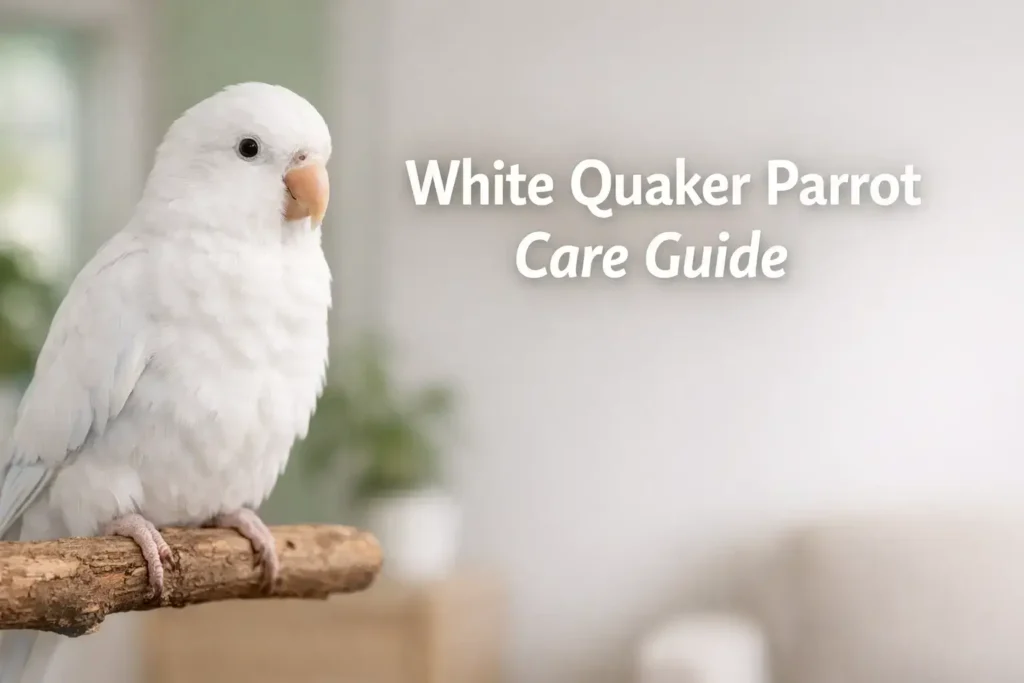
White quaker parrots have quickly become a fascination among bird lovers due to their striking appearance, intelligent personality, and strong bonding behavior. Unlike the typical green Quaker, these lighter or nearly white variations stand out and often spark curiosity among new owners.
However, caring for a white quaker parrot is not exactly the same as owning a small, low-maintenance pet. They are highly social, vocal, and mentally demanding birds. Many beginners underestimate their need for attention, proper diet, and mental stimulation — which often leads to behavioral issues.
Table of Contents
TogglePet Care Insight
This guide is based on widely accepted pet care practices, veterinary guidance, and common experiences shared by responsible pet owners. The goal is to provide practical, easy-to-follow advice that helps owners keep their pets healthy, comfortable, and well cared for.
Pet Overview
Temperament And Personality
White quaker parrots are known for their:
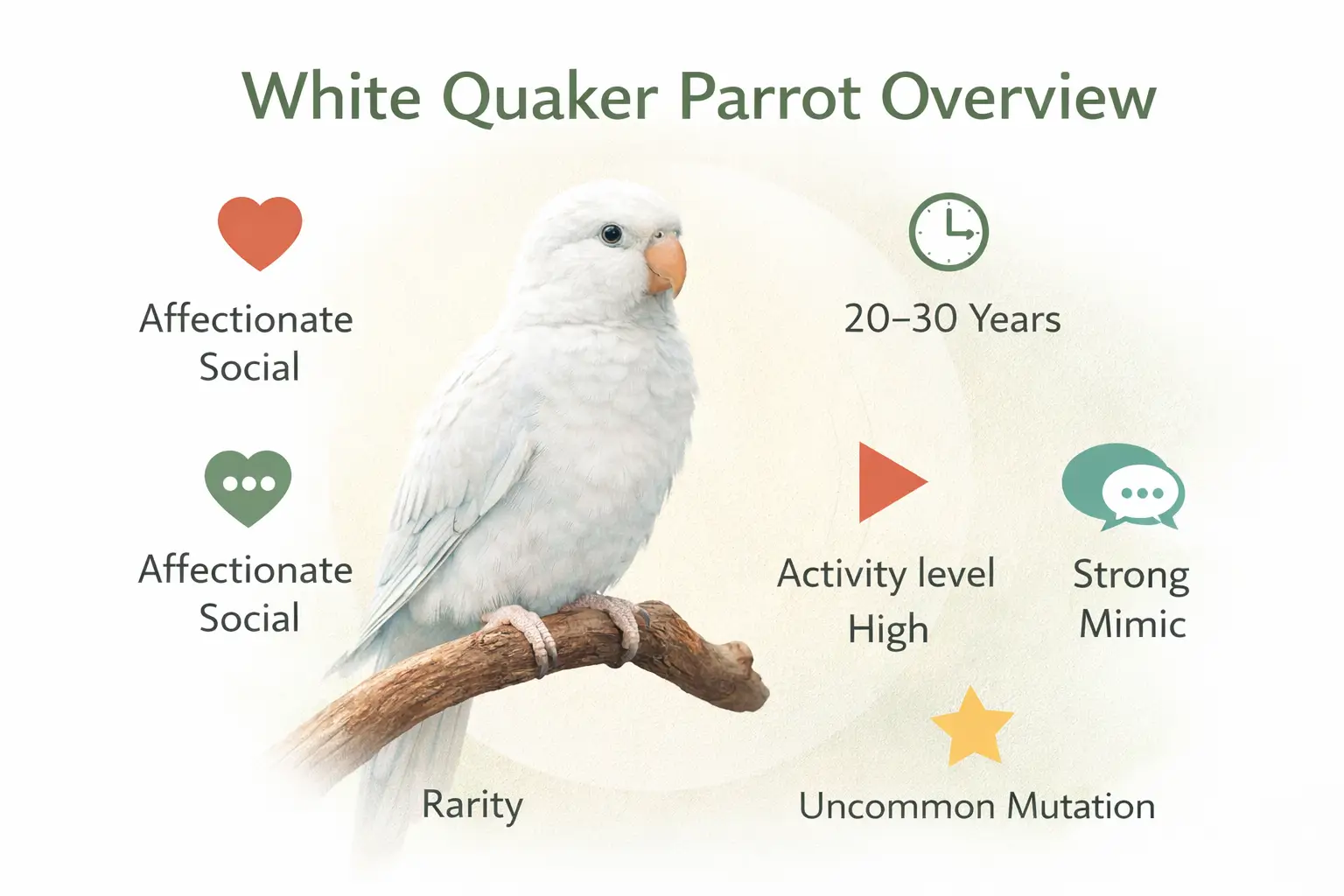
- Friendly and affectionate nature
- Strong attachment to their owner
- Curious and playful behavior
- Ability to mimic sounds and speech
They can become territorial if not properly trained, but with consistency, they are very loving companions.
Lifespan And Longevity
The average white quaker parrot lifespan ranges between:
- 20 to 30 years with proper care
This makes them a long-term commitment, similar to adopting a dog.
Physical Appearance
White quaker parrots are not always pure white. Variations may include:
- White with blue tail
- Blue and white quaker parrot
- Grey and white or yellow-toned mutations
Their soft feather coloring makes them appear unique compared to standard green quakers.
Activity Level And Social Needs
- High activity level
- Requires daily interaction
- Needs mental stimulation to prevent boredom
They do not do well when ignored for long periods.
Family Compatibility
- Suitable for experienced bird owners
- Can live with families, but supervision is needed with children
- May not get along with other pets without gradual introduction
Daily Care Essentials
Feeding Routine Basics
Feed your parrot:
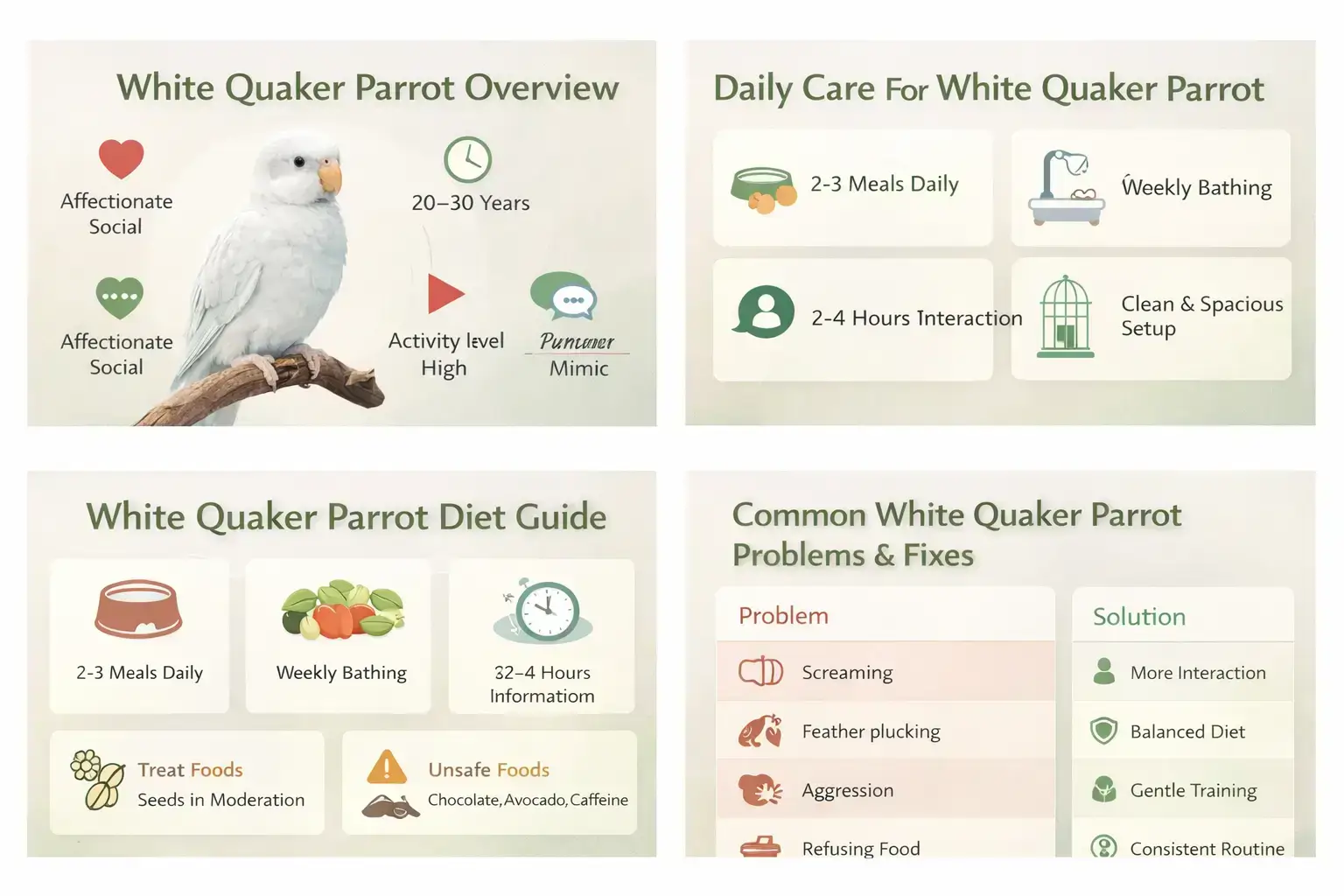
- 2–3 times daily
- Fresh food in the morning
- Light feeding in the evening
Always provide clean water.
Grooming And Hygiene Needs
- Weekly misting or light bathing
- Nail trimming as needed
- Clean cage regularly (daily spot cleaning, weekly deep clean)
Social Interaction Requirements
White quakers need:
- 2–4 hours of daily interaction
- Talking, play, and bonding time
Lack of attention often leads to screaming or feather plucking.
Safe Living Environment Setup
- Spacious cage with toys
- Perches of different sizes
- Safe, quiet location (not isolated, not too noisy)
Diet & Nutrition Guide
Balanced Diet Essentials
A healthy diet should include:
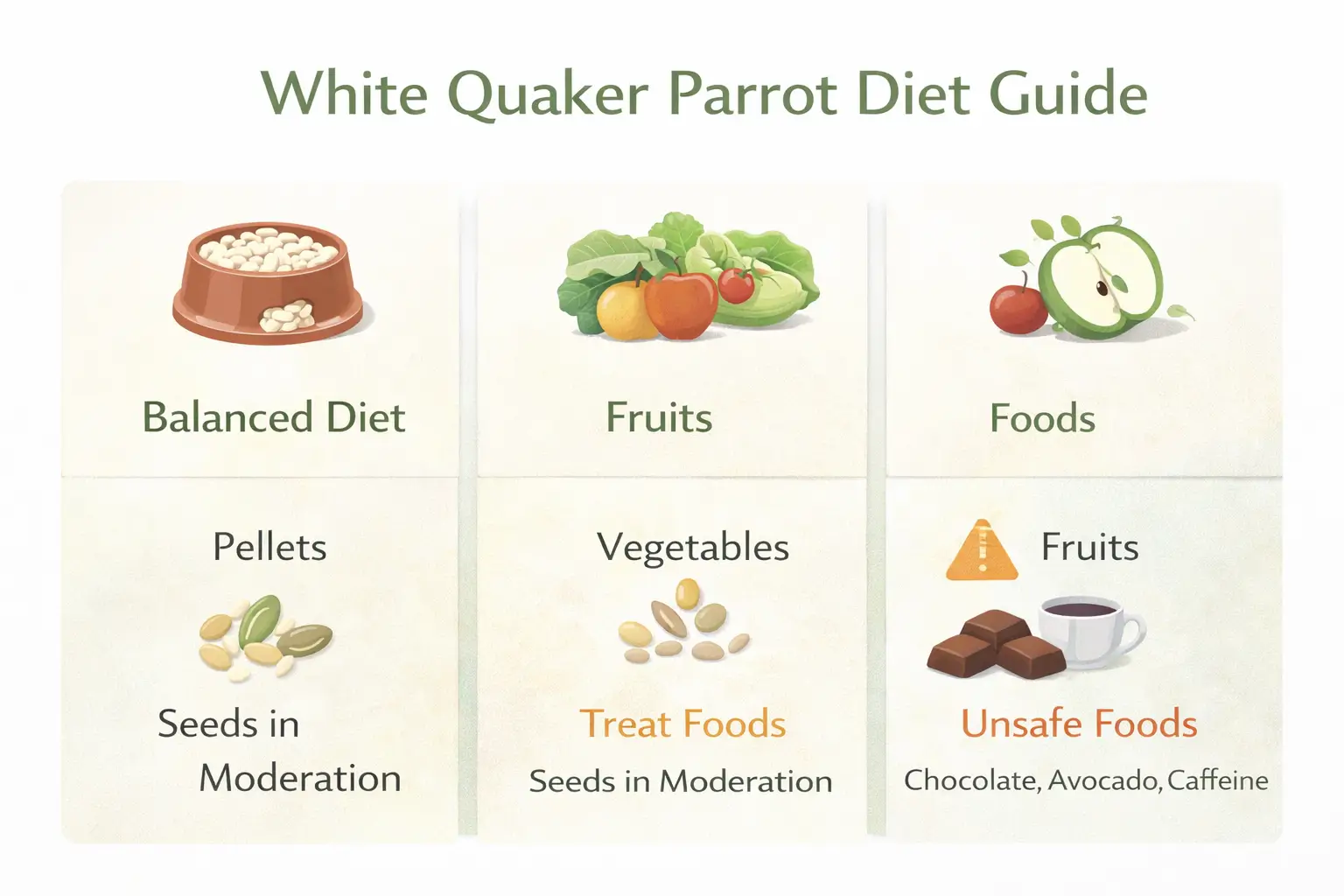
- High-quality pellets (base diet)
- Fresh vegetables (spinach, carrots, broccoli)
- Fruits in moderation (apple, banana)
- Seeds as occasional treats
Feeding Schedule By Age
- Young birds: small, frequent meals
- Adults: 2 main meals daily
- Seniors: lighter portions with more soft foods
Foods To Avoid Completely
Never feed:
- Chocolate
- Avocado
- Caffeine
- Onions and garlic
- Salty or processed foods
These can be toxic and life-threatening.
Portion Control Tips
- Avoid overfeeding seeds (high fat)
- Monitor weight weekly
- Adjust portions based on activity level
Exercise & Mental Stimulation
Daily Activity Needs
White quaker parrots need:
- At least 1–2 hours of out-of-cage time daily
- Climbing and flying space
Enrichment Activities At Home
- Puzzle toys
- Foraging toys
- Mirror play (in moderation)
- Rotating toys weekly
Preventing Boredom Behavior
Without stimulation, they may:
- Scream excessively
- Become aggressive
- Pluck feathers
Regular engagement prevents these issues.
Training & Behavior Guidance
Basic Training Techniques
Start with:
- Step-up training
- Name recognition
- Positive reinforcement (treat-based rewards)
Socialization Strategies
- Introduce new people gradually
- Handle daily from a young age
- Keep interactions calm and positive
Managing Talking Behavior
White quaker parrots are known for talking ability:
- Repeat simple words daily
- Use consistent tone
- Reward attempts
Some birds become excellent mimics.
Preventing Aggression Early
- Avoid forcing interaction
- Respect their space
- Maintain routine
Aggression often comes from fear or inconsistency.
Health & Climate Considerations
Common Health Concerns
Watch for:
- Feather plucking
- Obesity (due to seed-heavy diets)
- Respiratory issues
- Vitamin deficiencies
Heat And Cold Sensitivity
- Avoid extreme heat (above 35°C)
- Keep away from cold drafts
- Maintain moderate indoor temperature
Hydration And Clean Air
- Fresh water daily
- Avoid smoke, sprays, or strong odors
Birds are very sensitive to air quality.
Legal Considerations
You may come across questions like “why are quaker parrots illegal in some states.”
This is mainly due to:
- Their ability to survive in the wild
- Risk of becoming invasive and damaging crops
Always check local laws before owning one.
Common Problems & Troubleshooting
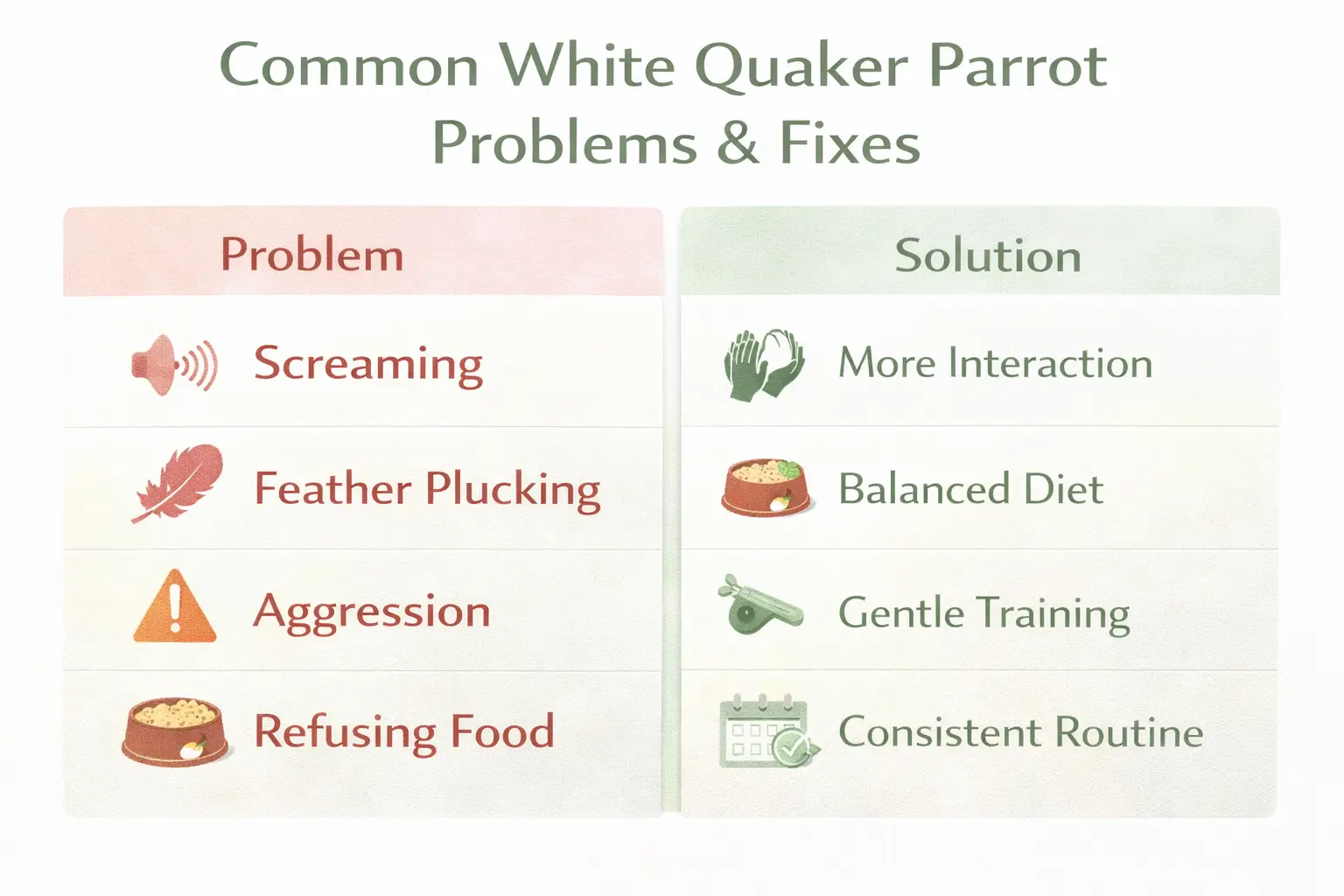
Excessive Screaming Issues
Cause:
- Boredom or lack of attention
Solution: - Increase interaction time
- Provide toys and stimulation
Prevention: - Maintain a consistent daily routine
Feather Plucking Behavior
Cause:
- Stress, loneliness, poor diet
Solution: - Improve environment and diet
- Increase bonding time
Prevention: - Regular mental stimulation
Refusing Food Problems
Cause:
- Sudden diet change
Solution: - Introduce new foods gradually
Prevention: - Maintain consistent feeding habits
Aggression Or Biting
Cause:
- Fear or territorial behavior
Solution: - Use gentle training
Prevention: - Early socialization
Seasonal Pet Care Tips
Summer Care Tips
- Provide shade and ventilation
- Ensure constant hydration
- Avoid direct sunlight
Winter Care Tips
- Keep cage away from cold drafts
- Maintain warm indoor temperature
- Reduce sudden temperature changes
Spring And Fall Adjustments
- Monitor for allergies or feather changes
- Adjust diet slightly based on activity
Additional Expert Tips
Common Beginner Mistakes
- Ignoring mental stimulation needs
- Feeding too many seeds
- Not spending enough time with the bird
Long Term Care Advice
- Regular vet checkups
- Maintain consistent routine
- Build trust gradually
Understanding Rarity
Many people ask: are white quaker parrots rare?
Yes, compared to green quakers, these color mutations are less common, but availability varies by region.
Conclusion
White quaker parrots are intelligent, social, and visually unique birds that require more than just basic care. Their long lifespan, emotional needs, and strong personality make them ideal for dedicated owners who can invest time and effort daily.
The most important things to remember are:
- Provide a balanced diet
- Ensure daily interaction
- Offer mental stimulation
- Maintain a consistent routine
Avoid common mistakes like neglecting attention or overfeeding seeds, and you will have a loyal, engaging companion for many years.
Learn More: Brown Ragdoll Cat Guide: Care, Traits & Tips
FAQs
-
How long do white quaker parrots live?
They typically live 20–30 years with proper care.
-
Are white quaker parrots good talkers?
Yes, they are known for strong talking ability and mimicry.
-
Why are quaker parrots illegal in some places?
They can become invasive and damage crops in certain regions.
-
How much interaction do they need daily?
At least 2–4 hours of social interaction is recommended.
-
Are white quaker parrots rare?
Yes, they are less common than standard green quakers.
-
What should I feed a white quaker parrot daily?
A mix of pellets, vegetables, fruits, and occasional seeds.
-
Can white quaker parrots live alone?
They can, but they require significant human interaction to stay happy.



2 Responses