
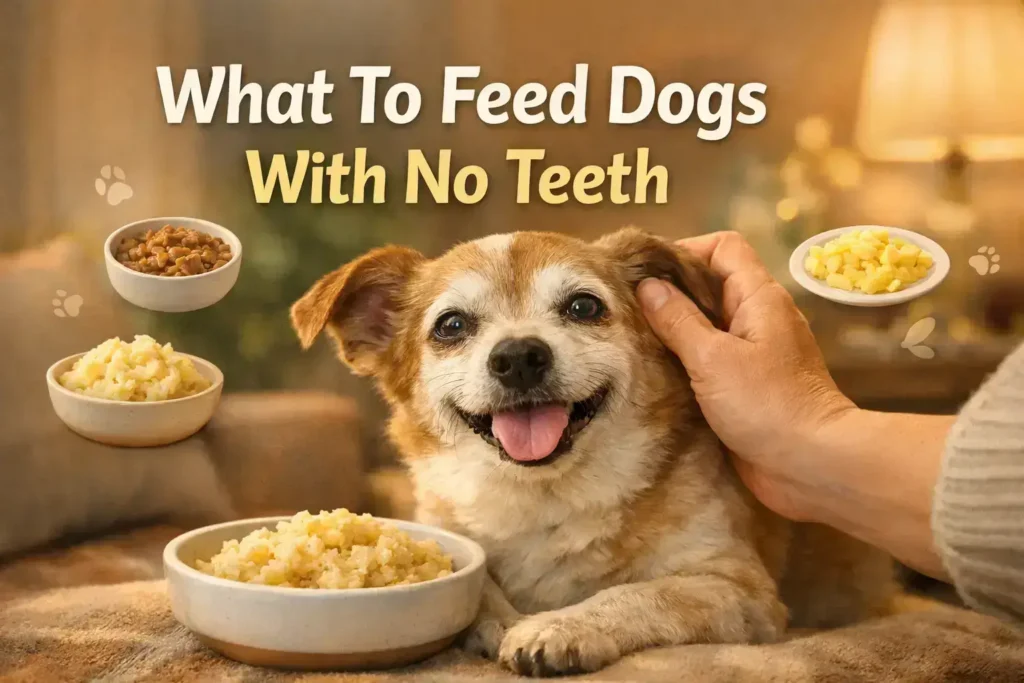
Dogs without teeth—often seniors or rescues—can still live happy, comfortable lives, but their care needs shift in important ways. One of the biggest concerns owners have is feeding: what to feed dogs with no teeth, how to make meals safe, and how to maintain good nutrition without causing discomfort.
Many owners worry at first, but dogs without teeth can still live a happy and comfortable life when cared for properly. If you’re just starting out, this complete guide on
dogs with no teeth explains everything you need to know about daily care and lifestyle adjustments.
Pet Care Insight
This guide is based on widely accepted pet care practices, veterinary guidance, and common experiences shared by responsible pet owners. The goal is to provide practical, easy-to-follow advice that helps owners keep their pets healthy, comfortable, and well cared for.
Pet Overview
Temperament And Behavior
Dogs without teeth behave just like other dogs. Tooth loss does not affect their personality. Most remain playful, affectionate, and social.
Lifespan And Aging
Tooth loss is common in senior dogs, but it doesn’t shorten lifespan if proper care is maintained. Many toothless dogs live long, healthy lives.
Physical Characteristics
You may notice:
- Slightly sunken muzzle
- Tongue hanging out more often
- Softer jawline appearance
Suitability For Families
Toothless dogs are excellent companions:
- Gentle with children
- Less likely to nip
- Ideal for calm households
Activity Level And Compatibility
They usually maintain normal energy levels, though older dogs may slow down. They still enjoy walks and playtime.
Daily Care Essentials
Feeding Routine Basics
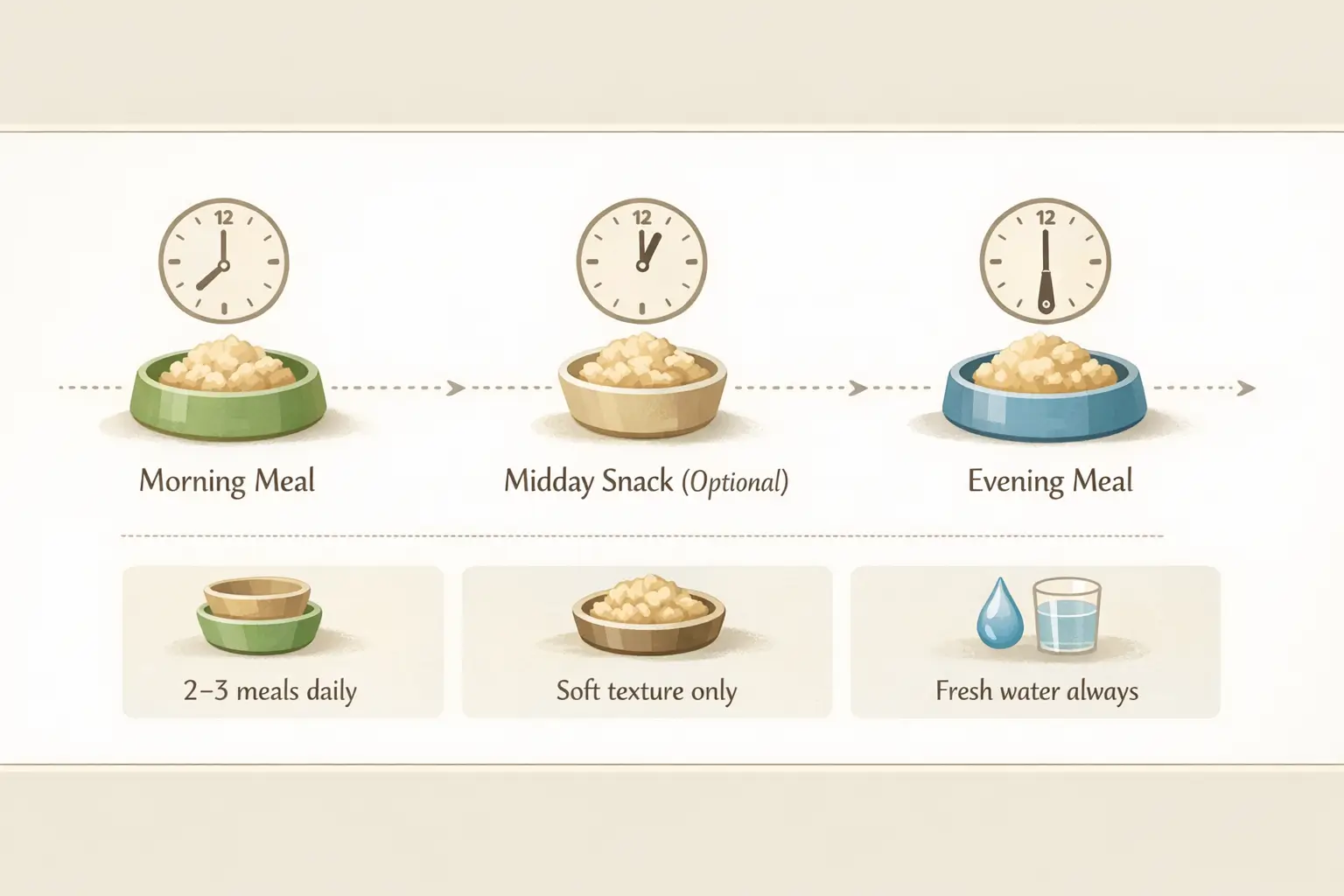
Consistency is key:
- Feed 2–3 small meals daily
- Use soft or moistened food
- Ensure food is easy to swallow
Grooming And Oral Care
Even without teeth, oral hygiene matters:
- Clean gums gently with a soft cloth
- Watch for redness or bad odor
- Schedule regular vet checks
Even if your dog has no teeth, professional care still matters—this guide on
how vets clean dogs teeth shows how veterinarians safely maintain oral health.
Exercise And Movement Needs
- Most toothless dogs:
- Enjoy short daily walks
- Benefit from light play
- Need mental stimulation more than intense exercise
Social And Emotional Needs
Dogs without teeth can become more dependent:
- Offer comfort and reassurance
- Maintain routine
- Avoid sudden changes
Diet & Nutrition Guide
What To Feed Dogs With No Teeth
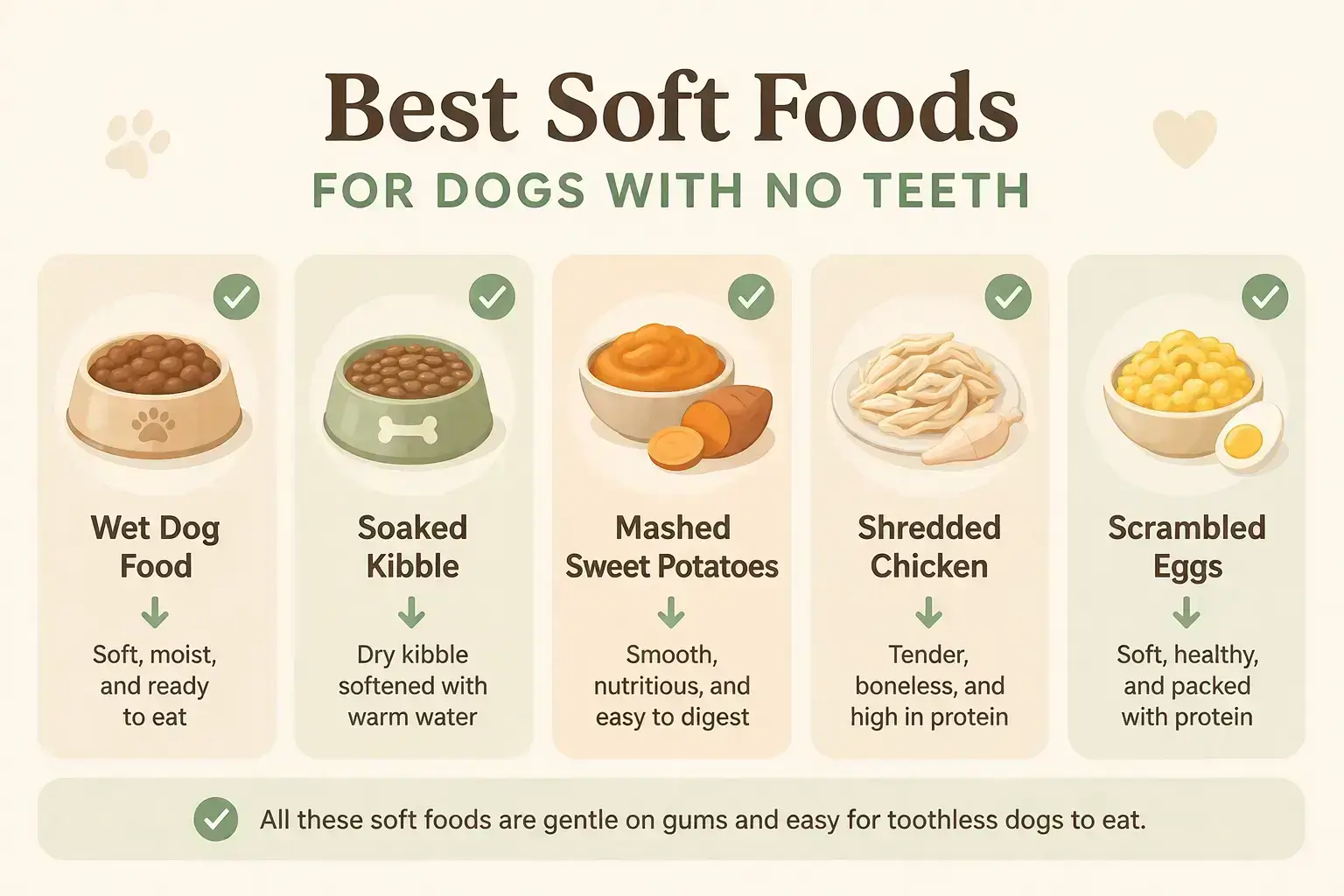
The best food is soft, easy to swallow, and nutrient-rich. Good options include:
- Wet dog food (high-quality canned food)
- Soaked dry kibble (softened with warm water)
- Homemade soft meals
- Blended or mashed food
What To Feed Dogs With No Teeth At Home
At home, you can prepare simple meals like:
- Boiled chicken (shredded finely)
- Mashed sweet potatoes
- Soft rice with broth
- Scrambled eggs (plain)
These are gentle on gums and easy to digest.
What To Feed Dogs With No Teeth Homemade
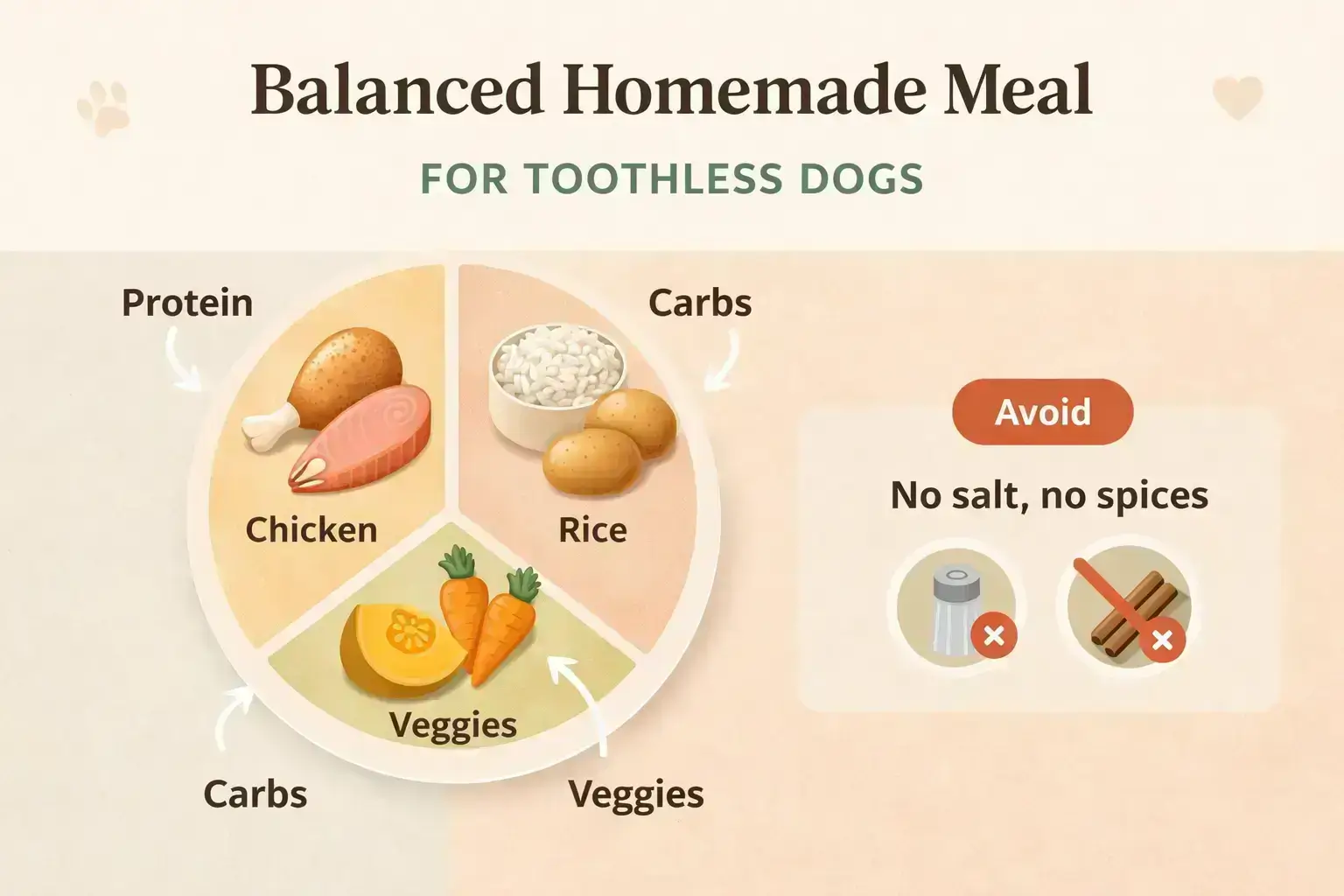
A balanced homemade meal should include:
- Protein: chicken, turkey, fish
- Carbs: rice, oats, potatoes
- Veggies: carrots, pumpkin (mashed)
Always avoid seasoning, salt, or oils.
Feeding Senior Dogs With No Teeth
Senior dogs need:
- Higher protein for muscle maintenance
- Easily digestible ingredients
- Smaller, frequent meals
Feeding Small Dogs With No Teeth
Small breeds may require:
- Even softer textures
- Smaller portions
- More frequent feeding
Portion Control And Schedule
- Feed twice daily (or three times for seniors)
- Adjust portions based on weight and activity
- Monitor weight regularly
Safe Vs Unsafe Foods
Safe:
- Plain meats
- Cooked vegetables
- Soft grains
Unsafe:
- Bones (even soft ones)
- Hard treats
- Spicy or seasoned food
- Chocolate, onions, garlic
Exercise & Mental Stimulation
Daily Activity Needs
Even without teeth, dogs need movement:
- 20–40 minutes of light activity daily
- Gentle walks
- Indoor play
Easy Play Ideas
- Soft toys (no chewing required)
- Scent games
- Hide-and-seek with treats
Mental Enrichment Activities
- Puzzle feeders with soft food
- Snuffle mats
- Training sessions with soft rewards
Training & Behavior Guidance
Basic Obedience Training
Toothless dogs can still learn:
- Sit, stay, come
- Leash manners
- Calm behavior indoors
Socialization Tips
- Continue exposure to people and pets
- Avoid overly rough dogs
- Encourage calm interactions
Preventing Behavior Issues
Common issues include:
- Anxiety due to aging
- Increased clinginess
Solutions:
- Keep routines stable
- Provide comfort items
- Use positive reinforcement
Health & Climate Considerations
Oral And Gum Health
Even without teeth:
- Watch for gum infections
- Look for swelling or bleeding
- Maintain vet checkups
If you notice swelling, bleeding, or persistent bad breath, it may signal a deeper issue—these
symptoms of dog tooth infection can help you identify problems early and seek proper treatment.
Why Do Old Dogs Tongues Hang Out
This happens because:
- Teeth normally support the tongue
- Without teeth, the tongue slips out naturally
It’s harmless and common.
This happens because teeth normally support the tongue, and without them it may hang out naturally—a change related to basic canine structure explained in dog anatomy.
Hydration Needs
Soft food often contains moisture, but still:
- Provide fresh water at all times
- Monitor drinking habits
Heat And Cold Sensitivity
Older dogs may be more sensitive:
- Keep them cool in summer
- Provide warmth in winter
Common Problems & Troubleshooting
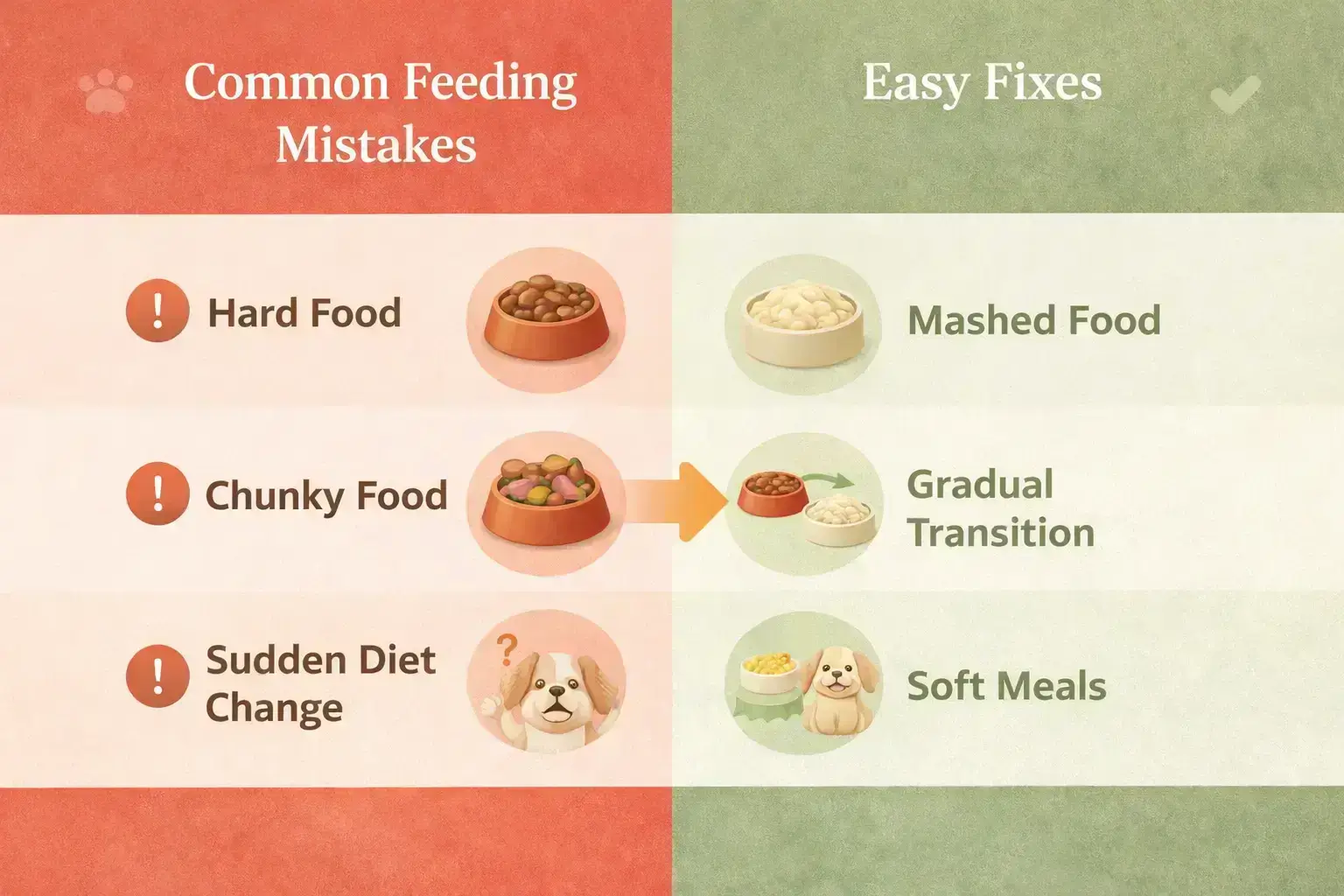
Dog Refuses Soft Food
Cause:
- Sudden diet change
Solution:
- Transition gradually
- Mix old and new food
Prevention:
- Avoid abrupt changes
Difficulty Swallowing
Cause:
- Food still too chunky
Solution:
- Mash or blend food further
Prevention:
- Ensure smooth consistency
Weight Loss
Cause:
- Not eating enough
Solution:
- Increase meal frequency
- Use calorie-dense foods
Prevention:
- Monitor weight weekly
Bad Breath Or Gum Issues
Cause:
- Infection or poor hygiene
Solution:
- Clean gums gently
- Visit vet
Prevention:
- Regular oral care
Seasonal Pet Care Tips
Spring Care Tips
- Watch for allergies
- Increase outdoor activity gradually
Summer Care Tips
- Prevent overheating
- Offer soft, hydrating meals
- Ensure constant water access
Fall Care Tips
- Maintain routine as weather changes
- Monitor appetite shifts
Winter Care Tips
- Keep warm indoors
- Provide cozy bedding
- Reduce exposure to cold surfaces
Additional Expert Tips
- Never assume a toothless dog cannot eat well—they just need the right texture
- Avoid hard treats completely; choose soft alternatives
- Use shallow bowls for easier access
- Maintain regular vet visits for gum health
- Be patient—feeding adjustments take time
Conclusion
Caring for a dog without teeth may feel overwhelming at first, but it quickly becomes routine once you understand their needs. The key is focusing on soft, nutritious food, maintaining a consistent feeding schedule, and ensuring their comfort.
Most importantly, tooth loss does not reduce your dog’s quality of life. With proper care, they can continue to enjoy meals, play, and companionship just like any other dog.
If you stay attentive, adapt their diet, and monitor their health, your toothless dog can live a full, happy, and comfortable life.
FAQs
-
What is the best food for dogs with no teeth?
Soft, moist food like wet dog food, soaked kibble, or mashed homemade meals works best.
-
Can dogs live a good quality of life with no teeth?
Yes, they can live very comfortably as long as their diet and care are adjusted properly.
-
What treats can I give a dog with no teeth?
Soft treats like mashed banana, soft commercial treats, or small pieces of cooked meat.
- Why is my dog’s tongue sticking out with no teeth?
Teeth normally hold the tongue in place. Without them, the tongue may hang out naturally.
-
How often should I feed a toothless dog?
Typically 2–3 small meals per day, depending on age and health.
-
Can I feed homemade food to a dog with no teeth?
Yes, as long as it’s balanced, soft, and free from harmful ingredients.
-
Do dogs without teeth need special bowls?
Shallow, wide bowls make it easier for them to eat comfortably.



4 Responses