
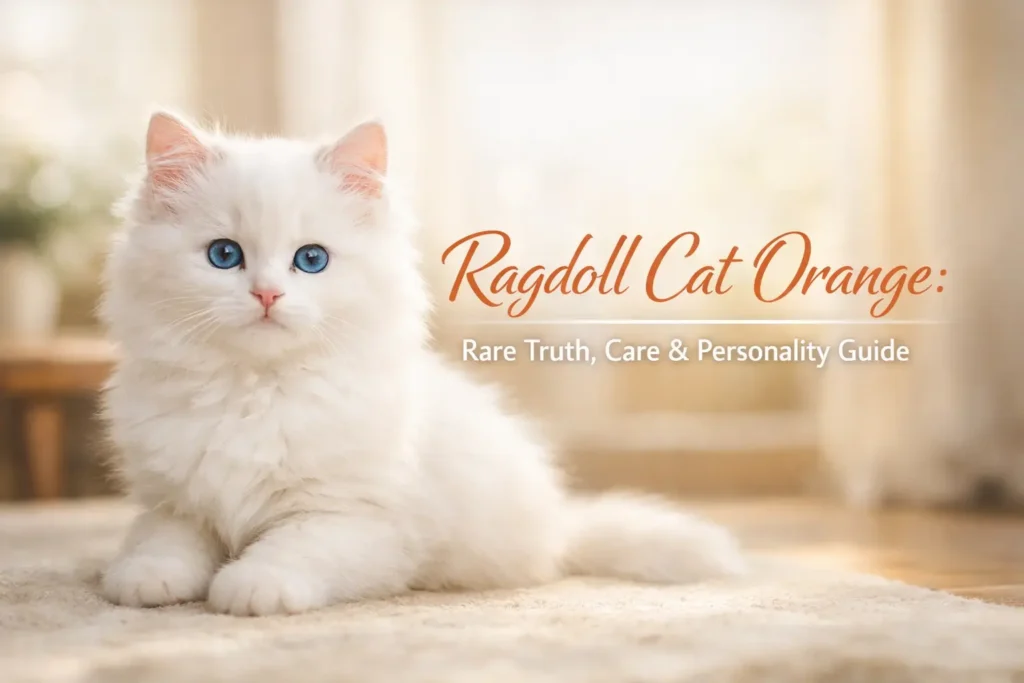
Ragdoll Cat Orange have become one of the most admired companion cats in the world—and it’s easy to see why. With their soft, fluffy coats, striking blue eyes, and calm, affectionate personality, they offer both beauty and companionship in a way few breeds do. A Ragdoll cat is known for its relaxed temperament, often going limp when held—hence the name “ragdoll.” The Ragdoll cat is a well-known breed recognized for its calm temperament and affectionate nature.
For new owners, the appeal is immediate—but so are the questions. How much grooming do they need? Are they fragile? Do they require special care compared to other cats? Many first-time owners underestimate how social and dependent these kittens can be, which can lead to avoidable behavior or health issues.
While many owners are drawn to white ragdoll kittens, some also explore different color variations like the brown ragdoll cat to better understand how coat patterns and traits can differ.
Pet Care Insight
This guide is based on widely accepted pet care practices, veterinary guidance, and common experiences shared by responsible pet owners. The goal is to provide practical, easy-to-follow advice that helps owners keep their pets healthy, comfortable, and well cared for.
Pet Overview
Temperament And Personality Traits
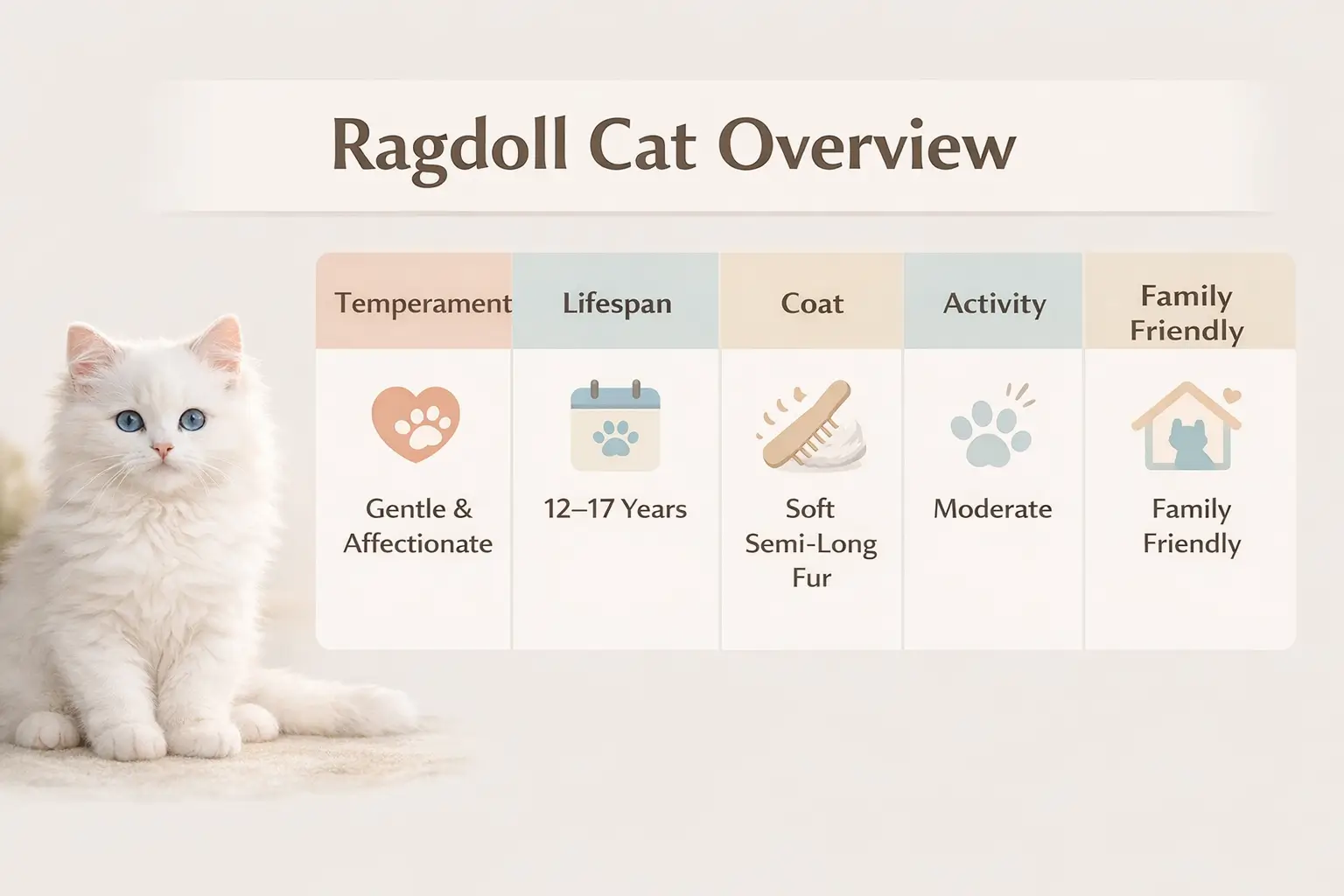
White ragdoll kittens are gentle, affectionate, and highly people-oriented. They tend to follow their owners around the house and enjoy being held, making them ideal lap cats.
Lifespan And Growth Stages
Ragdolls typically live between 12–17 years. They grow slowly compared to many breeds and may not reach full size until 3–4 years of age.
Physical Appearance And Coat Type
A white ragdoll kitten often has a silky, semi-long coat that feels soft rather than dense. Many are born white and develop subtle color points later. This soft, fluffy look is often compared to breeds like Persian cat, especially when looking at white-coated cats such as those featured in white Persian kitten varieties.
Family Compatibility And Behavior
These kittens are excellent with children and usually get along well with other pets. Their calm nature makes them less aggressive and more tolerant than many other breeds.
Activity Level And Lifestyle Needs
They are moderately active—not overly playful but still requiring daily interaction. They prefer indoor living and thrive in stable, quiet environments.
Daily Care Essentials
Feeding Routine And Daily Schedule
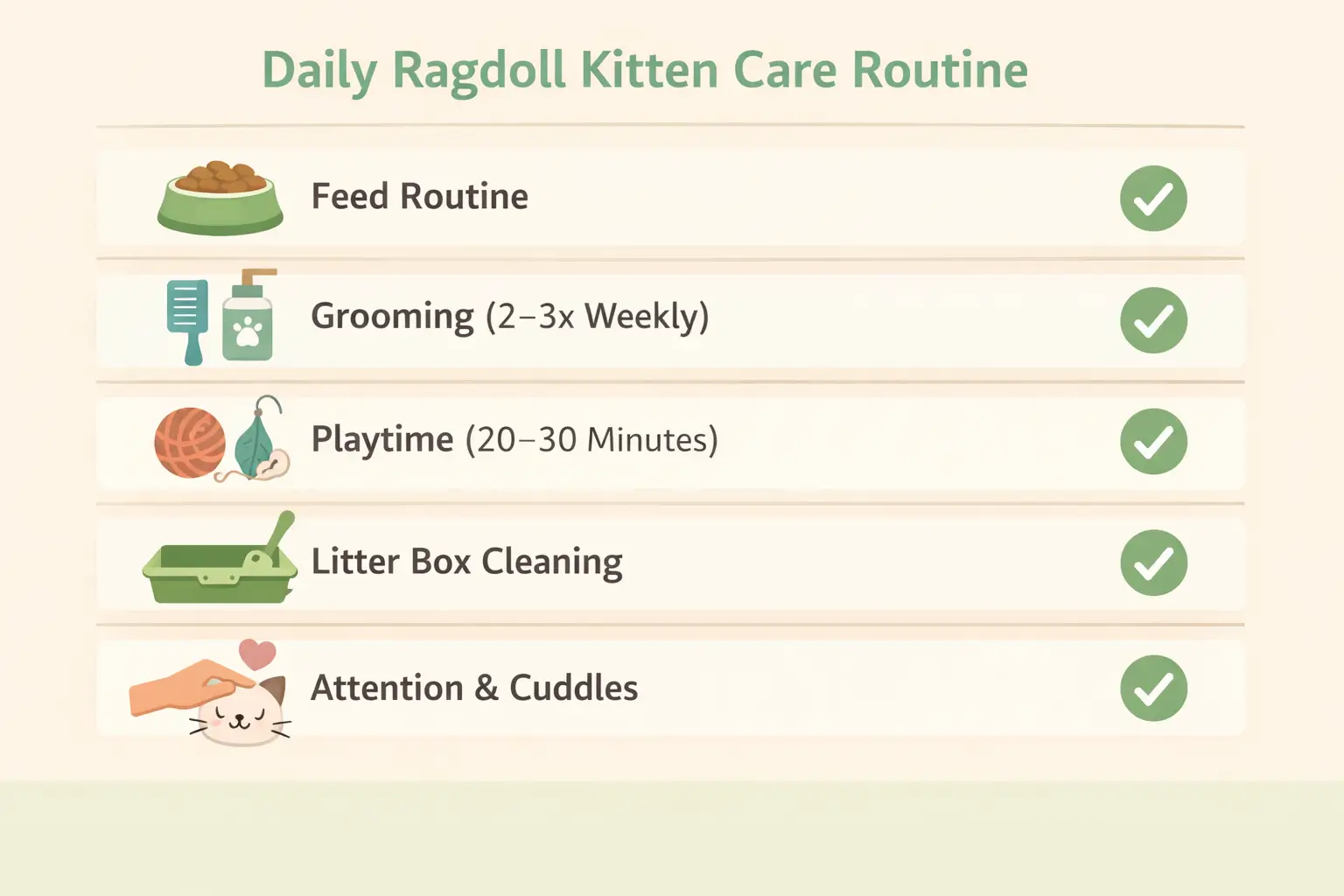
Feed your white ragdoll kitten 3–4 small meals per day during early months, transitioning to 2 meals as they grow.
Grooming Basics And Coat Care
Despite their fluffy appearance, ragdolls have low matting risk. Brush 2–3 times per week to reduce shedding and prevent tangles.
Exercise Needs And Indoor Play
Short play sessions using toys like feather wands or soft balls are enough to keep them active.
Social Interaction And Attention Needs
These kittens crave companionship. Leaving them alone for long periods can lead to stress or loneliness.
Diet & Nutrition Guide
Kitten Feeding And Nutritional Needs
Young kittens need high-protein, high-fat diets to support growth. Look for balanced kitten food with real meat as the primary ingredient.
Adult Feeding And Portion Control
Adult ragdolls should have controlled portions to prevent weight gain. Free-feeding is not recommended.
Senior Nutrition And Health Support
Older cats benefit from diets that support joint health and digestion, often with added omega fatty acids.
Safe And Unsafe Foods Guide
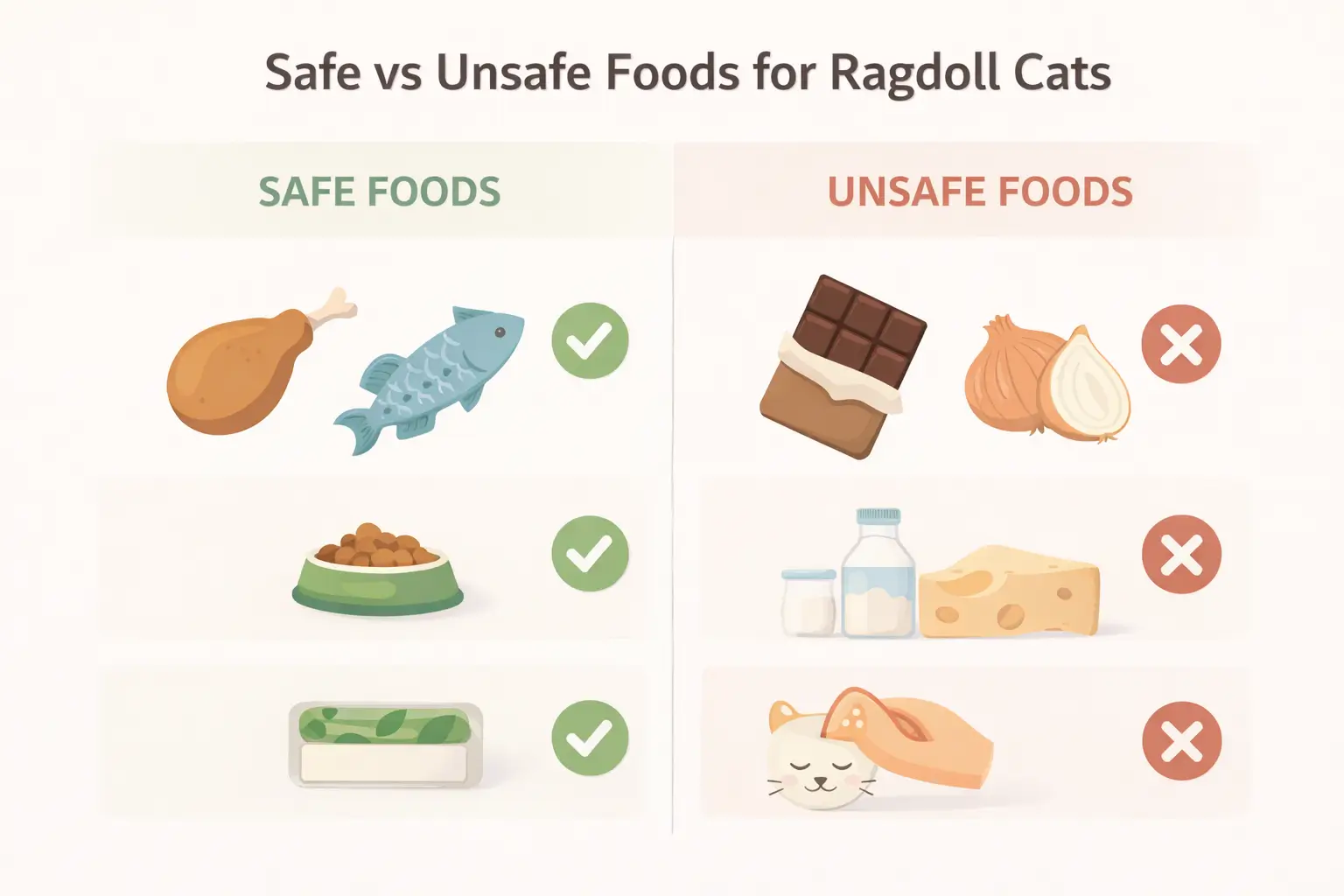
Safe foods:
- Cooked chicken or fish (plain)
- High-quality commercial cat food
Unsafe foods:
- Chocolate
- Onions and garlic
- Dairy (can cause digestive upset)
Fresh water should always be available.
Exercise & Mental Stimulation
Daily Activity And Playtime Needs
Even calm ragdolls need 20–30 minutes of daily play to maintain a healthy weight.
Indoor Enrichment Activities
- Puzzle feeders
- Window perches
- Cat trees for climbing
Bonding Activities With Owners
Simple activities like gentle brushing or interactive play strengthen trust and emotional connection.
Training & Behavior Guidance
Litter Training And Routine Building
Ragdoll kittens are usually easy to litter train. Keep the box clean and placed in a quiet area.
Socialization And Early Exposure
Expose your kitten gradually to different people, sounds, and environments to build confidence.
Preventing Common Behavior Issues
Avoid boredom by providing stimulation. Many unwanted behaviors stem from lack of attention.
Positive Reinforcement Techniques
Reward good behavior with treats or affection rather than punishment.
Health & Climate Considerations
Common Health Concerns
Ragdolls may be prone to:
- Heart conditions (like hypertrophic cardiomyopathy)
- Obesity if overfed
Regular vet checkups are essential.
In some cases, dental health can also become a concern in cats, so understanding proper aftercare—such as in cat tooth extraction recovery—can help owners respond quickly if issues arise.
Heat Sensitivity And Summer Care
In warmer climates, keep your kitten cool:
- Provide shade
- Ensure constant hydration
- Avoid overheating
Cold Weather Adaptation
Their coat offers moderate insulation, but they should remain indoors during extreme cold.
Hydration And General Wellness
Encourage water intake through clean bowls or fountains, especially in hot weather.
Common Problems & Troubleshooting
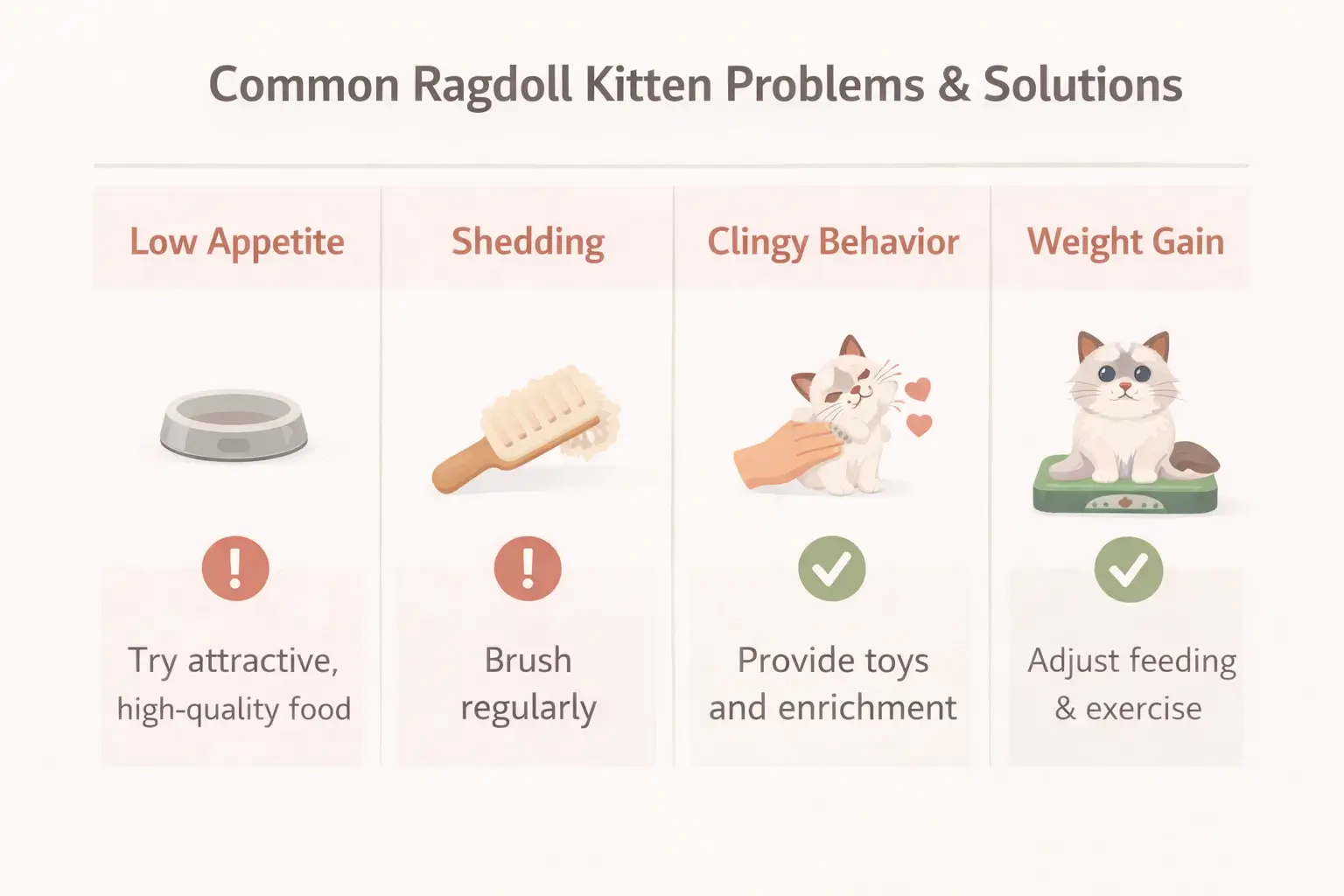
Poor Appetite Or Eating Issues
Cause: Stress or sudden food change
Solution: Introduce food gradually and maintain routine
Prevention: Avoid frequent diet changes
Excessive Shedding Or Fur Problems
Cause: Lack of grooming
Solution: Regular brushing
Prevention: Maintain grooming schedule
Clingy Or Needy Behavior
Cause: Lack of interaction
Solution: Increase playtime and engagement
Prevention: Provide companionship and enrichment
Weight Gain And Low Activity
Cause: Overfeeding and inactivity
Solution: Controlled diet and daily play
Prevention: Monitor portions and encourage exercise
Seasonal Pet Care Tips
Spring Allergy And Shedding Care
- Increase brushing during shedding season
- Watch for skin irritation
- Summer Heat Protection Tips
- Keep indoor temperatures cool
- Provide fresh water frequently
Fall Routine Adjustment Tips
- Maintain consistent feeding schedule
- Monitor activity levels
Winter Comfort And Warmth Care
- Provide warm bedding
- Keep them indoors and active
Additional Expert Tips
Common First-Time Owner Mistakes
- Assuming ragdolls are low-maintenance emotionally
- Overfeeding due to their calm nature
- Ignoring grooming because of their soft coat
Simple Habits For Better Health
- Regular grooming sessions
- Scheduled feeding times
- Daily interaction and play
Long-Term Care Considerations
Ragdolls form strong bonds with their owners. Planning for their emotional needs is just as important as physical care.
Conclusion
Caring for a white ragdoll kitten is less about complexity and more about consistency. They are affectionate, gentle companions that thrive on routine, attention, and a calm environment. By focusing on proper nutrition, regular grooming, and emotional connection, you can ensure your kitten grows into a healthy and happy adult cat.
Avoid common mistakes like overfeeding or neglecting social interaction, and you’ll find that owning a ragdoll is one of the most rewarding pet experiences. With the right care, these beautiful cats become lifelong companions that bring comfort and joy every day.
FAQs
-
How often should I groom a white ragdoll kitten?
2–3 times per week is usually enough to keep their coat healthy and tangle-free.
-
Do white ragdoll kittens always have blue eyes?
Most do, especially purebred ragdolls, though slight variations can occur.
-
Are white ragdoll kittens high maintenance?
Not physically, but they do require emotional attention and companionship.
-
Can ragdoll kittens live in hot climates?
Yes, but they need cool indoor environments and proper hydration.
-
Why is my ragdoll kitten so quiet and calm?
This is a natural trait of the breed—they are known for their relaxed temperament.
-
How much should I feed my ragdoll kitten daily?
Small, frequent meals for kittens; transition to 2 meals daily as they grow.
-
Do ragdolls get along with other pets?
Yes, they are generally friendly and adapt well to multi-pet households.




One Response