
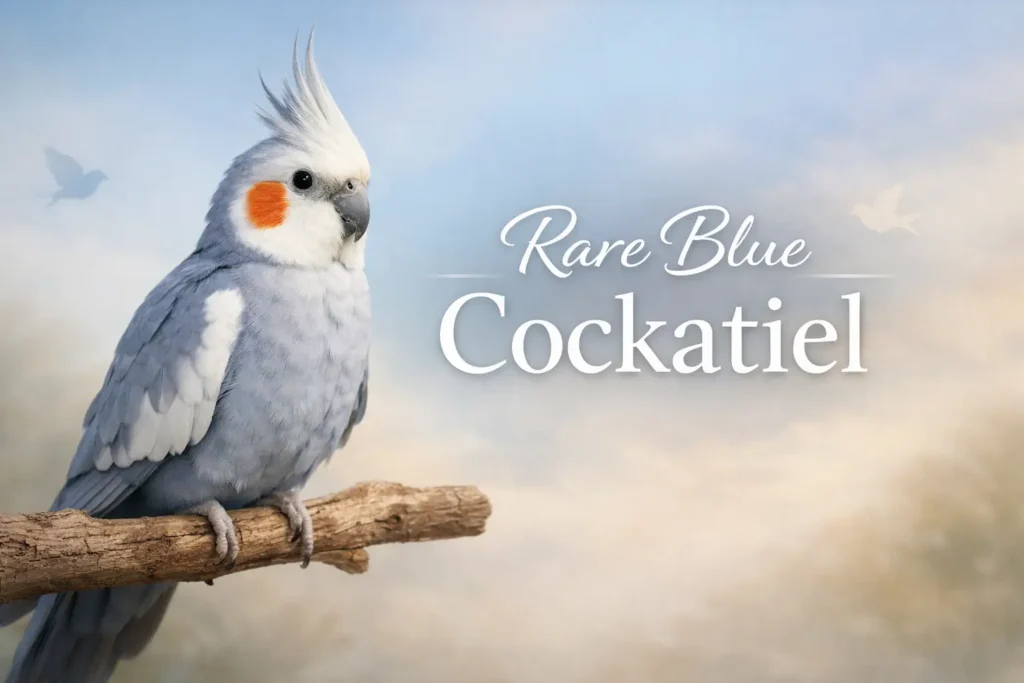
Caring for a rare blue cockatiel sounds exciting—and it is—but it also comes with a lot of confusion. Many new owners are drawn to the idea of a “blue cockatiel,” thinking it’s a unique or newly discovered color. In reality, true blue pigmentation does not naturally exist in cockatiels, which leads to misunderstandings, mislabeling, and unrealistic expectations.
What people often call a “rare blue cockatiel” is usually a visually unique mutation—like whiteface, silver, or emerald—that can appear bluish under certain lighting. Because of this, beginners sometimes overpay or buy birds without fully understanding their care needs.
If you’re interested in other uniquely colored birds, you may also enjoy learning about the blue quaker parrot, which shows how color mutations can vary across species.
Pet Care Insight
This guide is based on widely accepted pet care practices, veterinary guidance, and common experiences shared by responsible pet owners. The goal is to provide practical, easy-to-follow advice that helps owners keep their pets healthy, comfortable, and well cared for. This guide is based on widely accepted pet care practices, veterinary guidance, and common experiences shared by responsible pet owners. For a deeper breakdown of every recognized color variation, check out our complete cockatiel color mutation reference database, which catalogs genetics and appearance side by side.
Pet Overview
Temperament And Personality
Cockatiels are gentle, social, and affectionate birds. Even rare-looking mutations behave just like standard cockatiels. They enjoy human interaction, whistling, and light play.
Lifespan And Size
Most cockatiels live between 12–20 years with proper care. They are medium-sized parrots with a slim body, long tail, and a distinctive crest.
Physical Appearance
Cockatiel color mutations are influenced by genetics, which you can learn more about in this overview of Cockatiel.
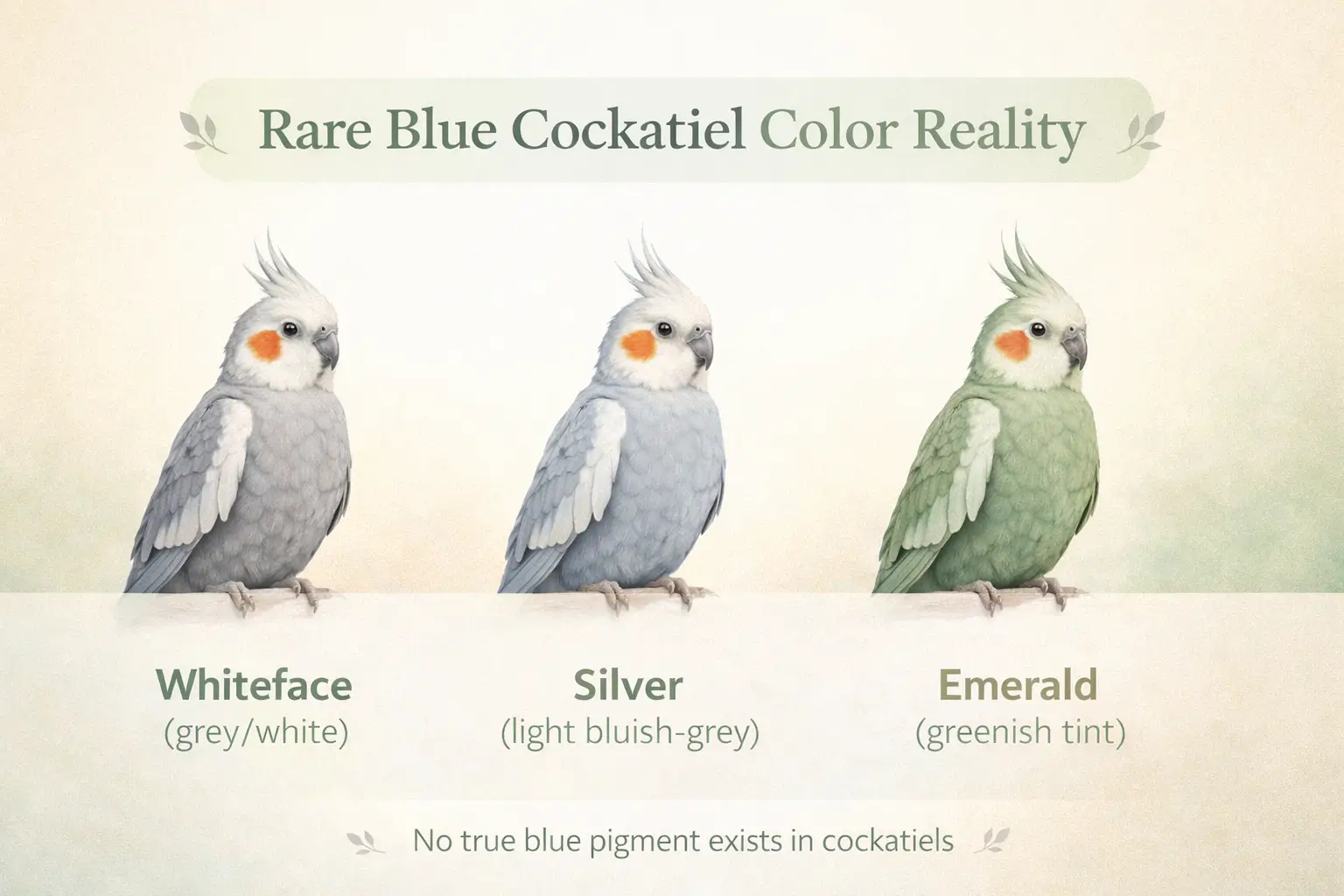
So-called “blue cockatiels” are usually mutations like:
- Whiteface (cool grey tones)
- Silver mutation (soft bluish-grey look)
- Emerald (greenish tint under light)
Similar color variations can be seen in birds like the leucistic cardinal, where genetic mutations create unusual and striking appearances.
These variations are part of broader cockatiel mutations, not true blue pigment. Trying to identify your own bird’s exact mutation can get confusing fast, since many colors overlap visually. Use this free cockatiel mutation identification tool to compare your bird’s markings against known genetic variants in seconds.
Suitability For Families
Cockatiels are excellent for families and beginners. They are less demanding than larger parrots and adapt well to home environments.
Activity Level
Moderately active. They need daily out-of-cage time and mental stimulation but are not hyperactive like some parrots.
Compatibility With Others
They generally get along with other cockatiels. With other pets, supervision is necessary.
Daily Care Essentials
Feeding Routine Basics
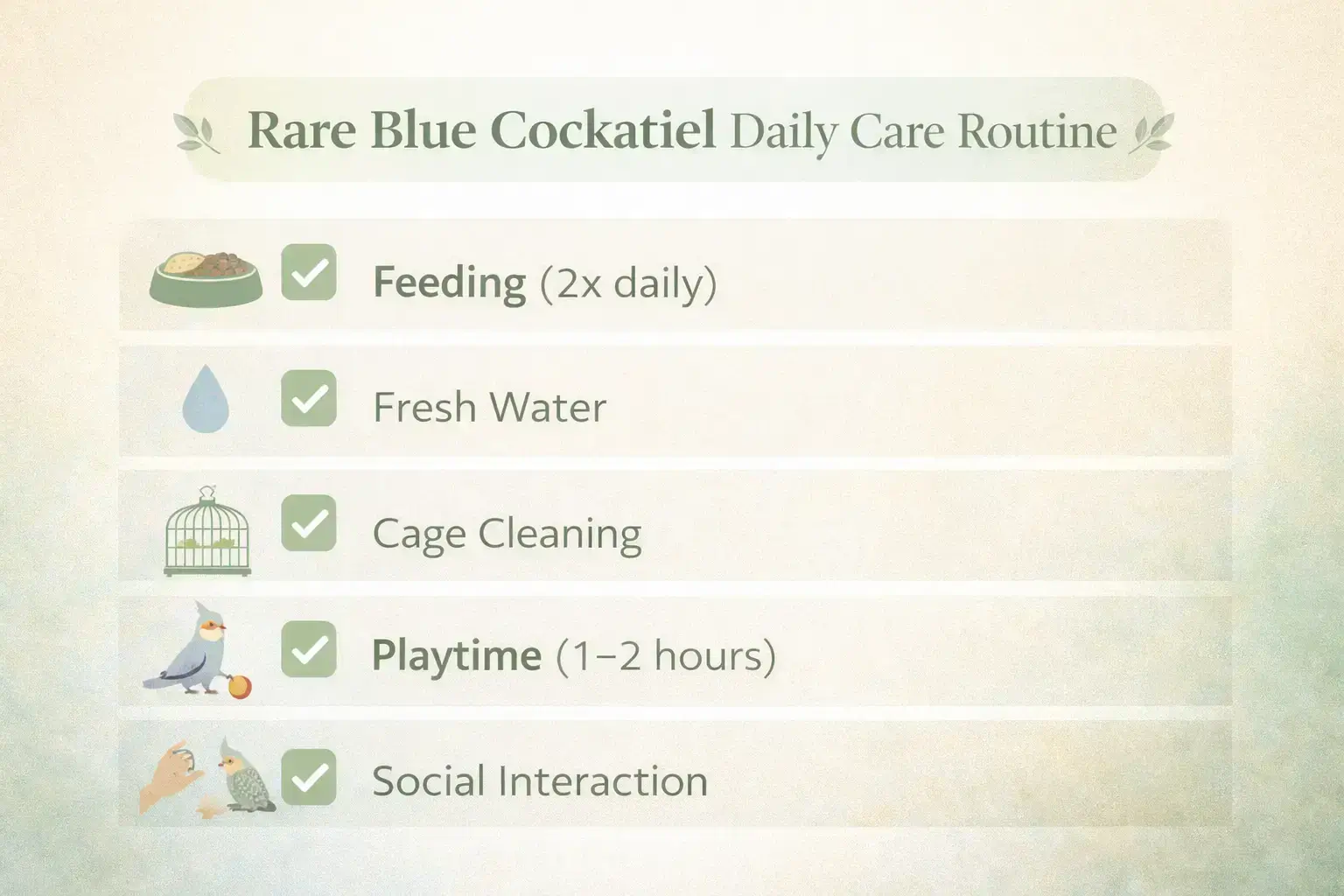
- Feed twice daily (morning and evening)
- Provide fresh water at all times
- Remove leftover fresh food within a few hours
Grooming And Hygiene
- Weekly cage cleaning
- Occasional misting or bathing
- Nail trimming when needed
Exercise Needs Daily
- At least 1–2 hours outside the cage
- Safe flying space or supervised play
Social Interaction Importance
Cockatiels are social birds. Without interaction, they may become lonely or stressed. Daily talking, whistling, or handling is important.
Diet & Nutrition Guide
Balanced Diet Requirements
A healthy cockatiel diet includes:
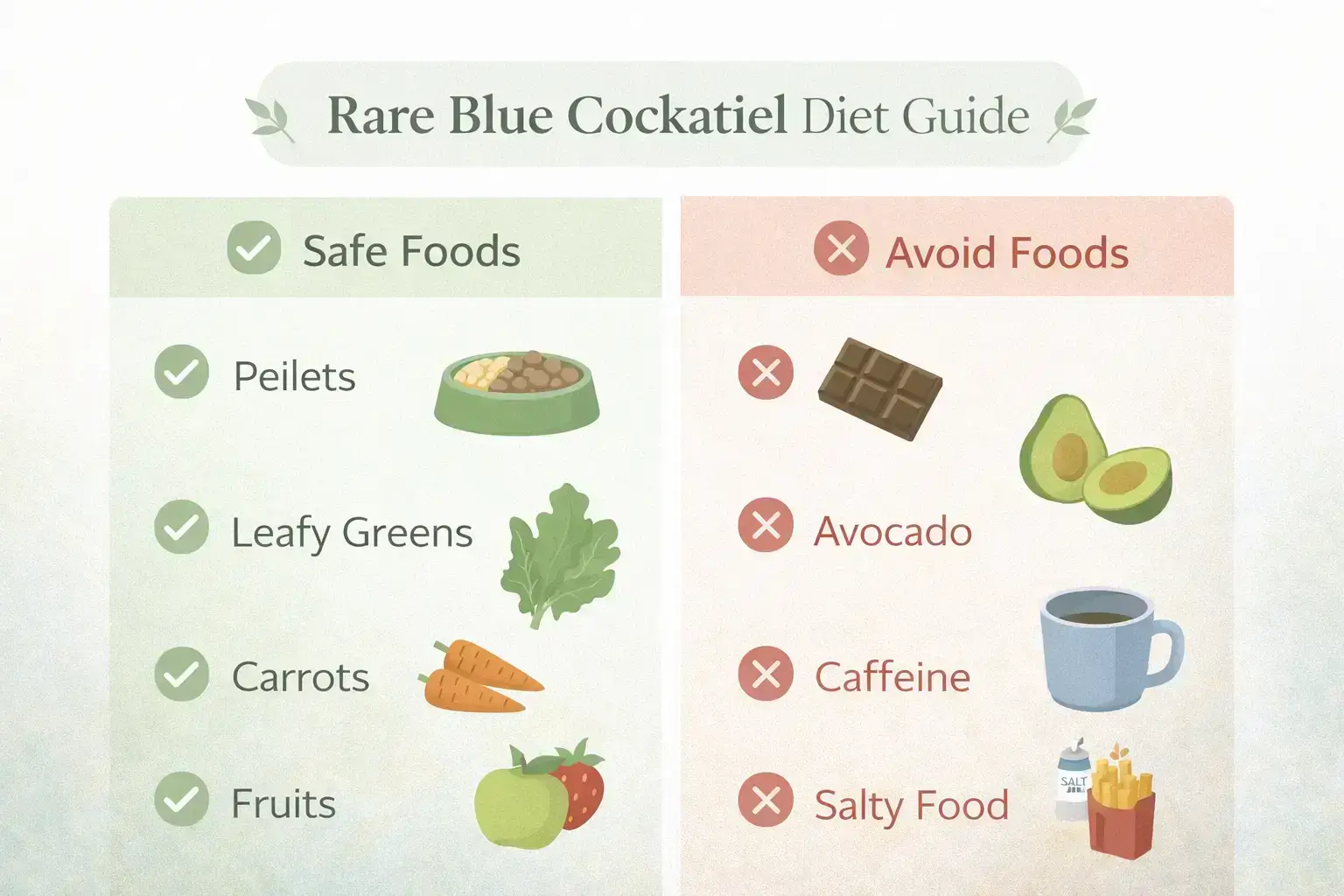
- High-quality pellets (main diet)
- Fresh vegetables (spinach, carrots, broccoli)
- Small amounts of seeds
- Occasional fruits (apple, banana)
Feeding Schedule Guide
- Morning: pellets + vegetables
- Evening: small seed portion + fruit (optional)
Safe And Unsafe Foods
Safe foods:
- Leafy greens
- Cooked rice
- Carrots and peas
Avoid:
- Chocolate
- Avocado
- Caffeine
- Salty or processed foods
Age Based Feeding Tips
Young birds:
- Require more frequent feeding
- Need soft, easy-to-eat foods
Adults:
- Maintain balanced pellet-based diet
Seniors:
- Softer foods
- Monitor weight and appetite closely
Exercise & Mental Stimulation
Daily Activity Needs
Cockatiels need both physical and mental activity every day.
Enrichment Ideas At Home
- Hanging toys and swings
- Mirrors (use sparingly)
- Foraging toys with hidden food
- Simple puzzle toys
Playtime Activities
- Whistle training sessions
- Hand-perch training
- Safe room exploration
Mental stimulation helps prevent boredom and destructive behaviors.
Training & Behavior Guidance
Basic Training Methods
Start with simple commands:
- Step-up training
- Recall training (coming when called)
Use positive reinforcement like treats or praise.
Socialization Tips Early
Expose your cockatiel to:
- Different people
- Household sounds
- Gentle handling
This builds confidence and reduces fear.
Preventing Behavior Problems
Common issues include:
- Screaming
- Biting
- Feather plucking
Prevention:
- Maintain routine
- Provide stimulation
- Avoid sudden environmental changes
Health & Climate Considerations
Common Health Concerns
- Respiratory infections
- Feather plucking
- Nutritional deficiencies
Watch for signs like:
- Lethargy
- Loss of appetite
- Fluffed feathers
Heat And Climate Safety
In warmer regions:
- Keep birds in well-ventilated areas
- Avoid direct sunlight
- Provide fresh water frequently
Cold Weather Care
- Keep away from drafts
- Maintain stable indoor temperature
- Provide cozy perches
Cockatiels are sensitive to temperature extremes.
Common Problems & Troubleshooting
Refusing Food Suddenly
Cause:
- Stress or illness
Solution:
- Check environment changes
- Offer favorite foods
- Consult a vet if it continues
Prevention:
- Maintain consistent feeding routine
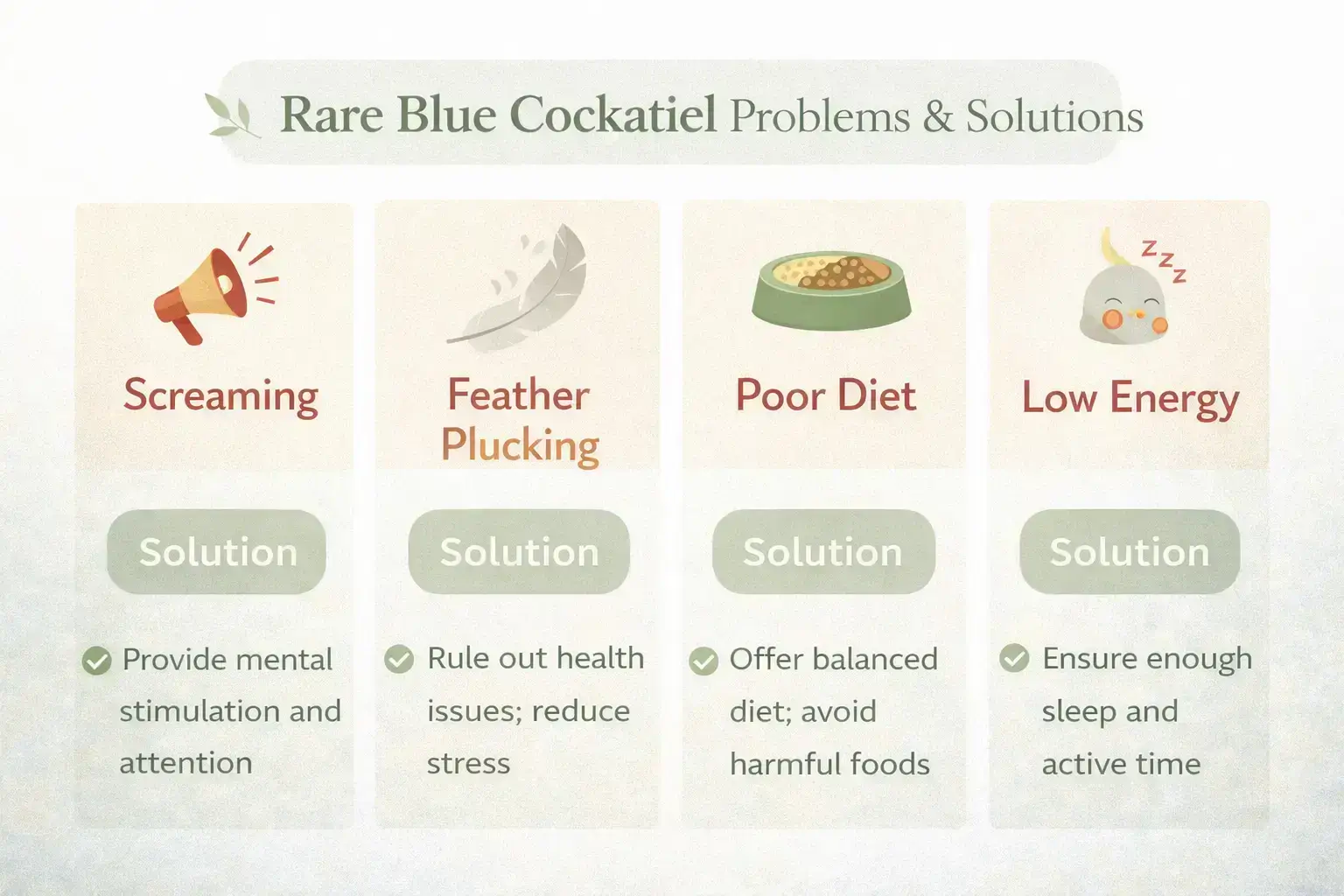
Excessive Screaming Behavior
Cause:
- Boredom or attention-seeking
Solution:
- Increase interaction
- Add toys
Prevention:
- Daily engagement and routine
Feather Plucking Issues
Cause:
- Stress, loneliness, or poor diet
Solution:
- Improve diet
- Increase mental stimulation
Prevention:
- Balanced nutrition and social time
Low Energy Or Activity
Cause:
- Illness or poor diet
Solution:
- Review diet
- Ensure proper lighting
Prevention:
- Regular health checks
Seasonal Pet Care Tips
Spring Care Adjustments
- Increase activity and playtime
- Watch for seasonal allergies
Summer Heat Protection
- Keep cool environment
- Provide extra hydration
- Avoid overheating
Fall Routine Changes
- Maintain consistent feeding
- Adjust activity levels slightly
Winter Comfort Care
- Keep warm indoor space
- Reduce exposure to cold air
- Provide indoor enrichment
Additional Expert Tips
- Don’t be misled by the term “blue cockatiel”—focus on health, not color rarity
- Avoid overfeeding seeds; they lead to obesity
- Keep a consistent daily routine—cockatiels thrive on predictability
- Spend time daily building trust—it improves behavior and bonding
- Regular vet checkups help catch issues early
Color differences don’t change care needs, much like with birds such as the yellow quaker parrot, where appearance varies but daily care remains consistent. If you want to track and compare mutation traits side by side before buying or breeding, this downloadable cockatiel mutation comparison spreadsheet is a handy reference to keep on hand.
Conclusion
A “rare blue cockatiel” may not be truly blue, but that doesn’t make it any less special. What matters most is understanding your bird’s needs, not just its appearance. These birds are affectionate, intelligent, and relatively easy to care for when given proper attention.
The biggest mistakes new owners make are focusing too much on color, neglecting diet balance, and underestimating social needs. If you prioritize nutrition, interaction, and a stable environment, your cockatiel will thrive for many years.
Owning a cockatiel is less about rarity—and more about building a strong, healthy relationship with your bird.
FAQs
-
Is there really a blue cockatiel?
No, true blue pigment does not exist in cockatiels. Some mutations may look bluish under certain lighting.
-
How much care does a cockatiel need daily?
They need at least 1–2 hours of interaction and regular feeding, cleaning, and stimulation.
-
What is the rarest cockatiel color?
Mutations like emerald, silver, and certain whiteface combinations are considered rare.
-
Can cockatiels live in hot climates?
Yes, but they need shade, ventilation, and constant access to fresh water.
-
Why is my cockatiel screaming more than usual?
It could be boredom, stress, or a need for attention.
-
How often should I clean my cockatiel’s cage?
Spot clean daily and do a deep clean at least once a week.




4 Responses