
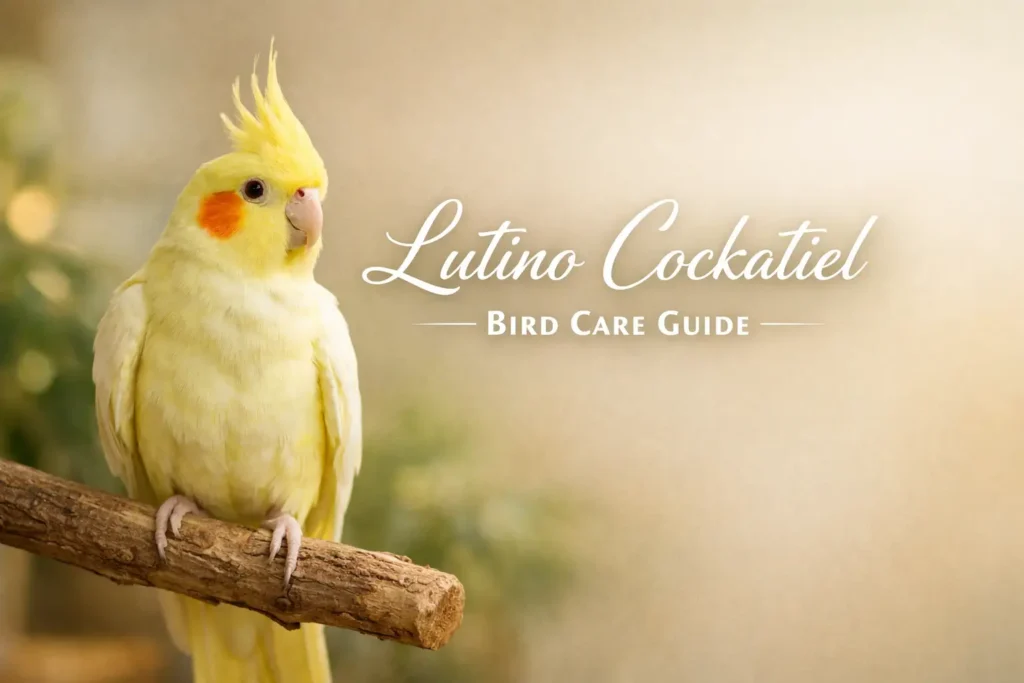
Lutino Cockatiel Bird are one of the most eye-catching and beloved pet birds, known for their bright yellow feathers, orange cheek patches, and gentle personality. They’re often chosen by first-time bird owners because they’re friendly, relatively easy to care for, and highly social.
What makes caring for a lutino cockatiel unique is their sensitivity—especially to diet, light, and emotional interaction. Many new owners underestimate how much attention these birds need, which can lead to issues like loneliness, feather problems, or poor health.
Pet Care Insight
This guide is based on widely accepted pet care practices, veterinary guidance, and common experiences shared by responsible pet owners. The goal is to provide practical, easy-to-follow advice that helps owners keep their pets healthy, comfortable, and well cared for.
Pet Overview
The lutino cockatiel is a color mutation of the Cockatiel, a small parrot species native to Australia known for its friendly and adaptable nature.
Temperament And Personality
Lutino cockatiels are affectionate, curious, and social birds. They enjoy human interaction and can form strong bonds with their owners. Many will whistle, mimic sounds, and even learn simple tricks.
Lifespan And Size
A healthy lutino cockatiel bird lifespan typically ranges between 12–20 years with proper care. They grow to about 12–13 inches in length, including their tail.
Physical Appearance
These birds are known for their striking yellow or white plumage with bright orange cheek patches and red or pink eyes due to the lutino mutation.
If you’re interested in unique cockatiel variations, you can also explore this guide on the rare blue cockatiel to understand how different mutations compare in appearance and care needs.
Suitability For Families
They are excellent pets for families, including homes with children (with supervision). Their gentle nature makes them less aggressive than many other parrots.
Activity Level And Social Needs
Cockatiels are moderately active but highly social. They need daily interaction and mental stimulation to stay happy.
Daily Care Essentials
Many small pet birds share similar care routines, and this daily dove care guide also highlights simple daily habits that help maintain a clean and healthy environment.
Feeding Routine Basics
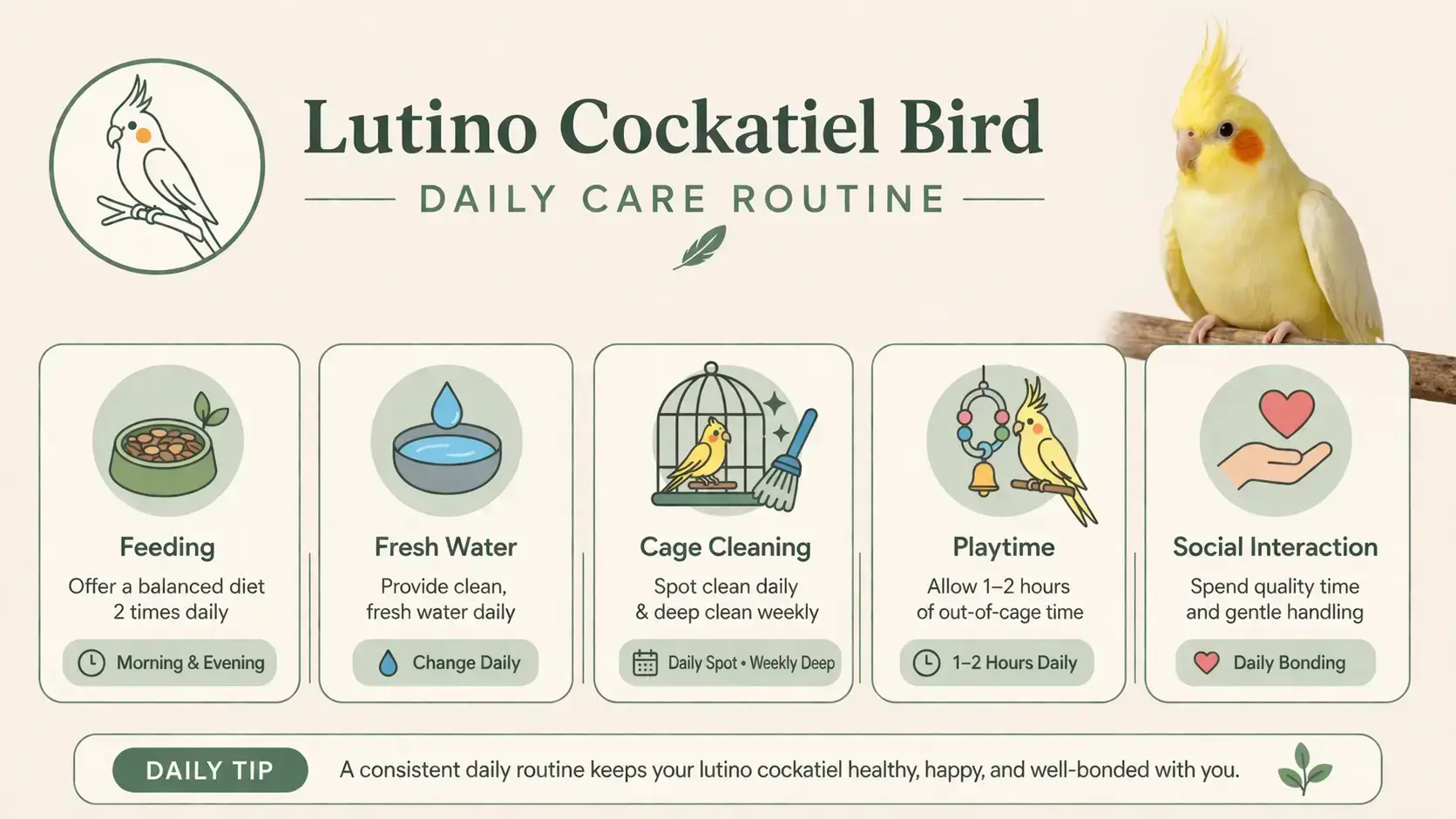
Feed your cockatiel twice daily with a balanced mix of pellets, seeds, and fresh foods. Always provide fresh water.
Grooming And Hygiene
- Trim nails when needed
- Provide a shallow water dish for bathing
- Keep the cage clean (daily spot cleaning, weekly deep cleaning)
Cage Setup And Space
- Minimum cage size: 18x18x24 inches
- Include perches of different sizes
- Add toys for stimulation
Social Interaction Needs
Lutino cockatiels should get at least 1–2 hours of interaction daily. Without this, they can become stressed or withdrawn.
Diet & Nutrition Guide
Balanced Diet Essentials
A healthy lutino cockatiel bird food plan includes:
- 60–70% high-quality pellets
- 20–30% seeds (in moderation)
- Fresh vegetables and occasional fruits
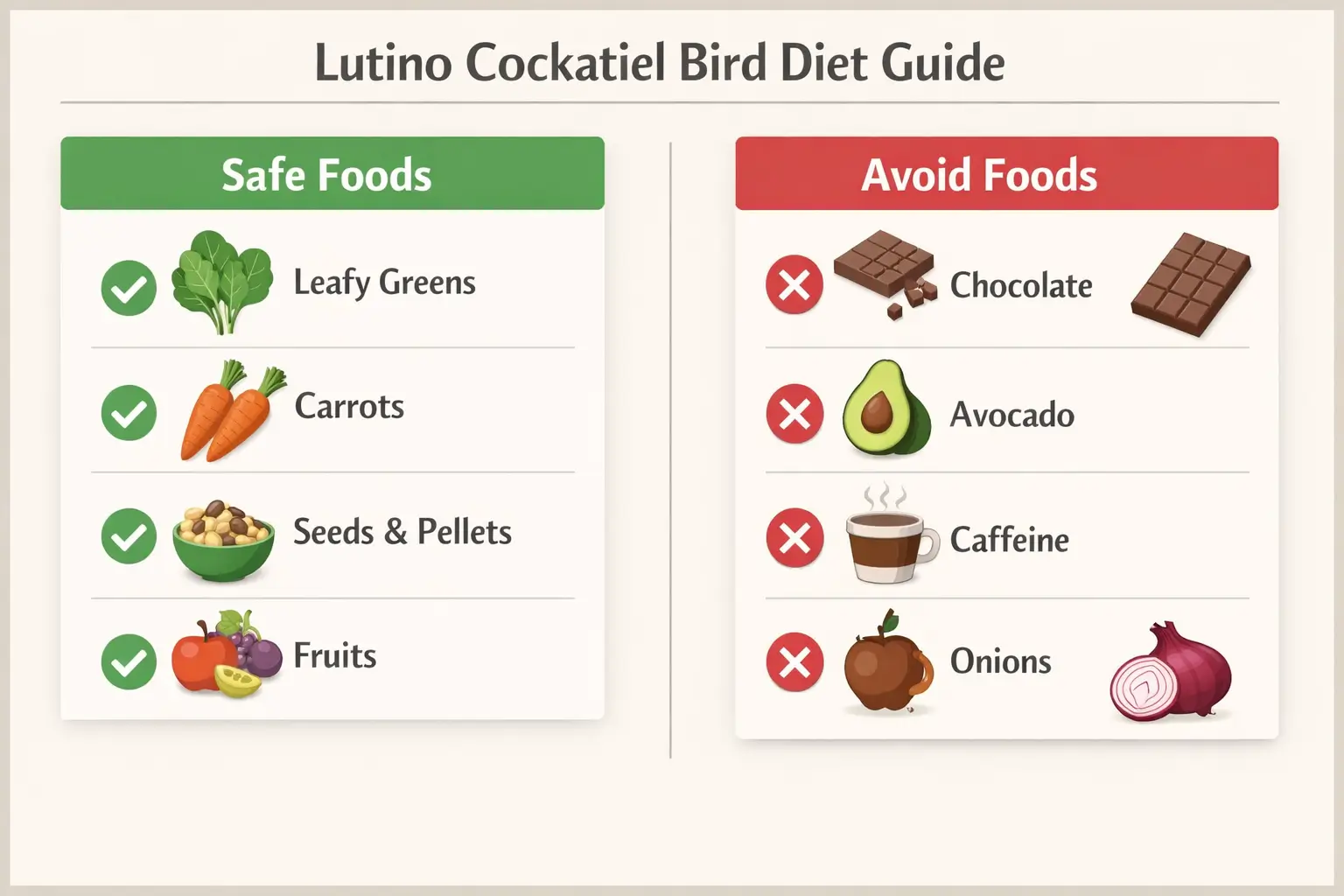
Safe Foods For Cockatiels
- Leafy greens (spinach, kale)
- Carrots, peas
- Apples (no seeds), bananas
Unsafe Foods To Avoid
- Chocolate
- Avocado
- Caffeine
- Onions and garlic
Feeding By Life Stage
Young (Baby Cockatiel)
- Soft foods and hand-feeding formula
- Frequent small meals
Adult Cockatiel
- Balanced pellet-based diet
- Controlled seed intake
Senior Cockatiel
- Softer foods if needed
- Monitor weight and appetite closely
Exercise & Mental Stimulation
Similar to other intelligent birds like the blue quaker parrot lutino cockatiels need regular mental stimulation and social interaction to stay happy and avoid boredom-related behaviors.
Daily Activity Needs
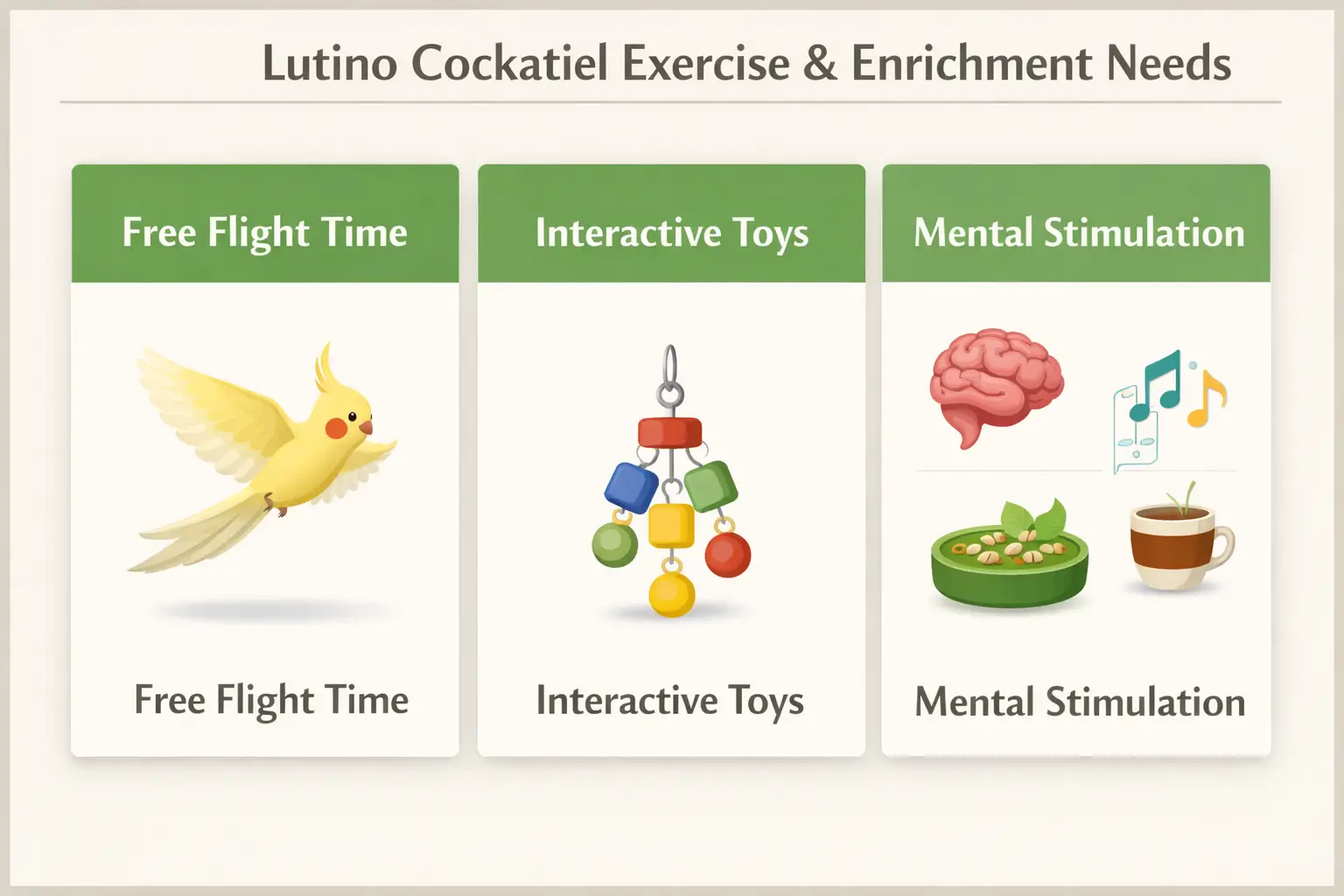
Cockatiels need time outside the cage daily to stretch, fly, and explore safely.
Simple Enrichment Ideas
- Hanging toys
- Mirrors (in moderation)
- Puzzle feeders
- Music or whistling interaction
Preventing Boredom
Rotate toys weekly and introduce new objects occasionally to keep their environment engaging.
Training & Behavior Guidance
Basic Training Tips
- Use positive reinforcement (treats, praise)
- Keep sessions short (5–10 minutes)
- Be consistent with commands
Socialization Advice
Expose your bird to different sounds, people, and environments gradually to build confidence.
Preventing Behavior Issues
Common issues like biting or screaming often come from boredom or lack of attention. Consistent interaction helps prevent this.
Health & Climate Considerations
Common Health Concerns
- Feather plucking
- Respiratory issues
- Vitamin deficiencies
Climate Sensitivity
Lutino cockatiels are sensitive to temperature changes:
- Ideal range: 20–25°C
- Avoid direct sunlight for long periods
- Keep away from drafts and air conditioners
Hydration And Heat Care
In warmer climates, ensure:
- Constant access to fresh water
- Shade and ventilation
- Occasional misting for cooling
Common Problems & Troubleshooting
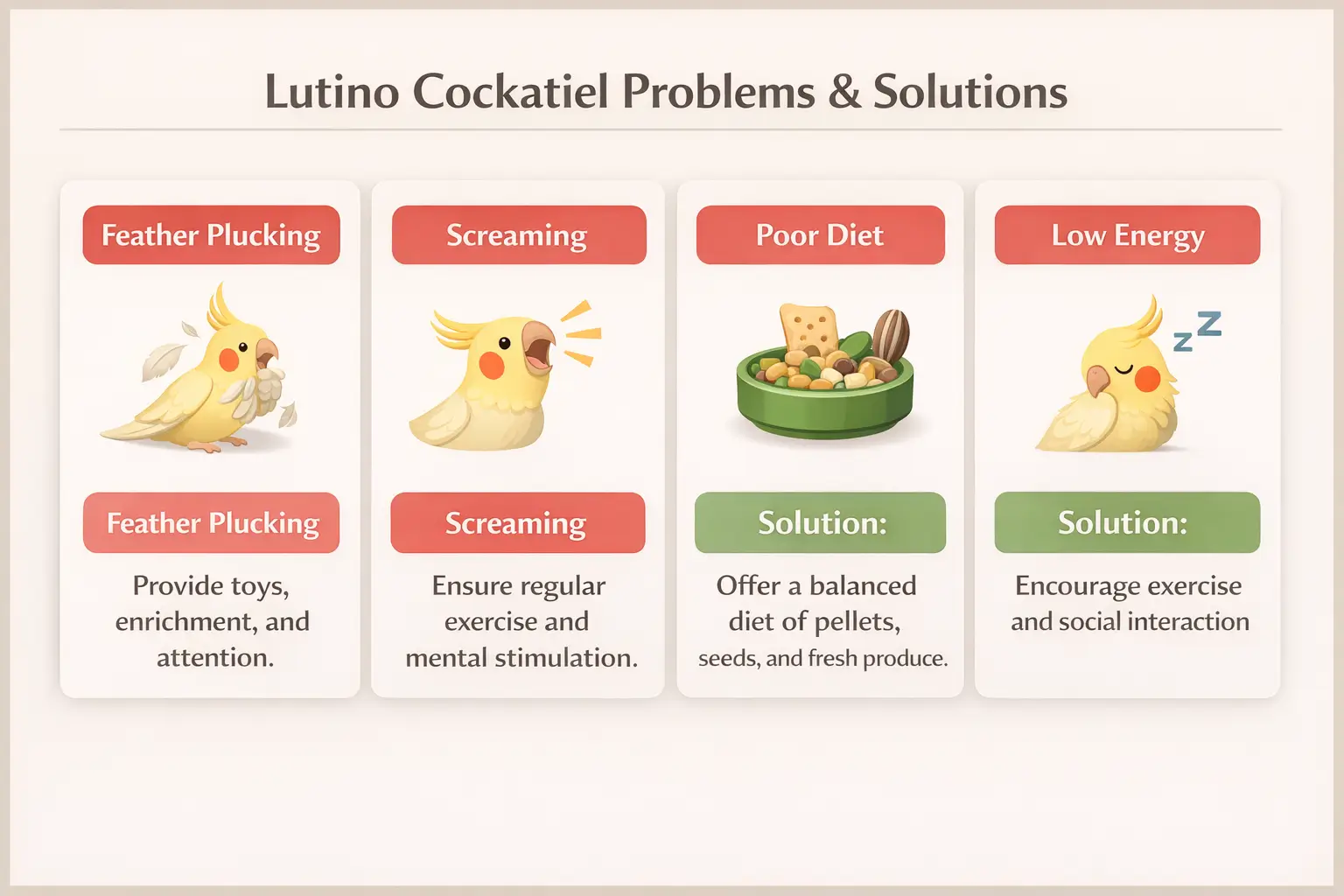
Feather Plucking Issues
Cause: Stress, boredom, poor diet
Solution: Improve diet, add enrichment, increase interaction
Prevention: Maintain routine and mental stimulation
Excessive Screaming Behavior
Cause: Attention-seeking or loneliness
Solution: Spend more time interacting
Prevention: Establish a daily routine
Poor Appetite Problems
Cause: Sudden diet change or illness
Solution: Gradually introduce new foods
Prevention: Keep diet consistent
Low Energy Signs
Cause: Nutritional deficiency or illness
Solution: Improve diet and consult a vet if needed
Prevention: Balanced nutrition and regular monitoring
Seasonal Pet Care Tips
Summer Care Tips
- Keep cage in a cool, shaded area
- Increase water availability
- Avoid overheating
Winter Care Tips
- Keep bird warm and away from cold drafts
- Reduce exposure to sudden temperature drops
Spring And Fall Adjustments
- Monitor for seasonal changes in behavior
- Adjust activity levels accordingly
Additional Expert Tips
- Avoid keeping your bird alone for long periods
- Do not rely only on seeds—they can cause obesity
- Maintain a consistent daily routine
- Observe your bird’s behavior daily for early health signs
- Provide natural sunlight (indirect) for vitamin D
If you enjoy learning about unique pets, you might also find this comparison of sugar glider vs flying squirrel helpful when exploring different companion animals.
Conclusion
Caring for a lutino cockatiel bird is both rewarding and manageable when you understand their needs. They thrive on balanced nutrition, daily interaction, and a safe, stimulating environment. The most common mistakes—like poor diet or lack of attention—are easy to avoid once you know what your bird needs.
With proper care, these beautiful and friendly birds can live long, happy lives and become a cherished part of your home.
FAQs
-
How can I tell if my lutino cockatiel is male or female?
Males are usually more vocal and whistle more, while females are quieter and may have subtle markings under their tail.
-
How long does a lutino cockatiel live?
With good care, they can live between 12 to 20 years.
-
What is the difference between lutino cockatiel male and female?
The main difference is behavior—males are more active and vocal, females are calmer and quieter.
-
How often should I feed my cockatiel?
Feed twice daily with access to fresh food and water at all times.
-
Why is my cockatiel losing feathers?
It could be molting, but excessive feather loss may indicate stress or poor diet.
-
Can lutino cockatiels live alone?
They can, but they need daily interaction. Otherwise, they may become lonely.
-
What should I feed a baby lutino cockatiel?
A special hand-feeding formula designed for baby birds is recommended until they are weaned.




One Response