

The white mini goldendoodle has become one of the most sought-after family dogs—and for good reason. With its soft, fluffy coat, friendly personality, and manageable size, it blends the intelligence of a poodle with the warmth of a golden retriever. Many first-time dog owners are drawn to this breed expecting a low-maintenance companion, but that’s where common mistakes begin.
Despite their “teddy bear” appearance, these dogs require consistent grooming, mental stimulation, and structured routines. Owners who underestimate their energy levels or coat care often struggle early on. Understanding their real needs is what makes the difference between a stressful experience and a truly rewarding one.
Pet Care Insight
This guide is based on widely accepted pet care practices, veterinary guidance, and common experiences shared by responsible pet owners. The goal is to provide practical, easy-to-follow advice that helps owners keep their pets healthy, comfortable, and well cared for.
Pet Overview
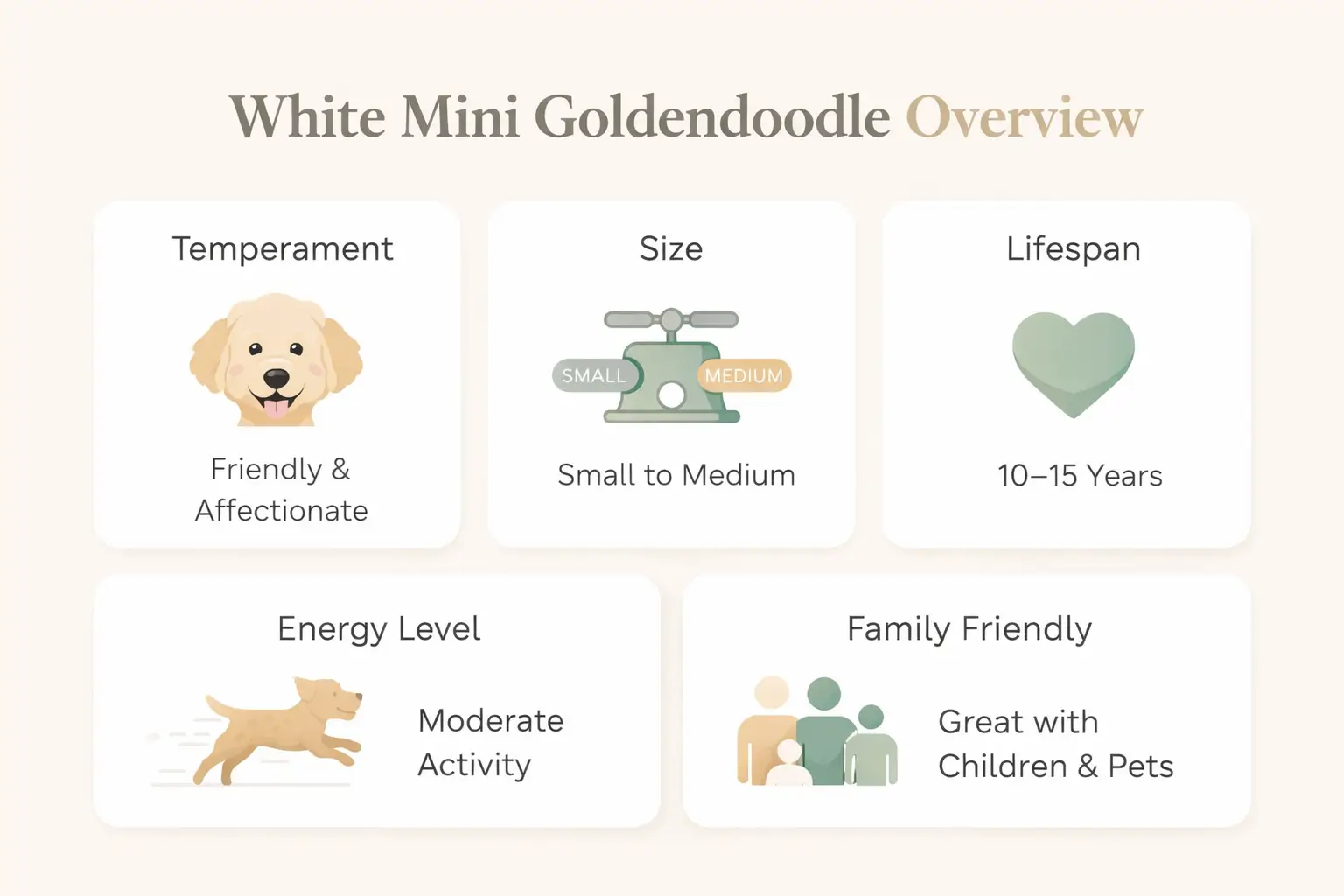
Gentle Friendly Temperament
White mini goldendoodles are known for their affectionate, social nature. The breed is a cross between a Golden Retriever and a Poodle, combining intelligence and friendliness—learn more about the Goldendoodle and its origins. They thrive on human interaction and often form strong bonds with their families. They’re rarely aggressive and tend to get along well with children and other pets.
Compact Manageable Size
A white mini goldendoodle full grown typically weighs between 15–35 pounds, making them ideal for both apartments and houses. Their small-to-medium size is one of the biggest reasons for their popularity.
Lifespan And Health
They usually live 10–15 years with proper care. Like all mixed breeds, they can inherit health traits from both parent breeds, so regular vet checkups are important.
Family Compatibility
This breed is highly family-friendly. They’re patient with kids and adaptable to different lifestyles, but they don’t do well when left alone for long periods.
Energy And Activity Level
They are moderately active dogs. Not hyper, but definitely not lazy either. Daily movement and mental engagement are essential.
Daily Care Essentials
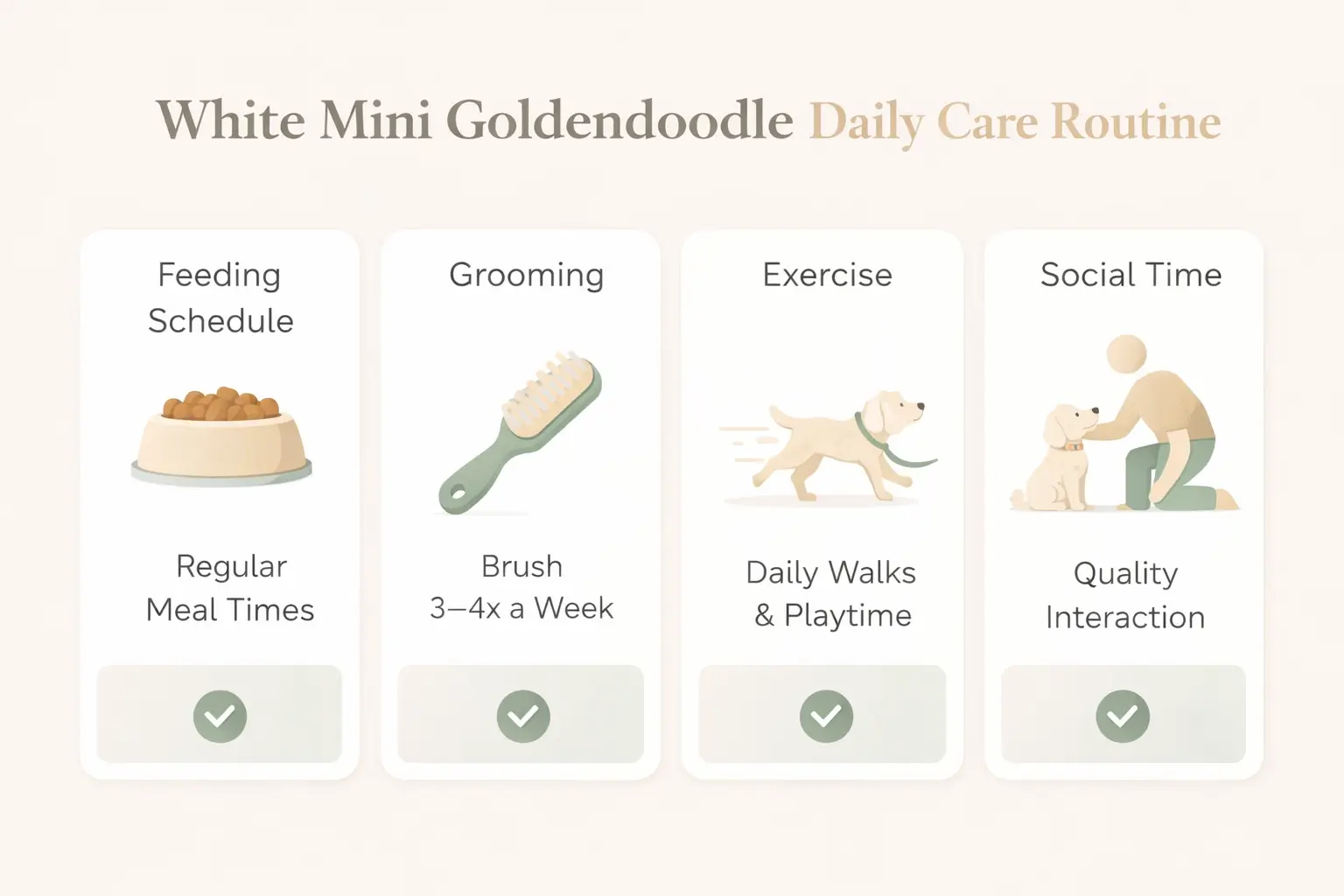
Consistent Feeding Routine
Feed your dog at the same times daily. Consistency helps digestion and behavior.
Regular Grooming Needs
Their soft, curly or wavy coat requires brushing at least 3–4 times a week to prevent matting. Professional grooming every 6–8 weeks is recommended.
Daily Exercise Requirement
Aim for at least 30–60 minutes of activity daily. This can include walks, playtime, or interactive games.
Social Interaction Needs
White mini goldendoodles crave companionship. They don’t thrive in isolation and can develop anxiety if ignored.
Diet & Nutrition Guide
Balanced Nutritional Needs
A high-quality diet rich in protein, healthy fats, and essential vitamins is key. Avoid fillers and overly processed food.
Feeding Schedule By Age
If your dog develops dental issues later in life, adjusting their diet becomes essential—this guide on what to feed dogs with no teeth can help you choose softer, safe options.
Puppies (white mini goldendoodle puppy):
• 3–4 small meals per day
• Focus on growth-supporting nutrition
Adults (white mini goldendoodle adult):
• 2 balanced meals daily
• Maintain portion control to prevent weight gain
Seniors:
• Lower calorie intake
• Joint-support supplements may help
Portion Control Tips
Overfeeding is a common issue. Follow portion guidelines based on weight and activity level rather than guessing.
Safe Vs Unsafe Foods
Maintaining oral health is just as important as diet, and using the best dental chew for dogs can help reduce plaque buildup and keep your goldendoodle’s teeth clean.
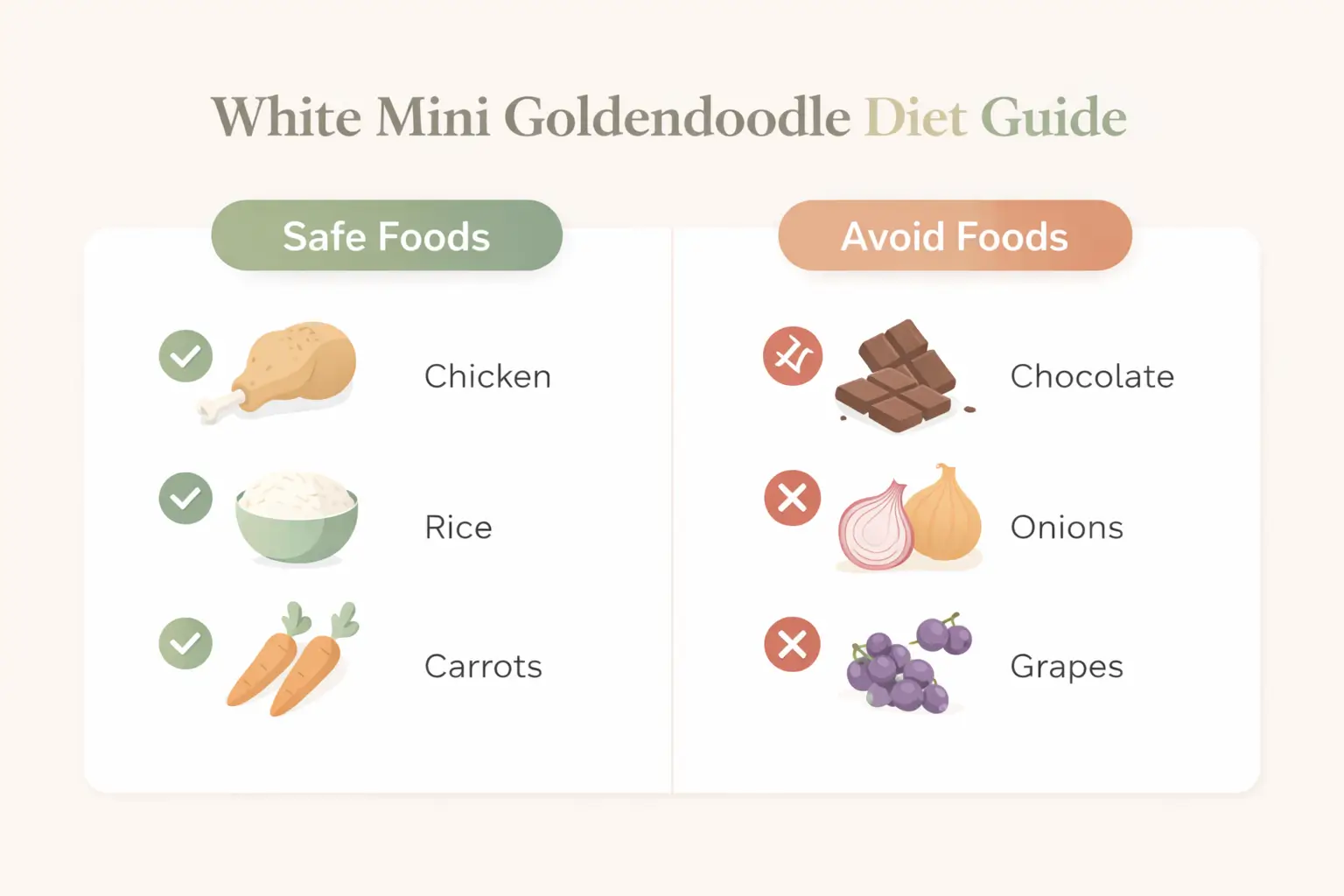
Safe:
• Cooked chicken
• Rice
• Carrots
Avoid:
• Chocolate
• Onions
• Grapes
• Fatty or fried foods
Exercise & Mental Stimulation
Daily Activity Ideas
• Morning and evening walks
• Fetch games
• Light jogging (for active dogs)
Mental Enrichment Activities
• Puzzle toys
• Training games
• Hide-and-seek with treats
Indoor Play Options
• Tug toys
• Interactive feeders
• Basic obedience drills
A bored goldendoodle often becomes destructive—mental stimulation is just as important as physical exercise.
Training & Behavior Guidance
Early Obedience Training
Start training early, especially during the puppy stage. Basic commands like sit, stay, and come should be introduced early.
Positive Reinforcement Approach
Reward good behavior with treats, praise, or playtime. Avoid harsh punishment—it damages trust.
Socialization Importance
Expose your dog to different people, sounds, and environments early. This prevents fear-based behaviors later.
Preventing Common Behavior Issues
• Chewing: Provide proper chew toys
• Barking: Address triggers early
• Separation anxiety: Gradual alone-time training
Health & Climate Considerations
Heat Sensitivity Awareness
Their thick coat can make them prone to overheating.
In hot climates:
• Walk early morning or evening
• Provide constant access to fresh water
• Avoid hot pavement
Cold Weather Care
While their coat provides some insulation, they still benefit from:
• Warm bedding
• Limited exposure to extreme cold
Common Health Concerns
Watch for early warning signs like bad breath, swelling, or reduced appetite, as these may indicate serious issues—understanding the symptoms of dog tooth infection can help you act early.
• Ear infections (due to floppy ears)
• Skin irritation
• Hip issues
Regular grooming and hygiene help prevent many of these.
Common Problems & Troubleshooting
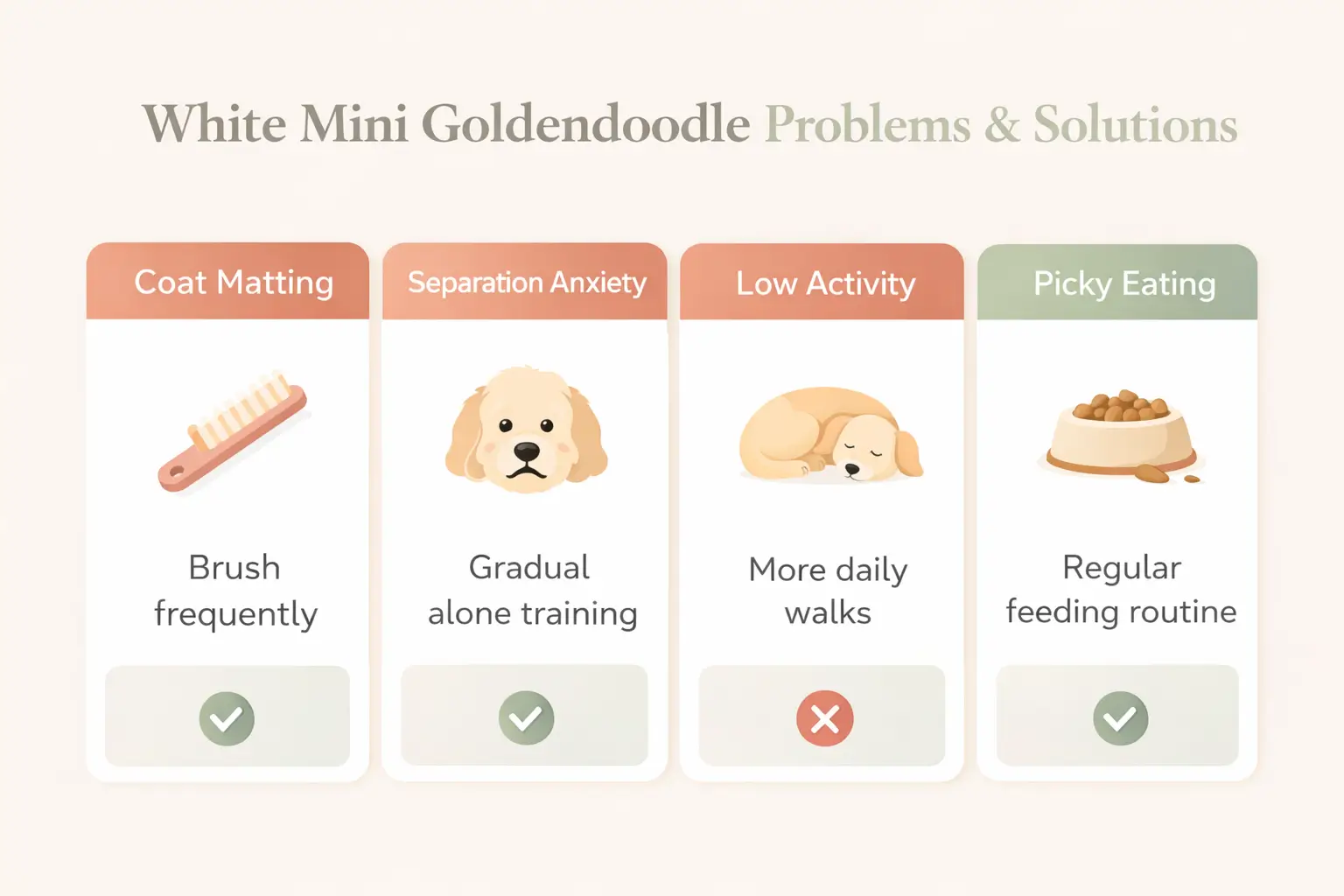
Coat Matting Issues
Cause: Irregular brushing
Solution: Brush frequently and schedule grooming
Prevention: Maintain a weekly grooming routine
Excessive Energy Indoors
Cause: Lack of exercise
Solution: Increase daily walks and playtime
Prevention: Structured activity schedule
Separation Anxiety
Cause: Too much dependence on owners
Solution: Gradual independence training
Prevention: Avoid constant attention dependency
Picky Eating Habits
Cause: Over-treating or inconsistent feeding
Solution: Stick to fixed meal times
Prevention: Avoid frequent food changes
Seasonal Pet Care Tips
Spring Care Routine
• Watch for allergies
• Increase outdoor activity gradually
Summer Protection Tips
• Prevent overheating
• Ensure hydration at all times
Fall Adjustment Needs
• Maintain exercise as temperatures drop
• Check for fleas and ticks
Winter Care Essentials
• Keep them warm indoors
• Reduce exposure to cold surfaces
Additional Expert Tips
Regular professional cleanings also play a big role—knowing how vets clean dogs teeth helps you understand what to expect during routine dental care.
Avoid These Common Mistakes
• Skipping grooming routines
• Underestimating their energy needs
• Leaving them alone too long
Build Healthy Daily Habits
• Regular feeding schedule
• Daily walks
• Weekly grooming
Long-Term Care Considerations
• Invest in early training
• Maintain consistent routines
• Prioritize preventive healthcare
A well-cared-for white mini goldendoodle becomes an incredibly loyal and joyful companion.
Conclusion
The white mini goldendoodle is more than just a cute, fluffy dog—it’s a highly social, intelligent, and active companion that thrives on structure, care, and attention. Owners who succeed with this breed understand the importance of grooming, consistent training, and daily engagement.
Avoid the common mistakes of neglecting exercise or coat care, and focus instead on building a routine that supports both physical and emotional well-being. With the right approach, this breed offers years of companionship, affection, and happiness.
FAQs
How big does a white mini goldendoodle get full grown?
They typically weigh between 15–35 pounds and are considered small to medium-sized dogs.
How often should I groom a white mini goldendoodle?
Brush 3–4 times weekly and schedule professional grooming every 6–8 weeks.
Are white mini goldendoodles good for first-time owners?
Yes, but only if the owner is prepared for grooming and daily activity needs.
Do white mini goldendoodles shed a lot?
They are low-shedding, but not completely hypoallergenic. Regular grooming helps manage shedding.
How much exercise does a mini goldendoodle need daily?
About 30–60 minutes of physical activity plus mental stimulation.
Why is my mini goldendoodle so clingy?
They are naturally social dogs and can develop separation anxiety without proper training.
Can a white mini goldendoodle live in hot climates?
Yes, but they require heat precautions like shade, hydration, and limited midday activity.




3 Responses