

Miniature Irish Terrier dogs are gaining attention among dog lovers who want the bold personality of a terrier in a more compact size. While the standard Irish Terrier is already a medium-sized, energetic breed, the idea of a “miniature” version appeals to owners looking for something more manageable for modern homes.
However, this is where many new owners get confused. A true miniature Irish Terrier is not officially recognized as a separate breed, which means care expectations often mirror those of the standard Irish Terrier. Understanding this early helps prevent common mistakes like underestimating their energy level or assuming they behave like toy breeds.
Pet Care Insight
This guide is based on widely accepted pet care practices, veterinary guidance, and common experiences shared by responsible pet owners. The goal is to provide practical, easy-to-follow advice that helps owners keep their pets healthy, comfortable, and well cared for.
Pet Overview

Temperament And Personality Traits
Miniature Irish Terrier–type dogs are known for their confident, spirited, and sometimes stubborn nature. They are affectionate with their families but can be independent thinkers.
- Loyal and protective
- Highly alert (great watchdog traits)
- Playful but strong-willed
- Can be territorial with other pets
Lifespan And Physical Characteristics
Even in smaller variants, they typically resemble the classic Irish Terrier look:
- Lifespan: 12–15 years
- Coat: wiry, dense, and often red or wheaten
- Build: athletic and compact
- miniature irish terrier size: smaller than standard but still sturdy
The Irish Terrier is one of the oldest terrier breeds, known for its bold personality and distinctive wiry coat.
Suitability For Families
They can be excellent family dogs if trained properly.
- Good with older children
- May be too energetic for very young kids
- Best for active households
Activity Level And Compatibility
These dogs are not low-energy companions.
- Require daily exercise
- May chase smaller animals
- Can coexist with pets if socialized early
Daily Care Essentials
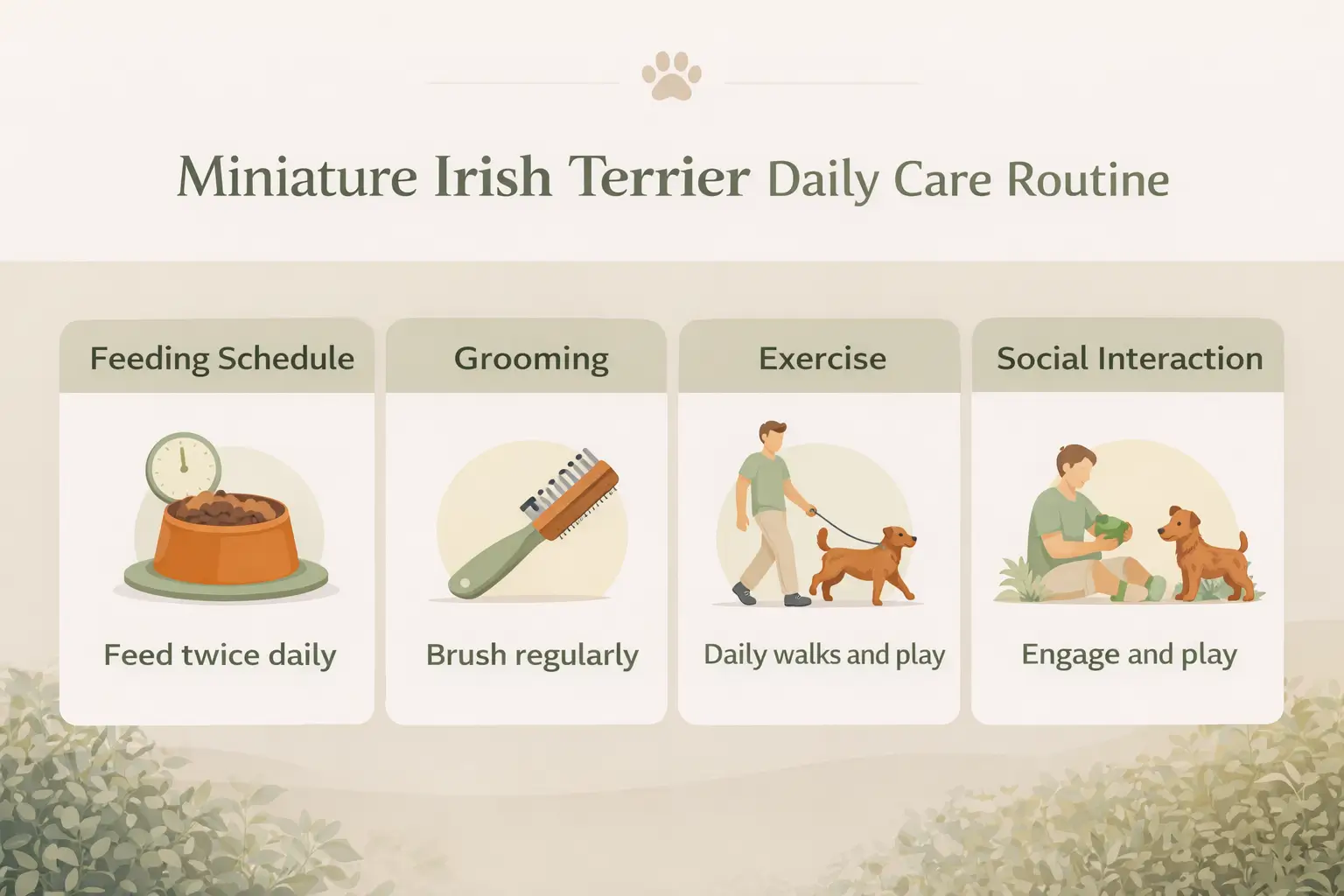
Feeding Routine And Portion Control
Consistency is key when feeding terrier-type dogs.
- Feed twice daily (morning and evening)
- Use portion sizes based on weight and activity
- Avoid overfeeding—they gain weight easily
Grooming Basics And Coat Care
Their wiry coat needs regular maintenance.
- Brush 2–3 times per week
- Hand-stripping or trimming every few months
- Occasional baths only when needed
Proper dental care is also essential for terrier breeds—using the best dental chew for dogs can help maintain oral hygiene and prevent plaque buildup.
Exercise Requirements And Daily Movement
These dogs need structured activity.
- 30–60 minutes of exercise daily
- Walks plus active playtime
- Secure outdoor space preferred
Social Interaction And Attention Needs
They thrive on companionship.
- Avoid leaving them alone for long hours
- Provide toys when unsupervised
- Regular interaction prevents boredom
Diet & Nutrition Guide

Feeding Schedule By Age
Puppies:
- 3–4 small meals daily
- Focus on growth-supporting nutrients
Adults:
- 2 balanced meals daily
- Maintain consistent feeding times
Seniors:
- Smaller portions
- Easier-to-digest food
Nutritional Needs And Balance
A balanced diet should include:
- High-quality protein for muscle health
- Healthy fats for coat condition
- Fiber for digestion
- Essential vitamins and minerals
Safe Foods And Unsafe Foods
Safe options (in moderation):
- Cooked chicken
- Plain rice
- Carrots and green beans
Avoid:
- Chocolate
- Onions and garlic
- Grapes and raisins
- Fatty leftovers
Practical Feeding Advice
- Always provide fresh water
- Avoid sudden diet changes
- Monitor weight regularly
Exercise & Mental Stimulation
Daily Activity Requirements
Miniature Irish Terrier–type dogs are energetic and need both physical and mental stimulation.
- At least one long walk daily
- Additional short play sessions
- Off-leash play in secure areas
Simple Play Ideas At Home
- Fetch games
- Tug toys
- Hide-and-seek with treats
Mental Enrichment Activities
- Puzzle feeders
- Training sessions
- Scent-based games
Without proper stimulation, they may develop destructive behaviors.
Training & Behavior Guidance
Basic Obedience Training Tips
Start training early to manage their strong personality.
- Use positive reinforcement
- Keep sessions short and consistent
- Focus on commands like sit, stay, and recall
Socialization Strategies
Early exposure is essential.
- Introduce them to different people
- Gradually expose to other animals
- Use calm, controlled environments
Preventing Common Behavior Issues
Common issues include barking and stubbornness.
Solutions:
- Provide enough exercise
- Avoid harsh punishment
- Reinforce calm behavior
Consistency is more important than intensity when training terriers.
Health & Climate Considerations
Watch for early warning signs like bad breath or discomfort, as these may indicate deeper issues explained in symptoms of dog tooth infection.
Common Health Concerns
While generally healthy, watch for:
- Skin sensitivities
- Dental issues
- Joint strain if overweight
Heat Sensitivity And Summer Care
In warmer climates:
- Walk during early morning or evening
- Provide constant hydration
- Avoid hot pavement
Cold Weather Considerations
Their coat offers some protection, but:
- Limit exposure in extreme cold
- Provide warm sleeping areas
- Use dog jackets if needed
Hydration And Seasonal Adjustments
Always adjust water intake and activity based on weather conditions.
Common Problems & Troubleshooting
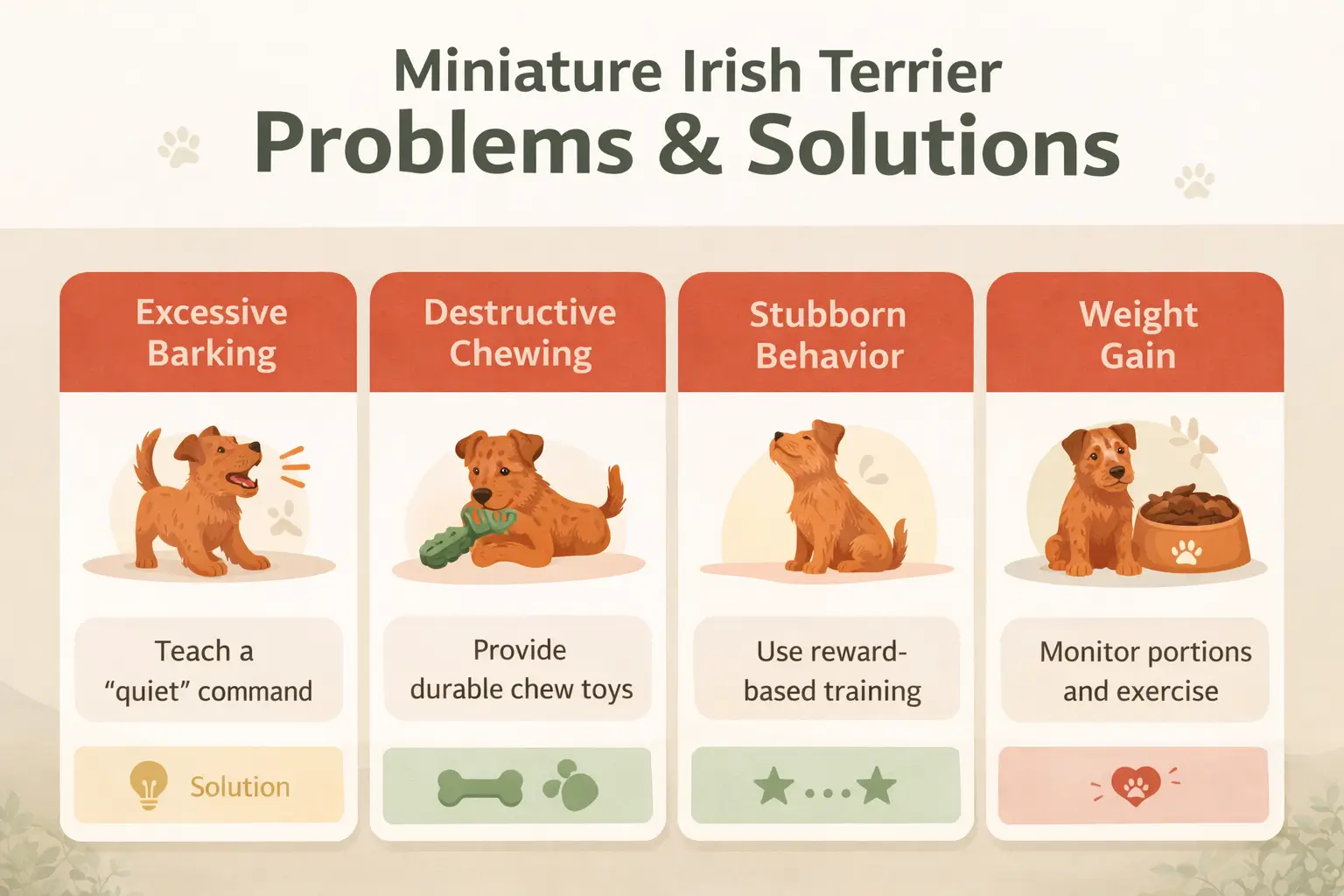
Excessive Barking And Alert Behavior
Cause: natural watchdog instinct
Solution:
- Train “quiet” command
- Avoid reinforcing barking
Prevention: early training and mental stimulation
Destructive Chewing
Cause: boredom or lack of exercise
Solution:
- Provide chew toys
- Increase daily activity
Prevention: structured routine
Stubborn Training Response
Cause: independent temperament
Solution:
- Use reward-based training
- Keep sessions engaging
Prevention: start training early
Weight Gain Issues
Cause: overfeeding or low activity
Solution:
- Measure food portions
- Increase exercise
Prevention: regular weight checks
Seasonal Pet Care Tips
Spring Care Routine
- Watch for allergies
- Increase outdoor activity gradually
Summer Protection Tips
- Prevent overheating
- Ensure constant hydration
- Provide shaded rest areas
Fall Adjustments
- Maintain exercise levels
- Watch for parasites
Winter Care Routine
- Keep them warm indoors
- Reduce exposure to harsh weather
- Increase indoor play activities
Additional Expert Tips
Common Beginner Mistakes
- Assuming they are low-energy due to “miniature” size
- Skipping early training
- Overfeeding treats
Simple Habits That Improve Health
- Daily brushing
- Regular vet checkups
- Consistent routines
Long-Term Care Considerations
- Plan for high activity throughout life
- Maintain dental hygiene
- Keep mental stimulation consistent
Conclusion
Miniature Irish Terrier–type dogs bring a bold personality in a smaller package, but they are far from low-maintenance. Their energy, intelligence, and independence require consistent care, training, and attention.
The biggest mistake new owners make is underestimating their needs. With proper exercise, structured routines, and early training, they can become loyal, lively, and rewarding companions.
If you focus on consistency, balanced care, and understanding their temperament, you’ll have a confident and happy dog that thrives in your home.
FAQs
-
Are miniature Irish Terriers officially recognized as a breed?
No, they are not officially recognized. Most are smaller variations or mixes.
-
How much exercise does a miniature Irish Terrier need daily?
Around 30–60 minutes of active exercise plus playtime.
-
Are they good with children?
Yes, especially with older children who understand how to interact with dogs.
-
Do they get along with other pets?
They can, but early socialization is important due to their strong prey drive.
-
How often should I groom them?
Brush 2–3 times weekly and trim or strip the coat every few months.
-
Are they suitable for apartment living?
Yes, but only if they get enough daily exercise and mental stimulation.




One Response