
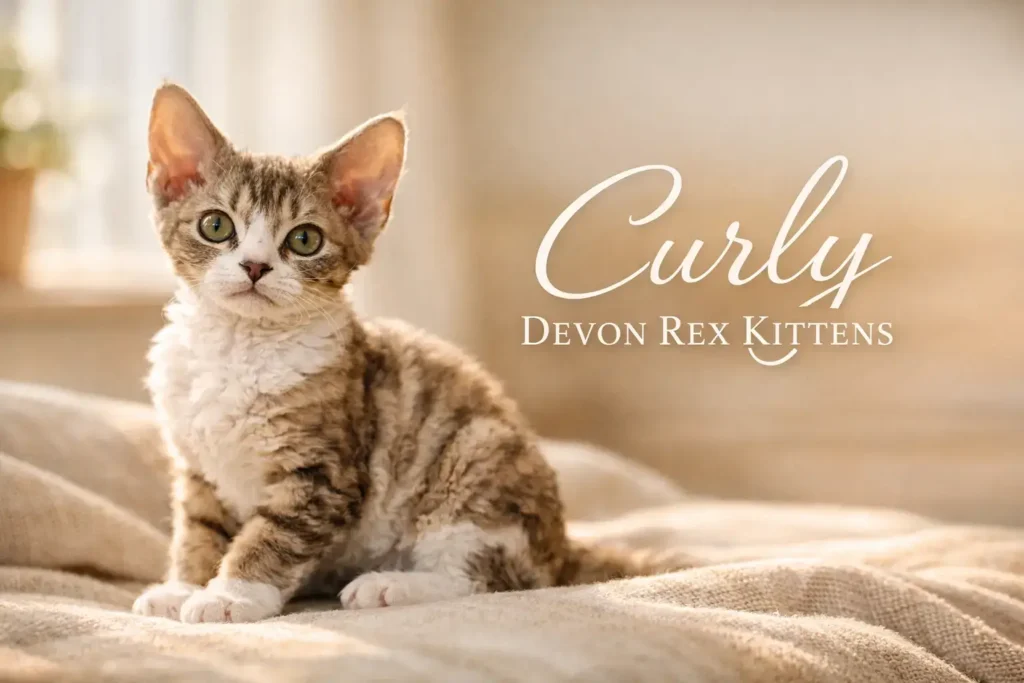
Curly Devon Rex kittens are quickly becoming one of the most loved cat breeds among pet owners—and it’s easy to see why. With their soft, wavy coats, oversized ears, and playful personality, they feel almost like a mix between a kitten and a mischievous little companion that never really grows up.
But owning a Devon Rex isn’t the same as owning a typical cat. Their unique coat, high energy, and strong need for human interaction mean they require a slightly different approach to care. One of the biggest mistakes new owners make is assuming they’re “low maintenance” just because they have less fur—when in reality, they need more attention in other ways.
Pet Care Insight
This guide is based on widely accepted pet care practices, veterinary guidance, and common experiences shared by responsible pet owners. The goal is to provide practical, easy-to-follow advice that helps owners keep their pets healthy, comfortable, and well cared for.
Pet Overview
The Devon Rex is a distinctive breed known for its curly coat and playful nature (learn more about the Devon Rex cat on Wikipedia).
Devon Rex Cat Temperament
Devon Rex kittens are extremely affectionate, social, and people-oriented. They often follow their owners around and love being involved in everything you do. Many owners describe them as “dog-like” because of their loyalty and playfulness.
They are:
- Highly interactive and playful
- Curious and intelligent
- Attention-seeking (in a good way)
Devon Rex Cat Characteristics
These curly-coated kittens have a very distinct appearance:
- Soft, wavy or curly coat (sometimes patchy as kittens)
- Large ears and wide eyes
- Slender body with long legs
Despite their delicate look, they are quite active and agile.
Devon Rex Lifespan
With proper care, Devon Rex cats typically live:
- 12 to 16 years
A healthy diet, regular vet visits, and mental stimulation all contribute to longevity.
Family Suitability And Compatibility
Devon Rex kittens are excellent for:
- Families with children
- Multi-pet households
- First-time cat owners (if prepared for their energy)
They thrive on companionship and don’t do well when left alone for long periods.
Devon Rex cats are also often compared to other unique companion breeds like the Scottish Fold Munchkin, which shares a similarly affectionate and people-oriented personality.
Daily Care Essentials
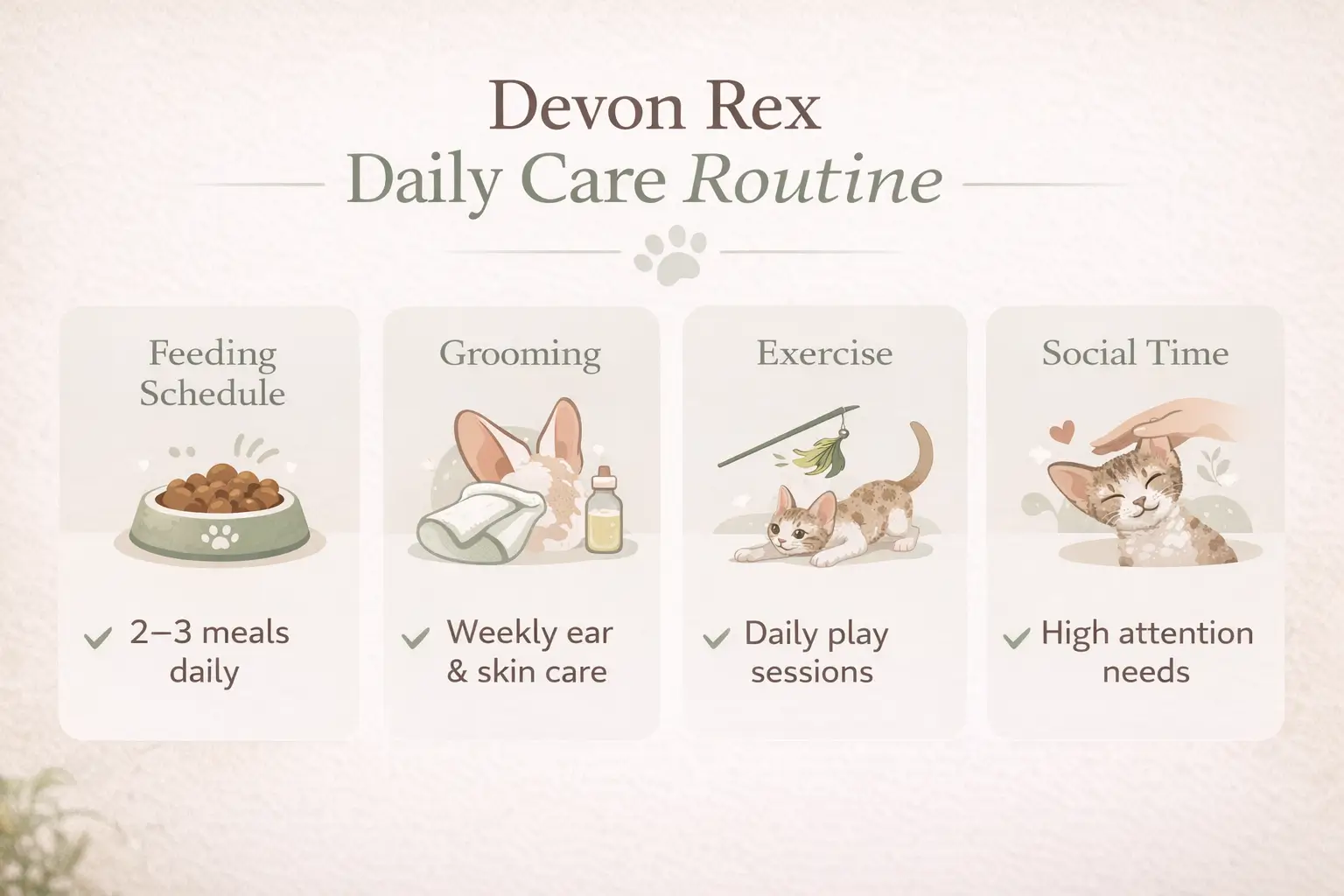
Feeding Routine Basics
Feed your Devon Rex kitten:
- 3–4 small meals daily (kittens)
- 2 meals daily (adults)
Consistency is key—they adapt well to routines.
Grooming Needs Overview
Even though they have less fur, grooming is still important:
- Gentle wiping to remove skin oils
- Occasional bathing if needed
- Regular ear cleaning (very important due to large ears)
Avoid over-brushing—their curls are delicate.
Cats with unique skin and coat types, like hairless breeds, often require similar attention—especially when managing oil buildup, as seen in cases like an obese Sphynx cat.
Exercise And Activity Needs
These kittens are extremely energetic:
- Daily play sessions (20–40 minutes total)
- Climbing structures or cat trees
- Interactive toys
They get bored easily, so variety matters.
Social Interaction Requirements
Devon Rex cats need attention daily:
- Cuddle time
- Interactive play
- Being near their humans
They can develop separation anxiety if ignored.
Diet & Nutrition Guide
Kitten Feeding Guidelines
For curly Devon Rex kittens:
- High-protein kitten food
- Small, frequent meals
- Plenty of fresh water
Protein supports their fast growth and energy levels.
Adult Nutrition Needs
As they grow:
- Balanced protein + moderate fat diet
- Portion control to prevent weight issues
- Mix of wet and dry food for hydration and dental health
Maintaining good oral health is essential, and if issues arise, understanding proper recovery steps after procedures like tooth removal can make a big difference (see cat tooth extraction recovery guide).
Senior Feeding Considerations
Older Devon Rex cats may need:
- Softer foods
- Lower calorie intake
- Joint-support nutrients
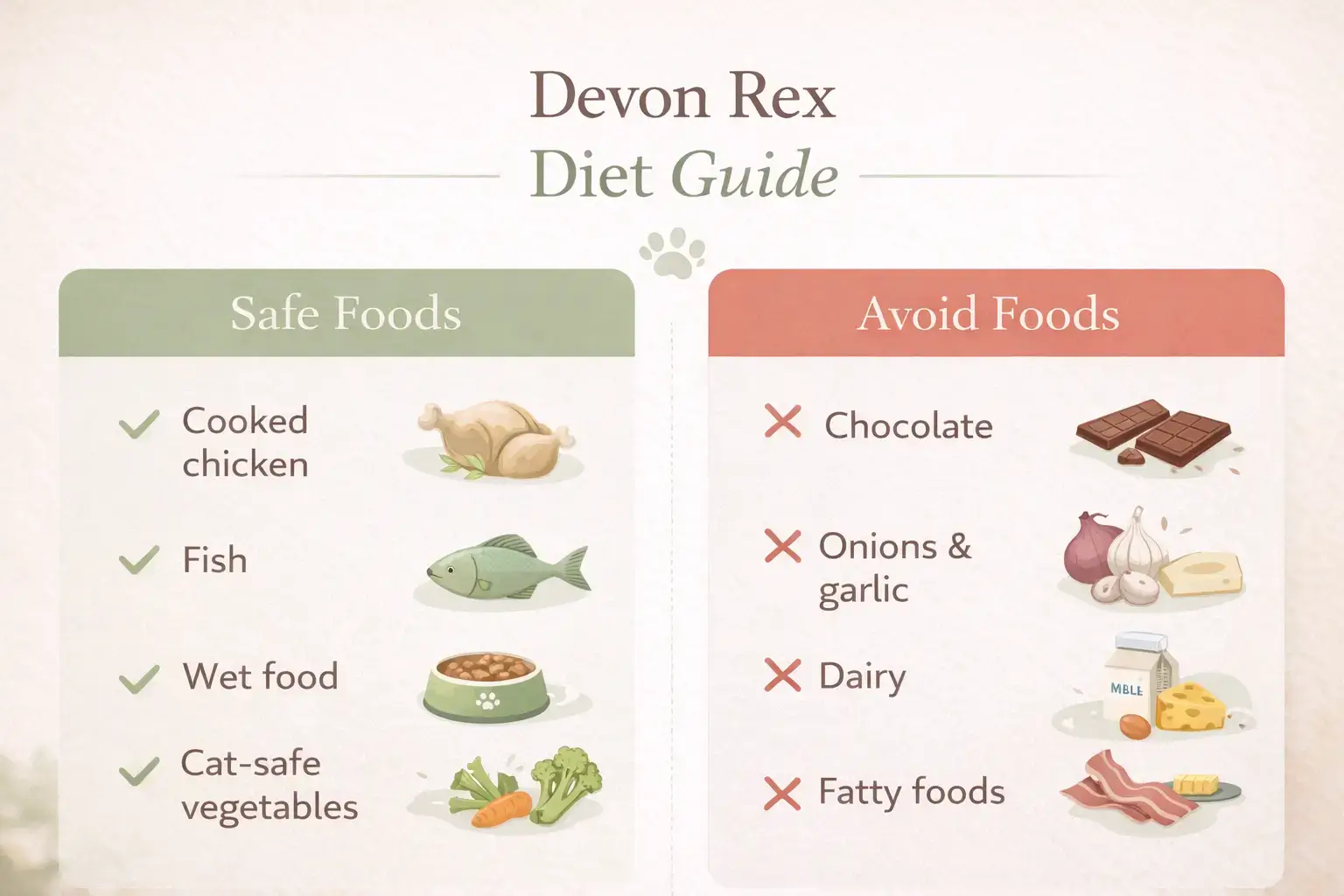
Safe Vs Unsafe Foods
Safe options:
- Cooked chicken or turkey
- Fish (in moderation)
- Cat-safe vegetables
Avoid:
- Chocolate
- Onions and garlic
- Dairy (many cats are lactose intolerant)
- Fatty or processed foods
Exercise & Mental Stimulation
Daily Activity Requirements
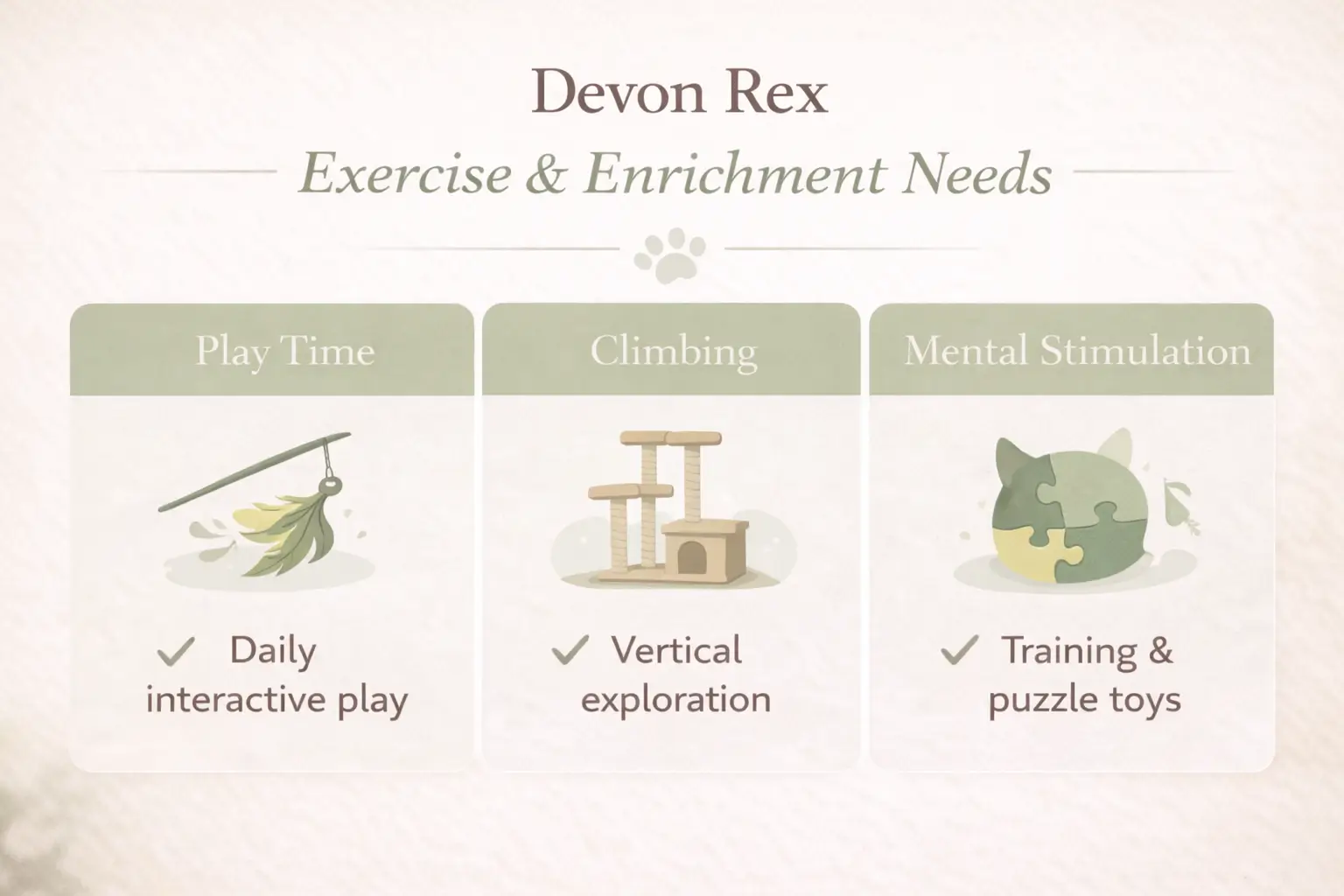
Devon Rex kittens are naturally active and need:
- Multiple short play sessions
- Opportunities to climb and explore
Without enough activity, they may become destructive.
Playtime Ideas At Home
Try:
- Feather wands
- Laser pointers
- Puzzle toys
Rotate toys to keep them interested.
Mental Enrichment Activities
Devon Rex cats are highly intelligent:
- Teach simple tricks
- Use food puzzles
- Create climbing challenges
Mental stimulation is just as important as physical exercise.
Training & Behavior Guidance
Basic Training Approach
Start early with:
- Litter box training (usually easy)
- Name recognition
- Simple commands
Use positive reinforcement—treats and praise work best.
Socialization Tips
Expose kittens to:
- Different people
- Gentle handling
- New environments gradually
This helps prevent fearfulness later.
Preventing Behavior Problems
Common issues like scratching or attention-seeking can be reduced by:
- Providing scratching posts
- Maintaining a routine
- Giving enough playtime
Boredom is the root of most behavior problems.
Health & Climate Considerations
Common Health Concerns
Devon Rex cats may be prone to:
- Skin oil buildup
- Ear infections
- Dental issues
Regular grooming and vet checkups help prevent problems.
Heat Sensitivity
In hot climates:
- Keep them cool indoors
- Provide constant fresh water
- Avoid direct sun exposure
Their thin coat offers less protection.
Cold Weather Care
They feel cold easily:
- Provide warm bedding
- Keep indoor temperatures stable
- Consider cat sweaters if needed
Hydration Needs
Always ensure:
- Fresh water available
- Wet food included in diet
Hydration supports overall health.
Common Problems & Troubleshooting
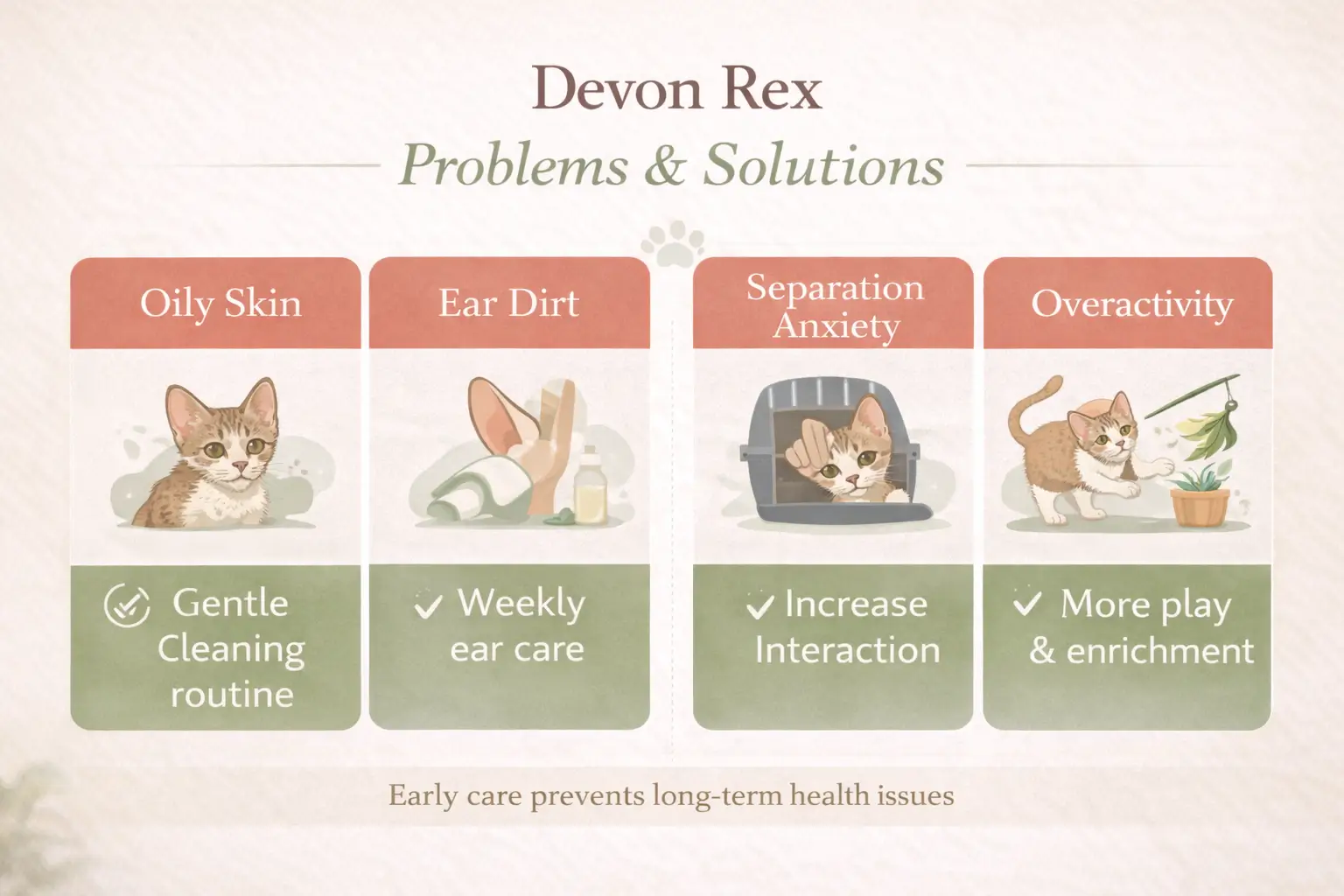
Excessive Oil On Skin
Cause:
- Natural skin oil buildup
Solution:
- Gentle wiping or occasional bath
Prevention:
- Regular skin checks
Ear Dirt Buildup
Cause:
- Large, open ears collect debris
Solution:
- Weekly ear cleaning
Prevention:
- Routine grooming
Separation Anxiety
Cause:
- Strong attachment to owners
Solution:
- Interactive toys when alone
- Consider a companion pet
Prevention:
- Gradual alone-time training
Overactivity Or Destructive Behavior
Cause:
- Lack of stimulation
Solution:
- Increase playtime
Prevention:
- Daily mental and physical enrichment
Seasonal Pet Care Tips
Spring Care Tips
- Watch for allergies
- Increase playtime as weather improves
Summer Care Tips
- Keep environment cool
- Provide hydration at all times
- Avoid overheating
Fall Care Tips
- Maintain activity routines
- Monitor appetite changes
Winter Care Tips
- Keep them warm indoors
- Add cozy bedding
- Increase indoor play
Additional Expert Tips
Common Owner Mistakes
- Assuming low grooming needs
- Leaving them alone too long
- Not providing enough stimulation
Simple Habits That Improve Health
- Daily interaction
- Routine feeding schedule
- Regular ear and skin checks
Long-Term Care Considerations
- Invest in enrichment tools
- Build a strong bond early
- Keep consistent routines
Devon Rex cats thrive when they feel included in your daily life.
If you’re still exploring different cat personalities, you might also find it helpful to compare them with calmer breeds like the British Shorthair Chinchilla cat, which has a more relaxed temperament.
Conclusion
Curly Devon Rex kittens are affectionate, intelligent, and full of personality—but they are not a “low-effort” pet. Their care revolves around attention, stimulation, and proper grooming rather than just basic feeding.
If you provide:
- Daily interaction
- Balanced nutrition
- Mental and physical enrichment
You’ll have a loyal, playful companion for many years.
The biggest takeaway is simple: treat them like a social partner, not just a pet—and they will reward you with unmatched affection and companionship.
FAQs
-
How much attention do Devon Rex kittens need daily?
They need several hours of interaction, including playtime and companionship.
-
Are Devon Rex cats good for beginners?
Yes, but only if you’re ready for their high energy and social needs.
-
Why is my Devon Rex kitten always active?
It’s normal—they are naturally energetic and require regular stimulation.
-
Do Devon Rex cats get cold easily?
Yes, their thin coat makes them sensitive to cold temperatures.
-
How often should I clean a Devon Rex’s ears?
Usually once a week, or as needed depending on buildup.
-
Can Devon Rex cats be left alone during the day?
Short periods are fine, but long hours alone can cause stress or anxiety.
-
What makes Devon Rex kittens different from other cats?
Their curly coat, high intelligence, and strong need for human interaction set them apart.




One Response