

The idea of a “white Yorkie terrier” often surprises new dog owners. Most people are familiar with the classic blue-and-tan Yorkshire Terrier, but lighter or white-toned Yorkies do exist—usually due to genetics, crossbreeding, or rare coat variations. This uniqueness is exactly why they’ve become so popular.
However, caring for a white or light-colored Yorkie comes with a few extra considerations. Their coat requires more maintenance, their skin can be sensitive, and their small size means they need careful handling. One of the biggest mistakes new owners make is assuming they’re just a “color variation” without adjusting care routines—especially grooming and diet.
Pet Care Invsight
This guide is based on widely accepted pet care practices, veterinary guidance, and common experiences shared by responsible pet owners. The goal is to provide practical, easy-to-follow advice that helps owners keep their pets healthy, comfortable, and well cared for.
Pet Overview
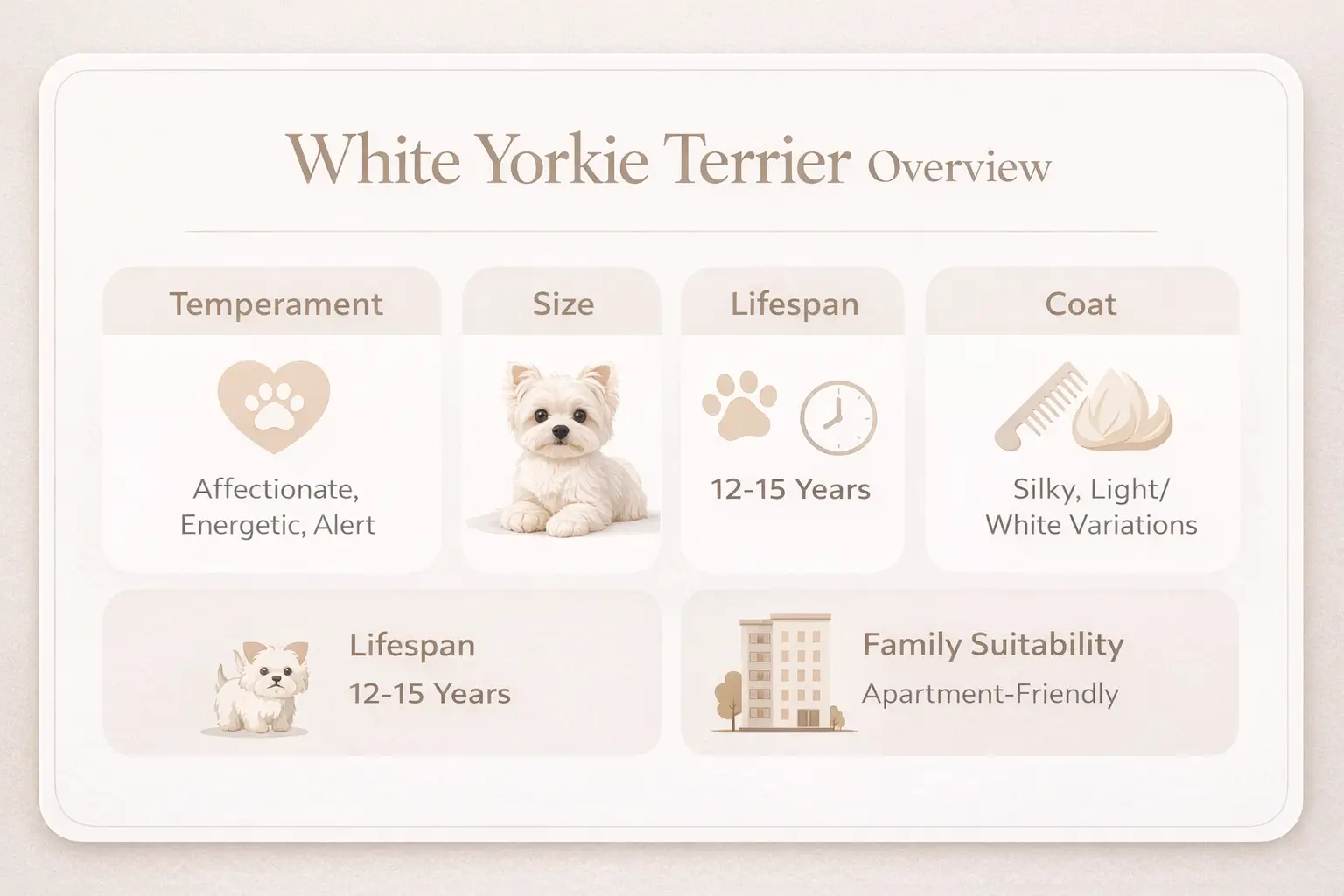
Temperament And Personality Traits
White Yorkies share the same lively and affectionate temperament as standard Yorkshire Terriers. They are:
- Highly energetic and playful
- Loyal and strongly attached to their owners
- Alert and sometimes vocal (great watchdogs)
- Confident despite their small size
They thrive on attention and can develop separation anxiety if left alone too long.
Physical Characteristics And Coat Variations
A true Yorkshire Terrier rarely comes in pure white. What people call a “white Yorkie” may be:
- A light-colored Yorkie (cream, blonde, or pale gold)
- A parti Yorkie (white mixed with black or brown)
- A Yorkie mix (like West Highland White Terrier Yorkie mix)
Their coats are fine, silky, and closer to human hair than typical dog fur. Since “white Yorkie” covers several different coat types and even separate breeds like the Biewer Terrier, many owners struggle to confirm exactly what they have. Use this white Yorkie and small white-dog identifier tool to compare coat texture, size, and grooming load side-by-side before assuming your dog’s variation.
To better understand the standard coat genetics and breed characteristics, you can refer to the official overview of the Yorkshire Terrier.
Lifespan And Health Expectations
- Average lifespan: 12–15 years
- Generally healthy but prone to small-breed issues
- With proper care, they can live long, active lives
Family Suitability And Social Behavior
- Good for small homes and apartments
- Suitable for older children (gentle handling required)
- Can live with other pets if socialized early
- Not ideal for very rough play environments
If you’re weighing a white Yorkie against other toy breeds for your household, this small toy dog breed reference database breaks down temperament, size, and family suitability across comparable companion breeds. It’s a useful cross-check before finalizing your decision.
Activity Level And Daily Energy
Despite their size, they are active dogs that need daily stimulation. Without it, they can become bored and develop behavioral issues.
Daily Care Essentials
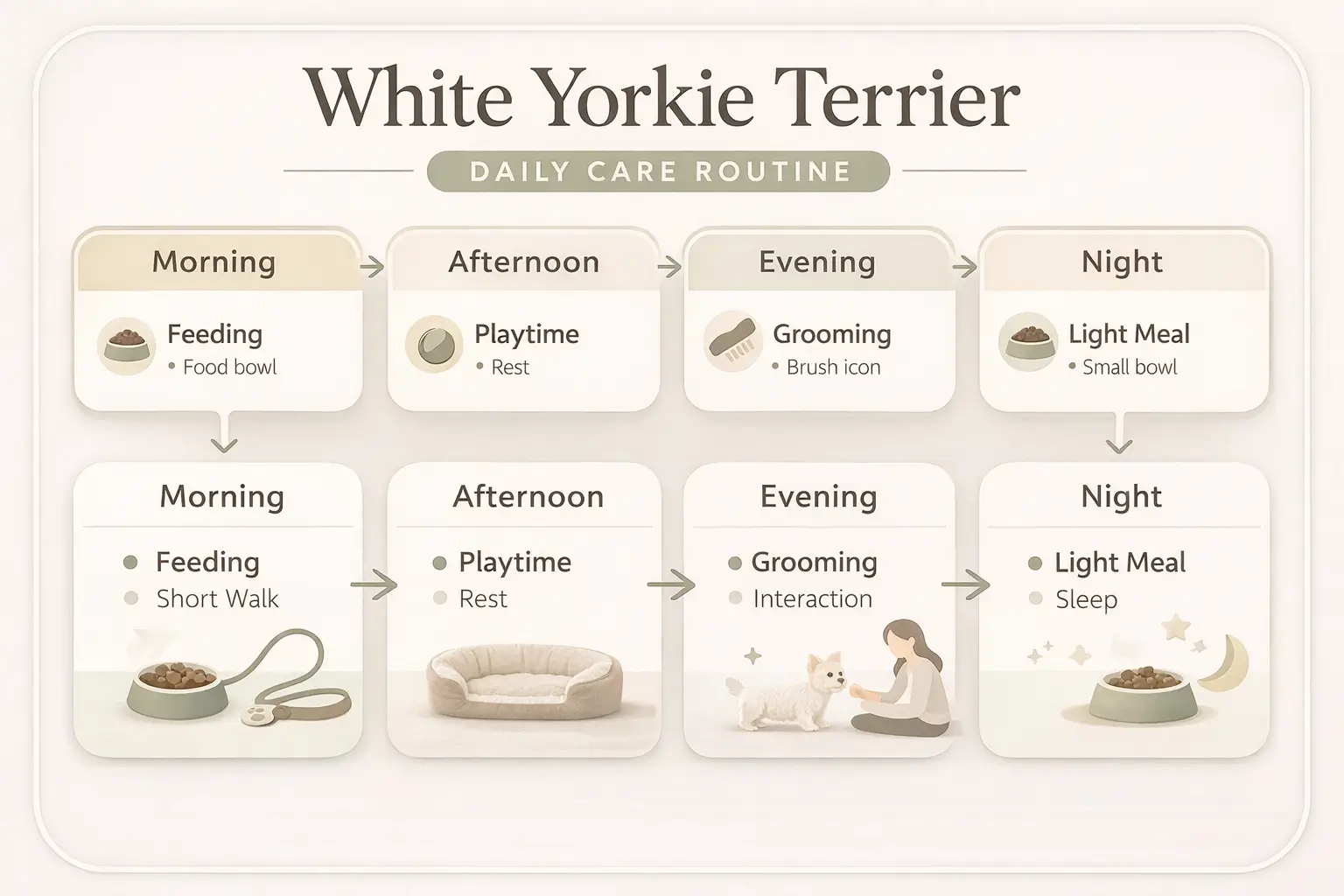
Feeding Routine And Daily Schedule
White Yorkies benefit from consistent feeding times:
- Puppies: 3–4 small meals per day
- Adults: 2 meals per day
- Fresh water must always be available
Because of their small stomachs, portion control is important.
Grooming Needs And Coat Maintenance
Light-colored coats require extra care:
- Brush daily to prevent tangles
- Bathe every 2–3 weeks using gentle shampoo
- Clean tear stains regularly (common in white Yorkies)
- Trim hair around eyes and paws
Neglecting grooming can lead to matting and skin irritation. Grooming demands vary significantly between small breeds, so it helps to see the numbers side-by-side. This small breed care comparison spreadsheet lays out bathing frequency, brushing needs, and coat upkeep across similar toy breeds, so you can benchmark your White Yorkie’s routine accurately.
If you’re comparing grooming needs across small breeds, you might also find it helpful to explore how coat care differs in similar companion dogs like the miniature Irish terrier.
Exercise Requirements And Activity Level
- 20–30 minutes of daily exercise
- Short walks + indoor play
- Avoid overexertion due to their small size
Social Interaction And Attention Needs
These dogs crave companionship. Daily interaction helps prevent:
- Anxiety
- Excessive barking
- Destructive habits
Diet & Nutrition Guide
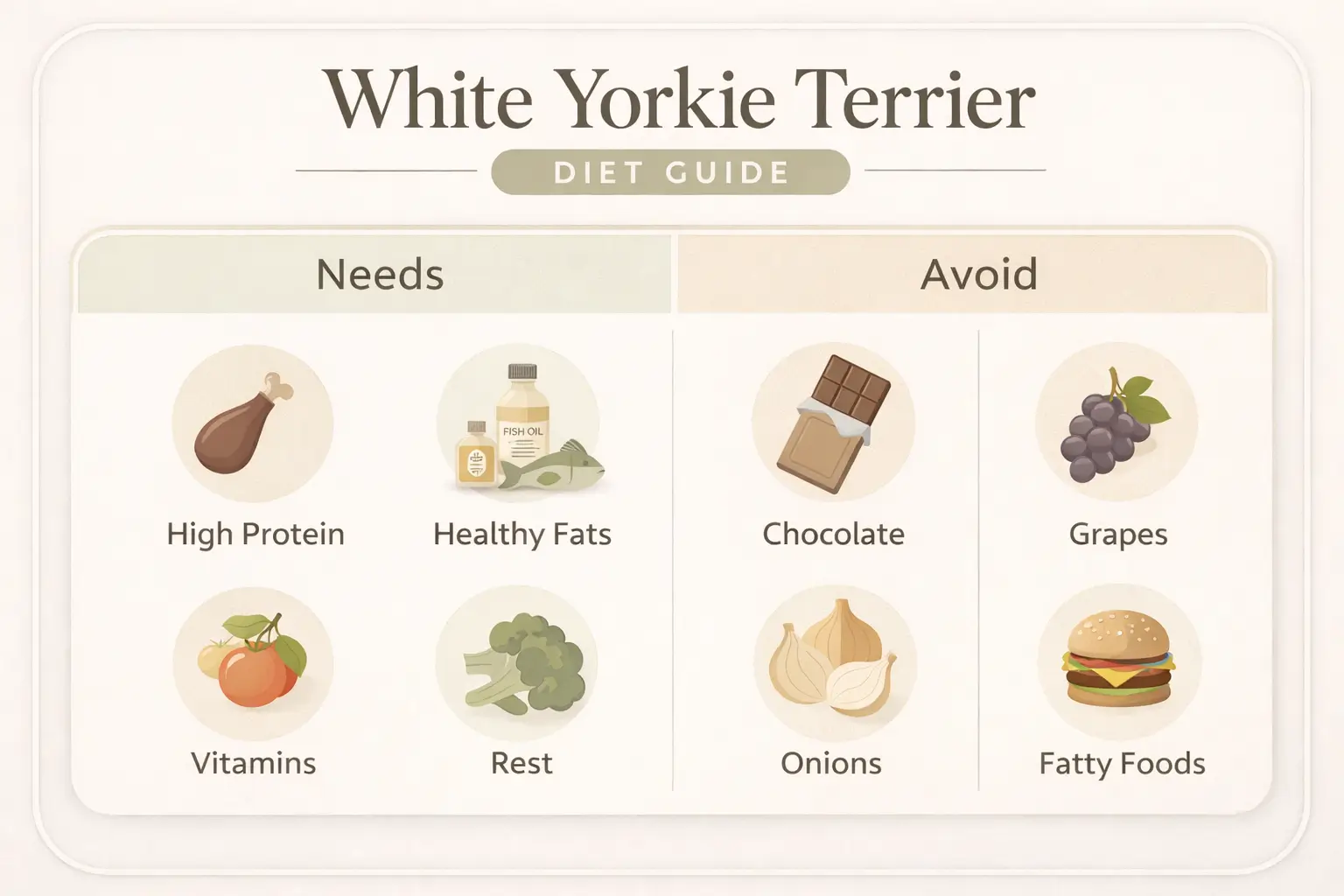
Balanced Diet And Nutritional Needs
A high-quality diet should include:
- Protein for muscle maintenance
- Healthy fats for coat health
- Vitamins and minerals for overall wellness
White Yorkies often benefit from diets that support skin and coat health.
Feeding Puppies Adults And Seniors
- Puppies: High-protein, calorie-dense meals for growth
- Adults: Balanced diet with controlled portions
- Seniors: Lower calories, joint-support nutrients
Safe And Unsafe Foods
Safe foods (in moderation):
- Cooked chicken
- Rice
- Carrots
Unsafe foods:
- Chocolate
- Onions and garlic
- Grapes and raisins
- Excess fatty foods
Portion Control And Weight Management
Overfeeding is a common issue. Because Yorkies are tiny, even small weight gain can impact health.
Exercise & Mental Stimulation
Daily Activity Requirements
White Yorkies don’t need intense exercise, but they do need consistency:
- Short walks
- Indoor play sessions
- Light outdoor exploration
Playtime Ideas For Small Dogs
- Soft toys for gentle chewing
- Fetch with small lightweight balls
- Tug toys (gentle play only)
Mental Enrichment Activities
- Puzzle toys
- Basic training exercises
- Interactive play with owners
Mental stimulation is just as important as physical activity.
Training & Behavior Guidance
Basic Obedience Training Tips
Start early with:
- Sit, stay, come commands
- Short training sessions (5–10 minutes)
- Positive reinforcement (treats and praise)
Socialization For Better Behavior
Expose your Yorkie to:
- Different people
- Calm pets
- New environments
This reduces fear-based behaviors later.
Preventing Common Behavior Problems
Common issues include:
- Excessive barking
- Separation anxiety
- Stubbornness
Solutions:
- Consistent routines
- Early training
- Avoid reinforcing bad habits
Health & Climate Considerations
Common Health Concerns
White Yorkies may experience:
- Dental issues (very common in small breeds)
- Skin sensitivity (especially lighter coats)
- Hypoglycemia (low blood sugar in puppies)
- Luxating patella (knee issues)
Regular vet checkups are essential.
Yorkies are especially prone to dental problems, so understanding early warning signs like bad breath or discomfort can help prevent serious issues—learn more in this detailed guide on symptoms of dog tooth infection.
Heat Sensitivity And Summer Care
Due to their size and coat:
- Avoid midday heat
- Provide shade and water
- Watch for overheating signs
Cold Weather Protection
They are not built for cold climates:
- Use dog sweaters
- Limit outdoor exposure
- Provide warm bedding
Hydration And Skin Care
Hydration helps maintain skin and coat health. Dry skin is more noticeable in white-coated dogs.
Common Problems & Troubleshooting
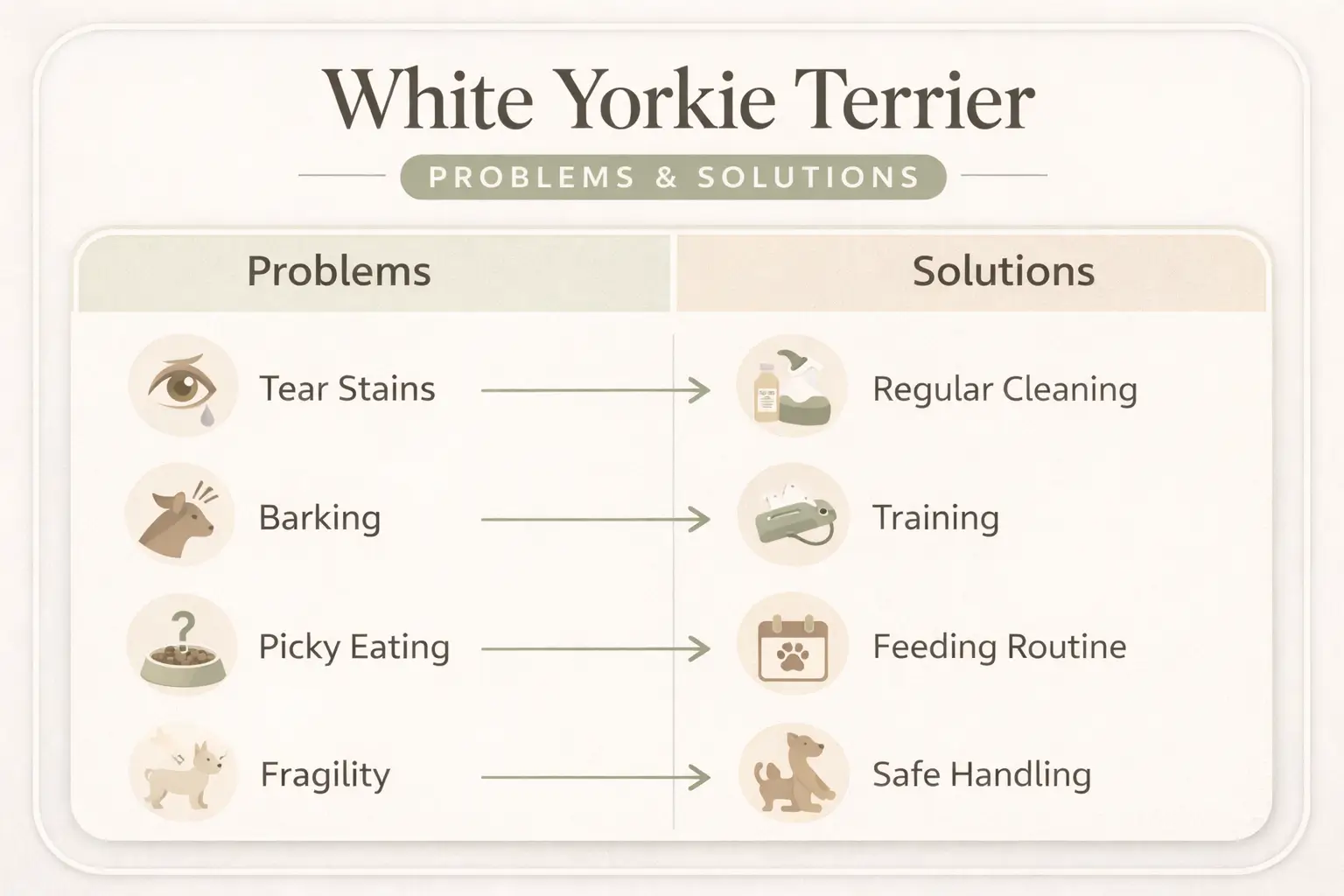
Tear Stains And Coat Discoloration
Cause:
- Eye discharge
- Diet or water quality
Solution:
- Clean daily with a damp cloth
- Use filtered water
- Maintain regular grooming
Prevention:
- Keep face hair trimmed
Excessive Barking
Cause:
- Boredom
- Attention-seeking
Solution:
- Increase activity
- Train “quiet” command
Prevention:
- Provide mental stimulation
Picky Eating Habits
Cause:
- Over-treating
- Lack of routine
Solution:
- Stick to feeding schedule
- Remove uneaten food after 15–20 minutes
Prevention:
- Avoid frequent food changes
Fragility And Injury Risk
Cause:
- Small size
- Rough handling
Solution:
- Supervise interactions with children
- Use safe indoor spaces
Prevention:
- Educate family members on gentle handling
Seasonal Pet Care Tips
Spring Care And Allergy Awareness
- Watch for skin irritation
- Increase grooming frequency
- Clean paws after walks
Summer Heat Protection Tips
- Walk early morning or evening
- Provide constant hydration
- Avoid hot surfaces
Fall Transition And Activity Changes
- Adjust exercise as temperatures drop
- Check for fleas and ticks
Winter Protection And Indoor Care
- Use warm clothing
- Reduce outdoor exposure
- Increase indoor playtime
Additional Expert Tips
Common Mistakes New Owners Make
- Skipping grooming routines
- Overfeeding small portions
- Ignoring early training
Simple Habits That Improve Health
- Daily brushing
- Consistent feeding schedule
- Regular vet visits
Long Term Care Considerations
- Dental care is critical
- Monitor weight closely
- Maintain a structured routine
Consistent dental hygiene is one of the most important long-term habits, and professional cleaning plays a big role—here’s a helpful breakdown of how vets clean dogs teeth and what to expect.
Conclusion
Caring for a white Yorkie terrier is rewarding, but it requires attention to detail. Their unique coat, small size, and lively personality mean they need consistent grooming, balanced nutrition, and regular interaction.
The biggest mistakes to avoid are neglecting grooming, overfeeding, and underestimating their need for mental stimulation. When properly cared for, these dogs become loyal, affectionate companions that bring energy and personality into any home.
With the right habits and awareness, you can confidently provide a happy, healthy life for your Yorkie.
FAQs
-
Are there truly white Yorkshire Terriers?
Pure white Yorkies are rare. Most are light-colored, parti Yorkies, or mixes.
-
How often should I groom a white Yorkie?
Daily brushing and bathing every 2–3 weeks is ideal.
-
Do white Yorkies require special food?
Not special, but a diet supporting skin and coat health is beneficial.
-
Are white Yorkies more sensitive than regular Yorkies?
They can have more visible skin sensitivity, especially with lighter coats.
-
How much exercise does a white Yorkie need daily?
Around 20–30 minutes of light activity plus playtime.
-
Why does my white Yorkie have tear stains?
It can be due to eye discharge, diet, or water quality—regular cleaning helps.
-
Are white Yorkies good for apartments?
Yes, they adapt very well to small living spaces if exercised daily.