
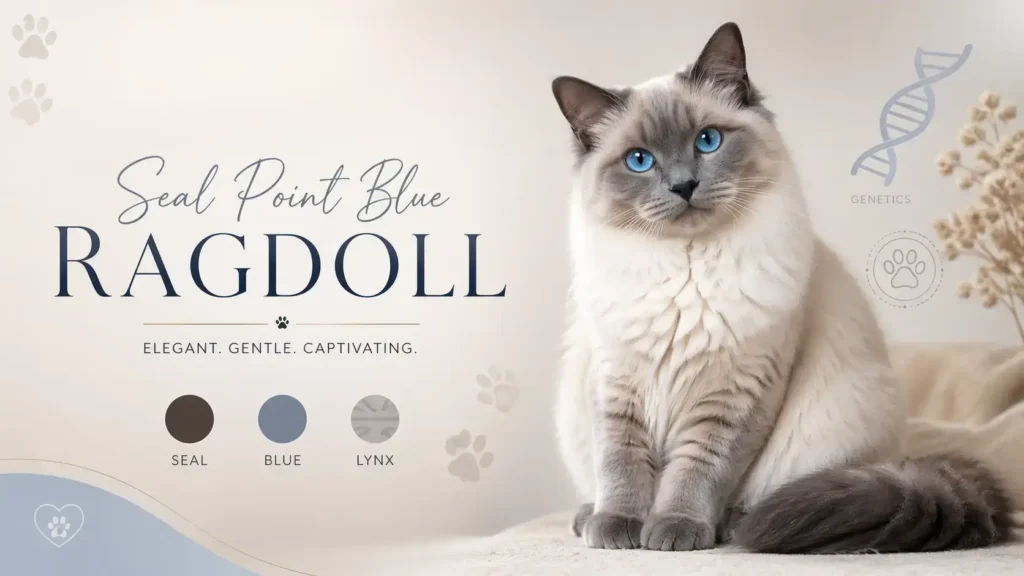
The seal point blue ragdoll is one of the most eye-catching and often misunderstood variations of the Ragdoll breed. People frequently mix up seal, blue, lynx, and bicolor patterns—so let’s clear that up properly.
This guide explains everything in simple terms: what this cat really looks like, how it behaves, how much it costs, and how it differs from other ragdoll colors.
What Is a Seal Point Blue Ragdoll?
A seal point blue ragdoll is not an official single color category. It usually refers to a mix-up between seal point ragdoll and blue point ragdoll.
In reality:
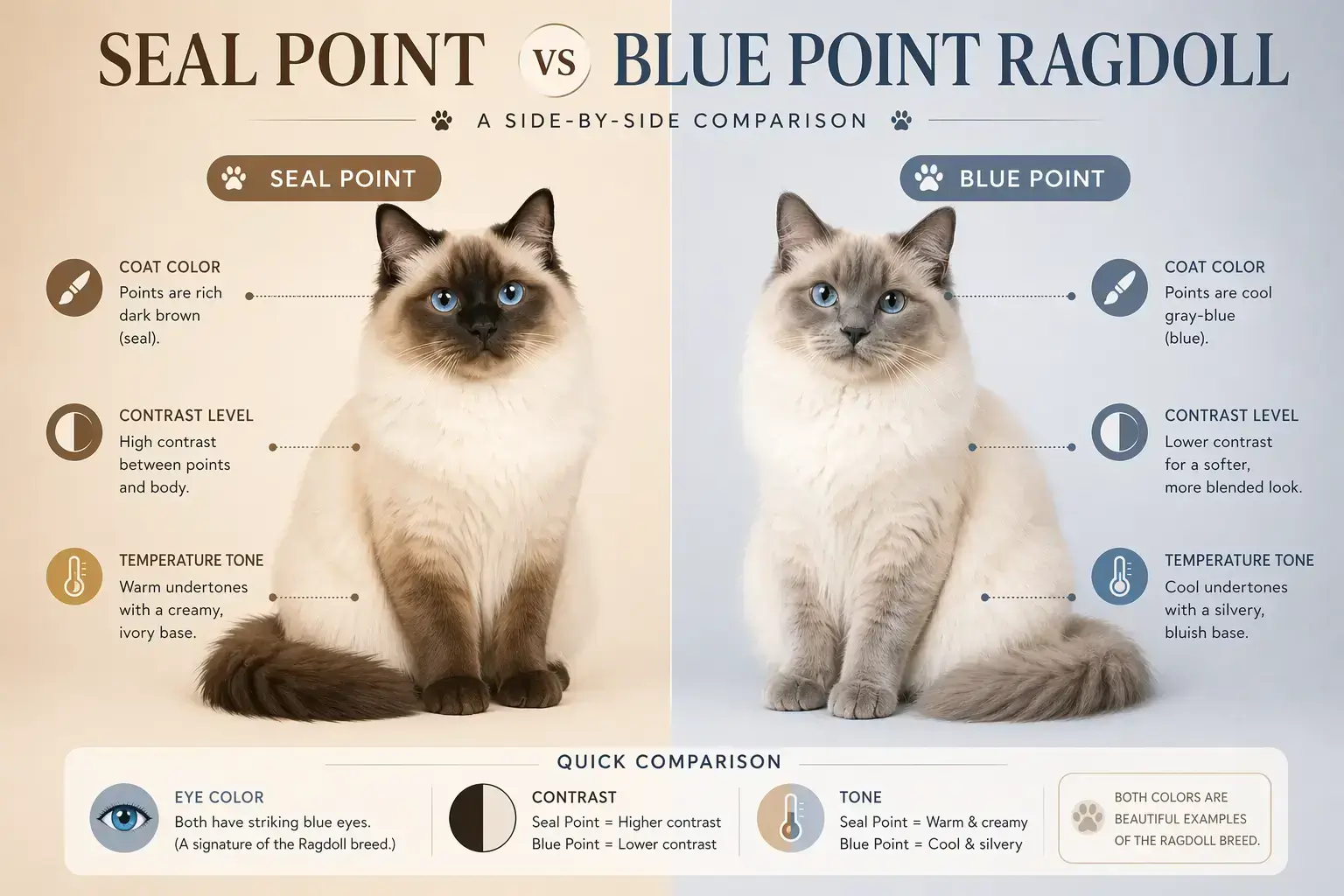
- Seal point ragdoll = dark brown (almost black) points
- Blue point ragdoll = soft gray/blue points
The confusion comes from lighting, genetics, and kitten coat changes.
Why Do People Call It “Blue Seal Point”?
- Kittens are born white and develop color slowly
- Seal points can look grayish in certain lighting
- Some cats carry both seal and dilute (blue) genes
According to breed standards from major registries like CFA and TICA, seal and blue are distinct color categories, not combined ones.
What Does a Seal Point Ragdoll Look Like?
If you’re drawn to deeper tones, you might also like the brown ragdoll cat, which shares similarities with seal point coloring but can vary slightly in warmth and richness. A seal point ragdoll has a strong contrast between its body and points.
Key Features:
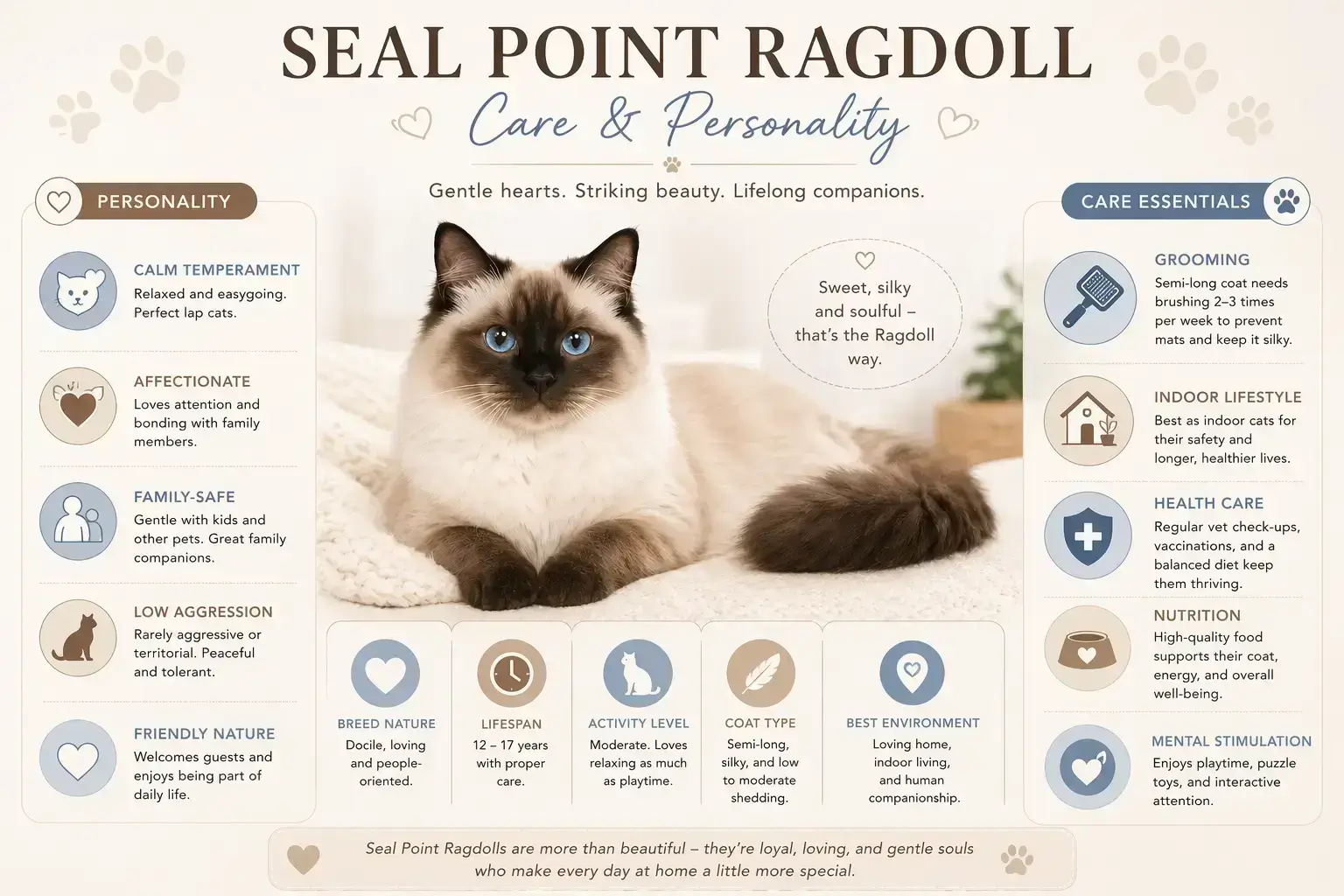
- Body: Cream to light beige
- Points (ears, face, paws, tail): Deep brown
- Eyes: Always bright blue
- Nose & paw pads: Dark brown
Important Fact
All ragdoll cats are born white due to a temperature-sensitive gene (similar to Siamese cats). Their darker color develops over weeks.
What About Blue Point Ragdolls?
Blue point ragdolls are a diluted version of seal points.
Key Differences:
- Points: Bluish-gray instead of dark brown
- Body: Cooler tone (icy white or bluish)
- Overall look: Softer and less contrast
Genetics Insight
The blue color comes from a dilution gene that reduces pigment intensity. This is a well-documented trait in cat genetics.
Blue Point vs Seal Point Ragdoll
For an even softer and more diluted look, some cat lovers prefer the lilac seal point ragdoll, which features a pale, frosty coat tone compared to both blue and seal points.
| Feature | Seal Point Ragdoll | Blue Point Ragdoll |
|---|---|---|
| Point Color | Dark brown | Bluish-gray |
| Body Tone | Warm cream | Cool white/gray |
| Contrast | High | Medium |
| Popularity | Very common | Slightly less common |
| Eye Color | Blue | Blue |
If you’re trying to decide between the two, it mostly comes down to whether you prefer bold contrast or softer tones.
What Is a Seal Point Blue Ragdoll Kitten?
Most listings for a “blue seal point ragdoll kitten” are actually one of these:
- Seal point kitten (still developing color)
- Blue point kitten (not fully visible yet)
- Seal lynx ragdoll (striped pattern causing confusion)
Important Tip
Kittens don’t show final color until around 8–12 weeks, and full coat maturity can take up to 2 years.
Seal Point Ragdoll Personality: What to Expect?
Seal point ragdoll personality is identical to other ragdolls—color does not affect temperament.
Quick Answer:
They are affectionate, calm, and extremely people-oriented.
Detailed Traits:
- Known as “puppy-like” cats
- Often follow owners around the house
- Enjoy being held (hence the name “ragdoll”)
- Low aggression and great with children
Insight
Ragdolls consistently rank among the most docile breeds in surveys by organizations like the Cat Fanciers’ Association.
What Is the Difference Between Seal Point, Mitted, and Bicolor Ragdolls?
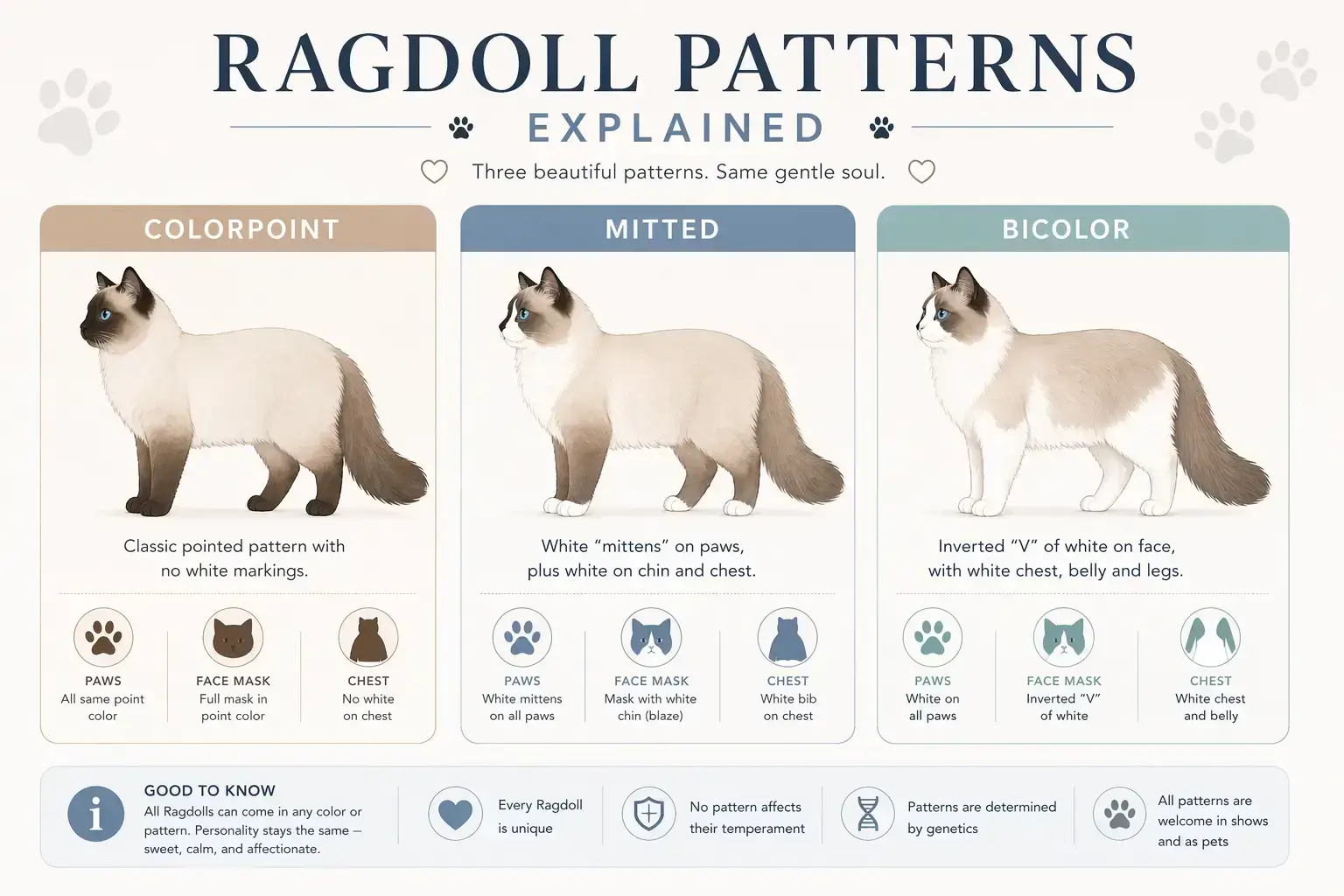
The difference is not color—but pattern.
1. Seal Point Ragdoll
- No white markings
- Solid dark points
2. Seal Mitted Ragdoll
- White “mittens” on front paws
- White chin and belly
3. Seal Bicolor Ragdoll
- White inverted “V” on face
- White legs and chest
- More white overall
Seal Bicolor vs Seal Mitted vs Seal Point
| Pattern | White Markings | Face Pattern | Overall Look |
|---|---|---|---|
| Seal Point | None | Dark mask | Classic contrast |
| Seal Mitted | Paws + chin | Dark mask | Balanced |
| Seal Bicolor | Extensive | White V shape | Bright & striking |
What Is a Lynx Ragdoll?
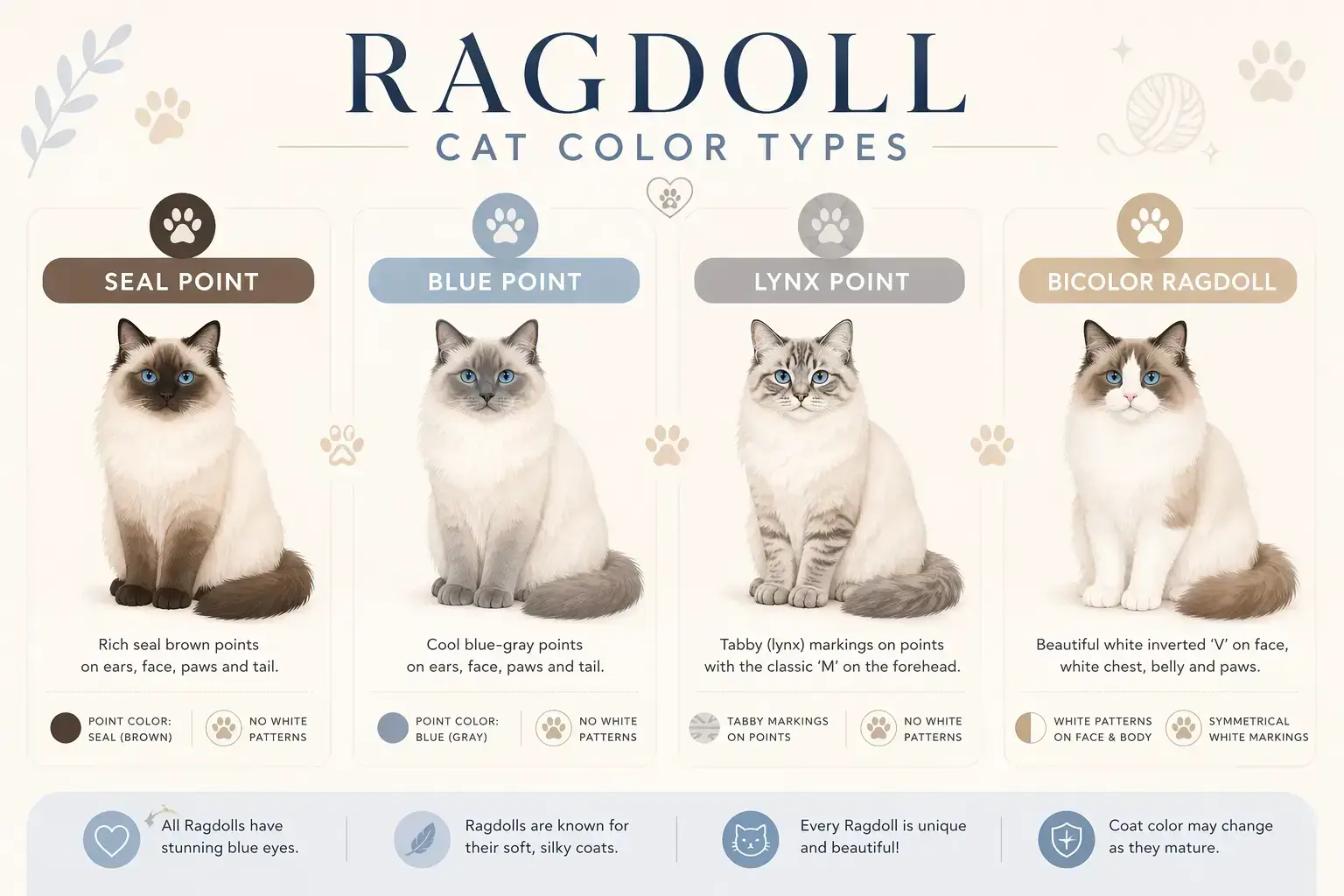
A lynx ragdoll has tabby (striped) markings over its points.
Types:
- Seal lynx ragdoll
- Blue lynx ragdoll
- Lynx bicolor ragdoll
Key Traits:
- Visible stripes on face and tail
- “M” marking on forehead
- Lighter, more patterned look
Seal Point Lynx vs Regular Seal Point
| Feature | Seal Point | Seal Lynx Point |
|---|---|---|
| Pattern | Solid | Striped |
| Face | Smooth mask | Tabby markings |
| Appearance | Bold | Textured |
Lynx patterns often confuse buyers into thinking the cat is a “blue seal point.”
Ragdoll Cat Colors
If you want to explore rarer variations beyond seal and blue, you can also check out unique shades like the cinnamon ragdoll cat, which has a warm-toned coat that stands out among traditional ragdoll colors. Ragdolls come in several recognized colors:
- Seal
- Blue
- Chocolate
- Lilac
- Cream
- Red
Fact-Based Insight
According to TICA standards, these colors combine with patterns like color point, mitted, and bicolor—creating dozens of variations.
Blue Seal Point Ragdoll Price: How Much Do They Cost?
Prices vary depending on breeder quality, lineage, and location.
Typical Price Range:
- Pet quality: $800 – $2,000
- Show quality: $2,000 – $4,000+
Why Prices Vary:
- Pedigree certification
- Health testing (HCM screening is important)
- Breeder reputation
Important Note
If you see extremely cheap “seal point blue ragdoll kittens for sale,” be cautious—it may indicate poor breeding practices.
Seal Point Ragdoll for Sale: What to Check First?
Before buying any ragdoll:
Essential Checks:
- Health records and vaccinations
- Genetic testing (especially heart conditions like HCM)
- Clean breeder environment
- Socialization of kittens
Trusted Sources:
- Registered breeders (CFA or TICA)
- Reputable adoption centers
Do Seal Point Ragdolls Always Have Blue Eyes?
Yes—this is a defining feature.
Quick Answer:
All color point ragdolls must have blue eyes.
Why?
The same gene responsible for their coat pattern also affects eye pigmentation.
Common Misconceptions About Seal Point Blue Ragdolls
1. It’s a separate breed
No—it’s just a naming confusion.
2. Color affects personality
No scientific evidence supports this.
3. Blue and seal can mix visually
They are genetically separate but may look similar in early stages.
Blue Lynx Ragdoll vs Seal Lynx Ragdoll
| Feature | Blue Lynx | Seal Lynx |
|---|---|---|
| Base Color | Gray-blue | Brown |
| Pattern | Striped | Striped |
| Contrast | Soft | Strong |
Both are beautiful, but seal lynx has a more dramatic appearance.
Seal Mink Ragdoll vs Traditional Seal Point
Mink ragdolls are different from traditional ragdolls.
Key Differences:
- Mink coats are darker overall
- Eye color may be aqua instead of blue
- Not always accepted in all breed standards
Lifespan and Care Facts
Verified Facts:
- Average lifespan: 12–17 years
- Weight: 4–9 kg (one of the largest domestic breeds)
- Grooming: Weekly brushing is enough
Health Note
Ragdolls are prone to hypertrophic cardiomyopathy (HCM), a genetic heart condition—testing is essential.
Why Seal Point Ragdolls Are So Popular
They are the “classic look” of the breed.
Reasons:
- Strong contrast makes them photogenic
- Widely available from breeders
- Closest to original ragdoll appearance
Final Thoughts
The term “seal point blue ragdoll” is mostly a mix-up—but it highlights how complex ragdoll colors can be.
If you understand the basics:
- Seal = dark brown
- Blue = gray
- Lynx = striped
- Mitted/Bicolor = pattern
then choosing the right ragdoll becomes much easier.
FAQs
It’s not an official category. People usually mean either a seal point or blue point ragdoll. What is a seal point blue ragdoll?
Seal points are dark brown, while blue points are gray due to a dilution gene. What is the difference between seal point and blue point ragdoll?
Yes, all color point ragdolls have blue eyes. Do seal point ragdolls have blue eyes?
No, they are one of the most common and popular ragdoll colors. Are seal point ragdolls rare?
Prices typically range from $800 to $4,000 depending on quality and breeder. How much does a seal point ragdoll cost?
It’s a seal-colored ragdoll with white paws and chin markings. What is a seal mitted ragdoll?
It has more white, including a distinctive inverted “V” on the face. What is a seal bicolor ragdoll?