
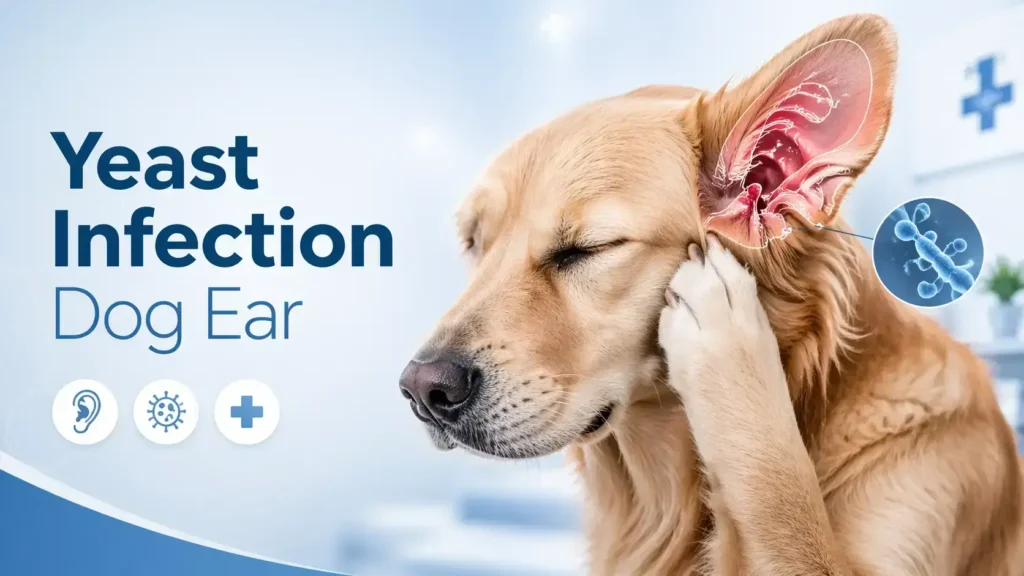
A yeast infection dog ear problem is one of the most common reasons dogs scratch, shake their heads, and feel uncomfortable. The good news? It’s treatable—and often preventable—with the right care.
In this complete guide, you’ll learn how to recognize, treat, and prevent dog ear yeast infections using vet-backed advice, over-the-counter options, and safe home care tips.
🦠 What Is a Yeast Infection in a Dog’s Ear?
A yeast infection in dogs’ ears happens when naturally occurring yeast (Malassezia) grows out of control. This infection is commonly caused by a type of yeast known as Malassezia, which naturally lives on the skin but can overgrow under certain conditions.
Dogs always have small amounts of yeast on their skin and ears. But when the environment becomes warm, moist, or inflamed, yeast multiplies rapidly and causes infection.
Key facts:
- Yeast thrives in dark, moist environments like floppy dog ears
- According to veterinary dermatology research, Malassezia is the most common fungal organism found in canine ear infections
- Dogs with allergies or weak immunity are more prone
⚠️ What Causes Yeast Infection Dog Ear Issues?
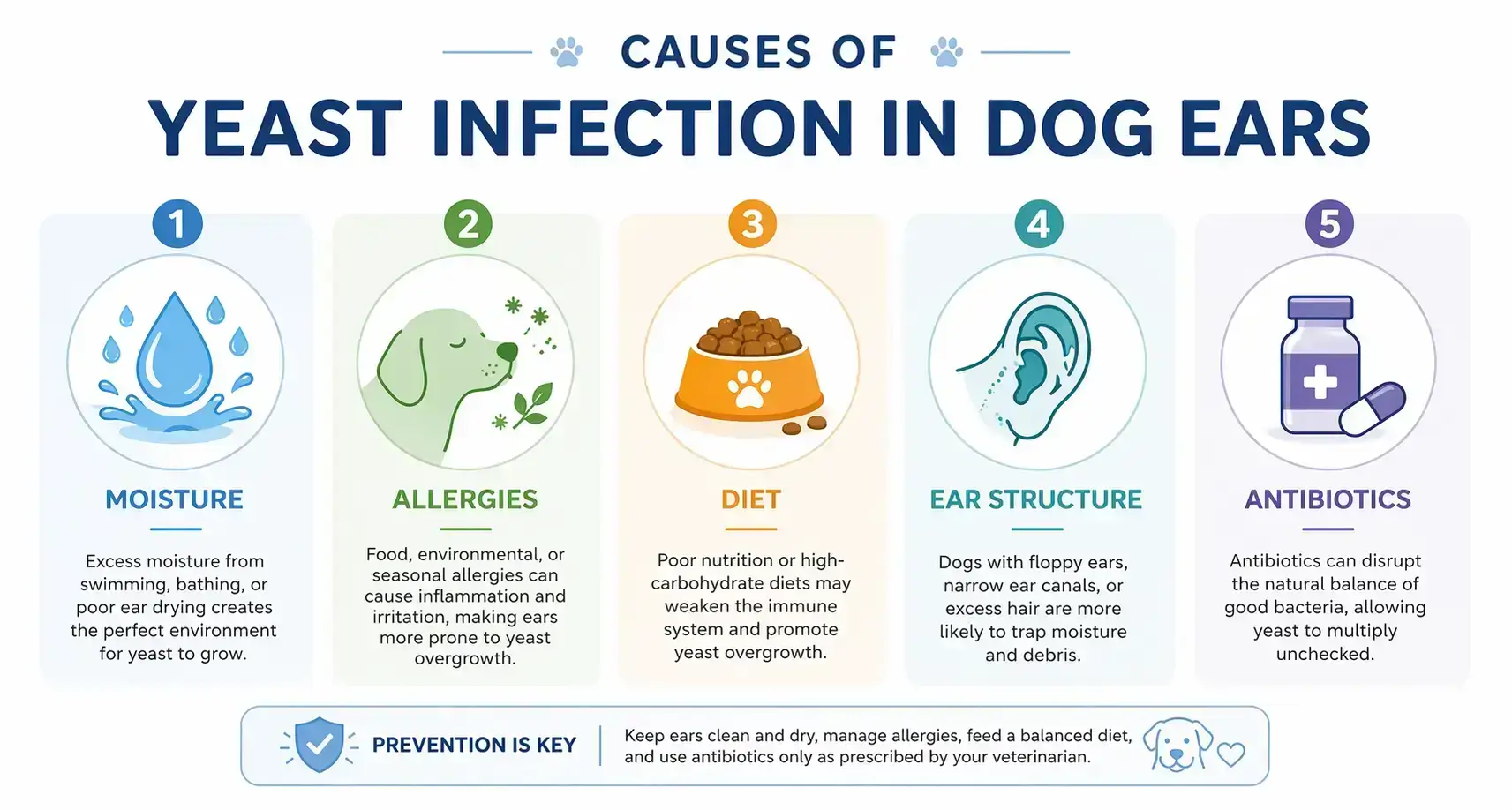
Yeast infections don’t appear randomly—there’s always an underlying trigger. Allergies are one of the leading triggers, often linked to immune responses.
Quick answer:
The most common causes are moisture, allergies, poor ear hygiene, and diet.
Main causes explained:
Table of Contents
Toggle1. Moisture buildup
After bathing or swimming, trapped water creates a perfect environment for yeast.
2. Allergies (top cause)
Food or environmental allergies inflame the ear canal, allowing yeast to overgrow.
3. Weak immune system
Dogs with chronic conditions or stress may struggle to control yeast levels.
4. Diet-related triggers
High-carb or sugar-heavy diets can contribute to yeast overgrowth.
5. Ear structure
Breeds with floppy ears (like Cocker Spaniels) are at higher risk due to poor airflow.
6. Overuse of antibiotics
Antibiotics kill good bacteria, allowing yeast to dominate.
🔍 What Are the Symptoms of Yeast Infection Dog Ear?
If your dog has a yeast infection, the signs are usually obvious.
Quick answer:
Look for itching, odor, redness, and discharge.
Common symptoms include:
- Constant ear scratching
- Head shaking
- Strong musty or “cheesy” smell
- Red, inflamed ear canal
- Brown, yellow, or black discharge
- Crusty or dry ear edges
- Pain when touching the ear
Important insight:
A study from veterinary clinics shows that odor is often the earliest and most reliable sign of yeast overgrowth.
📸 What Does a Yeast Infection Dog Ear Look Like?
You’ll usually see inflammation and dark discharge.
Visual signs:
- Dark brown or black wax buildup
- Greasy or sticky ear interior
- Swollen ear canal
- Hair loss around ears (in chronic cases)
Many pet owners search for pictures of yeast infection in dogs ears to confirm symptoms. While helpful, always rely on a vet diagnosis for accuracy.
⚖️ Bacterial vs Yeast Infection Dog Ear: What’s the Difference?
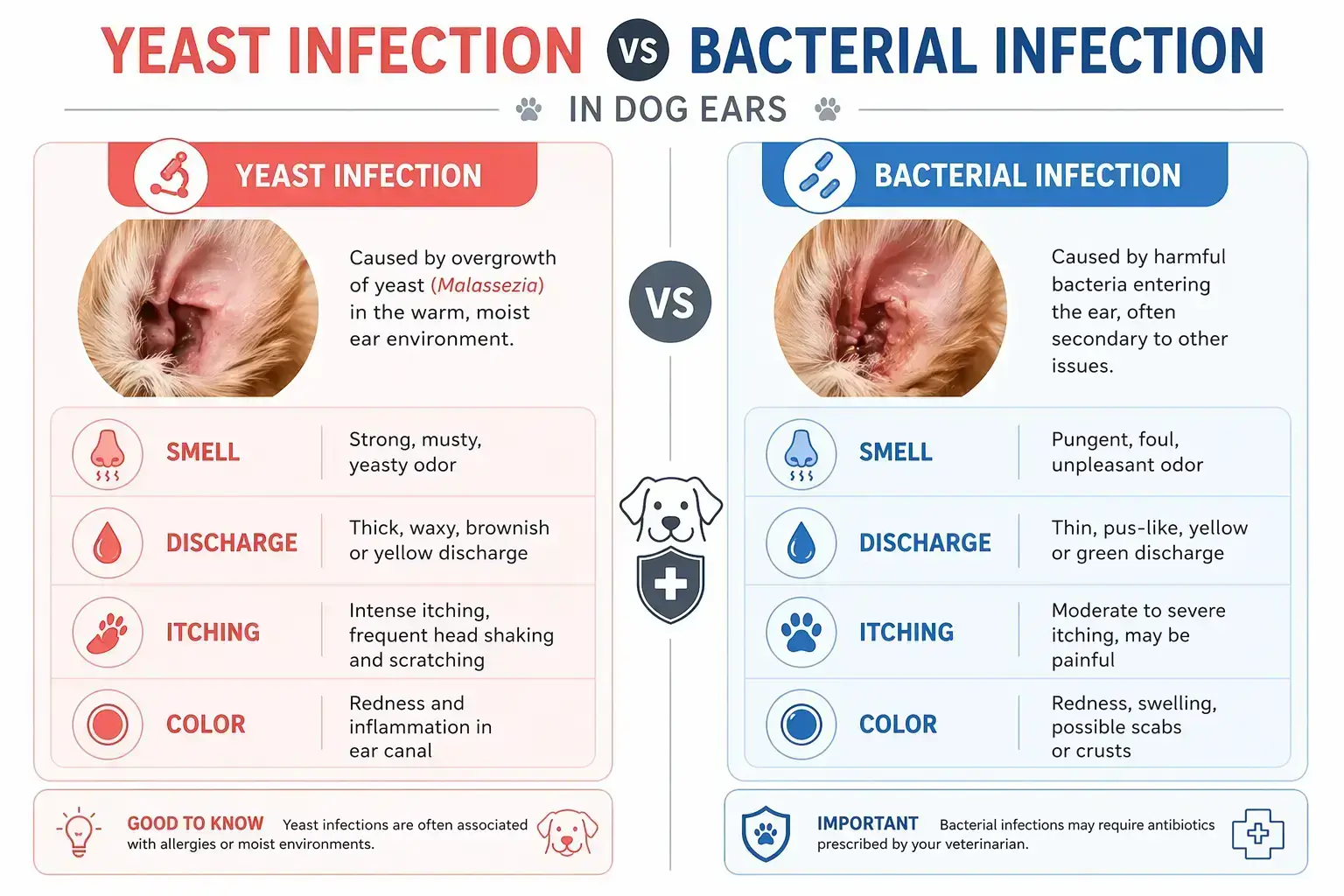
These infections often look similar—but treatment differs.
Quick answer:
Yeast infections smell musty; bacterial infections often produce pus and swelling.
Comparison table:
| Feature | Yeast Infection | Bacterial Infection |
|---|---|---|
| Smell | Strong, musty | Foul, rotten |
| Discharge | Brown/black, waxy | Yellow/green, pus-like |
| Itching | Very intense | Moderate to severe |
| Cause | Fungus (Malassezia) | Bacteria |
| Treatment | Antifungal drops | Antibiotics |
Pro tip:
Mixed infections are common—your dog can have both at the same time.
🐛 Ear Mites vs Yeast Infection Dog Ear
These are often confused, especially in puppies.
Quick answer:
Ear mites cause black debris and extreme itching; yeast causes odor and inflammation.
Key differences:
- Ear mites look like coffee-ground debris
- Yeast infections smell strongly
- Mites spread easily between pets
- Yeast infections are not contagious
💊 How to Treat Yeast Infection Dog Ear
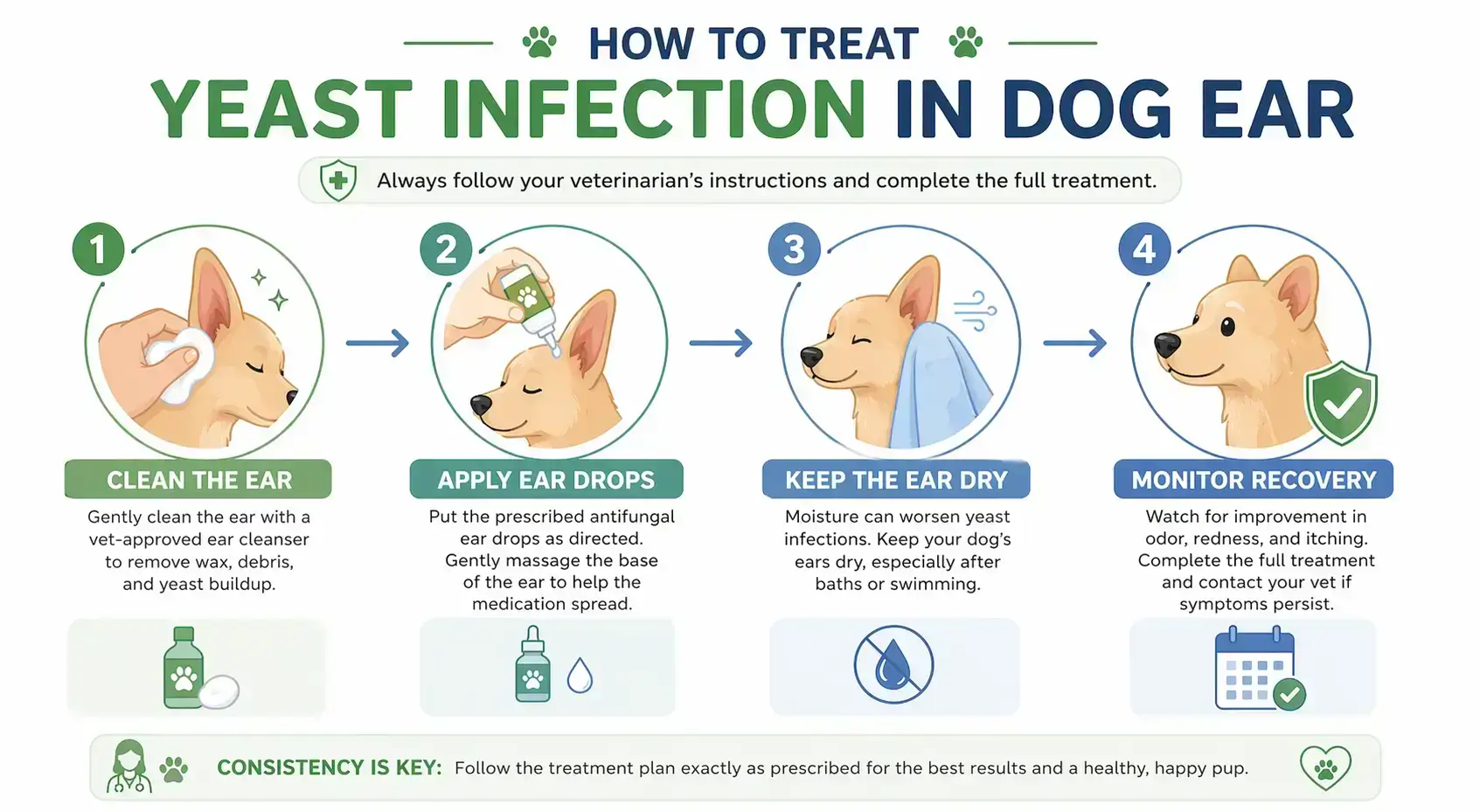
Treatment depends on severity—but early care makes a huge difference.
Quick answer:
Clean the ear, use antifungal medication, and address the root cause.
Step-by-step treatment:
1. Clean the ear
Use a vet-approved ear cleaner to remove debris and wax.
2. Apply antifungal drops
These kill yeast and reduce inflammation.
3. Keep ears dry
Moisture control is critical during recovery.
4. Treat underlying causes
Allergies or diet issues must be managed to prevent recurrence.
🏥 Best Medicine for Dog Ear Yeast Infection
Several effective treatments are available.
Quick answer:
Antifungal ear drops are the most effective option.
Common medications:
- Miconazole-based drops
- Ketoconazole treatments
- Combination ear drops (antifungal + anti-inflammatory)
Over-the-counter options:
Many dog ear yeast infection treatment over the counter products work well for mild cases.
Look for:
- Antifungal ingredients
- Alcohol-free formulas
- Soothing agents like aloe
Important:
Severe or chronic infections need prescription medication.
💧 Yeast Infection Dog Ear Drops: Do They Work?
Yes—ear drops are the first-line treatment.
Why they work:
- Deliver medication directly to infection site
- Reduce inflammation quickly
- Control odor and discharge
Consistency matters—missing doses can delay healing.
🌿 Yeast Infection Dog Ear Home Remedy: Are They Safe?
Home remedies can help—but only for mild cases.
Quick answer:
They support treatment but rarely replace medication.
Popular home remedies:
1. Apple cider vinegar (diluted)
Helps balance pH and reduce yeast growth.
2. Coconut oil
Has natural antifungal properties.
3. Green tea rinse
Soothes inflammation and irritation.
Warning:
Never use home remedies if:
- The ear is bleeding
- There’s severe swelling
- Your dog is in pain
🧼 How to Clean Yeast Infection Dog Ear Properly
Cleaning is essential—but must be done correctly.
Quick answer:
Use a gentle cleaner and avoid deep insertion.
Steps:
- Fill ear canal with cleaner
- Massage base of ear
- Let your dog shake
- Wipe excess with cotton
Avoid:
- Cotton swabs (can push debris deeper)
- Harsh chemicals
Regular hygiene is key to preventing infections—here’s a helpful guide on how often to trim dog nails and maintain overall grooming routines for better health.
🔁 Chronic Yeast Infection Dog Ear: Why It Keeps Coming Back
Recurring infections are frustrating but common.
Quick answer:
Chronic cases usually have an underlying issue.
Common reasons:
- Untreated allergies
- Poor diet
- Incomplete treatment
- Ear structure issues
Fact:
Veterinary studies show that over 50% of chronic ear infections are linked to allergies.
🥩 What to Feed When Dog Has a Yeast Infection
Diet plays a bigger role than most people think.
Quick answer:
Feed low-carb, high-protein diets and avoid sugar-rich foods.
Recommended diet:
- Grain-free or limited-ingredient food
- High-quality protein (chicken, fish, lamb)
- Omega-3 fatty acids
Foods to avoid:
- Sugary treats
- Corn and wheat
- Processed dog food with fillers
Insight:
Some studies suggest reducing carbohydrates may help control yeast overgrowth.
If you’re unsure where to start, check out this complete guide on easy homemade dog treats recipes vet approved to support your dog’s recovery naturally.
🚫 What Foods Cause Yeast Infections in Dogs Ears?
Certain foods can trigger or worsen yeast problems.
Common culprits:
- Corn
- Wheat
- Soy
- High-sugar diets
Food sensitivities can also lead to inflammation, which encourages yeast growth.
⚖️ Dog Ear Fungal Infection Home Remedy vs Medication
Which one should you choose?
Quick answer:
Use home remedies for mild cases; medication for moderate to severe infections.
Comparison table:
| Option | Best For | Effectiveness |
|---|---|---|
| Home remedies | Mild infections | Moderate |
| OTC medication | Early-stage infections | High |
| Prescription meds | Severe/chronic cases | Very high |
⚡ How to Get Rid of Yeast Infection Dog Ear Fast
Speed depends on early treatment.
Quick answer:
Start treatment early, clean regularly, and use proper medication.
Tips:
- Clean ears daily during infection
- Use antifungal drops consistently
- Keep ears dry at all times
Most mild infections improve within 7–10 days.
🐾 Yeast Infection in Dogs: Beyond the Ears
Yeast doesn’t just affect ears—it can spread.
Other areas:
- Paws (licking and redness)
- Skin folds
- Belly and groin
Signs:
- Constant licking
- Red, inflamed skin
- Musty odor
Treating the whole body may be necessary in severe cases.
If your dog is also licking their paws excessively, this could indicate a broader issue—learn more about dog yeast infection paws and how to manage it effectively.
👨⚕️ When to See a Vet
Some cases require professional care.
See a vet if:
- Infection lasts more than 1 week
- Symptoms worsen
- Your dog is in pain
- There’s swelling or bleeding
Fact:
Untreated ear infections can lead to hearing loss or damage to the ear canal.
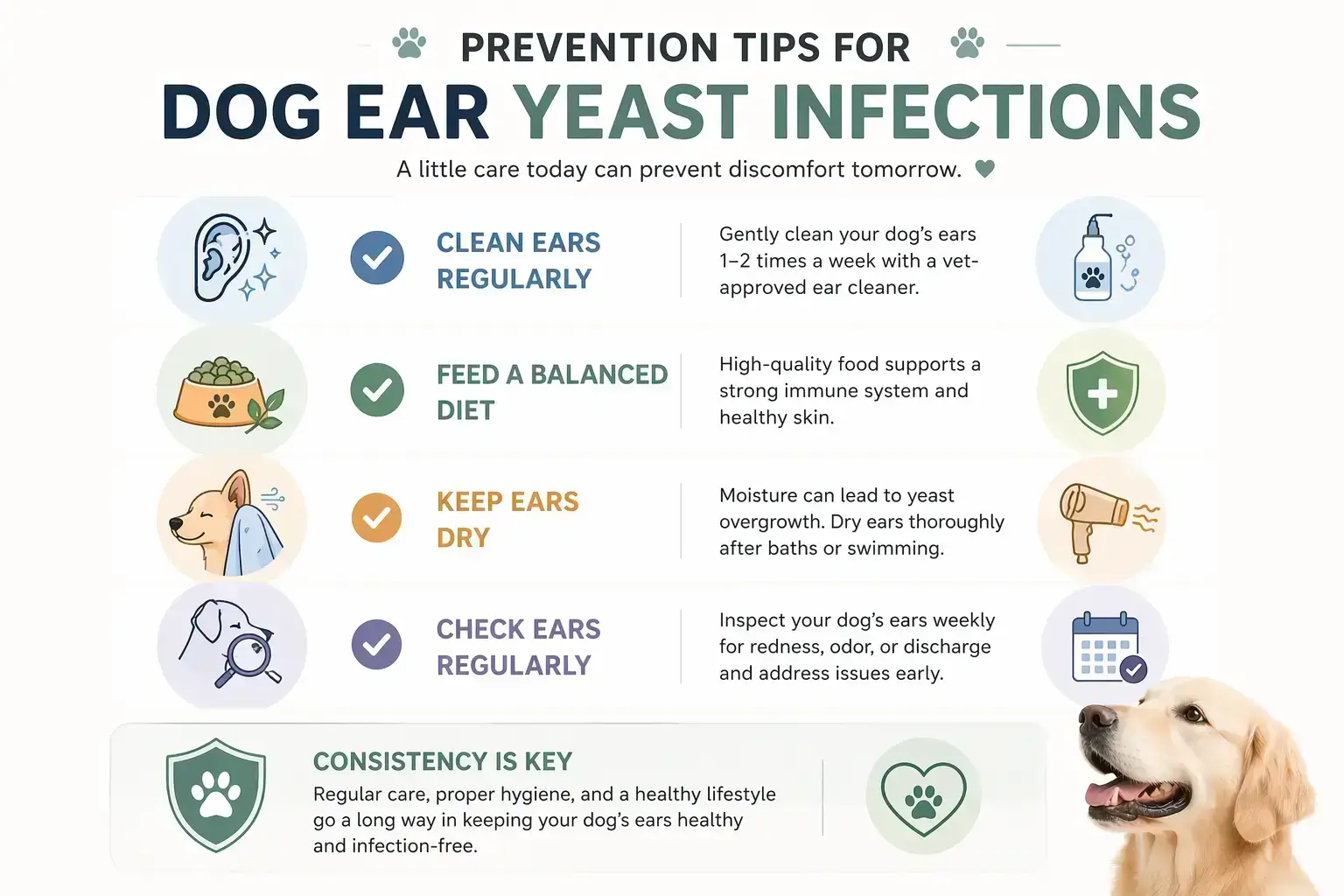
🛡️ How to Prevent Yeast Infection Dog Ear
Prevention is easier than treatment.
Quick answer:
Keep ears clean, dry, and monitor diet.
Prevention tips:
- Dry ears after bathing or swimming
- Clean ears weekly
- Feed a balanced diet
- Address allergies early
📝 Final Thoughts
A yeast infection dog ear issue might seem small, but it can quickly turn into a chronic problem if ignored. The key is early detection, proper cleaning, and addressing the root cause—especially diet and allergies. Treat it early, stay consistent, and your dog will be back to happy tail wags in no time.
❓FAQs
How do I know if my dog has a yeast ear infection?
Look for itching, odor, redness, and dark discharge.
Can I treat a dog ear yeast infection at home?
Yes, but only mild cases. Severe infections need medication.
What is the fastest treatment?
Antifungal ear drops combined with proper cleaning.
Are yeast infections in dog ears contagious?
No, they are not contagious between pets.
Can dog food cause yeast infections?
Yes, high-carb and allergenic foods can contribute.
How long does it take to heal?
Most mild infections improve within 1–2 weeks with proper treatment.




7 Responses