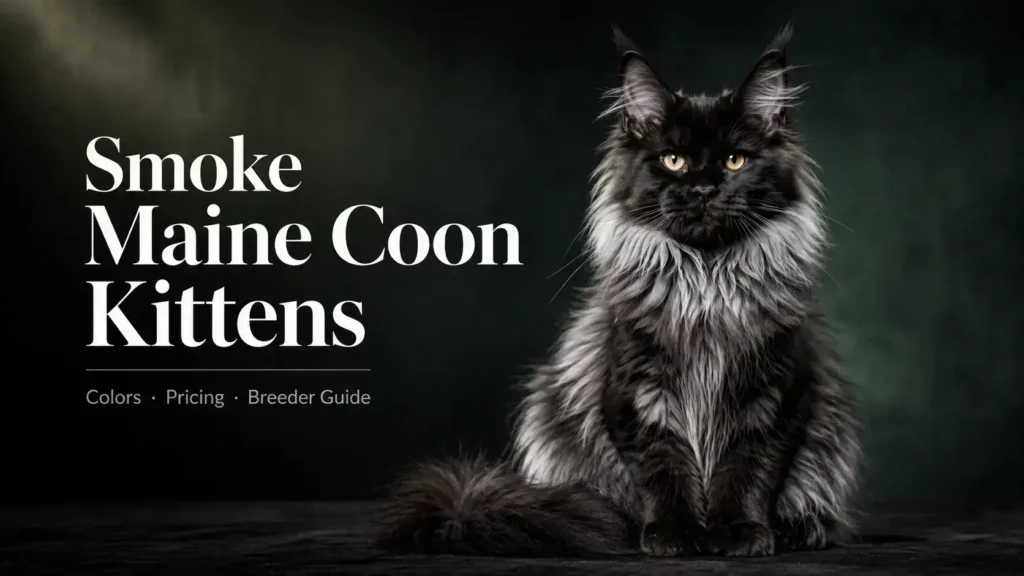
Your complete, honest guide to smoke Maine Coon kittens — covering everything from rare coat colors and real pricing to health screening and finding a trusted breeder. This is the breed that looks like living art, and once you see one in person, there is no going back.
The Maine Coon is one of the oldest and largest natural domestic cat breeds in North America. The breed has been officially documented in American cat shows since the late 1800s, making it one of the most historically grounded breeds you can own.
🐾 What Exactly Is a Smoke Maine Coon?
A smoke Maine Coon has a solid-colored topcoat with a white or pale silver undercoat. When the fur moves, it reveals a stunning two-tone shimmer that looks almost metallic.
This coat pattern is the result of a genetic modifier that suppresses pigment in the lower portion of each hair shaft. The effect is dramatic — a resting cat looks one color, but the moment it stretches or plays, that hidden white base lights up like smoke rising from the fur.
Unlike tabby stripes or tortoiseshell patches, smoke is a pattern type, not just a color. Any base color — black, blue, red, cream — can carry the smoke expression. This is why you see so many varieties: black smoke, blue smoke, silver smoke, and red smoke all belong to the same genetic family.
The Cat Fanciers’ Association (CFA) formally recognizes the smoke pattern as a distinct category, and the Maine Coon breed standard allows smoke coloring as a fully eligible show color class.
🖤 Black Smoke vs. Blue Smoke vs. Silver Smoke:
What’s the Difference?
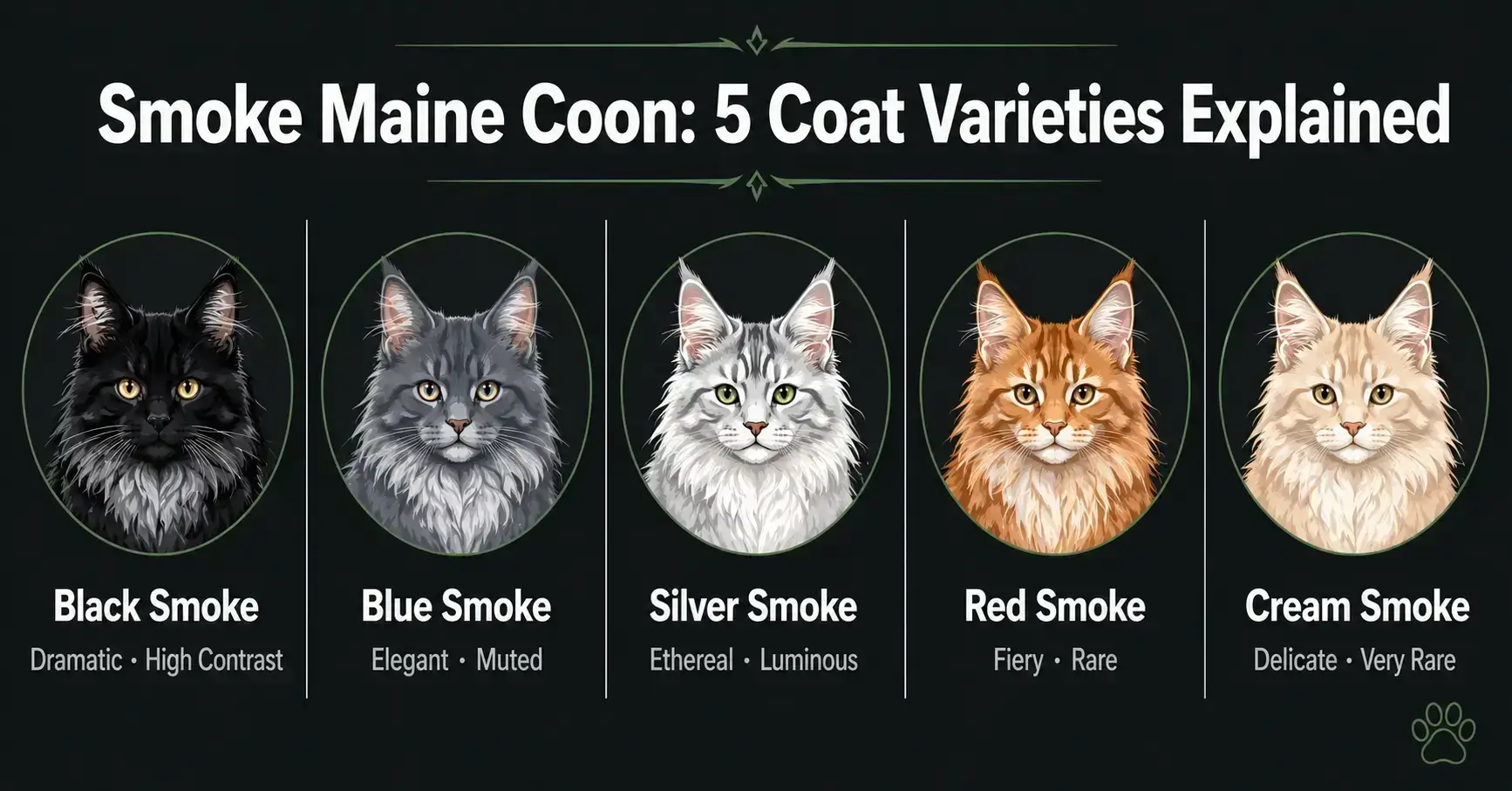
The base color differs between varieties, but the smoke mechanism is identical. Black smoke is the most dramatic, blue smoke is softer and more slate-gray, and silver smoke leans lighter with a cool, almost ghostly shimmer.
Comparison Table:
| Variety | Topcoat Color | Undercoat | Visual Impression | Rarity Level |
|---|---|---|---|---|
| Black smoke | Jet black | White | Striking, high-contrast | Common among smokes |
| Blue smoke | Steel blue-gray | White | Soft, muted, elegant | Moderately rare |
| Silver smoke | Pale silver-white | White | Ethereal, ghost-like | Harder to find |
| Red smoke | Warm orange-red | White/cream | Fiery, warm glow | Rare |
| Cream smoke | Pale peach-cream | White | Subtle, delicate | Very rare |
Silver smoke borders on the shaded category and catches light in a way that makes it look almost iridescent. If you love pale, striking Maine Coon coats, you might also want to explore the white Maine Coon kitten — another breathtaking coat variety that shares that same clean, luminous look.
💰 How Much Do Smoke Maine Coon Kittens Actually Cost?
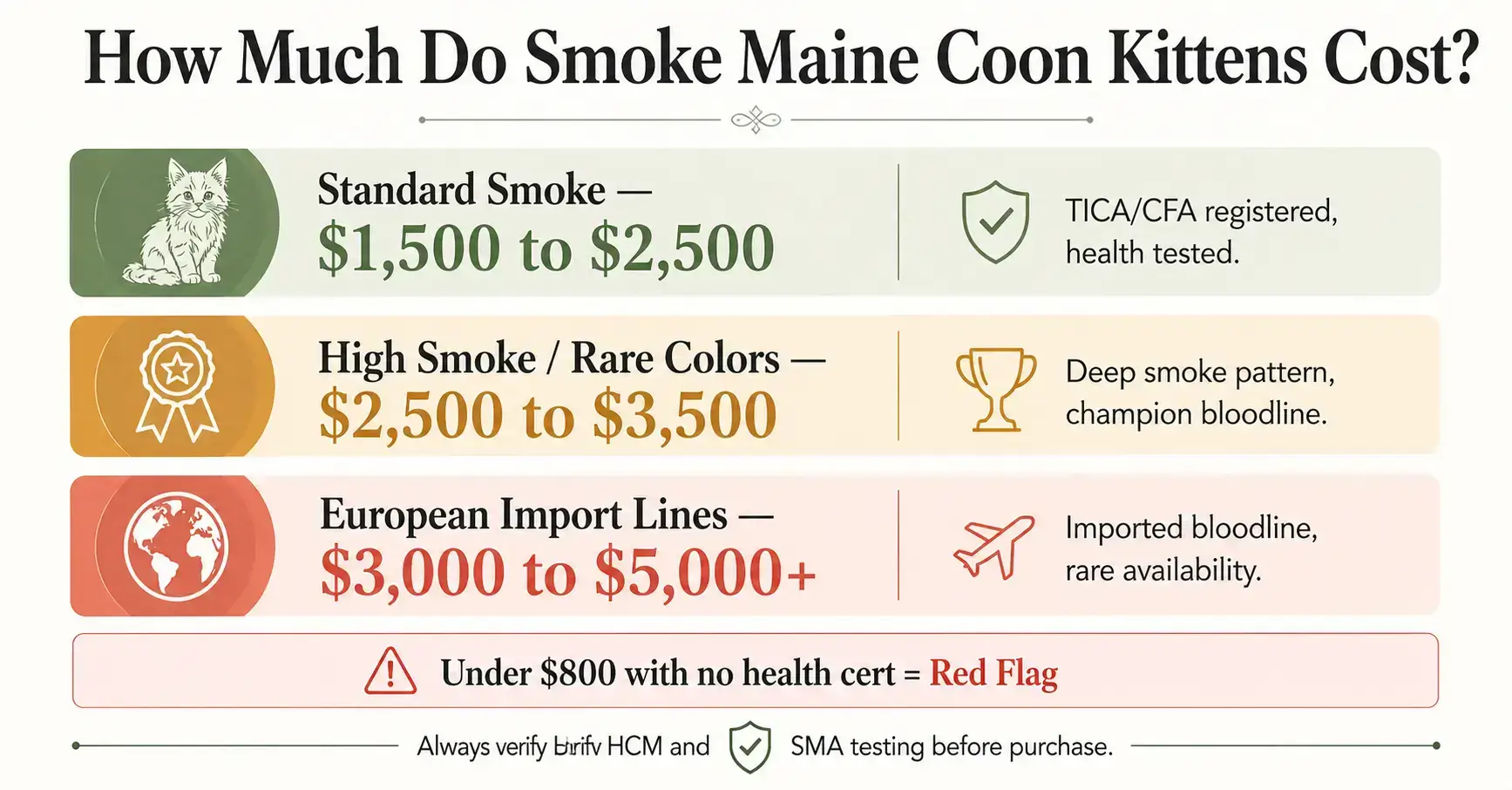
Prices typically run between $1,500 and $3,500 for a smoke Maine Coon kitten from a registered breeder. Rare patterns like red smoke or high-smoke silver can push well past $4,000.
The price variation comes down to several real factors: the breeder’s registration status with TICA or the CFA, bloodline quality, health testing history, and the depth of the smoke pattern itself. A “high smoke” cat — one where the white undercoat extends almost to the skin on 80% or more of each hair shaft — commands a premium because that pattern photographs the most dramatically and is harder to achieve genetically.
Any smoke Maine Coon kitten listed for under $800 with no health certifications should raise serious questions. Maine Coons are prone to hypertrophic cardiomyopathy (HCM), and responsible breeders screen for this using echocardiograms. Skipping that testing cuts costs — but it’s a cost passed on to you in vet bills later.
European-imported lines occasionally appear on the US market and tend to run higher — often $3,000 to $5,000 — because breeders factor in shipping, quarantine, and documentation costs. These cats are not inherently better, though European breeders do sometimes have access to bloodlines less common in North America. Speaking of international bloodlines, buyers interested in European-influenced cats may also want to read about the Russian Maine Coon — a distinct breeding line that has grown in popularity among US buyers looking for cats with strong bone structure and dense coats.
🏠 Do Smoke Maine Coons Need a Cat Tree?
Yes — and not just any cat tree. Maine Coons are one of the largest domestic cat breeds, and a flimsy tower designed for a 7-pound tabby will wobble and frustrate a 15-pound Maine Coon within days.
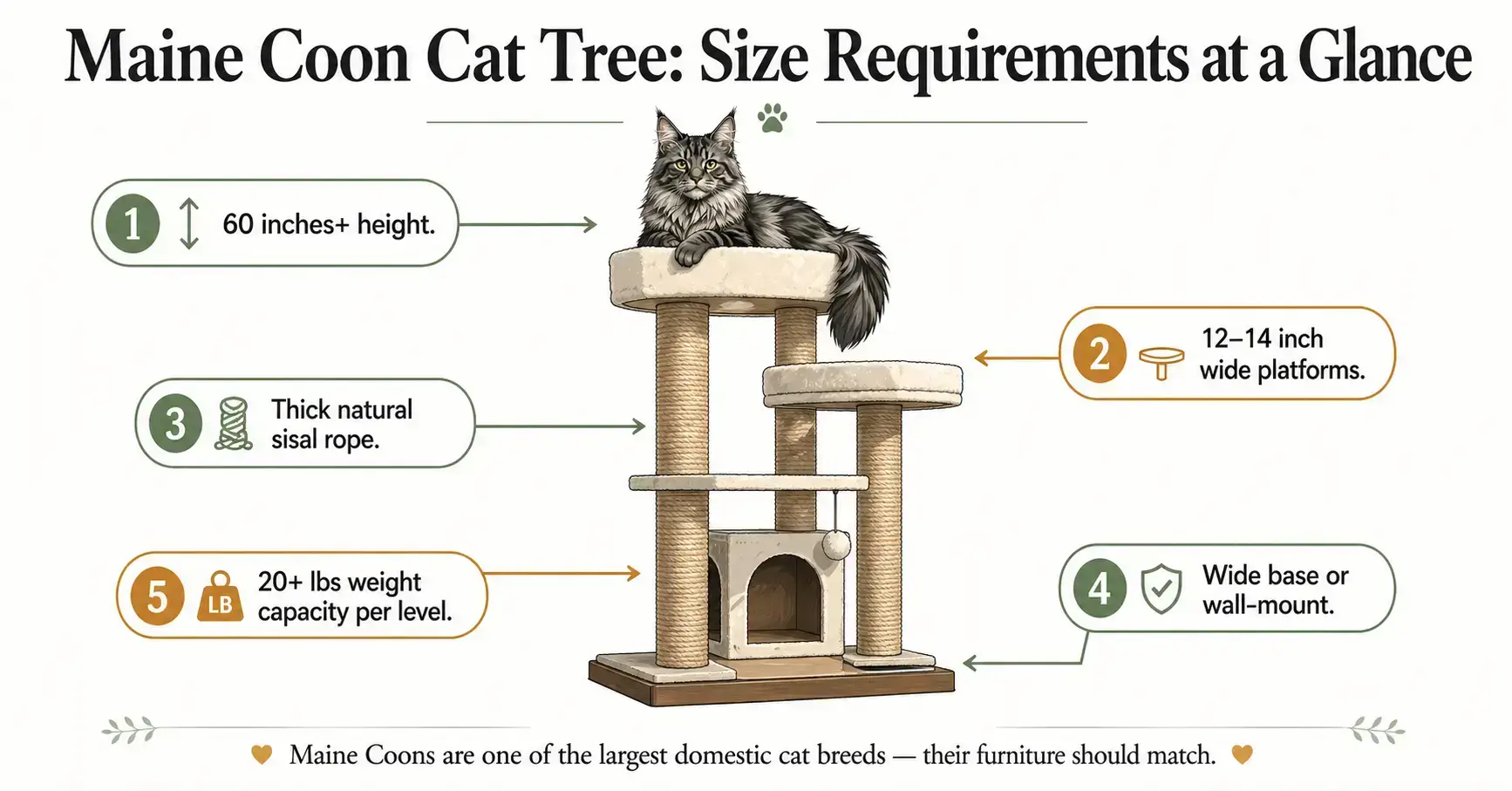
Maine Coons are famously active, curious, and vertical-space-oriented. They love to climb, survey rooms from above, and watch their humans from a perch that makes them feel like the royalty they believe themselves to be. A good Maine Coon cat tree needs to be tall (at least 60 inches), built with wide platforms (minimum 12–14 inches per platform), and have a solid, heavy base that won’t tip.
Look for trees with natural sisal rope on the posts — Maine Coons scratch more aggressively than most breeds due to their size and muscle mass. Carpeted platforms are fine, but avoid carpet-only posts, which wear out fast under regular Maine Coon use.
Comparison Table:
Cat Tree Requirements Table
| Feature | Minimum for Maine Coon | Why It Matters |
|---|---|---|
| Height | 60 inches+ | They love high perches; short towers get ignored |
| Platform width | 12–14 inches | Maine Coons need room to fully lie down |
| Base stability | Wide-base or wall-mounted | Prevents tipping with heavy cats in motion |
| Scratching posts | Thick sisal rope | Withstands heavy-duty scratching sessions |
| Weight capacity | 20+ lbs per platform | Males often reach 15–18 lbs fully grown |
🔬 The Genetics Behind the Smoke Pattern
The smoke pattern is produced by the inhibitor gene (I), which suppresses pigment in the lower portion of each hair. A cat must inherit this gene from at least one parent to display any form of smoke or silver coloring.
What makes smoke different from solid-colored cats is the interaction between this inhibitor gene and the non-agouti gene (aa). The agouti gene controls whether tabby banding appears in the coat. When the inhibitor gene acts on a non-agouti (solid) cat, you get smoke. When it acts on a tabby cat, you get silver tabby or silver classic tabby instead.
This gene interaction is well documented in feline biology. For anyone curious about the deeper science, the Wikipedia article on cat coat genetics provides an excellent breakdown of how the inhibitor gene, agouti gene, and extension gene all work together to produce patterns like smoke, silver, and shaded.
This is why two tabby parents can sometimes produce smoke kittens, and why smoke parents can occasionally produce tabby offspring. The genetics are a dance between multiple genes, not a simple on/off switch. Breeders who specialize in smoke lines spend years understanding these interactions to predictably produce high-smoke kittens.
According to the University of California Davis Veterinary Genetics Laboratory, feline coat color is controlled by a cluster of well-mapped genes, making it one of the most thoroughly studied areas in cat genetics.
📋 What to Look for When Buying from a Breeder
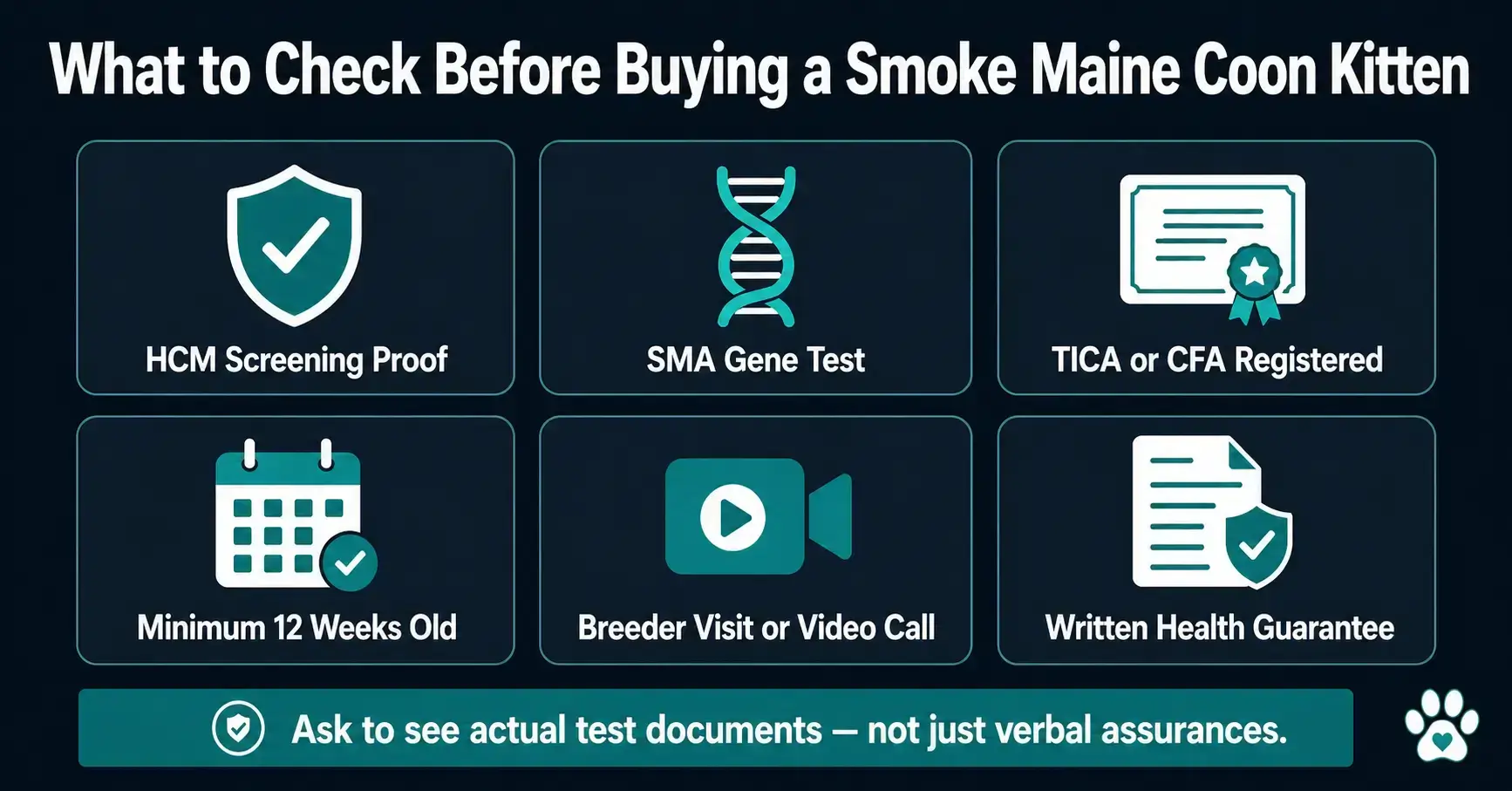
A reputable breeder should offer health guarantees, show proof of HCM screening on the parent cats, be registered with TICA or the CFA, and be happy to let you visit or video call before purchase.
Health testing is non-negotiable. Maine Coons have a genetic predisposition to hypertrophic cardiomyopathy (HCM). Responsible breeders use DNA tests (MyBPC3 mutation screening) and annual echocardiograms on their breeding cats to reduce the risk in kittens. Ask to see the actual test results — not just a verbal assurance.
Also ask about spinal muscular atrophy (SMA) testing. This is another hereditary condition found in Maine Coons that affects muscle development. Both parents should be tested before breeding.
Avoid breeders who sell kittens younger than 12–14 weeks. Early socialization is critical for Maine Coons, and any breeder rushing kittens out the door at 8 weeks is prioritizing profit over kitten welfare. The ASPCA and most major veterinary organizations recommend 12 weeks as the minimum for responsible kitten placement.
🌎 Finding Smoke Maine Coon Kittens for Sale Near You
The most reliable starting point is the TICA or CFA breeder registries, which list verified, accountable breeders by location. Expect waitlists of 3–12 months for quality smoke kittens.
Smoke Maine Coons are not mass-produced, and that’s actually a good sign. Quality breeders typically have one to three litters per year, and they screen buyers almost as carefully as buyers should screen them. A waitlist means the breeder is doing things right.
If you’re set on finding kittens near your location, be prepared to travel. The concentration of quality Maine Coon breeders is higher in the Northeast US, but TICA’s directory shows registered breeders across most states and provinces. Searching by zip code or state on tica.org is the cleanest approach.
Rescue organizations sometimes have adult Maine Coons — including smoke variants — available for adoption. Maine Coon Adoptions and the Maine Coon Rescue network are worth checking if you’re open to an adult cat. They’re often already litter-trained, socialized, and available for a fraction of the purchase price.
⚖️Comparison Table:
Smoke Maine Coon vs. Other Maine Coon Coat Types
| Coat Type | Visual Look | Price Premium? | Availability |
|---|---|---|---|
| Black smoke | Black with white undercoat flash | Yes | Moderate |
| Silver tabby | Silver base with dark tabby markings | Moderate | Common |
| Brown tabby | Classic brown/black tabby pattern | No | Very common |
| Solid black | Deep jet black all over | Slight | Common |
| Silver shaded | Very pale silver, minimal color tipping | Yes | Rare |
| Red smoke | Warm orange with white undercoat | High | Rare |
Maine Coons come in a surprisingly wide range of coat expressions beyond smoke. If you enjoy exploring unusual coat combinations, the torbie Maine Coon — a blend of tortoiseshell and tabby — is another visually stunning variety worth knowing about.
🧬 Do Smoke Kittens Look Different at Birth?
Yes — and this catches many first-time owners off guard. Black smoke kittens are often born looking nearly solid black or dark gray. The smoky contrast only becomes visible as their adult coat grows in, usually between 8 and 18 months.
This developmental timeline means that even experienced breeders sometimes can’t be 100% certain about smoke intensity until a kitten is several months old. Early indicators include a slightly lighter-colored facial ruff and a pale area visible at the hair base near the chest when you part the fur.
If the deep, dark look of a black-coated Maine Coon appeals to you, it is also worth reading about the black Maine Coon with blue eyes — a rare genetic combination that shares some visual drama with the black smoke variety but carries its own entirely unique appearance.
The depth of smoke continues to develop and clarify through the cat’s first two years. A kitten that shows moderate smoke at 4 months may develop into a stunning high-smoke adult. This is part of why photos of young kittens can look significantly different from the adult cats shown on a breeder’s website.
❤️ Temperament: What Are Smoke Maine Coons Actually Like?
Smoke coloring has no effect on personality — Maine Coon temperament is consistent across coat types. These cats are dog-like in their loyalty, playful well into adulthood, and unusually tolerant of children and other pets.
Maine Coons are frequently described as the gentle giants of the cat world, and that reputation is well-earned. They follow their owners around the house, chirp rather than meow (a soft, trilling vocalization unique to the breed), and often seek physical contact without being clingy.
They’re also among the most trainable domestic cat breeds. Many Maine Coon owners successfully leash-train their cats, teach them to fetch, and even clicker-train basic commands. The breed’s intelligence and food motivation make this easier than most people expect from a cat.
Full-grown males typically reach 15–18 pounds, with some exceptional individuals hitting 20+ pounds — making them one of the largest domestic cat breeds recognized by major registries. Females usually run 10–14 pounds, but still substantially larger than the average domestic shorthair.
❓ FAQs
Are black smoke Maine Coon kittens rare?
Black smoke is the most common variety within the smoke pattern category, but smoke as a whole is less common than tabby or solid coats. Expect a waitlist from quality breeders.
What is the average lifespan of a Maine Coon?
Well-bred Maine Coons typically live 12–15 years, with some reaching 18. Health screening for HCM and SMA significantly improves longevity outcomes.
Does a smoke Maine Coon need special grooming?
Brushing 2–3 times per week prevents matting. The smoke pattern itself needs no extra care, but regular brushing keeps the white undercoat visible and airy.
Can I find blue smoke Maine Coon kittens for sale in the UK?
Yes — GCCF registered breeders in the UK produce blue smoke Maine Coons. Use the GCCF online breeder directory and expect similar price ranges to the US, adjusted for GBP.
What size cat tree works best for a full-grown Maine Coon?
At least 60 inches tall, platforms 12 inches or wider, thick sisal posts, and a wide base or wall-mount option. Weight capacity per platform should be rated for 20+ lbs.
How do I know if a kitten is truly high smoke vs. low smoke?
Part the fur and look at the base of each hair. High smoke cats show white extending at least 50–70% of the hair length from the root. Ask your breeder to demonstrate this in person or on video.
Is a silver Maine Coon the same as a smoke Maine Coon?
Not quite. Both carry the inhibitor gene, but silver Maine Coons are typically silver tabbies with visible tabby markings, while smoke cats have a solid topcoat without tabby patterning.



One Response