

Choosing the right puppy collar sounds simple—but it’s one of the most confusing early decisions for new dog owners. The wrong choice can lead to pulling, discomfort, or even injury. Most beginners pick based on looks, not function, which causes training problems later.
Quick Summary
- A lightweight, adjustable flat collar is best for most puppies starting out
- Use a soft puppy collar + leash combo for comfort and early training
- Avoid choke or shock collars—they can harm development
- For pulling, switch to a martingale or harness, not force-based tools
- Fit matters more than brand: always use the two-finger rule
Pet Care Insight
This guide is based on widely accepted pet care practices, veterinary recommendations, and real-life experience from dog owners raising puppies in everyday home environments. The focus is simple: safe, practical, and effective choices that actually work.
Pet Overview
Temperament And Behavior Traits
Most puppies are naturally curious, energetic, and easily distracted. They explore through pulling, chewing, and sudden movements.
Lifespan And Growth Stages
Dogs typically live 10–15 years, so early training tools (like collars) influence long-term behavior.
Physical Traits And Sensitivity
- Rapid growth (collar size changes often)
- Sensitive neck and developing bones
- Soft skin prone to irritation
Family Suitability And Lifestyle Fit
Puppies adapt well to families but need consistent handling. Kids often pull leads incorrectly—collar choice matters here.
Activity Level And Energy Needs
High. Puppies need structured movement, not restriction.
Compatibility With Training Tools
They respond best to gentle guidance tools, not force-based collars.
Daily Care Essentials
As your puppy grows quickly into adulthood, collar size and training needs change—this Cockapoo growth guide shows how fast those transitions happen.
Feeding Routine And Timing Basics
- 3–4 meals daily (young puppies)
- Transition to 2 meals by adulthood
Grooming Basics And Collar Hygiene
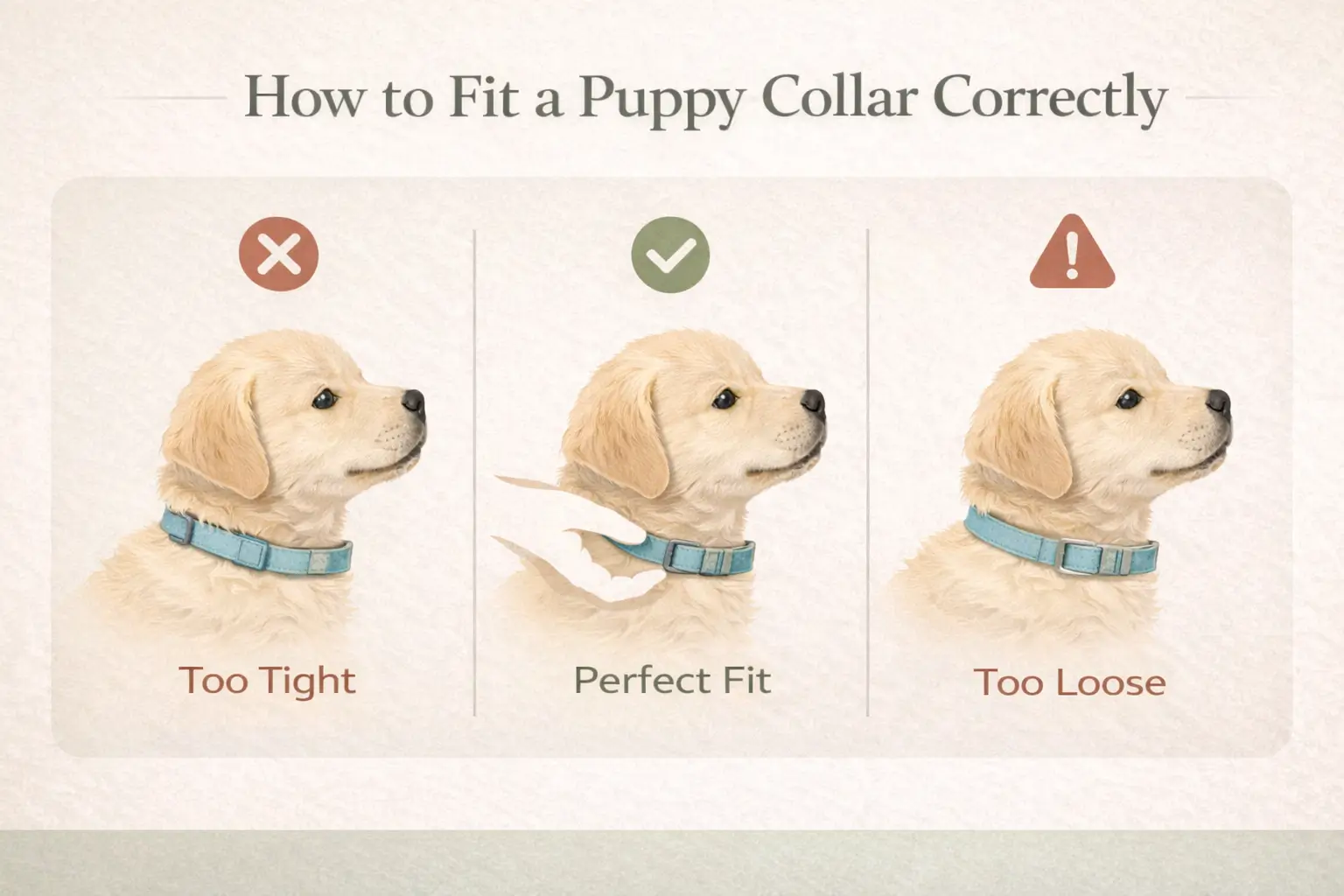
- Check collar area daily for irritation
- Clean collar weekly (especially fabric ones)
Exercise Needs And Daily Movement
- Short, frequent walks (5–15 minutes initially)
- Avoid long leash tension early
Social Needs And Interaction Importance
- Exposure to people, sounds, and environments
- Collar should support—not restrict—movement
Real Life Daily Routine Example
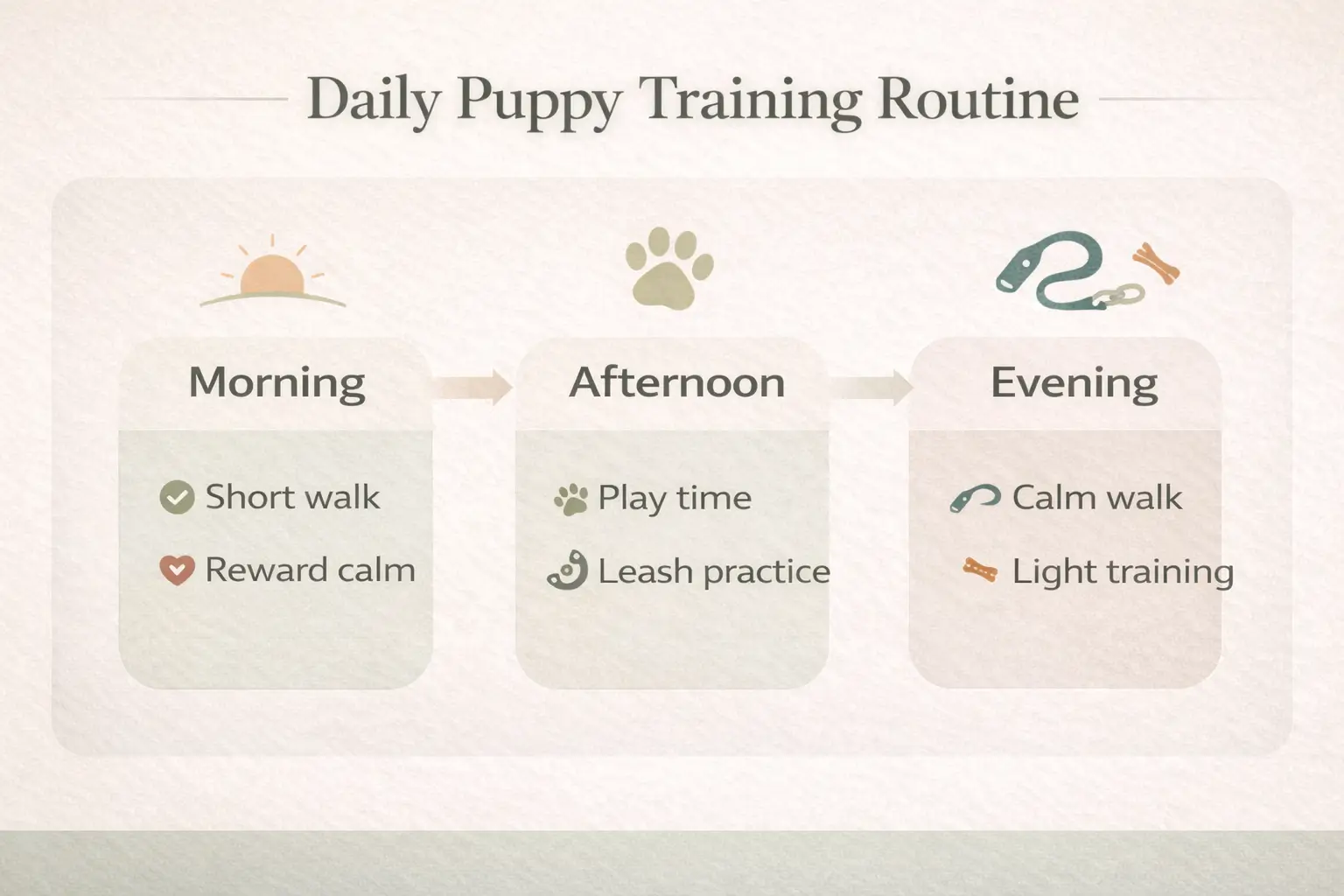
Morning: collar on → short potty walk → reward calm walking
Afternoon: light play + leash exposure indoors
Evening: calm walk with minimal pulling pressure
Common Mistakes New Owners Make
- Leaving tight collar on growing puppy
- Using heavy collars too early
- Skipping leash training entirely
Diet & Nutrition Guide
Feeding Schedule By Age Stage
- Puppies: 3–4 meals
- Adults: 2 meals
- Seniors: controlled portions
Portion Control And Weight Management
Follow weight guidelines, not guesswork.
Nutritional Needs For Healthy Growth
- High protein for growth
- Balanced fats for energy
- Calcium for bone development
Safe And Unsafe Foods List
Safe:
Cooked chicken, rice, carrots
Unsafe:
Chocolate, onions, grapes
Practical Feeding Insight For Training
A well-fed puppy is calmer on the leash. Hunger often increases pulling behavior.
Exercise & Mental Stimulation
Daily Activity Requirements For Puppies
20–60 minutes depending on breed
Play Ideas That Support Training
- Tug games (light pressure only)
- Treat-based recall training
- Indoor leash walking practice
Using chew-based rewards during training can reduce leash frustration—these dental chews are especially helpful for keeping puppies engaged while reinforcing calm behavior.
Easy At Home Enrichment Activities
- Walk with leash inside first
- Reward eye contact during walks
- Practice “follow me” instead of pulling
Training & Behavior Guidance
Basic Training Foundations For Puppies
Start with name recognition, loose leash walking, and stop-and-go training
Socialization For Confident Behavior
Expose your puppy to different surfaces, sounds, and other dogs
Behavior Prevention And Early Correction
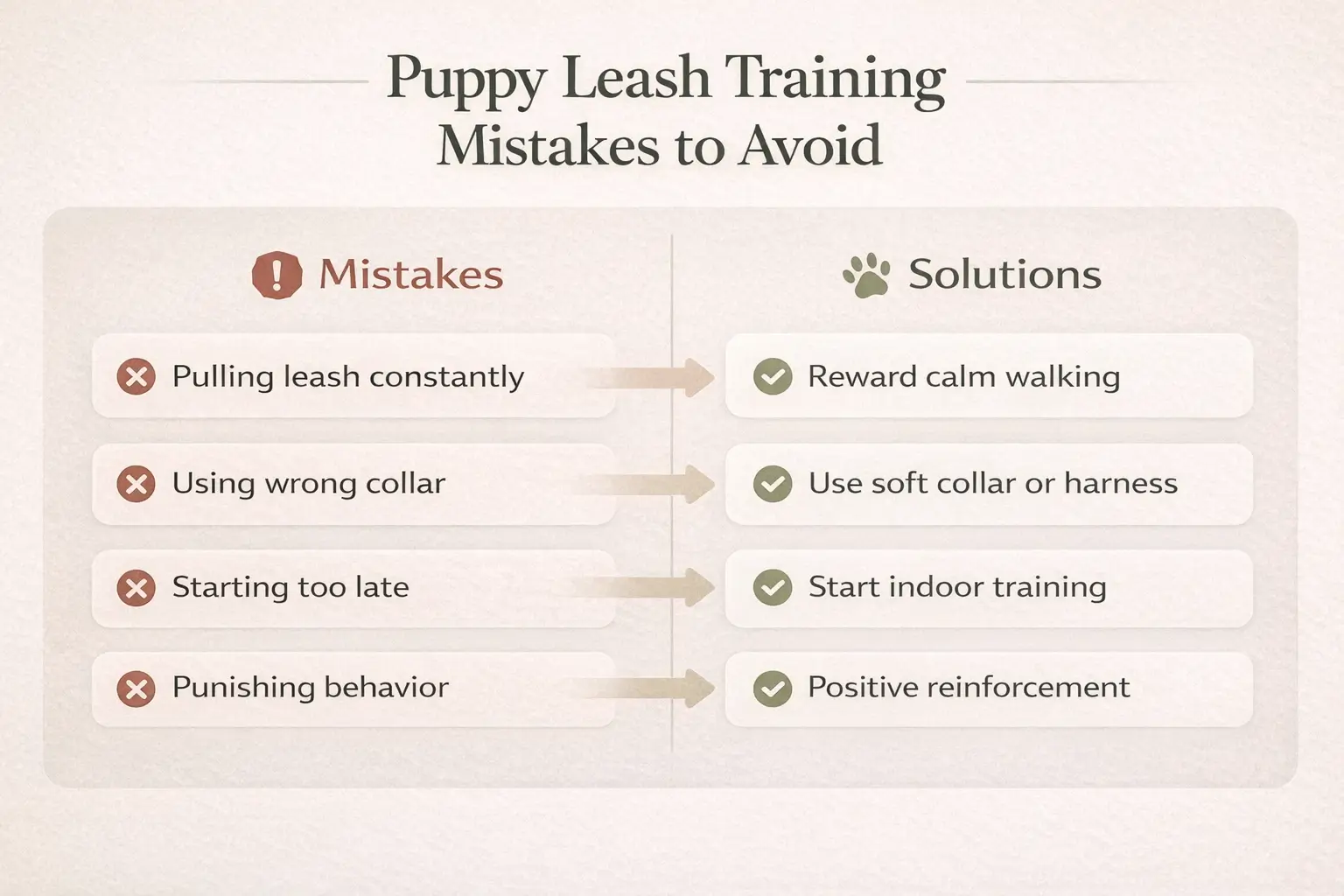
- Don’t yank leash
- Don’t punish pulling
- Reward calm walking
Comparison Section: Puppy Collar Types
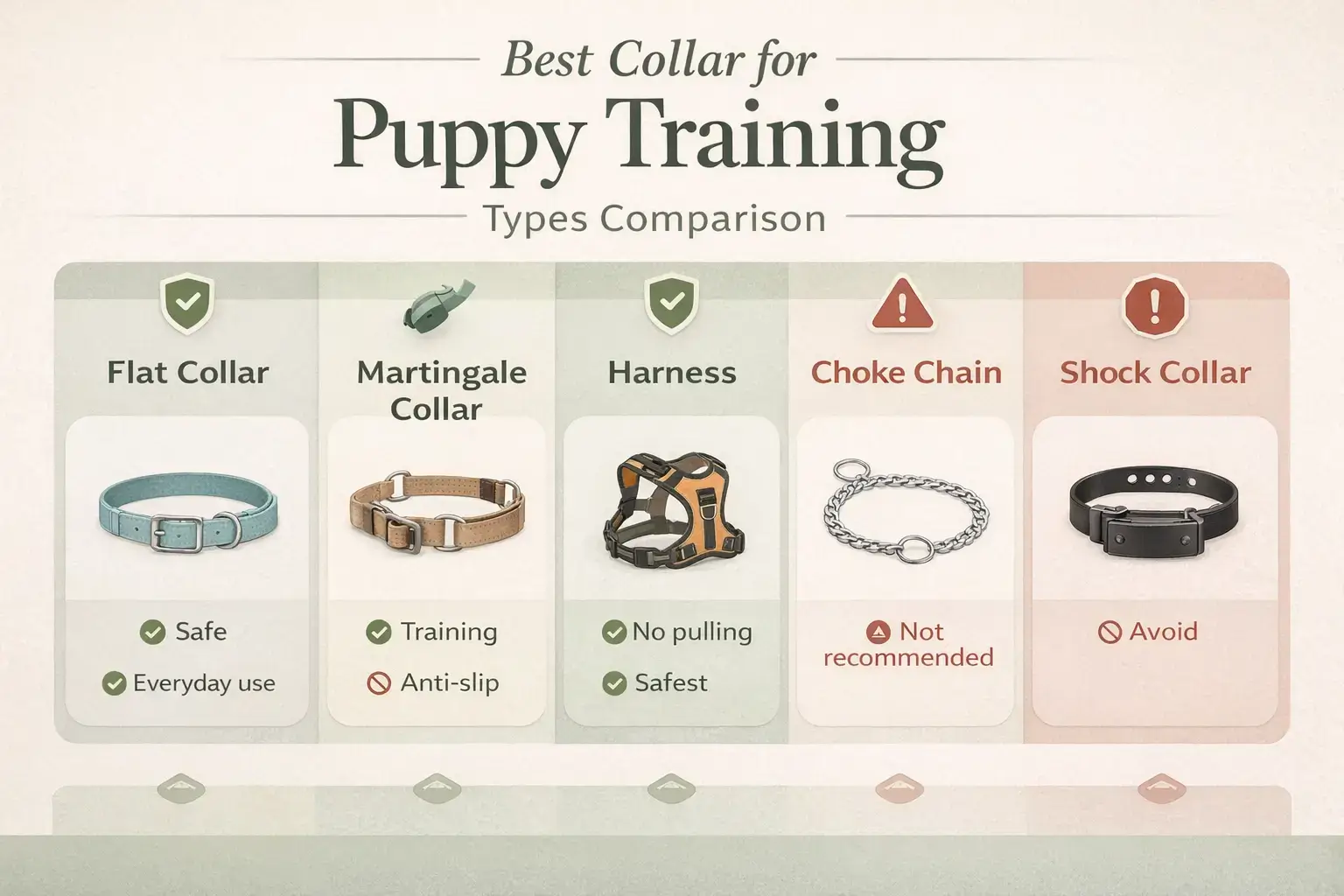
If you’re new to training tools, understanding the basic types of dog collars can help you make safer choices for your puppy.
| Collar Type | Safety Level | Best For | Risks |
|---|---|---|---|
| Flat Collar | High | Daily use, ID tags | Minimal if fitted properly |
| Martingale | Medium-High | Puppies that slip collars | Over-tightening if misused |
| Harness | Very High | Pulling puppies | None if fitted correctly |
| Choke Chain | Low | Not recommended | Neck injury, fear |
| Shock Collar | Very Low | Not recommended | Stress, behavioral damage |
| Soft Fabric Collar | High | Small or sensitive puppies | Wear and tear |
Key Insight For Best Choice
For most puppies: soft collar + lightweight leash, and harness for pulling phase.
Common Problems & Troubleshooting
Puppy Pulling On Leash Problem
Cause: excitement and lack of training
Solution: stop walking and reward calm behavior
Prevention: start leash training indoors
When to see a vet: breathing or choking issues
Many owners solve this by redirecting chewing to safe alternatives—if you’re unsure which chews are actually safe, this guide on Nylabone safety explains what to avoid and what works best.
Puppy Biting The Leash Issue
Cause: teething or play
Solution: redirect with toys
Prevention: avoid dangling leash
Puppy Refuses To Walk Situation
Cause: fear or unfamiliarity
Solution: start indoors with treats
Collar Causing Skin Irritation Problem
Cause: poor fit or rough material
Solution: switch to soft collar and adjust fit
Health & Climate Considerations
Before starting outdoor leash training, make sure your puppy is properly vaccinated—this breakdown of puppy shot costs helps you plan early care responsibly.
Heat Safety And Outdoor Care
- Avoid hot surfaces
- Remove collar indoors if overheating
Cold Weather Protection Tips
- Use lightweight collars under coats
- Avoid metal collars in extreme cold
Hydration And Walking Safety
Always carry water
Regional Climate Advice For Hot Areas
- Walk early morning or evening
- Avoid midday heat
- Choose breathable collars
Seasonal Pet Care Tips
Spring Allergy And Skin Care
Watch for irritation under collar
Summer Heat Protection Tips
Use lightweight collars and avoid overheating
Fall Growth And Adjustment Needs
Adjust collar size as puppy grows
Winter Indoor Care Adjustments
Check for dryness and skin issues
Additional Expert Tips
Hidden Mistakes Many Owners Make
- Using heavy decorative collars
- Ignoring collar fit checks
Simple Habits For Better Training
- Weekly collar adjustment
- Use collar for ID, harness for control
Long Term Care And Safety Advice
- Never leave leash attached unattended
- Keep training positive
Conclusion
The best puppy collar isn’t the most expensive—it’s the one that fits properly, feels comfortable, and supports training. Most mistakes happen when owners rush into tools without understanding their puppy’s needs. Start simple, stay consistent, and adjust as your puppy grows.
FAQs
-
What Is Best Collar For Puppy Training?
Lightweight flat collar or martingale with positive training.
-
When Should I Start Leash Training Puppy?
Around 8 weeks, starting indoors.
-
Is Harness Better Than Collar For Puppies?
Yes for pulling, but collar is needed for ID.
-
How Tight Should Puppy Collar Be?
Two fingers should fit comfortably.
-
Why Puppy Keeps Pulling On Leash?
Natural behavior—training fixes it.
-
Can I Use Shock Collar For Puppy?
No, it can harm behavior.
-
What Material Is Best For Puppy Collar?
Soft nylon or fabric.