

Choosing the right doodle breed sounds simple—but most new owners underestimate how different these dogs can be. Size, energy, grooming, and temperament vary a lot, and picking the wrong match often leads to frustration. Many beginners focus on looks instead of lifestyle fit—that’s where problems begin.
Quick Summary
- The “best doodle puppy” depends on your lifestyle, not popularity
- Mini doodles suit apartments; large doodles need space and exercise
- Grooming needs are high for most doodles—this is often underestimated
- Calm doodle breeds exist, but training and routine matter more than genetics
- Health, diet, and daily structure determine long-term behavior and happiness
Pet Care Insight
This guide is based on widely accepted pet care practices, veterinary guidance, and real-life experiences from responsible pet owners. The goal is to provide practical, easy-to-follow advice for everyday pet care.
Pet Overview

Doodle dogs are mixes between Poodles and other breeds (like Golden Retrievers, Labradors, or Bernese Mountain Dogs).
Most doodles inherit their intelligence and coat traits from the Poodle, which is why grooming and mental stimulation are so important.
They vary widely, but generally share:
- Temperament: Friendly, social, intelligent
- Lifespan: 10–15 years depending on size
- Physical Traits: Curly/wavy coat, low-shedding (not always hypoallergenic)
- Family Suitability: Excellent with families, kids, and other pets
- Activity Level: Moderate to high
- Compatibility: Great for active households, less ideal for low-energy owners
If you’re leaning toward smaller options, this detailed guide on the white mini goldendoodle guide care size tips breaks down size, temperament, and real-life care expectations for mini doodles.
A common mistake: assuming all doodles behave the same. A mini doodle vs a large doodle is almost like comparing two different dogs.
Daily Care Essentials
Feeding Routine And Timing
- Puppies: 3 meals/day
- Adults: 2 meals/day
- Same feeding time daily improves digestion and behavior
Understanding how doodles mature over time is important—this cockapoo puppy to dog progression guide shows how behavior, energy, and care needs evolve from puppy to adult.
Grooming Basics And Frequency
- Brush 3–5 times per week (daily for curly coats)
- Professional grooming every 6–8 weeks
- Check ears often—doodles are prone to infections
Exercise Needs And Activity
- 30–60 minutes daily (mini)
- 60–90 minutes daily (medium/large doodles)
Social Needs And Interaction
- Highly social—don’t leave alone for long hours
- Need mental engagement as much as physical activity
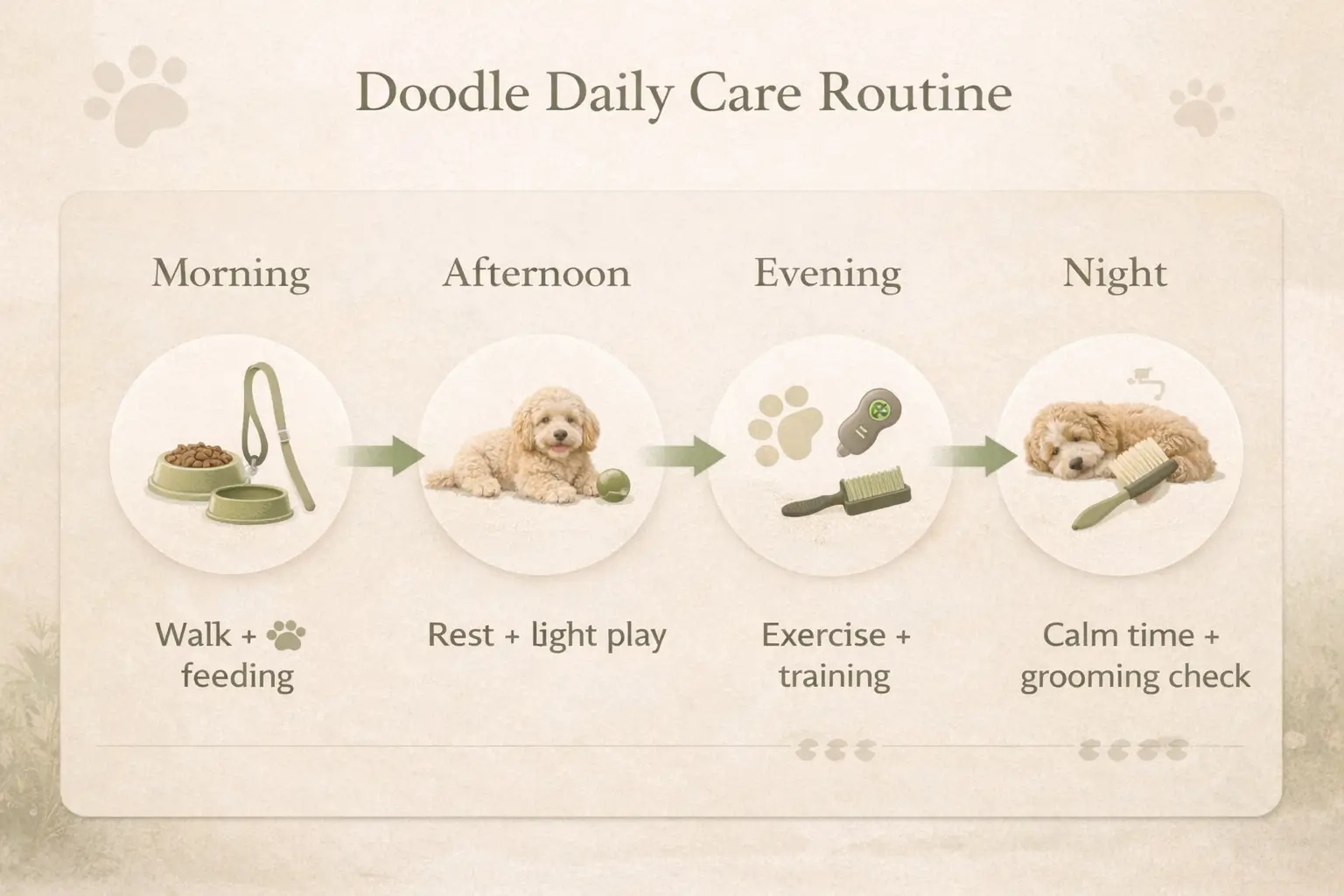
Real-life routine example:
Morning walk → breakfast → short training → afternoon rest → evening play → grooming check → calm bedtime routine
Common mistake:
Skipping brushing “just for a few days” → leads to painful matting fast.
Diet & Nutrition Guide
Feeding Schedule For Puppies
- High-protein puppy food
- Divide into 3 meals
- Avoid overfeeding—doodles gain weight quickly
Adult And Senior Nutrition Needs
- Adults: balanced protein + fat
- Seniors: joint support, lower calories
Portion Control And Balance
- Follow weight-based feeding, not guesswork
- Adjust based on activity level
Safe Foods And Foods To Avoid
Dental hygiene is often overlooked in doodles, so it’s helpful to understand how professionals handle it—here’s how how do vets clean dogs teeth and why regular care matters.
Safe:
- Cooked chicken
- Rice
- Carrots
Unsafe:
- Chocolate
- Grapes
- Onions
Confusing advice clarified:
“Grain-free is better” → not always true. Many doodles do better on balanced diets with grains.
Exercise & Mental Stimulation
Daily Activity Requirements Explained
Doodles are intelligent—without stimulation, they become destructive.
Easy At Home Activities
- Puzzle toys
- Hide-and-seek treats
- Basic obedience drills
- Tug games
Real-life tip:
10 minutes of mental stimulation can tire your doodle more than a long walk.
Training & Behavior Guidance
Basic Training And Commands
Start early with:
- Sit
- Stay
- Recall
Socialization And Exposure
- Introduce to people, pets, environments early
- Prevent fear-based behaviors
Preventing Common Behavior Issues
- Jumping → ignore + reward calm behavior
- Barking → identify cause (boredom, anxiety)
Beginner mistake:
Thinking doodles “train themselves” because they’re smart—they actually need consistent guidance.
Health & Climate Considerations
Heat Safety And Hydration
- Thick coats = high heat risk
- Avoid midday walks
- Provide constant water
Cold Weather Care Tips
- Short-haired doodles may need sweaters
- Dry coat after rain
Regional Climate Advice
In hot regions (like South Asia):
- Groom shorter coat
- Walk early morning or evening
- Watch for heat exhaustion signs
Comparison Section

Mini Vs Medium Vs Large Doodles
| Feature | Mini Doodle | Medium Doodle | Large Doodle |
|---|---|---|---|
| Size | 10–20 lbs | 30–45 lbs | 50–90 lbs |
| Energy | Moderate | Moderate-high | High |
| Space Needed | Small homes | Medium homes | Large homes |
| Grooming | High | High | Very high |
| Best For | Apartments | Families | Active owners |
| Risk Level | Low | Moderate | Higher (joint stress) |
Common Problems & Troubleshooting
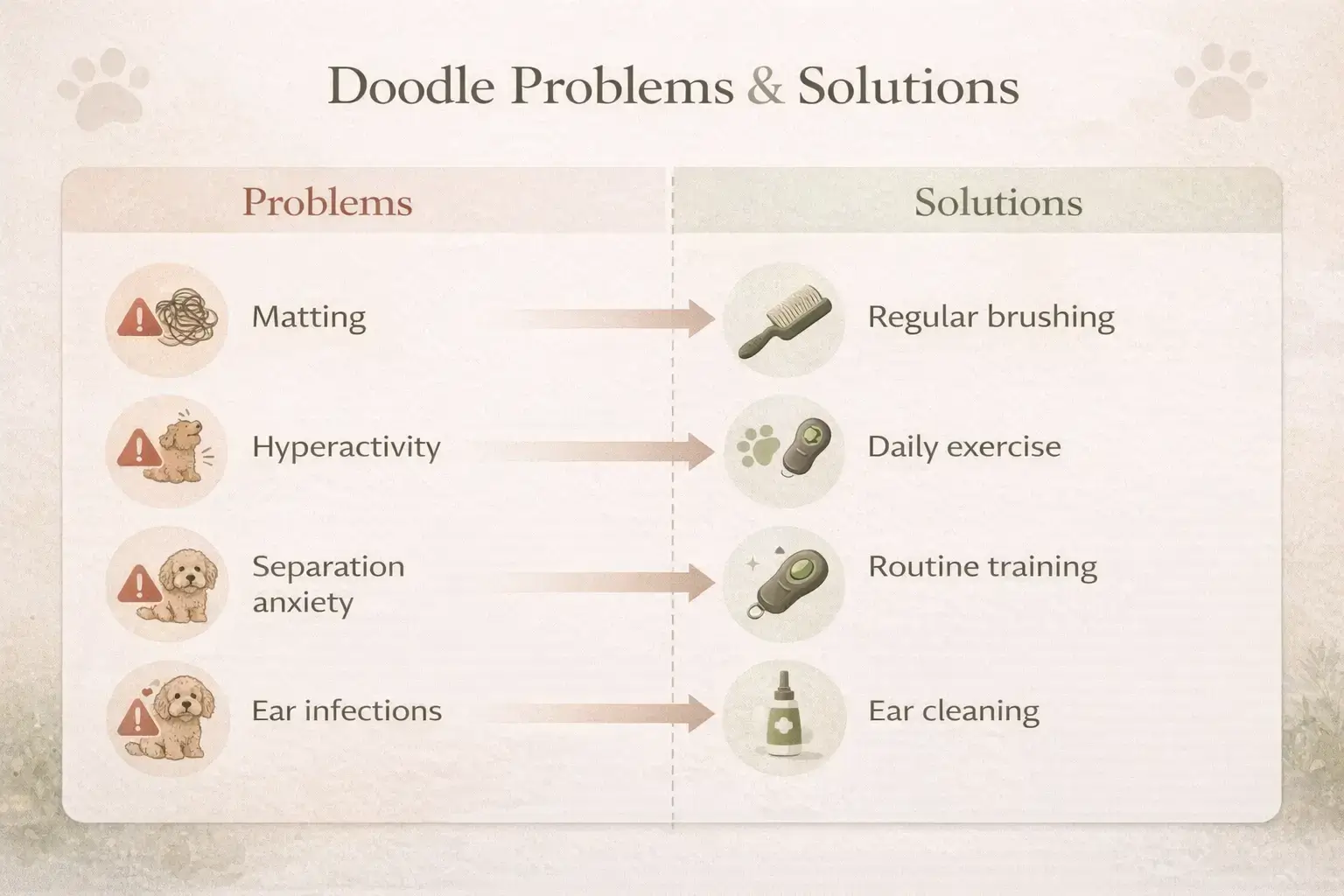
Excessive Energy And Hyperactivity
- Cause: lack of exercise
- Solution: structured play + training
- Prevention: daily routine
- Vet: if extreme restlessness persists
Matting And Skin Issues
- Cause: poor grooming
- Solution: regular brushing
- Prevention: routine grooming
- Vet: if skin irritation appears
Separation Anxiety
- Cause: over-attachment
- Solution: gradual alone-time training
- Prevention: avoid constant attention
- Vet: if destructive behavior escalates
Seasonal Pet Care Tips
Spring Allergy And Shedding
- Watch for itching
- Clean paws after walks
Summer Heat Protection Measures
- Shade + water
- Avoid hot surfaces
Fall Routine Adjustments Needed
- Adjust food intake
- Increase indoor play
Winter Indoor Care Focus
- More indoor stimulation
- Maintain grooming (don’t skip!)
Additional Expert Tips
- Don’t choose a doodle based on photos—focus on lifestyle
- Grooming cost is often higher than food cost
- Early training saves years of frustration
- A calm doodle is built through routine—not just breed
Conclusion
The best doodle puppy isn’t about trends—it’s about fit. When you match the dog’s size, energy, and care needs to your daily life, everything becomes easier. Most problems people face with doodles come from mismatched expectations, not bad dogs. Choose wisely, stay consistent, and your doodle will thrive.
FAQs
-
Which doodle breed is easiest for beginners?
Mini Goldendoodles—manageable size and friendly temperament
-
Are doodles high maintenance?
Yes, especially grooming and mental stimulation
-
What is the calmest doodle breed?
Bernedoodles tend to be calmer, but training matters more
-
Do doodles bark a lot?
They can, especially if bored or under-stimulated
-
How often should I groom a doodle?
Brush several times weekly; professional grooming every 6–8 weeks
-
Are doodles good for hot climates?
Yes, but require careful heat management and grooming
-
What is the biggest mistake new doodle owners make?
Underestimating grooming and exercise needs.




One Response