
Budgies, also known as parakeets, are among the most popular pet birds in the world—and for good reason. They’re small, intelligent, social, and relatively easy to care for compared to larger parrots. But one thing many new owners struggle with is figuring out their bird’s age. Unlike dogs or cats, budgies don’t come with obvious age markers, which makes a budgie age chart incredibly useful.
Understanding your budgie’s age helps you provide the right diet, training, and care at every life stage. Many owners make mistakes like feeding adult diets to baby budgies or expecting young birds to behave like mature ones—both can lead to stress or health issues.
Pet Care Insight
This guide is based on widely accepted pet care practices, veterinary guidance, and common experiences shared by responsible pet owners. The goal is to provide practical, easy-to-follow advice that helps owners keep their pets healthy, comfortable, and well cared for.
Pet Overview
Budgie Temperament And Personality
Budgies are friendly, curious, and highly social birds. They thrive on interaction and can form strong bonds with their owners. Younger budgies are more energetic and easier to train, while older birds tend to be calmer.
Budgie Lifespan And Age Span
The average budgie lifespan ranges between 5 to 10 years, though with excellent care, some live up to 12–15 years. This makes understanding a budgie age chart essential for long-term care.
Physical Characteristics By Age
Budgies change noticeably as they age:
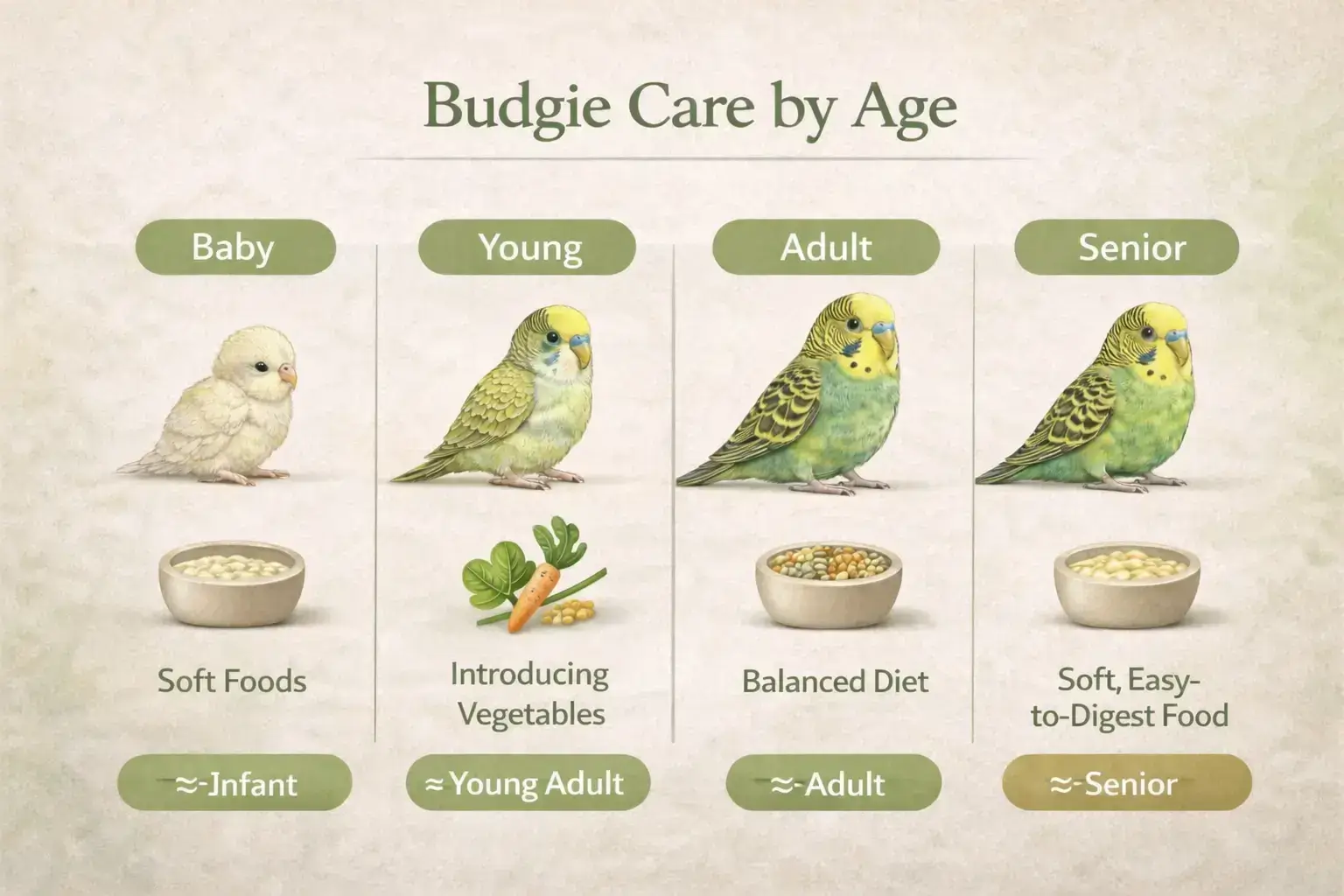
- Baby budgies: dark eyes, striped forehead (bars)
- Young budgies: clearer forehead, iris ring forming
- Adult budgies: bright iris ring, smoother head
- Senior budgies: slower movement, duller feathers
Suitability For Families
Budgies are excellent for families, including beginners and children (with supervision). They’re gentle and adaptable but require daily interaction.
Budgies are often recommended for beginners, similar to other friendly companion birds like Blue Quaker Parrots, which also adapt well to home environments.
Activity Level And Social Needs
They are active birds that need mental stimulation, toys, and social engagement to stay happy.
Daily Care Essentials
Feeding Routine And Schedule
- Feed fresh seeds or pellets daily
- Offer vegetables every day
- Remove uneaten fresh food within a few hours
Grooming Basics And Hygiene
- Provide a shallow water dish for bathing
- Clean cage weekly
- Trim nails if necessary
Exercise And Cage Setup
- Allow out-of-cage time daily
- Provide perches and climbing areas
Social Interaction Needs
Budgies should not be left alone for long periods. Interaction prevents loneliness and behavioral issues.
If you’re exploring other social bird species, this daily dove care guide offers helpful insights into building strong bonds with pet birds.
Diet & Nutrition Guide
Feeding By Age Stage
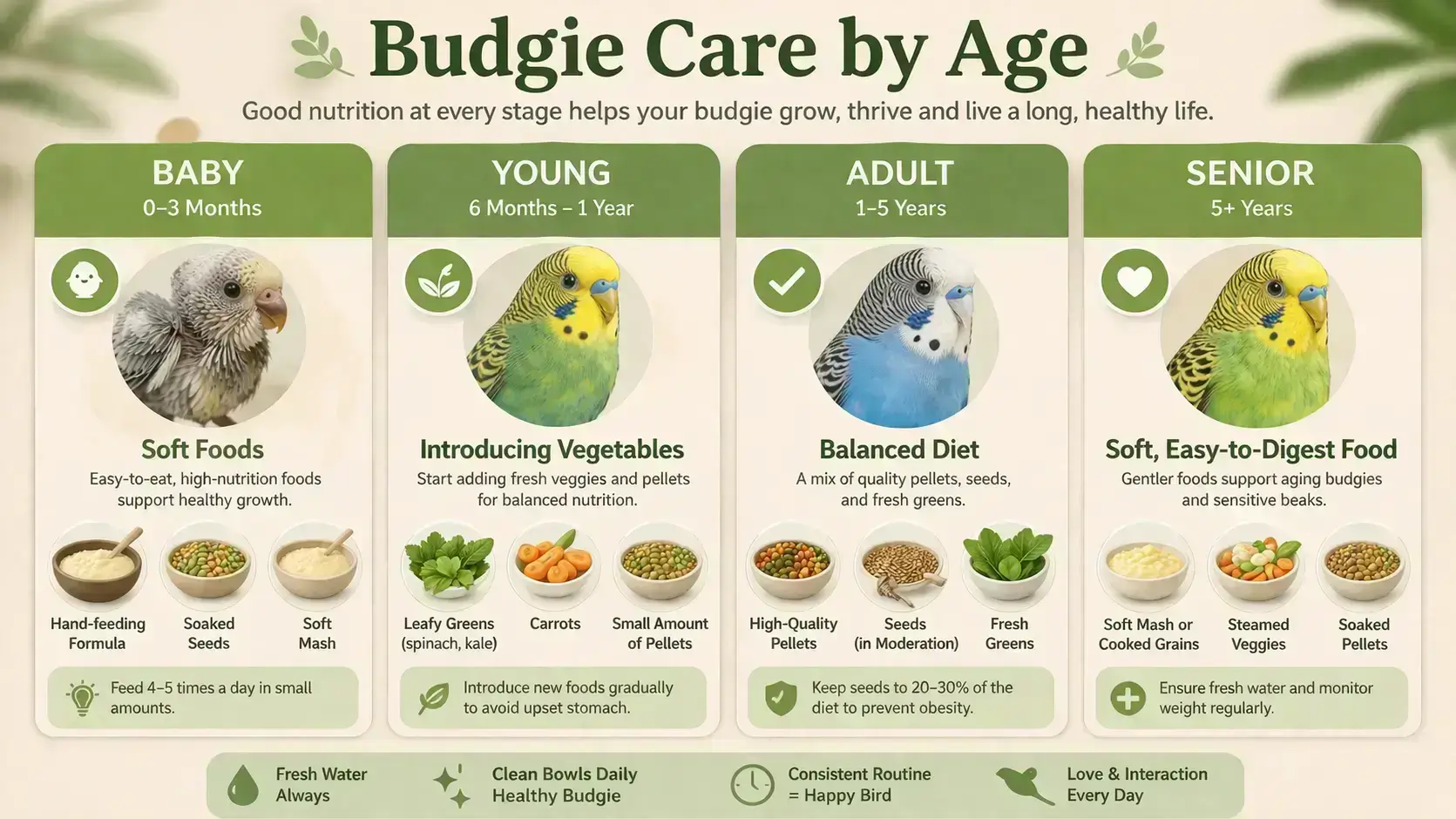
- Baby budgie (0–3 months): soft foods, soaked seeds, hand-feeding formula if needed
- Young budgie (3–6 months): introduce vegetables and pellets
- Adult budgie: balanced diet of pellets, seeds, and greens
- Senior budgie: softer foods, easy-to-digest options
Safe Foods For Budgies
- Leafy greens (spinach, lettuce)
- Carrots, broccoli
- Apples (without seeds)
Foods To Avoid
- Chocolate
- Avocado
- Onion and garlic
- Sugary or salty foods
Portion Control Tips
Avoid overfeeding seeds, as they are high in fat. Balance is key.
Exercise & Mental Stimulation
Daily Activity Requirements
Budgies need at least 1–2 hours of active movement outside the cage daily.
Playtime Ideas For Budgies
- Mirror toys (in moderation)
- Swings and ladders
- Foraging toys
Mental Enrichment Activities
- Teach simple tricks
- Rotate toys weekly
- Provide puzzle feeders
Training & Behavior Guidance
Basic Training And Taming
Young budgies (based on a baby budgie age chart) are easier to tame. Start with:
- Hand feeding
- Gentle voice interaction
- Step-up training
Socialization Tips
Expose your budgie to different sounds and environments gradually.
Preventing Behavior Problems
- Avoid boredom
- Maintain routine
- Provide enough stimulation
Health & Climate Considerations
Common Health Concerns
- Feather plucking
- Respiratory infections
- Obesity (due to poor diet)
Climate Sensitivity
Budgies are sensitive to extreme temperatures:
- Ideal range: 18–26°C
- Avoid drafts and direct sunlight
Hydration Needs
Always provide fresh water. In hot climates like Pakistan, check water multiple times daily.
Common Problems & Troubleshooting
Budgie Not Eating Properly
Cause: Stress or sudden diet change
Solution: Introduce new foods gradually
Prevention: Maintain consistent feeding routine
Excessive Screaming Or Noise
Cause: Loneliness or boredom
Solution: Increase interaction and toys
Prevention: Daily engagement
Feather Plucking Behavior
Cause: Stress, illness, or boredom
Solution: Improve environment and consult vet
Prevention: Provide mental stimulation
Difficulty Determining Age
Cause: Lack of visible markers
Solution: Use a budgie age chart by month and physical traits
Prevention: Buy from trusted breeders with records
Seasonal Pet Care Tips
Spring Care Adjustments
- Increased activity
- Watch for allergies
Summer Heat Protection
- Keep cage in cool area
- Provide extra water
- Avoid overheating
Fall Routine Changes
- Slight reduction in activity
- Maintain diet consistency
Winter Cold Protection
- Keep away from cold drafts
- Provide warmth
- Reduce bathing frequency
Additional Expert Tips
Common Beginner Mistakes
- Feeding only seeds
- Ignoring mental stimulation
- Keeping a single budgie without interaction
Simple Habits For Better Health
- Clean cage regularly
- Offer fresh vegetables daily
- Monitor weight and behavior
Long-Term Care Considerations
Understanding budgie age in human years helps owners adjust expectations. A 5-year-old budgie is considered middle-aged and needs more attentive care.
For comparison, birds like Lutino Cockatiels have slightly different lifespan and care needs, which can help you better understand long-term bird ownership.
Budgie Age Chart By Month
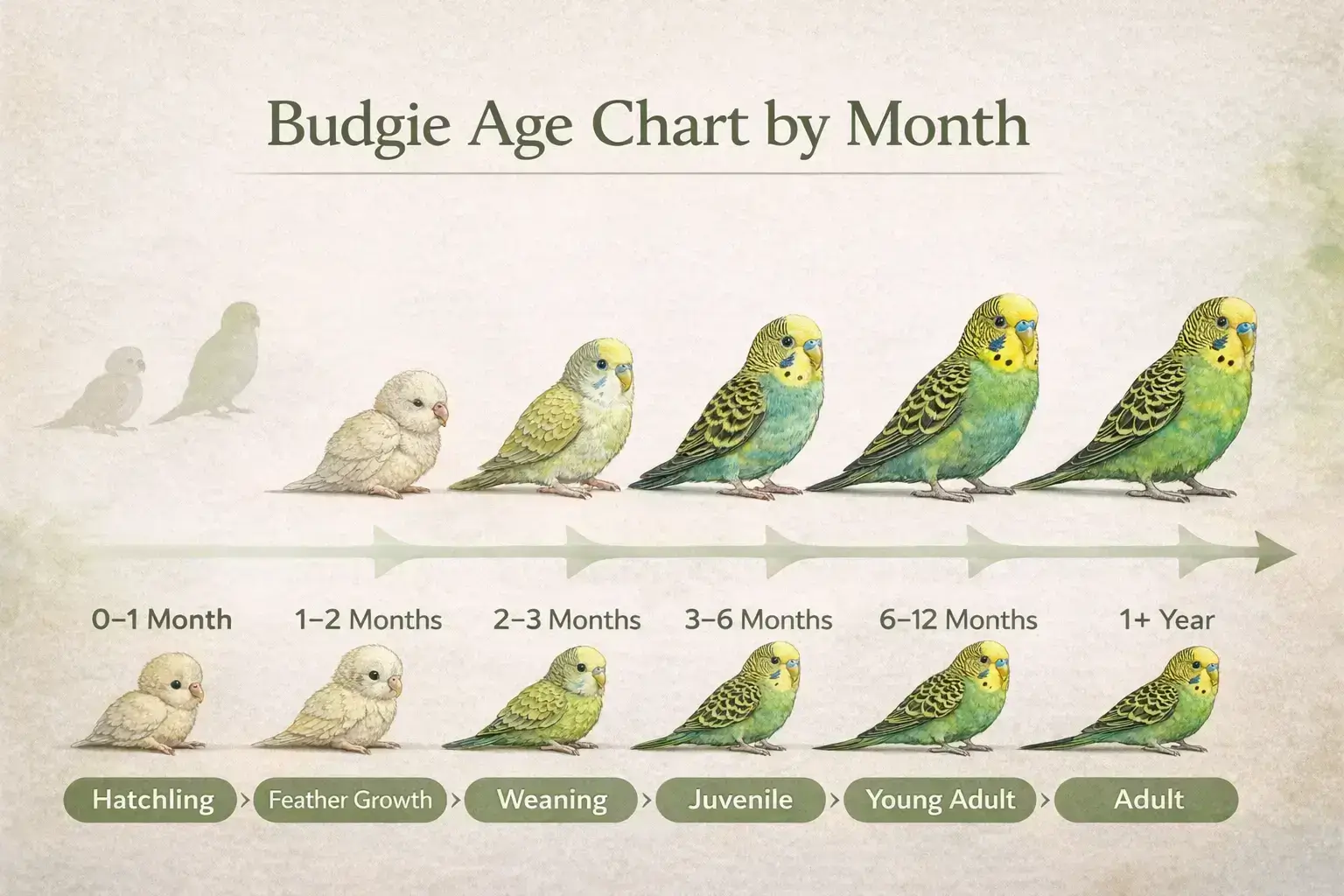
- 0–1 month: Fully dependent, eyes closed initially
- 1–2 months: Feather development, learning to eat
- 2–3 months: Weaning stage, very active
- 3–6 months: Juvenile, easier to train
- 6–12 months: Young adult
- 1+ year: Fully mature
- 5+ years: Senior stage begins
How Can You Tell Age Of Budgie
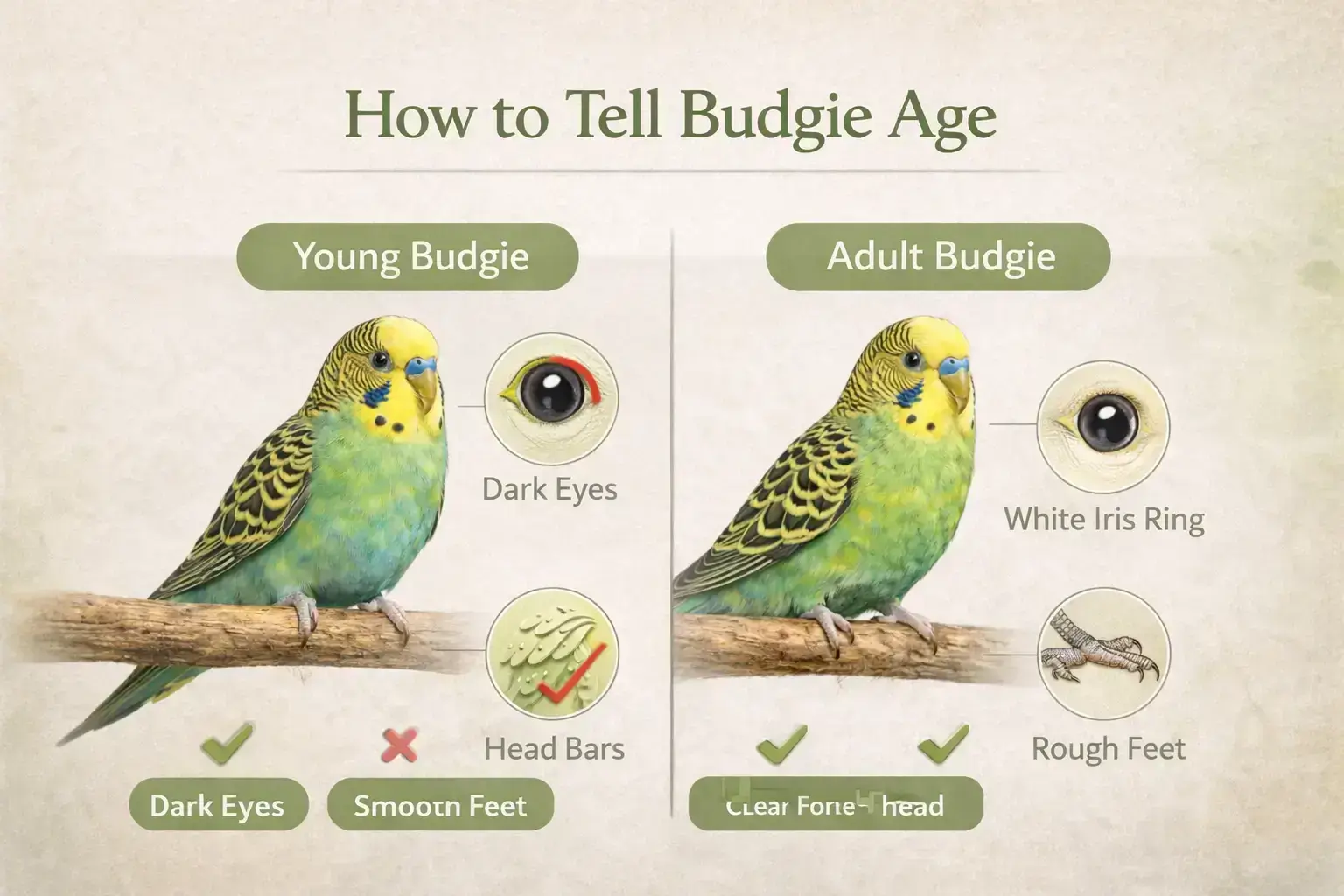
Physical Signs To Look For
- Eye color: dark (young), white iris (adult)
- Head bars: present (young), gone (adult)
- Cere color (male vs female budgie age chart helps here)
You can also learn more about budgerigar characteristics and development stages on Wikipedia for a deeper understanding of age-related changes.
Feet And Beak Indicators
Budgie age by feet can give clues:
- Smooth feet: younger
- Rough/scaly feet: older
Conclusion
Understanding a budgie age chart is one of the most important steps in becoming a responsible bird owner. It helps you provide the right food, training, and care at every stage of your bird’s life.
Many common mistakes—like improper feeding or unrealistic expectations—come from not recognizing a budgie’s age. By learning how to tell your budgie’s age and adjusting care accordingly, you can ensure a healthier, happier life for your pet.
The key takeaway: observe your budgie closely, follow age-appropriate care, and stay consistent with daily routines.
FAQs
-
How can I tell how old my budgie is?
Look at eye color, head bars, and cere color. Younger budgies have dark eyes and striped heads.
-
How long do budgies live?
Most budgies live 5–10 years, but with proper care, they can live up to 15 years.
-
At what age can budgies breed?
Budgies typically reach breeding age around 6–12 months, but it’s safer after 1 year.
-
What is a baby budgie age chart used for?
It helps track development stages and ensures proper feeding and care for young birds.
-
Do male and female budgies age differently?
Aging is similar, but cere color differs—blue in males and brown/white in females.
-
Can I determine a budgie’s exact age?
Not always. You can estimate age using physical traits, but exact age requires breeder records.