
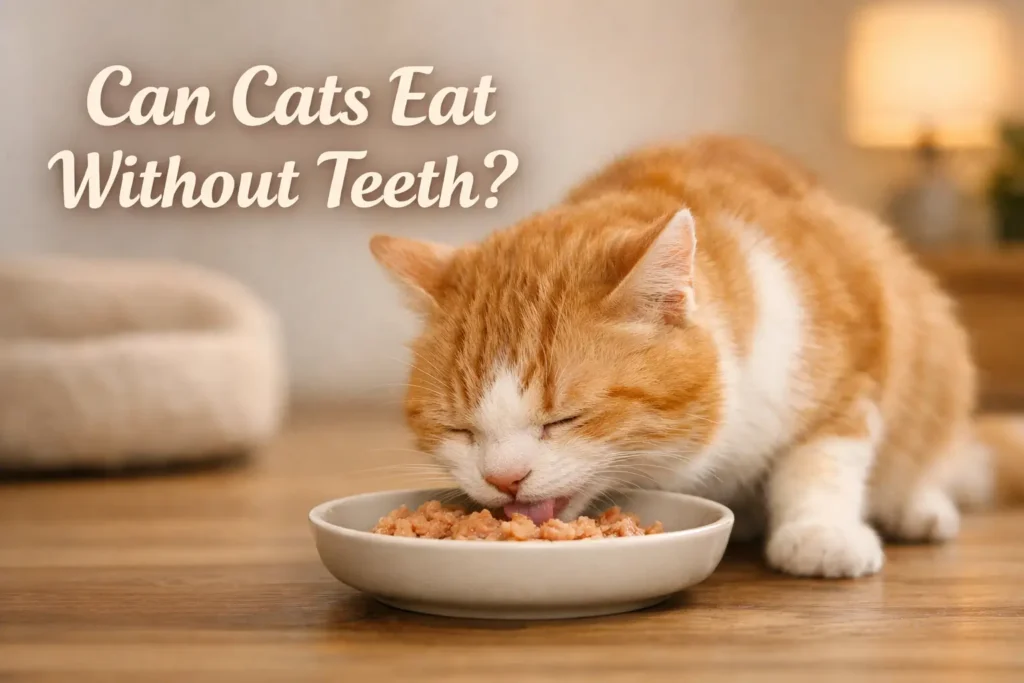
Cats are known for their sharp teeth and hunting instincts, so it’s natural for owners to worry when a cat loses its teeth. Whether due to age, dental disease, or surgery, many owners ask: can cats eat without teeth and still live comfortably?
The reassuring answer is yes—cats without teeth can still eat, thrive, and enjoy a good quality of life. However, their care routine, especially feeding, needs a few adjustments. Many new owners make the mistake of assuming a toothless cat cannot eat at all or needs complicated diets, when in reality, simple changes can make a big difference.
Pet Care Insight
This guide is based on widely accepted pet care practices, veterinary guidance, and common experiences shared by responsible pet owners. The goal is to provide practical, easy-to-follow advice that helps owners keep their pets healthy, comfortable, and well cared for.
Pet Overview
General Cat Traits Overview
Cats are independent, adaptable, and resilient animals. Even a cat with no teeth can adjust surprisingly well.
- Temperament: Calm, curious, and affectionate depending on personality
- Lifespan: 12–18 years (often longer with good care)
- Physical traits: Agile body, sharp claws (which compensate for tooth loss)
- Family suitability: Great for families, singles, and seniors
- Activity level: Moderate; enjoys play but also naps frequently
- Compatibility: Usually good with children and other pets if socialized
Toothless cats may appear different, but their core personality and behavior remain the same.
Daily Care Essentials
Feeding Routine Adjustments
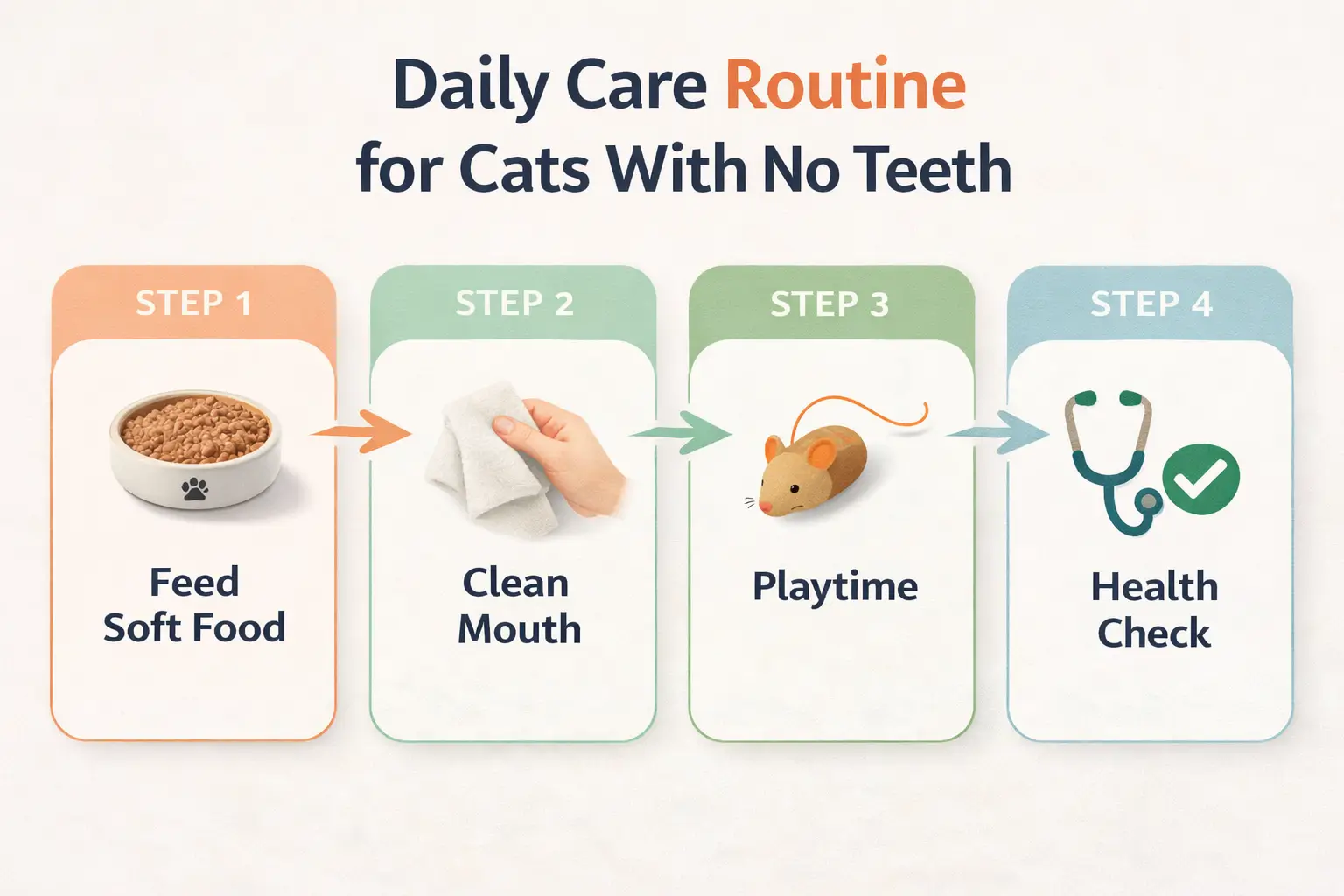
A cat without teeth still eats using its tongue and gums. They don’t chew the way humans do—most cats swallow small pieces whole.
Helpful tips:
- Feed smaller, manageable portions
- Use soft or moist food options
- Keep a consistent feeding schedule
Grooming And Cleanliness Basics
Cats without teeth may groom slightly less efficiently.
- Brush your cat weekly
- Wipe face gently if food sticks around the mouth
- Monitor drooling in cats, especially after meals
Social Interaction Needs
Toothless cats still crave companionship.
- Provide daily attention and playtime
- Maintain a calm, stress-free environment
Diet & Nutrition Guide
What To Feed A Toothless Cat
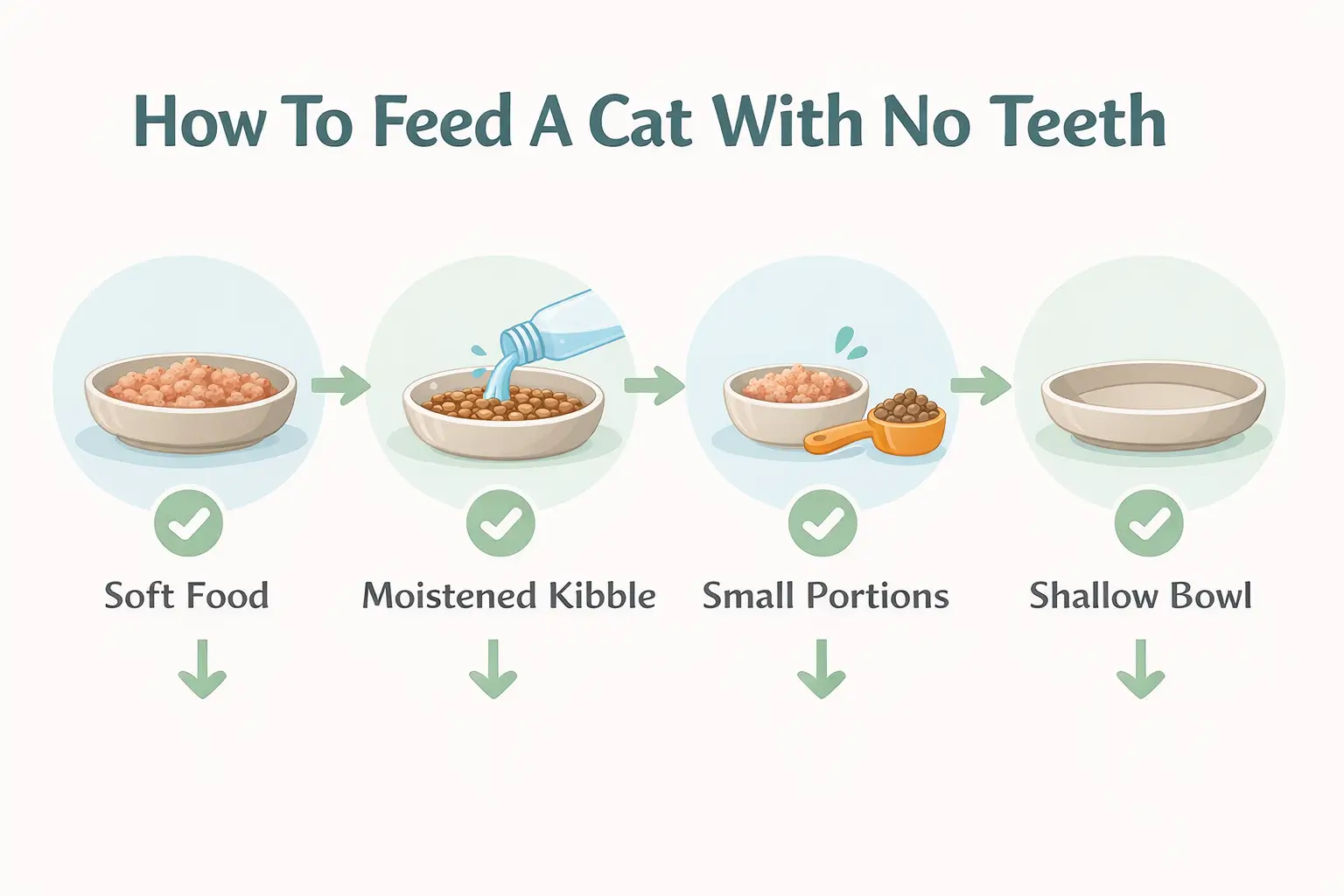
If you’re wondering what to feed a cat with no teeth, focus on soft, easy-to-swallow foods.
Best options:
- Wet food for cats with no teeth
- Soft homemade cat food (well-balanced)
- Moistened kibble if needed
Many cats can eat without canine teeth or even without front teeth because they rely more on swallowing than chewing.
Feeding By Life Stage
Kittens:
- Soft kitten food
- Small, frequent meals
Adults:
- Balanced wet or softened food
- Maintain portion control
Seniors:
- Easier-to-digest meals
- Monitor weight and hydration
Safe Vs Unsafe Foods
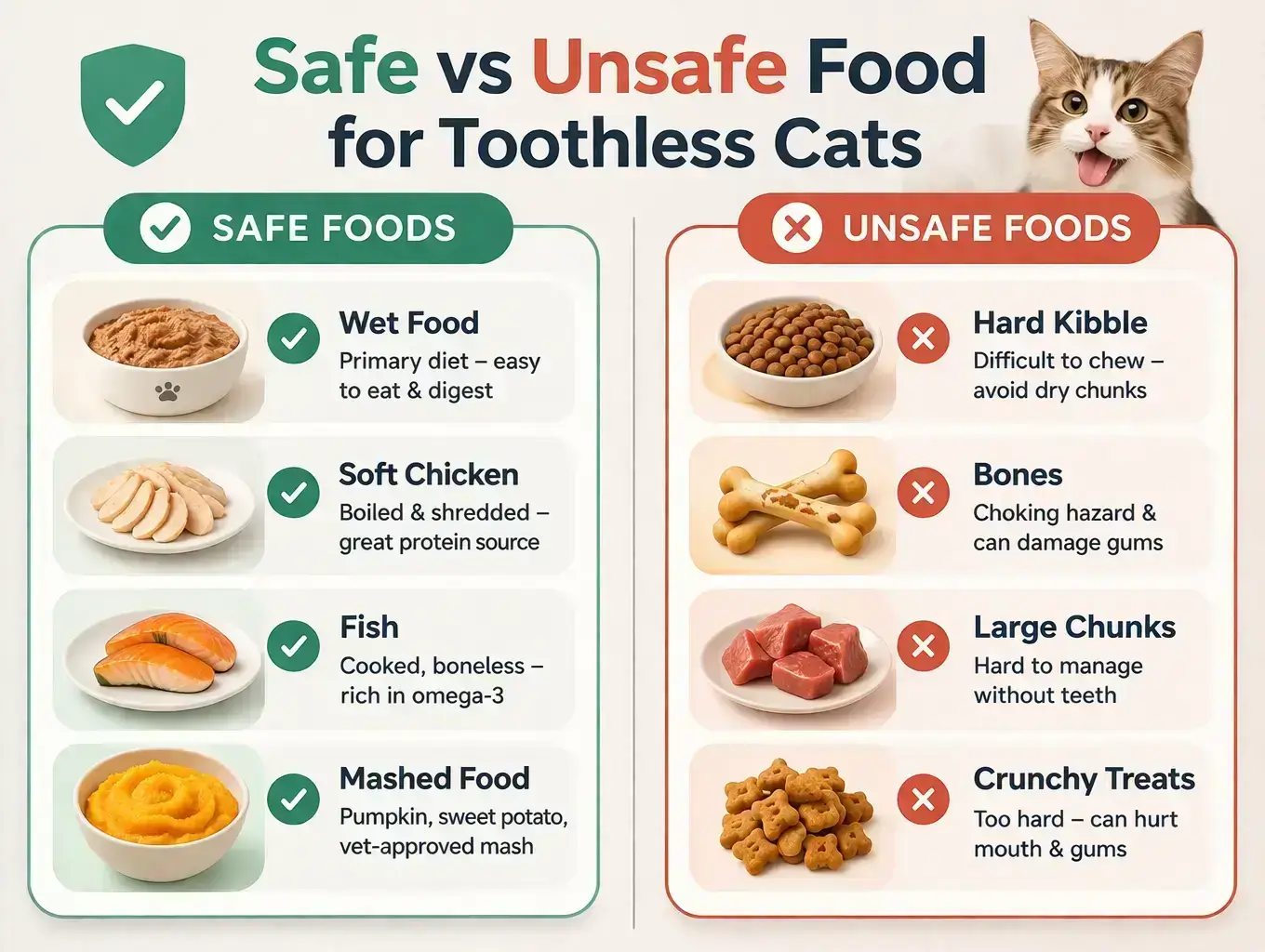
Safe:
- Soft meats (chicken, fish)
- Wet cat food
- Properly prepared homemade cat food recipes
Unsafe:
- Hard bones
- Large chunks of meat
- Human foods with salt or seasoning
Can Cats Eat Dry Food Without Teeth?
Some cats without teeth can eat dry food, but it’s not always ideal. If you offer kibble:
- Soften it with warm water
- Choose smaller pieces
- Observe your cat’s comfort level
Exercise & Mental Stimulation
Daily Activity Needs
Toothless cats still need exercise to stay healthy.
- 15–30 minutes of play daily
- Encourage movement with toys
Simple Indoor Activities
- Feather wands
- Laser pointers
- Puzzle feeders (with soft treats)
Mental stimulation helps prevent boredom and supports overall well-being.
Training & Behavior Guidance
Basic Training Tips
Cats without teeth learn just like any other cat.
- Use positive reinforcement
- Reward with soft treats
- Keep sessions short and consistent
Preventing Behavior Issues
Some cats may become sensitive after dental issues.
- Avoid sudden changes in routine
- Provide quiet resting areas
- Monitor for signs of discomfort
Health & Climate Considerations
Dental Health After Tooth Loss
Even without teeth, oral care is still important.
- Watch for swelling or redness
- Monitor for excessive drooling in cats
- Regular vet checkups
Why Is My Cat Drooling?
A cat with no teeth drooling slightly can be normal, but excessive drooling may signal:
- Oral infection
- Pain or inflammation
- Digestive issues
If your cat is drooling a lot or suddenly, consult a vet.
Hydration And Climate Care
- Ensure constant access to fresh water
- In hot weather, increase hydration
- In cold weather, maintain indoor warmth
Common Problems & Troubleshooting
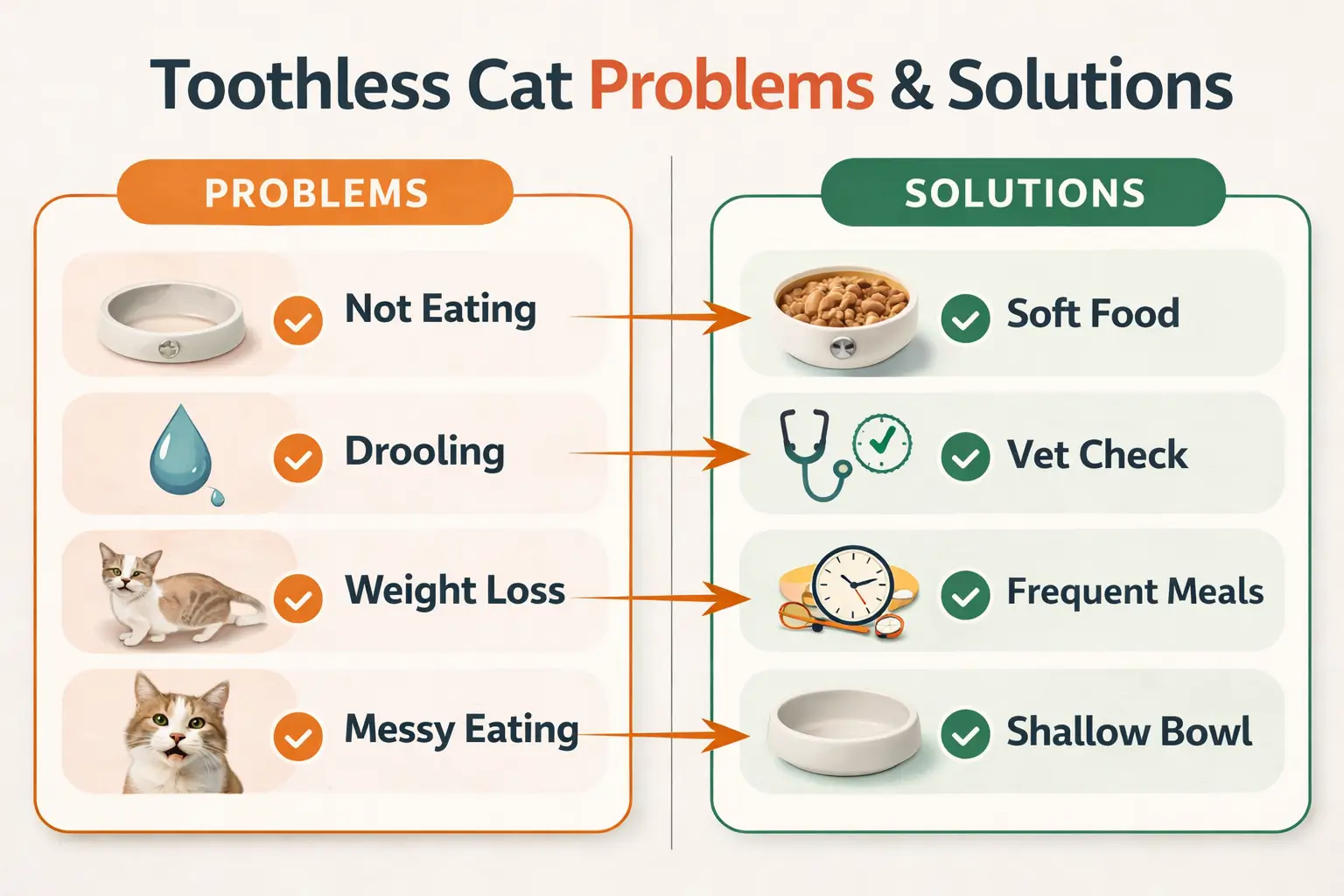
Problem: Cat Not Eating
Cause:
-
Food too hard or unfamiliar
Solution:
- Switch to soft food
- Warm food slightly to enhance smell
Prevention:
-
Gradual diet changes
Problem: Excessive Drooling
Cause:
-
Oral discomfort or illness
Solution:
- Check mouth
- Visit vet if persistent
Prevention:
-
Regular health monitoring
Problem: Weight Loss
Cause:
-
Difficulty eating or poor nutrition
Solution:
- Increase meal frequency
- Offer calorie-rich soft foods
Prevention:
-
Track weight regularly
Problem: Food Mess Around Mouth
Cause:
-
Lack of teeth affects eating technique
Solution:
- Clean after meals
- Use shallow feeding bowls
Seasonal Pet Care Tips
Spring Care Adjustments
- Watch for allergies
- Increase grooming
Summer Heat Safety
- Keep food fresh
- Prevent dehydration
Fall Routine Changes
- Adjust feeding as activity changes
- Monitor appetite
Winter Comfort Tips
- Provide warm resting areas
- Maintain indoor play
Additional Expert Tips
Common Owner Mistakes
- Assuming cats cannot eat without teeth
- Feeding only hard food
- Ignoring drooling or discomfort
Helpful Care Habits
- Use a bowl for cat with no teeth (shallow and wide)
- Keep food portions small and manageable
- Observe eating behavior daily
Long-Term Care Considerations
- Cats without teeth can live full, happy lives
- Focus on comfort, nutrition, and routine
- Regular vet visits are essential
Conclusion
Cats without teeth are incredibly adaptable and can continue to live healthy, happy lives with the right care. The most important things to focus on are proper nutrition, easy-to-eat food, and regular health monitoring.
Avoid common mistakes like feeding hard food or ignoring signs of discomfort. With simple adjustments—like offering soft meals and maintaining a consistent routine—you can ensure your toothless cat thrives.
A cat with no teeth is not a fragile pet—it’s simply a pet that needs a little extra understanding and thoughtful care.
Learn More: Daily Dove Care Guide: Feeding, Diet & Health Tips
FAQs
-
Can cats still eat without teeth?
Yes, cats can eat without teeth by using their gums and swallowing small food pieces.
-
Can cats eat kibble without teeth?
Some can, but it’s better to soften kibble with water to make it easier.
-
What is the best food for a cat with no teeth?
Soft food like wet cat food or balanced homemade meals works best.
-
Why is my cat drooling all of a sudden?
Sudden drooling may indicate pain, infection, or oral issues—consult a vet if it continues.
-
Can cats live without teeth long-term?
Yes, cats without teeth can live normal, healthy lives with proper care.
-
How do I feed a cat with no teeth?
Offer soft food, small portions, and use a shallow bowl to make eating easier.
-
Is drooling normal in toothless cats?
Mild drooling can be normal, but excessive drooling should be checked by a vet.




One Response