
Seeing your cat not drinking water after dental surgery can feel alarming, especially when recovery already feels uncertain. Many pet owners misinterpret normal post-surgery behavior or miss early warning signs, which can delay proper care.
Quick Summary
- It’s common for cats to drink less for 12–24 hours after dental surgery, especially after anesthesia
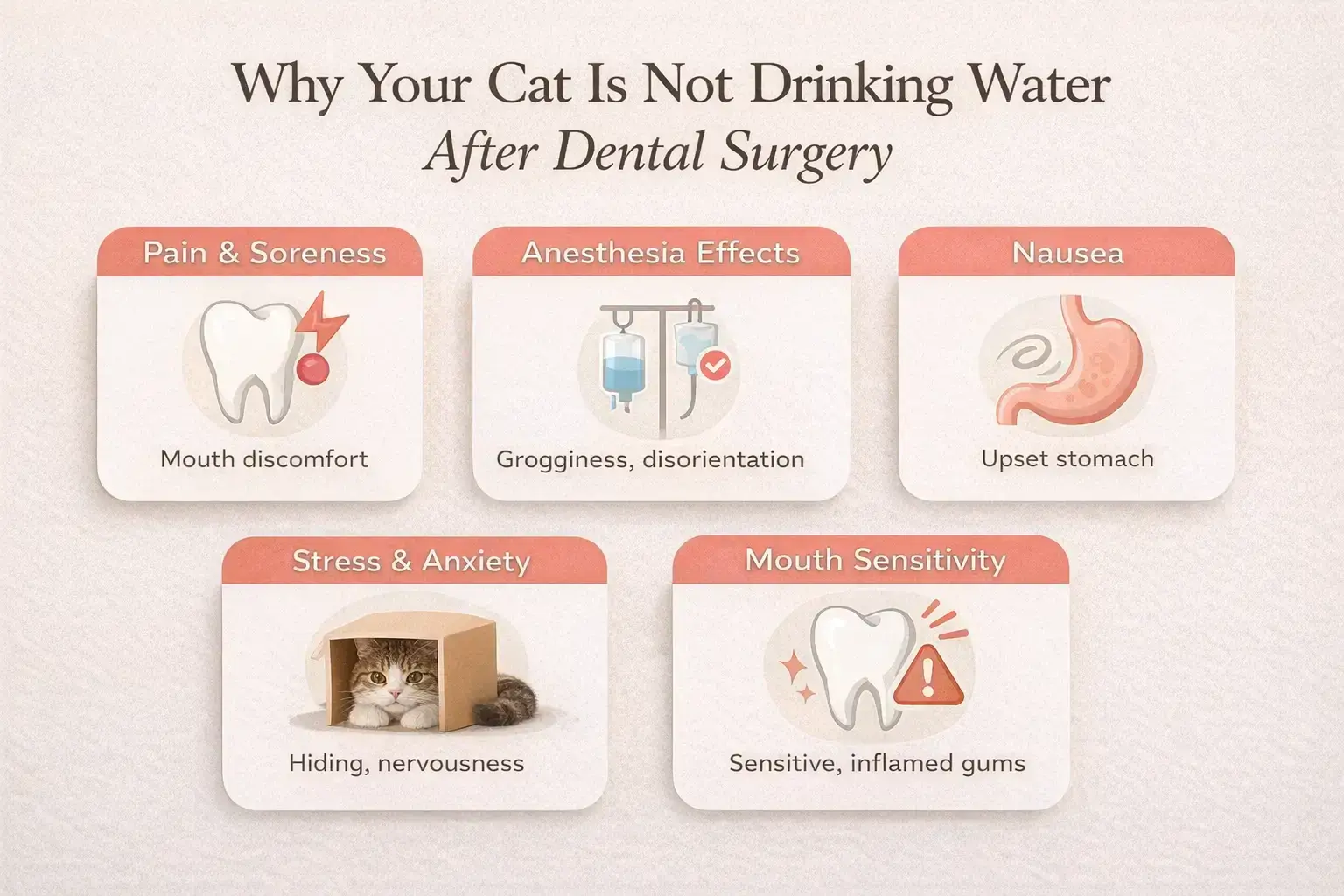
- Pain, nausea, or mouth sensitivity are the most common causes
- Encourage hydration with wet food, broth, or syringe feeding if needed
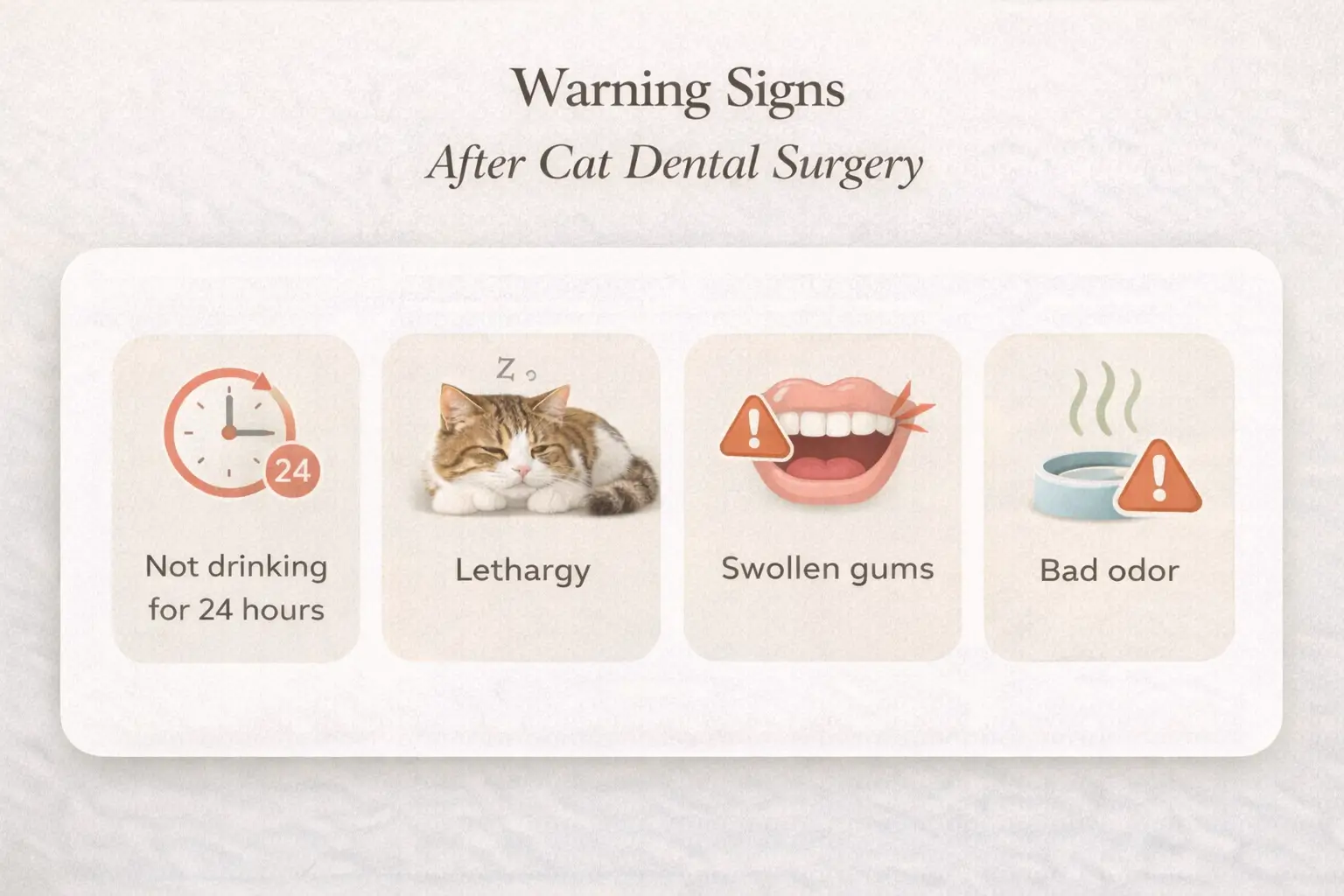
- If your cat isn’t drinking for over 24 hours, contact your vet
- Watch for red flags like lethargy, swelling, or foul odor
Pet Care Insight
This guide is based on widely accepted pet care practices, veterinary guidance, and real-life experiences from responsible pet owners. The goal is to provide practical, easy-to-follow advice for everyday pet care.
Pet Overview
Cats recovering from cat dental surgery or tooth extraction are temporarily more sensitive, withdrawn, and less active than usual.
What to expect in recovery
Dental procedures in cats often involve anesthesia and soft tissue healing, which can temporarily affect appetite and hydration—according to VCA Animal Hospitals, this is a normal part of post-surgical recovery.
- Temperament: Quiet, possibly hiding or avoiding interaction
- Lifespan: Unaffected if recovery is smooth
- Physical traits: Swollen gums, drooling, mild bleeding (short-term)
- Family suitability: Needs calm, low-stress environment
- Activity level: Reduced for a few days
- Compatibility: May avoid other pets during recovery
A normally social cat may suddenly hide — this is very common after procedures like cat oral surgery.
Daily Care Essentials
Feeding Routine After Surgery
- Offer small, soft meals 2–3 times daily
- Use shallow bowls to avoid mouth discomfort
- Keep water easily accessible
Grooming And Hygiene Basics
- Avoid brushing near the mouth
- Let your cat groom naturally (don’t force cleaning)
Exercise And Activity Level
- Limit jumping and rough play
- Provide a quiet, warm resting area
Real-life routine example
Morning: Offer soft food + fresh water
Afternoon: Quiet rest, minimal disturbance
Evening: Light feeding + gentle interaction
Common mistakes owners make
- Forcing food or water too early
- Offering dry kibble too soon
- Ignoring subtle dehydration signs
Diet & Nutrition Guide
Feeding Schedule And Portions
- First 24 hours: Small, soft meals
- Days 2–5: Gradually increase portion size
- After 7–10 days: Return to normal diet (if approved)
Best soft food options
- Wet canned food
- Mashed boiled chicken (plain)
- Blended wet food with water
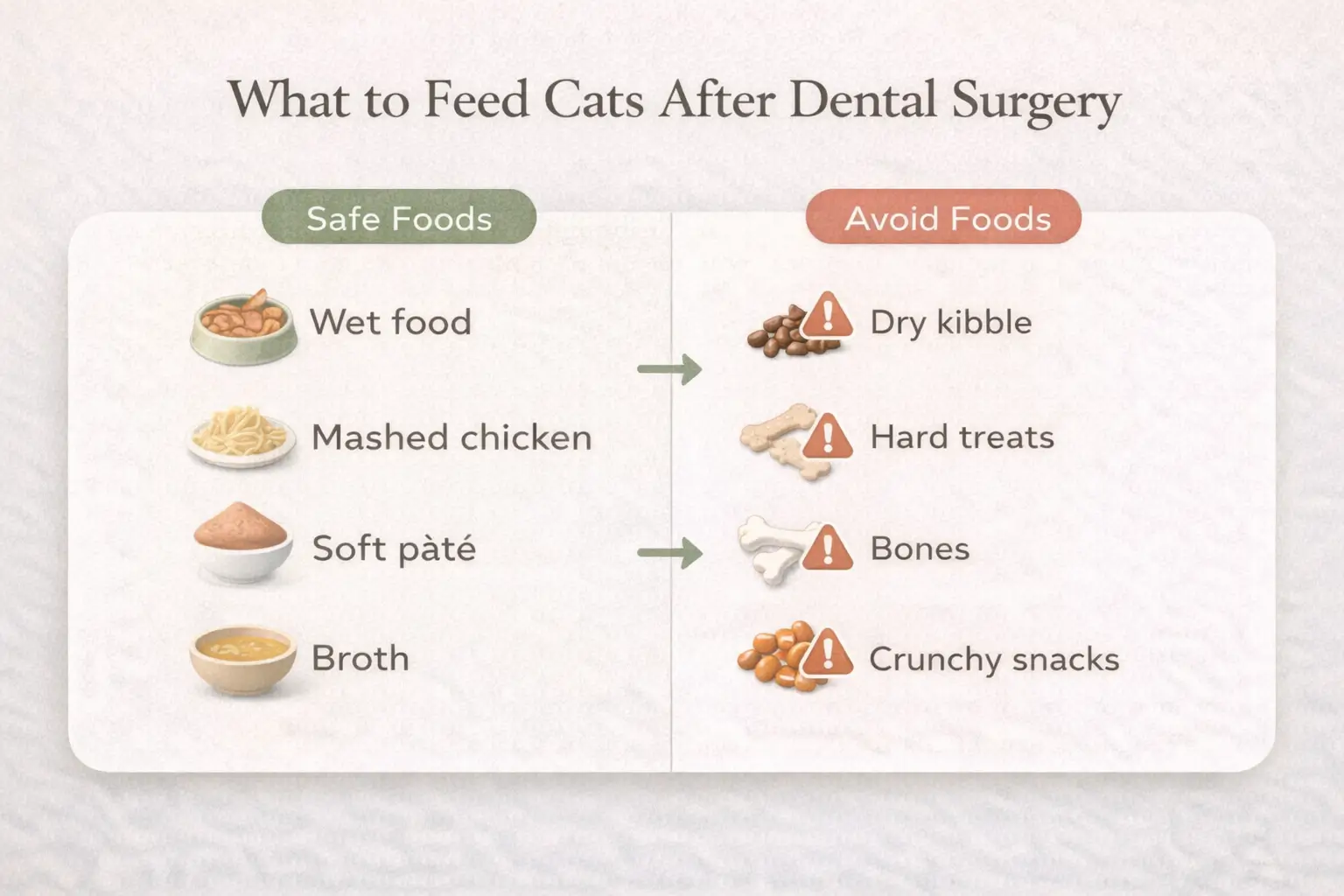
Safe vs unsafe foods
Safe:
- Soft, moist food
- Lukewarm broth (no salt/onion)
Unsafe:
- Hard kibble (early recovery)
- Bones or crunchy treats
- Spicy or seasoned food
Age-specific guidance
Kittens:
- Need frequent small meals
- Monitor hydration closely
Adult cats:
- Usually recover faster
- Appetite returns within 24–48 hours
Senior cats:
- Higher risk of dehydration
- May take longer to resume eating/drinking
Exercise & Mental Stimulation
Activity needs during recovery
- Minimal physical activity
- Focus on comfort rather than exercise
Easy at-home activities
- Soft toys for light interaction
- Gentle petting if tolerated
- Quiet companionship
Avoid overstimulation — healing takes priority.
Training & Behavior Guidance
Why cats behave differently
- Pain or discomfort
- Effects of anesthesia
- Stress from vet visit
Common behaviors
- Cat hiding after dental surgery
- Reduced appetite
- Avoiding water
What helps
- Keep environment quiet
- Avoid forcing interaction
- Maintain routine consistency
Health & Climate Considerations
Hydration is critical
A cat not drinking after dental surgery can quickly become dehydrated.
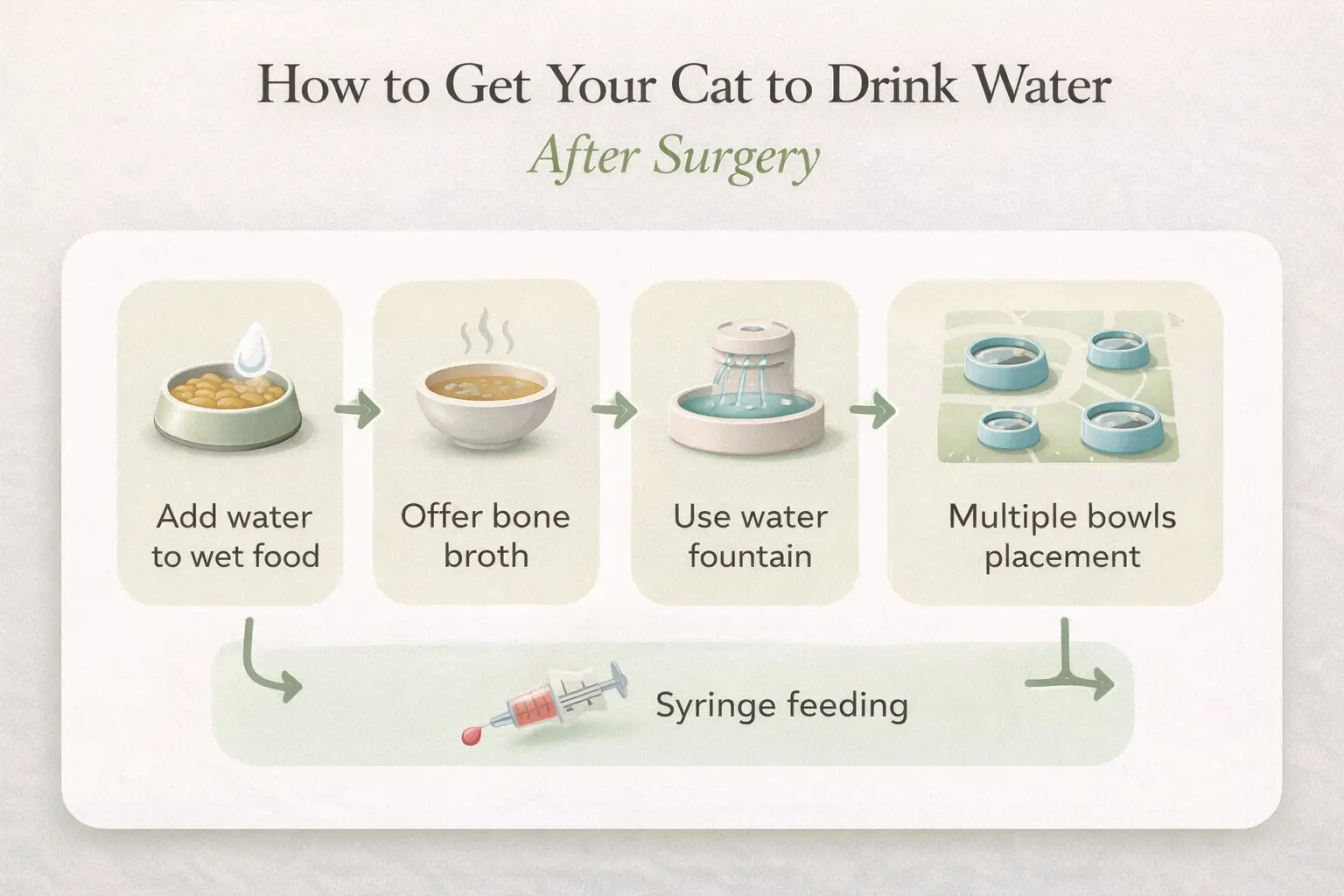
How to encourage drinking
- Add water to wet food
- Use a pet water fountain
- Offer tuna water (unsalted)
Signs of dehydration
- Dry gums
- Lethargy
- Sunken eyes
In some cases, dehydration may be linked with underlying illness—if you notice additional symptoms like discharge or sneezing, this guide on cat sneezing and vomiting can help you identify when it’s more serious.
Climate tips
- Hot climates: Increase hydration efforts
- Cold climates: Keep water slightly warm
Comparison: Hydration Methods After Surgery
| Method | Safety Level | Best For | Risks |
|---|---|---|---|
| Wet food + water | Very Safe | Most cats | Minimal |
| Bone broth | Safe | Picky eaters | Salt risk if improper |
| Syringe feeding | Moderate | Severe refusal cases | Aspiration risk |
| Water fountain | Very Safe | Encouraging curiosity | None |
Common Problems & Troubleshooting
Cat Not Drinking Water After Dental Surgery
Cause: Pain, nausea, anesthesia effects
Solution: Offer wet food, flavored water
Prevention: Pre-plan soft diet
Vet visit: If >24 hours without drinking
If your cat recently had a tooth removed, understanding the full healing timeline can help you manage hydration better—this detailed guide on cat tooth extraction recovery explains what to expect day by day.
Cat Not Eating Or Drinking After Surgery
Cause: Oral pain or stress
Solution: Warm soft food, quiet feeding space
Prevention: Gradual reintroduction
Vet visit: If >48 hours
Cat Drooling After Tooth Extraction
Cause: Normal healing or irritation
Solution: Monitor; keep area clean
Prevention: Follow medication schedule
Vet visit: If excessive or foul-smelling
Signs Of Infection After Extraction
Cause: Bacterial infection
Signs:
- Swelling
- Bad breath
- Pus
- Fever
Action: Immediate vet visit
Unusual symptoms like bleeding or discharge may indicate complications—this resource on cat sneeze blood can help you recognize when symptoms go beyond normal recovery.
Cat Hiding After Dental Surgery
Cause: Stress or discomfort
Solution: Provide safe hiding spot
Prevention: Calm recovery space
Vet visit: If hiding persists with other symptoms
Seasonal Pet Care Tips
Spring
- Watch for allergies affecting appetite
Summer
- High dehydration risk → monitor water intake closely
Fall
- Maintain routine as weather shifts
Winter
- Keep water from getting too cold
- Encourage indoor hydration
Additional Expert Tips
- Always give prescribed pain meds (e.g., gabapentin or buprenorphine) as directed
- Don’t assume “they’ll drink when thirsty” — cats often won’t
- Use multiple water bowls around the house
- Track food and water intake daily
Conclusion
A cat not drinking water after dental surgery is common—but not something to ignore. Most cases are mild and temporary, caused by discomfort or anesthesia, but hydration must be actively supported. With soft food, patience, and careful monitoring, most cats recover smoothly within a few days.
FAQs
• How long can a cat go without drinking after dental surgery?
Usually no more than 24 hours — beyond that, contact a vet.
• Why isn’t my cat drinking water after surgery?
Pain, nausea, or mouth sensitivity are the most common reasons.
• How can I get my cat to drink water after surgery?
Add water to wet food, offer broth, or use a fountain.
• Is it normal for a cat to drool after tooth extraction?
Yes, mild drooling is normal for 1–2 days.
• When can my cat eat dry food again?
Typically after 7–10 days, depending on healing.
• What are signs of infection after cat tooth extraction?
Swelling, bad smell, pus, and reduced appetite.
• Should I worry if my cat is hiding after dental surgery?
Not immediately — but monitor if it lasts more than a few days.