
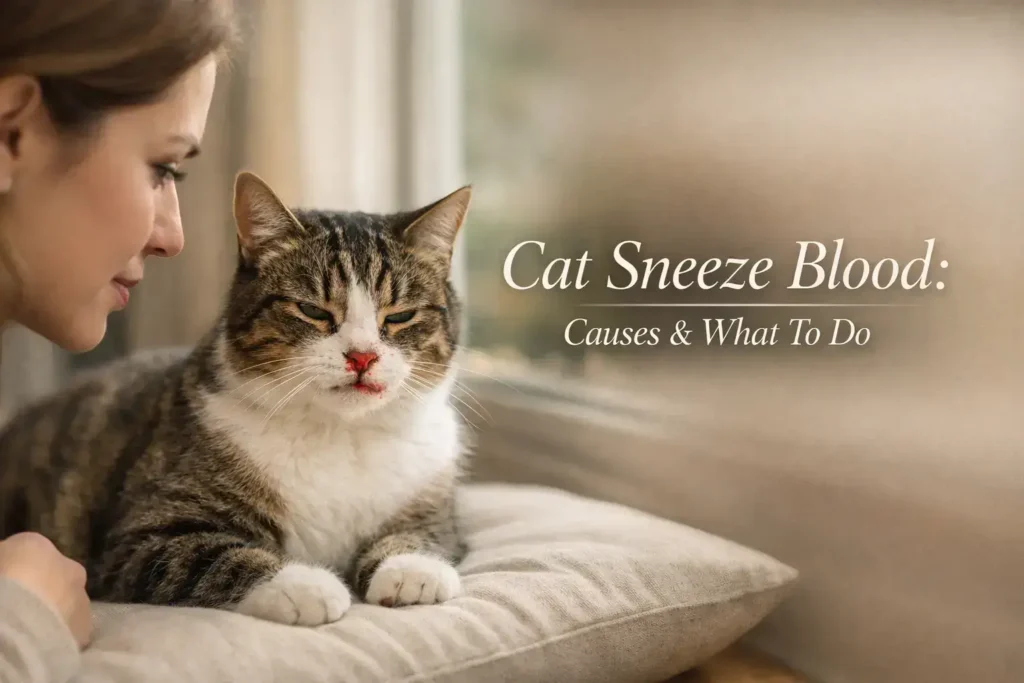
Cats are usually clean, low-maintenance companions, which is why something like blood in a sneeze can feel alarming very quickly. Many owners panic when they notice their cat sneezing blood—even if the cat seems completely normal otherwise. The truth is, while it can sometimes be minor, it can also signal underlying issues that shouldn’t be ignored.
Understanding why a cat sneezes blood, what’s normal, and when to act can make a big difference in your cat’s health. This guide walks you through real causes, practical care steps, and what experienced pet owners and vets commonly see in these situations.
Pet Care Insight
This guide is based on widely accepted pet care practices, veterinary guidance, and common experiences shared by responsible pet owners. The goal is to provide practical, easy-to-follow advice that helps owners keep their pets healthy, comfortable, and well cared for.
Pet Overview
What Cats Temperament And Behavior
Cats are independent but observant animals. They often hide discomfort, which is why even small symptoms like sneezing blood can be more important than they appear.
Typical Lifespan And Health
Most indoor cats live 12–18 years. Respiratory health plays a major role in long-term wellbeing, especially in kittens and older cats.
Physical Characteristics And Sensitivity
Cats have delicate nasal passages. Even minor irritation, dryness, or infection can lead to sneezing, sometimes with blood-tinged mucus.
Some breeds, like curly Devon Rex kittens, are especially sensitive to environmental changes, which can make them more prone to respiratory irritation and sneezing issues.
Suitability For Families And Homes
Cats adapt well to most homes, but environmental factors like dust, smoke, and strong fragrances can affect their respiratory system.
Activity Level And Daily Routine
They are moderately active, with bursts of play followed by rest. Changes in activity or breathing can signal health issues.
Daily Care Essentials
Proper Feeding And Hydration Routine
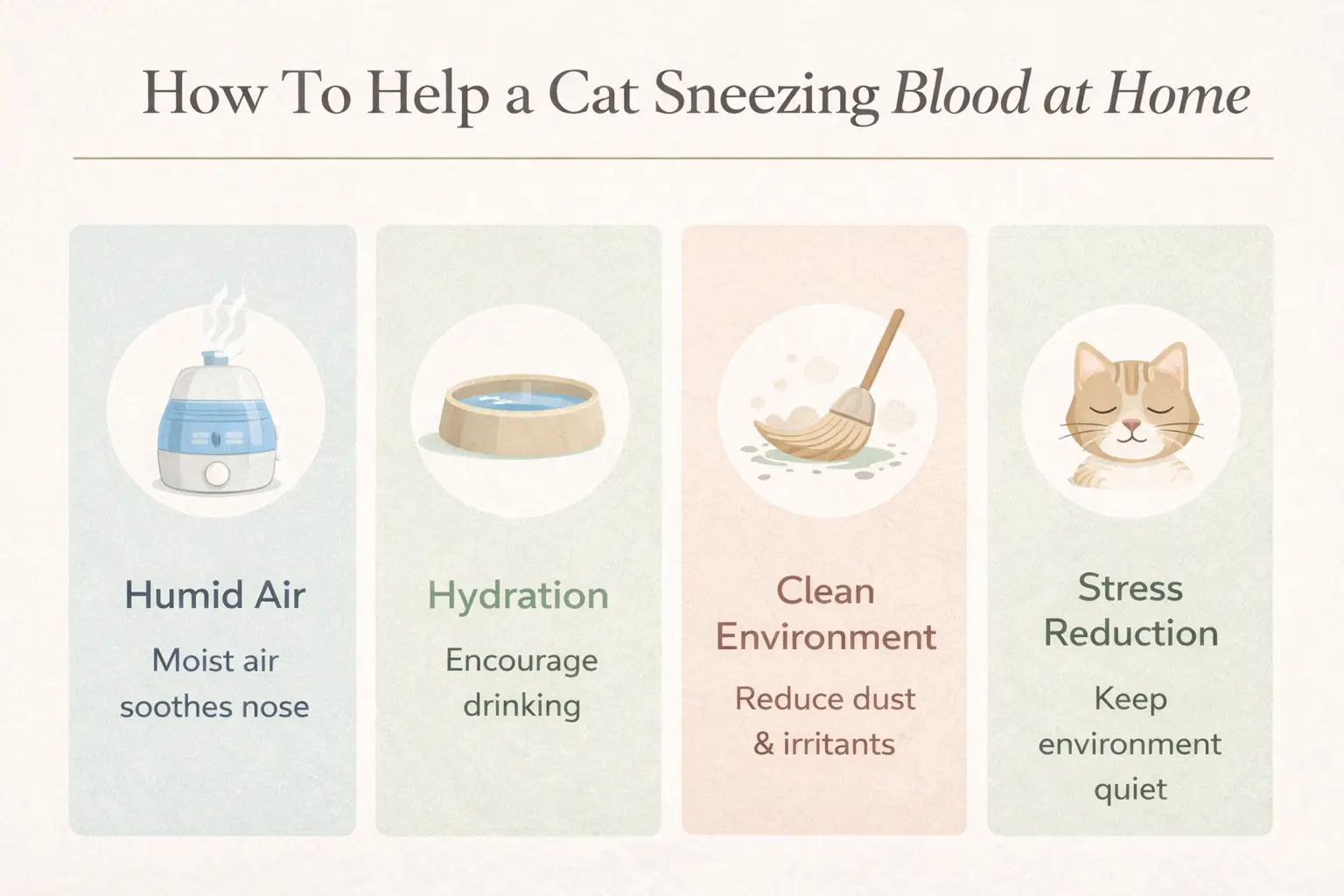
Provide clean water daily and a consistent feeding schedule. Good hydration helps maintain healthy nasal membranes and reduces irritation.
Basic Grooming And Hygiene Needs
Regular brushing reduces dust, dander, and allergens that can trigger sneezing.
Clean Living Environment Maintenance
Keep litter boxes clean and avoid dusty litter. Air quality matters more than many owners realize.
Monitoring Daily Behavior Changes
Watch for subtle changes like increased sneezing, nasal discharge, or reduced appetite.
Diet & Nutrition Guide
Feeding Schedule And Portion Control
Feed adult cats 2 meals per day. Kittens may need 3–4 smaller meals.
Nutritional Needs For Healthy Immunity
A balanced diet supports immune health, which helps prevent infections that may cause cat sneezing blood.
Safe And Unsafe Food Awareness
Safe foods:
- High-quality cat food
- Cooked chicken or fish (plain)
Avoid:
- Onions and garlic
- Dairy in excess
- Processed human foods
Diet Adjustments For Age Groups
Kittens need protein-rich diets. Seniors benefit from softer, easy-to-digest food, especially if respiratory issues affect appetite.
Exercise & Mental Stimulation
Daily Activity And Play Requirements
Short play sessions (10–15 minutes) twice daily keep cats active and healthy.
Indoor Enrichment Ideas For Cats
- Puzzle toys
- Feather wands
- Window watching perches
Reducing Stress Through Engagement
Stress can weaken immunity, increasing risk of infections that may lead to symptoms like sneezing blood.
Training & Behavior Guidance
Basic Training And Routine Building
Cats respond well to routine. Feeding, play, and sleep cycles should be consistent.
Socialization And Comfort Handling
Gentle handling helps you check your cat’s nose, breathing, and general health without stress.
Preventing Anxiety And Stress Triggers
Avoid loud environments, sudden changes, and overcrowded spaces.
Health & Climate Considerations
These infections are highly contagious among cats and are commonly linked to viruses like feline herpesvirus, which can cause repeated flare-ups of sneezing, inflammation, and occasional nosebleeds throughout a cat’s life.
Common Causes Of Cat Sneezing Blood
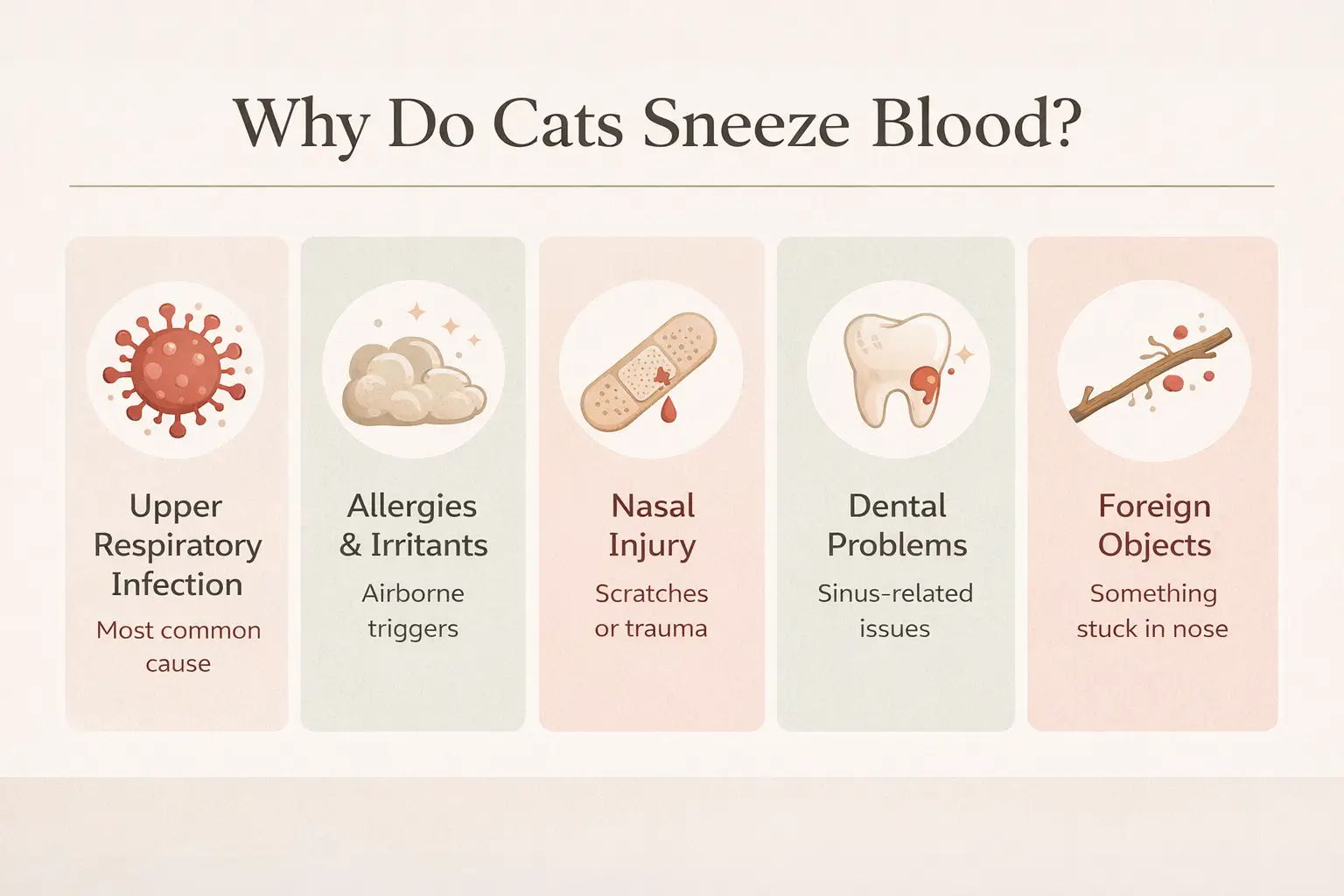
There are several reasons why a cat may sneeze blood:
- Upper respiratory infection (very common)
- Nasal injury or trauma
- Allergies or irritants
- Foreign objects in the nose
- Dental disease affecting sinuses
- Nasal tumors (rare but serious)
Poor dental health is often overlooked—understanding the difference between healthy cat teeth vs unhealthy can help you catch hidden infections that may contribute to bloody sneezing.
Why Cat Sneezing Blood But Acting Normal Happens
Sometimes, a cat sneezed blood once and continues acting normal. This may be due to:
- Minor irritation
- Dry air
- Small nasal scratch
However, repeated episodes should never be ignored.
Cat Sneezing Blood Upper Respiratory Infection Signs
One of the most common causes is an Upper respiratory infection, which affects the nose and sinuses and often leads to sneezing, discharge, and occasional blood.
Look for:
- Runny nose
- Watery eyes
- Frequent sneezing
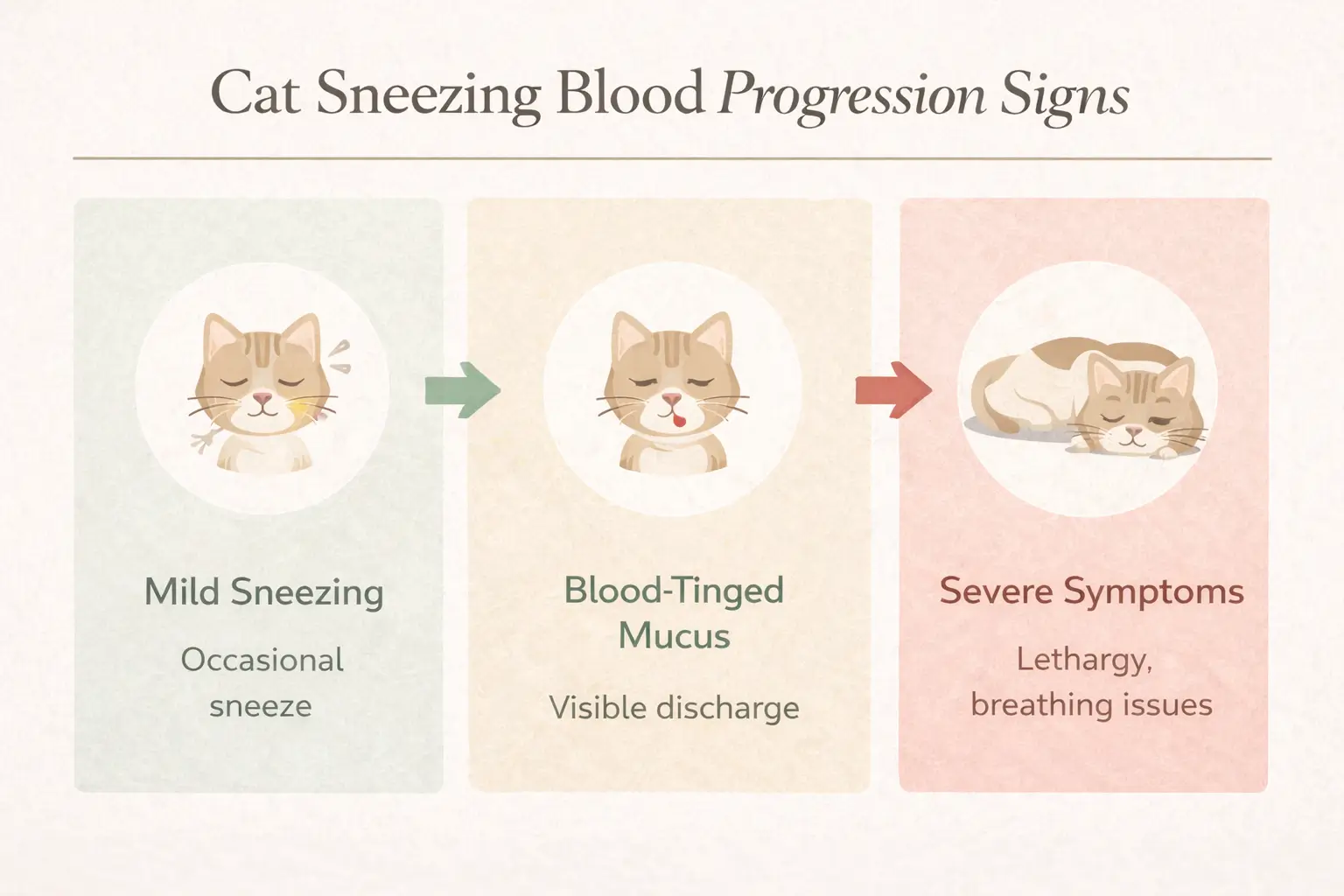
- Lethargy
This is one of the most common causes, especially in kittens.
Dental issues can sometimes affect the sinus area, which is why conditions requiring procedures like cat tooth extraction recovery may also lead to sneezing blood or nasal discharge if left untreated.
Climate And Air Quality Effects
Hot, dry climates or dusty environments can irritate nasal passages, leading to blood-tinged mucus.
Common Problems & Troubleshooting
Cat Sneezed Blood Once Only
Cause:
Minor irritation or dryness
Solution:
- Monitor for 24–48 hours
- Keep environment clean
Prevention:
Maintain humidity and avoid dust exposure
Cat Sneezing Blood From One Nostril
Cause:
Possible foreign object or localized infection
Solution:
- Do not attempt removal at home
- Seek vet advice if persistent
Prevention:
Keep small objects out of reach
Cat Sneezing Blood Tinged Mucus
Cause:
Upper respiratory infection or inflammation
Solution:
- Ensure hydration
- Provide warm, humid air
Prevention:
Boost immunity through proper nutrition
Cat Sneezing Blood After Antibiotics
Cause:
Incomplete recovery or irritation
Solution:
- Follow up with vet
- Avoid stopping medication early
Prevention:
Always complete prescribed treatment
Cat Nose Bleed And Sneezing
Cause:
Injury, infection, or high blood pressure (rare)
Solution:
- Keep cat calm
- Seek veterinary care
Prevention:
Avoid trauma and monitor health regularly
Seasonal Pet Care Tips
Spring Allergy Awareness And Care
- Increased pollen may trigger sneezing
- Keep windows clean
Summer Heat And Hydration Needs
- Ensure constant access to water
- Avoid overheating
Fall Dust And Air Quality Changes
- Clean living areas regularly
- Reduce airborne irritants
Winter Dry Air And Indoor Care
- Use a humidifier if needed
- Prevent nasal dryness
Additional Expert Tips
- Never ignore repeated sneezing blood, even if your cat seems fine
- Avoid home remedies that involve inserting anything into the nose
- Keep your cat’s vaccinations up to date to prevent infections
- Monitor appetite—loss of appetite often signals deeper issues
- Early vet visits save money and prevent complications
Conclusion
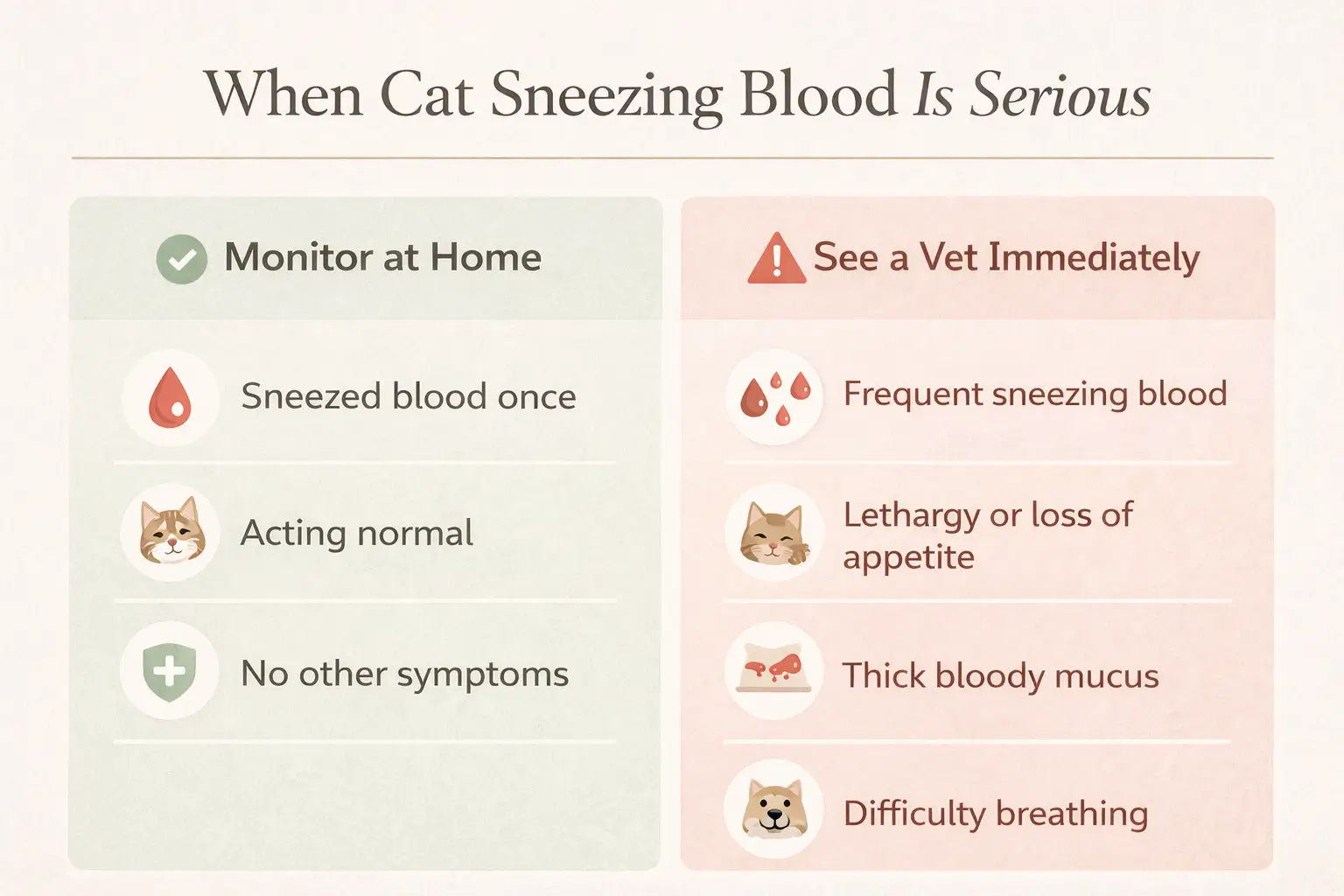
Seeing your cat sneeze blood can be unsettling, but not every case is an emergency. Sometimes it’s a minor irritation, especially if it happens once and your cat is otherwise acting normal. However, frequent sneezing, blood-tinged mucus, or additional symptoms like lethargy or loss of appetite should always be taken seriously.
The key is observation and timely action. Keeping your cat’s environment clean, diet balanced, and stress levels low can prevent many of the common causes. When in doubt, a quick veterinary check is always the safest route.
Caring for your cat isn’t about reacting to problems—it’s about noticing small signs early and responding with confidence.
FAQs
-
Can a cat sneeze blood and still be okay?
Yes, if it happens once due to minor irritation, but repeated episodes need attention.
-
Why is my cat sneezing blood but acting normal?
It may be dryness or a mild irritation, but monitor closely for changes.
-
What would make a cat sneeze blood suddenly?
Infections, nasal injury, allergies, or foreign objects are common causes.
-
Is cat sneezing blood an emergency?
Not always, but it becomes urgent if frequent or combined with other symptoms.
-
Are there home remedies for cat sneezing blood?
Humid air and hydration can help, but avoid DIY treatments inside the nose.
-
Can kittens sneeze blood from infections?
Yes, kittens are more prone to upper respiratory infections.
-
When should I take my cat to the vet?
If sneezing blood continues for more than 1–2 days or worsens.