
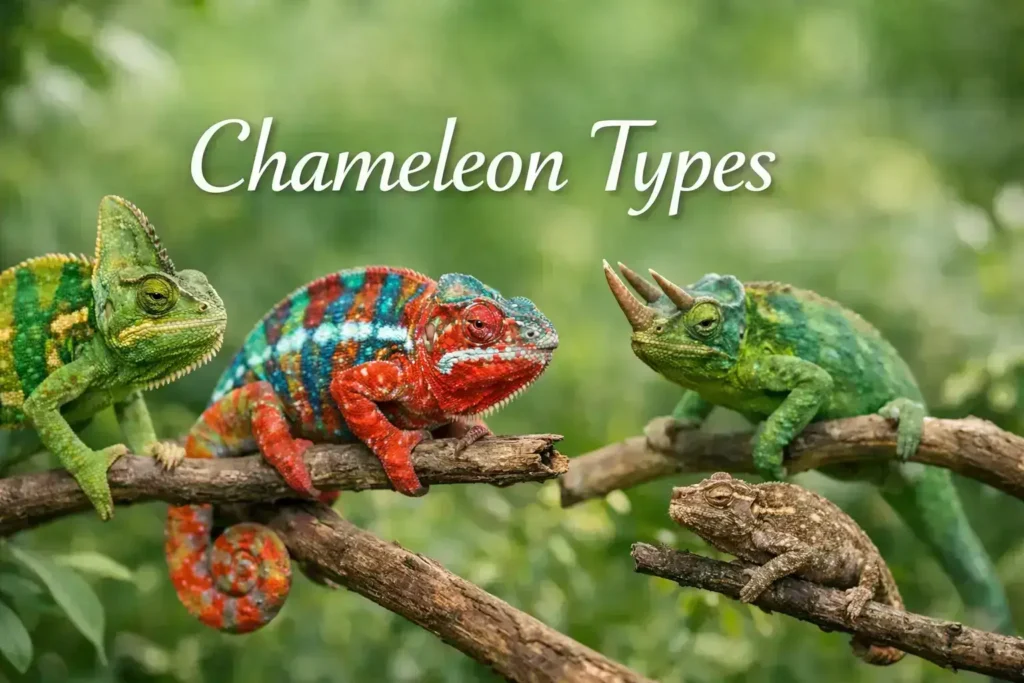
Understanding Chameleon Types and Why They Fascinate Pet Owners
Chameleons are among the most unique reptiles in the world, known for their color-changing ability, slow movements, and independently rotating eyes. Many pet owners are drawn to different chameleon types because each species has its own personality, care needs, and visual appeal.
However, caring for a chameleon is very different from common pets like cats or dogs. They require specific lighting, humidity, and feeding routines. A common mistake new owners make is choosing rare chameleon types without understanding their advanced care needs, which can lead to stress or health issues for the animal.
Pet Care Insight
This guide is based on widely accepted pet care practices, veterinary guidance, and common experiences shared by responsible pet owners. The goal is to provide practical, easy-to-follow advice that helps owners keep their pets healthy, comfortable, and well cared for.
Pet Overview: Common Chameleon Types and Traits
Chameleons belong to a group of reptiles with over 200 species worldwide. If you’re wondering how many types of chameleon are there, the answer is quite a lot—but only a few are commonly kept as pets.
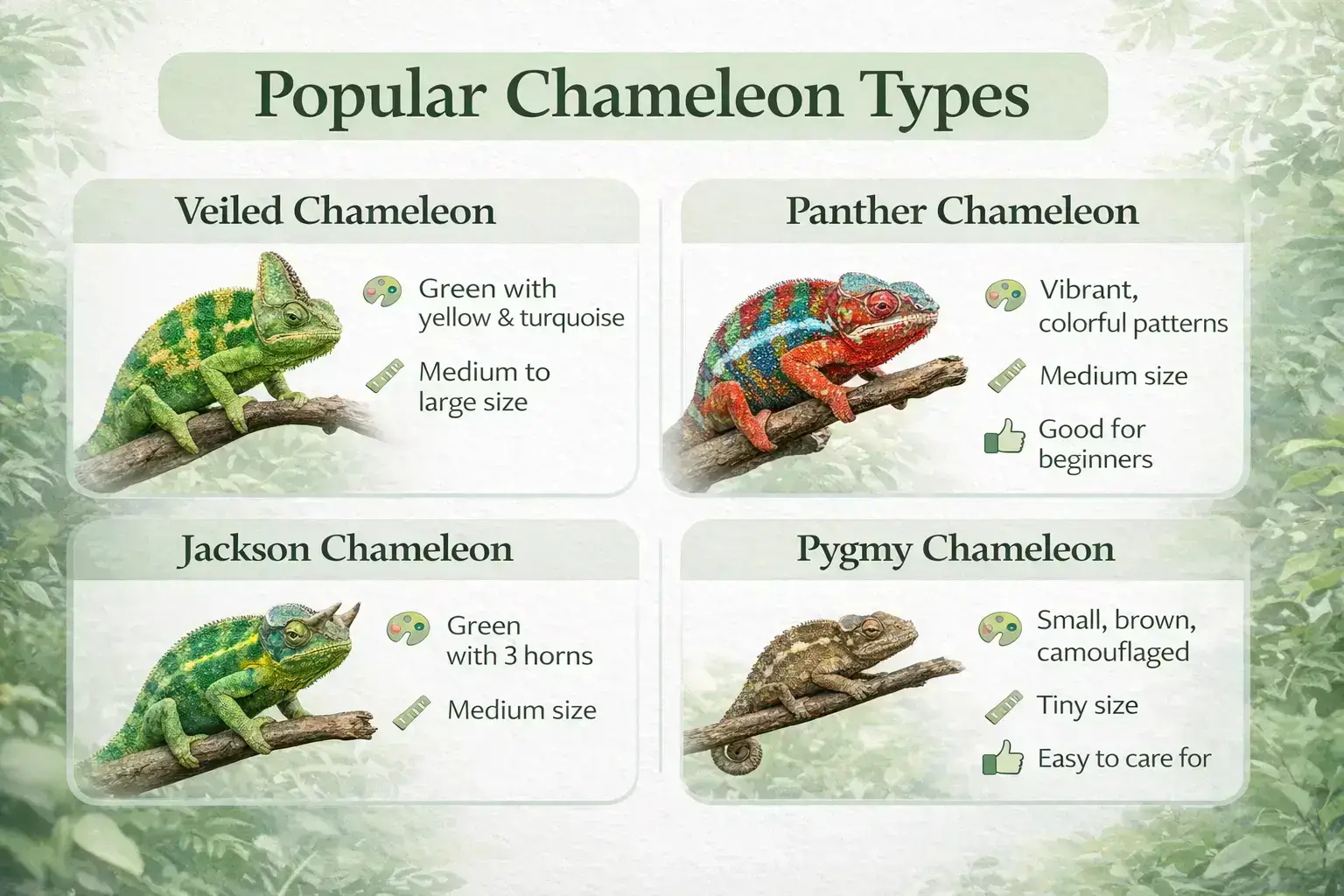
Popular chameleon types and names
- Veiled chameleon (great for beginners)
- Panther chameleon (known for vibrant colors)
- Jackson chameleon (distinct horns, cooler climate preference)
- Pygmy chameleon (small chameleon types, ideal for nano setups)
Key traits
- Lifespan: typically 5–8 years depending on species
- Temperament: solitary, not very social
- Activity level: low to moderate
- Color change: varies by species (some change more than others)
Suitability
- Not ideal for young children
- Better suited for patient, attentive owners
- Prefer minimal handling
Daily Care Essentials
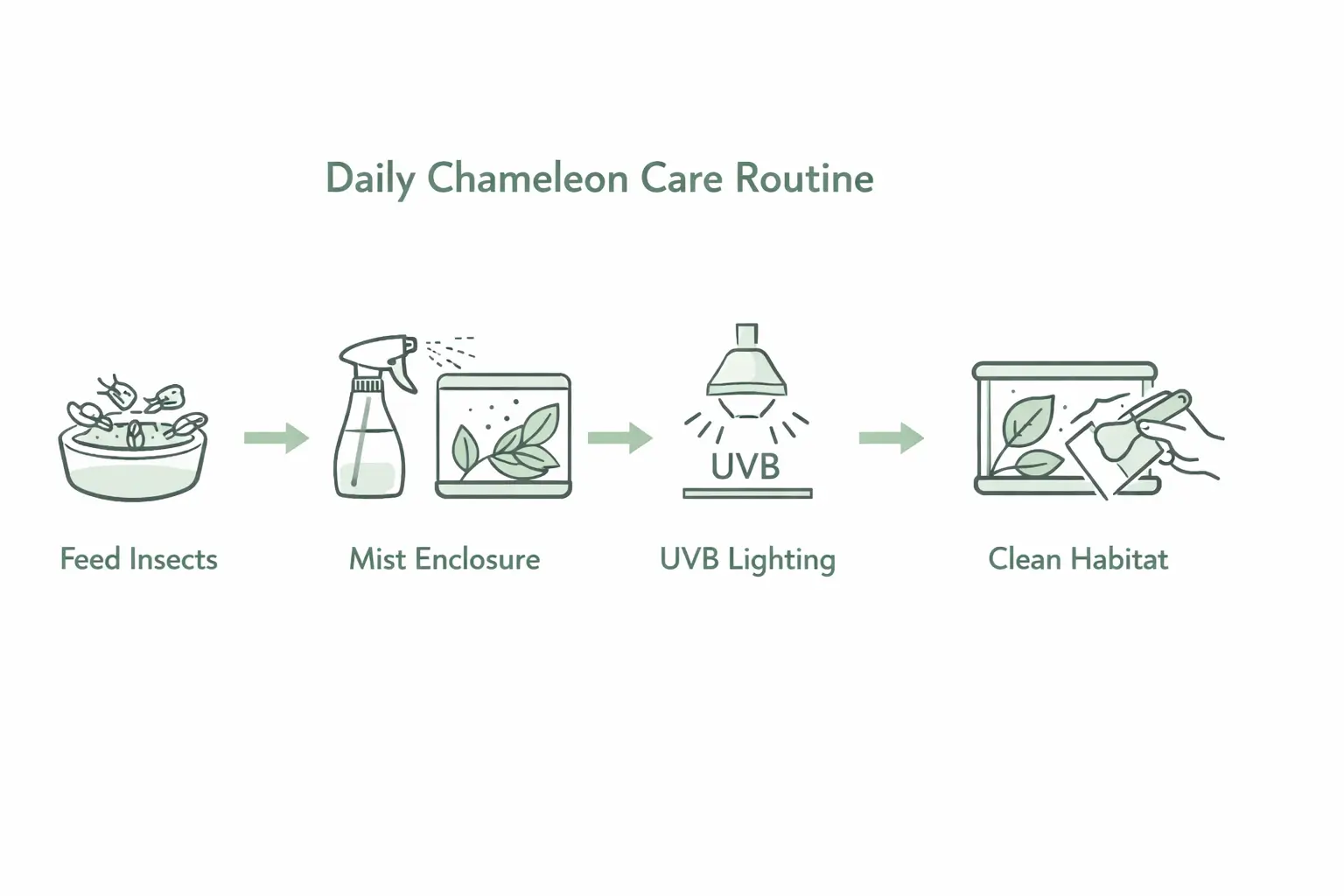
Basic care routine
- Feed live insects daily or every other day
- Mist enclosure 2–3 times daily for hydration
- Maintain proper temperature gradients
- Provide UVB lighting for health
Grooming and hygiene
- No bathing required
- Keep enclosure clean and dry
- Remove uneaten insects
Social needs
- Chameleons prefer to live alone
- Avoid frequent handling to reduce stress
Diet & Nutrition Guide
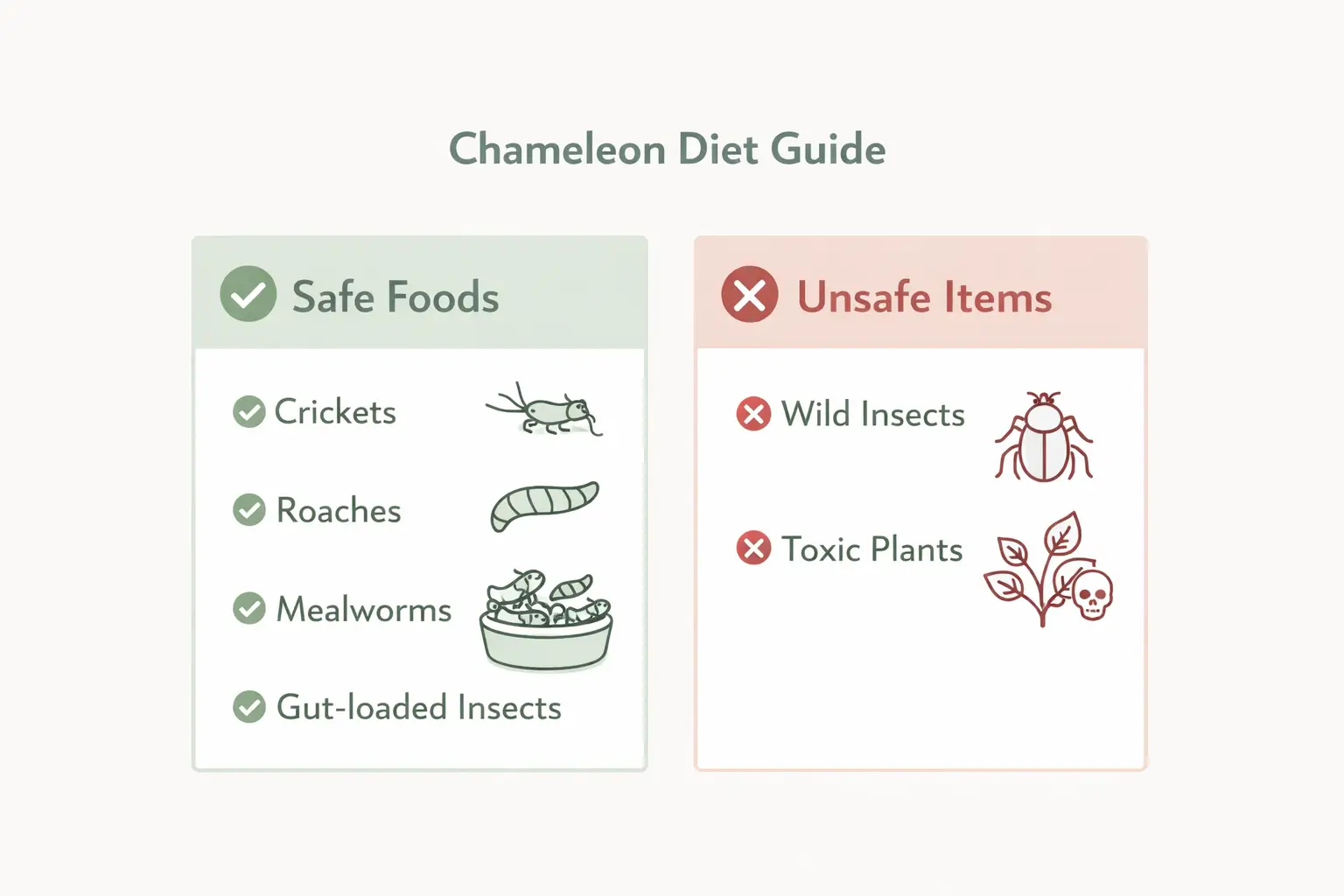
Feeding basics
- Main diet: crickets, roaches, mealworms
- Supplement with calcium and vitamins
- Feed once daily (juveniles) or every other day (adults)
Portion control
- Juveniles: 10–15 small insects daily
- Adults: 5–10 larger insects
Safe vs unsafe foods
- Safe: gut-loaded insects, occasional soft fruits
- Unsafe: wild-caught insects, toxic plants
Age-based feeding
- Young chameleons: higher protein needs
- Adults: balanced diet with supplements
- Seniors: smaller, softer prey
Exercise & Mental Stimulation
Activity needs
- Climbing branches and plants
- Vertical space is essential
Enrichment ideas
- Add live plants for exploration
- Change branch layout occasionally
- Provide visual barriers to reduce stress
Training & Behavior Guidance
Understanding behavior
- Color changes signal mood or temperature
- Dark colors may indicate stress
Handling tips
- Handle only when necessary
- Move slowly and calmly
Preventing problems
- Avoid overcrowding
- Maintain consistent environment
Health & Climate Considerations
Common health concerns
- Dehydration
- Metabolic bone disease (lack of UVB)
- Respiratory infections
Climate care
- Warm environment (species-dependent)
- Proper humidity levels (50–80%)
- Good ventilation
Lifespan awareness
- Panther chameleon lifespan: around 5–7 years
- Veiled chameleon lifespan: 6–8 years with proper care
Common Problems & Troubleshooting
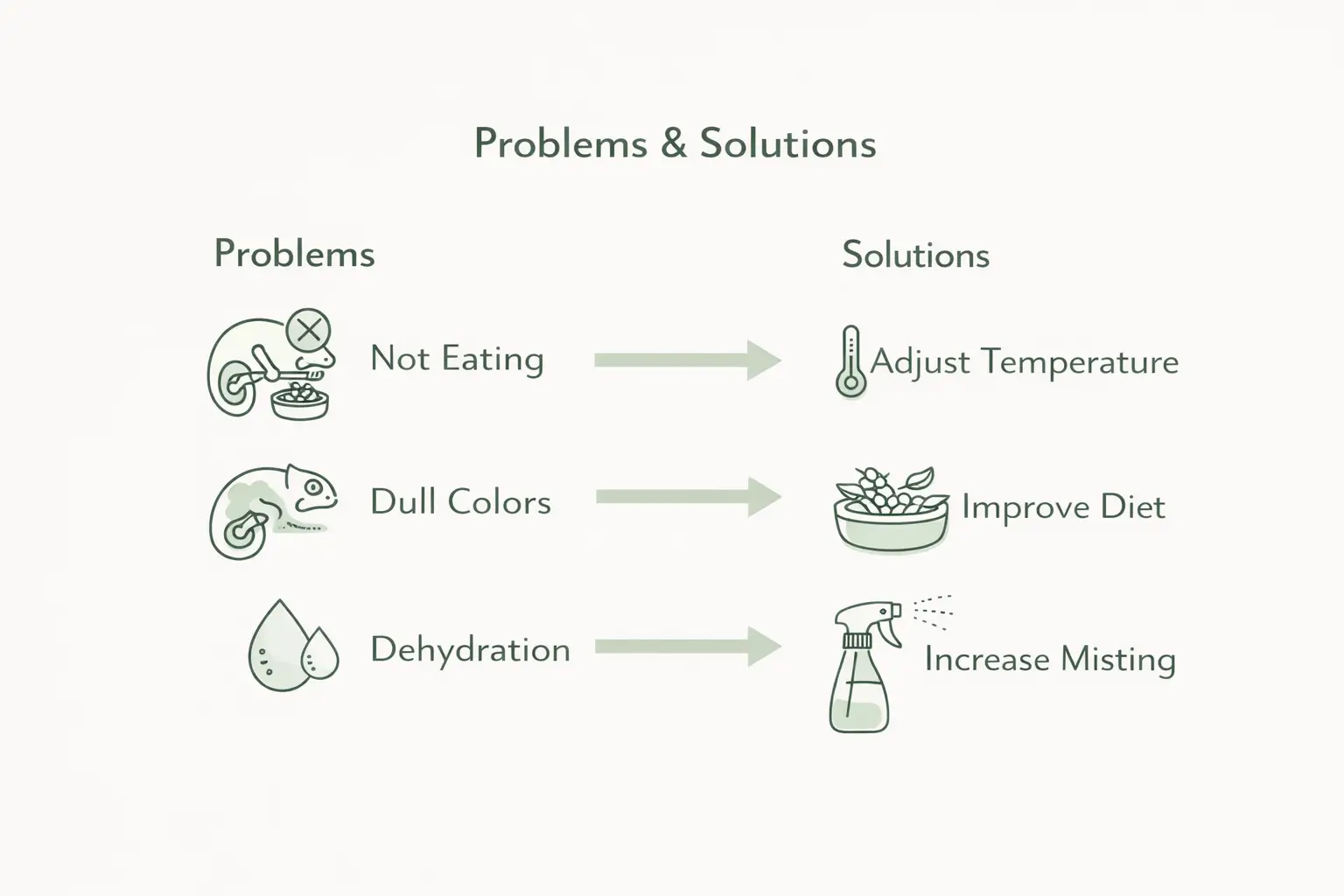
Problem: Not eating
- Cause: stress or improper temperature
- Solution: adjust habitat, reduce handling
- Prevention: stable environment
Problem: Dull colors
- Cause: illness or poor diet
- Solution: improve nutrition and lighting
- Prevention: proper supplementation
Problem: Dehydration
- Cause: lack of misting
- Solution: increase humidity
- Prevention: regular misting schedule
Seasonal Pet Care Tips
Spring
- Increase enclosure cleaning
- Monitor shedding
Summer
- Prevent overheating
- Increase hydration
Fall
- Adjust lighting hours
- Monitor appetite changes
Winter
- Maintain warmth
- Ensure UVB exposure remains consistent
Additional Expert Tips
Common beginner mistakes
- Choosing rare chameleon types too early
- Incorrect lighting setup
- Overhandling
Pro care tips
- Always use UVB lighting
- Invest in a good thermometer and hygrometer
- Keep a consistent routine
Conclusion
Chameleons are fascinating reptiles with a wide range of species, from colorful panther chameleons to tiny pygmy chameleons. Understanding different chameleon types and their care requirements is essential for providing a healthy environment.
The most important things to remember are proper lighting, hydration, and minimal stress. Avoid common mistakes like overhandling or poor enclosure setup, and you’ll be able to care for your chameleon with confidence.
Learn More: Black Siamese Cat Guide: Traits, Care & Facts
FAQs
- What are the best chameleon types for beginners?
Veiled chameleons are the easiest to care for and most beginner-friendly. - How many types of chameleon are there?
There are over 200 species worldwide, but only a few are commonly kept as pets. - Which chameleons change color the most?
Panther chameleons are known for the most vibrant and noticeable color changes. - How long do chameleons live?
Most pet chameleons live between 5–8 years depending on care and species. - What is the smallest chameleon type?
Pygmy chameleons are among the smallest and are often called miniature chameleons. - Do all chameleons change color?
Yes, but not all species change colors dramatically like panther chameleons.




One Response