
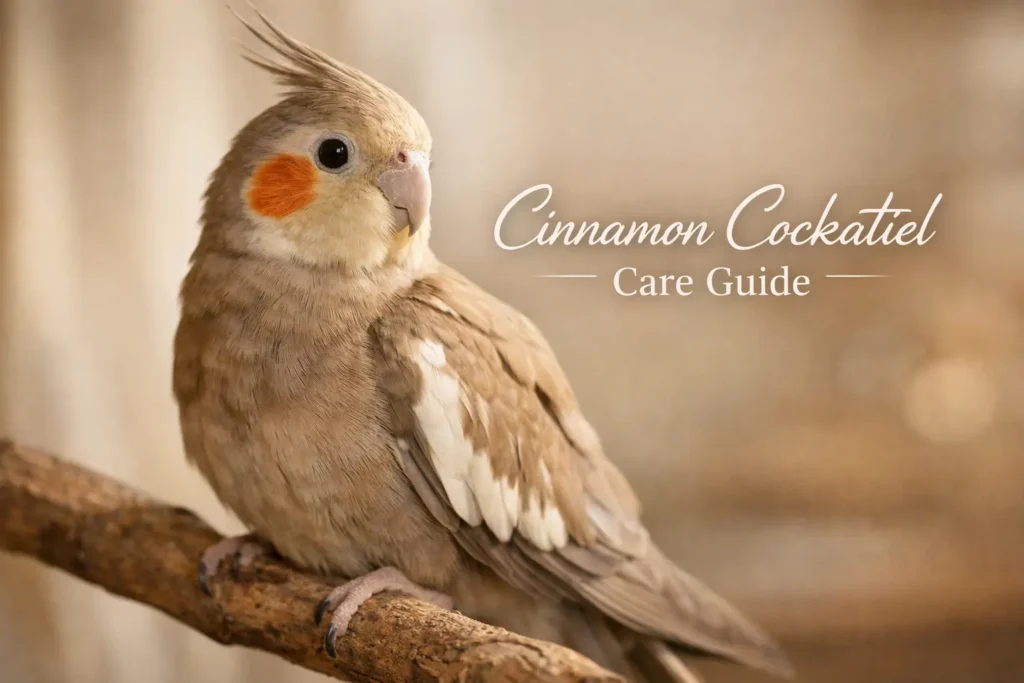
Cinnamon cockatiels are one of the most loved color mutations of the Cockatiel, admired for their warm brown tones, gentle personalities, and strong bond with humans. For many bird owners, they offer the perfect mix of beauty and companionship.
What makes them unique is not just their color but also how their genetics affect behavior and appearance—especially when it comes to identifying males vs females. New owners often make mistakes like overfeeding seeds, neglecting mental stimulation, or misunderstanding their social needs, which can lead to health or behavior issues.
Pet Care Insight
This guide is based on widely accepted pet care practices, veterinary guidance, and common experiences shared by responsible pet owners. The goal is to provide practical, easy-to-follow advice that helps owners keep their pets healthy, comfortable, and well cared for.
Pet Overview
Gentle Temperament And Personality
Cinnamon cockatiels are calm, affectionate, and highly social birds. They enjoy human interaction and can become very attached to their owners. Males are usually more vocal and playful, while females tend to be quieter and more reserved.
Lifespan And Size
- Average lifespan: 12–20 years with proper care
- Size: 12–13 inches long
- Weight: 80–120 grams
Physical Characteristics
- Soft brown or “cinnamon” colored feathers instead of grey
- Orange cheek patches (except in whiteface varieties)
- Variations include pearl, pied, and lutino cinnamon combinations
You can also explore other stunning color variations like the rare blue mutation in this detailed guide on rare blue cockatiels.
Family Compatibility And Activity Level
- Suitable for families and beginners
- Good with children (with supervision)
- Moderate activity level with bursts of playful energy
Daily Care Essentials
For a broader understanding of bird care routines, this daily dove care guide offers useful insights that also apply to cockatiels.
Feeding Routine And Schedule
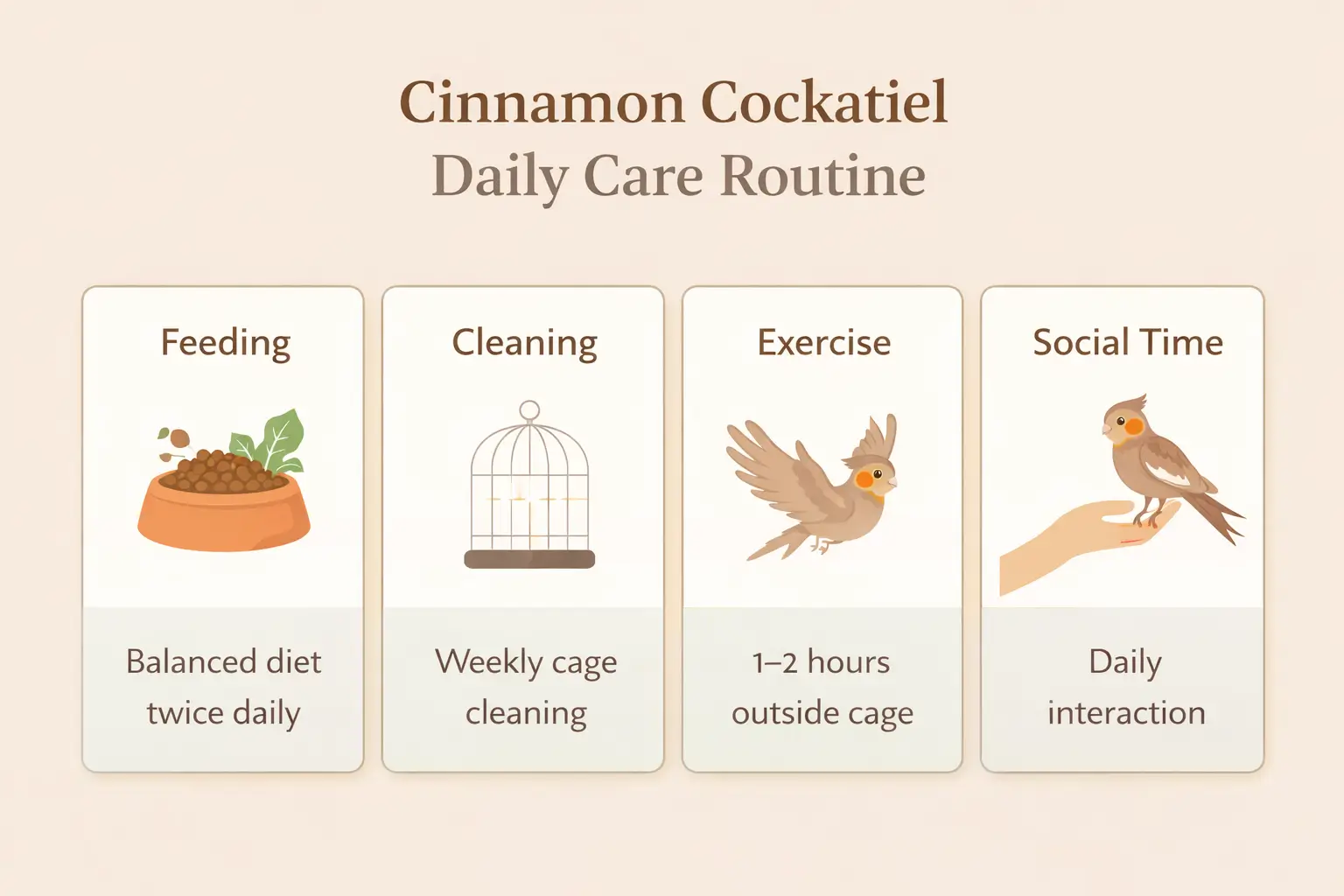
Feed twice daily—morning and evening—with a mix of pellets, fresh foods, and limited seeds.
Grooming And Hygiene Basics
- Trim nails when needed
- Provide a shallow water dish for bathing
- Clean cage weekly
Exercise And Cage Setup
- Minimum 1–2 hours outside the cage daily
- Provide perches of different sizes
- Include safe chew toys
Social Interaction Needs
Cockatiels need daily interaction. Lack of attention can lead to loneliness or feather plucking.
Diet & Nutrition Guide
Balanced Diet Basics For Cockatiels
- 60–70% high-quality pellets
- 20–25% fresh vegetables (spinach, carrots, broccoli)
- 5–10% fruits (apple, banana)
- Seeds only as treats
If you’re comparing color mutations and care differences, this complete guide on lutino cockatiels explains how diet and care may slightly vary across types.
Feeding Young, Adult, And Senior Birds
- Baby cockatiels: require soft, hand-fed formula
- Adults: balanced diet with controlled portions
- Seniors: softer foods and more hydration
Safe And Unsafe Foods
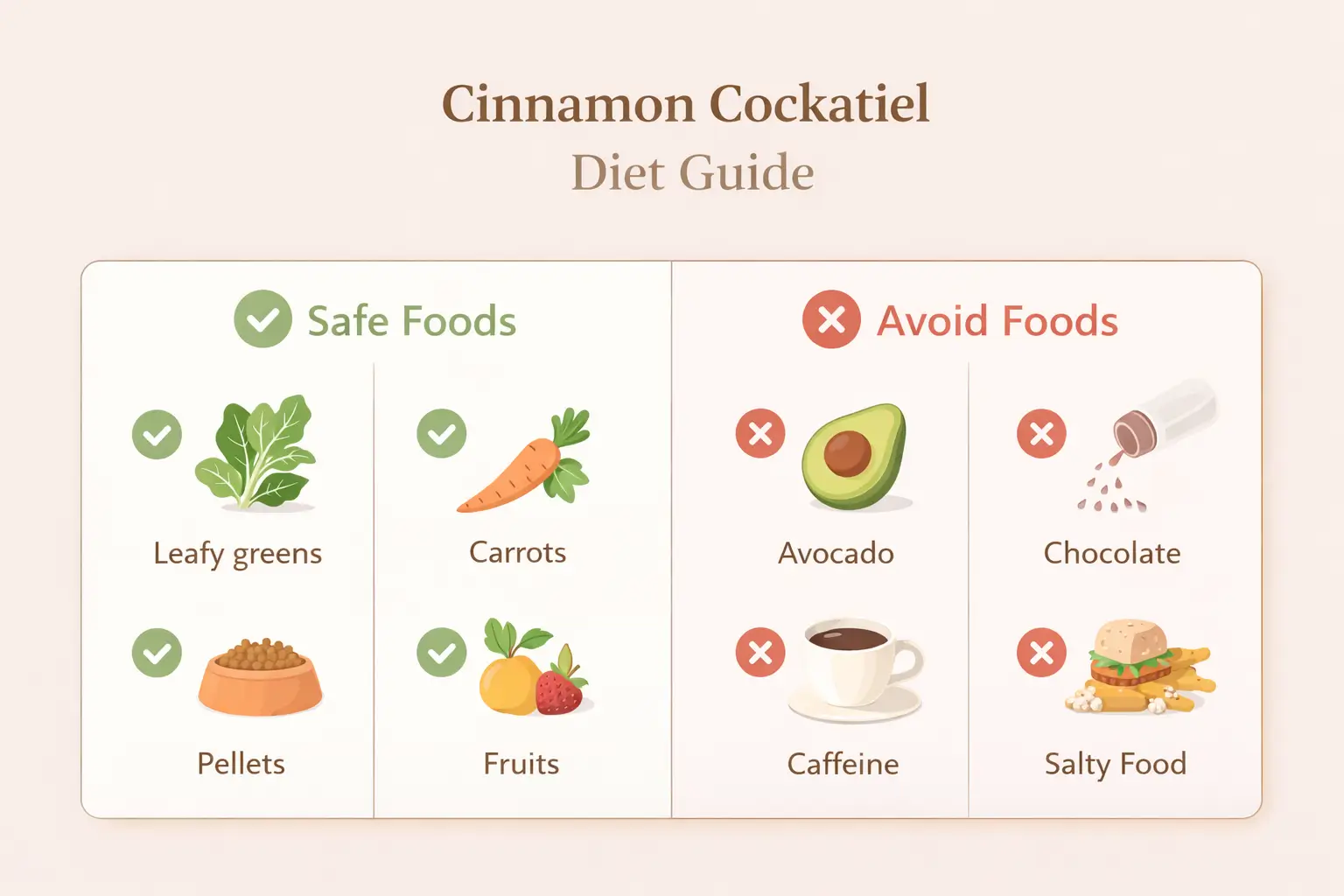
Safe foods:
- Leafy greens
- Cooked rice
- Boiled eggs (occasionally)
Avoid:
- Chocolate
- Avocado
- Caffeine
- Salty or fried foods
Exercise & Mental Stimulation
Daily Activity Needs
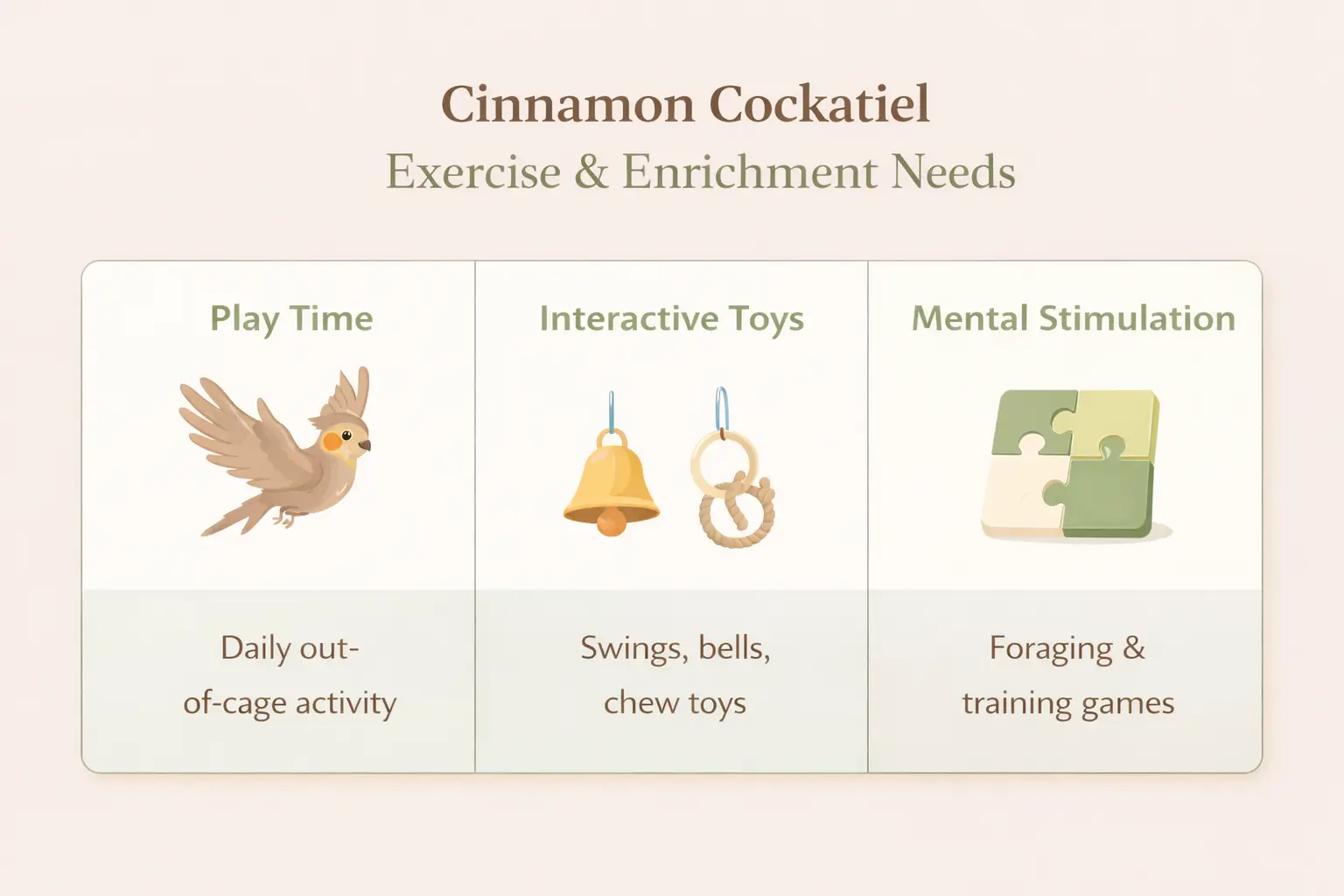
Cinnamon cockatiels need at least 1–2 hours of active time outside the cage.
Simple Enrichment Activities
- Mirror toys (use sparingly)
- Bells and swings
- Foraging toys
Birds like cockatiels and parrots share similar enrichment needs, as explained in this helpful guide on blue quaker parrots and their daily activity routines.
Mental Stimulation Ideas
- Hide treats inside toys
- Teach simple tricks like stepping up
- Rotate toys weekly to prevent boredom
Training & Behavior Guidance
Basic Training And Handling
Start with simple commands like “step up.” Use gentle tones and reward with treats.
Socialization Tips
Expose your cockatiel to different environments slowly. This builds confidence and reduces fear.
Preventing Behavior Problems
- Avoid sudden loud noises
- Maintain a routine
- Give attention daily
Male cinnamon cockatiels are more likely to whistle and mimic sounds, while females are generally quieter.
Health & Climate Considerations
Common Health Concerns
- Respiratory infections
- Feather plucking
- Nutritional deficiencies
Climate Sensitivity
Cockatiels are sensitive to extreme temperatures.
- Ideal temperature: 20–28°C
- Avoid drafts and direct sunlight
Hydration And Air Quality
- Always provide fresh water
- Avoid smoke, perfumes, and strong chemicals
Common Problems & Troubleshooting
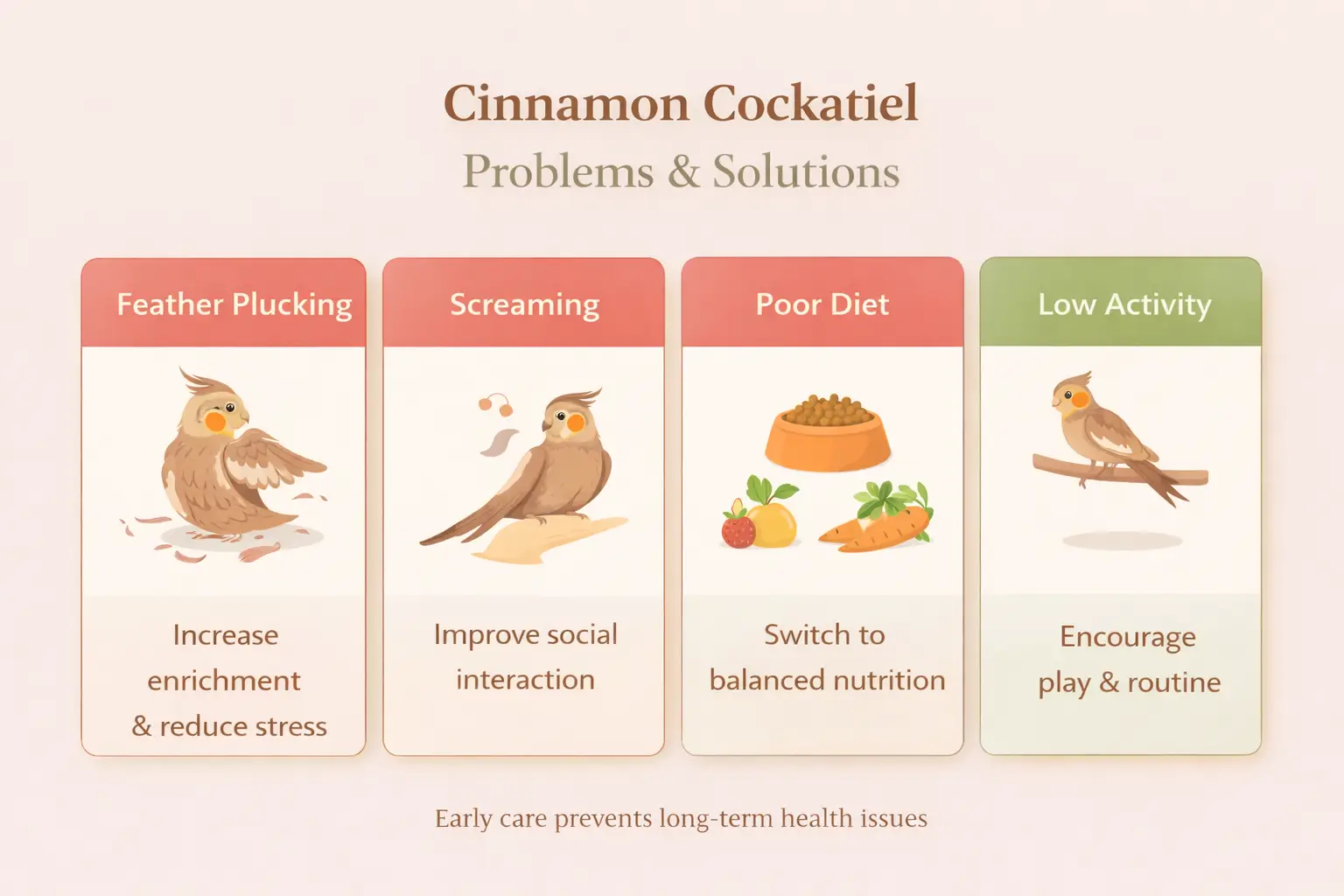
Feather Plucking Issues
Cause: Stress, boredom, or poor diet
Solution: Increase interaction and improve nutrition
Prevention: Provide enrichment and maintain routine
Excessive Screaming
Cause: Loneliness or attention-seeking
Solution: Spend more time with your bird
Prevention: Consistent daily interaction
Poor Appetite
Cause: Stress or illness
Solution: Introduce fresh foods gradually
Prevention: Keep feeding routine stable
Seasonal Pet Care Tips
Spring And Summer Care
- Ensure proper ventilation
- Provide extra water
- Avoid overheating
Fall Adjustments
- Maintain consistent diet
- Monitor changes in activity
Winter Protection
- Keep cage away from cold drafts
- Provide warmth but avoid overheating
- Increase indoor playtime
Additional Expert Tips
Common Beginner Mistakes
- Feeding only seeds
- Ignoring mental stimulation
- Keeping the bird isolated
Long-Term Care Advice
- Schedule regular vet checkups
- Maintain a consistent routine
- Invest in a spacious cage
Choosing Male Or Female
- Male cinnamon cockatiels: more vocal and interactive
- Female cinnamon cockatiels: calmer and quieter
Choose based on your lifestyle and expectations.
Conclusion
Cinnamon cockatiels are affectionate, intelligent, and visually stunning birds that thrive with proper care and attention. Their unique coloring, combined with their friendly personality, makes them ideal companions for both beginners and experienced bird owners.
The key to keeping them healthy lies in a balanced diet, daily interaction, mental stimulation, and a stable environment. Avoid common mistakes like poor nutrition or lack of engagement, and your cockatiel can live a long, happy life by your side.
FAQs
-
How long does a cinnamon cockatiel live?
Typically 12–20 years with proper care
-
How can I tell if my cinnamon cockatiel is male or female?
Males are more vocal and may sing; females are quieter and may have barred tail feathers
-
Are cinnamon cockatiels good for beginners?
Yes, they are friendly, easy to manage, and adaptable
-
What is the difference between cinnamon and lutino cockatiels?
Cinnamon has brown tones, while lutino is yellow/white with red eyes
-
How often should I feed my cockatiel?
Twice daily with access to fresh water at all times
-
Do cinnamon cockatiels talk?
Some males can mimic sounds and whistles, but they are not strong talkers
-
Why is my cockatiel not active?
It could be due to heat, stress, or lack of stimulation—observe and adjust care accordingly