
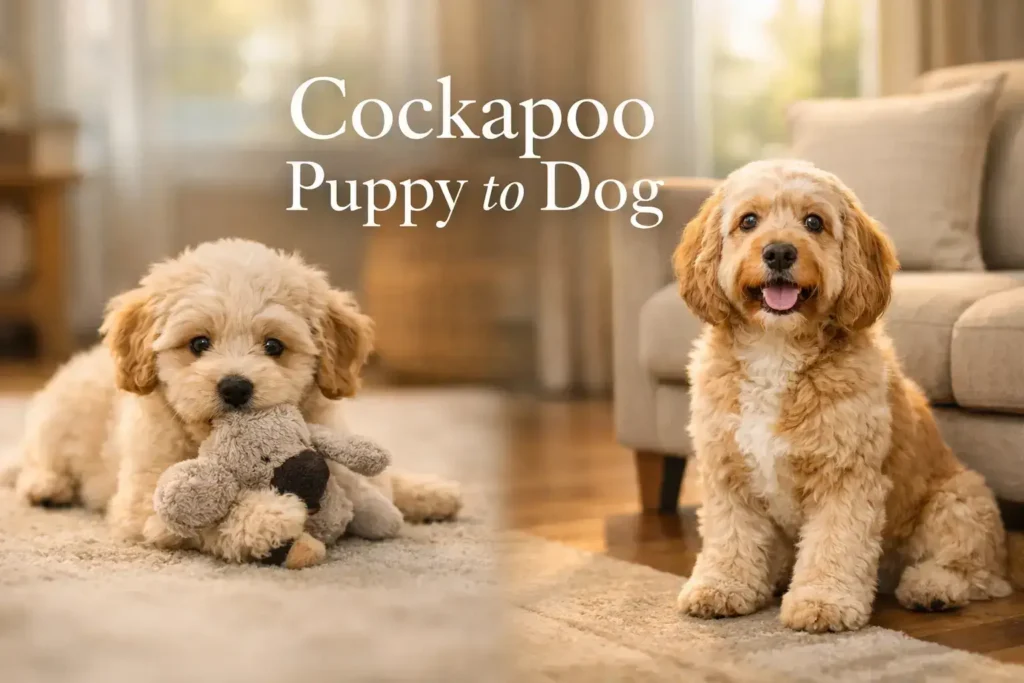
Cockapoos have quickly become one of the most loved companion dogs—and for good reason. As a mix of the Cocker Spaniel and Poodle, the Cockapoo combines intelligence, friendliness, and a low-shedding coat. What often surprises people is how much their needs evolve. A playful cockapoo puppy can quickly turn into an energetic adolescent with strong habits—good or bad—depending on how they’re raised. Understanding this transition is the key to raising a well-behaved, happy adult cockapoo.
Pet Care Insight
This guide is based on widely accepted pet care practices, veterinary guidance, and common experiences shared by responsible pet owners. The goal is to provide practical, easy-to-follow advice that helps owners keep their pets healthy, comfortable, and well cared for.
Pet Overview
Cockapoo Temperament Traits
Cockapoos are known for their affectionate, people-focused personality. They thrive on attention and often form strong bonds with their families. Most have a cheerful, playful nature and are eager to please, which makes them relatively easy to train.
Cockapoo Size And Growth
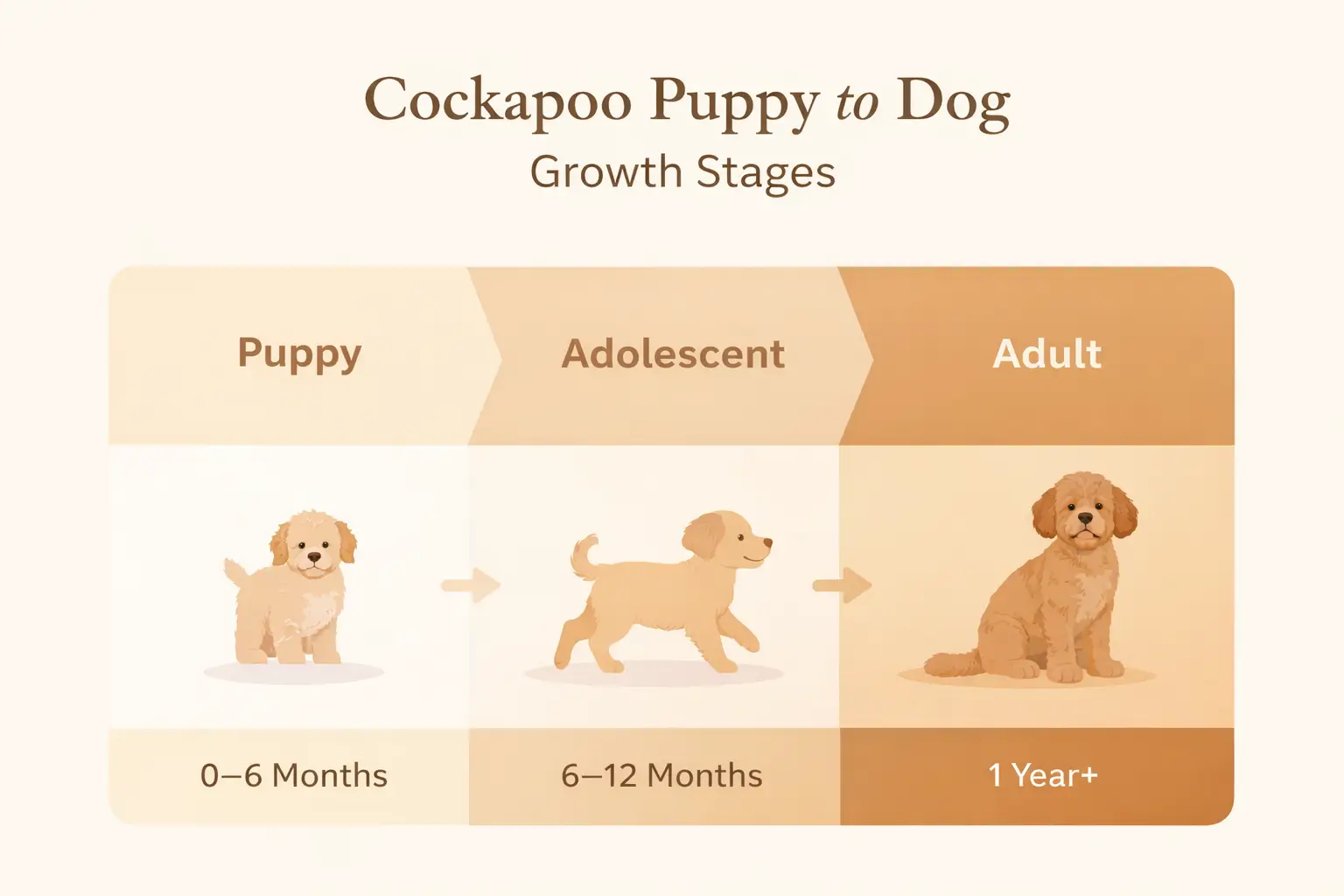
Cockapoo size can vary depending on whether they are toy, miniature, or standard. A cockapoo puppy to adult transition usually reaches full size between 9–12 months. Mini cockapoo full grown dogs tend to stay compact, while standard ones are more active and larger.
Cockapoo Lifespan And Health
They typically live 12–16 years. With proper care, many remain active well into their senior years.
Cockapoo Family Compatibility
They are excellent family dogs, especially with children. They usually get along well with other pets—but early socialization matters.
Cockapoos are also often compared to other doodle mixes like mini goldendoodles—if you’re exploring similar breeds, this guide on white mini goldendoodle care and size differences can help you understand key similarities and differences.
Cockapoo Activity Level
Moderately high. They need daily physical and mental stimulation to stay balanced.
Daily Care Essentials
Feeding Routine Structure
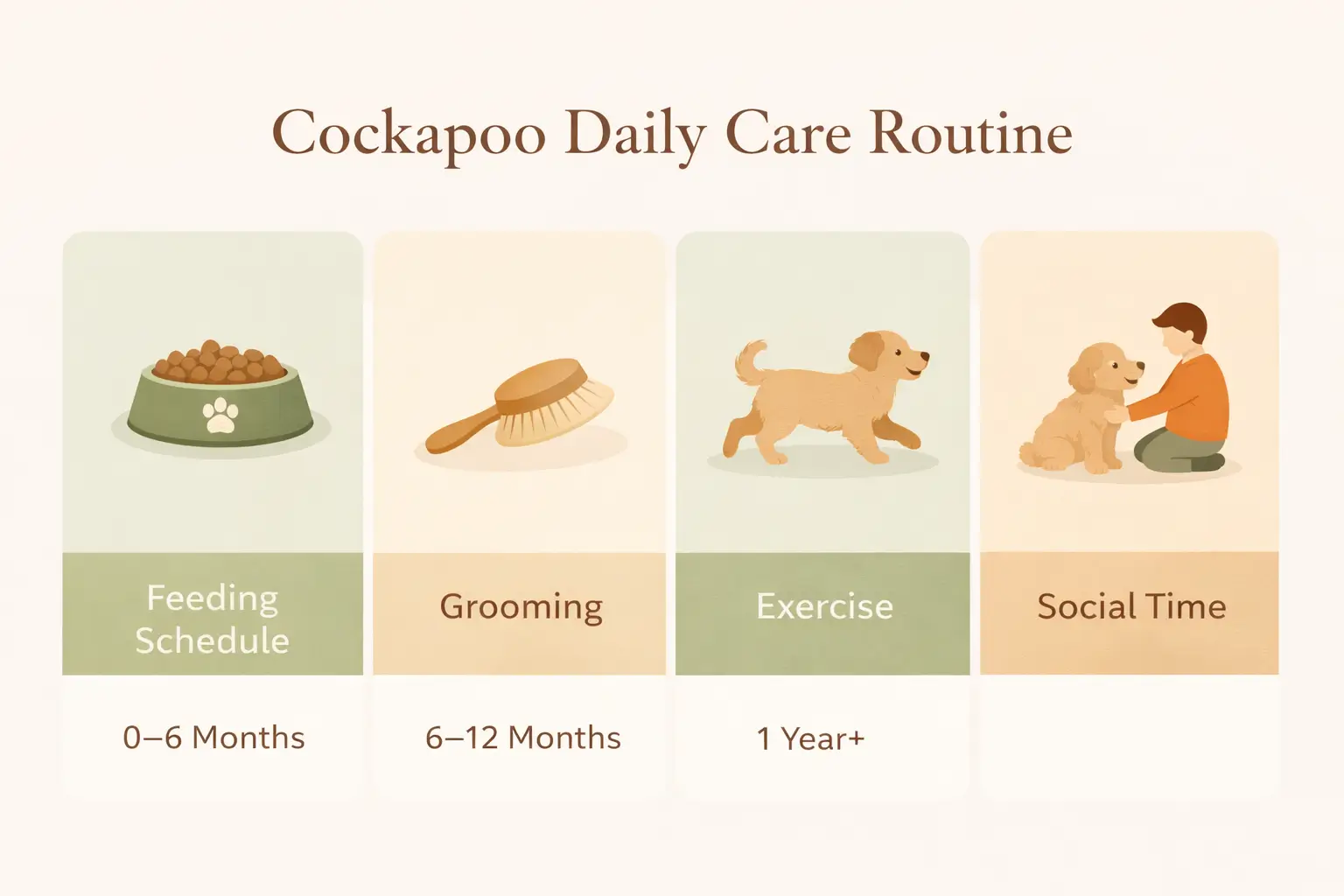
Feed puppies 3–4 times daily, then transition to twice daily as they grow into adult cockapoos. Consistency helps digestion and behavior.
Grooming Basics Routine
Cockapoos require regular brushing (3–5 times weekly) to prevent matting. Their coat can vary from wavy to curly, so grooming needs differ slightly.
Exercise Daily Needs
A cockapoo dog needs at least 30–60 minutes of activity daily. Puppies need shorter, more frequent play sessions.
Social Interaction Importance
Cockapoos do not like being alone for long periods. Lack of interaction can lead to separation anxiety or destructive behavior.
Diet & Nutrition Guide
Puppy Feeding Guidelines
Cockapoo puppies need high-protein, nutrient-dense food to support growth.
Practical tips:
- Feed small, frequent meals
- Monitor appetite (if your cockapoo puppy is not eating, check for stress or sudden food changes)
- Ensure fresh water is always available
Adult Feeding Balance
Adult cockapoos need balanced nutrition with controlled portions to avoid weight gain.
Dental health also plays a key role in overall nutrition, so understanding how vets clean dogs’ teeth can help you maintain your cockapoo’s long-term health.
Helpful approach:
- Stick to consistent feeding times
- Adjust portions based on activity level
- Avoid overfeeding treats
Senior Dog Nutrition Care
Older cockapoos benefit from:
- Lower-calorie diets
- Joint-support nutrients
- Easily digestible food
Safe And Unsafe Foods
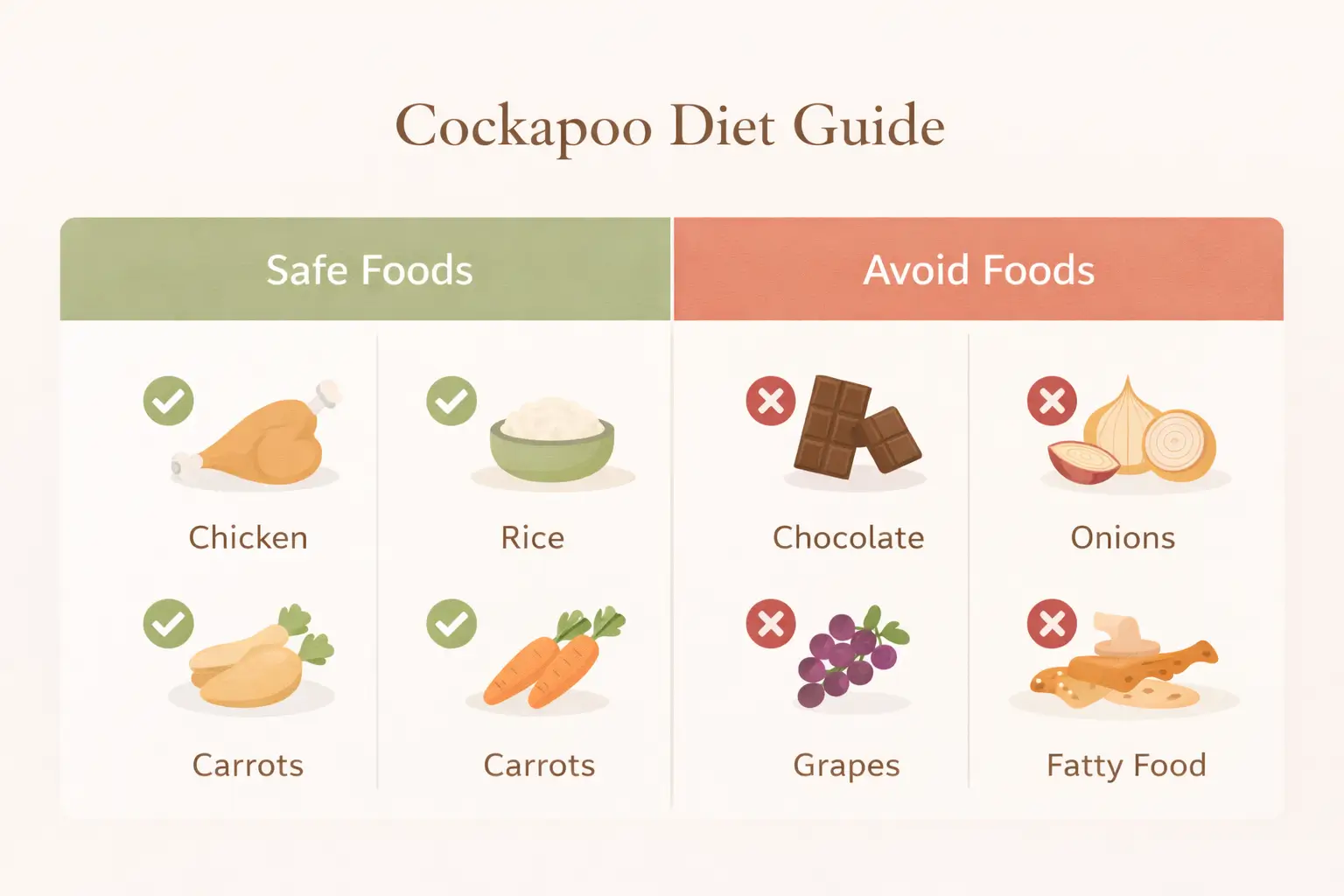
Safe foods:
- Cooked chicken
- Rice
- Carrots
Avoid:
- Chocolate
- Onions
- Grapes
- Fatty scraps
Exercise & Mental Stimulation
Daily Activity Requirements
Cockapoos are energetic but adaptable. A mix of walks and play is ideal.
Good routine:
- Morning walk
- Interactive play session
- Evening calm walk
If you’re familiar with active mixed breeds like Vizsla crosses, you’ll notice cockapoos share a similar need for structured exercise and mental engagement to stay balanced.
Playtime And Toy Ideas
Cockapoo puppy toys should focus on both mental and physical engagement.
Examples:
- Puzzle toys
- Soft chew toys
- Fetch balls
Mental Enrichment Activities
Without stimulation, cockapoos may develop behavior issues.
Try:
- Basic training games
- Hide-and-seek
- Food puzzle challenges
Training & Behavior Guidance
Basic Obedience Training
Start early with commands like sit, stay, and recall. Cockapoos respond well to positive reinforcement.
Socialization Early Exposure
Expose your cockapoo puppy to:
- Different people
- Other dogs
- New environments
This prevents fear-based behaviors later.
Managing Puppy And Older Dog Interaction
If you’re wondering “can my puppy be around my dog,” the answer is yes—with supervision.
Tips:
- Introduce gradually
- Monitor play intensity
- Give the older dog space
If your puppy is pestering an older dog:
- Redirect with toys
- Use short time-outs
- Reward calm behavior
Preventing Behavior Problems
Cockapoo personality problems often come from lack of structure.
Avoid:
- Inconsistent rules
- Too much alone time
- Lack of exercise
Health & Climate Considerations
Heat Sensitivity Awareness
Cockapoos can overheat easily, especially in warmer climates.
Precautions:
- Avoid midday walks
- Provide shade and water
- Watch for panting or lethargy
Cold Weather Care
Their coat offers some protection, but smaller cockapoos may feel cold.
Helpful steps:
- Use light dog sweaters
- Limit exposure in extreme cold
Hydration And Skin Care
Always ensure fresh water is available. Their coat also needs proper maintenance to prevent skin issues.
Common Problems & Troubleshooting
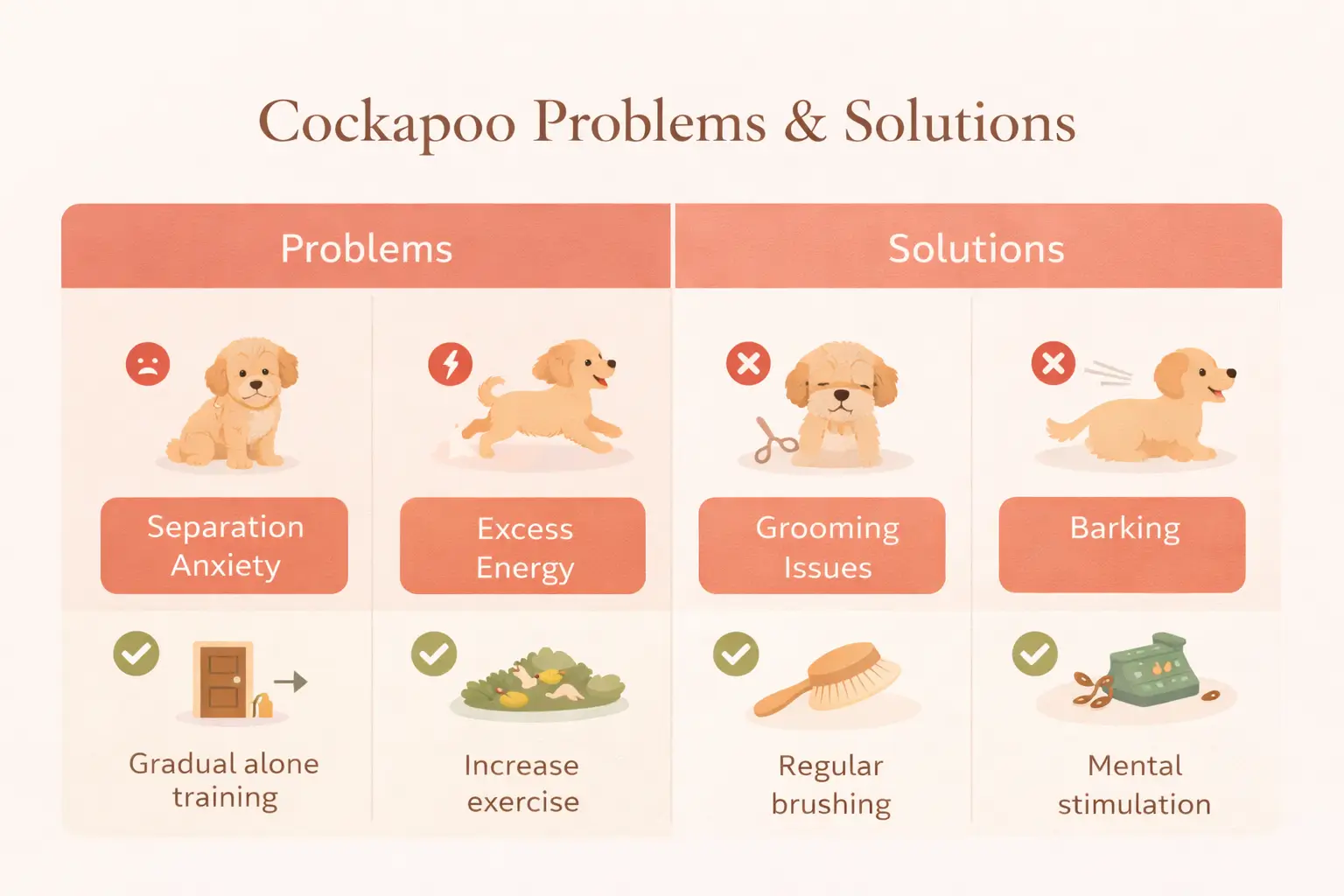
Excessive Energy Issues
Cause:
- Not enough exercise
Solution:
- Increase structured play
- Add mental stimulation
Prevention:
- Daily routine consistency
Grooming And Eye Care Challenges
Cockapoo hair can grow around the eyes.
Solution:
- Regular trimming (especially around eyes)
- Gentle grooming tools
Prevention:
- Weekly grooming routine
Eating Problems In Puppies
Cause:
- Stress, food change, or illness
Solution:
- Stick to one food type
- Reduce environmental stress
Prevention:
- Gradual food transitions
Separation Anxiety Behavior
Cause:
- Strong attachment to owners
Solution:
- Gradual alone-time training
- Interactive toys when alone
Prevention:
- Avoid over-dependence
Barking Or Attention Seeking
Cause:
- Boredom or lack of stimulation
Solution:
- Ignore attention barking
- Reward calm behavior
Prevention:
- Daily mental engagement
Seasonal Pet Care Tips
Spring Allergy Awareness
- Watch for itching or sneezing
- Clean paws after walks
Summer Heat Protection
- Walk early morning or evening
- Provide cooling areas
Fall Exercise Adjustment
- Maintain activity levels as weather cools
- Watch for parasites
Winter Indoor Activity
- Use indoor games
- Keep them warm and dry
Additional Expert Tips
Avoid Common First-Time Owner Mistakes
Many owners underestimate how quickly a cockapoo puppy becomes energetic and demanding. Early training matters more than size or cuteness.
Build Long-Term Habits Early
- Set feeding schedules
- Establish grooming routines
- Teach calm behavior early
Understand Their Emotional Needs
Cockapoos are highly social. Ignoring their need for interaction can lead to behavioral issues later.
Conclusion
Raising a cockapoo puppy to dog is less about luck and more about consistency. Their intelligence and affectionate nature make them incredible companions—but only when their physical, mental, and emotional needs are met.
The most common mistakes—lack of routine, poor socialization, and insufficient exercise—are also the easiest to fix with awareness and effort. Focus on structure, patience, and daily engagement, and your cockapoo will grow into a balanced, loving adult dog.
FAQs
-
How long does it take for a cockapoo puppy to become fully grown?
Most cockapoos reach full size between 9–12 months, though mental maturity continues into adulthood.
-
Do cockapoos need another dog for companionship?
Not necessarily. They bond strongly with humans, but proper interaction and stimulation are essential.
-
Why is my cockapoo puppy not eating properly?
Common causes include stress, food changes, or minor health issues. Monitor closely and keep routines consistent.
-
How much exercise does an adult cockapoo need?
Around 30–60 minutes daily, including both physical activity and mental stimulation.
-
How do I stop my puppy from pestering an older dog?
Use redirection, structured play, and ensure the older dog has space to rest.
-
Are cockapoos good for first-time owners?
Yes, but they require commitment to training, grooming, and daily interaction.
-
What are common behavior problems in cockapoos?
Separation anxiety, excessive barking, and hyperactivity—usually linked to lack of routine or stimulation.