
Table of Contents
ToggleDaily Dove Care
Doves are gentle, peaceful birds that have become increasingly popular as pets due to their calm temperament, soft cooing sounds, and relatively low-maintenance lifestyle. Unlike more demanding birds such as parrots, doves thrive on routine, quiet environments, and simple care practices, making them ideal for beginners and families.
However, many new owners underestimate their needs. Common mistakes include improper diet (too many seeds), lack of mental stimulation, and insufficient space for flight. Understanding daily dove care properly ensures your bird remains healthy, active, and stress-free.
Pet Care Insight
This guide is based on widely accepted pet care practices, veterinary guidance, and common experiences shared by responsible pet owners. The goal is to provide practical, easy-to-follow advice that helps owners keep their pets healthy, comfortable, and well cared for.
Pet Overview
Gentle Calm Nature
Doves are known for their peaceful and non-aggressive temperament. They rarely bite and are generally easy to handle.
Average Lifespan Range
With proper care, most pet doves live between 10 to 15 years, though some can live longer in ideal conditions.
Physical Appearance Traits
They typically have:
- Soft feathers in white, gray, or beige tones
- Slender bodies
- Small heads and short beaks
Family Friendly Behavior
Doves are excellent for families because they are quiet and non-destructive. They do well around children when handled gently.
Moderate Activity Level
While not hyperactive, doves need space to fly and move daily to stay healthy.
Daily Care Essentials
Consistent Feeding Routine
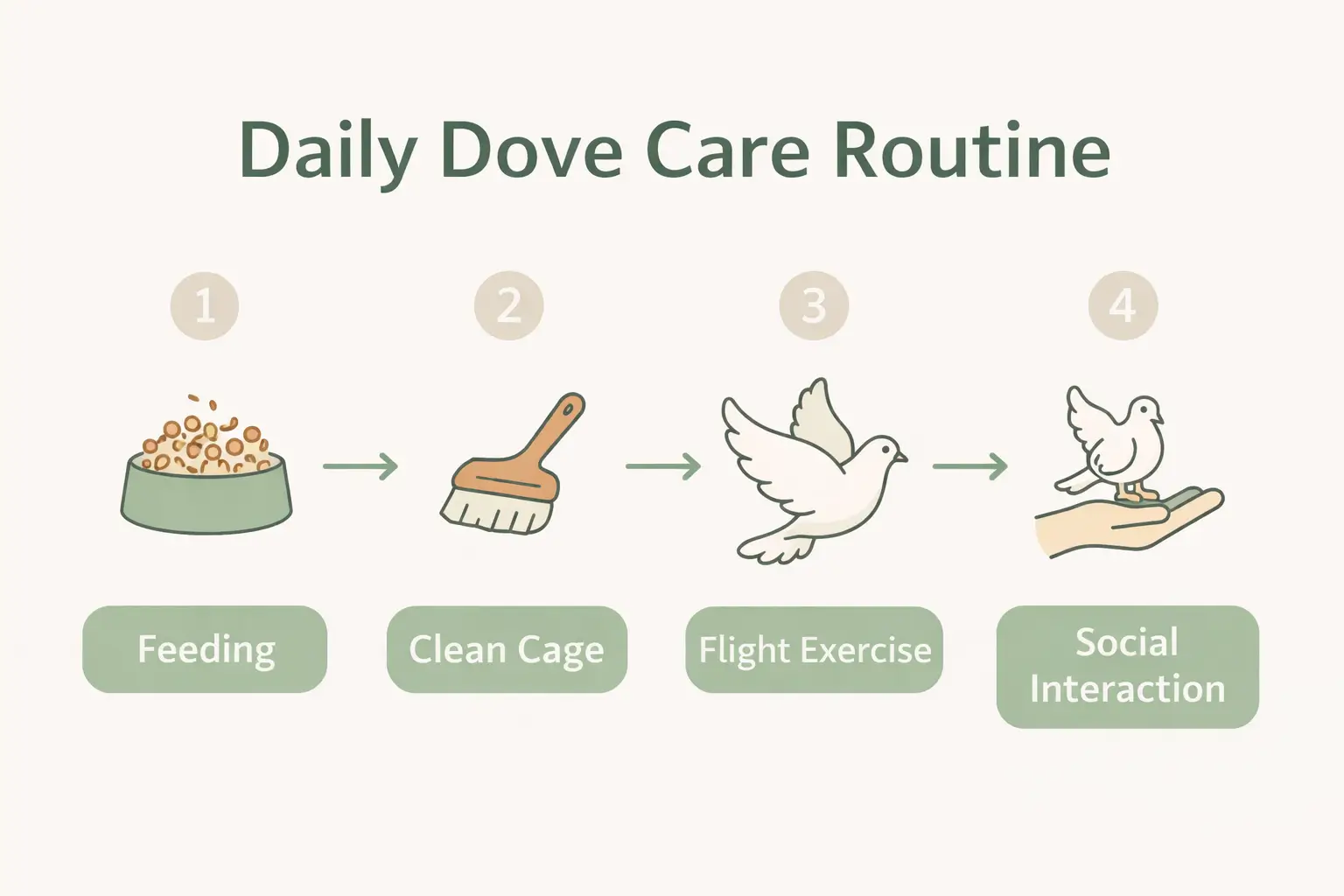
Feed your dove once or twice daily with measured portions. Always provide fresh water.
Basic Grooming Needs
Doves maintain themselves but still require:
- Clean cages
- Occasional nail checks
- Access to bathing water
Daily Exercise Requirement
Allow safe, supervised out-of-cage time or provide a spacious aviary for flight.
Social Interaction Importance
Doves are social birds. They need:
- Gentle interaction with owners
- A companion dove (recommended)
Diet & Nutrition Guide
Balanced Seed Based Diet
A proper dove diet includes:
- High-quality seed mix (millet, safflower, canary seed)
- Occasional grains
Avoid feeding only one type of seed.
Feeding Schedule Guide
- Morning: Main feeding
- Evening: Light top-up if needed
Remove leftover food daily to prevent spoilage.
Portion Control Tips
Overfeeding leads to obesity. Use small measured portions instead of free feeding.
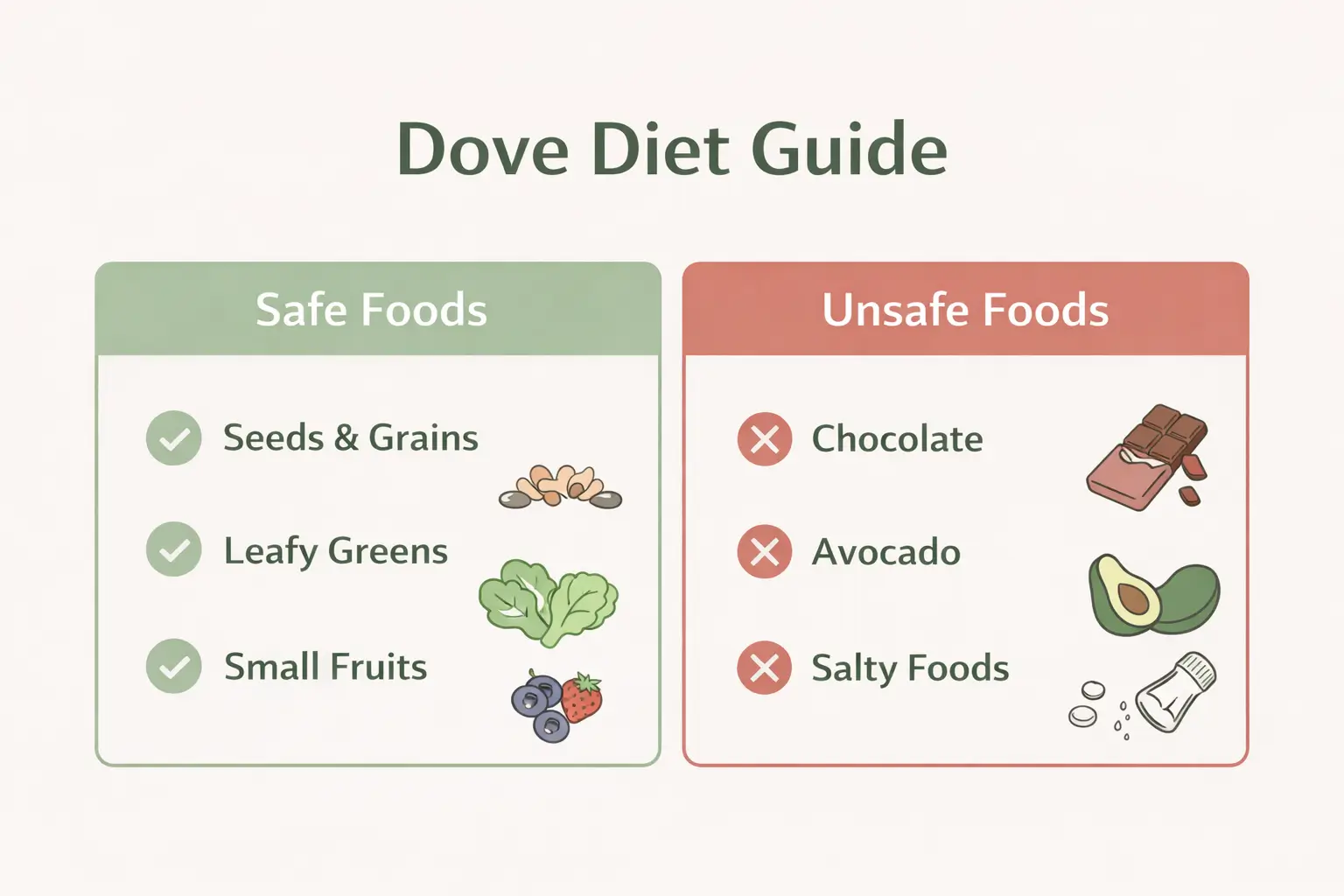
Safe Food Options List
- Fresh greens (spinach, kale)
- Small fruits (apple slices, berries)
- Cooked rice or grains
Unsafe Food To Avoid
- Chocolate
- Avocado
- Salty or processed foods
- Caffeine
Age Based Feeding Needs
- Young doves: More frequent feeding and softer foods
- Adult doves: Stable seed-based diet
- Senior doves: Easier-to-digest foods and softer grains
Exercise & Mental Stimulation
Daily Flight Activity
Doves need daily wing movement. Lack of exercise can cause:
- Weak muscles
- Weight gain
Simple Enrichment Ideas
- Perches at different heights
- Swings
- Safe open space for flying
Mental Engagement Activities
- Gentle interaction
- Changing cage layout occasionally
- Providing natural materials like twigs
Training & Behavior Guidance
Basic Handling Training
Start with:
- Slow hand movements
- Letting the dove approach you
Avoid forcing contact.
Socialization Techniques
- Talk softly to your dove
- Spend consistent time daily
- Introduce new environments gradually
Preventing Behavior Issues
Common issues include fearfulness or inactivity. Prevent them by:
- Keeping a calm environment
- Avoiding loud noises
- Maintaining routine
Health & Climate Considerations
Temperature Sensitivity Care
Doves prefer mild climates. Ideal range:
-
18°C to 27°C
Avoid sudden temperature changes.
Hydration Importance
Always provide clean water. Dehydration can happen quickly in warm weather.
Signs Of Health Problems
Watch for:
- Fluffed feathers
- Loss of appetite
- Lethargy
- Abnormal droppings
Seek veterinary advice if symptoms persist.
Warm Climate Tips
In hotter regions:
- Keep cage in shaded, ventilated areas
- Provide extra water
- Avoid direct sunlight
Cold Weather Protection
- Keep indoors or insulated
- Avoid drafts
- Provide stable warmth
Common Problems & Troubleshooting
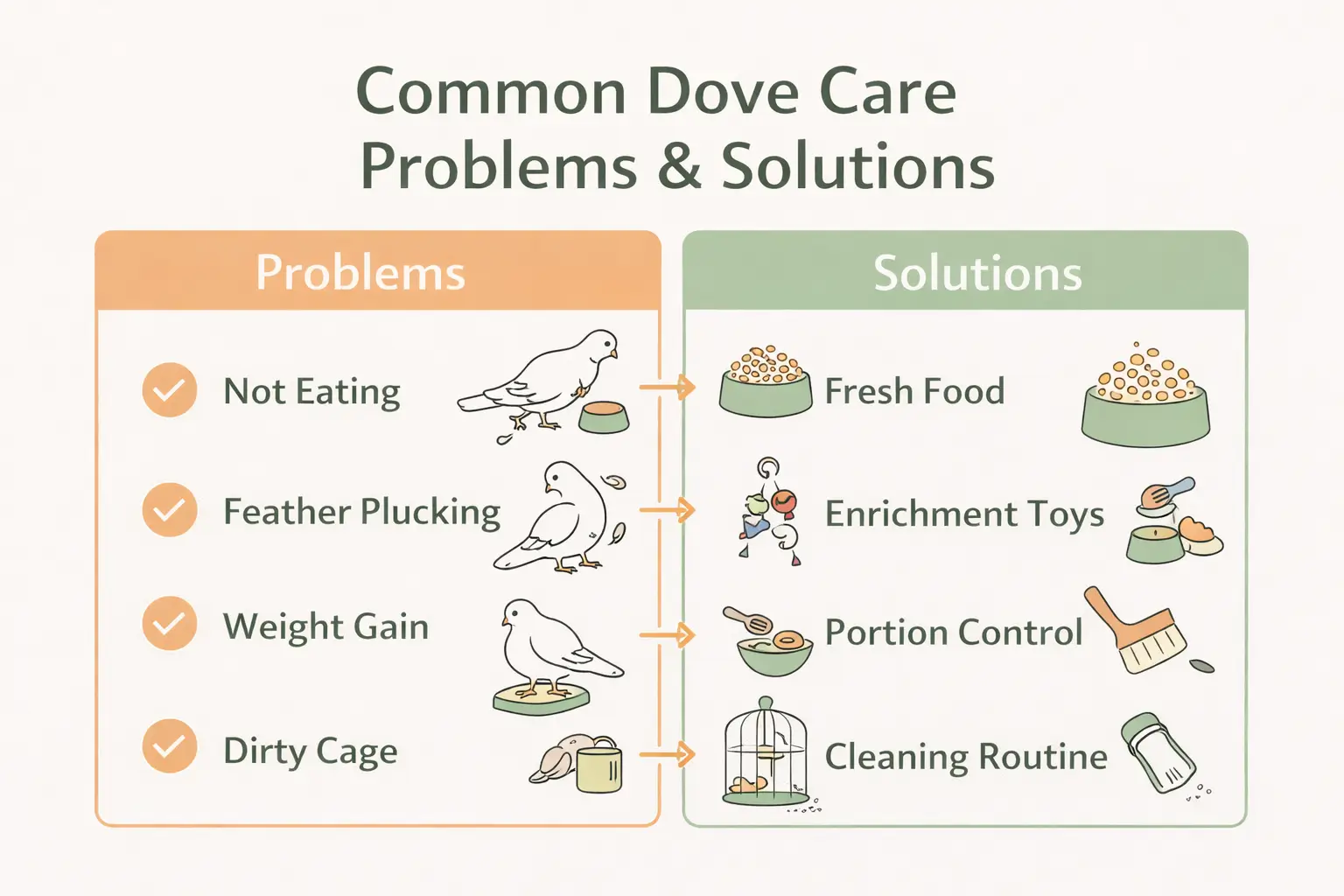
Poor Appetite Issue
Cause:
-
Stress or illness
Solution:
- Check environment
- Offer fresh food
Prevention:
-
Maintain routine
Feather Plucking Behavior
Cause:
-
Boredom or stress
Solution:
- Increase stimulation
- Provide companionship
Prevention:
-
Daily interaction
Weight Gain Problem
Cause:
-
Overfeeding
Solution:
- Control portions
- Encourage exercise
Prevention:
-
Balanced diet
Dirty Living Conditions
Cause:
-
Irregular cleaning
Solution:
-
Clean cage weekly
Prevention:
- Daily spot cleaning
Seasonal Pet Care Tips
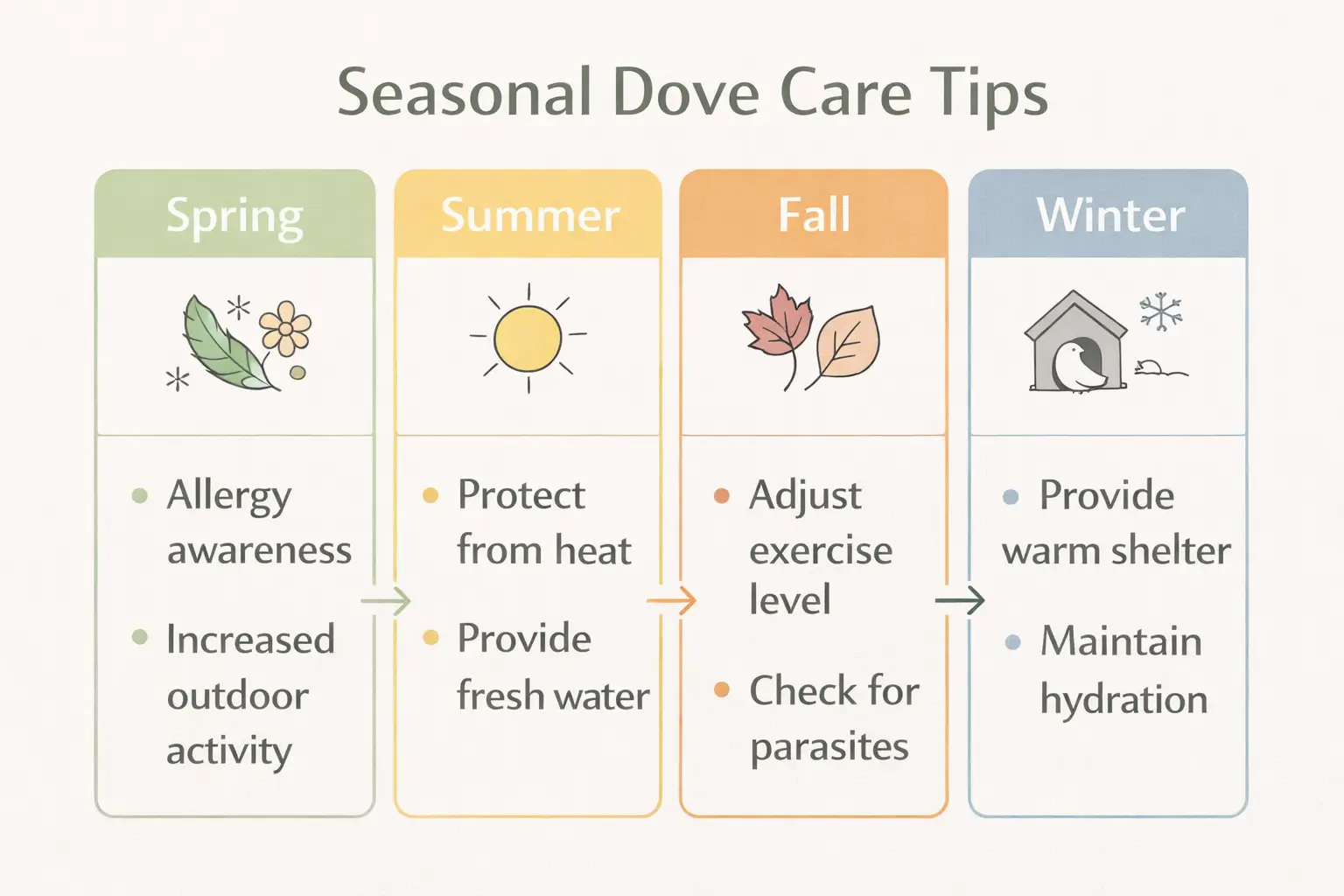
Spring Care Adjustments
- Increase cleaning due to shedding
- Monitor allergies
Summer Heat Protection
- Provide shade
- Ensure constant hydration
Fall Routine Changes
- Maintain stable feeding schedule
- Watch for reduced activity
Winter Care Tips
- Keep warm
- Reduce exposure to cold drafts
- Provide indoor exercise
Additional Expert Tips
Avoid Common Beginner Mistakes
- Overfeeding seeds
- Ignoring social needs
- Keeping cages too small
Maintain A Daily Routine
Doves thrive on consistency. Feed, clean, and interact at the same times daily.
Provide A Calm Environment
Stress can harm doves. Keep them away from loud noises and frequent disturbances.
Consider Pair Housing
Doves are happier in pairs, especially if you cannot spend much time with them.
Conclusion
Daily dove care is simple but requires consistency, attention, and understanding of their gentle nature. Providing a balanced diet, clean environment, regular interaction, and proper exercise ensures your dove remains healthy and content.
Avoid common mistakes like overfeeding, neglecting social needs, or limiting movement. With proper care, doves can become calm, rewarding companions that bring peace and beauty to your home.
Learn More: Orange Siamese Cat Guide: Personality, Care & Tips
FAQs
-
How often should I feed my dove daily?
Feed once or twice a day with measured portions and always provide fresh water.
-
Can doves live alone or do they need a companion?
They can live alone, but they are happier and less stressed with a companion.
-
How much exercise does a dove need daily?
They need daily flight time or a large cage that allows movement and wing stretching.
-
What is the best diet for pet doves?
A balanced seed mix with occasional greens and grains is ideal.
-
Why is my dove sitting still and puffed up?
This may indicate illness or stress and should be monitored closely.
-
Do doves need bathing water?
Yes, they enjoy bathing and it helps maintain feather health.
-
Can doves tolerate hot weather?
They can, but they must have shade, ventilation, and constant access to water.




One Response