
Soft, plush fabrics are popular in many homes, especially cozy items like blankets, rugs, and throws. One material that often appears in home décor is faux rabbit fur—a synthetic fabric designed to mimic the incredibly soft texture of real rabbit fur.
For pet owners, especially those with small animals like rabbits, cats, or dogs, it’s natural to wonder:
- Is faux rabbit fur real?
- What is faux rabbit fur made of?
- Is it safe to use around pets?
- How do you clean faux rabbit fur rugs or blankets if pets lie on them?
Understanding how this material works—and how to care for it—can help pet owners keep their homes comfortable while maintaining a safe environment for their animals.
Pet Care Insight
This guide is based on widely accepted pet care practices, veterinary guidance, and common experiences shared by responsible pet owners. The goal is to provide practical, easy-to-follow advice that helps owners keep their pets healthy, comfortable, and well cared for.
What Is Faux Rabbit Fur?
Faux rabbit fur is a synthetic fabric designed to imitate the look and feel of real rabbit fur. It’s commonly used in soft home items such as blankets, throws, rugs, and upholstery.
Unlike real animal fur, faux rabbit fur is completely artificial.
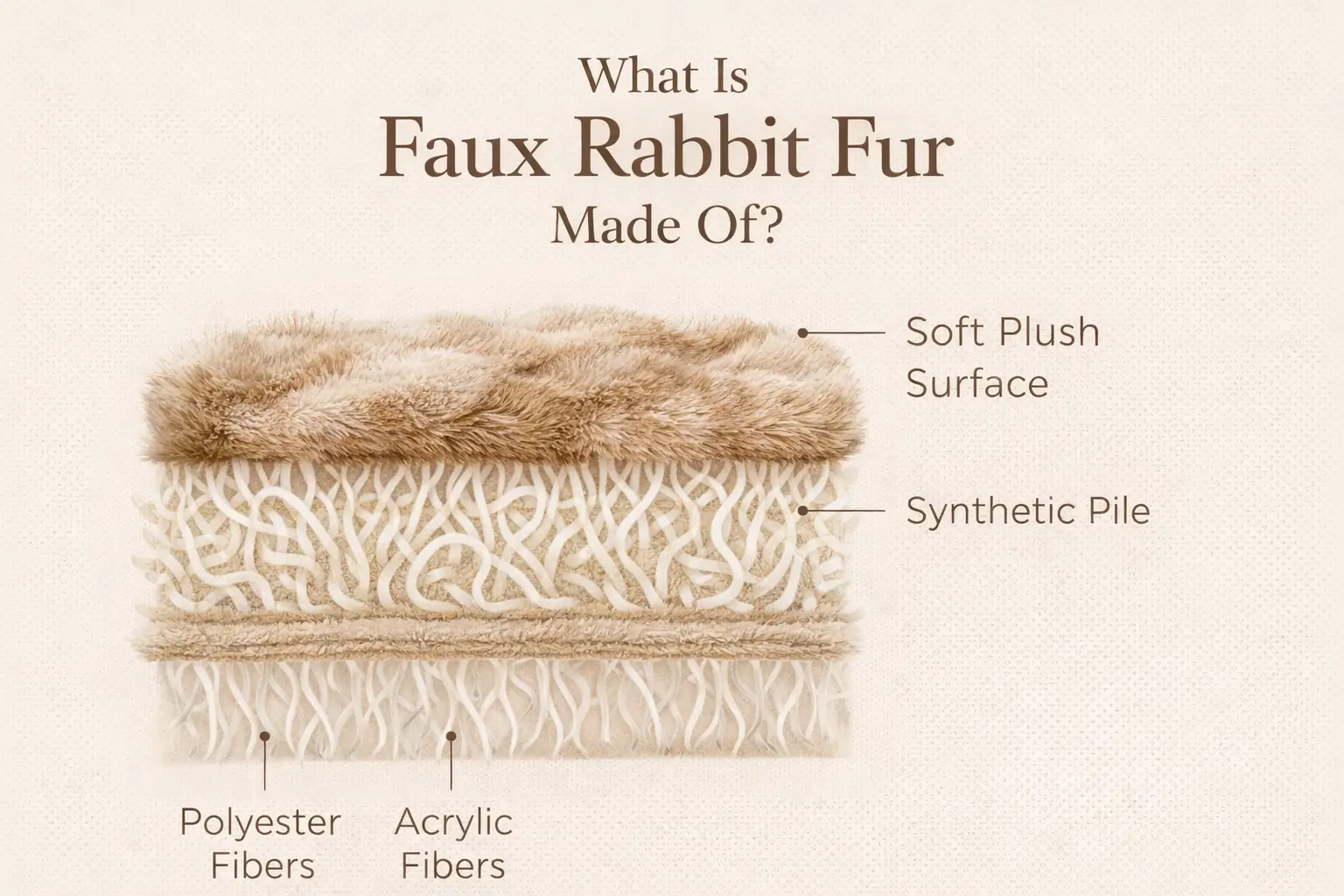
What Is Faux Rabbit Fur Made Of?
Most faux rabbit fur fabrics are made from:
- Polyester
- Acrylic fibers
- Modacrylic fibers
These materials are woven into a short pile faux fur fabric that recreates the dense, velvety softness associated with rabbit fur.
The result is a material that looks luxurious but does not involve animal fur harvesting.
Is Faux Rabbit Fur Real?
No. Faux rabbit fur is not real fur.
It is manufactured using synthetic fibers that mimic natural fur texture.
This makes it popular among:
- ethical shoppers
- pet owners
- people with animal welfare concerns
Why Pet Owners Often Use Faux Rabbit Fur at Home
Many households with pets use faux rabbit fur blankets, rugs, or throws because the material provides several practical benefits.
Common uses in pet-friendly homes
- Soft pet bedding
- Couch throws where pets sleep
- Decorative rugs in pet areas
- Warm blankets for small animals
Because the fabric has a short, dense pile, it can feel comfortable for animals that like soft surfaces.
Pets that often enjoy faux fur fabrics include:
- rabbits
- cats
- small dogs
- ferrets
- guinea pigs
The texture resembles natural fur, which can feel familiar and comforting to animals.
Pet Overview: Rabbits as Companion Animals
Since faux rabbit fur is designed to imitate rabbit fur, it helps to understand the animals themselves—especially for owners who keep rabbits as pets.
Temperament
Rabbits are generally:
- gentle
- curious
- social when properly handled
- sensitive to stress
They form strong bonds with their owners and thrive in calm environments.
Lifespan
Domestic rabbits typically live:
8–12 years with proper care.
Physical Characteristics
Rabbits are known for:
- extremely soft fur
- dense undercoats
- seasonal shedding
Their natural fur is actually one of the softest animal coats in the world, which is why fabrics attempt to replicate it.
Suitability for Families
Rabbits can make excellent pets for families who:
- provide gentle handling
- supervise young children
- offer daily interaction
Activity Level
Rabbits are active animals that need:
- daily movement
- mental stimulation
- space to explore
Daily Care Essentials for Rabbits
If you keep rabbits at home, maintaining a comfortable environment is essential.
Feeding Basics
A healthy rabbit diet should include:
- 80% hay
- 10–15% leafy greens
- small portion of pellets
- fresh water at all times
Avoid sugary fruits in large amounts.
Grooming
Rabbits groom themselves frequently but still require help.
Important grooming habits:
- brush weekly
- brush more during shedding seasons
- check for fur matting
Soft fabrics such as faux rabbit fur blankets sometimes collect loose rabbit hair, so they should be cleaned regularly.
Exercise Needs
Rabbits require at least 3–4 hours of free movement daily.
They benefit from:
- hopping space
- tunnels
- chew toys
- safe exploration areas
Social Interaction
Rabbits are social animals and need:
- daily interaction
- gentle handling
- mental stimulation
Diet & Nutrition Guide for Rabbits
Proper nutrition directly affects a rabbit’s fur condition and overall health.
Baby Rabbits
Young rabbits need:
- unlimited hay
- rabbit pellets
- fresh water
Introduce vegetables gradually.
Adult Rabbits
Healthy adult rabbits should eat:
- unlimited hay
- 1/4 cup pellets per 5 pounds of body weight
- leafy greens daily
Good greens include:
- romaine lettuce
- cilantro
- parsley
- basil
Senior Rabbits
Older rabbits may require:
- softer foods
- monitored weight
- dental checks
Healthy diets support strong fur and skin, which helps reduce excessive shedding in the home.
Exercise & Mental Stimulation
Rabbits are intelligent animals that require stimulation.
Easy Enrichment Ideas
Pet owners can provide:
- cardboard tunnels
- digging boxes
- chew blocks
- stacking cups
- treat puzzles
Daily playtime helps prevent boredom and destructive chewing.
Soft rugs—such as faux rabbit fur area rugs—can sometimes provide comfortable surfaces for indoor rabbit play areas.
However, always supervise pets to prevent chewing on fabric.
Training & Behavior Guidance
Rabbits can be trained with patience and consistency.
Litter Training
Most rabbits learn litter habits easily.
Steps include:
- Place litter boxes in corners
- Add hay above the box
- Reward correct use
Preventing Chewing
Rabbits naturally chew.
Protect your home by providing:
- untreated wood toys
- cardboard items
- hay-based chew sticks
Avoid allowing rabbits to chew synthetic fabrics like faux fur materials.
Health & Climate Considerations
Rabbits are sensitive animals and require stable living conditions.
Heat Sensitivity
Rabbits tolerate cold better than heat.
Danger begins around:
80°F (27°C).
Signs of heat stress include:
- panting
- lethargy
- drooling
Provide:
- shaded areas
- cool surfaces
- fresh water
Hydration
Always provide clean water in:
- heavy bowls
- bottle dispensers
Fur Health
Healthy rabbit fur should be:
- smooth
- dense
- clean
- free of bald patches
Poor fur quality may signal:
- nutritional problems
- parasites
- illness
Common Problems & Troubleshooting
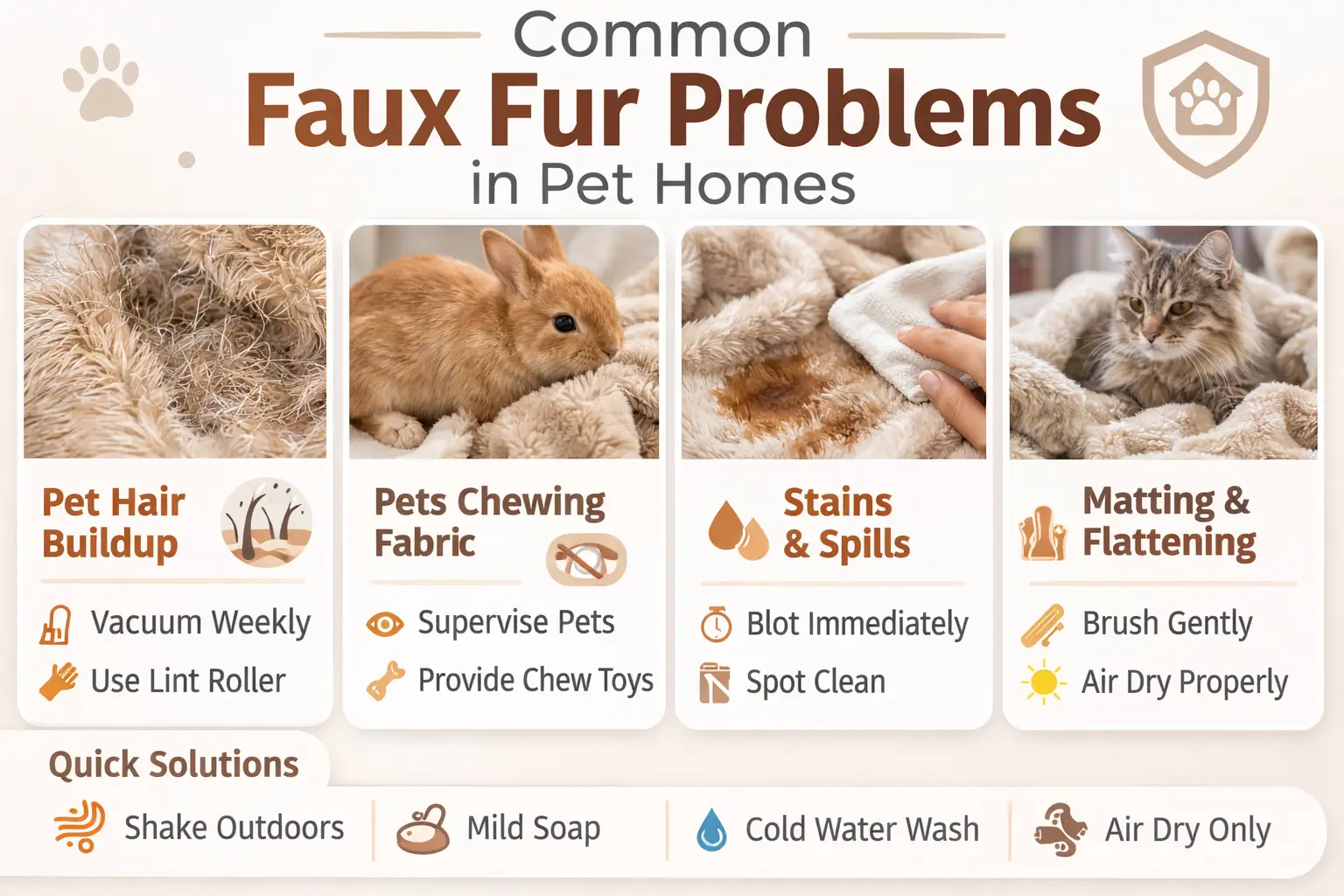
1. Pets Chewing Faux Fur Fabrics
Cause
Animals often chew soft materials out of curiosity.
Solution
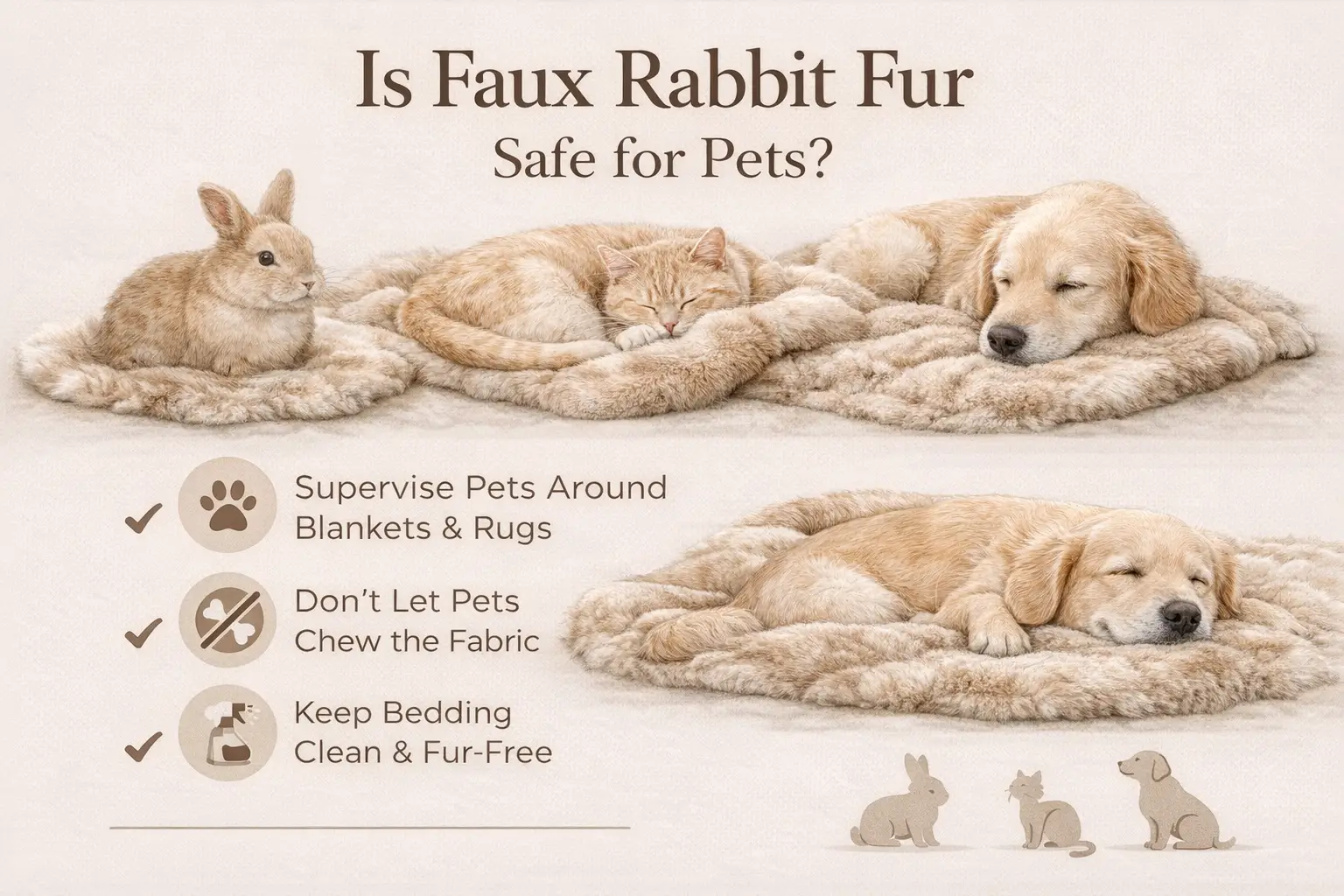
- supervise pets
- provide chew toys
- avoid leaving blankets in unsupervised play areas
Prevention
Use pet-safe bedding materials when possible.
2. Faux Rabbit Fur Rugs Collecting Pet Hair
Cause
Dense fibers trap hair easily.
Solution
- vacuum weekly
- shake rugs outside
- use lint rollers
Prevention
Brush pets regularly to reduce shedding.
3. Stains on Faux Rabbit Fur Blankets
Cause
Pets may track dirt, food, or accidents onto fabrics.
Solution
Wash according to fabric care instructions.
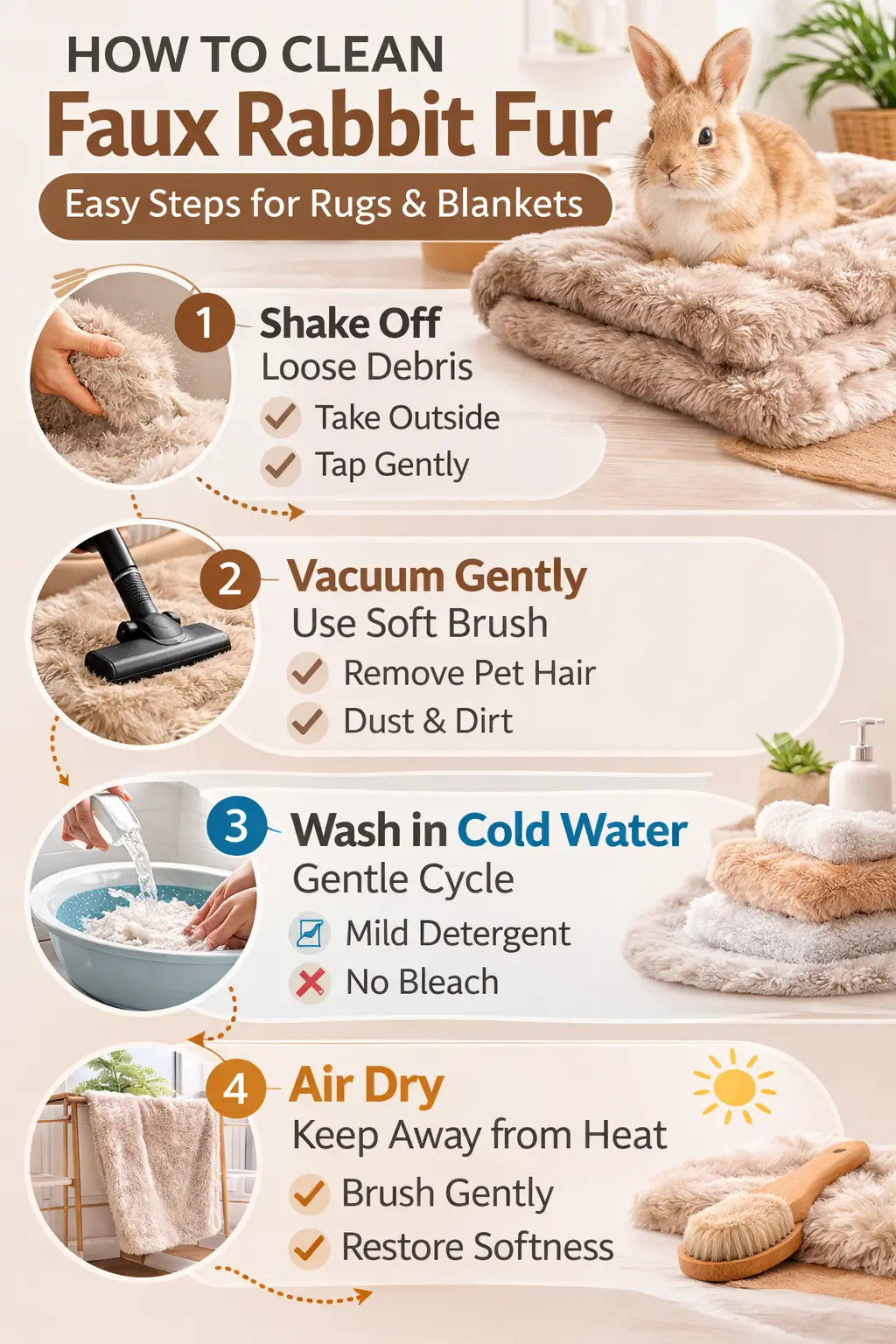
How to Clean Faux Rabbit Fur Rugs and Blankets
Many pet owners ask how to clean faux rabbit fur rugs when pets lie on them.
Basic Cleaning Method
- Shake loose debris outside
- Vacuum using a gentle brush attachment
- Spot clean stains with mild detergent
Machine Washing
If the item is washable:
- use cold water
- select gentle cycle
- use mild detergent
Avoid:
- bleach
- hot water
- fabric softener
Drying
Best method:
- air dry
- brush fibers gently after drying
Heat can damage synthetic fur fibers.
Seasonal Pet Care Tips
Spring
- rabbits begin shedding heavily
- brush frequently
- vacuum faux fur fabrics more often
Summer
- protect rabbits from heat
- provide cooling mats
- ensure hydration
Fall
- maintain exercise routines
- inspect fur condition
Winter
- rabbits grow thicker coats
- ensure dry bedding
- maintain indoor warmth
Additional Expert Tips for Pet Owners
1. Avoid Fabric Ingestion
Never allow rabbits to chew or ingest faux fur materials.
Synthetic fibers can cause digestive blockages.
2. Rotate Pet Bedding
Use multiple washable blankets to maintain hygiene.
3. Maintain Grooming Routine
Frequent brushing reduces:
- hair buildup
- matting
- fur ingestion during grooming
4. Choose Durable Fabrics
In pet homes, fabrics should be:
- washable
- durable
- resistant to scratching
Conclusion
Faux rabbit fur is a soft synthetic fabric designed to replicate the luxurious texture of real rabbit fur without using animal products. In homes with pets, these fabrics are often used in blankets, rugs, and throws because they feel warm and comfortable.
For pet owners, the key considerations are simple:
- prevent pets from chewing synthetic fibers
- clean fabrics regularly to remove hair and dirt
- maintain proper grooming routines for animals
When used responsibly, faux rabbit fur items can add comfort to a pet-friendly home while keeping animals safe and healthy. With proper care and cleaning, these fabrics can remain soft, hygienic, and enjoyable for both pets and their owners.
Learn More: Best Dental Chew for Dogs: Safe Options for Healthy Teeth
FAQs
-
Is faux rabbit fur safe for pets?
Yes, faux rabbit fur fabrics are generally safe around pets, but animals should not chew or ingest the material. Supervision is recommended.
-
What is faux rabbit fur made of?
Faux rabbit fur is usually made from synthetic fibers like polyester or acrylic that mimic the texture of real rabbit fur.
-
Is faux rabbit fur real animal fur?
No. Faux rabbit fur is completely artificial and does not come from real animals.
-
How do you clean a faux rabbit fur rug with pet hair?
Vacuum the rug regularly, shake it outdoors, and spot clean stains with mild detergent. Many faux fur rugs can also be washed on a gentle cycle with cold water.
-
Why do pets like faux fur blankets?
Many animals enjoy faux fur because the soft texture resembles natural fur, making it comfortable and warm.
-
Can rabbits sleep on faux fur blankets?
Yes, rabbits may enjoy soft surfaces, but owners should monitor them to ensure they do not chew or ingest the fabric.



One Response