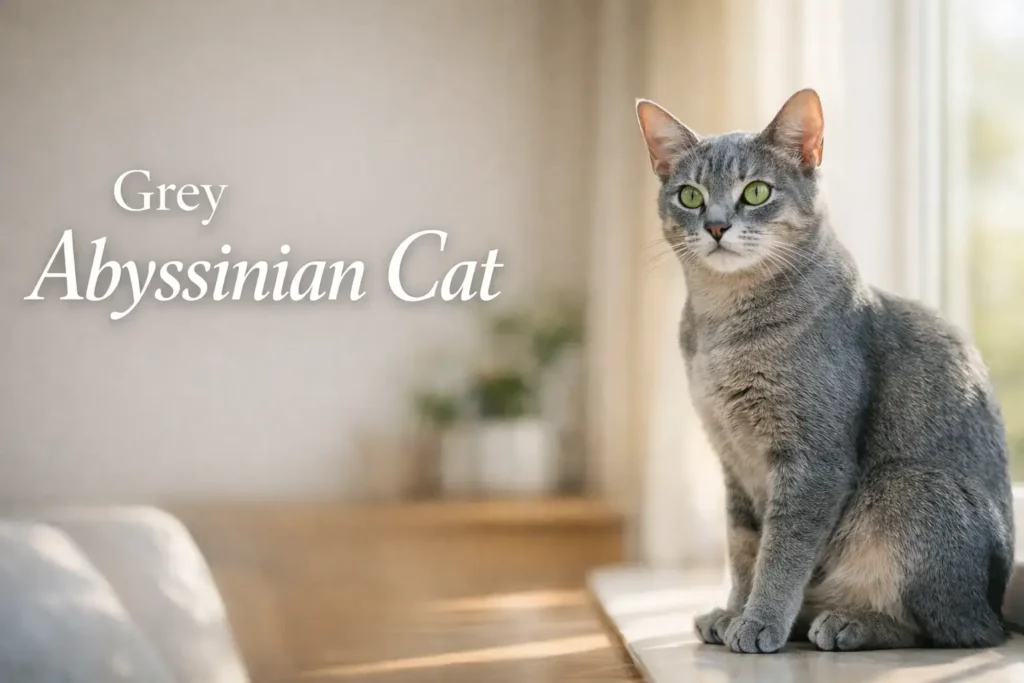
Grey Abyssinian cats are one of the most striking and misunderstood variations of the Abyssinian cat. Known for their sleek, ticked coats and expressive eyes, these cats combine elegance with a highly active, curious personality. The grey or “blue” variation, often described as smoky grey or blue silver, adds a softer, cooler tone to the breed’s classic look.
Grey Abyssinian cats are one of the most striking variations of the Abyssinian cat, a breed known for its elegance, intelligence, and rich history.
What makes caring for a grey Abyssinian unique is their energy level and social nature. These aren’t lap cats that lounge all day—they need engagement, interaction, and mental stimulation. One of the most common mistakes new owners make is underestimating how active and attention-seeking they are.
Pet Care Insight
This guide is based on widely accepted pet care practices, veterinary guidance, and common experiences shared by responsible pet owners. The goal is to provide practical, easy-to-follow advice that helps owners keep their pets healthy, comfortable, and well cared for.
Pet Overview
Temperament And Personality Traits
Grey Abyssinian cat personality is often described as intelligent, playful, and highly social. They are curious explorers who love climbing, observing, and interacting with their environment. Unlike more independent breeds, they form strong bonds with their owners and may follow you around the house.
Compared to calmer breeds like the British Shorthair Chinchilla cat, Abyssinians are far more energetic and require significantly more daily interaction.
Physical Characteristics And Colors
A grey Abyssinian cat, often referred to as a blue Abyssinian, has a soft bluish-grey coat with darker ticking. Variations include:
- blue silver grey abyssinian cat
- smokey grey abyssinian cat
- grey and white abyssinian cat
Their coat is short, fine, and low-shedding, making grooming relatively easy.
Their ticked coat differs from patterned breeds like the silver Bengal cat, which typically display bold spots or marbling instead of the Abyssinian’s subtle shading.
Lifespan And Health Profile
Abyssinians typically live between 12–15 years with proper care. They are generally healthy but can be prone to dental issues and certain genetic conditions.
Suitability For Families And Homes
They do well in active households. They’re great with older children and can coexist with other pets if properly introduced. However, they may not thrive in quiet homes where they’re left alone for long periods.
If you prefer a more relaxed and laid-back companion, breeds like the brown Ragdoll cat may be a better fit than the highly active Abyssinian.
Activity Level And Lifestyle Needs
This breed is highly energetic. They require daily interaction, climbing spaces, and toys to stay mentally and physically satisfied.
Daily Care Essentials
Feeding Routine Basics
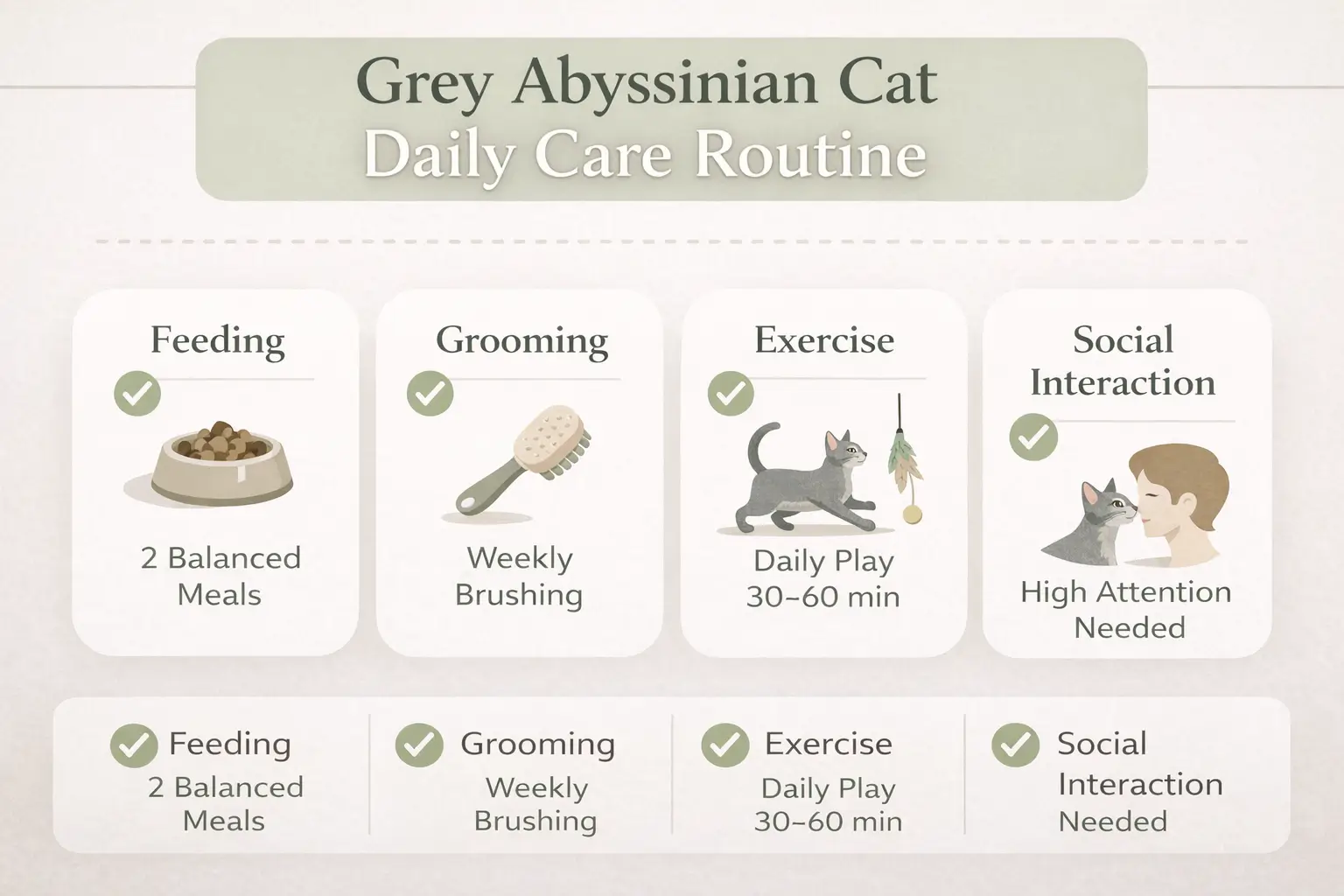
Feed your grey Abyssinian twice daily with high-quality, protein-rich cat food. Maintain consistency in feeding times to support digestion and routine.
Grooming And Coat Maintenance
Their short coat requires minimal grooming:
- Brush once weekly
- Check ears regularly
- Trim nails every 2–3 weeks
Exercise And Play Requirements
Daily play is essential. Without it, they may become bored or destructive.
Social Interaction Needs
Grey Abyssinians crave attention. They enjoy being part of daily activities and may become vocal if ignored.
Diet & Nutrition Guide
Feeding Schedule And Portion Control
- Kittens: 3–4 small meals per day
- Adults: 2 balanced meals
- Seniors: Smaller, frequent meals depending on activity
Avoid overfeeding, as even active cats can gain weight if portions aren’t controlled.
Nutritional Needs By Life Stage
- Kittens need higher protein and fat
- Adults need balanced nutrition
- Seniors may need joint and digestive support
Safe Foods And Unsafe Foods
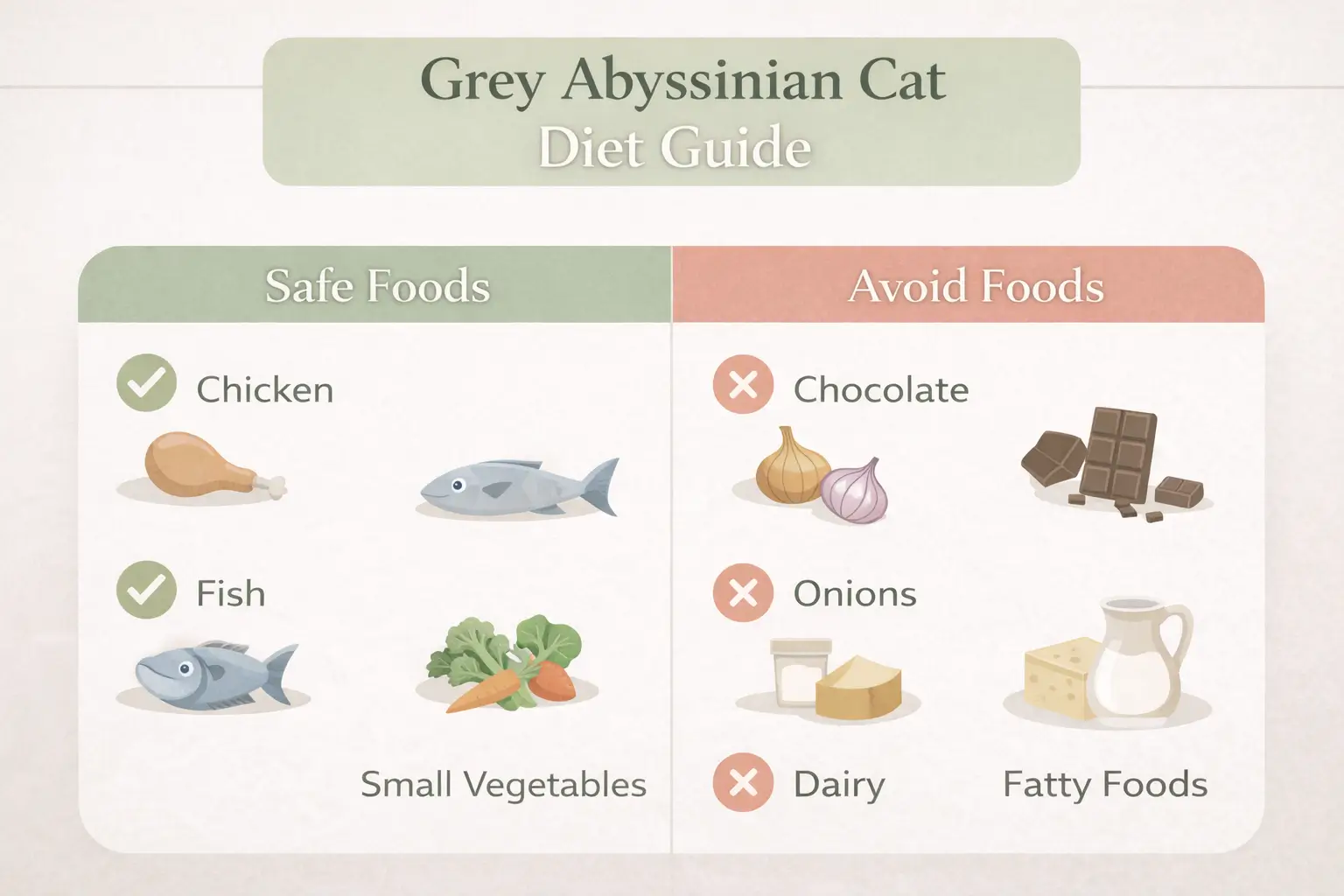
Safe options:
- Cooked chicken
- Plain fish
- Small amounts of vegetables
Avoid:
- Chocolate
- Onions and garlic
- Dairy (can cause digestive issues)
Hydration And Feeding Tips
Always provide fresh water. Some Abyssinians prefer running water, so a cat fountain can help increase hydration.
Exercise & Mental Stimulation
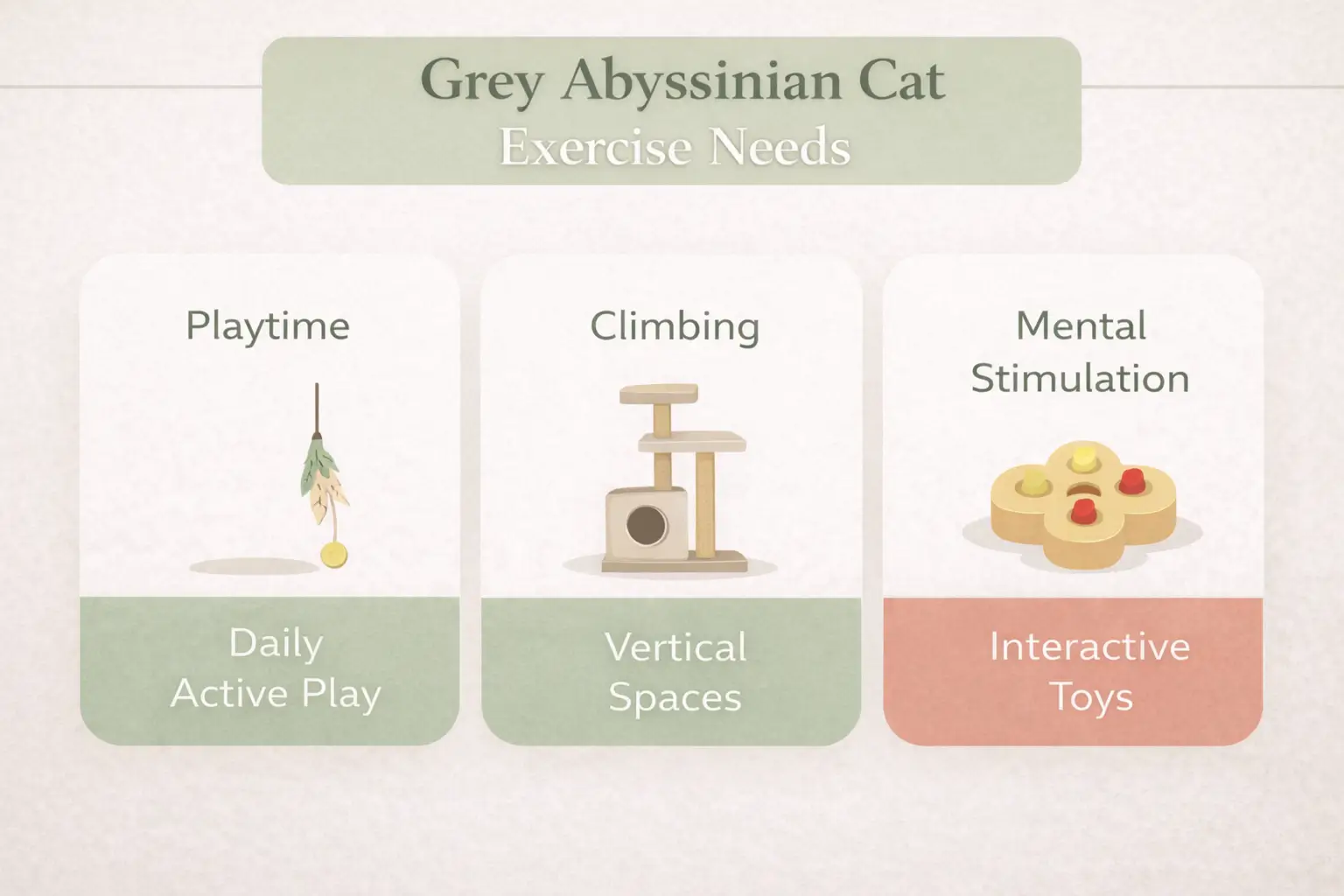
Daily Activity Requirements
Expect at least 30–60 minutes of active play daily. This breed thrives on movement.
Indoor Play Ideas And Toys
- Feather wands
- Laser pointers
- Puzzle feeders
Environmental Enrichment Activities
Provide:
- Cat trees
- Wall shelves
- Window perches
These help satisfy their natural climbing instincts.
Training & Behavior Guidance
Basic Training And Commands
Abyssinians are intelligent and can learn:
- Name recognition
- Simple commands
- Litter training quickly
Socialization Tips For Cats
Expose them early to:
- Different people
- Other pets
- Household sounds
This reduces anxiety later in life.
Preventing Behavior Problems
Common issues like scratching furniture can be prevented with:
- Scratching posts
- Regular playtime
- Positive reinforcement
Health & Climate Considerations
Common Health Concerns
- Dental disease
- Gingivitis
- Genetic conditions like progressive retinal atrophy
Regular vet checkups are essential.
Dental disease is common in active breeds like Abyssinians, so understanding recovery and care after procedures is important—especially if your cat ever needs treatment like a cat tooth extraction recovery.
Heat And Warm Climate Care
In warmer regions like Pakistan:
- Ensure cool resting areas
- Provide constant fresh water
- Avoid excessive midday play
Cold Weather Considerations
Their short coat offers little insulation:
- Keep them indoors during cold weather
- Provide warm bedding
Hydration And Seasonal Health Needs
Hydration becomes especially important in hot climates. Monitor water intake closely.
Common Problems & Troubleshooting
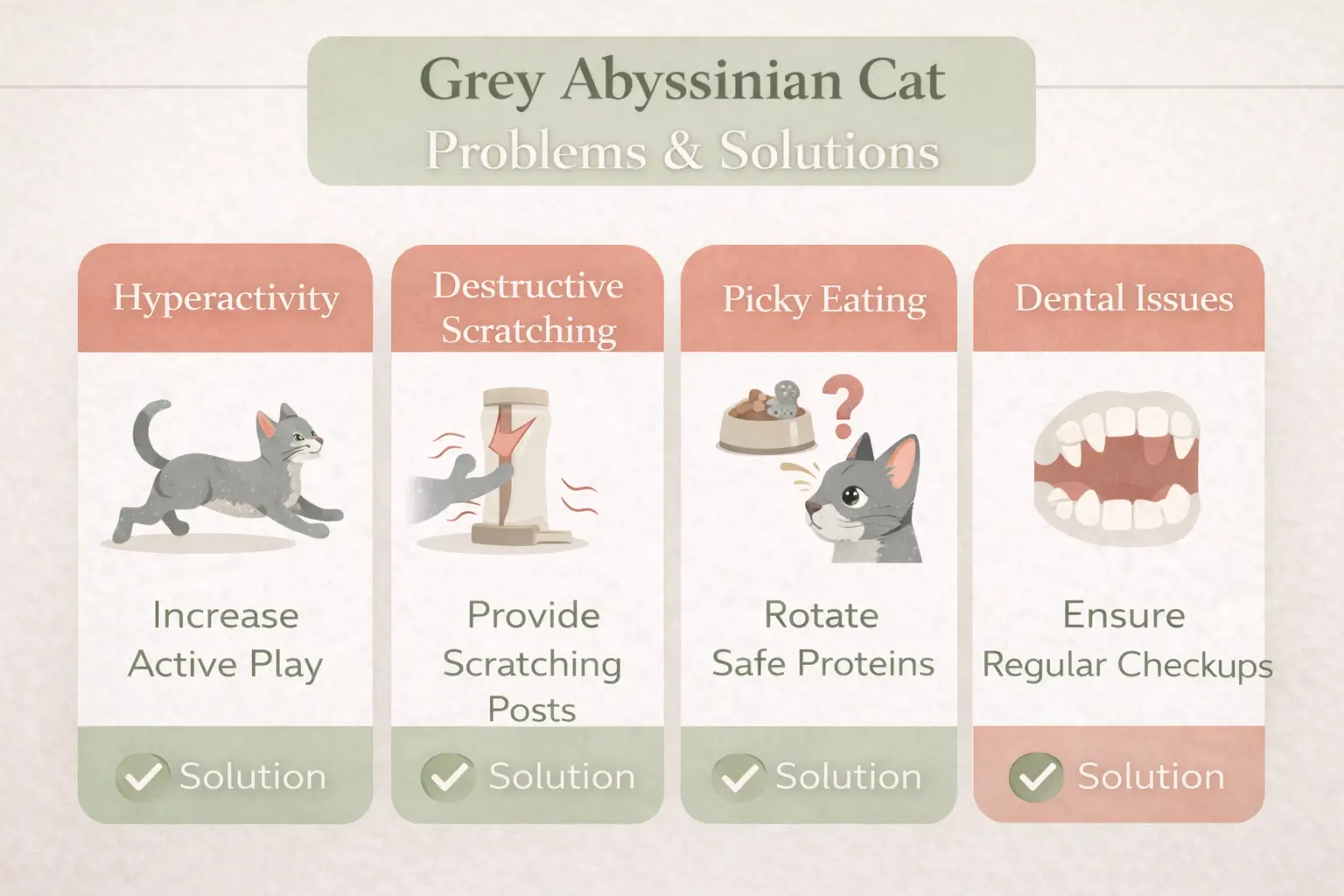
Excessive Energy And Hyperactivity
Cause: Lack of stimulation
Solution: Increase play sessions and introduce puzzle toys
Prevention: Maintain daily exercise routine
Destructive Scratching Behavior
Cause: Natural instinct without proper outlet
Solution: Provide multiple scratching posts
Prevention: Place posts near furniture
Poor Appetite Or Picky Eating
Cause: Boredom or diet monotony
Solution: Rotate safe protein sources
Prevention: Maintain variety within a balanced diet
Early Signs Of Health Issues
Watch for:
- Lethargy
- Bad breath
- Weight loss
Early vet intervention is key.
Seasonal Pet Care Tips
Spring Care Adjustments
- Monitor allergies
- Increase playtime
Summer Heat Protection
- Keep indoor temperatures cool
- Avoid heat exposure
Fall Transition Care
- Adjust feeding if activity changes
- Watch for parasites
Winter Comfort And Warmth
- Provide warm sleeping areas
- Encourage indoor activity
Additional Expert Tips
Common Owner Mistakes To Avoid
- Ignoring their need for interaction
- Underestimating activity levels
- Feeding inconsistent diets
Simple Habits That Improve Health
- Daily playtime
- Regular grooming
- Routine vet visits
Long-Term Care Considerations
Grey Abyssinians thrive with consistency. A stable routine supports both their physical and emotional well-being.
Conclusion
Grey Abyssinian cats are intelligent, energetic companions that bring life and personality into any home. Their unique grey-toned coat and playful nature make them stand out, but they require more attention and engagement than many other breeds.
If you provide proper nutrition, daily activity, and consistent interaction, they reward you with loyalty, affection, and endless entertainment. The key is understanding their active nature and building your routine around it.
FAQs
-
How active is a grey Abyssinian cat?
They are highly active and need daily play and mental stimulation.
-
Are grey Abyssinian cats good for families?
Yes, especially in active households with older children.
-
How often should I groom a grey Abyssinian cat?
Once a week is usually enough due to their short coat.
-
Can grey Abyssinian cats live in hot climates?
Yes, but they need cool indoor environments and proper hydration.
-
Why is my Abyssinian cat always following me?
They are naturally social and enjoy being close to their owners.
-
Do grey Abyssinians get along with other pets?
Yes, if properly introduced, they can live well with other pets.
-
What makes the grey Abyssinian different from other colors?
The grey (blue) coat gives a softer, smoky appearance while maintaining the same personality traits.