
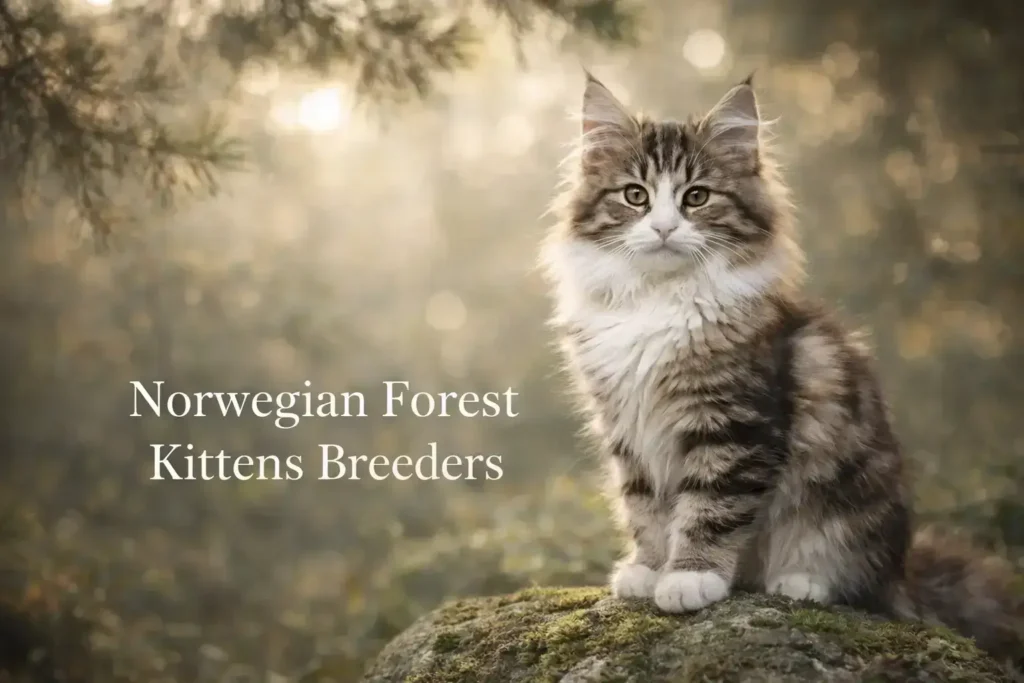
Searching for Norwegian Forest kittens breeders can feel overwhelming because the internet is flooded with listings that don’t distinguish between a reputable preservationist and a backyard operation. The most common mistake beginners make is focusing solely on “kittens for sale near me” without first understanding the breed’s specific needs and the red flags that separate a healthy, well-socialized kitten from a future heartbreak. This guide prepares you for the journey ahead.
Table of Contents
ToggleQuick Summary
-
What Defines A Responsible Breeder
Ethical Norwegian Forest Cat breeders prioritize health testing (HCM and GSD IV scans), breed standard preservation, and kitten socialization over profit or convenience.
-
Norwegian Forest Cat Price Expectations
In the UK, a well-bred purebred Norwegian Forest Cat from a registered breeder typically costs between £600 and £1,200, influenced by pedigree, show potential, and breeder location.
-
Finding Breeders In The UK
Focus your search on breed club directories like the Norwegian Forest Cat Club and the Viking Cat Club rather than generic classified ad sites.
-
Red Flags To Avoid Immediately
Avoid any breeder who cannot provide proof of health testing, offers to ship kittens sight-unseen without a video call, or pressures you to make a quick deposit.
-
Kitten Vs Adult Availability
Reputable breeders occasionally have retired show cats or older kittens available. This can be a wonderful, lower-cost alternative for owners not set on a tiny baby.
Pet Care Insight
This guide is based on widely accepted feline care practices, the ethical guidelines of established breed clubs, and the real-life experiences of devoted Norwegian Forest Cat owners. The goal is to provide practical, easy-to-follow advice for navigating the breeder search and preparing your home.
Norwegian Forest Cat Overview:
A Unique Breed
-
Temperament And Family Suitability
The Norwegian Forest Cat, or “Wegie,” is known for a gentle, friendly temperament. They are not typically demanding lap cats but are loyal companions who enjoy being near their humans. They are generally excellent with respectful children and cat-friendly dogs, making them a superb choice for families.
-
Lifespan And Physical Traits
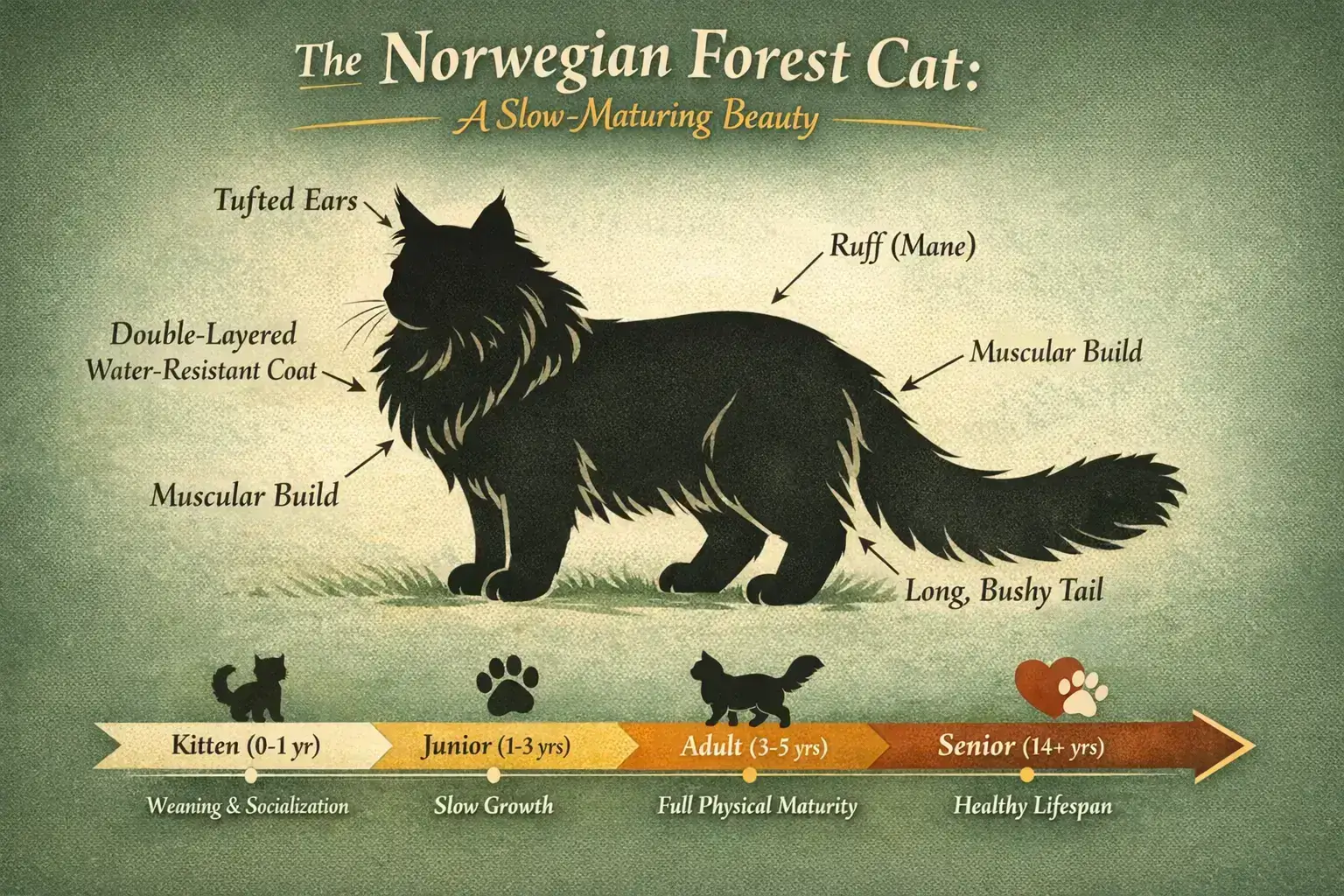
With proper care, a Norwegian Forest Cat can live 14 to 16 years. This is a slow-maturing, large breed that doesn’t reach full physical maturity until about age five. They possess a distinctive double-layered, water-resistant coat, tufted ears, and a sturdy, muscular build designed for the harsh Scandinavian climate. For the complete official description, the Governing Council of the Cat Fancy provides a detailed Norwegian Forest Cat breed standard.
-
Activity Level And Compatibility
While they have bursts of high energy and adore climbing, Norwegian Forest Cats are not as relentlessly demanding as some Oriental breeds. If you’re also drawn to other large, longhaired felines, our guide to the Russian Maine Coon explores how this majestic mix compares in temperament and care requirements.
Daily Care Essentials:
Preparing For A Wegie Kitten
-
Feeding Routine For A Growing Breed
Norwegian Forest kittens require a high-protein, high-moisture diet to support slow, steady bone growth. Overfeeding and rapid growth can stress developing joints. A real-life routine involves scheduled meals rather than free-feeding kibble to monitor intake.
-
Grooming Basics For The Double Coat
A common mistake new owners make is underestimating the coat. While the fur resists matting better than a Persian’s, it does require a thorough combing with a wide-toothed metal comb once a week. During spring and autumn shedding seasons, daily grooming is essential to prevent hairballs and matting in the britches and underarms.
-
Exercise And Social Needs
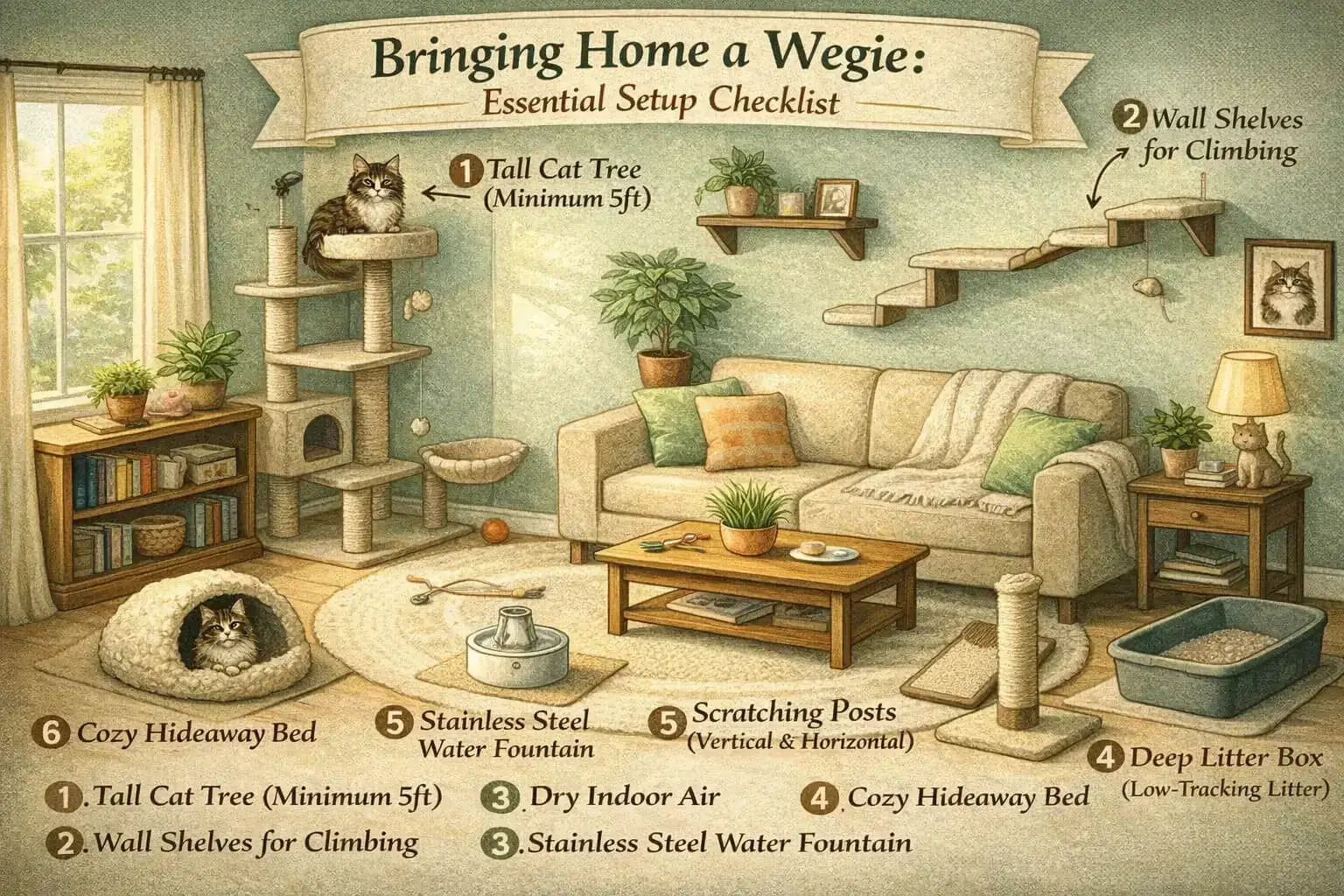
These cats are climbers, not burrowers. Provide tall cat trees and wall shelves. A real-life scenario: a bored Norwegian Forest Cat without vertical access will find their own high ground—usually the top of your kitchen cabinets or curtains.
Diet And Nutrition Guide:
Fueling A Large Cat
-
Feeding Schedule And Portion Control
Kittens need three to four small meals daily. Adults thrive on two meals a day. Because they are prone to obesity if inactive indoors, portion control is critical. Always measure food based on the manufacturer’s weight guidelines and your vet’s advice.
-
Nutritional Needs For Each Life Stage
For kittens, look for food specifically formulated for “Growth” or “All Life Stages” that lists a named meat protein first. Adults benefit from a balanced diet rich in Omega-3 fatty acids to maintain that signature glossy, water-resistant coat. Seniors may require lower phosphorus levels to support aging kidneys.
-
Safe Vs Unsafe Foods
Safe treats include small pieces of cooked chicken or freeze-dried meat. Unsafe foods are the standard feline toxins: onions, garlic, chocolate, grapes, and xylitol. Never give a cat dog food as a meal replacement due to taurine deficiency risks.
Exercise And Mental Stimulation
-
Daily Activity Needs And Play Ideas
Dedicate at least 15-20 minutes twice a day to interactive play. Wand toys that mimic birds flying overhead are irresistible to this breed’s hunting instinct. Drag the toy up the cat tree to encourage climbing.
-
Easy At-Home Enrichment Activities
Food puzzles are excellent for this intelligent breed. Hide a few kibbles in a cardboard egg carton or a commercial puzzle feeder. A simple “treasure hunt” around the living room keeps their sharp mind engaged and prevents boredom-related mischief.
Training And Behavior Guidance
-
Basic Training And Socialization
Norwegian Forest Cats are highly trainable. They respond well to clicker training and positive reinforcement. Teach “come,” “sit,” and “paw” just as you would a dog. This mental workout strengthens your bond.
-
Behavior Prevention For Kittens
Establish boundaries early. If you don’t want a 16-pound adult cat walking on your kitchen counters, don’t let the adorable kitten do it. Provide an acceptable alternative nearby, like a tall stool where they are allowed to sit and watch you cook.
Health And Climate Considerations
Indoor heating can dry out the skin, so adding a humidifier to your home during winter months benefits their coat and respiratory health. Dental care is another often overlooked aspect of long-term wellness; should your cat ever require a procedure, understanding cat tooth extraction recovery will help you provide the best post-operative care.
-
Heat Safety And Hydration
Despite their thick coat, they can overheat. In summer, ensure access to cool tile floors, fresh water (a pet fountain works wonders), and air circulation. Watch for signs of panting.
-
Cold Care And Coat Health
This breed thrives in cooler weather. You may notice the coat becomes incredibly dense and plush in winter. Indoor heating can dry out the skin, so adding a humidifier to your home during winter months benefits their coat and respiratory health.
Comparison:
Ethical Breeder Vs. Backyard Breeder
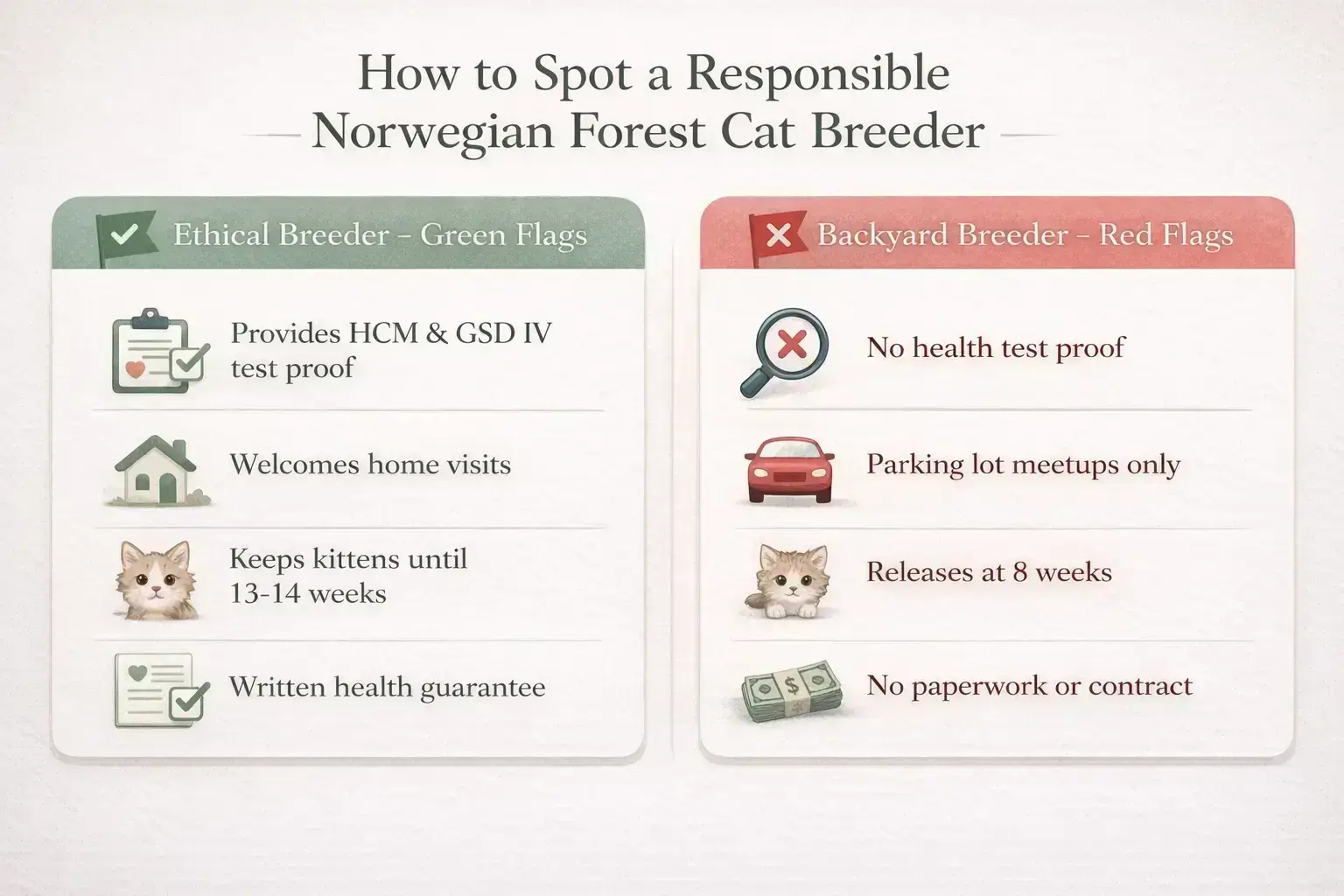
Knowing the difference is the key to a healthy kitten and a positive ownership experience.
| Feature | Ethical Preservation Breeder | Backyard Breeder or Kitten Mill |
|---|---|---|
| Health Testing | Provides documented proof of HCM ultrasound scans and GSD IV DNA tests for parents. | Claims “vet checked” but cannot produce OFA or breed club health certificates. |
| Environment | Invites you to visit their home to meet the mother cat and see where kittens are raised. | Meets in a parking lot, insists on shipping only, or makes excuses for not showing the home. |
| Kitten Socialization | Kittens are handled daily, exposed to household sounds, and are confident and curious. | Kittens are shy, fearful, or seem unwell (runny eyes/nose). |
| Kitten Age | Keeps kittens until at least 13-14 weeks old to ensure proper social development. | Offers kittens at 8 weeks or younger to cut costs on food and vaccinations. |
| Contract & Guarantee | Provides a detailed written contract with a health guarantee and a return-to-breeder clause. | Cash sale only, no paperwork, no questions asked. |
Common Problems And Troubleshooting
Problem Cat Is Not Eating After Coming Home
Cause
Stress from transition and new environment.
Solution
Offer the same exact food the breeder was feeding, even if you plan to switch later. Warm it slightly to enhance aroma. Use a flat plate rather than a deep bowl to avoid whisker fatigue.
Prevention
Ask the breeder for a “go-home” bag with a few days’ supply of current food and a blanket with the mother’s scent.
When To See A Vet
If the kitten refuses all food (including treats) for more than 24 hours.
Problem Excessive Shedding And Hairballs
Cause
Seasonal coat blowout or lack of grooming.
Solution
Increase grooming to daily sessions with a deshedding tool and a greyhound comb. Add a small amount of fish oil to food (vet approved) and offer cat grass.
Prevention
Maintain a weekly grooming schedule year-round, not just when you see fur on the sofa.
When To See A Vet
If the cat is retching unproductively, lethargic, or stops eating, as this can signal a blockage.
Seasonal Pet Care Tips
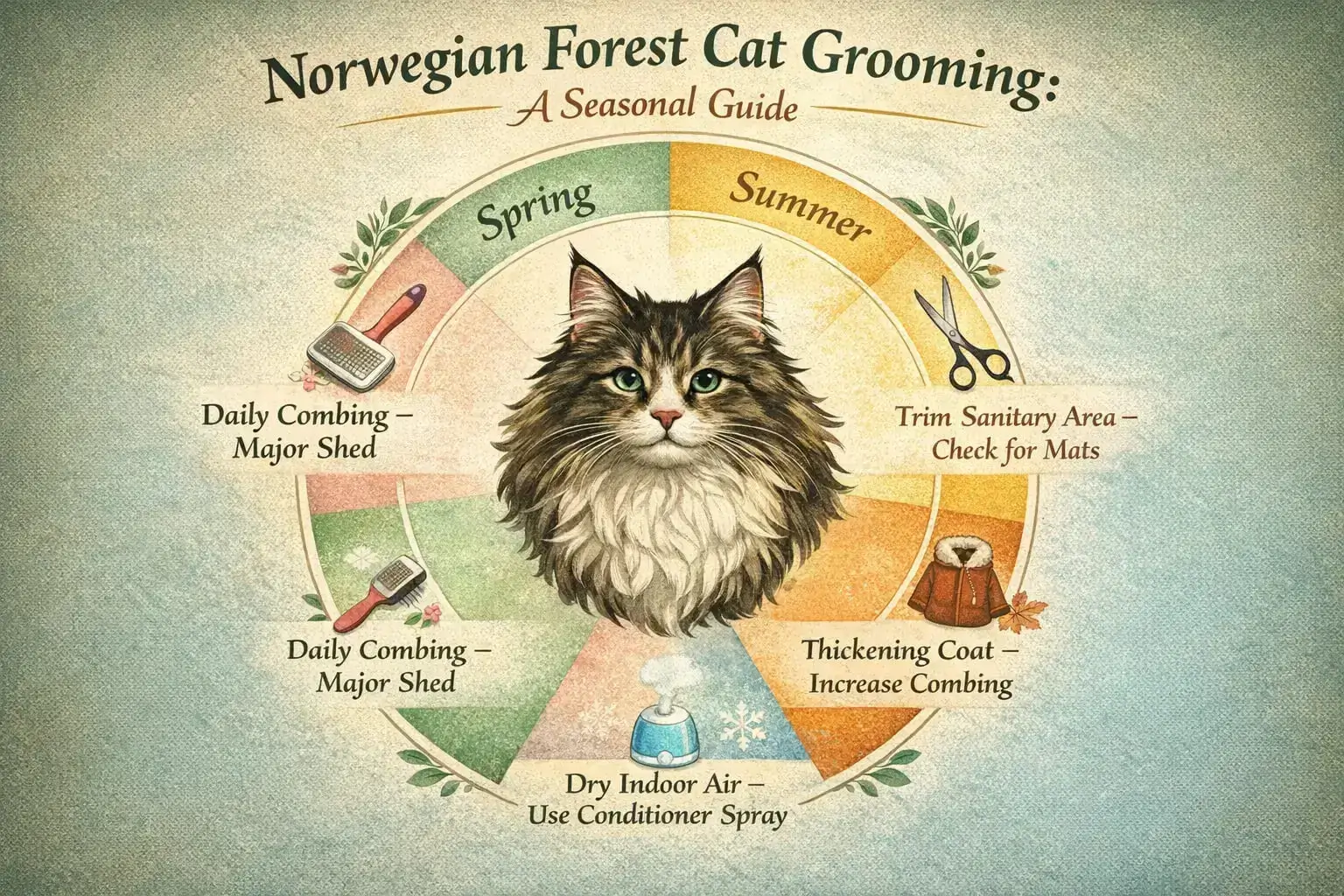
-
Spring Grooming Needs
This is the major shed. Invest in a high-quality slicker brush and comb daily. You will remove enough fur to build another cat. This is normal.
-
Summer Heat Protection
Keep blinds drawn during peak sun hours. Provide multiple water stations. Consider a cooling mat; these cats feel the humidity keenly.
-
Fall Routine Changes
As the coat thickens, check for mats behind the ears and in the armpits daily. Prevention is easier than cutting out a tight mat.
-
Winter Indoor Care
With heaters running, static electricity can make grooming uncomfortable. Lightly mist the coat with water or use a pet-safe conditioning spray before combing.
Additional Expert Tips
-
Hidden Mistake Registering Kittens
Some breeders charge extra for “registration papers.” This is a red flag. A purebred Norwegian Forest Cat kitten should come with GCCF or TICA registration papers included in the price, not as an add-on fee.
-
Simple Habit Weekly Weigh-Ins
Because of their heavy coat, you might miss weight loss or gain. Weigh your cat weekly on a home scale (weigh yourself, then weigh yourself holding the cat) to catch health trends early.
-
Long-Term Care For Joints
Given their size and love of jumping, start a joint supplement like glucosamine early (around age 7 or 8) as a preventative measure. Ensure their landing zones are soft with rugs or mats.
Conclusion
Finding norwegian forest kittens breeders is just the first chapter in a 15-year story. The most responsible thing you can do is be patient in your search for an ethical breeder and then be prepared for the unique needs of this magnificent, semi-longhaired climber. Invest in health testing, proper vertical space, and consistent grooming, and you will be rewarded with a loyal, stunning companion. Of course, every family’s lifestyle is different; if a quieter, more lap-oriented companion suits your home better, you might enjoy learning about the gentle nature of the British Shorthair Chinchilla Cat before making your final decision.
FAQs
-
How do I find norwegian forest kittens breeders near me?
Start with the breeder lists on the official Norwegian Forest Cat Club or Viking Cat Club websites. They vet their members for health testing compliance.
-
What is the average norwegian forest cat price in the UK?
You should expect to pay between £600 and £1,200 for a well-bred kitten from health-tested parents registered with a major cat fancy.
-
Are Norwegian Forest Cats good with dogs?
Yes, they are generally confident and laid-back. With proper, slow introductions, they adapt well to living with cat-friendly dogs.
-
Do Norwegian Forest cats like to be held?
They are affectionate but often prefer to be near you rather than restrained on a lap. They will often follow you from room to room and “supervise” your activities.
-
How big do Norwegian Forest cats get?
They are a large, slow-maturing breed. Females typically weigh 9-12 lbs, while males can reach 13-16 lbs or more. They are long and tall, taking up to five years to fully fill out.
-
Do Norwegian Forest cats shed a lot?
They have a dense undercoat. While they shed moderately most of the year, they experience a dramatic “blow out” in spring where shedding is very heavy.
-
Can Norwegian Forest cats be indoor-only?
Yes, they adapt well to indoor life provided they have ample vertical space (cat trees, shelves) to climb and interactive play sessions to satisfy their active nature.