
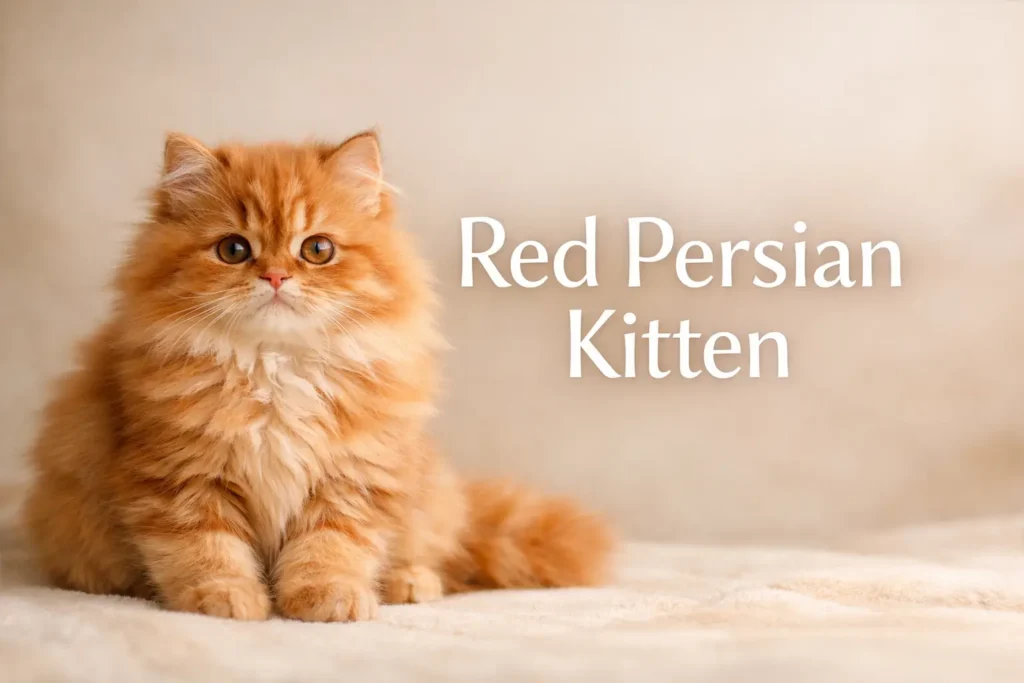
Red Persian kittens are known for their luxurious coats, calm personalities, and striking warm-toned fur that ranges from deep orange to soft red tabby patterns. Their adorable flat faces (especially in traditional or doll face Persian kittens) and gentle nature make them one of the most loved cat breeds worldwide.
However, caring for a red Persian kitten is very different from caring for a short-haired or active breed. Many new owners underestimate grooming needs, dietary sensitivity, and the importance of maintaining their delicate facial structure.
Common beginner mistakes include:
- skipping daily grooming
- feeding low-quality diets
- ignoring eye cleaning needs
- underestimating how sensitive Persian kittens can be
Understanding these needs early helps ensure your kitten grows into a healthy, happy companion.
Pet Care Insight
This guide is based on widely accepted pet care practices, veterinary guidance, and common experiences shared by responsible pet owners. The goal is to provide practical, easy-to-follow advice that helps owners keep their pets healthy, comfortable, and well cared for.
Pet Overview
Temperament And Personality
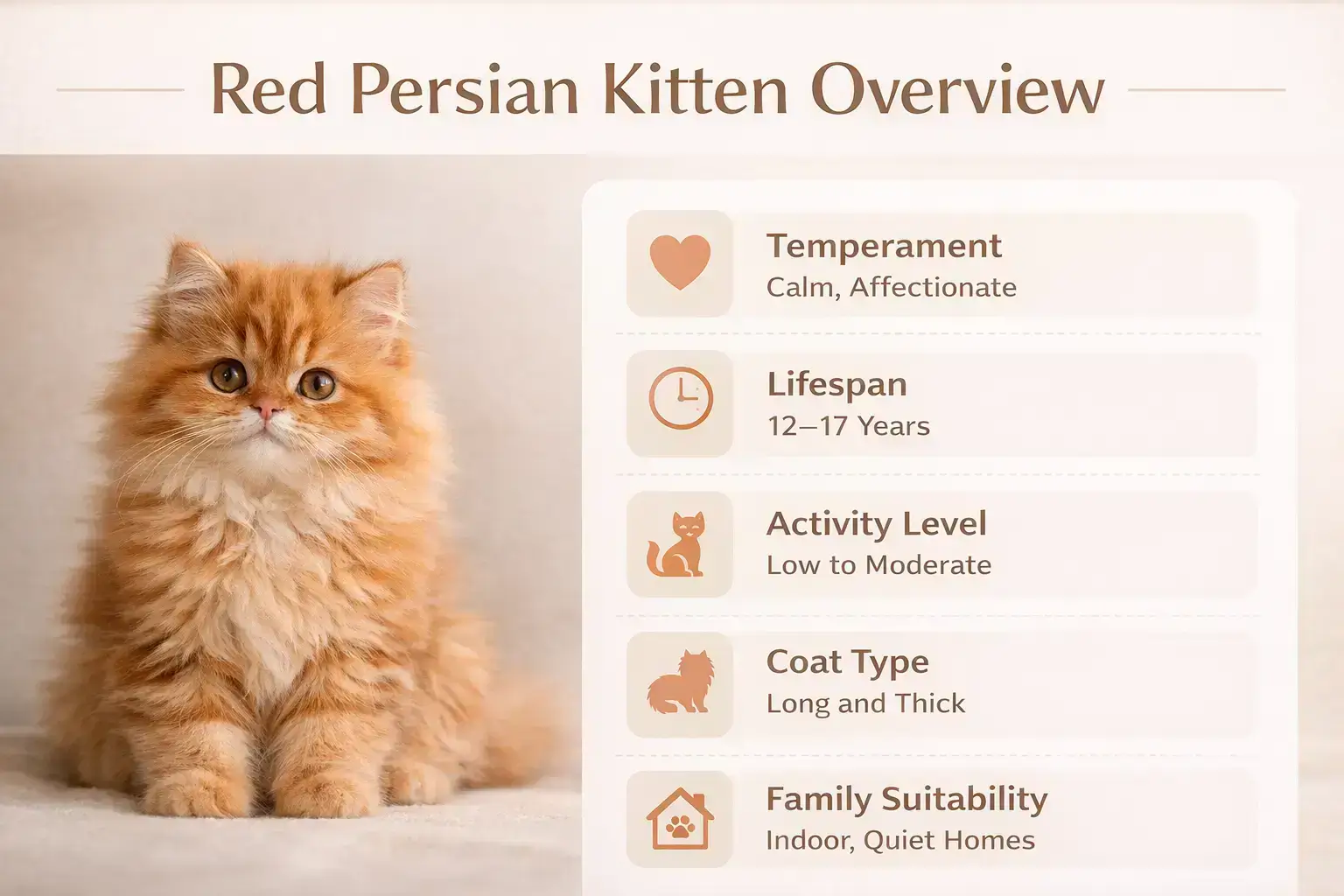
Red Persian kittens are calm, affectionate, and quiet. They prefer relaxing environments and enjoy gentle attention rather than high-energy play.
Lifespan And Growth
With proper care, Persian cats typically live between 12–17 years. Kittens grow steadily and reach full maturity around 12–18 months.
Physical Appearance Traits
- long, thick coat (often red tabby Persian kitten patterns)
- round face with short nose (flat or doll face Persian cat types)
- large expressive eyes (some kittens may appear to have red-toned eyes in certain lighting)
Family Compatibility Level
They are excellent for:
- quiet households
- families with older children
- apartment living
They may struggle in loud or chaotic environments.
Activity Level And Behavior
Low to moderate activity level. They enjoy short play sessions but mostly prefer lounging.
Compatibility With Pets
They can get along with other calm pets but dislike aggressive or overly energetic animals.
Daily Care Essentials
Feeding Routine Basics
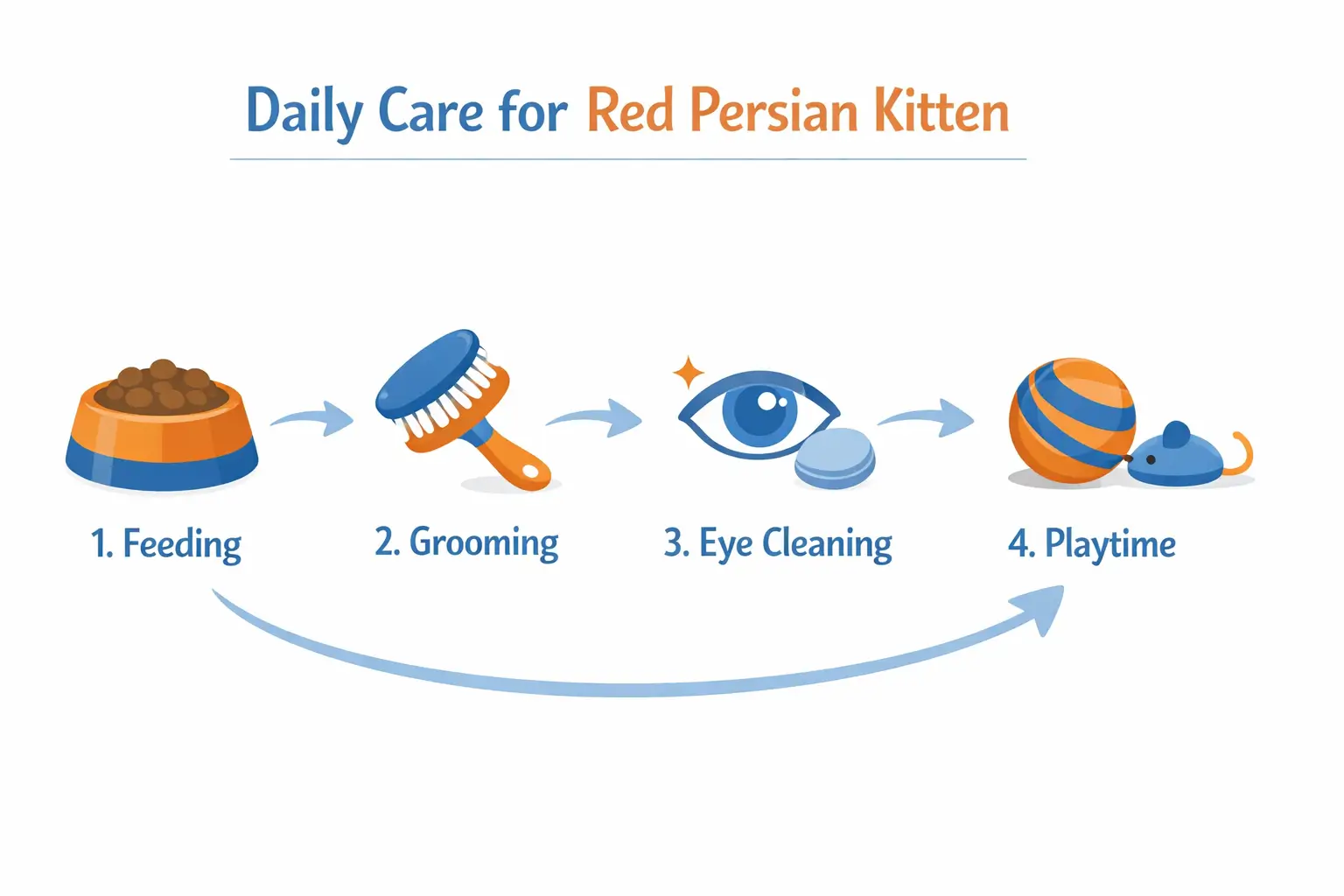
Feed your red Persian kitten:
- 3–4 small meals daily (kitten stage)
- consistent timing to avoid digestive upset
Grooming Routine Needs
Daily grooming is essential:
- brush coat to prevent matting
- clean eyes daily to remove tear stains
- check ears weekly
Exercise And Play Needs
Short daily play sessions:
- 10–20 minutes of gentle activity
- avoid excessive jumping due to body structure
Social Interaction Requirements
They need:
- gentle affection
- calm companionship
- minimal stress environment
Diet & Nutrition Guide
Feeding Schedule By Age
- kittens (2–6 months): 3–4 meals daily
- juveniles (6–12 months): 2–3 meals
- adults: 2 meals per day
Portion Control Tips
Avoid overfeeding. Persian cats are prone to weight gain due to low activity.
Essential Nutritional Needs
Focus on:
- high-quality protein
- omega fatty acids (for coat health)
- easily digestible formulas
Safe And Unsafe Foods
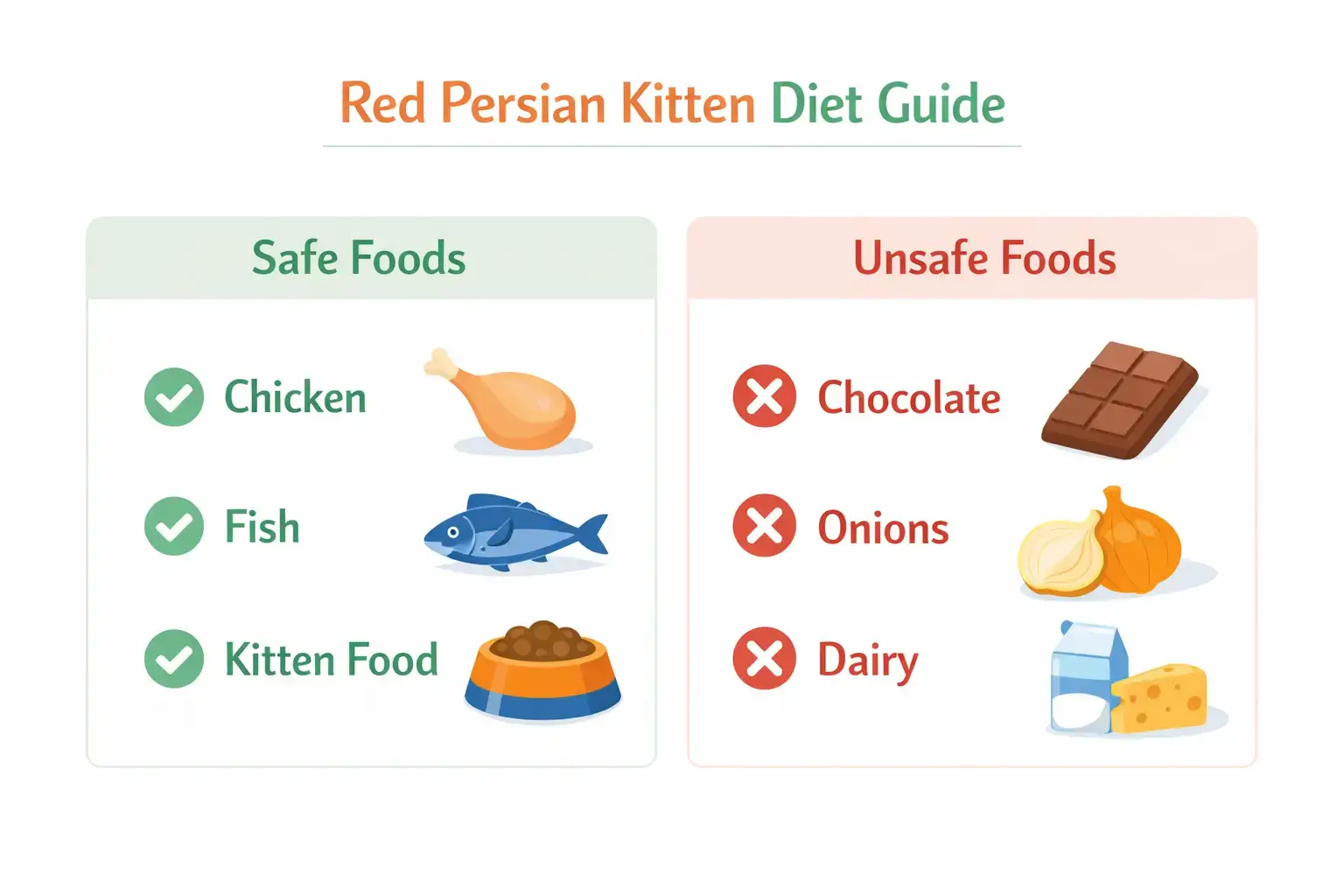
Safe foods:
- cooked chicken
- fish (in moderation)
- vet-approved cat food
Unsafe foods:
- chocolate
- onions and garlic
- dairy products
- raw or spoiled food
Kitten Vs Adult Diet Differences
Kittens need:
- higher protein
- more frequent meals
Adults need:
- controlled calories
- balanced nutrients
Hydration Importance
Always provide fresh water. Persian cats may drink less, so monitor hydration closely.
Exercise & Mental Stimulation
Daily Activity Requirements
Red Persian kittens do not need intense exercise but still require daily stimulation.
Simple Indoor Play Ideas
- feather toys
- soft balls
- interactive wand toys
Mental Enrichment Activities
- puzzle feeders
- hiding treats
- rotating toys weekly
Preventing Boredom Signs
Watch for:
- excessive sleeping
- lack of interest
- mild behavioral changes
Training & Behavior Guidance
Basic Litter Training Tips
Most Persian kittens learn quickly:
- keep litter box clean
- place in quiet area
- use consistent litter type
Early Socialization Methods
Introduce gradually:
- new people
- quiet environments
- gentle handling
Preventing Behavior Problems
Avoid:
- loud environments
- inconsistent routines
Encourage:
- calm habits
- routine feeding and play
Handling Sensitivity Issues
Persians are sensitive:
- avoid rough play
- handle gently
- respect their space
Health & Climate Considerations
Common Health Concerns
- eye discharge and tear staining
- breathing issues (especially flat-faced types)
- skin and coat problems
Hot Weather Care Tips
In warmer climates:
- keep indoors in cool areas
- provide constant water
- avoid midday heat
Cold Weather Considerations
They tolerate mild cold but still prefer indoor warmth.
Grooming Related Health Risks
Neglecting grooming can lead to:
- painful matting
- skin infections
- parasite buildup
Common Problems & Troubleshooting
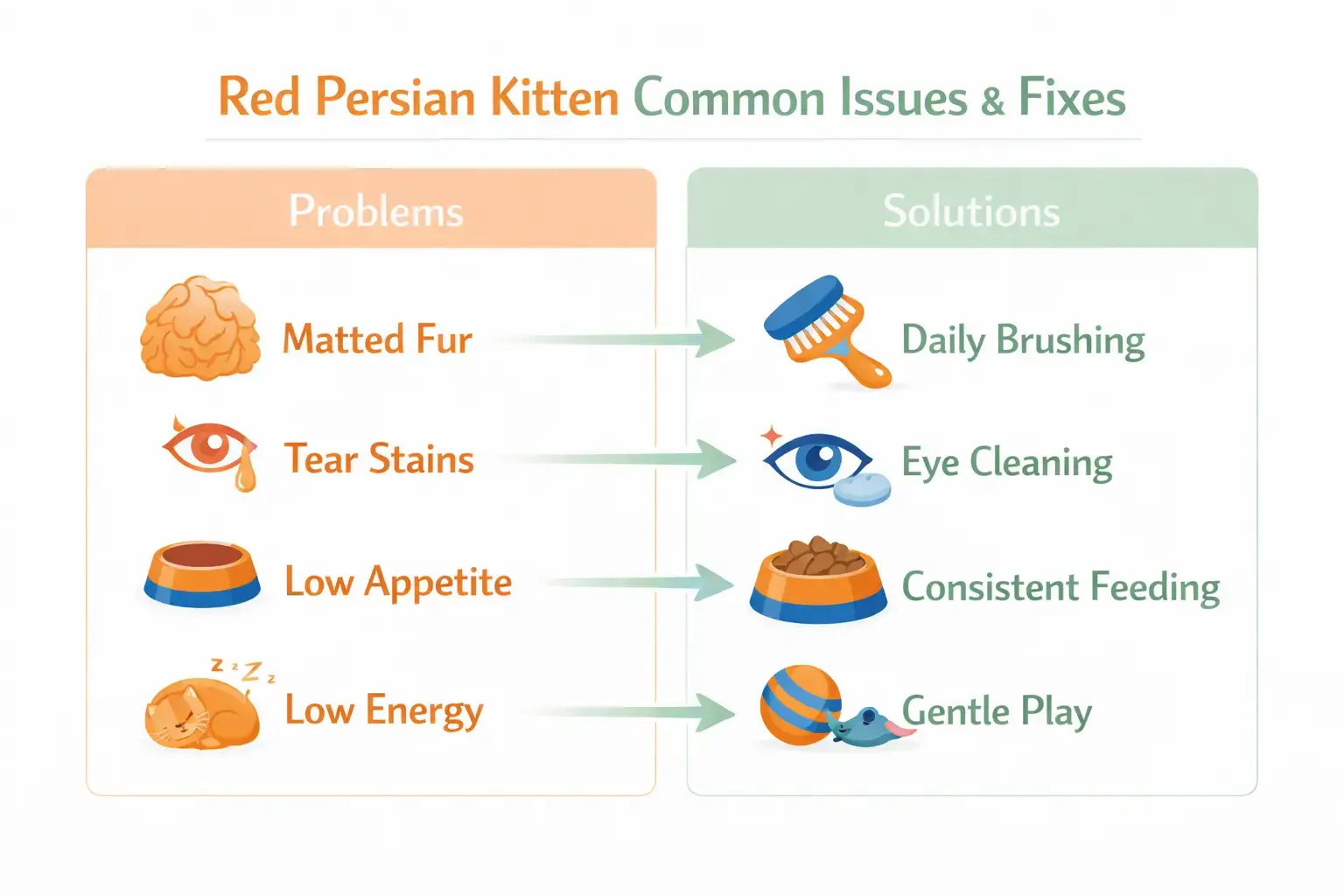
Matting And Tangled Fur
Cause:
- lack of brushing
Solution:
- daily grooming
- detangling tools
Prevention:
- start grooming early
Tear Stains And Eye Discharge
Cause:
- facial structure
Solution:
- daily cleaning with soft cloth
Prevention:
- keep face dry and clean
Poor Appetite Issues
Cause:
- stress or diet change
Solution:
- maintain routine
- offer familiar food
Prevention:
- avoid sudden food changes
Low Energy Or Lethargy
Cause:
- heat, illness, or boredom
Solution:
- encourage gentle play
- monitor health
Prevention:
- balanced diet and environment
Seasonal Pet Care Tips
Spring Care Adjustments
- watch for allergies
- increase grooming during shedding
Summer Heat Protection
- keep environment cool
- ensure hydration
- avoid overheating
Fall Routine Changes
- adjust feeding if activity changes
- maintain grooming routine
Winter Comfort Care
- provide warm bedding
- maintain indoor activity
Additional Expert Tips
Common Owner Mistakes
- skipping daily grooming
- overfeeding
- ignoring eye care
Simple Habits For Better Health
- stick to routine
- keep environment calm
- schedule regular vet visits
Long Term Care Considerations
- coat maintenance is lifelong
- monitor weight carefully
- maintain consistent diet
Conclusion
Caring for a red Persian kitten requires patience, consistency, and attention to detail. Their beauty comes with responsibility—especially grooming, diet, and maintaining a calm environment.
Avoid common mistakes like neglecting coat care or feeding improperly. With the right approach, your kitten will grow into a gentle, affectionate companion that thrives in a loving home.
The key is simple: consistent care, proper nutrition, and a stress-free environment.
Learn More: Healthy Cat Teeth vs Unhealthy: Signs & Care Guide
FAQs
-
How often should I groom a red Persian kitten?
Daily brushing is recommended to prevent matting and maintain coat health.
-
Do Persian kittens change color as they grow?
Yes, coat shades can slightly deepen or change as the kitten matures.
-
Why does my Persian kitten have watery eyes?
This is common due to their facial structure, but daily cleaning is important.
-
How much should I feed a Persian kitten?
Feed small portions 3–4 times daily, depending on age and activity level.
-
Are red Persian kittens good for apartments?
Yes, they are ideal for indoor living due to their calm nature.
-
Do Persian kittens need a lot of exercise?
No, they require light daily play rather than intense activity.
-
Can Persian kittens live in hot climates?
Yes, but they must stay indoors with proper cooling and hydration.




One Response