
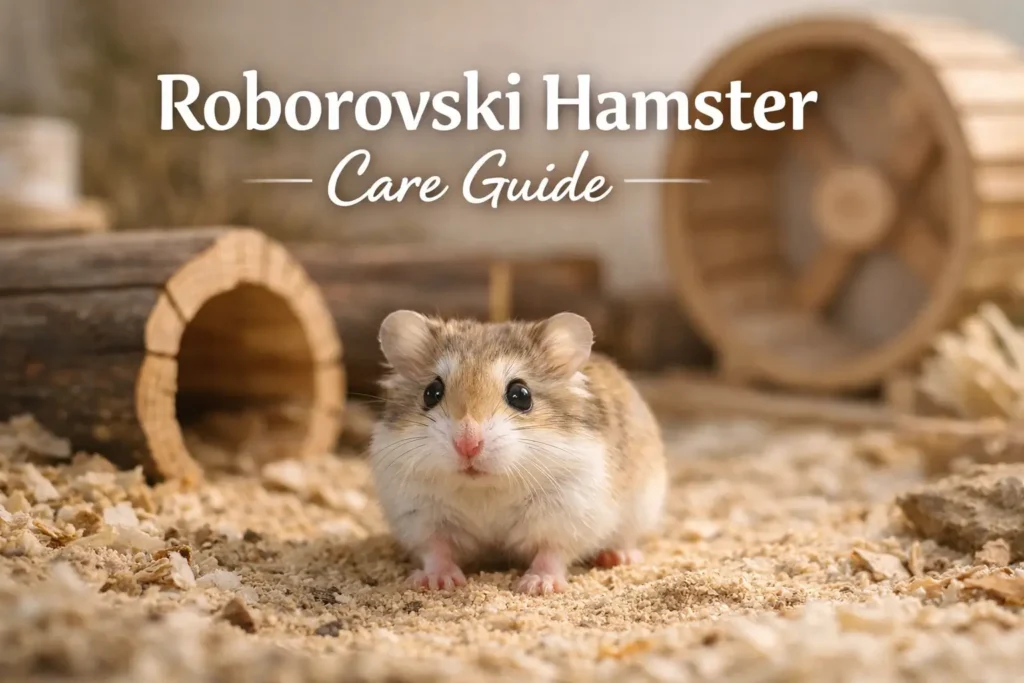
Roborovski hamsters are one of the smallest and fastest hamster species kept as pets. These tiny desert rodents are popular with experienced hamster owners because of their energetic personalities, adorable appearance, and fascinating behavior.
Often called Robo hamsters or Roborovski dwarf hamsters, they differ from larger hamster breeds such as Syrian hamsters in both size and temperament. They are extremely quick, curious, and active, making them fun to watch — but sometimes challenging to handle.
Many new owners assume these hamsters are easy starter pets. In reality, their speed and timid nature mean they require gentle handling, proper housing, and thoughtful care.
Understanding their diet, lifespan, cage setup, and social needs helps ensure a happy and healthy hamster.
Pet Care Insight
This guide is based on widely accepted pet care practices, veterinary guidance, and common experiences shared by responsible pet owners. The goal is to provide practical, easy-to-follow advice that helps owners keep their pets healthy, comfortable, and well cared for.
Pet Overview
Roborovski hamsters are the smallest domesticated hamster species and originate from desert regions of Central Asia.
Basic Characteristics
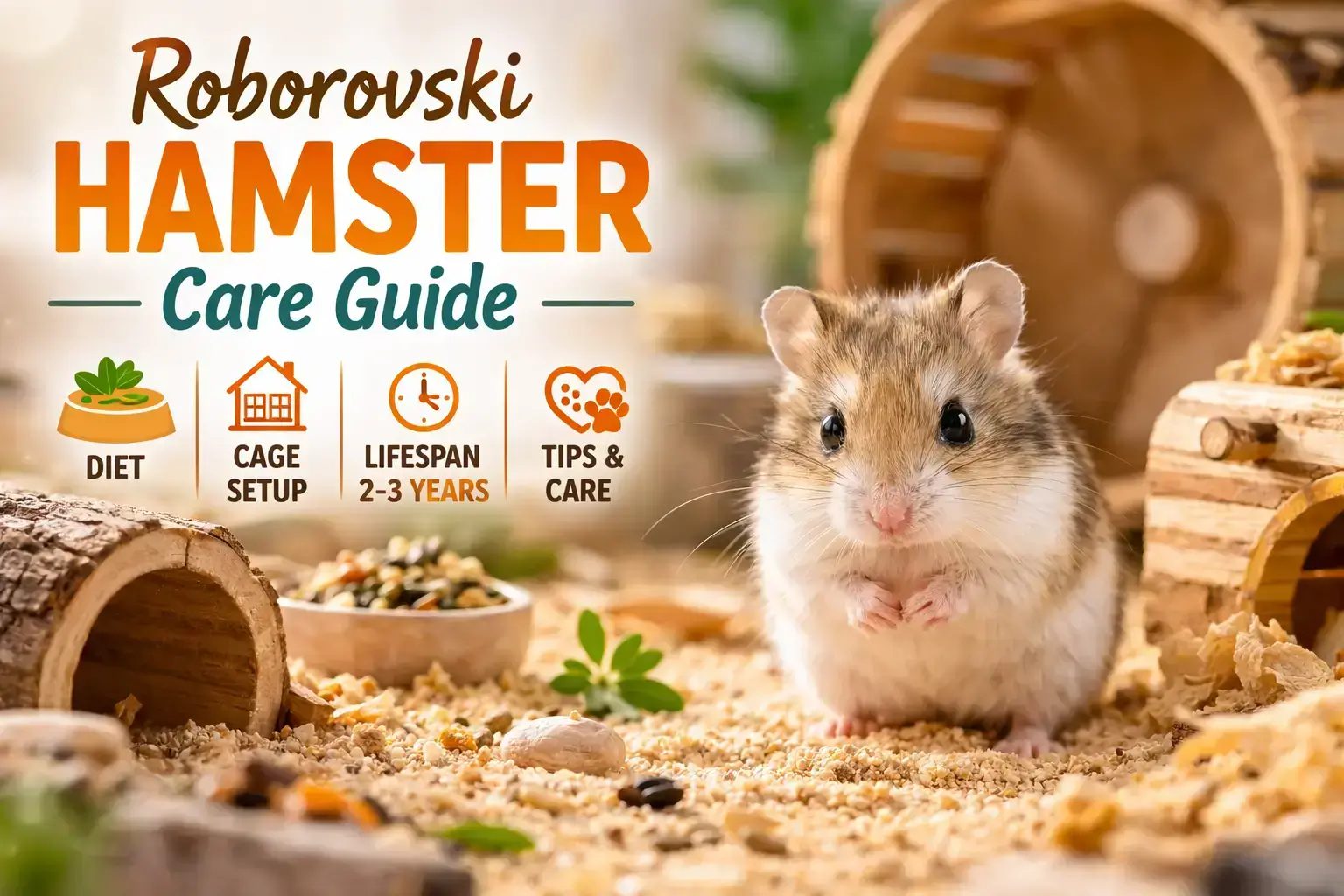
- Scientific type: Roborovski dwarf hamster
- Adult size: about 4–5 cm (1.5–2 inches)
- Weight: around 20–30 grams
- Lifespan: typically 2–3 years
- Activity level: extremely active and fast
- Temperament: shy but curious
- Best for: observing rather than handling
Roborovski Hamster Size
A full-grown Robo hamster is very tiny compared with other hamsters. Their small size is one reason they are considered the smallest hamster species kept as pets.
Roborovski Hamster Lifespan
Most Roborovski hamsters live 2–3 years, although excellent care, proper diet, and a stress-free environment can sometimes extend their lifespan slightly.
Roborovski Hamster Colors
Several color varieties exist, including:
- Agouti Roborovski hamster (natural sandy color)
- White Roborovski hamster
- Pied Roborovski hamster
- Blue Roborovski hamster (rare)
- White-faced Roborovski
These variations are sometimes called types of Roborovski hamsters.
Temperament
Many owners ask: Is Roborovski hamster friendly?
They are generally not aggressive, but they are:
- very shy
- extremely fast
- difficult to handle
They are better suited for watching rather than cuddling.
Can Roborovski Hamsters Live in Pairs?
Unlike Syrian hamsters, Roborovski hamsters can sometimes live in same-sex pairs or small groups if raised together from a young age. However, owners should monitor for fighting.
Daily Care Essentials
Roborovski hamsters require consistent daily care to stay healthy.
Feeding
Provide fresh food daily and remove old food from the cage.
Typical routine:
- Morning: small portion of hamster food
- Evening: main feeding
- Fresh water available at all times
Cage Cleaning
Spot clean daily and perform a full cage clean every 1–2 weeks.
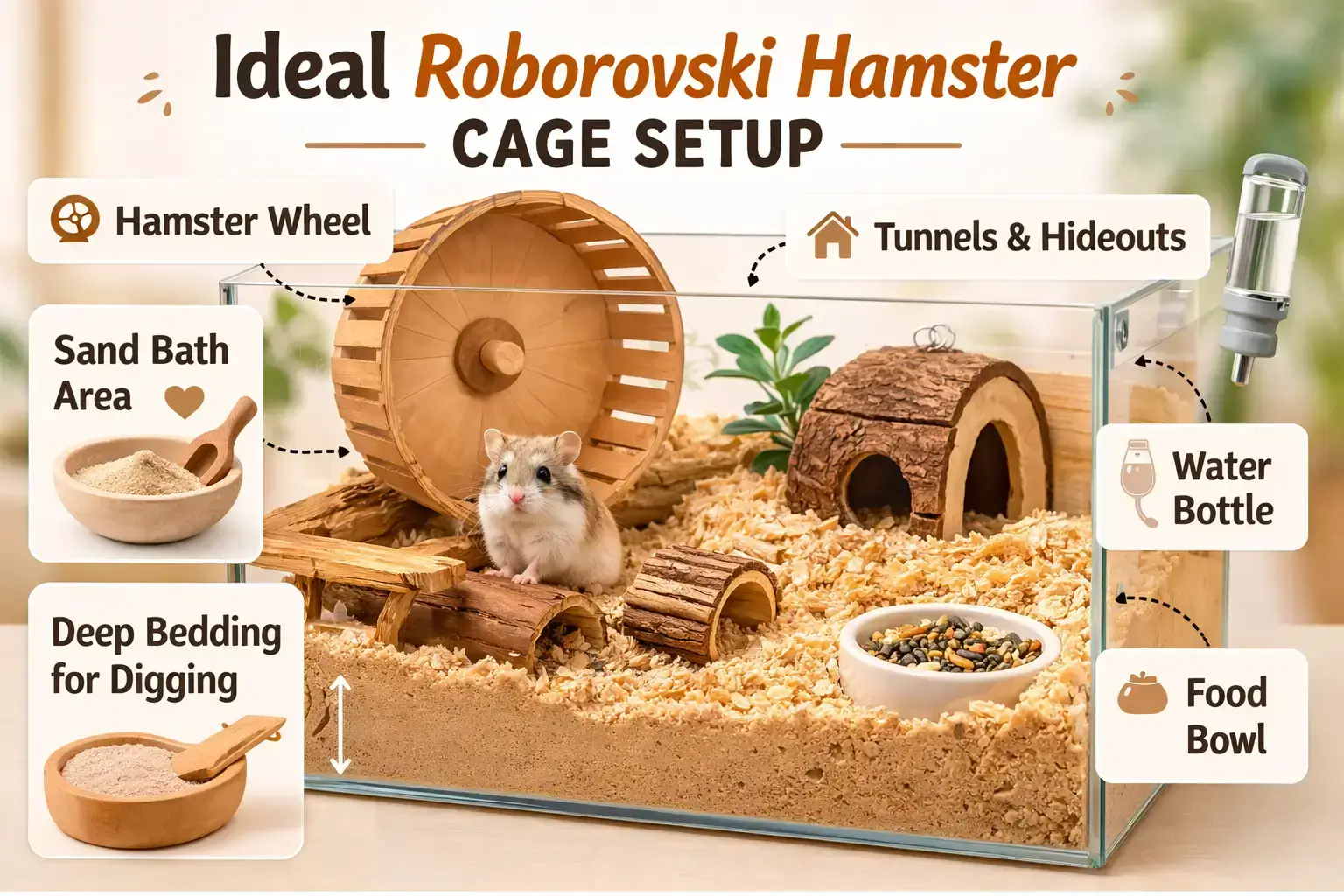
Bedding
Use:
- paper bedding
- aspen shavings
- dust-free bedding
Avoid cedar or pine bedding.
Grooming
Roborovski hamsters groom themselves and do not need bathing.
Provide a sand bath for natural cleaning.
Social Needs
Although small, Robo hamsters still require:
- stimulation
- exploration space
- hiding spots
Diet & Nutrition Guide
A proper Roborovski hamster diet supports energy, digestion, and longevity.
What Do Roborovski Hamsters Eat?
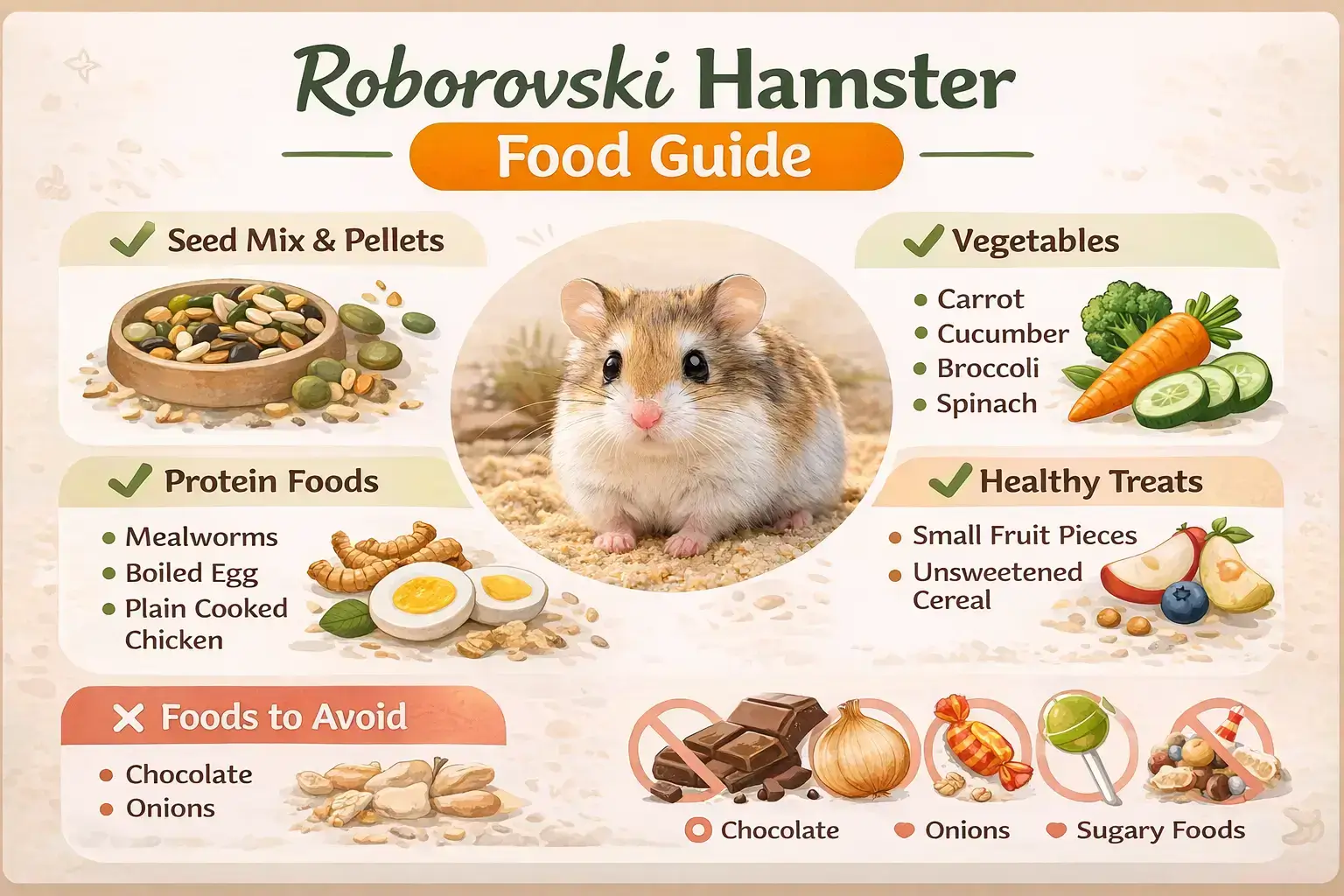
A balanced diet should include:
Staple Foods
- high-quality hamster seed mix
- fortified hamster pellets
Fresh Vegetables (small amounts)
- cucumber
- broccoli
- spinach
- carrot
- zucchini
Protein Sources
- mealworms
- boiled egg (tiny pieces)
- plain cooked chicken
Roborovski Hamster Food List
Healthy options include:
- sunflower seeds (limited)
- pumpkin seeds
- oats
- millet
- leafy greens
Treats
Occasional robo hamster treats can include:
- small apple pieces
- banana
- unsweetened cereal
- dried insects
Foods to Avoid
Never feed:
- chocolate
- onions
- garlic
- citrus fruits
- sugary foods
- sticky candy
These foods can cause digestive issues or toxicity.
Feeding Schedule
Typical feeding amounts:
- Adult hamsters: 1–2 teaspoons of food daily
- Baby Roborovski hamsters: smaller frequent portions
Because they are desert animals, Roborovski hamsters also store food in their nests.
Exercise & Mental Stimulation
Roborovski hamsters are among the most active hamster species, so exercise is essential.
Daily Activity Needs
Provide opportunities for:
- running
- digging
- exploring
Essential Exercise Equipment
Include in the cage:
- hamster wheel (20 cm / 8 inches minimum)
- tunnels
- climbing platforms
- chew toys
Play Ideas
Simple enrichment activities:
- scatter feeding to encourage foraging
- cardboard tunnels
- digging boxes with sand or soil
- safe chew toys
Mental stimulation prevents boredom and stress.
Training & Behavior Guidance
Roborovski hamsters are not easy to train like dogs or cats, but gentle interaction helps them become comfortable with humans.
Handling Tips
Because they move extremely fast:
- scoop them gently with both hands
- avoid grabbing from above
- allow them to walk onto your hand
Taming Process
Steps to build trust:
- Sit near the cage daily
- Offer food from your hand
- Allow the hamster to approach voluntarily
- Gradually introduce gentle handling
Gender Differences
Some owners ask about male vs female dwarf hamsters.
Generally:
- Male Roborovski hamsters tend to be slightly calmer.
- Female Roborovski hamsters can be more territorial.
However, personality varies widely.
Health & Climate Considerations
Roborovski hamsters come from desert climates and prefer dry, warm environments.
Ideal Temperature
- 20–24°C (68–75°F)
Avoid:
- extreme heat
- cold drafts
- sudden temperature changes
Hydration
Always provide:
- fresh clean water
- a functioning water bottle
Common Health Concerns
Watch for:
- weight loss
- lethargy
- fur loss
- diarrhea
- difficulty moving
Any unusual symptoms should be evaluated by a veterinarian experienced with small animals.
Common Problems & Troubleshooting
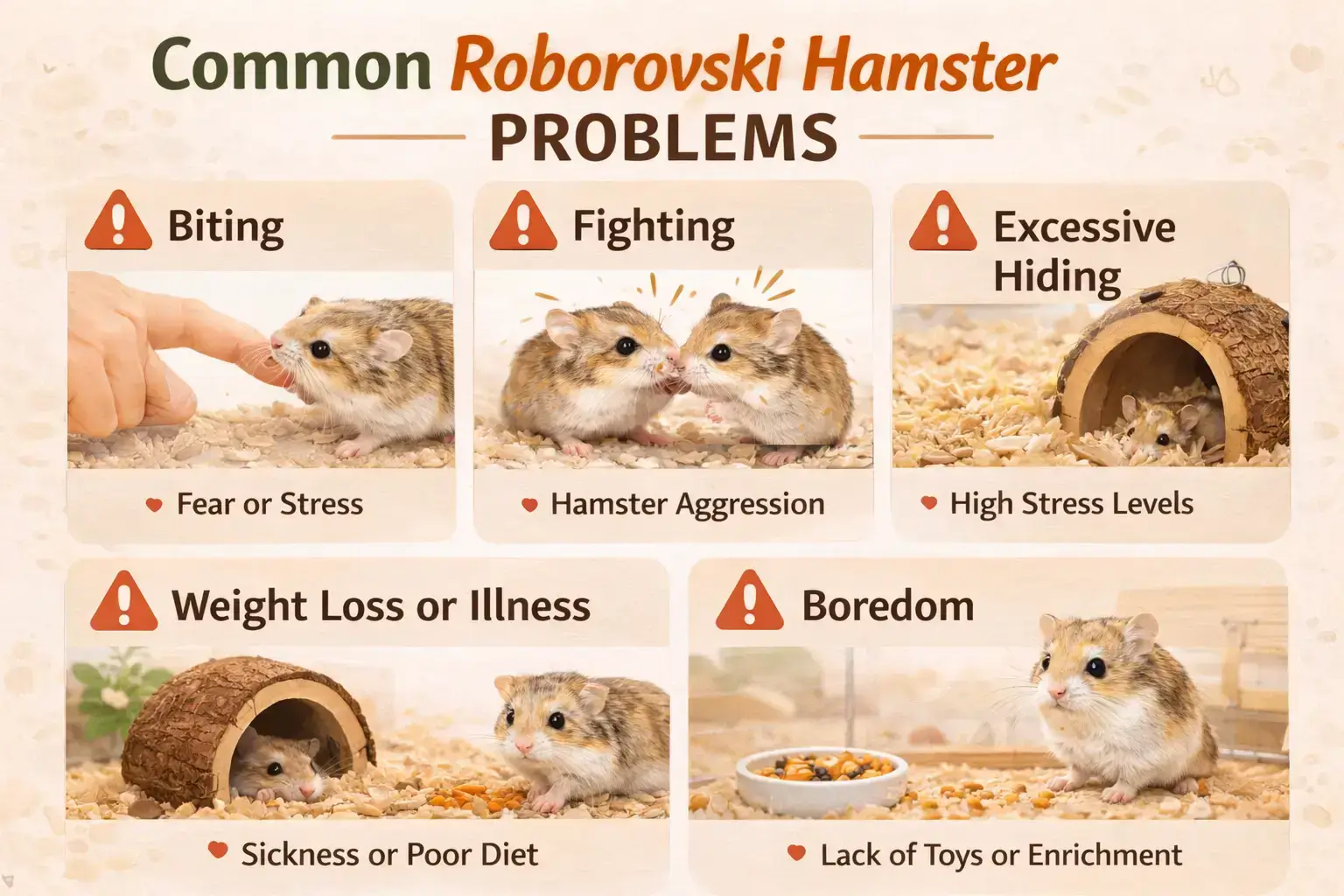
Hamster Biting
Possible cause
- fear or stress
Solution
- reduce handling
- build trust gradually
Prevention
- never wake a sleeping hamster suddenly
Excessive Hiding
Possible cause
- stress
- too much noise
- lack of hiding spots
Solution
- add tunnels and shelters
Cage Fighting (Pairs)
Possible cause
- dominance behavior
Solution
- separate hamsters immediately if fights occur
Weight Loss
Possible cause
- illness
- poor diet
Solution
- improve nutrition
- consult a vet
Seasonal Pet Care Tips
Even indoor hamsters can be affected by seasonal changes.
Spring
- increase cage cleaning frequency
- watch for mold in stored food
Summer
- prevent overheating
- keep cage away from direct sunlight
- provide extra water
Fall
- monitor temperature drops
- keep bedding deep for warmth
Winter
- avoid cold drafts
- ensure room temperature stays stable
- Roborovski hamsters do not hibernate but may become less active in cold conditions.
Additional Expert Tips
Helpful advice for Robo hamster owners:
Provide a larger cage than expected
Roborovski hamsters are tiny but extremely active. A large cage prevents boredom.
Use deep bedding
They love digging and tunneling.
Avoid hamster balls
These can cause stress and injuries.
Observe behavior daily
Changes in activity or appetite may signal health issues.
Handle with patience
Because Robo hamsters are so fast, they are often better as observation pets.
Conclusion
Roborovski hamsters are fascinating pets known for their tiny size, energetic behavior, and adorable appearance. While they are not always ideal for frequent handling, they make wonderful pets for people who enjoy observing active and curious animals.
Providing the right environment, balanced diet, and gentle care helps ensure these tiny desert hamsters live a healthy life.
Remember the most important care essentials:
- provide a spacious cage with enrichment
- feed a balanced hamster diet
- maintain a stable temperature
- handle gently and patiently
With thoughtful care and attention, a Roborovski hamster can become a lively and entertaining companion in your home.
Learn More: British Shorthair Chinchilla Cat: Care, Personality & Guide
FAQs
-
What is a Roborovski hamster?
A Roborovski hamster is the smallest species of pet hamster, known for its speed, sandy desert coloring, and energetic personality.
-
How long do Roborovski hamsters live?
Most Roborovski hamsters live 2–3 years when provided proper diet, housing, and veterinary care.
-
How big do Roborovski hamsters get?
A full-grown Roborovski hamster typically reaches 4–5 cm (about 2 inches) in length.
-
What do Roborovski hamsters eat?
They eat a diet consisting mainly of:
- hamster seed mix
- pellets
- vegetables
- small protein sources like mealworms.
-
Can Roborovski hamsters live together?
Yes, Roborovski hamsters sometimes live in same-sex pairs or groups, especially if raised together from a young age. However, fighting can occur.
-
Are Roborovski hamsters good pets for children?
They are better suited for older children or adults because they are very small, fast, and difficult to handle safely.
-
Do Roborovski hamsters bite?
They rarely bite when comfortable, but they may nip if frightened or handled roughly.




One Response