
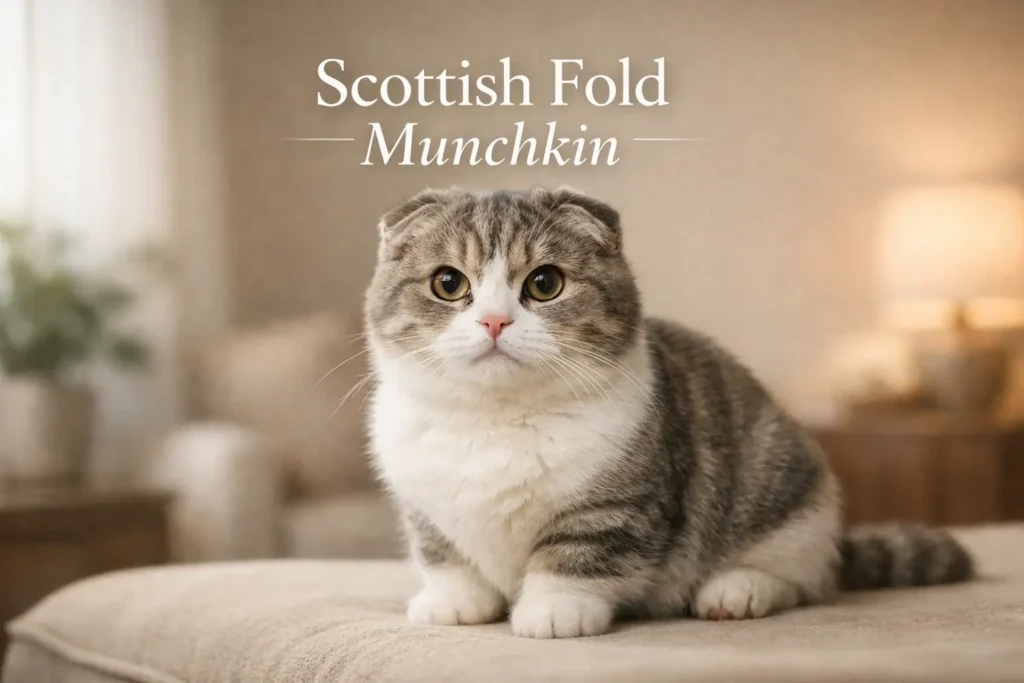
The Scottish Fold Munchkin is one of the most unique and eye-catching cat breeds, combining the folded ears of the Scottish Fold with the short legs of the Munchkin. Their adorable, almost toy-like appearance makes them incredibly popular—but caring for them is not as simple as it looks.
Many new owners are drawn in by their looks without realizing this breed requires extra attention, especially when it comes to health and mobility. Understanding their needs early can make a huge difference in their comfort and lifespan.
Pet Care Insight
This guide is based on widely accepted pet care practices, veterinary guidance, and common experiences shared by responsible pet owners. The goal is to provide practical, easy-to-follow advice that helps owners keep their pets healthy, comfortable, and well cared for.
Pet Overview
Temperament And Personality Traits
Scottish Fold Munchkin cats are affectionate, gentle, and people-oriented. They enjoy human companionship and often follow their owners around the house. They are playful but not overly hyper, making them suitable for calm households.
Lifespan And Physical Traits
Their average lifespan ranges from 10 to 15 years, though it can vary depending on genetics and care. They have:
- Folded ears (not always present in all kittens)
- Short legs due to dwarfism
- Round face with large expressive eyes
- Compact, low-to-the-ground body
Their short legs come from the genetics of the Munchkin cat, a breed known for its distinctive dwarfism trait.
Suitability For Families And Homes
They are generally:
- Good with children (gentle handling required)
- Compatible with other pets
- Best suited for indoor living
- Ideal for apartment environments
Similar to calm indoor breeds like the British Shorthair Chinchilla cat, this hybrid breed adapts well to quiet home environments and relaxed lifestyles.
Activity Level And Behavior
They have moderate energy levels. While playful, their short legs limit jumping and climbing compared to other cats.
Daily Care Essentials
Feeding Routine Basics
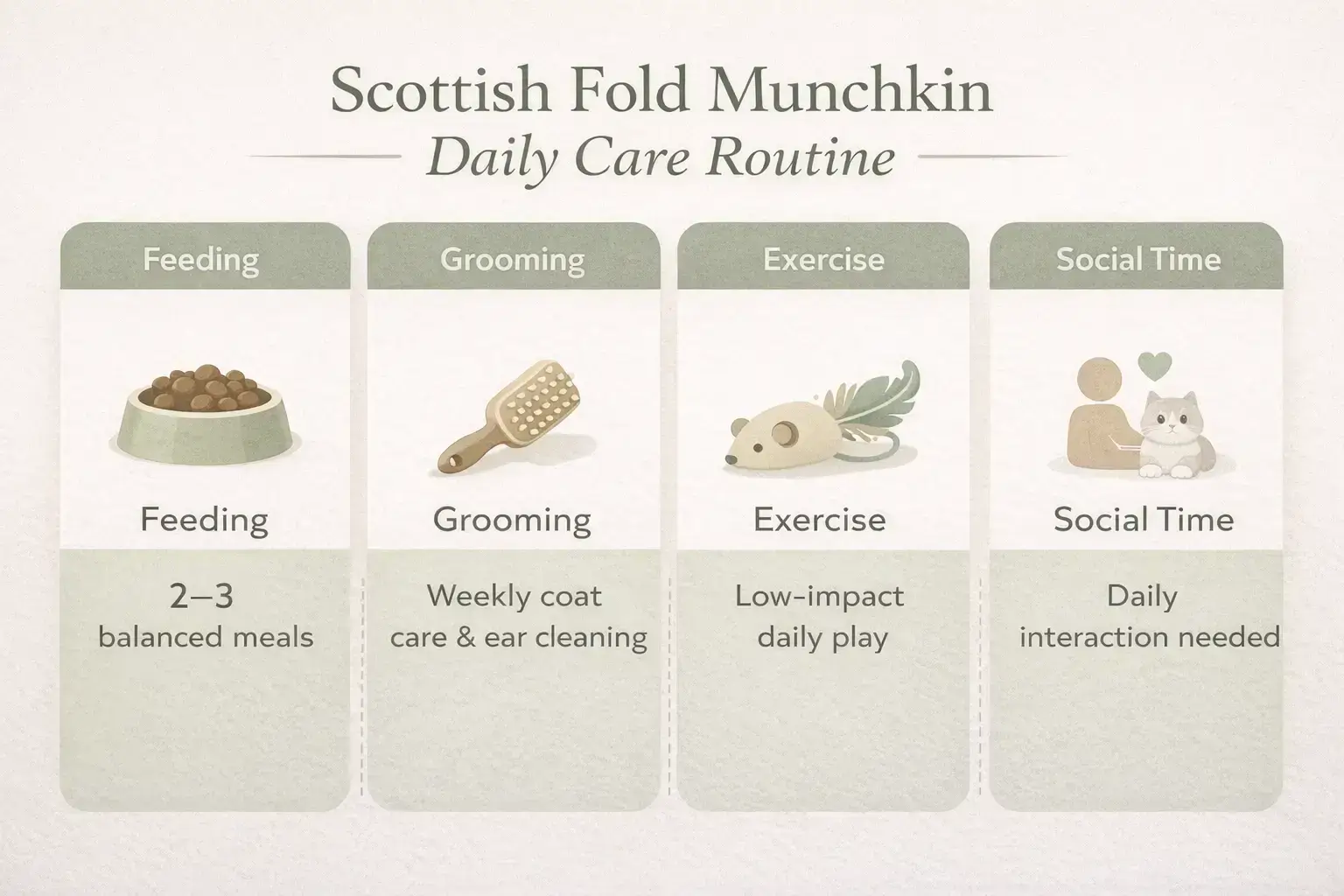
Feed your Scottish Fold Munchkin 2–3 times daily with high-quality cat food. Avoid free-feeding to prevent weight gain, which can strain their joints.
Grooming And Coat Care
- Short-haired: brush once a week
- Long-haired: brush 2–3 times weekly
- Clean ears gently (especially folded ears)
- Trim nails every 2–3 weeks
Exercise And Movement Needs
They need light daily activity:
- Gentle play sessions (10–20 minutes)
- Low-impact toys (avoid high jumps)
Social Interaction Needs
This breed thrives on companionship. Lack of interaction can lead to boredom or mild anxiety. Spend time daily playing or simply sitting with them.
Diet & Nutrition Guide
Feeding Schedule By Age
- Kittens: 3–4 small meals daily
- Adults: 2 meals daily
- Seniors: 2 smaller, easily digestible meals
Portion Control And Weight Management
Because of their short legs, excess weight puts extra pressure on joints. Keep portions controlled and monitor body condition regularly.
Weight control is especially important for breeds with structural limitations—just like in overweight cats, where joint stress becomes a serious concern. You can explore this further in our guide on obese Sphynx cats.
Nutritional Requirements
Focus on:
- High protein content
- Moderate fat levels
- Added joint support nutrients (like glucosamine)
Safe Vs Unsafe Foods
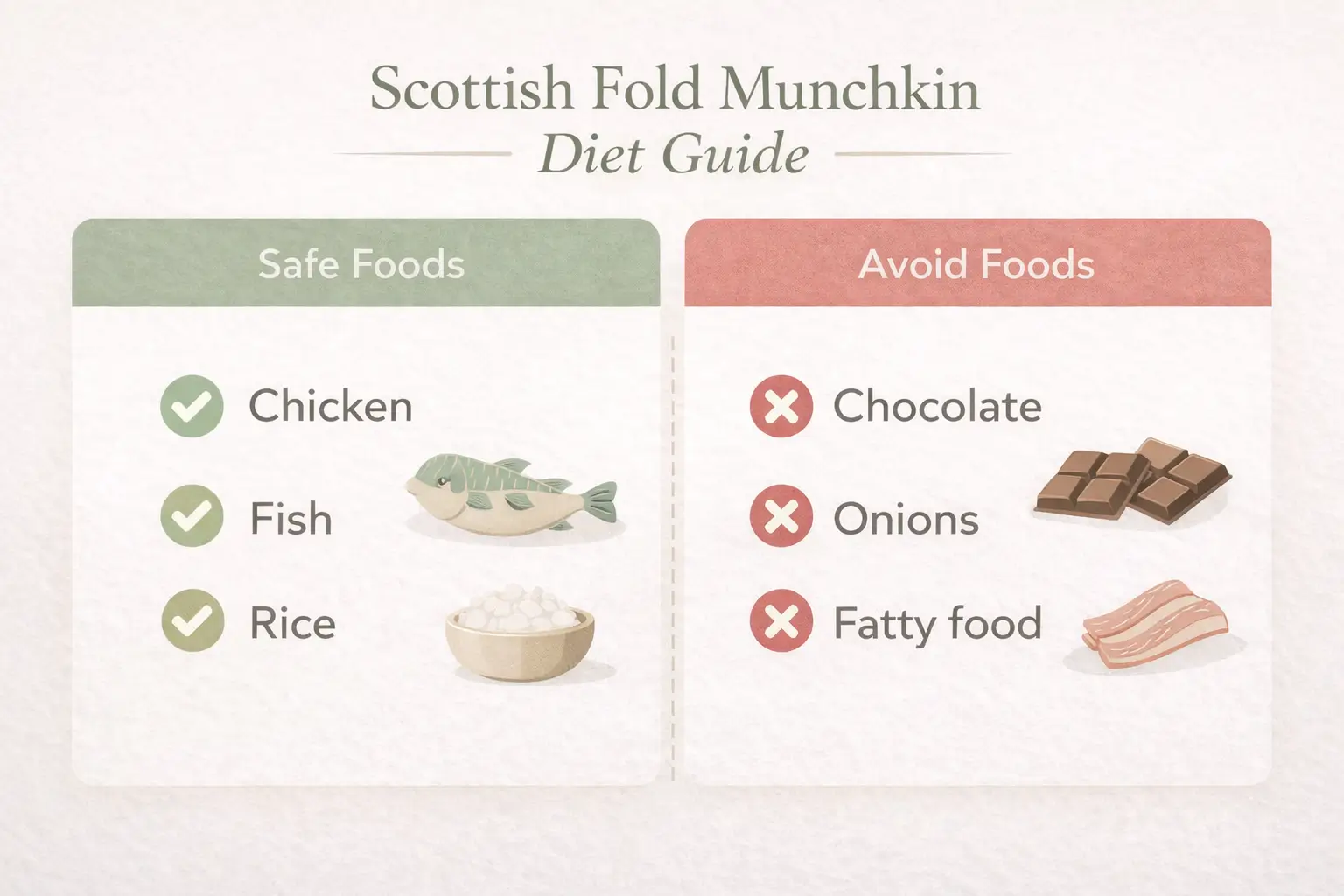
Safe foods (in moderation):
- Cooked chicken
- Fish (boneless)
- Small portions of plain rice
Avoid:
- Chocolate
- Onions and garlic
- Dairy (many cats are lactose intolerant)
- Fatty or salty human foods
Exercise & Mental Stimulation
Daily Activity Requirements
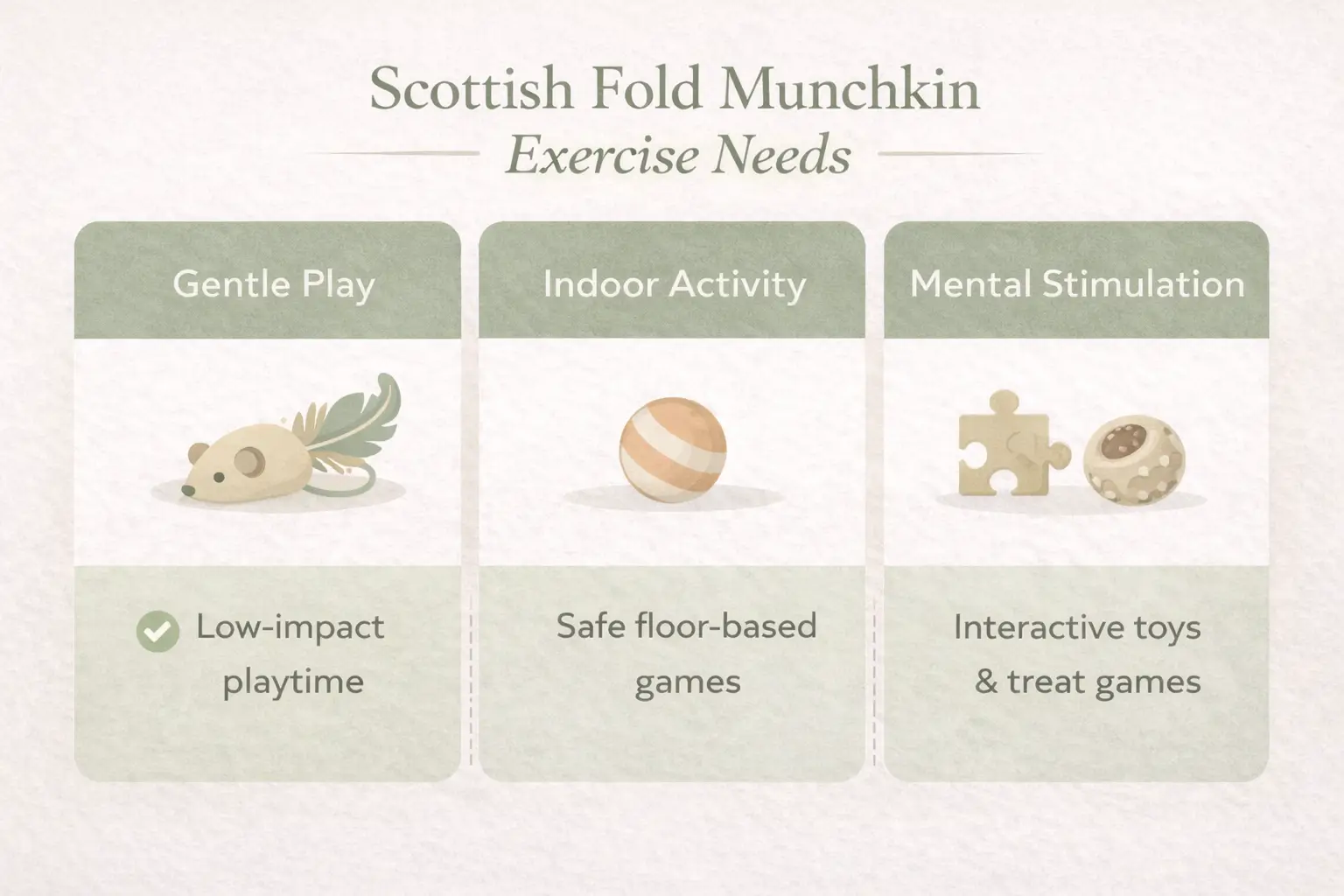
They need moderate exercise but not intense activity. Around 20–30 minutes of play per day is sufficient.
Indoor Play Ideas
- Feather toys at ground level
- Soft rolling balls
- Puzzle feeders
Mental Enrichment Activities
- Hide-and-seek treats
- Interactive toys
- Gentle training games
Avoid tall cat trees—opt for low platforms instead.
Training & Behavior Guidance
Basic Training And Habits
Scottish Fold Munchkins are intelligent and can learn:
- Litter box habits quickly
- Simple commands like “come”
- Routine feeding schedules
Socialization Tips
Expose them early to:
- Different people
- Household sounds
- Gentle handling
This helps prevent fearfulness later.
Preventing Behavior Problems
Common issues like scratching or boredom can be reduced by:
- Providing scratching posts
- Rotating toys regularly
- Maintaining a consistent routine
Health & Climate Considerations
Common Health Concerns
This breed can face several health issues:
- Joint and bone problems (due to dwarfism)
- Osteochondrodysplasia (linked to folded ears)
- Arthritis as they age
Regular vet checkups are essential.
Dental care is often overlooked but equally important—especially as cats age. If procedures are needed, understanding proper recovery is essential, as explained in this cat tooth extraction recovery guide.
Heat Sensitivity And Summer Care
In hot climates:
- Keep them indoors in cool areas
- Provide constant fresh water
- Avoid overexertion
Cold Weather Care
They tolerate mild cold but should stay indoors. Provide warm bedding and avoid cold floors.
Hydration And General Wellness
Ensure:
- Clean water available at all times
- Wet food inclusion for hydration
- Regular grooming to monitor skin health
Common Problems & Troubleshooting
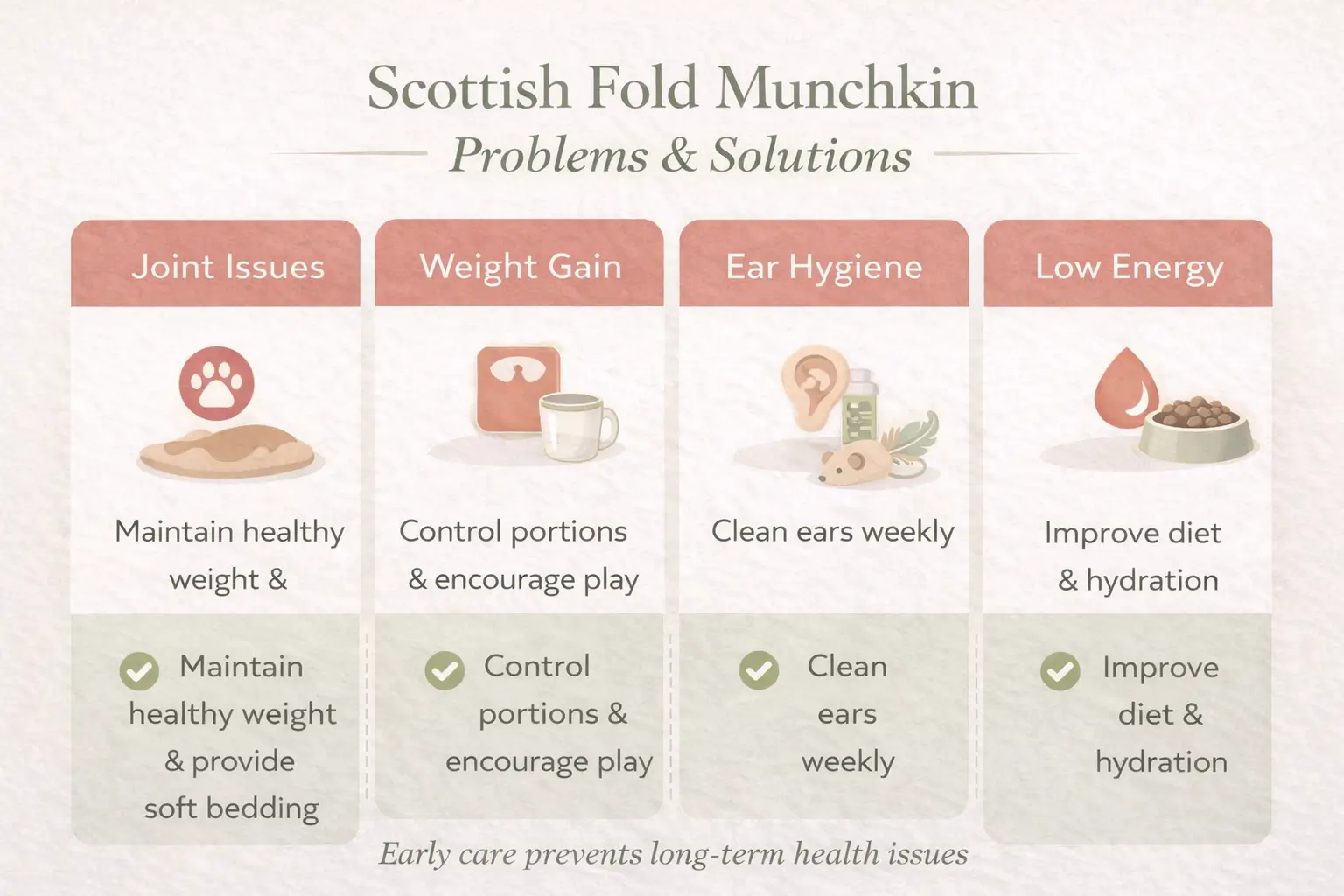
Mobility Issues Or Stiff Movement
Cause: Joint stress or genetic conditions
Solution:
- Maintain healthy weight
- Use soft bedding
- Provide ramps instead of jumps
Prevention: Regular vet monitoring and controlled activity
Weight Gain Problems
Cause: Overfeeding and low activity
Solution:
- Measure food portions
- Increase gentle playtime
Prevention: Stick to a feeding schedule
Ear Hygiene Challenges
Cause: Folded ears trap dirt
Solution:
- Clean ears weekly with vet-approved solution
Prevention: Regular checks and gentle cleaning
Low Energy Or Lethargy
Cause: Poor diet, health issues, or heat
Solution:
- Improve diet quality
- Ensure hydration
- Consult a vet if persistent
Seasonal Pet Care Tips
Spring Care Adjustments
- Watch for seasonal allergies
- Increase light play sessions
Summer Heat Protection
- Keep indoors during peak heat
- Provide cooling mats or shaded areas
Fall Health Preparation
- Maintain consistent diet
- Monitor activity changes
Winter Comfort And Warmth
- Provide soft, warm bedding
- Encourage indoor play
Additional Expert Tips
Common Mistakes New Owners Make
- Ignoring joint health early
- Allowing excessive weight gain
- Choosing high furniture setups
Simple Habits For Better Health
- Daily short play sessions
- Weekly grooming checks
- Consistent feeding schedule
Long-Term Care Considerations
- Plan for potential joint issues
- Invest in comfortable living spaces
- Keep regular veterinary visits
Conclusion
The Scottish Fold Munchkin is a charming and affectionate companion, but it comes with unique care responsibilities. Their short legs and folded ears require extra attention, especially when it comes to mobility and long-term health.
By focusing on proper nutrition, gentle exercise, and regular health monitoring, you can help your cat live a comfortable and happy life. Avoid common mistakes like overfeeding or ignoring early signs of joint issues, and always prioritize their physical comfort.
With the right care approach, this adorable breed can be a loving, loyal part of your home for many years.
FAQs
-
How long does a Scottish Fold Munchkin live?
Usually between 10 to 15 years with proper care and regular vet checkups.
-
Do Scottish Fold Munchkin cats have health problems?
Yes, they are prone to joint and bone issues, so careful monitoring is important.
-
How much exercise does this cat need daily?
Around 20–30 minutes of light, low-impact play is enough.
-
Are they good for small apartments?
Yes, their low activity level makes them ideal for apartment living.
-
Can they jump like normal cats?
No, their short legs limit jumping ability, so low furniture is better.
-
How often should I groom them?
Once weekly for short hair and 2–3 times weekly for long-haired varieties.
-
Are they suitable for families with children?
Yes, as long as children handle them gently and respectfully.



One Response