
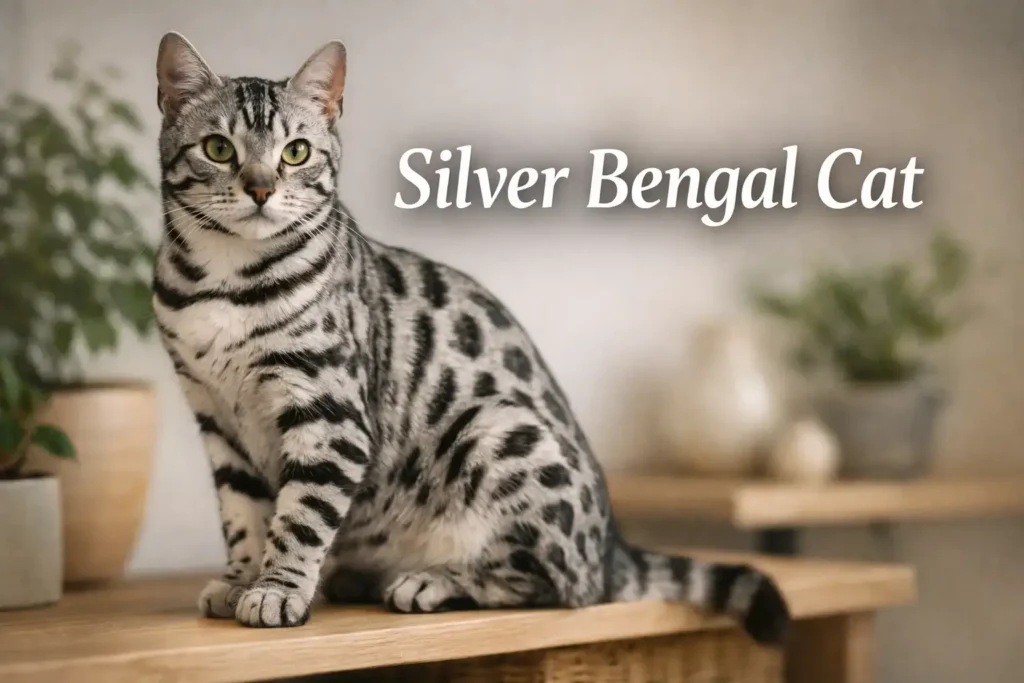
Silver Bengal cats are one of the most eye-catching and energetic cat breeds you can bring into your home. Their shimmering silver coats with bold markings give them a wild appearance, but their personality is deeply affectionate and playful. Many new owners are drawn in by their looks, but quickly realize that this breed needs more attention, stimulation, and understanding than a typical house cat.
The Silver Bengal is a variation of the popular Bengal cat, a breed originally developed to resemble wild leopard cats while maintaining a domestic temperament.
A common mistake new owners make is assuming they behave like regular domestic cats. In reality, Silver Bengals are highly active, intelligent, and curious—closer to a small wildcat in behavior than a laid-back lap cat.
Table of Contents
TogglePet Care Insight
This guide is based on widely accepted pet care practices, veterinary guidance, and common experiences shared by responsible pet owners. The goal is to provide practical, easy-to-follow advice that helps owners keep their pets healthy, comfortable, and well cared for.
Pet Overview
Silver Bengal Cat Temperament And Personality
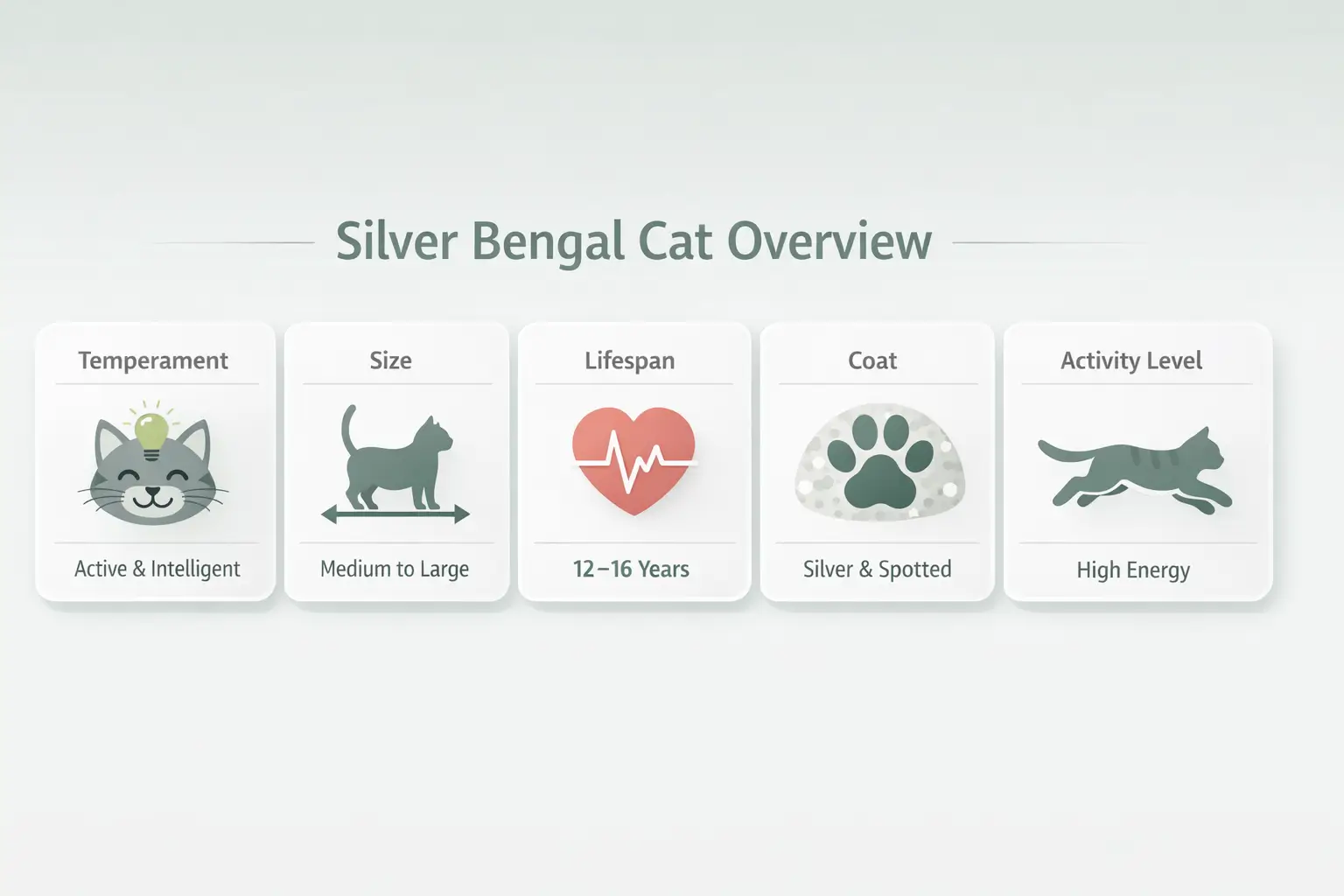
Silver Bengal cats are known for their bold, energetic, and highly intelligent nature. They are:
- Extremely playful and active
- Curious and investigative
- Affectionate but not always lap cats
- Vocal and interactive with owners
They thrive on interaction and can become bored quickly if left alone for long periods.
Silver Bengals are far more energetic than calmer breeds like the British Shorthair Chinchilla Cat, which is known for its relaxed and low-maintenance personality.
Physical Characteristics And Size
- Medium to large-sized cats
- Muscular, athletic build
- Short, dense coat with silver base and black or charcoal markings
- Common patterns include spotted and marbled
Some variations, like charcoal or snow silver Bengal cats, may have slightly different tones and contrast levels.
Lifespan And Family Suitability
- Lifespan: 12–16 years with proper care
- Good with families if socialized early
- Can live with other pets but prefer active companions
They are best suited for owners who can provide time, space, and engagement.
Daily Care Essentials
Feeding Routine And Daily Needs
Silver Bengals require consistent feeding schedules:
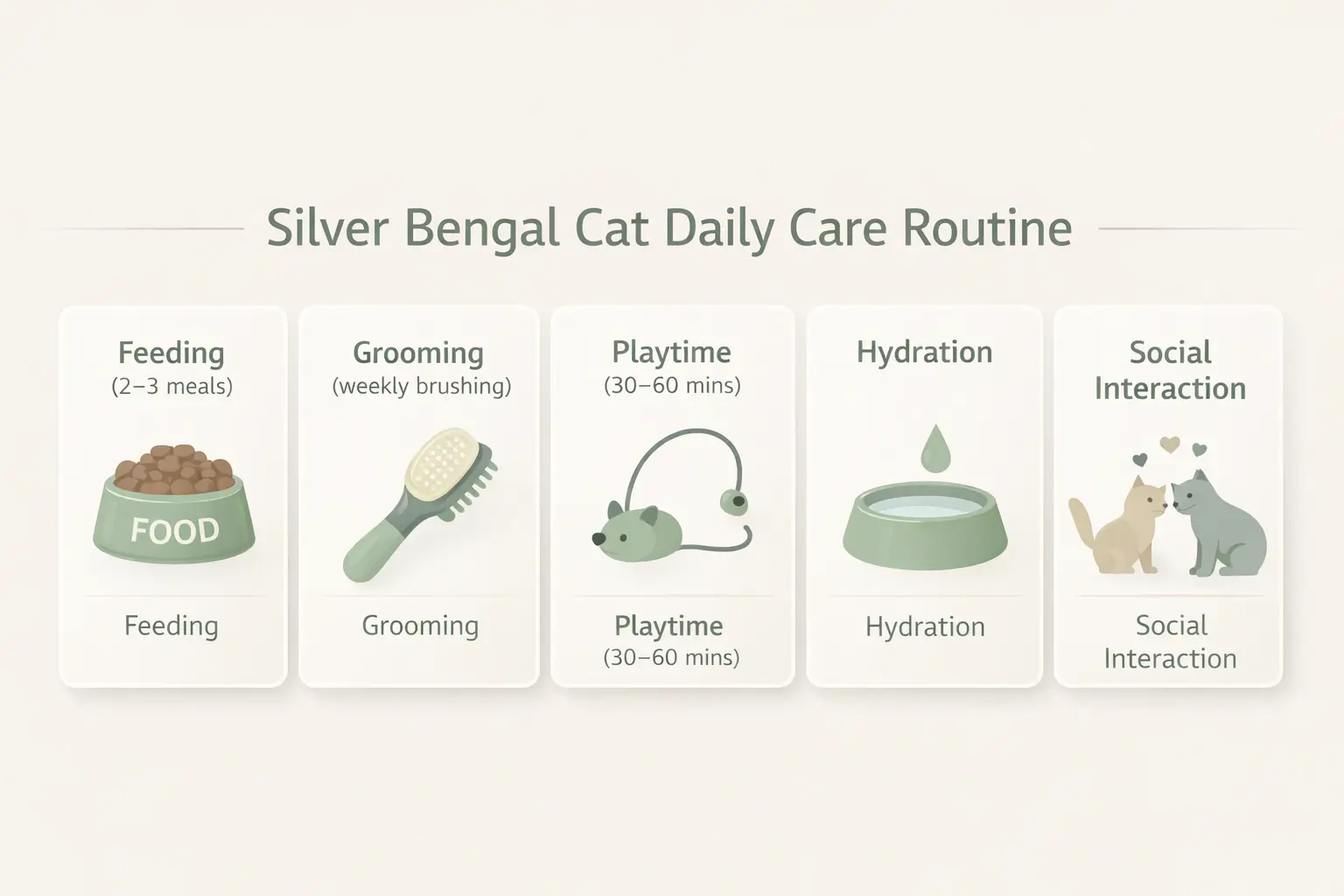
- 2–3 meals per day for adults
- Free feeding is not recommended due to overeating risks
Fresh water should always be available, especially since active cats dehydrate quickly.
Grooming Basics And Coat Care
Despite their exotic appearance, grooming is simple:
- Brush once a week
- Minimal shedding compared to many breeds
- Occasional nail trimming and ear cleaning
Their coat naturally stays clean due to low oil buildup.
Exercise Requirements And Activity
This breed needs daily stimulation:
- At least 30–60 minutes of active play
- Climbing trees, shelves, or cat towers
- Interactive toys and puzzle feeders
Without activity, they may develop destructive habits.
Social Interaction Needs
Silver Bengals crave attention:
- Enjoy interactive play with owners
- May follow you around the house
- Can become stressed if ignored
They are not ideal for people who are away all day without providing enrichment.
If you prefer a more laid-back and cuddly companion, breeds like the Brown Ragdoll Cat are often easier to manage for first-time owners.
Diet & Nutrition Guide
Feeding Schedule And Portion Control
- Kittens: 3–4 small meals daily
- Adults: 2 balanced meals daily
- Seniors: Adjust portions based on activity level
Always monitor weight to prevent obesity.
Nutritional Needs For Silver Bengals
A high-protein diet is essential:
- Animal-based protein should be the main ingredient
- Moderate fats for energy
- Limited carbohydrates
Wet food is often preferred for hydration and digestion.
Safe And Unsafe Foods
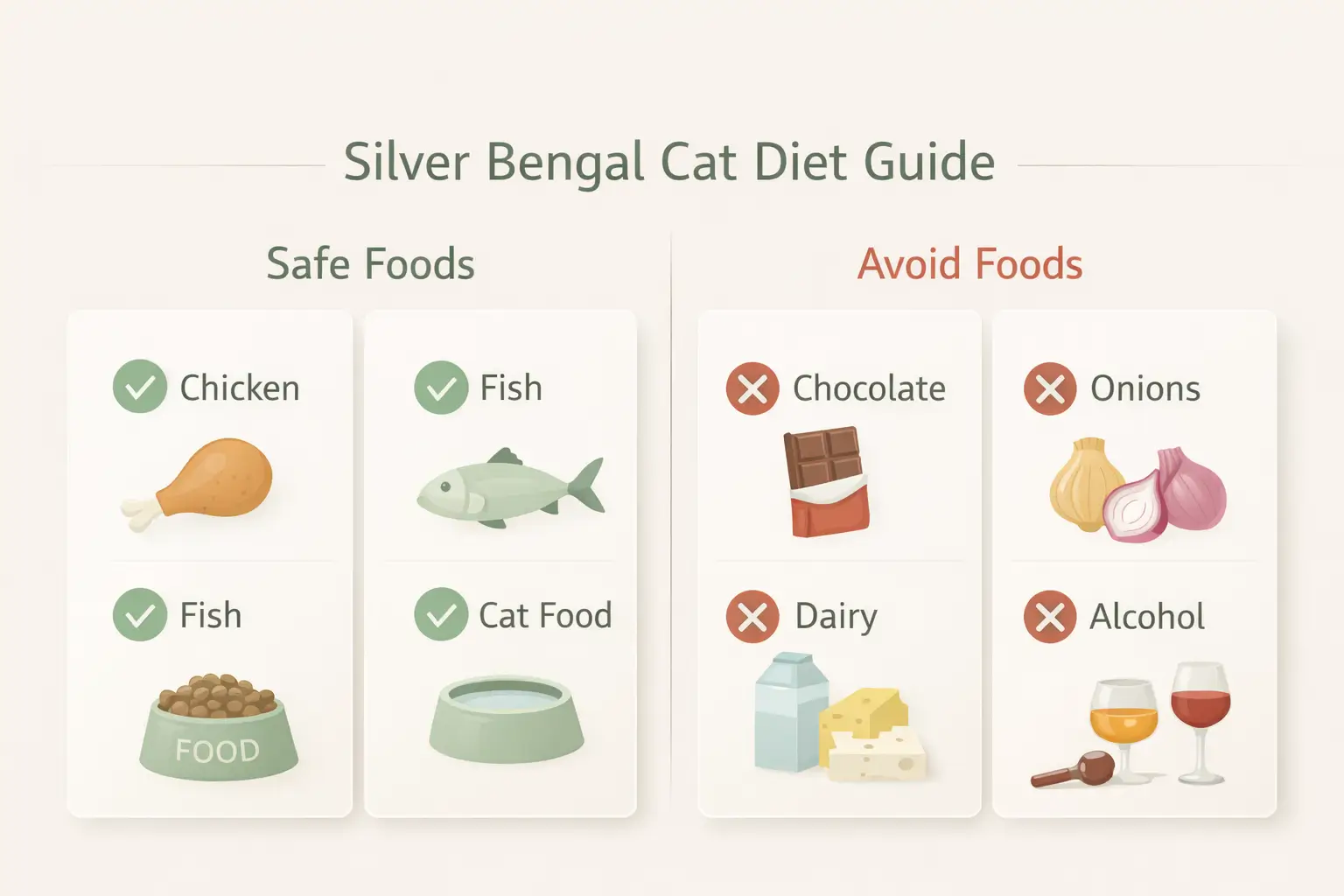
Safe foods include:
- Cooked chicken or turkey
- Fish (in moderation)
- Commercial cat food
Avoid:
- Chocolate
- Onions and garlic
- Raw dough or alcohol
Never feed heavily seasoned human food.
Exercise & Mental Stimulation
Daily Activity Requirements
Silver Bengals are one of the most active domestic breeds. They need:
- Structured play sessions
- Opportunities to climb and jump
- Rotating toys to prevent boredom
Playtime Ideas For Home
- Laser pointer chasing
- Feather wand toys
- Puzzle feeders
- Hide-and-seek games
They especially enjoy activities that mimic hunting behavior.
Enrichment Activities
- Install wall shelves or cat trees
- Provide window perches
- Rotate toys weekly
Mental stimulation is just as important as physical activity.
Compared to larger but less hyper breeds like the Russian Maine Coon, Silver Bengals require much more daily mental stimulation and interactive play.
Training & Behavior Guidance
Basic Training And Obedience
Silver Bengals are highly trainable:
- Can learn commands like sit or come
- Respond well to positive reinforcement
- Clicker training works effectively
Socialization Tips
- Introduce new environments gradually
- Expose them to different people early
- Supervise interactions with children
Early socialization prevents fear-based behavior.
Preventing Behavior Problems
Common issues include scratching and biting:
- Provide scratching posts
- Redirect biting to toys
- Avoid punishment—use reward-based training
Boredom is often the root cause of bad behavior.
Health & Climate Considerations
Common Health Concerns
Silver Bengals are generally healthy but may face:
- Heart conditions (like hypertrophic cardiomyopathy)
- Digestive sensitivity
- Dental issues
Regular vet checkups are essential.
Heat And Hydration Needs
In warmer climates:
- Ensure access to cool areas
- Provide fresh water at all times
- Avoid intense play during peak heat
Their active nature increases dehydration risk.
Cold Weather Care
- Provide warm sleeping areas
- Limit exposure to cold drafts
- Indoor living is recommended in winter
Common Problems & Troubleshooting
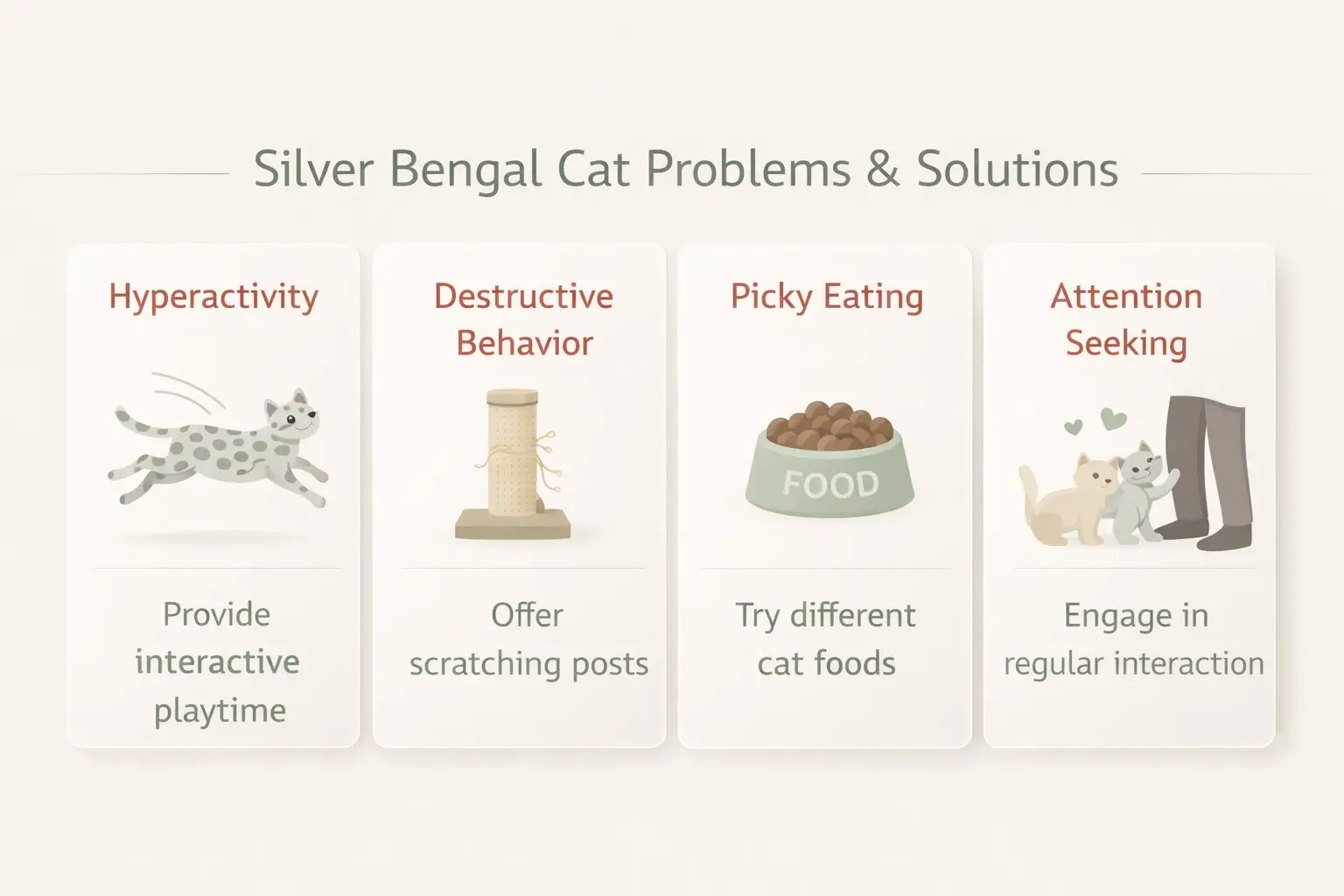
Excessive Energy And Hyperactivity
Cause: Lack of stimulation
Solution: Increase playtime and enrichment
Prevention: Daily structured activity
Destructive Behavior
Cause: Boredom or stress
Solution: Add toys and interactive play
Prevention: Keep environment engaging
Picky Eating
Cause: Sudden food changes
Solution: Transition food gradually
Prevention: Maintain consistent diet
Vocalization Or Attention-Seeking
Cause: Need for interaction
Solution: Schedule regular play sessions
Prevention: Spend quality time daily
Seasonal Pet Care Tips
Spring Care Tips
- Watch for seasonal allergies
- Increase grooming due to shedding
Summer Care Tips
- Keep environment cool
- Provide extra hydration
- Avoid overheating during play
Fall Care Tips
- Adjust activity as weather cools
- Monitor appetite changes
Winter Care Tips
- Provide warm bedding
- Increase indoor playtime
- Limit cold exposure
Additional Expert Tips
Common Mistakes New Owners Make
- Underestimating their energy levels
- Not providing enough stimulation
- Treating them like low-maintenance cats
Simple Habits That Improve Health
- Daily interactive play
- Consistent feeding routine
- Regular vet visits
Long-Term Care Considerations
- Invest in enrichment tools
- Maintain a stable environment
- Plan for their long lifespan
Conclusion
Silver Bengal cats are stunning, intelligent, and full of energy—but they are not low-maintenance pets. Their care requires time, attention, and an understanding of their active nature. Owners who provide proper stimulation, a balanced diet, and regular interaction will be rewarded with a loyal, playful, and deeply engaging companion.
The biggest takeaway is simple: treat them like an active, intelligent animal—not just a decorative pet—and they will thrive in your home.
FAQs
-
How much exercise does a silver Bengal cat need daily?
They need at least 30–60 minutes of active play each day.
-
Are silver Bengal cats good for beginners?
They can be challenging for beginners due to their high energy and attention needs.
-
Why is my silver Bengal cat so active at night?
They are naturally energetic and may need more daytime stimulation to rest at night.
-
How often should I groom a silver Bengal cat?
Once a week is usually enough due to their short coat.
-
Can silver Bengal cats live with other pets?
Yes, especially if introduced early, but they prefer active companions.
-
What makes silver Bengal cats different from other Bengals?
Their silver coat with black or charcoal markings gives them a unique, metallic appearance.