
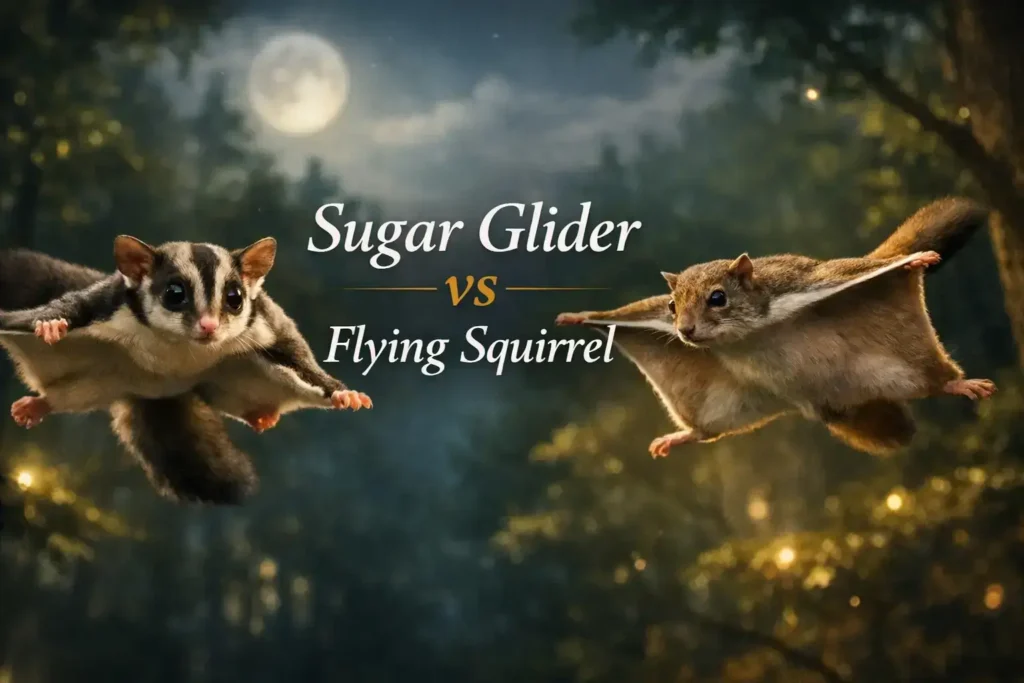
Sugar gliders and flying squirrels often get confused because they look almost identical when gliding through the air. Many people even wonder, are flying squirrels and sugar gliders the same? The short answer is no — they are completely different animals that evolved similar features through a fascinating process called convergent evolution.
For pet owners, this comparison matters a lot. Choosing between a sugar glider vs flying squirrel as a pet is not just about looks — it’s about behavior, legality, care difficulty, and long-term commitment. A common mistake beginners make is assuming both animals have the same needs, which can lead to poor care and stressed animals.
Many new exotic pet owners face similar confusion when choosing between small mammals, just like when deciding between baby chinchilla or other unique pets.
Pet Care Insight
This guide is based on widely accepted pet care practices, veterinary guidance, and common experiences shared by responsible pet owners. The goal is to provide practical, easy-to-follow advice that helps owners keep their pets healthy, comfortable, and well cared for.
Pet Overview
Sugar Glider Overview Basics
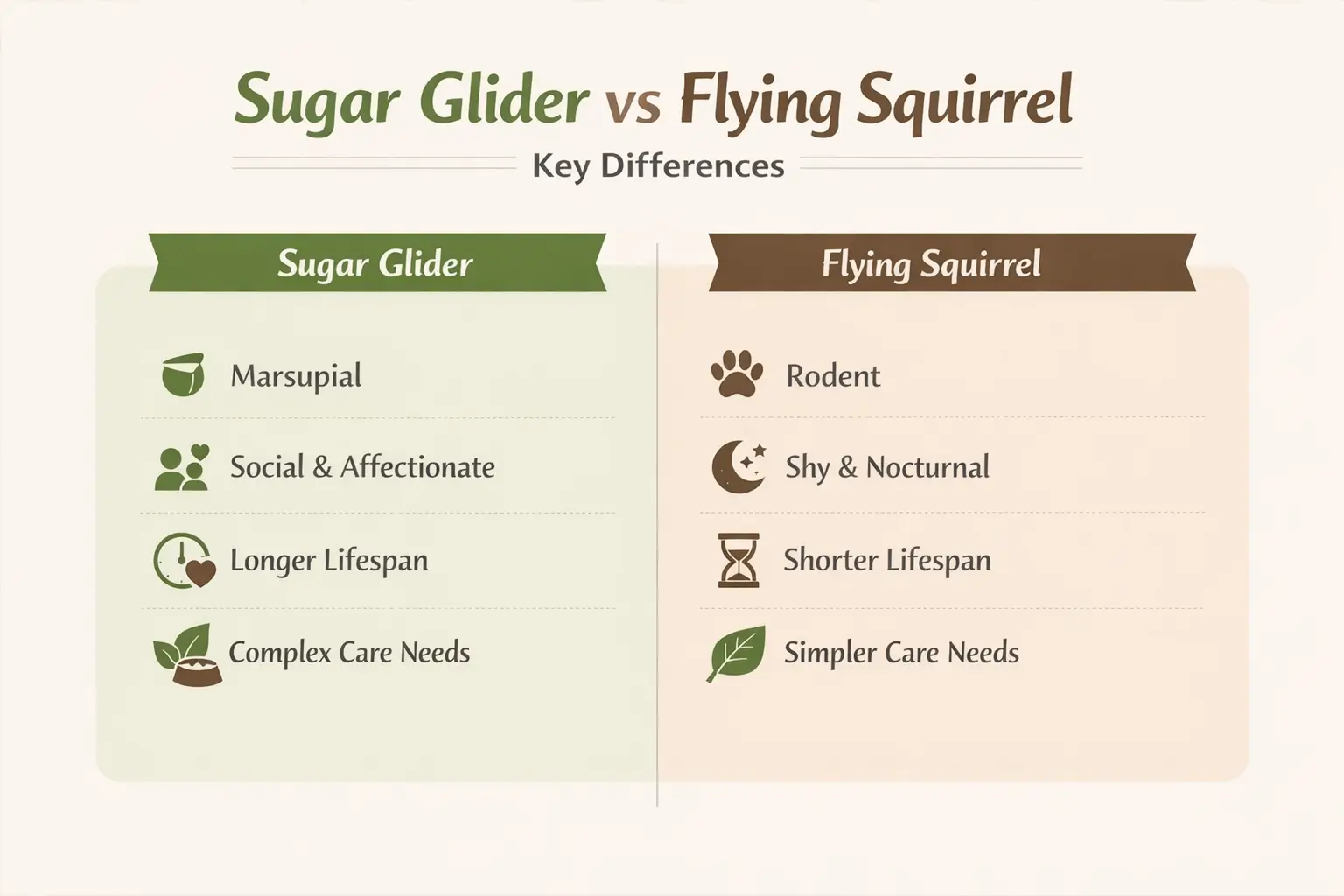
Sugar gliders are small marsupials native to Australia and nearby regions. They are not rodents, which surprises many people asking “is a sugar glider a rodent?”
- temperament: highly social, affectionate, bond strongly with owners
- lifespan: 10–15 years in captivity
- size: about 6–12 inches including tail
- activity level: very active at night
- family suitability: good with experienced owners, not ideal for very young children
They are often considered exotic pets and require significant attention.
Flying Squirrel Overview Basics
Flying squirrels are rodents found in North America, Asia, and parts of Europe. Examples include southern flying squirrels and northern flying squirrels.
- temperament: shy, less interactive than sugar gliders
- lifespan: 5–10 years in captivity
- size: similar body size but often lighter
- activity level: nocturnal and active gliders
- family suitability: not ideal pets in most cases
Unlike sugar gliders, flying squirrels are true squirrels, closely related to tree squirrels.
If you’re exploring small pet options, animals like Roborovski hamsters are much easier to manage compared to more demanding exotic pets like sugar gliders.
Daily Care Essentials
Feeding Routine Needs
Both animals need frequent feeding due to high metabolism.
- sugar gliders: require balanced diets with fruits, insects, and specialized nectar mixes
- flying squirrels: eat nuts, seeds, fruits, and insects
Consistency is key — irregular feeding can cause stress.
Grooming And Hygiene Basics
- sugar gliders groom themselves but need clean enclosures
- flying squirrels also self-groom but require nesting areas
Cleaning cages 2–3 times weekly prevents odor and health issues.
Social Interaction Needs
This is where the biggest difference lies.
- sugar gliders need daily bonding and companionship
- flying squirrels are more independent and often avoid handling
If ignored, sugar gliders can develop depression or behavioral issues.
Similar to baby ferrets sugar gliders require daily interaction and mental stimulation to stay healthy and emotionally balanced.
Diet & Nutrition Guide
Balanced Diet Requirements
Sugar gliders have stricter dietary needs compared to flying squirrels.
Sugar glider diet:
- fruits (apple, papaya, berries)
- protein (insects, boiled eggs)
- calcium supplements
Flying squirrel diet:
- nuts and seeds
- fungi and fruits
- occasional insects
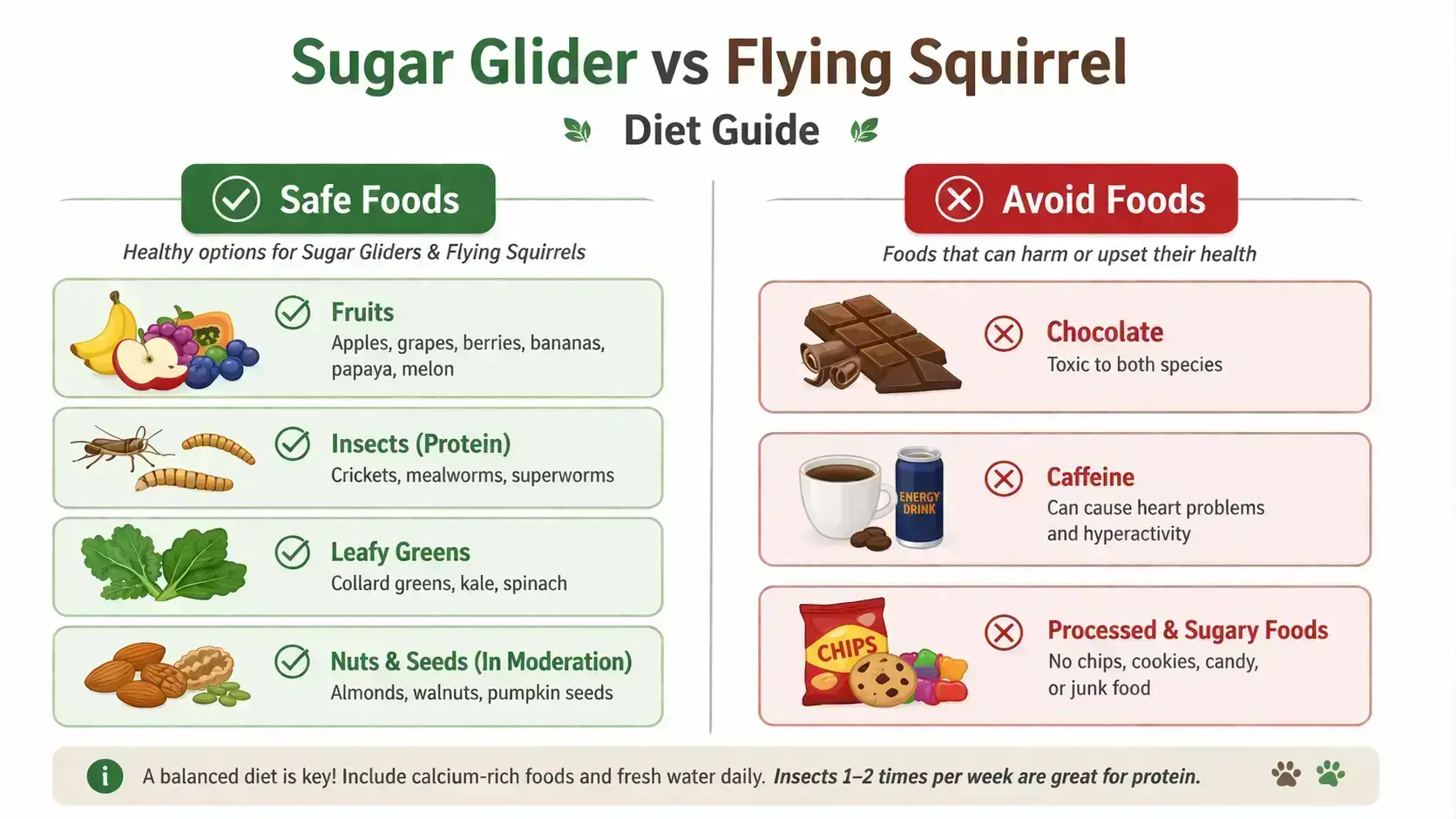
Safe And Unsafe Foods
Safe foods:
- fresh fruits
- insects
- leafy greens
Unsafe foods:
- chocolate
- caffeine
- processed sugary foods
Age Based Feeding Guide
Young:
- require more protein for growth
Adult:
- balanced diet with controlled portions
Senior:
- softer foods and reduced fat intake
Exercise & Mental Stimulation
Daily Activity Needs
Both animals are nocturnal and require space to glide.
- large vertical cages are essential
- climbing branches and ropes help mimic natural habitats
Enrichment Activities Ideas
- hide food for foraging
- install gliding platforms
- rotate toys weekly
Sugar gliders especially need stimulation to avoid boredom.
Training & Behavior Guidance
Bonding And Socialization Tips
Sugar gliders can form strong bonds if handled regularly.
- start with short handling sessions
- use gentle voice and slow movements
Flying squirrels are harder to train and may remain shy.
Preventing Behavior Issues
Common problems include:
- biting (fear or stress)
- noise at night
- territorial behavior
Solutions:
- consistent routine
- proper cage size
- social interaction
Health & Climate Considerations
Temperature And Environment Needs
Both animals are sensitive to temperature changes.
- ideal range: 22–28°C
- avoid cold drafts
- provide warm nesting areas
In hotter regions like Pakistan, proper ventilation is crucial.
Common Health Concerns
Sugar gliders:
- calcium deficiency
- obesity
- stress-related illness
Flying squirrels:
- injuries from falls
- nutritional imbalance
Regular observation is key for early detection.
Common Problems & Troubleshooting
Sugar Glider Behavioral Issues
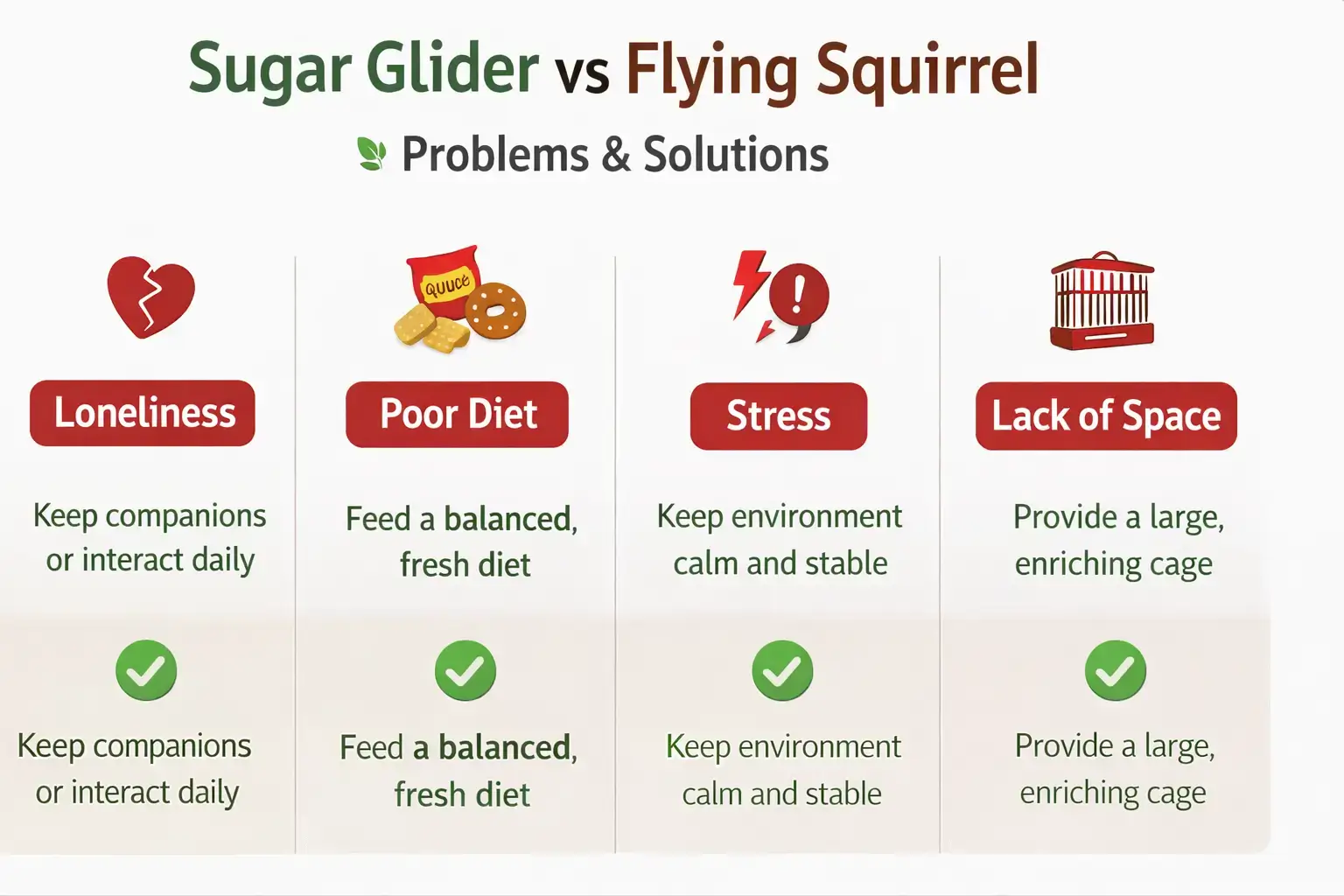
Problem: excessive barking or noise
- cause: loneliness
- solution: increase interaction
Problem: refusal to eat
- cause: poor diet variety
- solution: introduce fresh foods gradually
Flying Squirrel Care Challenges
Problem: hiding constantly
- cause: stress or fear
- solution: reduce handling and provide safe nesting
Problem: escape attempts
- cause: insufficient space
- solution: upgrade enclosure
Seasonal Pet Care Tips
Summer Care Essentials
- ensure hydration
- avoid overheating
- provide shaded cage areas
Winter Care Essentials
- add warm bedding
- keep cages away from cold air
- monitor reduced activity
Spring And Fall Adjustments
- increase activity time
- check for parasites
- adjust diet slightly
Additional Expert Tips
Common Owner Mistakes
- assuming both species are the same
- underestimating sugar glider social needs
- keeping a single sugar glider (they prefer pairs)
Long Term Care Advice
- sugar gliders require long-term commitment
- flying squirrels are better observed than handled
- always research local laws before keeping exotic pets
Conclusion
When comparing sugar glider vs flying squirrel, the biggest difference comes down to behavior and care needs. Sugar gliders are social, interactive pets that demand time and attention, while flying squirrels are more independent and less suitable for handling. Choosing the right animal means understanding their needs, avoiding common care mistakes, and committing to proper long-term care. With the right approach, both animals can thrive — but only when their unique requirements are respected.
FAQs
-
Are sugar gliders and flying squirrels the same?
No, sugar gliders are marsupials while flying squirrels are rodents.
-
Are sugar gliders good pets for beginners?
Not really. They require time, bonding, and specialized care.
-
Can flying squirrels be kept as pets?
In some places yes, but they are not ideal due to their shy nature.
-
Do flying squirrels actually fly?
No, they glide using a membrane between their limbs.
-
Which is more social, sugar glider or flying squirrel?
Sugar gliders are much more social and interactive.
-
How much exercise do sugar gliders need?
They need daily activity and space to glide inside a large enclosure.
-
Are sugar gliders related to squirrels?
No, they are marsupials and not related to squirrels at all.