

White Siamese cats are one of the most striking and elegant cat types you’ll come across. Their pale coats combined with bright blue eyes make them stand out instantly. Many first-time owners are drawn to their beauty, but what keeps people attached is their affectionate personality and strong bond with humans.
However, caring for a white Siamese cat isn’t exactly the same as caring for other cats. They are highly social, vocal, and mentally active. A common mistake new owners make is treating them like independent cats—they actually crave attention and interaction daily.
Pet Care Insight
This guide is based on widely accepted pet care practices, veterinary guidance, and common experiences shared by responsible pet owners. The goal is to provide practical, easy-to-follow advice that helps owners keep their pets healthy, comfortable, and well cared for.
Pet Overview
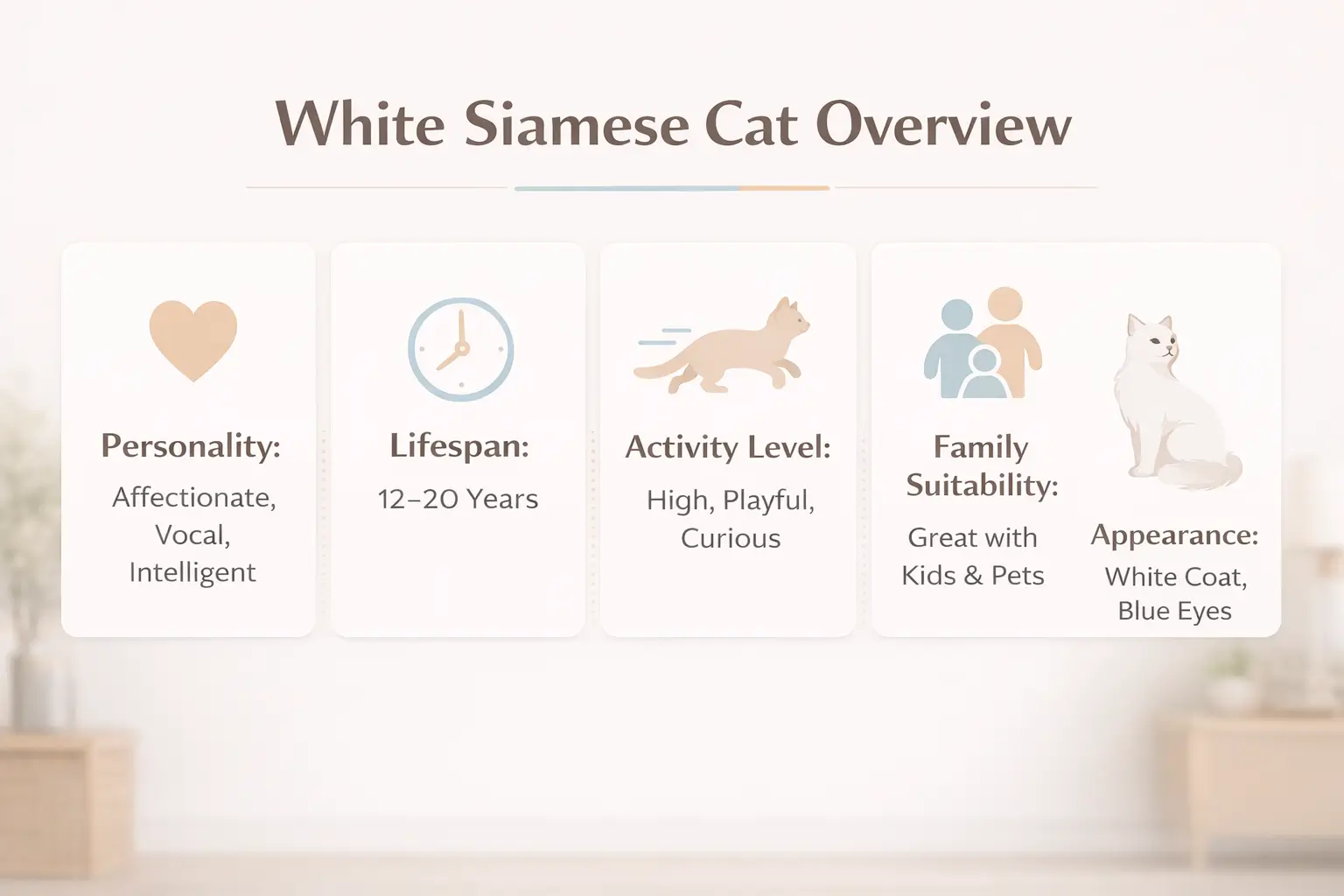
Temperament And Personality
White Siamese cats are known for their expressive and social nature. They often follow their owners around the house and “talk” through soft to loud vocalizations. Their personality is:
- Affectionate and people-oriented
- Intelligent and curious
- Vocal and communicative
- Sensitive to changes in routine
Their strong bonding behavior means they don’t like being left alone for long periods.
Lifespan And Physical Traits
A typical white Siamese cat can live 12–20 years with proper care. Their physical features include:
- Sleek, muscular body
- Short coat (though some may appear fluffy or long-haired in mixes)
- Bright blue eyes (especially in white Siamese cat with blue eyes)
- Light cream to pure white fur, sometimes with subtle point coloring
Some variations like lynx point Siamese or flame point Siamese may show faint patterns or color accents.
Suitability For Families
They are excellent family pets but do best in homes where:
- Someone is around most of the day
- Children are gentle and respectful
- Other pets are properly introduced
They usually get along well with other cats and even dogs if socialized early.
Activity Level
White Siamese cats are moderately to highly active. They enjoy climbing, exploring, and interactive play.
Daily Care Essentials
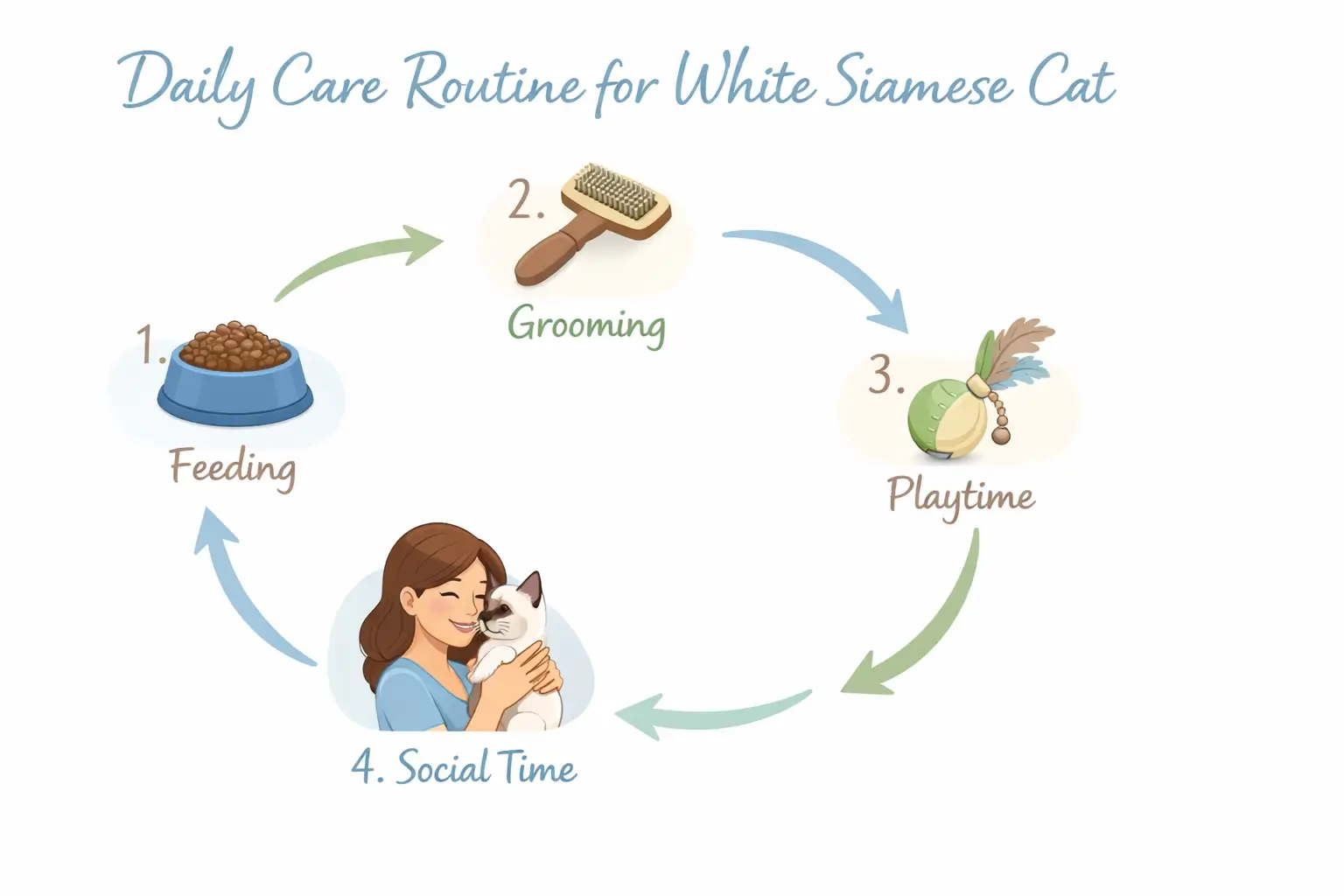
Feeding Routine Basics
Feed your cat 2–3 times a day with consistent timing. Kittens need more frequent meals, while adults do well with morning and evening feeding.
Grooming And Coat Care
Despite their sleek coat, they still benefit from:
- Weekly brushing (more if fluffy or long-haired)
- Occasional wiping to maintain coat brightness
- Regular ear cleaning and nail trimming
White coats can show dirt easily, so light grooming keeps them looking clean.
Exercise And Play Needs
Daily play is essential:
- 20–30 minutes of interactive play
- Toys like feather wands, balls, or laser pointers
- Climbing trees or shelves
Social Interaction Needs
These cats thrive on attention. Spend time:
- Talking and engaging with them
- Allowing lap time or cuddles
- Avoiding long periods of isolation
Diet & Nutrition Guide
Feeding Schedule And Portions
- Kittens: 3–4 small meals daily
- Adults: 2 balanced meals daily
- Seniors: smaller, frequent meals if needed
Adjust portions based on weight and activity level.
Nutritional Requirements
White Siamese cats need:
- High-protein diet (animal-based protein)
- Moderate fat for energy
- Essential vitamins and taurine
Avoid low-quality fillers and overly processed foods.
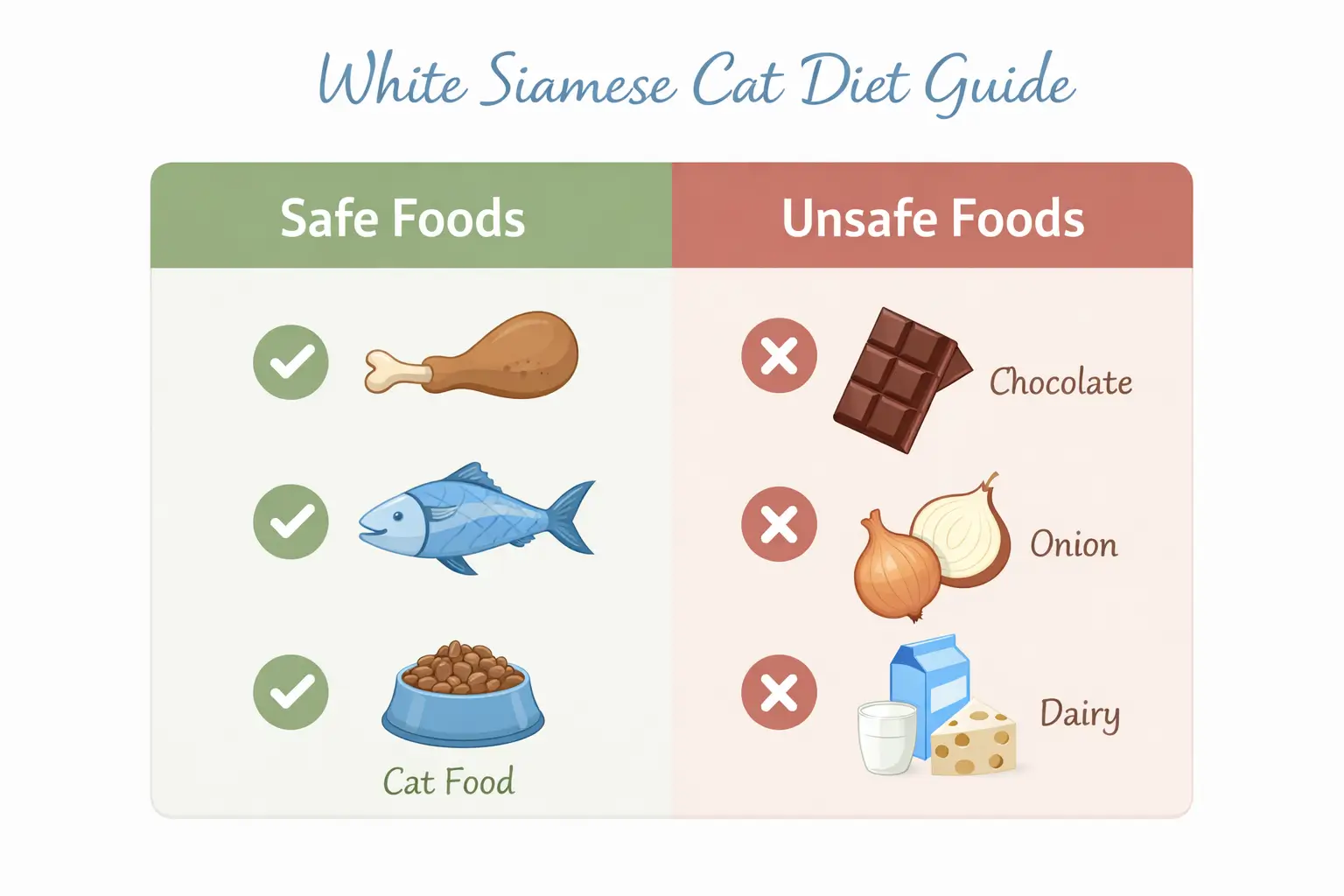
Safe And Unsafe Foods
Safe Foods:
- Cooked chicken or fish (plain)
- High-quality wet or dry cat food
Unsafe foods:
- Chocolate
- Onions and garlic
- Dairy (many cats are lactose intolerant)
- Raw bones or fatty scraps
Life Stage Feeding Guidance
- Kittens: require growth-supporting nutrients
- Adults: balanced maintenance diet
- Seniors: easy-to-digest food with joint support
Exercise & Mental Stimulation
Daily Activity Requirements
White Siamese cats need both physical and mental stimulation daily to prevent boredom.
Indoor Play Ideas
- Puzzle feeders
- Hide-and-seek games
- Interactive toys
Enrichment Activities
- Window perches for bird watching
- Rotating toys to prevent boredom
- Teaching simple tricks
Their intelligence makes them quick learners and easily engaged.
Training & Behavior Guidance
Basic Training Tips
Siamese cats respond well to positive reinforcement:
- Use treats and praise
- Keep sessions short and consistent
- Start training early
Socialization Advice
Expose them gradually to:
- New people
- Other pets
- Different environments
This helps reduce anxiety and fear later.
Preventing Behavior Problems
Common issues include excessive meowing or attention-seeking. Prevent by:
- Providing enough playtime
- Maintaining routine
- Avoiding sudden changes
Health & Climate Considerations
Common Health Concerns
White Siamese cats may be prone to:
- Dental issues
- Respiratory sensitivities
- Eye conditions
Regular vet checkups are essential.
Heat And Warm Climate Care
In warmer climates:
- Ensure constant access to fresh water
- Provide shaded, cool areas
- Avoid overheating
Their light coat can reflect heat but doesn’t fully protect from high temperatures.
Cold Weather Care
They are not very cold-tolerant:
- Provide warm bedding
- Keep them indoors in winter
- Avoid exposure to drafts
Common Problems & Troubleshooting
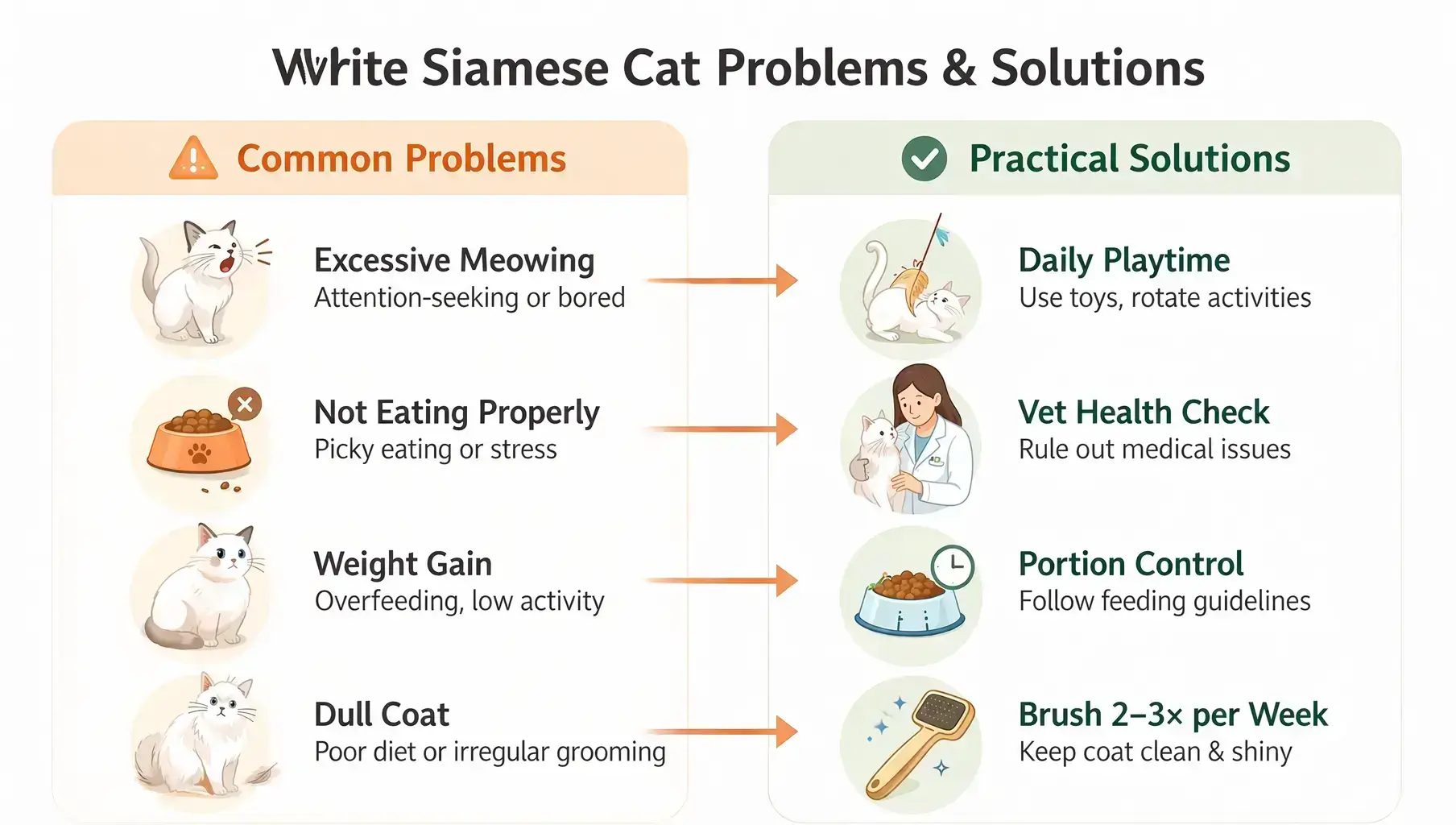
Excessive Vocalization
Cause: boredom or need for attention
Solution: increase playtime and interaction
Prevention: maintain daily engagement
Refusing Food
- Cause: stress, illness, or diet change
- Solution: check for health issues and offer familiar food
- Prevention: introduce new food gradually
Weight Gain
- Cause: overfeeding or low activity
- Solution: adjust portions and increase play
- Prevention: monitor weight regularly
Dirty Or Dull Coat
- Cause: lack of grooming or poor diet
- Solution: improve diet and brush regularly
- Prevention: maintain grooming routine
- Seasonal Pet Care Tips
Spring Care Adjustments
- Watch for allergies
- Increase playtime as activity rises
Summer Heat Protection
- Keep water available at all times
- Avoid peak heat hours
- Provide cool resting spots
Fall Routine Changes
- Maintain exercise as weather cools
- Check for parasites
Winter Comfort Tips
- Keep indoors and warm
- Add cozy sleeping areas
- Increase indoor play
Additional Expert Tips
- Don’t ignore their need for companionship—loneliness can lead to behavior issues
- Keep a consistent routine to reduce stress
- Provide vertical space like cat trees for climbing
- Avoid harsh grooming products that can dull their white coat
- Early training helps manage their strong personality
Conclusion
White Siamese cats are not just beautiful—they are deeply social, intelligent, and emotionally connected pets. With proper care, consistent attention, and a balanced routine, they become incredibly loyal companions.
The most important things to remember are:
- Give them daily interaction and stimulation
- Maintain a proper diet and grooming routine
- Watch for behavioral and health signals early
Avoid treating them like low-maintenance pets. With the right care, they will reward you with affection, companionship, and years of joy.
Learn More: Can Cats Eat Without Teeth? Feeding & Care Guide
FAQs
-
Are white Siamese cats rare?
They are less common than traditional point-colored Siamese, but not extremely rare. Variations like all white Siamese cat with blue eyes can be more unique.
-
Why do white Siamese cats have blue eyes?
Their genetics are linked to color-point patterns, which also influence eye color, resulting in bright blue eyes.
-
How much exercise does a white Siamese cat need daily?
Around 20–30 minutes of active play along with mental stimulation is ideal.
-
Are white Siamese cats good for beginners?
They can be, but only if the owner is ready to give time, attention, and interaction.
-
Why is my white Siamese cat so vocal?
This breed naturally communicates more than others. It’s part of their personality.
-
How often should I groom a white Siamese cat?
Once a week is usually enough, but more frequent grooming helps maintain a clean white coat.
-
Do white Siamese cats get along with other pets?
Yes, especially if introduced early. They are generally social and adaptable.




One Response