Many pet owners assume dogs don’t get cavities at all—which sounds reassuring but isn’t entirely true. The confusion comes from how different canine teeth are compared to human teeth, and what actually causes tooth decay. Misunderstanding this often leads to poor dental care habits.
Quick Summary
- Dogs can get cavities, but they are much less common than in humans
- Their diet, saliva, and tooth shape naturally protect them from decay
- Dogs are more prone to gum disease and plaque, not classic cavities
- Poor dental care can still lead to painful tooth damage and infections
- Regular brushing, proper diet, and chew toys are key to prevention
Pet Care Insight
This guide is based on widely accepted pet care practices, veterinary guidance, and real-life experiences from responsible pet owners. The goal is to provide practical, easy-to-follow advice for everyday pet care.
Pet Overview
Dogs are naturally adapted for tearing and chewing rather than grinding sugary foods like humans.
- Temperament: Loyal, social, routine-driven
- Lifespan: 10–15 years depending on breed
- Teeth Structure: Pointed, spaced teeth designed for tearing meat
- Family Suitability: Excellent with proper training
- Activity Level: Moderate to high
- Compatibility: Good with humans and other pets when socialized
Their dental structure plays a big role in why cavities are rare.
Daily Care Essentials
Daily Feeding Routine Basics
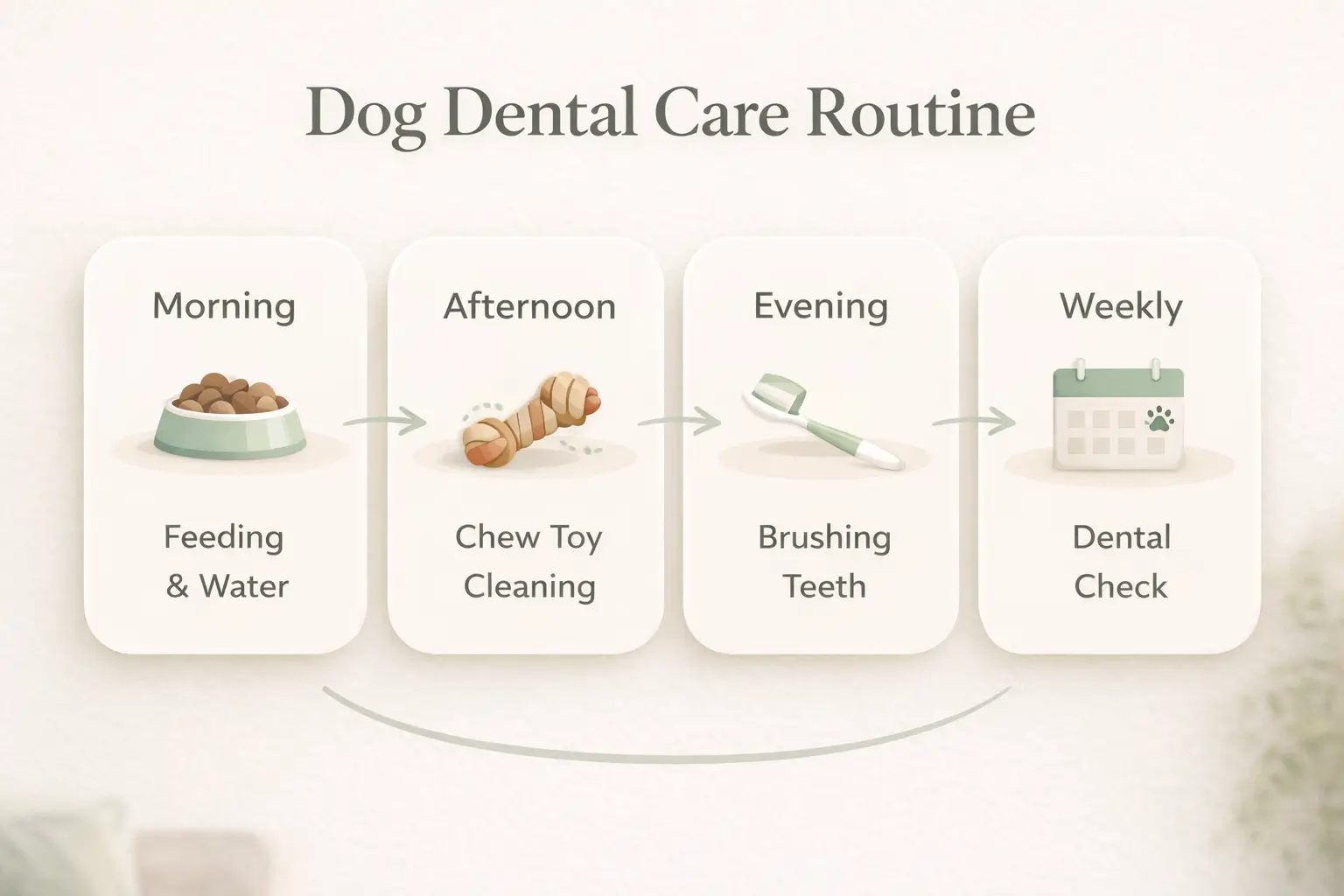
Feed dogs 1–2 times daily using balanced commercial or vet-approved diets. Avoid sugary treats—these are a major contributor to decay.
Daily Grooming And Hygiene
- Brush teeth 2–3 times per week (daily is ideal)
- Use dog-safe toothpaste only
- Check gums and teeth weekly
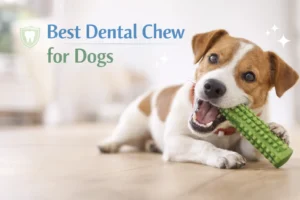
Regular brushing is important, but pairing it with the best dental chew for dogs can significantly reduce plaque and keep your dog’s teeth cleaner between brushings.
Daily Exercise And Activity
- Walks + chew time = natural cleaning
- Chewing helps reduce plaque buildup
Social Interaction And Bonding
- Playtime reduces stress-related chewing habits
- Mental engagement prevents destructive behavior
Real-life example:
A dog that gets daily chew toys and outdoor activity will often have cleaner teeth than one that stays indoors with soft food and no stimulation.
Common mistakes:
- Assuming dogs don’t need brushing
- Feeding only soft food
- Ignoring bad breath (often the first sign of dental issues)
Diet & Nutrition Guide
Feeding Schedule And Portions
- Puppies: 3–4 small meals daily
- Adults: 1–2 meals
- Seniors: Smaller, controlled portions
Nutritional Needs For Teeth
- Protein-rich diets support oral health
- Crunchy kibble helps reduce plaque
- Avoid sugary or sticky human foods
Safe Vs Unsafe Foods
Safe:
- Dry kibble
- Dental chews
- Raw carrots (in moderation)
Unsafe:
- Sugary snacks
- Sticky foods (like peanut butter with sugar)
- Processed human treats
Puppy And Senior Considerations
- Puppies: Teeth are developing—avoid very hard chews
- Seniors: Softer options but still require cleaning
Clarifying confusion:
Dogs don’t get cavities often because they don’t consume sugar-heavy diets like humans—but if they do, risk increases.
Exercise & Mental Stimulation
Choosing safe chew options matters—some materials can damage teeth, so it’s worth understanding are Nylabones safe before giving them to your dog.
Daily Activity Needs Explained
- 30–90 minutes depending on breed
- Include chewing activities
Easy At-Home Enrichment Ideas
- Dental chew toys
- Frozen treats (unsweetened)
- Puzzle feeders
Chewing is not just play—it’s natural dental cleaning.
Training & Behavior Guidance
Basic Dental-Friendly Training
- Teach “leave it” to avoid harmful items
- Reward with healthy treats
Socialization And Chewing Habits
- Proper socialization reduces stress chewing
- Redirect chewing to safe toys
Preventing Destructive Behavior
- Lack of stimulation = poor chewing choices
- Provide structured routines
Health & Climate Considerations
Heat Safety And Hydration
- Dehydration reduces saliva → increases bacteria
- Always provide fresh water
Cold Weather Care Tips
- Less outdoor chewing activity in winter
- Increase indoor dental care
Seasonal Dental Risks
- Summer: More treats → higher risk
- Winter: Reduced activity → plaque buildup
Why Don’t Dogs Get Cavities?
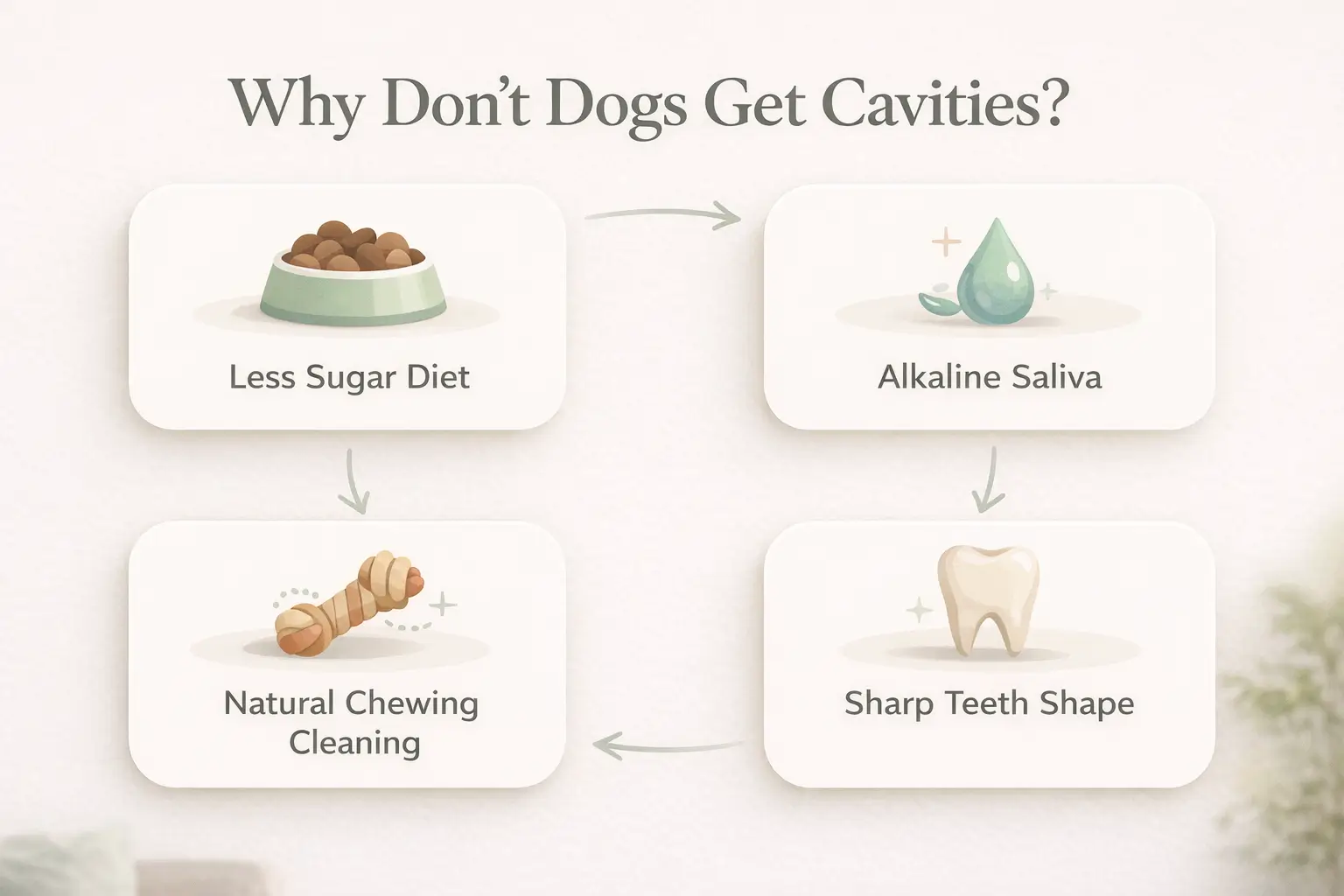
Dogs are naturally protected due to:
- Less sugar consumption → bacteria don’t thrive
- Alkaline saliva → neutralizes acids
- Sharp tooth shape → food doesn’t stick
- Natural chewing behavior → self-cleaning effect
However, this doesn’t make them immune.
Comparison Section: Types of Chews and Dental Impact
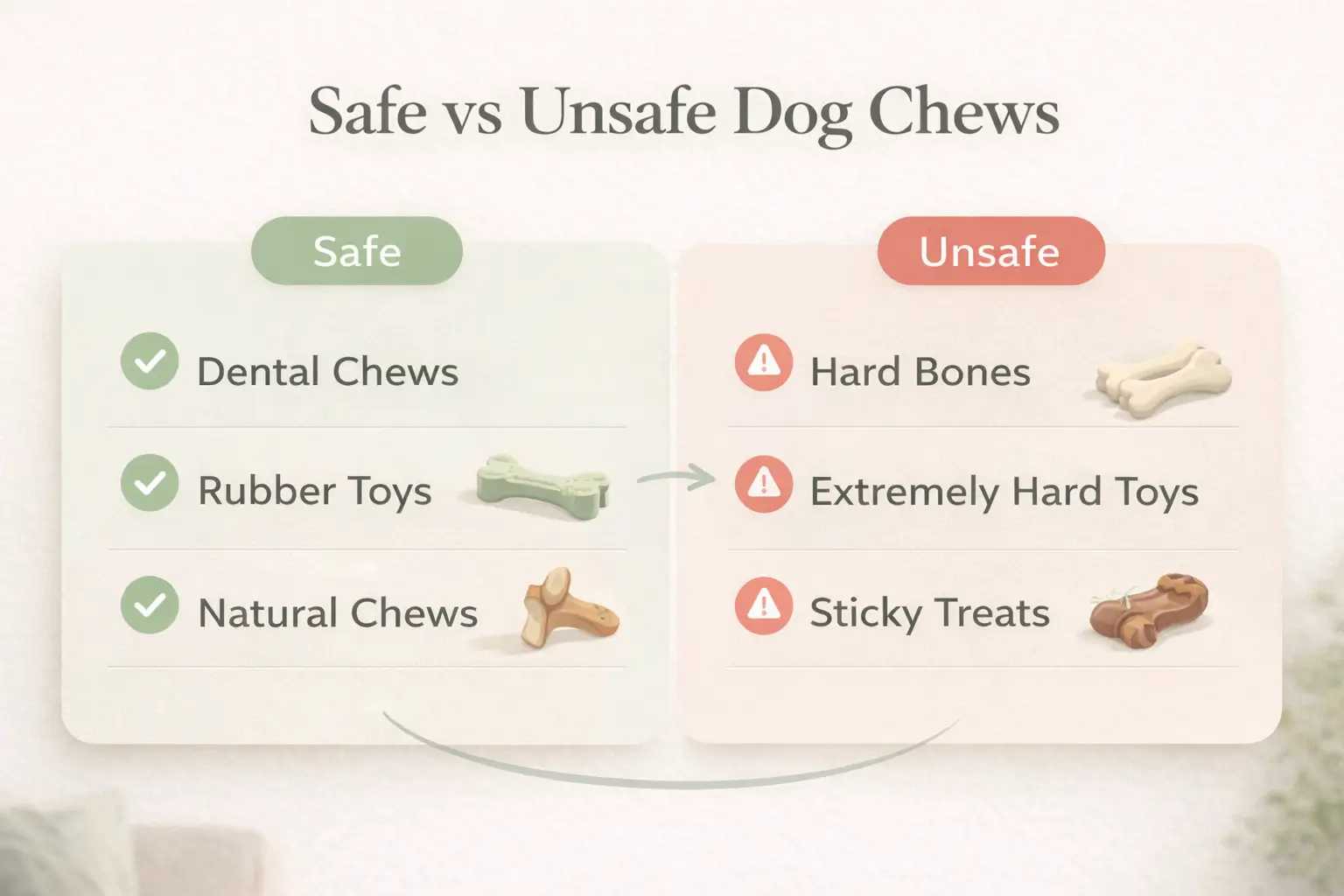
| Type of Chew | Safety Level | Best For | Risks |
|---|---|---|---|
| Natural Chews | High | Dental cleaning | Overconsumption risk |
| Rubber Toys | High | Safe chewing | Minimal |
| Hard Bones | Low | Aggressive chewers | Tooth fractures |
| Soft Treats | Medium | Training rewards | Plaque buildup |
| Dental Chews | High | Oral hygiene | Calorie intake |
Key takeaway: Not all chewing is beneficial—some can damage teeth.
Common Problems & Troubleshooting
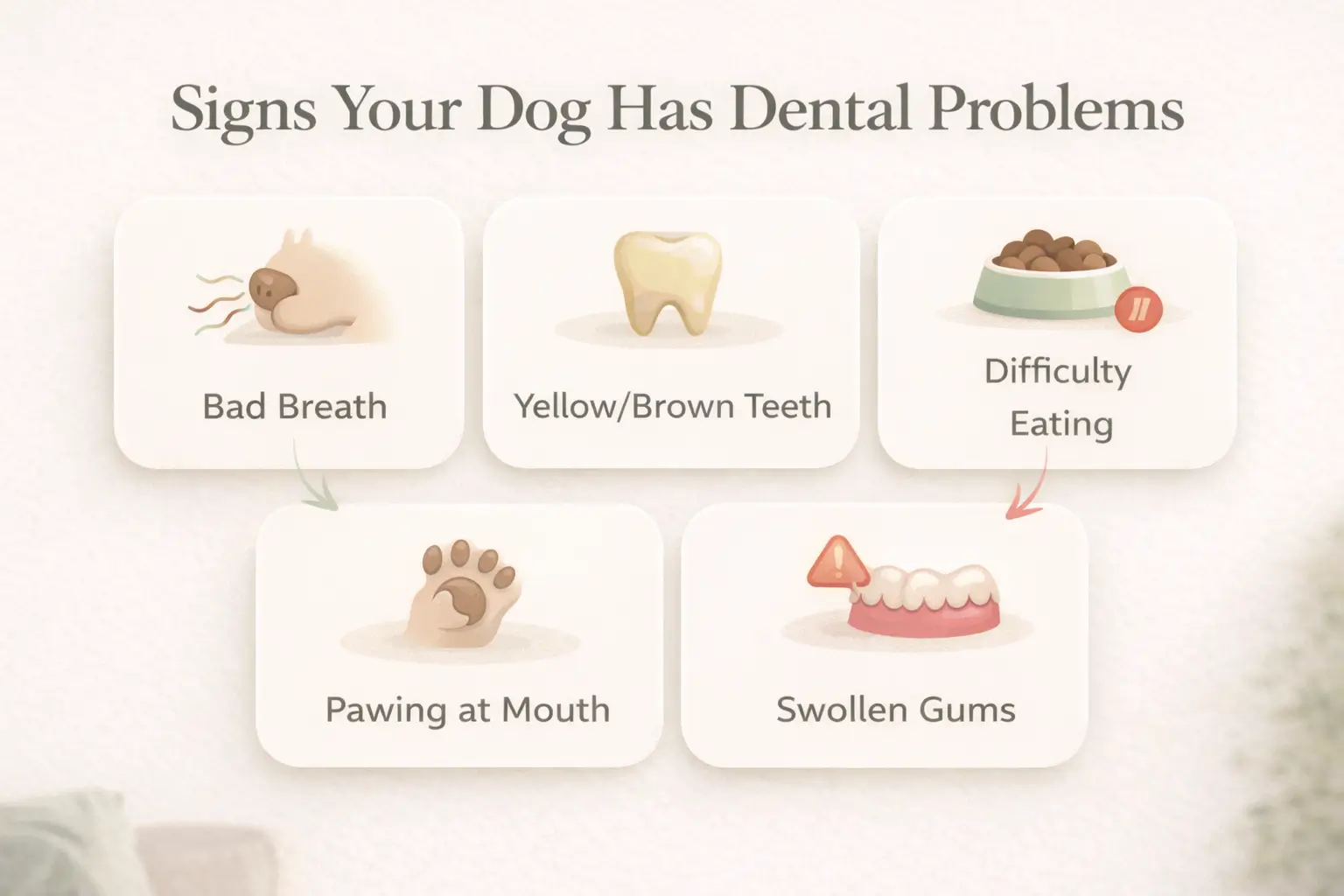
Persistent bad breath or visible tooth damage may indicate underlying dental disease—according to American Veterinary Medical Association, untreated oral infections can lead to serious health complications beyond the mouth.
Dog Has Bad Breath Issue
- Cause: Bacteria buildup
- Solution: Regular brushing
- Prevention: Dental chews
- Vet Visit: If smell persists
If symptoms worsen, it could indicate deeper problems like infection—here’s a helpful guide on symptoms of dog tooth infection to watch for early warning signs.
Dog Showing Tooth Discoloration
- Cause: Plaque or decay
- Solution: Professional cleaning
- Prevention: Routine care
- Vet Visit: Immediately if worsening
Dog Struggling To Eat
- Cause: Pain or infection
- Solution: Soft food temporarily
- Prevention: Early dental checks
- Vet Visit: Urgent
Dog Has Visible Damage
- Cause: Hard chewing objects
- Solution: Remove unsafe items
- Prevention: Use safe toys only
- Vet Visit: Required
Seasonal Pet Care Tips
Spring Allergy And Dental Impact
- Allergies can affect gums
- Monitor swelling
Summer Heat And Hydration
- Increased water intake supports oral health
Fall Routine Adjustments Needed
- Reintroduce structured feeding
- Reduce random treats
Winter Indoor Care Focus
- Increase brushing frequency
- Provide indoor chew activities
Additional Expert Tips
- Don’t rely only on kibble for cleaning
- Rotate chew toys to keep dogs interested
- Schedule yearly dental checkups
- Start dental care early (puppy stage)
- Watch for subtle signs like drooling or pawing mouth
Hidden mistake:
Many owners ignore dental care until symptoms appear—by then, damage is already advanced.
Conclusion
Dogs don’t commonly get cavities because of their biology and diet—but they are far from immune to dental problems. The real risk lies in neglecting oral care, assuming nature will handle it. Consistent hygiene, proper diet, and safe chewing habits are the foundation of lifelong dental health.
FAQs
- Do dogs get cavities like humans?
Rarely, but they can—especially with poor diet and hygiene - Can puppies get cavities?
Yes, though it’s uncommon; early care is important - Do wild animals get cavities?
Very rarely due to natural diets and constant chewing - How do I tell if my dog has a cavity?
Look for bad breath, discoloration, or eating difficulty - Do dogs need teeth brushing?
Yes—this is the most effective prevention method - Can dogs get cavities filled?
In rare cases, but extraction is more common - Why don’t animals need to brush their teeth?
Their diets and chewing habits naturally reduce buildup—but pets still need care