

Canker sores on dogs are a confusing and often worrying issue for pet owners. Many people assume dogs get “canker sores” just like humans, but in reality, true canker sores are uncommon in dogs. What most owners notice as canker sores are usually mouth ulcers, injuries, infections, or even early signs of more serious conditions like oral cancer or systemic illness.
If you’ve ever searched for dog mouth sores pictures or wondered why your dog has sores around its mouth, you’re not alone. These symptoms can range from mild irritation to serious health concerns that need prompt attention. Understanding the difference is key to keeping your dog safe and comfortable.
Pet Care Insight
This guide is based on widely accepted pet care practices, veterinary guidance, and common experiences shared by responsible pet owners. The goal is to provide practical, easy-to-follow advice that helps owners keep their pets healthy, comfortable, and well cared for.
Understanding Canker Sores on Dogs
What are “canker sores” in dogs?
- True canker sores (aphthous ulcers) are rare in dogs
- Most cases are actually dog mouth ulcers or sores caused by irritation or infection
- They can appear on gums, tongue, lips, or even outside the mouth
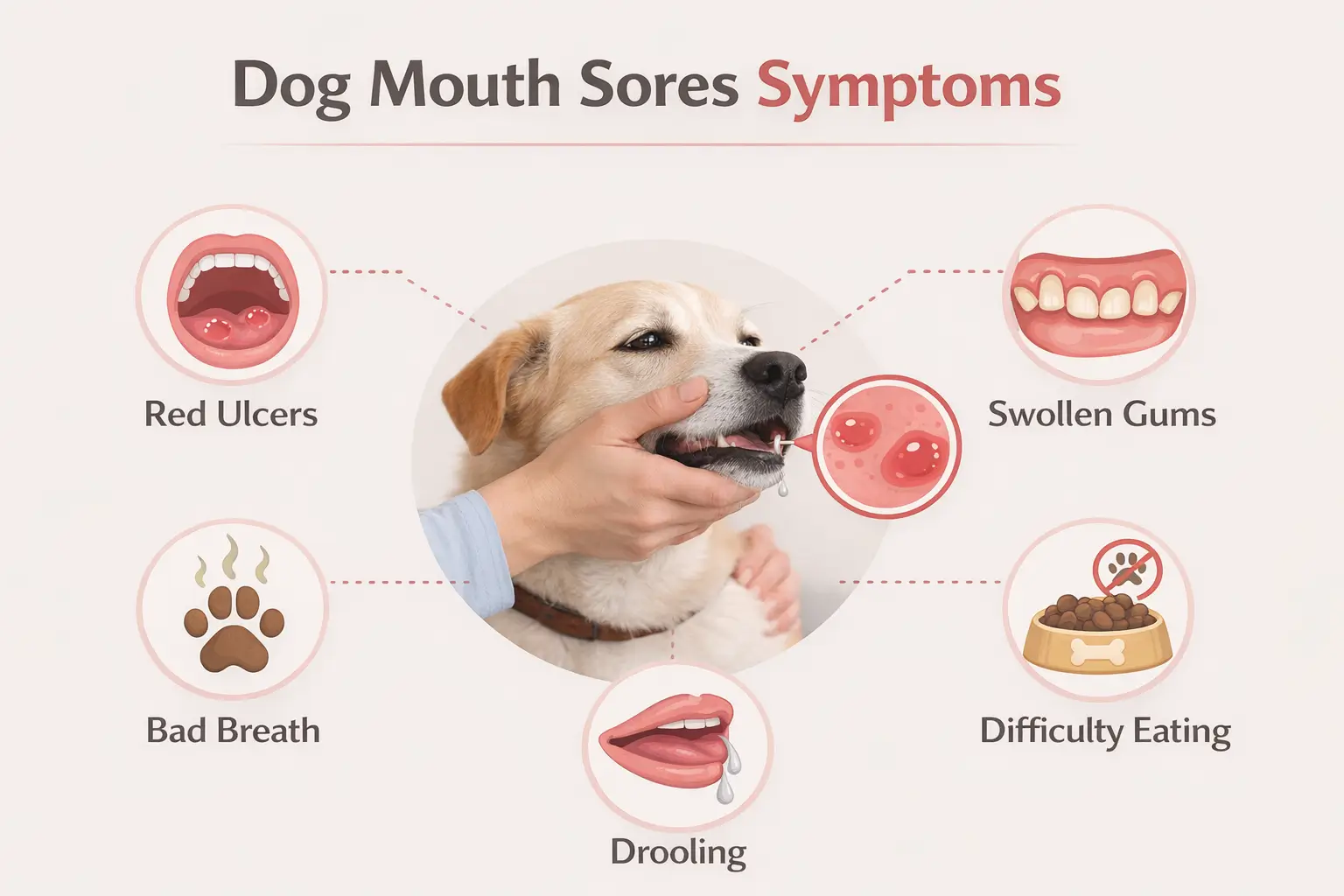
What do canker sores look like on dogs?
- Small red or white lesions
- Open sores with inflamed edges
- Sometimes bleeding or covered with a yellowish film
- Can resemble early stage dog mouth sores pictures seen online
Where can sores appear?
- Inside the mouth (gums, tongue, cheeks)
- On lips or outside of the mouth
- Less commonly on legs or ears (often different conditions like canker dogs ears or infections)
Common Causes of Dog Mouth Sores
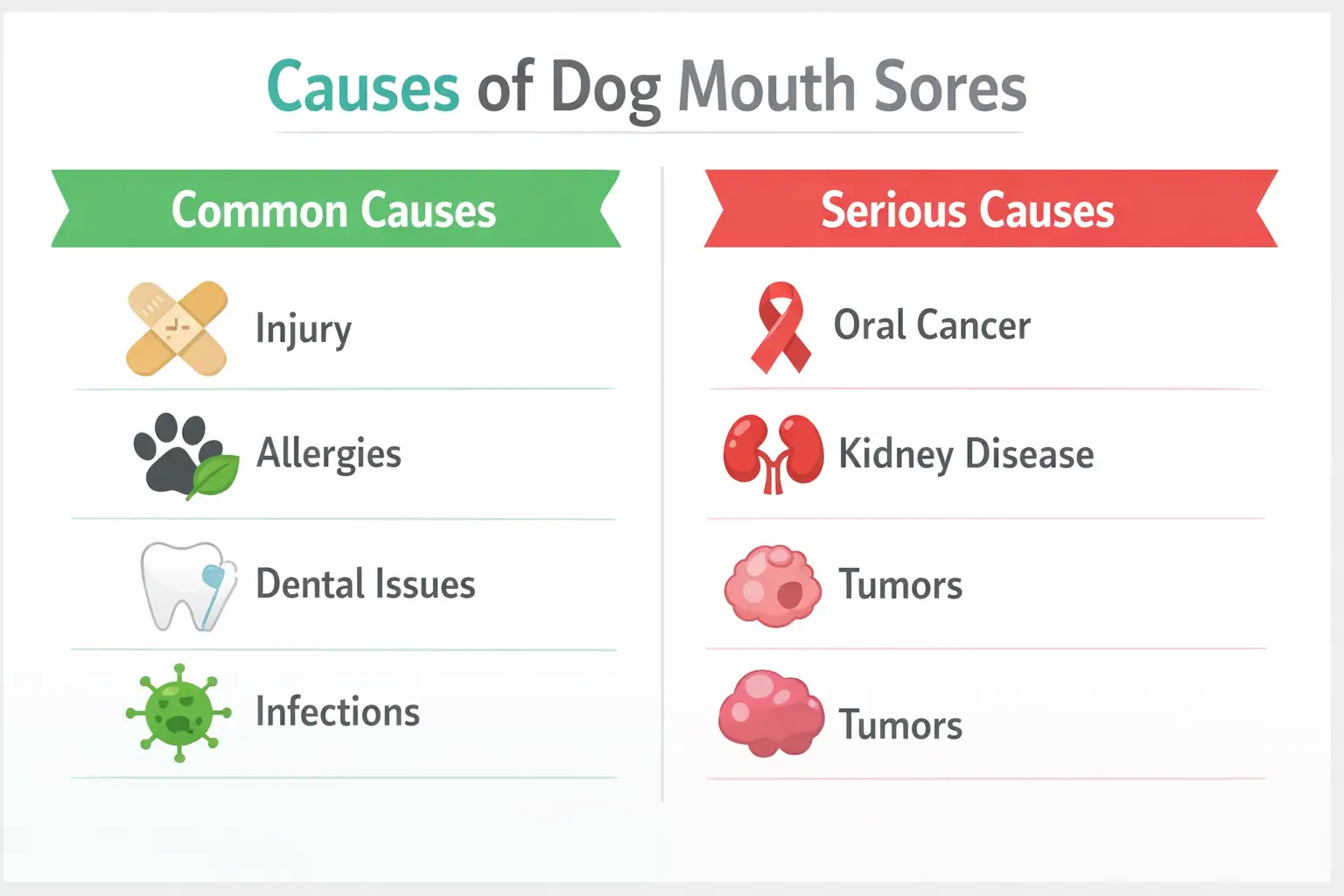
Minor and common causes
- Injury from chewing hard objects
- Burns from hot food
- Allergic reactions
- Poor dental hygiene
Infections and medical conditions
- Bacterial infections
- Viral infections
- Fungal infections
- Gum disease
Serious underlying causes
- Dog mouth cancer or oral cancer in dogs
- Tumor in dogs mouth
- Kidney disease in dogs symptoms (ulcers can develop in advanced cases)
Daily Care Essentials for Dogs with Mouth Sores
Feeding adjustments
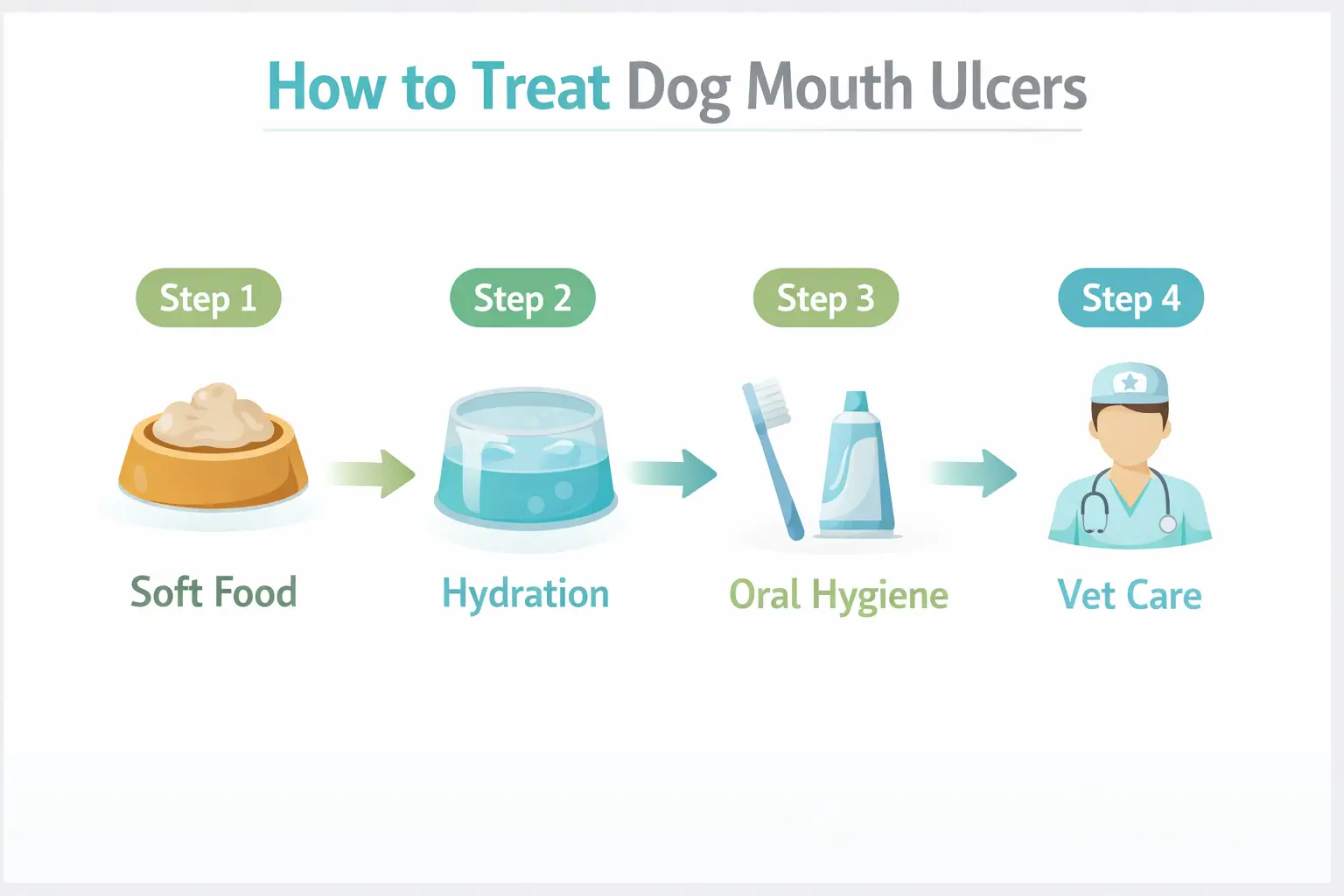
- Offer soft food to reduce pain
- Avoid dry kibble if chewing is painful
- Provide fresh, clean water at all times
Oral hygiene basics
- Gently clean teeth if tolerated
- Use vet-approved dental rinses
- Avoid harsh brushing on sore areas
Comfort and monitoring
- Check mouth daily for changes
- Watch for drooling, bleeding, or bad breath
- Limit chewing on hard toys
Diet & Nutrition Guide
Feeding dogs with mouth ulcers
- Soft, moist food is easier to eat
- Warm (not hot) meals can improve appetite
- Smaller, frequent meals help reduce discomfort
Nutritional needs
- Balanced protein for healing
- Vitamins (especially B-complex and C support tissue repair)
- Hydration is critical
Life stage considerations
- Puppies: ensure soft food during teething or irritation
- Adults: maintain dental health through proper diet
- Seniors: monitor closely for signs of kidney disease in dogs or oral tumors
Safe vs unsafe foods
- Safe: boiled chicken, rice, soft dog food
- Avoid: spicy foods, salty snacks, hard bones
Exercise & Mental Stimulation
Activity considerations
- Normal exercise is usually fine
- Avoid rough play if mouth is painful
Gentle enrichment ideas
- Puzzle feeders with soft food
- Snuffle mats
- Short training sessions
Why mental stimulation matters
- Keeps dogs engaged when appetite or activity drops
- Reduces stress that may slow healing
Training & Behavior Guidance
Supporting a dog in discomfort
- Be patient if your dog resists eating or playing
- Avoid punishment for behavior changes
Encouraging healthy habits
- Train your dog to accept mouth checks
- Reward calm behavior during care routines
Preventing future issues
- Discourage chewing harmful objects
- Teach “leave it” and “drop it” commands
Health & Climate Considerations
Heat and hydration
- Dehydration can worsen mouth ulcers
- Always provide cool, fresh water
Cold weather effects
- Dry air can irritate oral tissues
- Ensure proper hydration indoors
Systemic health links
Mouth ulcers in dogs with kidney disease are a serious sign
Symptoms of kidney disease in dogs include:
- Increased thirst
- Weight loss
- Bad breath (ammonia-like)
- Lethargy
Common Problems & Troubleshooting
Problem: sores around dog’s mouth
- Cause: allergies, infection, or irritation
- Solution: clean area and monitor
- Prevention: avoid irritants and maintain hygiene
Problem: dog refuses to eat
- Cause: pain from mouth ulcers
- Solution: switch to soft food
- Prevention: regular dental care
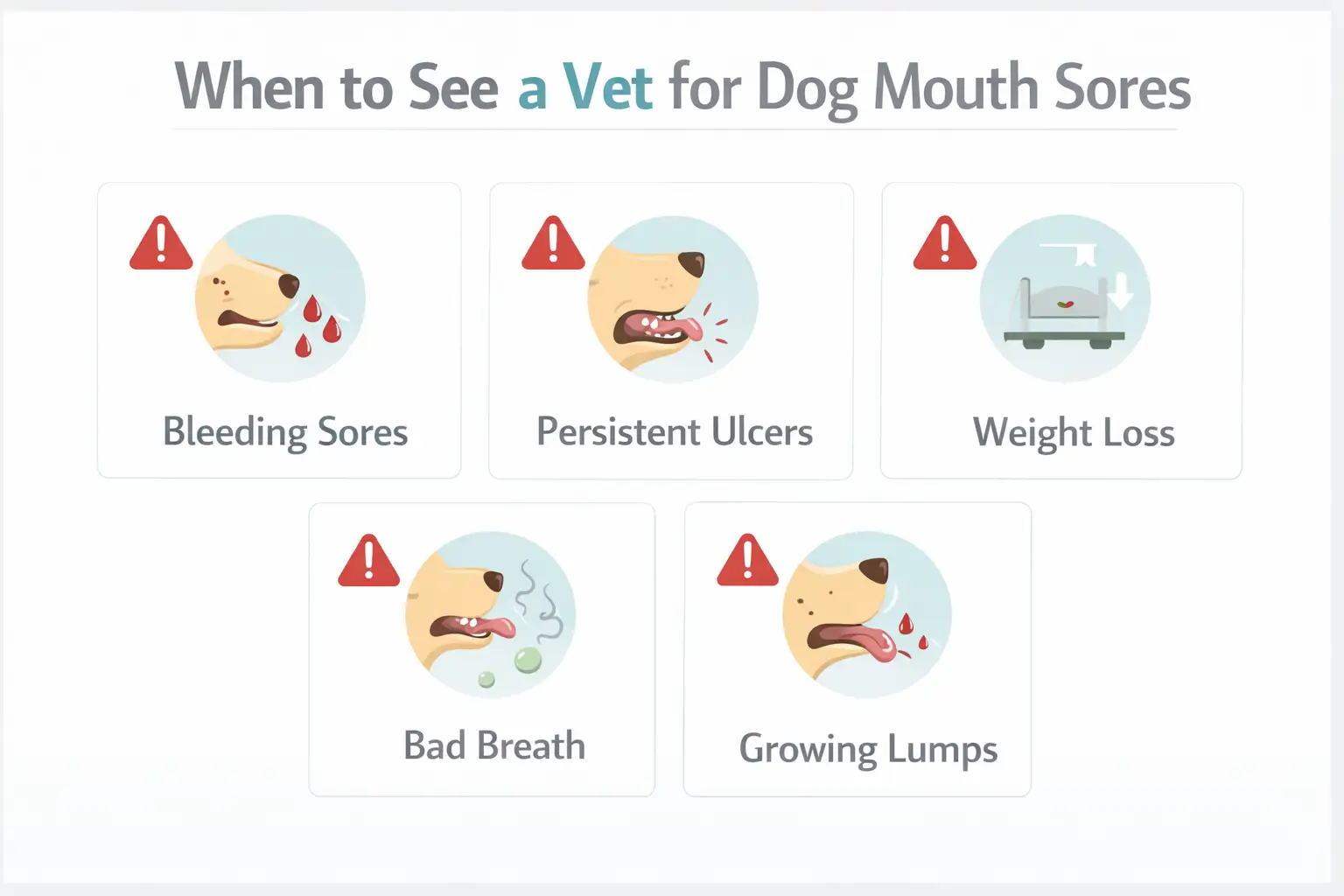
Problem: bleeding or growing sores
- Cause: possible tumor or oral cancer in dogs
- Solution: immediate vet visit
- Prevention: early detection through routine checks
Problem: persistent bad breath
- Cause: infection or dental disease
- Solution: dental cleaning or treatment
- Prevention: regular oral hygiene
Seasonal Pet Care Tips
Summer care
- Keep dogs hydrated
- Avoid hot surfaces that may stress the body
Winter care
- Maintain indoor humidity
- Monitor for reduced water intake
Spring & fall
- Watch for allergies that may trigger sores
- Increase grooming and cleaning routines
Additional Expert Tips
Common mistakes owners make
- Ignoring early signs of mouth sores
- Assuming all sores are harmless
- Delaying vet visits
Smart care habits
- Check your dog’s mouth weekly
- Provide safe chew toys
- Maintain regular vet checkups
Long-term care considerations
- Monitor aging dogs closely for oral cancer
- Watch for recurring sores as a sign of deeper issues
- Keep dental care consistent
Conclusion
Canker sores on dogs are often misunderstood, but they should never be ignored. What appears to be a simple sore could be a minor injury—or an early sign of something more serious like infection, kidney disease, or even oral cancer.
The key to protecting your dog is early detection, proper care, and knowing when to seek veterinary help. By maintaining good oral hygiene, feeding a balanced diet, and regularly checking your dog’s mouth, you can prevent many common issues and catch problems before they worsen.
Taking small, consistent steps in your dog’s daily care can make a big difference in their comfort, health, and overall quality of life.
Learn More: Chameleon Types Explained: Best Species & Care Guide
FAQs
-
Can dogs get canker sores on gums, tongue, or lips?
Dogs rarely get true canker sores, but they can develop ulcers or sores in these areas due to injury, infection, or disease.
-
What do dog mouth sores look like?
They often appear as red, white, or ulcerated patches that may bleed or cause swelling.
-
How to treat dog mouth ulcers at home?
Provide soft food, keep the area clean, and ensure hydration. Always consult a vet if sores persist.
-
When should I worry about dog mouth sores?
If sores last more than a few days, grow, bleed, or are accompanied by weight loss or bad breath, seek veterinary care.
-
Can kidney disease cause mouth ulcers in dogs?
Yes, advanced kidney disease can lead to mouth ulcers and bad breath due to toxin buildup.
-
Are mouth sores in dogs a sign of cancer?
Not always, but persistent or unusual sores can indicate oral cancer and should be checked by a vet.




2 Responses