
Every dog owner wants their dog to live a long, healthy, happy life. But knowing what’s normal — and what’s a warning sign — isn’t always easy, especially for new pet parents.
This guide covers the most important dog health topics in one place. From dental care and infections to behavior, grooming, and puppy health, you’ll find clear overviews and links to in-depth articles for every concern.
Use this as your go-to reference whenever something seems off with your dog. Each section introduces a key health topic and points you to expert resources for the full picture.
By Furry Care Hub | Pet Care & Animal Welfare Expert
Last Updated: August 2026
What Are Dog Health Problems?
Dog health problems are any physical, behavioral, or dental conditions that affect your dog’s quality of life. They range from minor issues — like a chipped tooth or an upset stomach — to serious conditions requiring surgery or long-term management.
Key reasons to stay on top of dog health:
- Early detection saves lives and reduces treatment costs
- Many conditions are preventable with routine care
- Dogs hide pain — subtle signs often indicate real problems
- Dental disease affects over 80% of dogs by age three
- Behavioral changes are often the first sign of illness
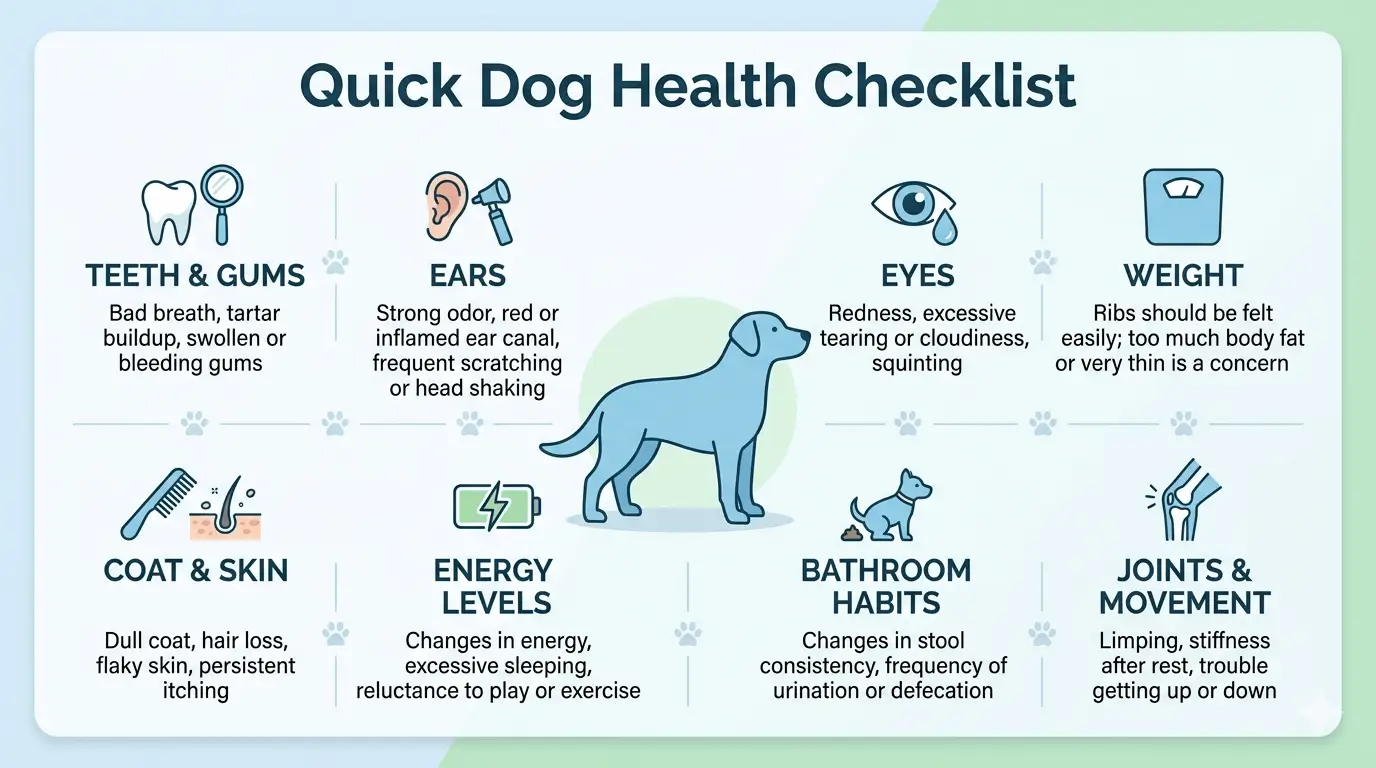
Quick Dog Health Checklist
| Factor | Key Focus |
| Teeth & Gums | Check weekly for discoloration, swelling, or odor |
| Ears | Look for redness, discharge, or scratching |
| Eyes | Watch for redness, cloudiness, or discharge |
| Weight | Ribs should be felt but not seen |
| Coat & Skin | No bald patches, sores, or excessive itching |
| Energy Levels | Sudden lethargy is always worth noting |
| Bathroom Habits | Changes in frequency or consistency matter |
| Joints & Movement | Limping or stiffness needs prompt attention |
🐾 For a complete overview of weight-related health risks, explore How to Tell If Your Dog Is Overweight.
🦷 Dental & Oral Health
Why Dental Health Matters
Dental disease is the most common health problem in dogs, yet it’s also the most overlooked. Bacteria from the mouth can enter the bloodstream and damage the heart, kidneys, and liver over time.
How Often Do Dogs Need Teeth Cleaning?
Most vets recommend a professional cleaning once a year, but high-risk breeds may need it more frequently. At-home brushing and dental chews help maintain oral health between appointments.
Signs of Dental Problems
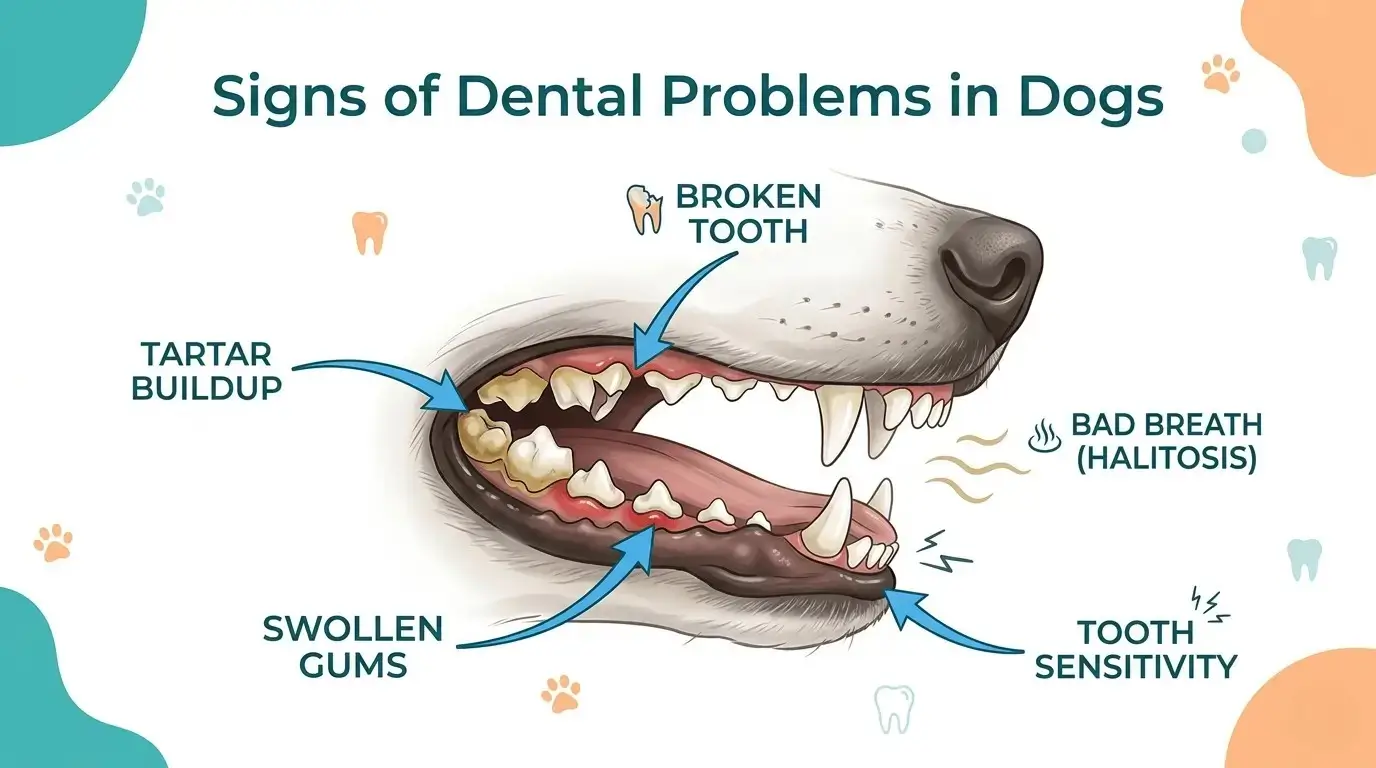
- Dark spots or black buildup on teeth
- Broken, loose, or missing teeth
- Bad breath that goes beyond normal “dog breath”
- Reluctance to eat or chew on one side
- Chattering jaw or pawing at the mouth
🦷 For black buildup concerns, explore Black on Dogs Teeth.
🦷 To understand professional cleaning, explore How Do Vets Clean Dogs Teeth and How Often Should Dogs Get Their Teeth Cleaned.
🦠 Infections & Common Illnesses
Bacterial & Fungal Infections
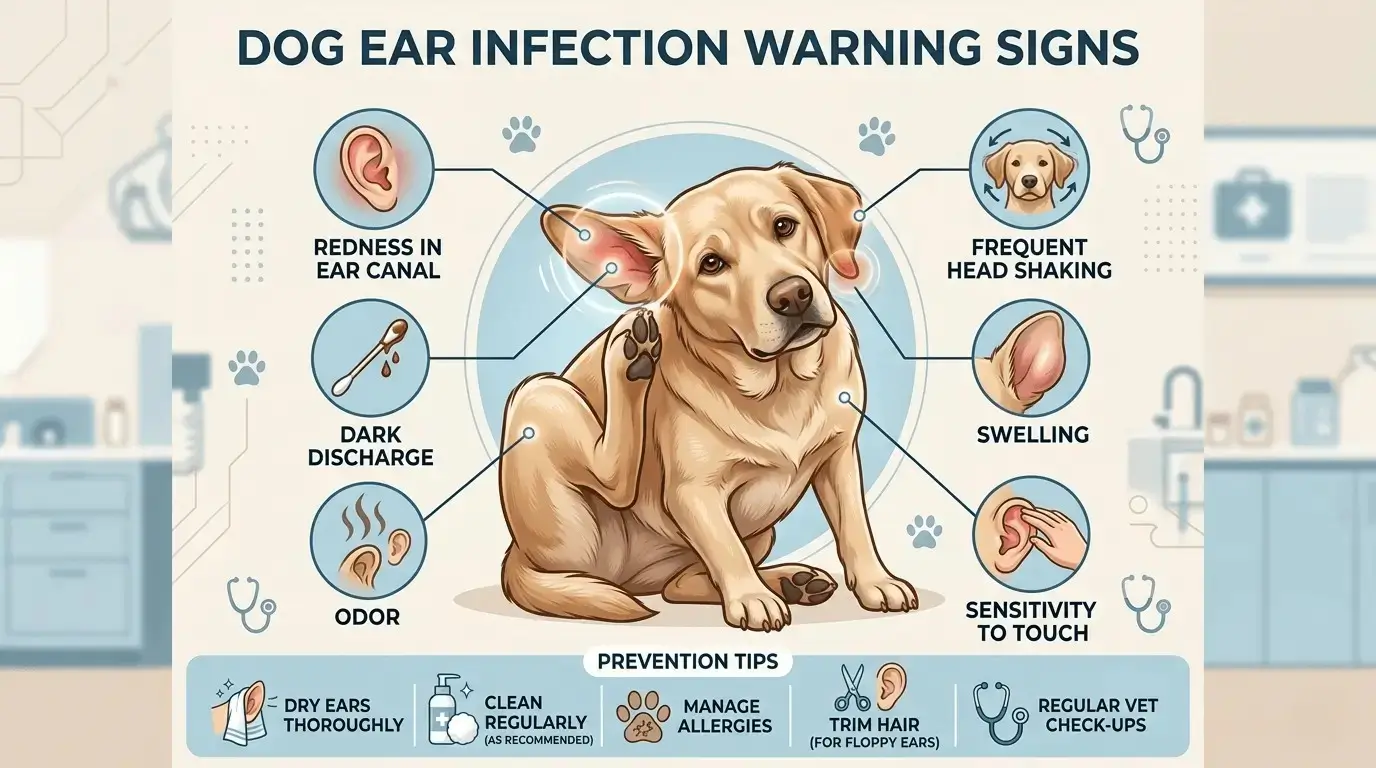
Infections in dogs often show up in the ears, skin, mouth, and urinary tract. A yeast infection in the ear, for example, causes intense scratching, dark discharge, and a strong odor that won’t go away on its own.
Fungal Skin Infections
Fungal infections in dogs can look like patchy hair loss, crusty skin, or circular lesions, and are often confused with allergies or bacterial infections.
🩺 For visual signs and identification, explore What Does a Fungal Infection Look Like on a Dog.
Heart Diagnostics: The Dog EKG
For dogs with suspected arrhythmias or heart murmurs, vets may use an EKG (ECG) to measure the heart’s electrical activity and catch problems that a stethoscope alone can miss.
🩺 To understand how it works, explore Dog EKG.
Ear Bleeding
Bleeding from the ear can result from scratching injuries, hematomas, infections, or foreign objects, and the underlying cause determines whether it’s a same-day vet visit or an emergency.
🩺 For causes and when to worry, explore Dog Ear Bleeding.
Senior Wellness Bloodwork
A senior profile is a bundle of bloodwork and diagnostic tests designed to catch age-related organ decline — kidney, liver, thyroid — before symptoms become obvious.
🩺 For what’s included and why it matters, explore Senior Profile for Dogs.
Comforting a Dog in Pain Before You Reach the Vet
When a dog is clearly in pain and you can’t get to the vet immediately, there are safe, practical steps to keep them calm and comfortable without masking symptoms or causing further harm.
🩺 For a step-by-step guide, explore How to Comfort a Dog in Pain Waiting for the Vet.
Oral Growths & Sores
Papillomas (warts), canker sores, and gingival hyperplasia are common oral conditions that pet owners frequently mistake for something more serious. Most are benign but still require monitoring.
When to Treat vs. When to Panic
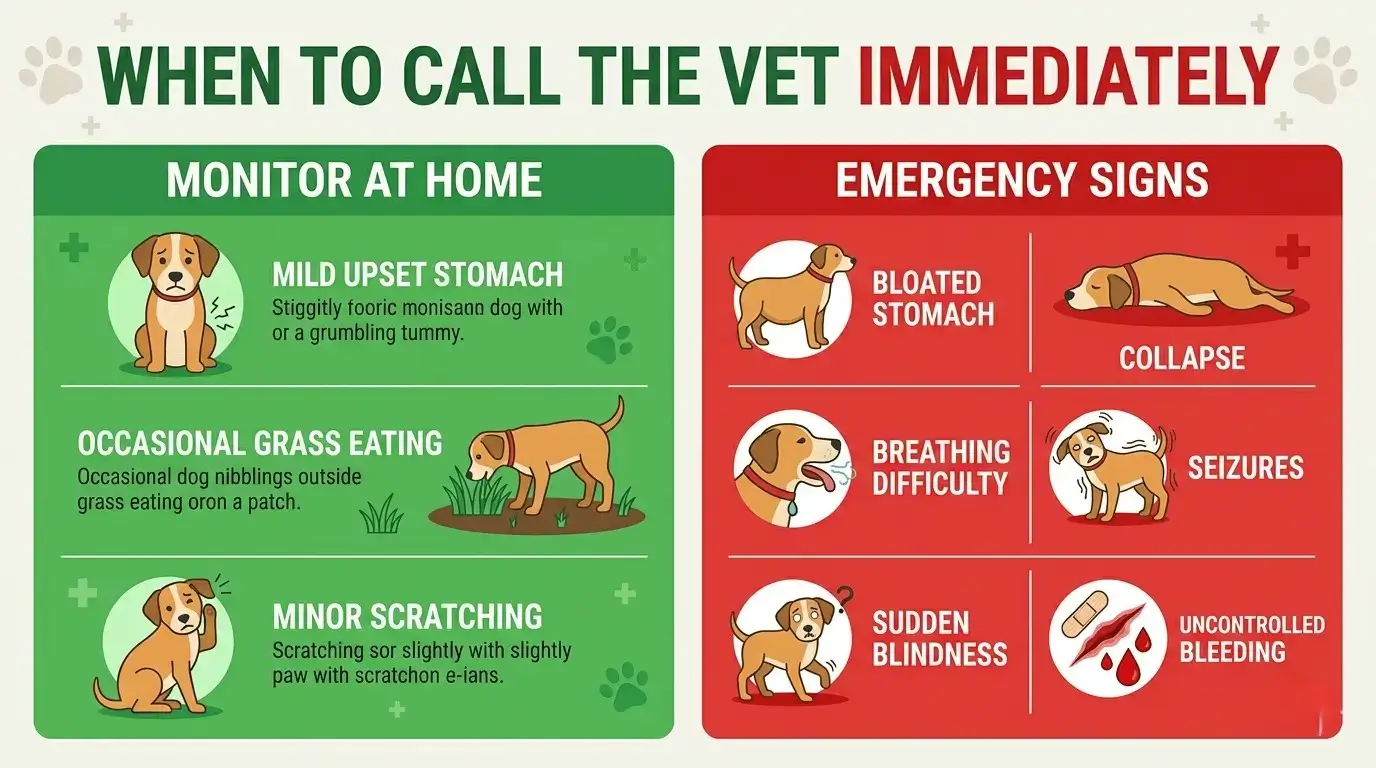
Not every infection is an emergency, but some — like an abscess — can become life-threatening if left untreated. Knowing the difference can save your dog’s life and your vet bill.
🦠 For urinary symptoms, explore Signs of Bladder Infection in Dogs.
🦠 For ear issues, explore Yeast Infection Dog Ear and for abscess urgency, explore Is a Dog Abscess an Emergency.
Ectropion: When the Eyelid Turns Outward
Ectropion is a condition where the lower eyelid rolls outward, exposing the inner surface and increasing the risk of irritation, dryness, and infection. It’s especially common in breeds with loose facial skin.
👁️ For causes, symptoms, and treatment, explore Ectropion in Dogs.
🦴 Musculoskeletal, Heart & Neurological Health
Joint & Spine Conditions
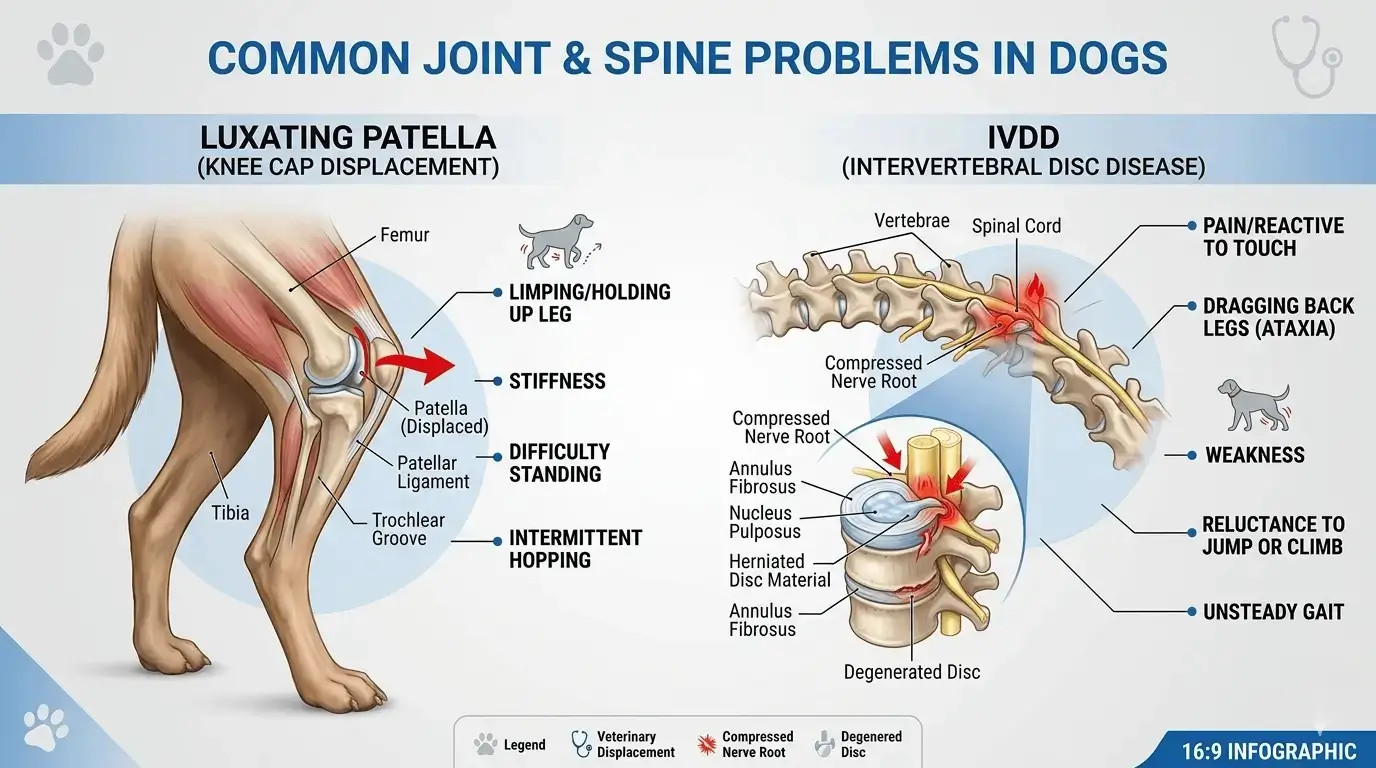
Conditions like luxating patella (a slipping kneecap) and IVDD (intervertebral disc disease) are painful and progressive. Early intervention — including rest, physical therapy, or surgery — dramatically improves outcomes.
Heart Murmurs in Dogs
A heart murmur is an abnormal sound heard during a heartbeat and is graded on a scale of 1–6. Not all murmurs require immediate treatment, but they do need regular monitoring by your vet.
Ear Hematomas
An aural hematoma is a blood-filled swelling on the ear flap, usually caused by head shaking or scratching. It requires prompt veterinary care to prevent permanent disfigurement of the ear.
🦴 For joint concerns, explore Signs of Luxating Patella in Dogs and How to Treat IVDD in Dogs at Home.
🦴 For cardiac health, explore Heart Murmur in Dogs.
Hip Fractures vs. Chronic Joint Disease
A hip fracture is a sudden, traumatic injury — usually from a car accident, fall, or hard impact — that breaks the bones of the hip joint. It’s very different from gradual conditions like hip dysplasia: fractures come on suddenly and cause immediate, severe lameness, while joint disease develops slowly over months or years.
🦴 For full signs, treatment options, surgery costs, and recovery timelines, explore Hip Fracture in Dogs.
🐾 Behavior & Digestive Health
Why Dogs Eat Strange Things
Dogs eat grass, socks, and other non-food items for a range of reasons — boredom, nutritional deficiency, anxiety, or instinct. While occasional grass eating is normal, compulsive object eating can be dangerous.
Digestive Upset Signs

An upset stomach in dogs usually shows as vomiting, diarrhea, bloating, or loss of appetite. Most cases resolve within 24 hours, but repeated episodes warrant a vet visit.
Destructive Chewing & Vision Loss
Destructive chewing is a behavioral issue that’s almost always rooted in unmet needs — exercise, mental stimulation, or anxiety relief. Sudden blindness, on the other hand, is a medical emergency that requires immediate attention.
🐾 For grass-eating behavior, explore Why Do Dogs Eat Grass to Throw Up and Signs of Upset Stomach in Dogs.
🐾 For chewing behavior, explore How to Stop a Dog From Chewing Everything and Signs of Blindness in Dogs.
✂️ Grooming, Care & Puppy Health
Routine Grooming as Preventive Care
Regular grooming isn’t just about appearance — it’s your first line of defense against skin issues, infections, and overgrown nails. Long nails change a dog’s gait and can lead to joint pain over time.
Puppy-Specific Health Needs
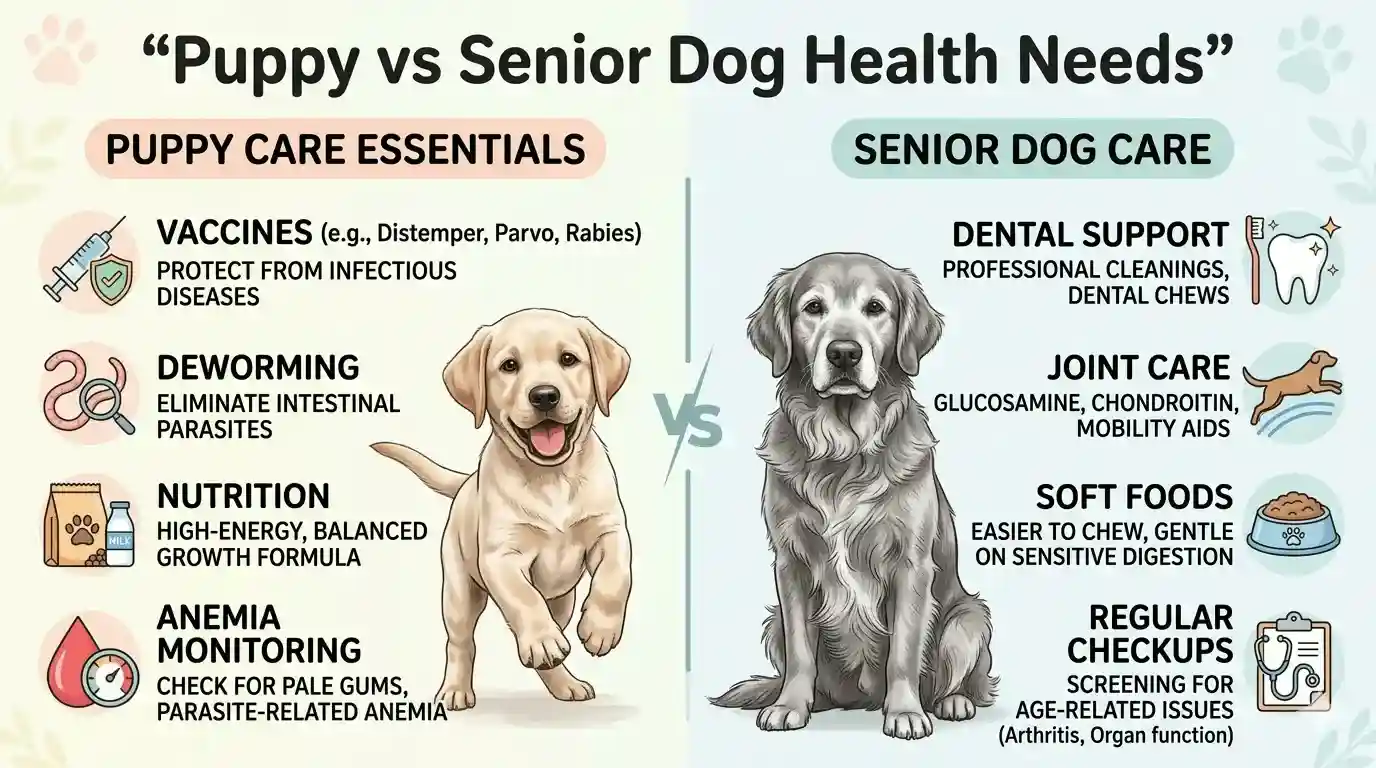
Puppies have unique health requirements including vaccines, deworming, and nutrient-dense feeding. Anemia in puppies is more common than most owners realize and can be life-threatening if not caught early.
Senior Dog Care
Older dogs face different challenges — tooth extraction recovery takes longer, healing is slower, and their nutritional needs shift. Dogs who lose teeth entirely still need to eat well, and there are safe feeding options available.
✂️ For grooming basics, explore How Often to Trim Dog Nails and How to Protect Dogs Feet from Hot Pavement.
✂️ For puppy and senior needs, explore Anemia in Puppies, Senior Dog Tooth Extraction Recovery, and What to Feed Dogs With No Teeth.
What Puppy Shots Cost at Major Retail Vet Clinics
Puppy vaccination schedules typically run from 6 to 20 weeks of age, and costs vary widely by provider. Retail-based vet clinics are often a more budget-friendly option than a traditional private practice.
💉 For a full price breakdown, explore How Much Do Puppy Shots Cost at PetSmart.
🪴 Troubleshooting Common Dog Health Problems
| Symptom | Likely Cause | Quick Fix |
| Bad breath + yellow teeth | Dental tartar buildup | Schedule professional cleaning |
| Scratching ears constantly | Yeast or bacterial infection | Vet exam + ear drops |
| Limping on hind leg | Luxating patella or injury | Rest + vet evaluation |
| Eating grass and vomiting | Upset stomach or instinct | Monitor; vet if persistent |
| Swollen ear flap | Aural hematoma | Vet visit immediately |
| Black spots on teeth | Tartar or dead tooth | Dental checkup |
| Won’t eat dry food | Tooth pain or mouth sore | Soft food + dental exam |
| Jaw chattering randomly | Tooth sensitivity or pain | Vet dental examination |
🐾 For tooth sensitivity symptoms, explore Dogs Teeth Chattering.
Common Dog Health Mistakes to Avoid
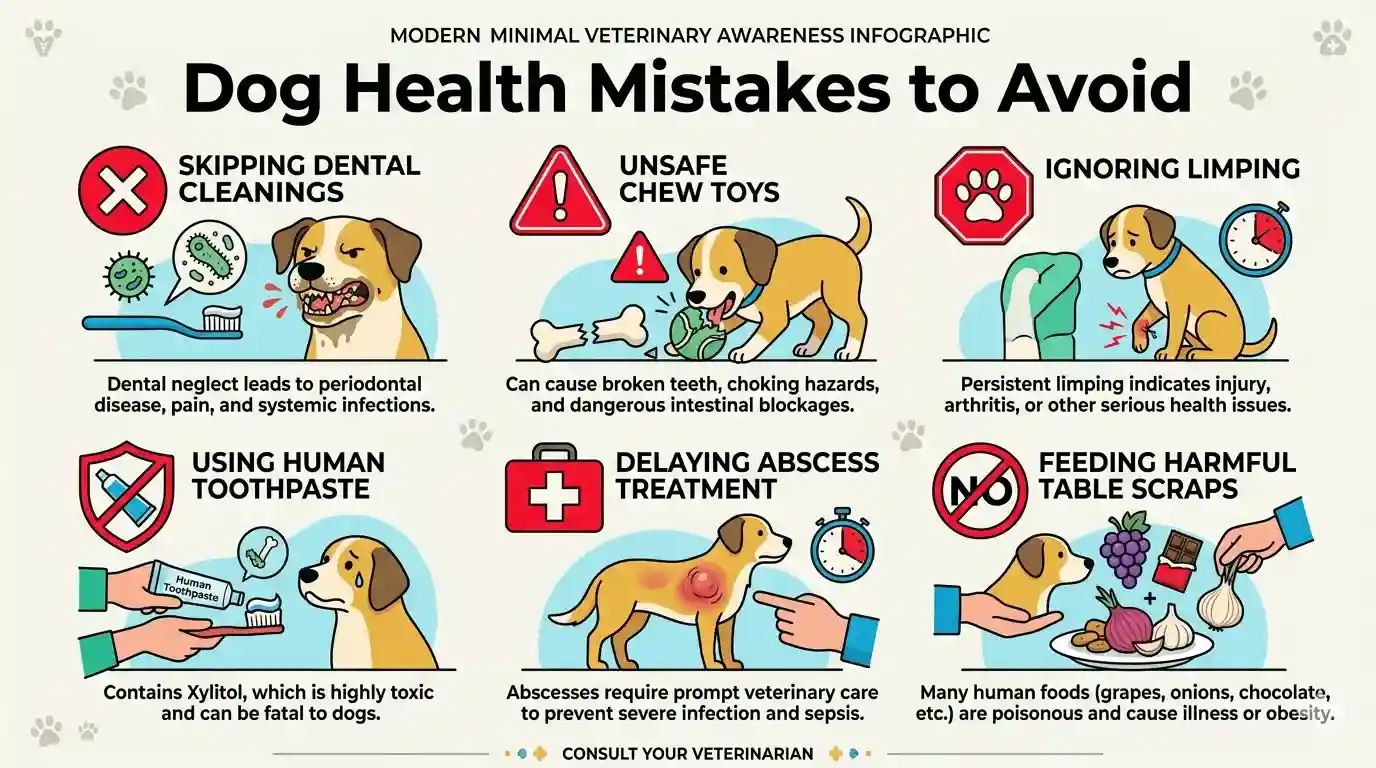
- Skipping annual dental cleanings because the dog “seems fine”
- Ignoring limping or stiffness as “just getting older”
- Using human toothpaste on dogs (it’s toxic)
- Giving unsafe chew toys that crack teeth
- Overlooking ear scratching as a minor annoyance
- Waiting too long on abscesses or swellings
- Feeding table scraps to dogs with no teeth
Beginner vs. Experienced Dog Owner Approach
Beginner Focus
- Start with a full vet checkup and vaccination schedule
- Learn the normal baseline for your dog’s weight, energy, and appetite
- Add daily tooth brushing and monthly nail trims to your routine
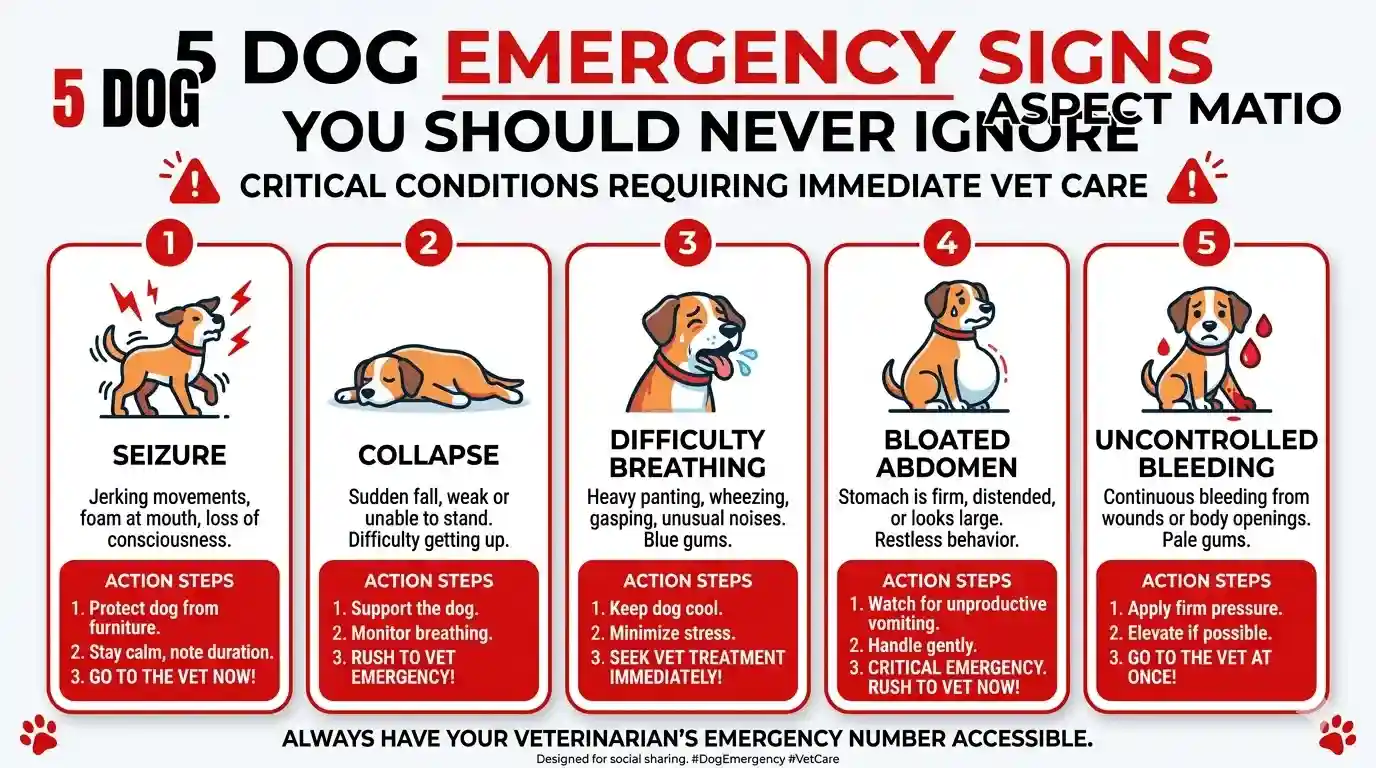
- Know the five emergency signs: seizure, collapse, bloat, difficulty breathing, uncontrolled bleeding
Experienced Focus
- Track your dog’s health history across vet visits for pattern spotting
- Use dental chews strategically between annual cleanings
- Research breed-specific conditions before symptoms appear
- Know when home management is appropriate vs. when to escalate
🌍 Sustainable & Budget-Friendly Dog Care
Responsible dog ownership doesn’t have to be expensive. Homemade vet-approved treats, regular at-home grooming, and preventive care all reduce long-term costs significantly.
Choosing the right chew toys and dental products also matters for the planet. Opt for durable, non-toxic options that don’t need frequent replacing and won’t end up in landfills after a single session.
🌿 For affordable treat options, explore Easy Homemade Dog Treats Recipes Vet Approved and Are Nylabones Safe.
🌼 Seasonal Dog Health Calendar
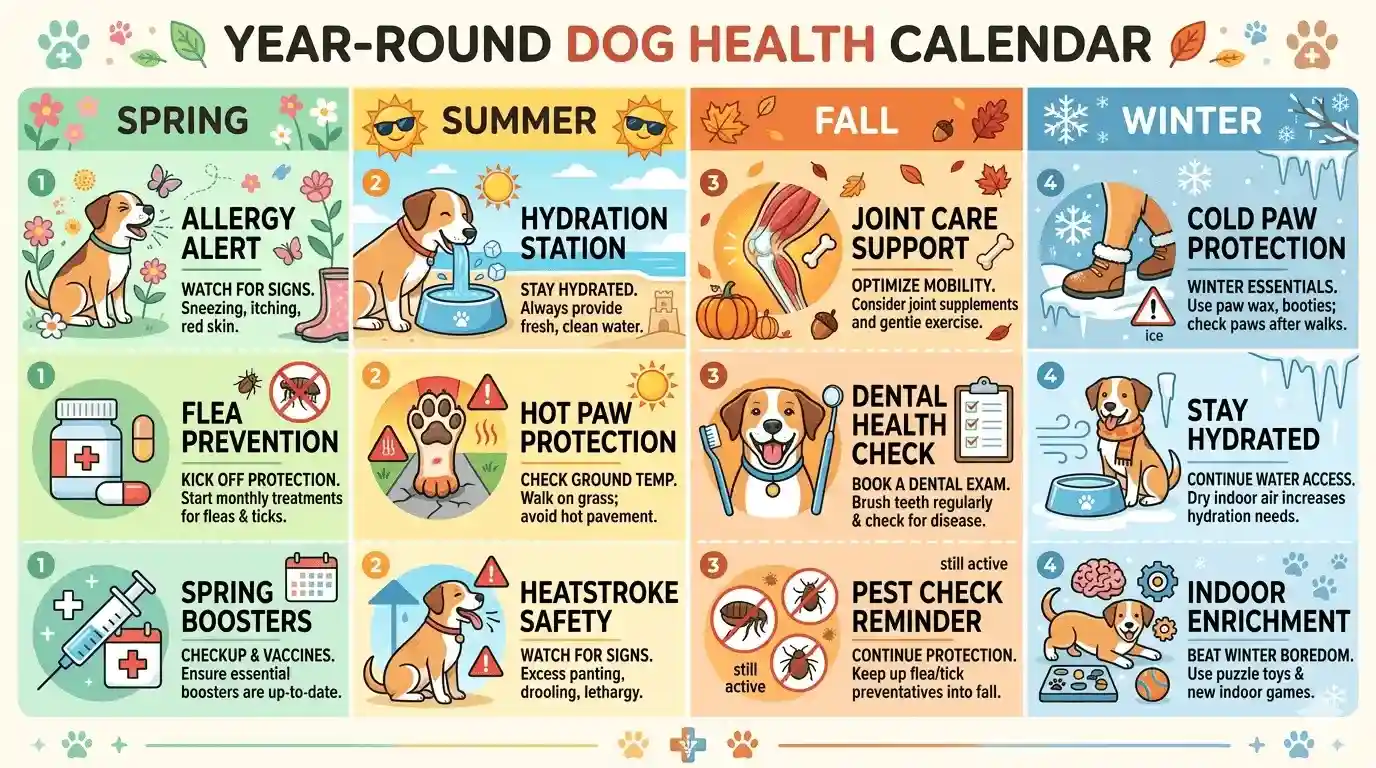
Keep your dog healthy year-round by adjusting your care routine with the seasons. Each season brings different health risks that owners need to anticipate.
🌸 Spring — Allergy season begins. Watch for itchy skin, sneezing, and paw licking. Tick and flea prevention should start now.
☀️ Summer — Heat-related illness and hot pavement are serious dangers. Hydration, shade, and paw protection are essential.
🍂 Fall — Dental and joint checkups are ideal before winter. Watch for weight gain as activity levels drop.
❄️ Winter — Cold weather worsens joint pain in older dogs. Indoor enrichment prevents boredom-based destructive behavior.
| Season | Key Tasks | Purpose |
| Spring | Flea/tick prevention, allergy check | Prevent parasite infestation |
| Summer | Hydration, paw protection, shade | Prevent heat exhaustion |
| Fall | Dental cleaning, weight monitoring | Prepare for lower activity months |
| Winter | Joint support, indoor enrichment | Reduce pain and boredom |
🌼 For summer paw safety, explore How to Protect Dogs Feet from Hot Pavement.
🌼 For reproductive health timing, explore How Long Are Dogs in Heat.
🐶 Explore Detailed Dog Health Guides
Everything in this article links to a deeper resource. Here’s your full library, organized by topic:
🦷 Dental & Oral Health
- Black on Dogs Teeth
- How Often Should Dogs Get Their Teeth Cleaned
- How Do Vets Clean Dogs Teeth
- Symptoms of Dog Tooth Infection
- Dog Teeth Pulled
- Dog Dead Tooth
- My Dog Chipped His Tooth
- Best Dental Chew for Dogs
- Dogs Teeth Chattering
🦠 Infections & Illnesses
- Signs of Bladder Infection in Dogs
- Yeast Infection Dog Ear
- Is a Dog Abscess an Emergency
- Gingival Hyperplasia Dogs
- Canker Sores on Dogs
- Dog Papilloma Fall Off
🦴 Musculoskeletal, Heart & Neurological
- Signs of Luxating Patella in Dogs
- Heart Murmur in Dogs
- How to Treat IVDD in Dogs at Home
- Aural Hematoma Dog Surgery
🐾 Behavior & Digestive Health
- Why Do Dogs Eat Grass to Throw Up
- Signs of Upset Stomach in Dogs
- Why Does My Dog Eat Socks
- How to Stop a Dog From Chewing Everything
- Signs of Blindness in Dogs
🦴 Musculoskeletal, Heart & Neurological
🦷 Dental & Oral Health
- Why Don’t Dogs Get Cavities
- Hypocalcification Teeth
- Do Dogs Need Braces
- Dental Disease in Dogs
- Dog Bad Breath
- What Mammal Has the Most Teeth
- Can Cats Eat Without Teeth
🦠 Infections & Illnesses
🐾 Behavior & Digestive Health
- Why Is My Dog Panting While Resting
- Why Does My Dog Wake Up Panting
- Dog Losing Weight and Itchy Skin Treatment Guide
✂️ Grooming, Care & Puppies
🩺 Diagnostics & Emergency Care
Panting While Resting or Sleeping
Occasional panting after play or in heat is normal, but panting while fully at rest — or panting that wakes a dog from sleep — can point to pain, anxiety, heart or respiratory issues, or Cushing’s disease, and is worth tracking closely.
😮💨 For daytime resting panting, explore Why Is My Dog Panting While Resting.
😮💨 For nighttime/sleep panting specifically, explore Why Does My Dog Wake Up Panting.
Weight Loss Paired With Itchy Skin
When a dog is losing weight and dealing with persistent itching at the same time, it’s rarely a coincidence — this combination often points to underlying issues like allergies, parasites, thyroid disease, or malabsorption.
😮💨 For a full treatment guide, explore Dog Losing Weight and Itchy Skin Treatment Guide.
✂️ Grooming, Care & Puppies
- How to Tell If Dog Is Overweight
- How Often to Trim Dog Nails
- How to Protect Dogs Feet from Hot Pavement
- Easy Homemade Dog Treats Recipes Vet Approved
- Are Nylabones Safe
- Anemia in Puppies
- Senior Dog Tooth Extraction Recovery
- How Long Are Dogs in Heat
- What to Feed Dogs With No Teeth
Do Dogs Actually Get Cavities?
Unlike humans, dogs rarely develop true cavities because of differences in their mouth pH, diet, and tooth shape. What most owners mistake for cavities is usually tartar buildup, gum disease, or a fractured tooth exposing the pulp.
🦷 Curious why dogs are naturally resistant? Explore Why Don’t Dogs Get Cavities.
Enamel & Development Issues
Some dogs are born with or develop weak, poorly formed enamel — a condition called hypocalcification — which leaves teeth more prone to wear, staining, and decay than normal.
🦷 To understand this condition, explore Hypocalcification Teeth.
Do Dogs Ever Need Orthodontic Correction?
Misaligned bites in dogs aren’t just cosmetic — they can cause chronic pain, difficulty eating, and damage to the roof of the mouth or gums. In select cases, vets do recommend corrective devices, similar in concept to human braces.
🦷 For a full explainer, explore Do Dogs Need Braces.
When Dental Disease Goes Untreated
Left unmanaged, plaque and tartar progress into periodontal disease — inflamed gums, bone loss, and eventually tooth loss — and the bacteria involved can travel through the bloodstream to the heart and kidneys.
🦷 For the full progression and prevention guide, explore Dental Disease in Dogs.
Bad Breath Isn’t Always “Just Dog Breath”
Persistent bad breath is one of the earliest and most overlooked warning signs of dental disease, and sometimes of kidney or liver issues.
🦷 For causes and fixes, explore Dog Bad Breath.
A Fun Comparative Fact
Ever wondered how a dog’s mouth compares to other animals? Interestingly, dogs aren’t even close to the record holder for most teeth in the mammal kingdom.
🦷 Explore What Mammal Has the Most Teeth.
Toothless Comparisons Across Species
Dogs with no teeth can still eat comfortably with the right diet — and interestingly, they’re not the only common pet that can manage without a full tooth set.
🦷 For a cross-species comparison, explore Can Cats Eat Without Teeth.
Final Thoughts
Your dog counts on you to notice what they can’t tell you in words. The good news is that most serious health conditions give early warning signs — and this guide exists to help you spot them before they become emergencies.
Bookmark this page and revisit it whenever something feels off. The more familiar you become with your dog’s baseline health, the faster you’ll catch anything that needs attention. A healthy dog is a happy dog — and a happy dog makes for a happy home.
FAQs – Dog Health Problems
What are the most common health problems in dogs?
Dental disease, ear infections, obesity, joint problems, and skin conditions top the list. Most are preventable or manageable with routine care and regular vet visits.
How do I know if my dog is in pain?
Watch for changes in behavior — reduced appetite, reluctance to move, whimpering, hiding, or sudden aggression. Dogs rarely vocalize pain openly.
When should I take my dog to the vet immediately?
Go immediately if your dog collapses, can’t breathe normally, has a bloated abdomen, is having seizures, or shows signs of severe pain or sudden blindness.
How often should dogs have a full health checkup?
Once a year for adult dogs under seven; twice a year for seniors. Annual checkups catch issues early, even when your dog appears completely healthy.
Can I manage dog health problems at home?
Minor issues like mild digestive upset or surface-level wounds can often be managed at home. However, infections, dental disease, and structural problems almost always require professional care.




6 Responses