

Caring for unique animals like capybaras has become increasingly popular, especially as people see them portrayed as calm, social, and friendly creatures online. But one of the most common questions new or curious owners ask is: do capybaras bite? While they are generally gentle animals, they are still large rodents with strong teeth and natural instincts that shouldn’t be overlooked. Understanding their behavior is essential for safe interaction and responsible care.
Many first-time owners assume capybaras are always harmless, which can lead to mistakes like improper handling, lack of socialization, or ignoring warning signs. This guide explains everything you need to know about capybara biting behavior, safety, and proper care.
Pet Care Insight
This guide is based on widely accepted pet care practices, veterinary guidance, and common experiences shared by responsible pet owners. The goal is to provide practical, easy-to-follow advice that helps owners keep their pets healthy, comfortable, and well cared for.
Pet Overview
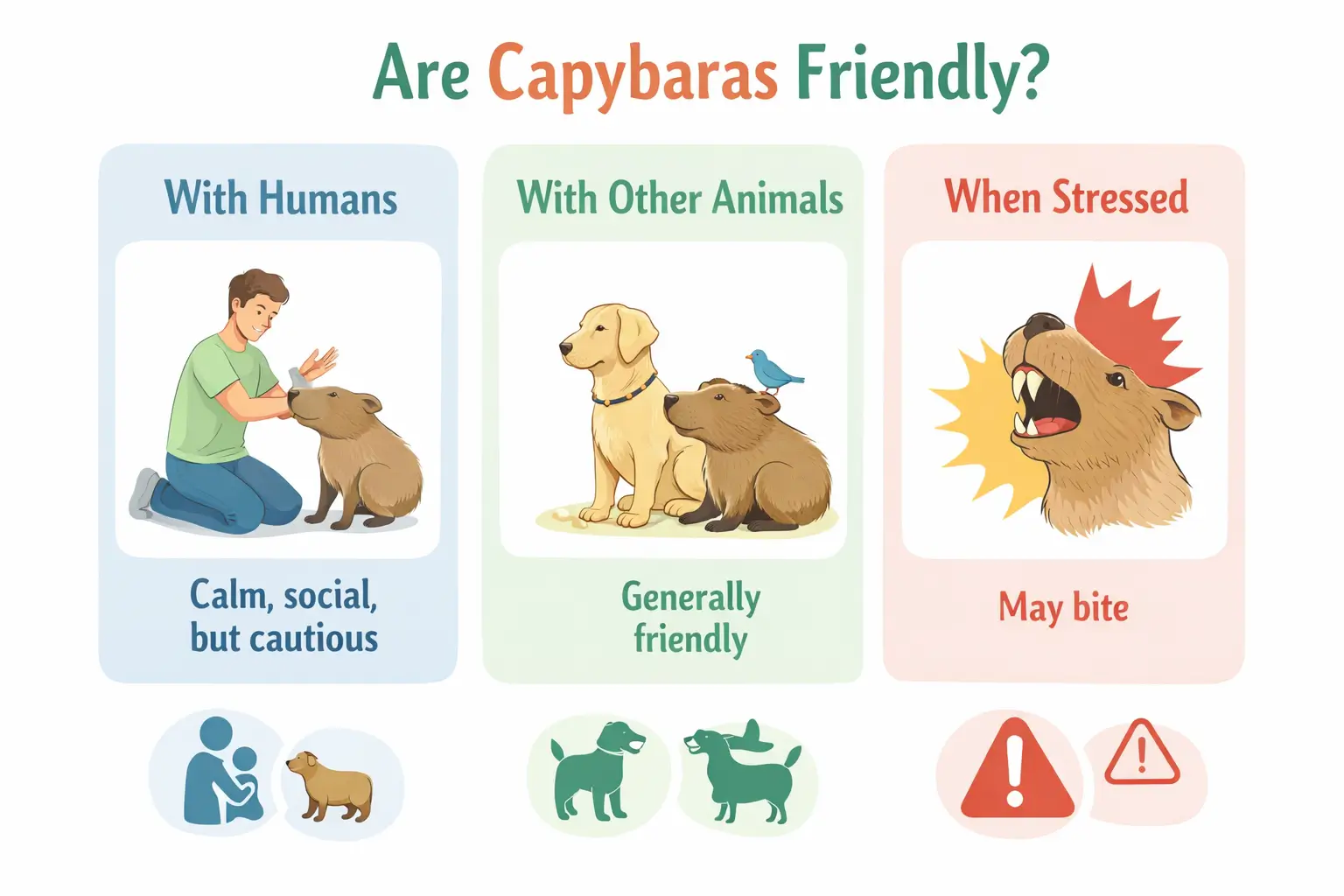
Temperament And Behavior
Capybaras are known for their calm, social, and gentle temperament. They are highly social animals that prefer living in groups and often bond well with humans when raised properly.
However, they are still wild animals at their core. Capybaras can bite if they feel threatened, stressed, or uncomfortable.
Physical Characteristics
Capybaras are the largest rodents in the world, with strong jaws and continuously growing teeth. Their teeth are designed for chewing tough vegetation, which means they can deliver a powerful bite if necessary.
Lifespan And Suitability
- Lifespan: 8–12 years (with proper care)
- Best suited for experienced owners
- Require large outdoor space and access to water
- Not ideal for small homes or apartments
Compatibility With Humans And Animals
Capybaras are often friendly with other animals like dogs, cats, and even birds when socialized early. However, interactions should always be supervised.
Daily Care Essentials
Feeding Routine Basics
Capybaras are herbivores and require a diet rich in fiber:
- Fresh grasses and hay (main diet)
- Leafy greens
- Occasional fruits (in moderation)
Grooming Needs
They are relatively low-maintenance:
- Minimal brushing needed
- Access to water helps keep skin healthy
- Regular checks for parasites
Exercise And Space
Capybaras need:
- Large outdoor space
- Access to a pool or water area
- Daily movement and exploration
Social Interaction Needs
They thrive on companionship:
- Prefer living in pairs or groups
- Require daily human interaction if kept as pets
Diet & Nutrition Guide
Feeding Schedule And Portions
- Feed twice daily (morning and evening)
- Unlimited access to hay
- Fresh water always available
Nutritional Requirements
- High fiber intake is essential
- Low sugar and low fat
- Vitamin C is important (like guinea pigs)
Safe And Unsafe Foods
Safe foods:
- Grass hay
- Romaine lettuce
- Carrots (in moderation)
Unsafe foods:
- Processed foods
- Sugary fruits in excess
- Toxic plants
Feeding By Life Stage
Young capybaras:
-
Require more protein and nutrients for growth
Adults:
-
Balanced high-fiber diet
Seniors:
-
Softer foods if dental issues develop
Exercise & Mental Stimulation
Daily Activity Needs
Capybaras are active animals that require:
- Several hours of movement daily
- Swimming opportunities
Enrichment Activities
- Foraging for food
- Exploring new environments
- Interaction with other animals
Indoor Vs Outdoor Stimulation
Outdoor environments are ideal, but enrichment can include:
- Safe chew items
- Water play areas
- Natural habitat setups
Training & Behavior Guidance
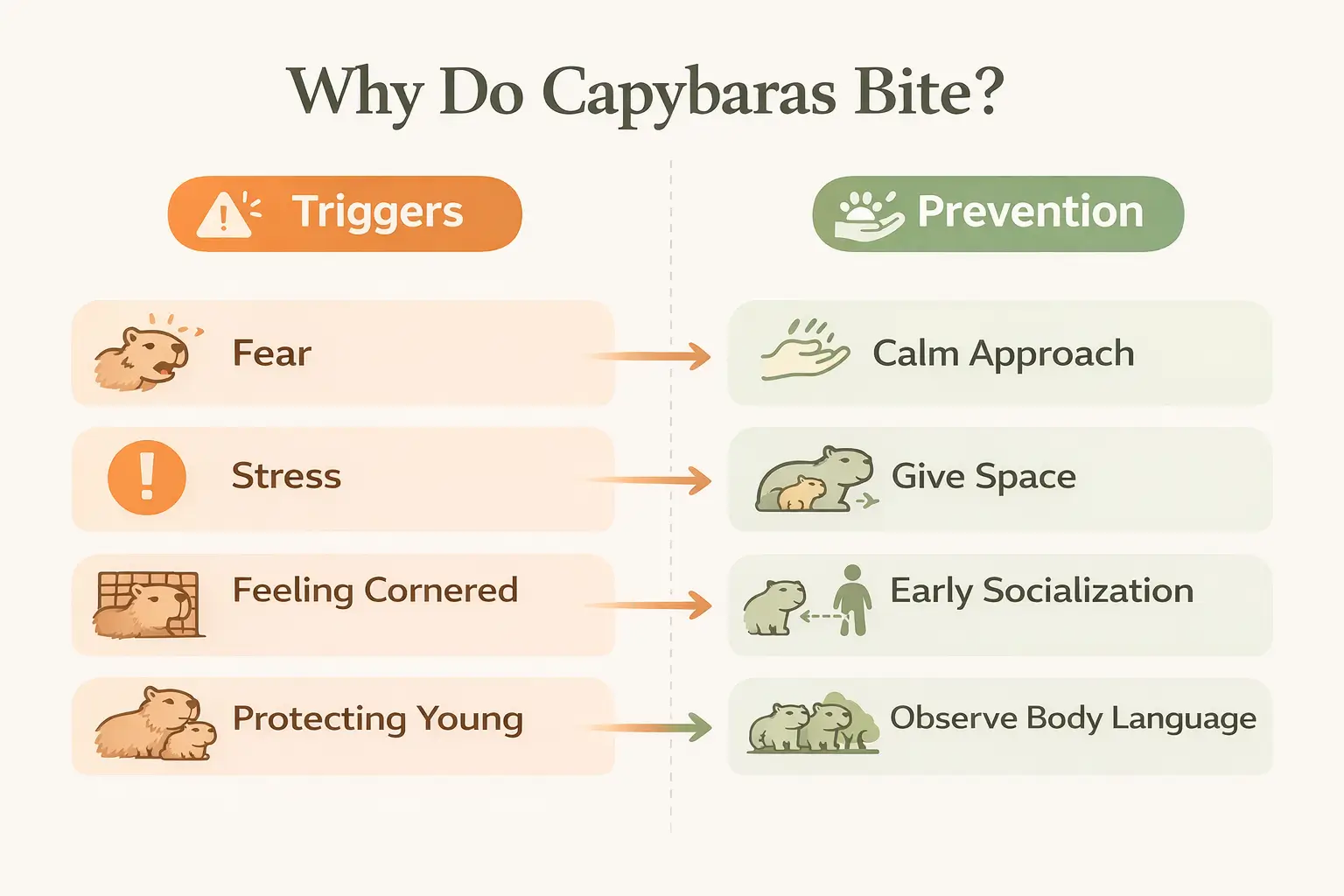
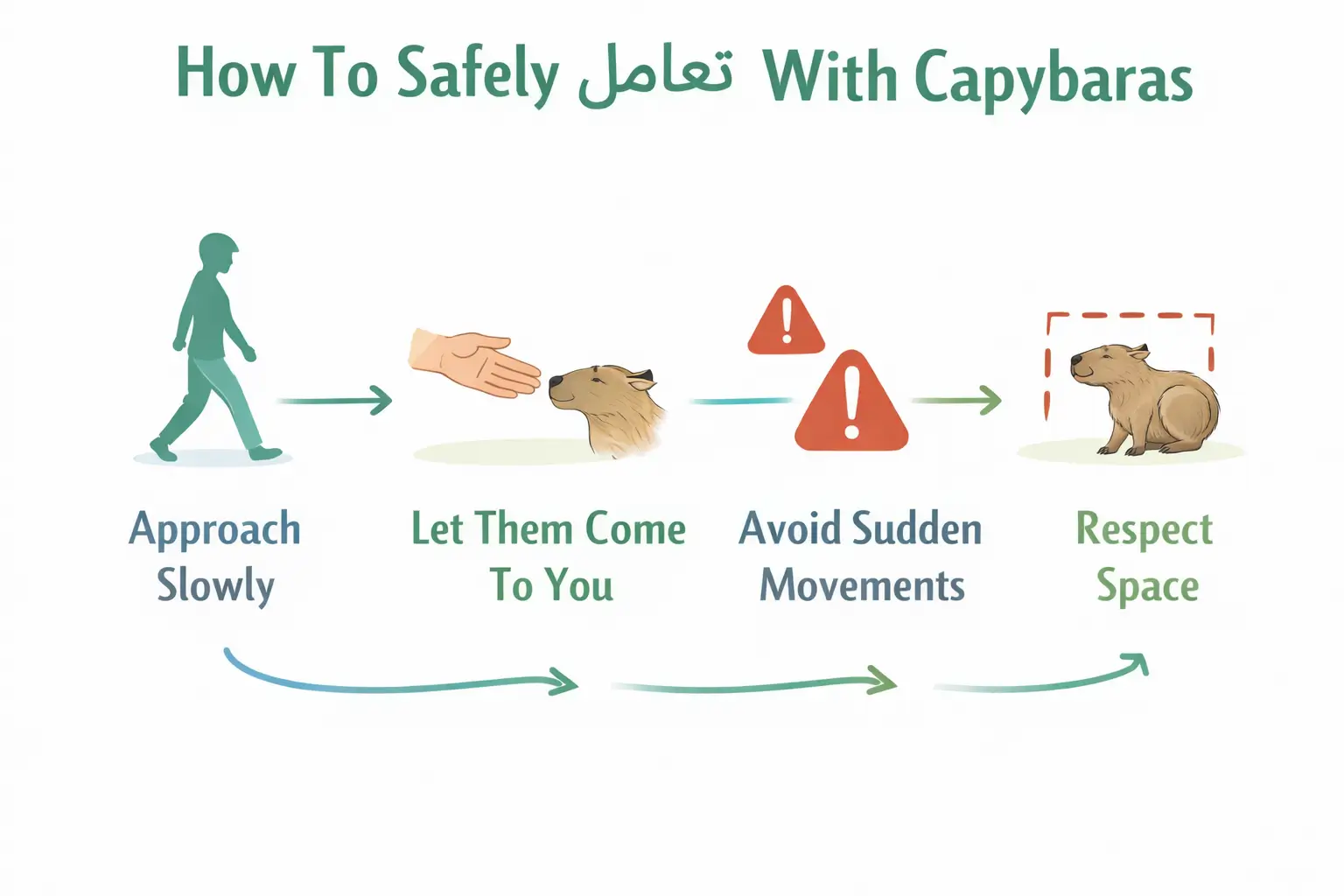
Basic Socialization Tips
Early socialization helps reduce biting risk:
- Introduce humans gradually
- Allow them to approach you first
- Avoid sudden movements
Understanding Biting Behavior
So, do capybaras bite humans? Yes, but usually only under certain conditions:
- Fear or stress
- Feeling cornered
- Protecting territory or young
Preventing Aggressive Behavior
- Respect their space
- Avoid forcing interaction
- Watch for warning signs (teeth chattering, backing away)
Handling Tips
- Approach calmly
- Never grab suddenly
- Support their body properly
Health & Climate Considerations
Heat Sensitivity
Capybaras are sensitive to heat:
- Require shade and water access
- Risk of overheating without proper cooling
Cold Weather Care
- Need warm shelter in colder climates
- Avoid prolonged exposure to cold
Hydration Needs
Water is essential:
- Drinking water
- Swimming helps regulate body temperature
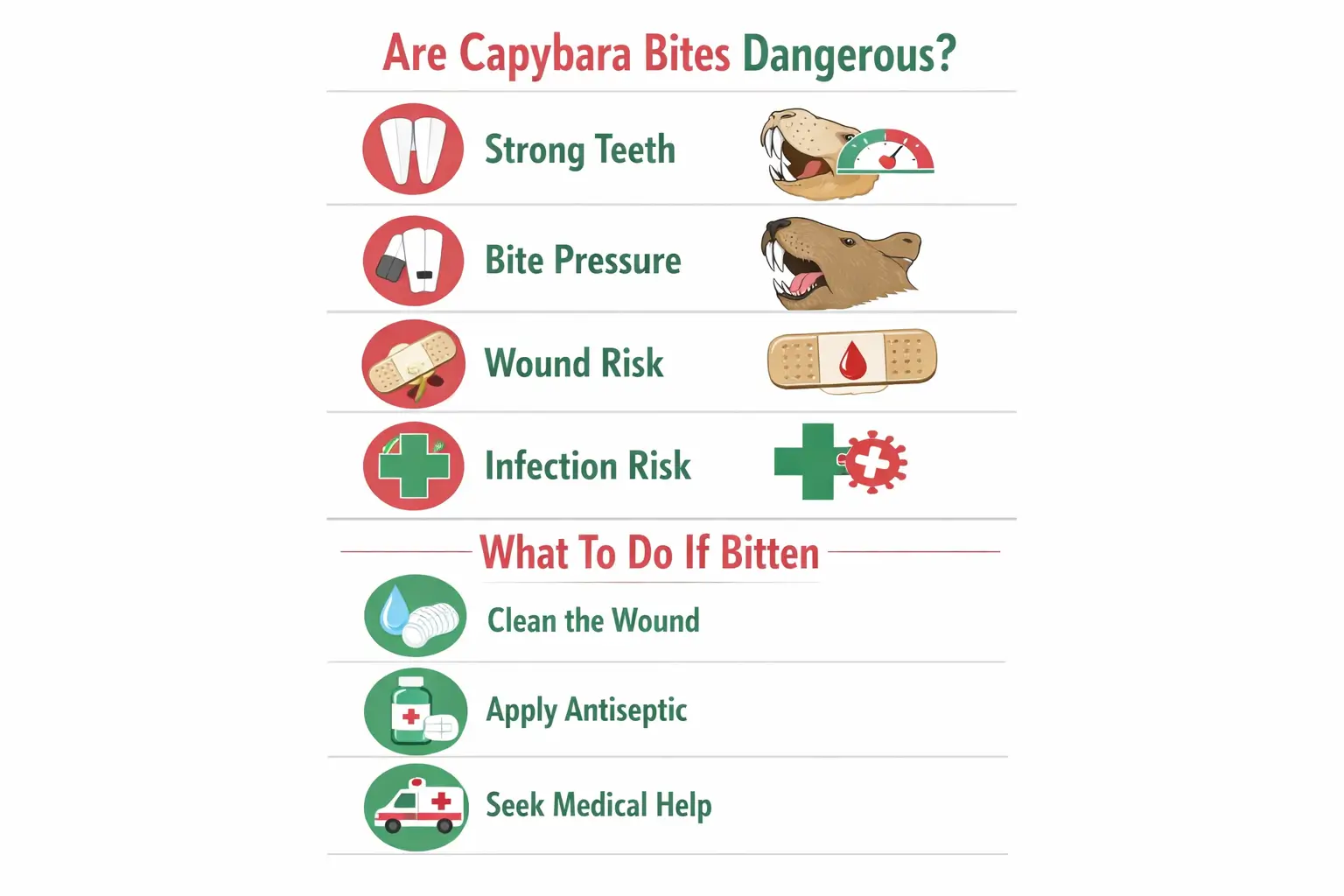
Bite Risk And Health Concerns
Are capybara bites dangerous? They can be:
- Their teeth are sharp and strong
- Bites can cause deep wounds
- Risk of infection if untreated
Common Problems & Troubleshooting
Biting Or Nipping Behavior
Cause:
-
Fear, stress, or poor socialization
Solution:
- Improve trust through slow interaction
- Avoid forcing contact
Prevention:
- Early socialization
- Calm environment
Aggression Toward Other Animals
Cause:
- Territorial behavior
- Lack of proper introduction
Solution:
- Gradual introductions
- Supervised interactions
Prevention:
-
Socialize early with other animals
Chewing And Destructive Behavior
Cause:
-
Natural chewing instinct
Solution:
-
Provide safe chew items
Prevention:
-
Enrichment and proper diet
Capybara Bite Wound Care
If a bite occurs:
- Clean the wound immediately
- Apply antiseptic
- Seek medical attention if deep
Seasonal Pet Care Tips
Spring Care Tips
- Monitor for allergies
- Increase outdoor activity gradually
Summer Care Tips
- Provide constant access to water
- Ensure shaded areas
- Watch for overheating
Fall Care Tips
- Maintain consistent feeding
- Prepare shelter for cooler weather
Winter Care Tips
- Provide warm shelter
- Limit exposure to cold
- Increase indoor enrichment
Additional Expert Tips
Understanding Their Nature
Capybaras are not aggressive by default, but they are not domesticated like dogs or cats. Respecting their natural behavior is key.
Common Owner Mistakes
- Treating them like small pets
- Ignoring social needs
- Underestimating their size and strength
Long-Term Care Considerations
- Require significant space and commitment
- Need companionship
- Ongoing veterinary care is essential
Conclusion
Capybaras are generally friendly and social animals, but they can bite under certain conditions. While capybara bites are not common, they can hurt and may be dangerous if proper care and precautions are not taken. Most biting incidents happen due to fear, stress, or improper handling.
Understanding their behavior, providing proper care, and respecting their space are the best ways to prevent biting. Responsible ownership ensures both the safety of the animal and the people around it.
Learn More: White Persian Kittens Care Guide: Diet, Grooming & Tips
FAQs
-
Do capybaras bite humans often?
No, they rarely bite humans unless they feel threatened or stressed.
-
Do capybara bites hurt?
Yes, their bites can be painful due to strong teeth and jaw pressure.
-
Are capybaras dangerous to humans?
They are generally not dangerous but can cause injury if provoked.
-
Can capybaras kill humans?
No, there are no known cases of capybaras killing humans.
-
Do capybaras bite dogs?
They can bite dogs if scared or if boundaries are not respected.
-
How often do capybaras bite?
Biting is uncommon and usually happens only in stressful situations.
-
Do baby capybaras bite?
They may nip during play, but it is usually harmless and part of learning behavior.




One Response