
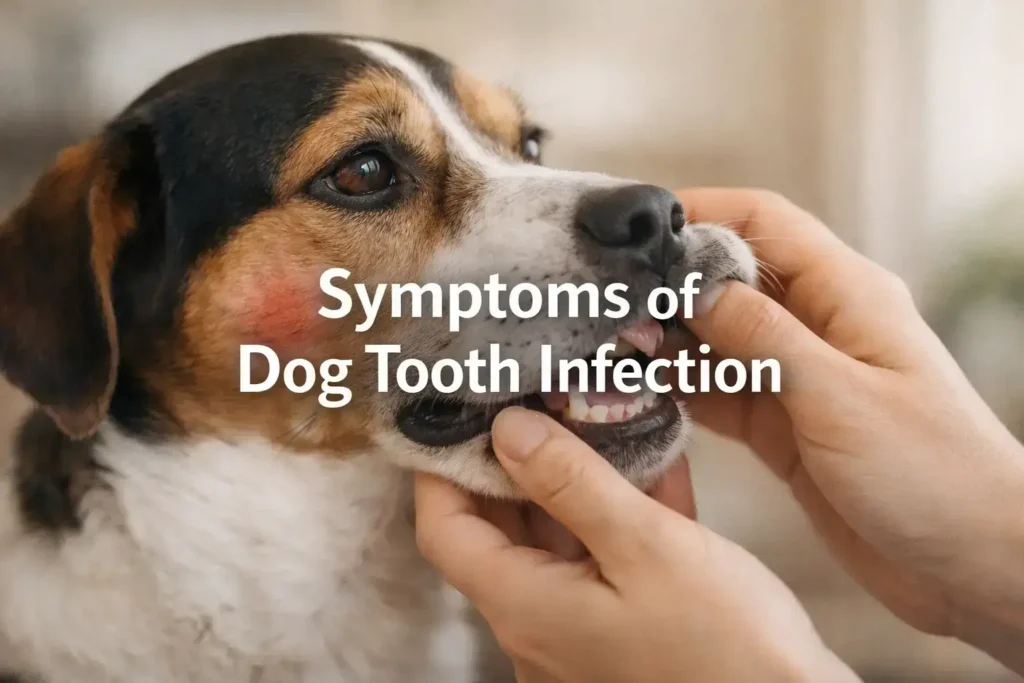
Dental issues are one of the most overlooked yet serious health problems in dogs. Many pet owners don’t realize that a simple tooth infection can quickly turn into a painful, dangerous condition if ignored. Dogs are naturally good at hiding pain, so early symptoms of dog tooth infection are often missed until swelling or severe discomfort appears.
Understanding what to look for — and what to do next — can make a big difference in your dog’s comfort and overall health. In this guide, you’ll learn how to recognize early warning signs, what a tooth abscess looks like, and how to respond safely at home while knowing when veterinary care is essential.
Pet Care Insight
This guide is based on widely accepted pet care practices, veterinary guidance, and common experiences shared by responsible pet owners. The goal is to provide practical, easy-to-follow advice that helps owners keep their pets healthy, comfortable, and well cared for.
Understanding Dog Tooth Infections
What Causes Tooth Infections
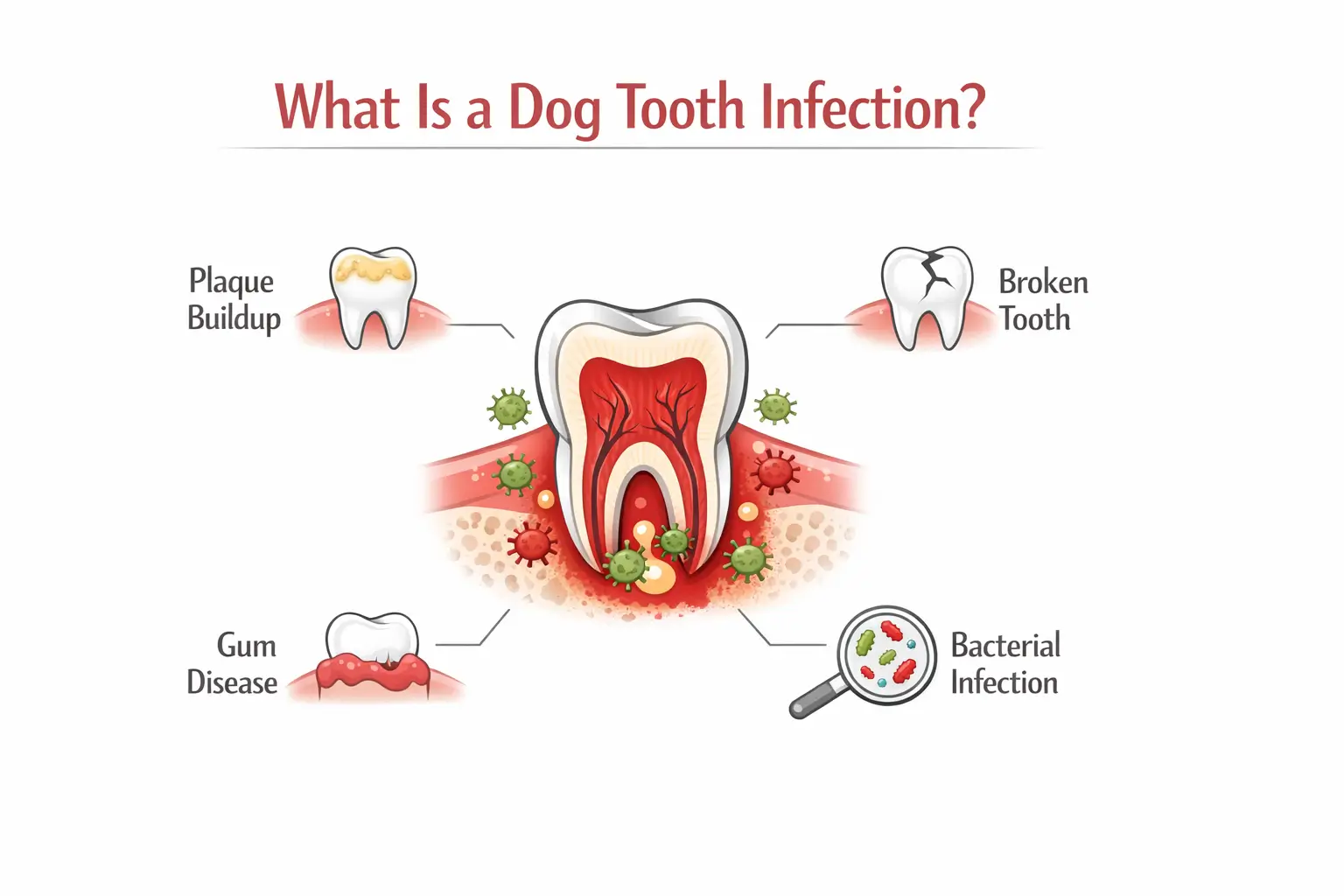
Dog tooth infections usually develop from untreated dental problems such as plaque buildup, gum disease, or broken teeth. Bacteria enter the tooth root, leading to infection and sometimes an abscess in the dog’s mouth.
Why They Are Dangerous
An untreated infection doesn’t stay in the mouth. It can spread to the jaw, sinuses, and even vital organs. This is why many owners ask, how fast can a tooth abscess kill a dog — in severe cases, complications can escalate quickly if ignored.
Common Symptoms of Dog Tooth Infection
Early Warning Signs To Watch
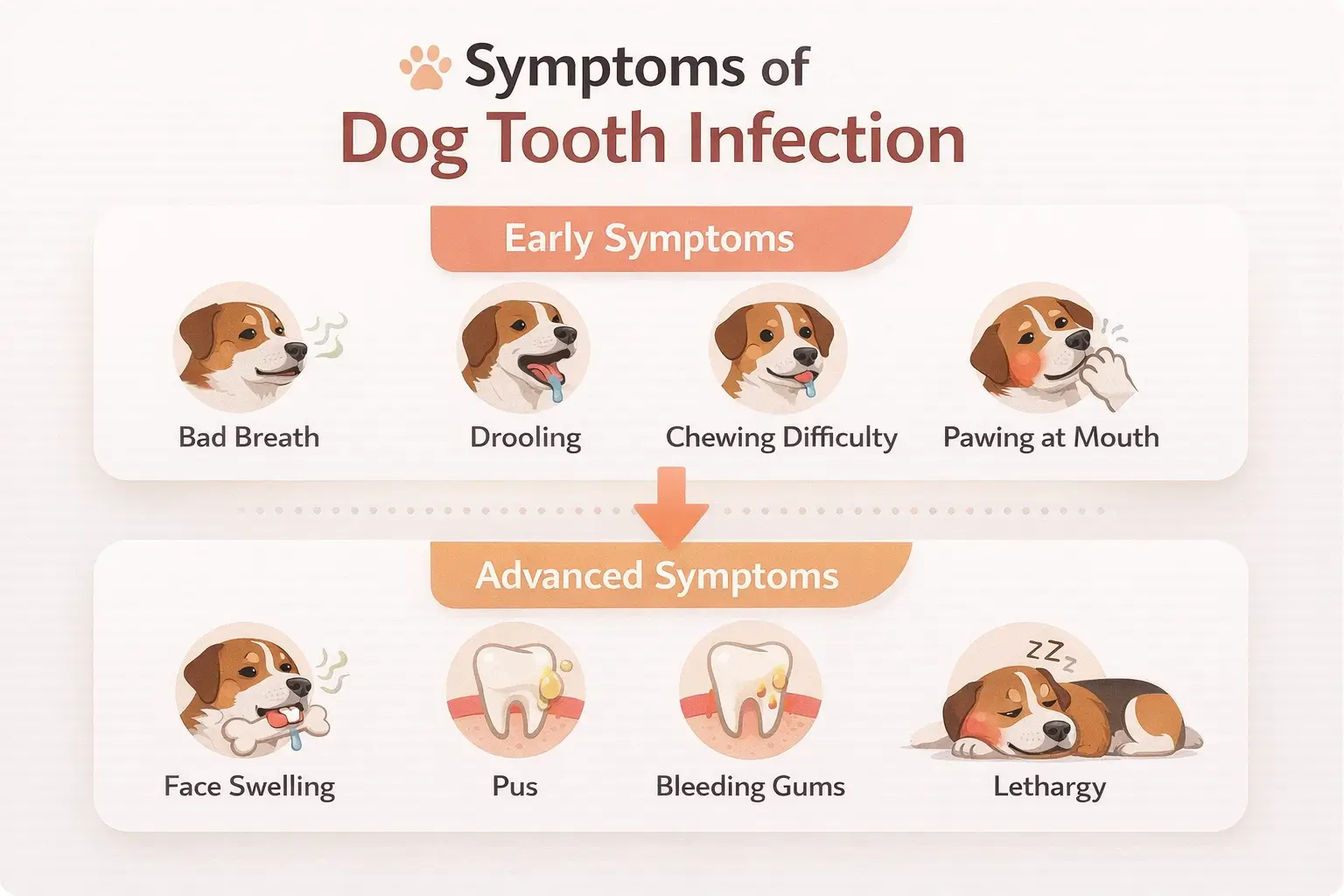
Recognizing symptoms of dog tooth infection early can prevent serious complications. Look for:
- Bad breath (stronger than usual)
- Drooling more than normal
- Pawing at the mouth
- Difficulty eating or chewing on one side
- Reduced appetite
These are often the first signs of tooth decay in dogs or early dental problems.
Advanced Symptoms You Should Not Ignore
As the infection worsens, symptoms become more obvious:
- Swelling on the face or under the eye (common in dog tooth abscess face swelling)
- Visible pus or discharge
- Red, inflamed gums (abscess gum in dogs)
- Loose or discolored teeth
- Fever or lethargy
At this stage, it may indicate an abscessed tooth in dogs and requires urgent care.
What A Tooth Abscess Looks Like
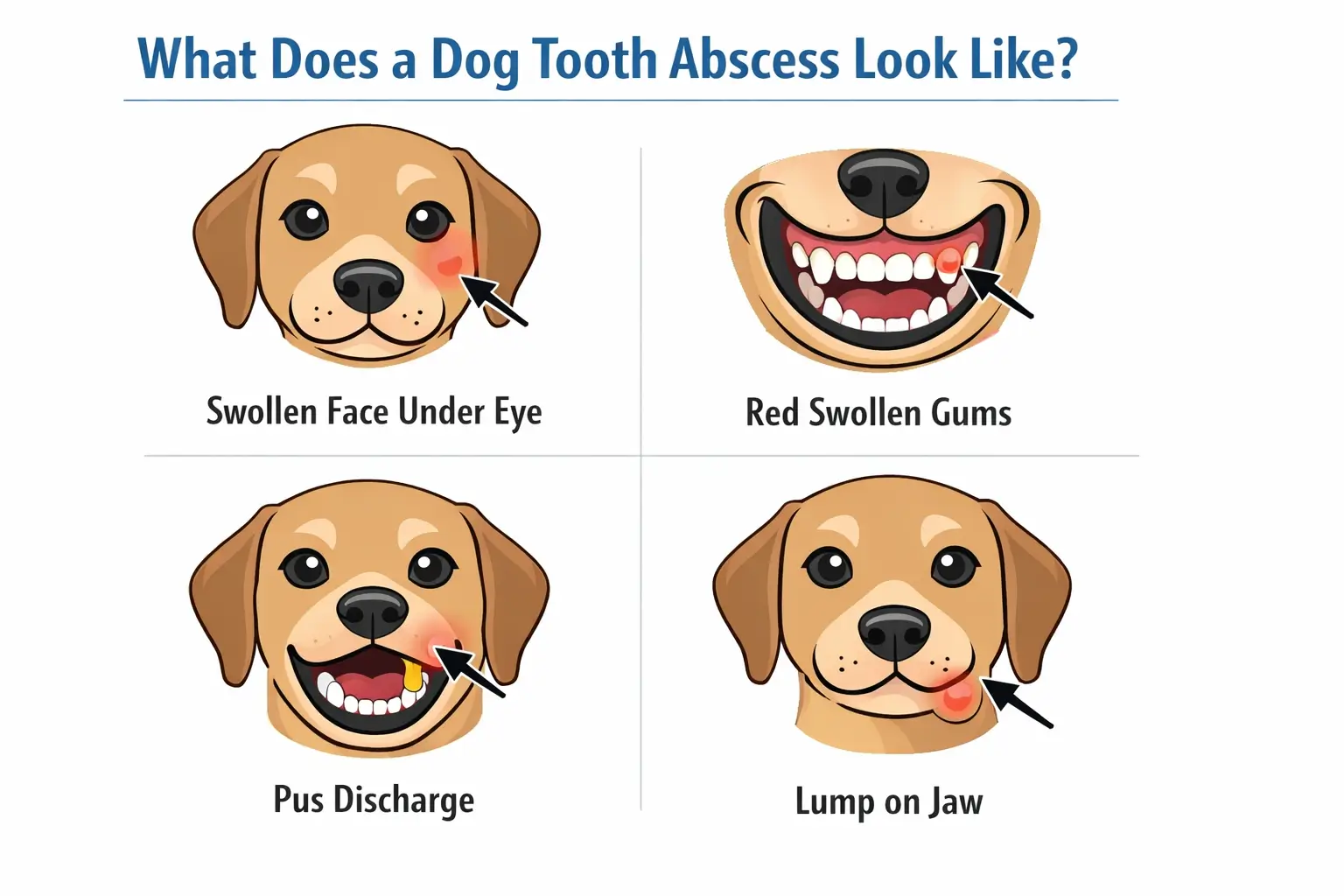
Many owners search for what does a tooth infection look like on a dog. Typical signs include:
- A lump on the gum or face
- Swelling below the eye
- Draining wound near the jaw
- Red, swollen gum tissue (abscess on dogs gum)
These signs clearly indicate a tooth abscess in dogs.
How To Tell If Your Dog Has A Tooth Infection
Behavior Changes That Signal Pain
Dogs rarely cry out, so behavior changes are key indicators:
- Avoiding chew toys
- Becoming irritable or withdrawn
- Sleeping more than usual
- Refusing hard food
These subtle signs often answer the question: does my dog have a tooth infection?
Physical Signs You Can Check
Gently inspect your dog’s mouth:
- Look for redness or swelling
- Check for broken or dark teeth
- Smell for strong odor
- Watch for bleeding gums
If you notice multiple symptoms, it’s likely a dog teeth infection.
Home Care and Temporary Relief
Safe Home Remedies For Mild Cases
For very early symptoms of dog tooth infection, home remedies can help temporarily:
- Soft food diet to reduce pain
- Clean, fresh water at all times
- Gentle mouth rinsing (vet-approved solutions only)
- Coconut oil (small amounts for antibacterial support)
These methods are part of dog tooth infection home treatment, but they do not cure infections.
What You Can Give Your Dog
If you’re wondering what can I give my dog for tooth infection:
- Only use vet-approved medications
- Avoid human painkillers (they are toxic to dogs)
- Natural remedies can soothe but not eliminate infection
Veterinary Treatment Options
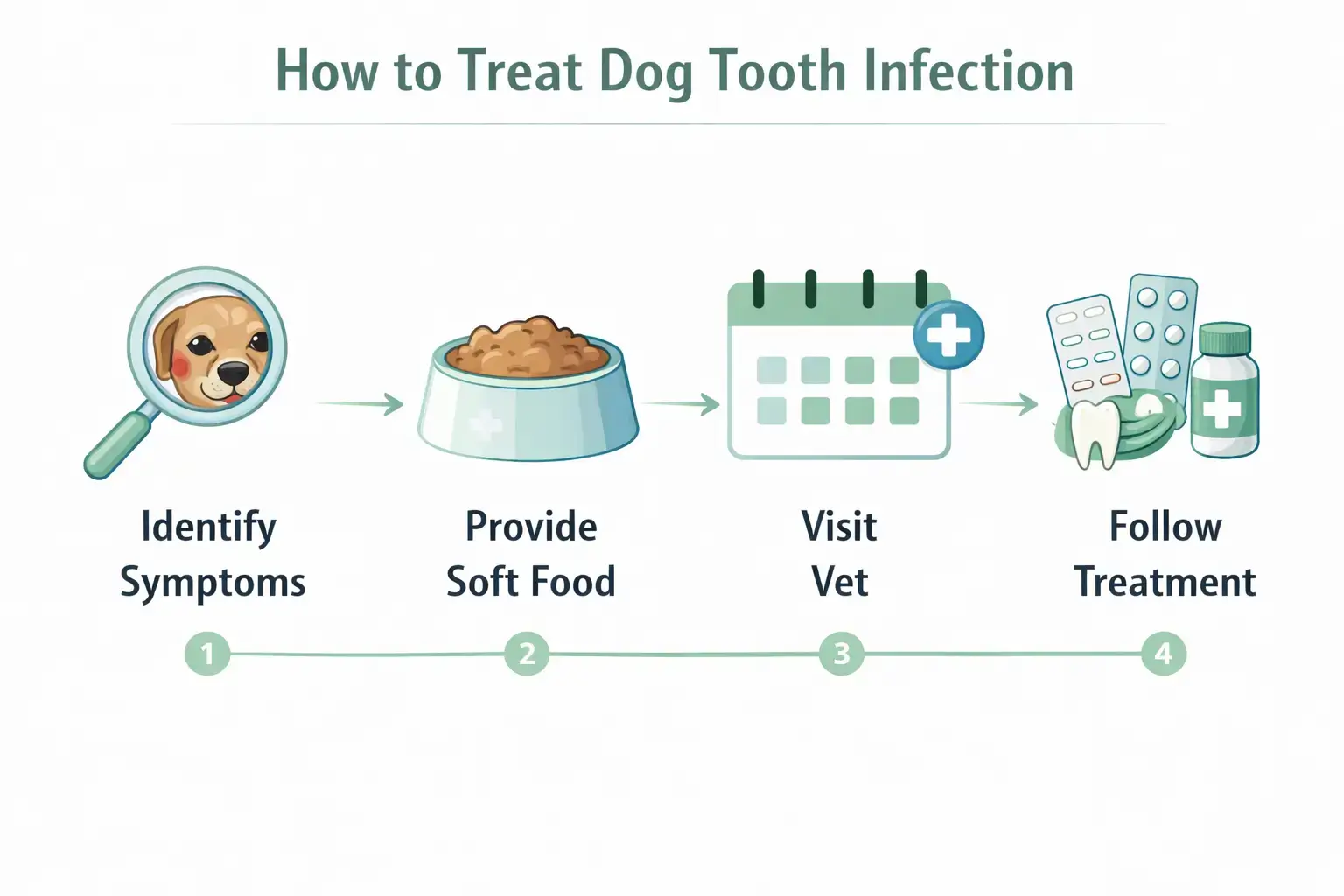
Professional Treatment Methods
Once infection is confirmed, vets may recommend:
- Antibiotics for dog tooth infection
- Tooth extraction
- Deep dental cleaning
- Drainage of abscess
Common questions like best antibiotic for dog tooth infection should always be answered by a vet, not self-medication.
Treatment Cost Expectations
Many owners worry about cost:
- Dog tooth abscess treatment cost: varies widely
- Tooth extraction cost dog: depends on severity
- Dog tooth abscess cost: increases if surgery is needed
Early treatment is always cheaper and safer.
Special Considerations for Senior Dogs
Why Older Dogs Are At Risk
A senior dog tooth abscess is more common due to:
- Weakened immune system
- Long-term plaque buildup
- Fragile teeth
Extra Care Tips For Seniors
- Provide soft food regularly
- Schedule frequent dental checks
- Monitor eating habits closely
Common Problems and Troubleshooting
Dog Not Eating Properly
- Cause: Pain from tooth infection
- Solution: Switch to soft food and consult a vet
- Prevention: Regular dental cleaning
Swelling On Face Or Jaw
- Cause: Tooth root abscess dog
- Solution: Immediate veterinary visit
- Prevention: Early detection of dental issues
Pus Or Bleeding Gums
- Cause: Advanced gum abscess dog
- Solution: Antibiotics and dental procedure
- Prevention: Routine oral hygiene
Confusion Between Abscess Or Tumor
- Cause: Similar appearance
- Solution: Vet diagnosis (dog tooth abscess or tumor)
- Prevention: Don’t delay professional evaluation
Seasonal Dental Care Tips
Summer Heat And Hydration Care
- Keep your dog hydrated
- Watch for reduced appetite due to heat
Winter Feeding And Oral Comfort
- Offer slightly warmed soft food
- Monitor chewing discomfort
Year Round Oral Hygiene Routine
- Brush teeth regularly
- Provide dental chews
- Schedule annual dental exams
Additional Expert Tips
Common Mistakes Dog Owners Make
- Ignoring bad breath
- Delaying vet visits
- Using human medications
- Assuming swelling will go away
Simple Habits That Prevent Infection
- Brush your dog’s teeth 2–3 times weekly
- Use vet-approved dental treats
- Regularly inspect your dog’s mouth
Conclusion
Dog tooth infections are more serious than they seem and can quickly impact your pet’s overall health if left untreated. Recognizing early symptoms like bad breath, swelling, and difficulty eating allows you to act before the condition worsens.
While home remedies can offer temporary relief, they are not a substitute for proper veterinary care. The key to preventing painful infections is consistent dental care, early detection, and timely treatment.
By staying attentive and proactive, you can keep your dog comfortable, healthy, and free from unnecessary pain.
Learn More: Black Persian Kitten Care Guide: Grooming, Diet & Tips
FAQs
-
How do you know if a dog has a tooth infection?
Look for bad breath, swelling, drooling, difficulty eating, and gum redness.
-
Can a tooth abscess kill a dog?
Yes, if untreated, infection can spread and become life-threatening.
-
What are the symptoms of dental problems in dogs?
Common signs include loose teeth, bleeding gums, bad breath, and reduced appetite.
-
How fast can a tooth abscess develop?
It can develop over days to weeks depending on the cause and severity.
-
Can I treat my dog’s tooth infection at home?
Home care can provide relief, but proper treatment requires veterinary care.
-
What does a dog tooth abscess look like?
It often appears as swelling on the face or gums, sometimes with pus or discharge.
-
Are antibiotics enough to cure a dog tooth infection?
Antibiotics help control infection, but dental procedures are usually needed to fully resolve it.




11 Responses