

A heart murmur in dogs is not a disease—it’s a sound your vet hears that may signal an underlying heart issue. Some murmurs are harmless, while others need medical attention quickly. Understanding the difference can help you act at the right time.
🩺 What Is a Heart Murmur in Dogs?
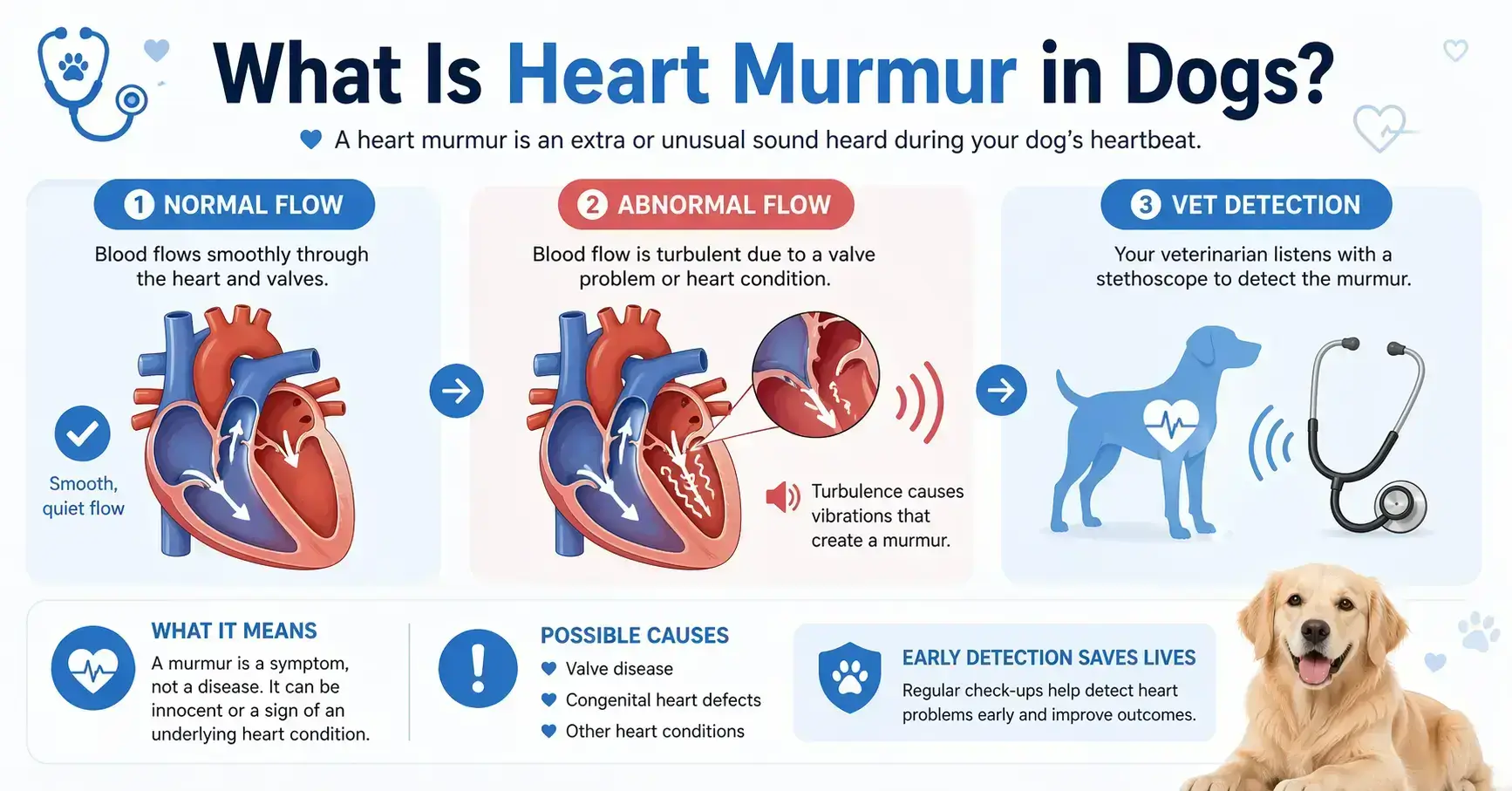
A heart murmur is an abnormal “whooshing” sound caused by turbulent blood flow in the heart. Vets detect it using a stethoscope during routine exams. For a deeper medical understanding of how heart murmurs work.
Normally, blood flows smoothly through the heart valves. When that flow becomes irregular—due to valve problems, defects, or disease—it creates a murmur. Some dogs live normal lives with mild murmurs, while others develop serious heart conditions.
Fact: Veterinary research shows heart murmurs are common in older small-breed dogs, especially due to valve degeneration.
🧬 What Causes Heart Murmur in Dogs?
Heart murmurs can have several causes, ranging from harmless to serious. Dental infections and oral health problems can sometimes contribute to systemic issues, so it’s important to recognize early signs like those explained in this guide on dog tooth infections.
Common Causes:
- Valve disease (especially mitral valve disease)
- Congenital heart defects (present at birth)
- Anemia (low red blood cells)
- Heart infections
- High blood pressure
- Hormonal disorders
Since murmur sound patterns can hint at the underlying cause, this dog heart condition and murmur-pattern database maps 17 conditions—from congenital defects to valve disease—to their typical timing, location, and severity. It’s a great next step if you want to understand what your dog’s specific diagnosis might mean.
In puppies, murmurs are often “innocent” and may disappear as they grow. In older dogs, they are more likely linked to heart disease.
Fact: Mitral valve disease accounts for the majority of heart-related cases in dogs.
⚠️ What Are the Symptoms of Heart Murmur in Dogs?
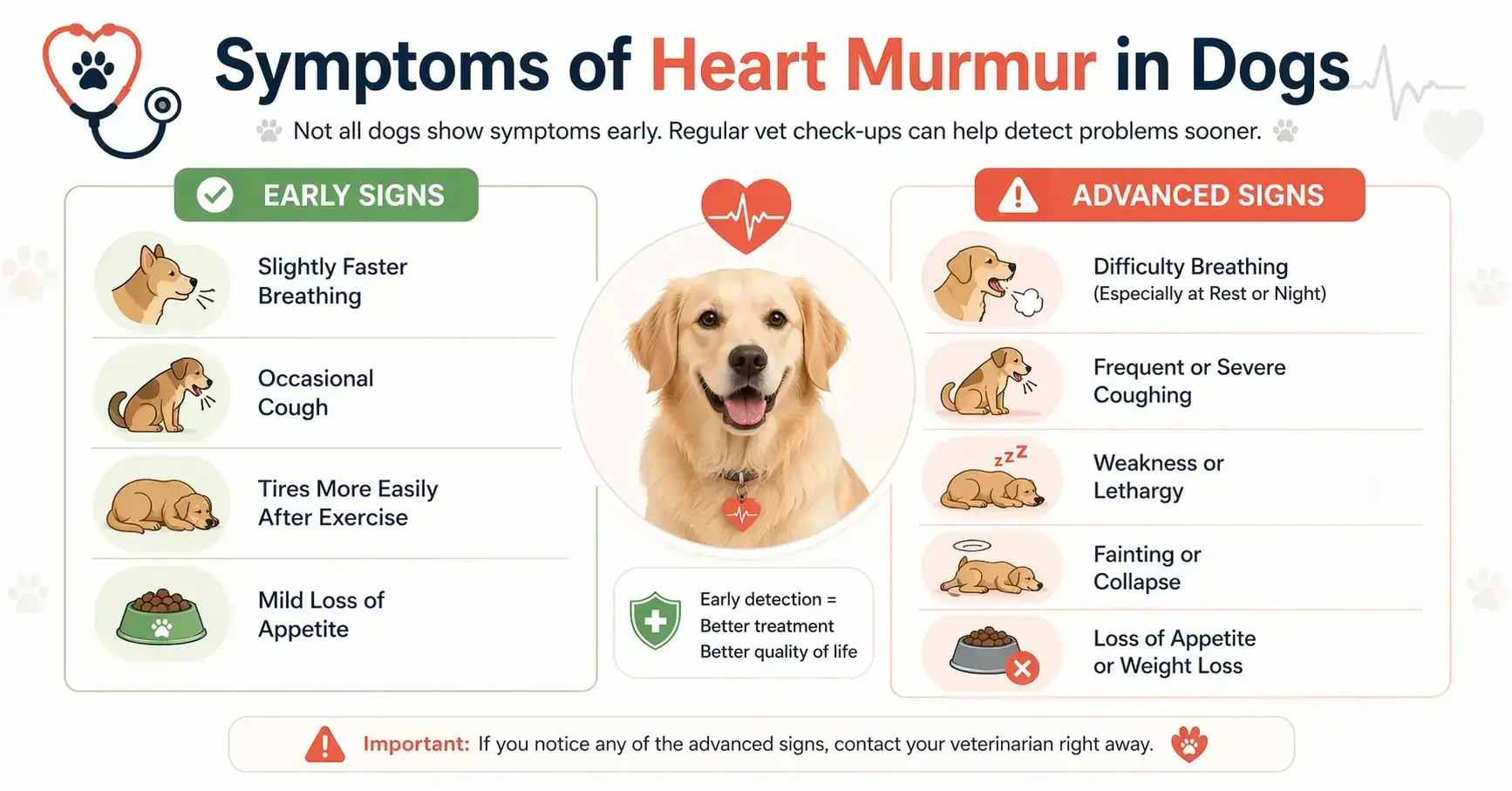
Some dogs show no symptoms at all. Others develop noticeable signs as the condition progresses.
Early Symptoms:
- Mild fatigue
- Reduced activity
- Slight breathing changes
Advanced Symptoms:
- Persistent coughing
- Difficulty breathing
- Fainting (syncope)
- Loss of appetite
- Weight loss
- Bluish gums
If your dog starts coughing frequently or struggles to breathe, it may indicate fluid buildup in the lungs—a serious condition.
Fact: Chronic coughing in dogs with murmurs often signals heart complications rather than a simple throat issue.
📊 Heart Murmur in Dogs Grades: What Do They Mean?
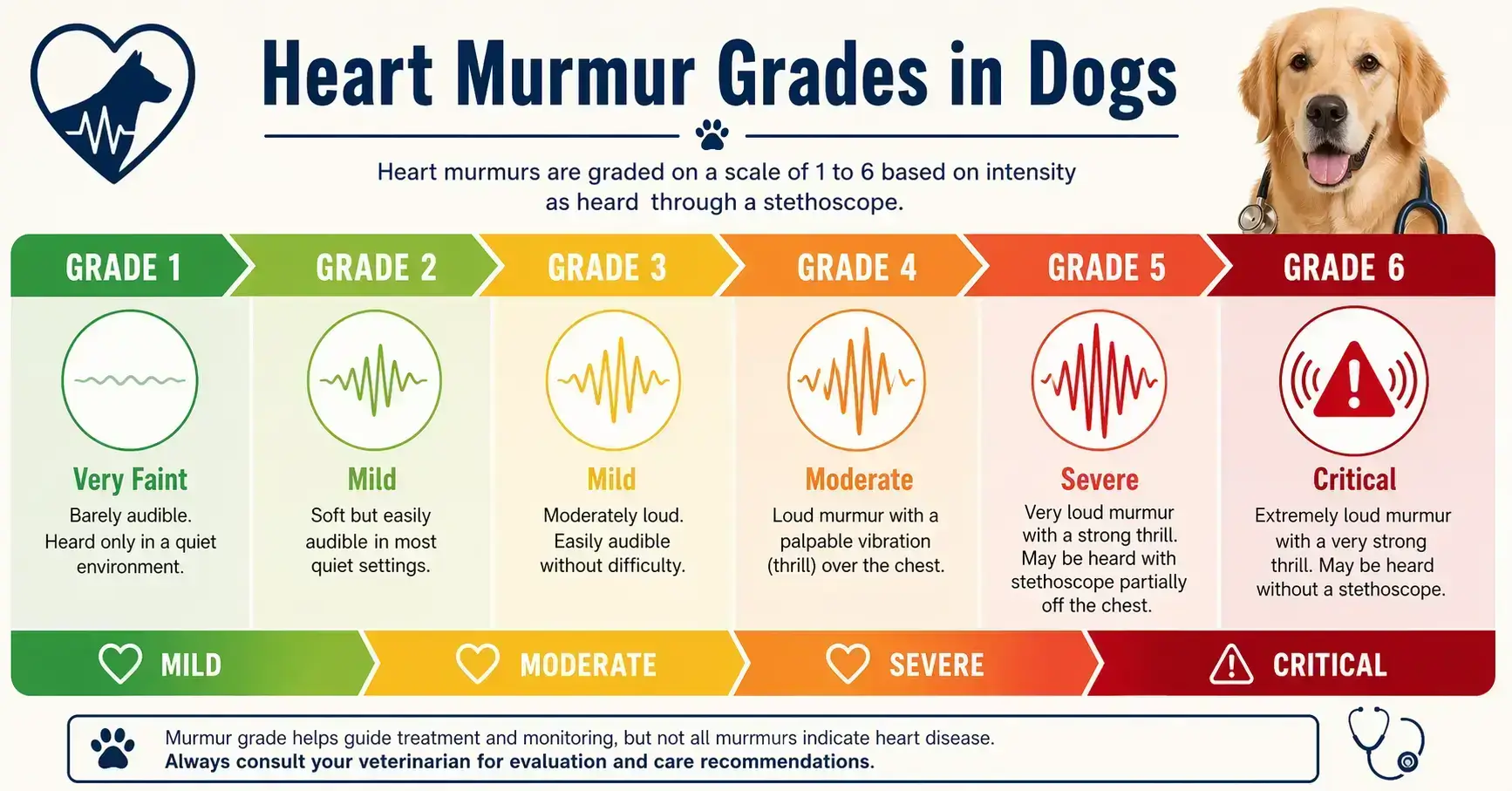
Vets classify murmurs on a scale from Grade 1 to Grade 6.
| Grade | Description | Severity |
|---|---|---|
| Grade 1 | Very faint, hard to hear | Mild |
| Grade 2 | Soft but detectable | Mild |
| Grade 3 | Moderately loud | Moderate |
| Grade 4 | Loud with vibrations | Significant |
| Grade 5 | Very loud, heard easily | Severe |
| Grade 6 | Heard without contact | Critical |
A higher grade increases the likelihood of a serious issue but doesn’t always define severity alone. If you want a fully sortable version of this scale with palpable-thrill notes and interpretation guardrails for each grade, check out this detailed heart murmur grading chart for dogs. It breaks down every grade from I to VI with clinical context vets actually use.
🧭 What Are the Stages of Heart Murmur in Dogs?
Heart disease linked to murmurs is categorized into stages.
Stage A
At risk but no murmur yet
Stage B
Murmur present but no symptoms
- B1: No heart enlargement
- B2: Heart enlargement visible
Stage C
Symptoms like coughing or breathing difficulty
Stage D
Advanced disease with limited response to treatment
Fact: Early-stage treatment can significantly delay progression to heart failure.
🚨 Heart Murmur in Dogs: When to Worry?
Not all murmurs are dangerous, but some signs require immediate attention.
Red Flags:
- Persistent coughing
- Labored breathing
- Collapse or fainting
- Swollen abdomen
- Sudden lethargy
If your dog shows these symptoms, seek veterinary care right away.
Fact: Early medical intervention can greatly improve survival and quality of life.
💊 Heart Murmur in Dogs Treatment Options
Treatment depends on the underlying cause—not the murmur itself. You can also explore how heart diseases progress and are treated in animals through this veterinary cardiology overview.
Common Treatments:
- Medications to improve heart function
- Diuretics to reduce fluid buildup
- Blood pressure control drugs
- Special cardiac diets
- Weight management
Surgery is rare but may be used for congenital defects.
Lifestyle Adjustments:
- Moderate exercise
- Low-sodium diet
- Regular monitoring
Fact: Certain heart medications can delay the onset of heart failure when started early.
💉 Heart Murmur in Dogs Medication
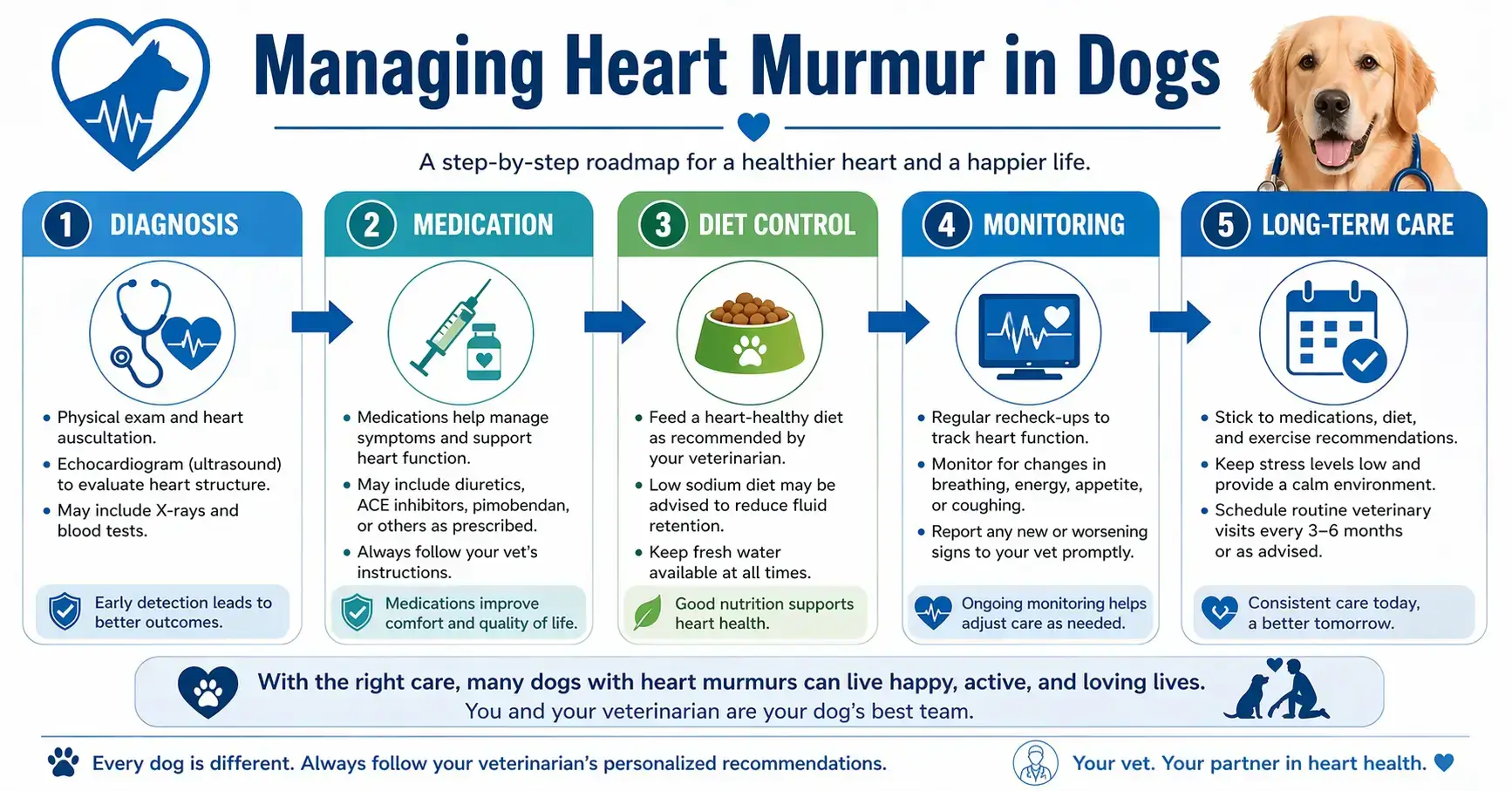
Common medications include:
- Pimobendan
- Furosemide
- Enalapril or benazepril
- Spironolactone
These are often used together depending on disease stage.
💰 Heart Murmur in Dogs Medication Cost
Costs vary based on dog size and treatment plan.
Estimated Monthly Costs:
- Basic medication: $30–$80
- Advanced therapy: $80–$200+
- Diagnostic tests: $100–$500
Larger dogs require higher doses, increasing overall cost.
Fact: Starting treatment early can reduce long-term expenses.
⏳ Heart Murmur in Dogs Life Expectancy
Life expectancy depends on severity and treatment.
General Guidelines:
- Innocent murmur: Normal lifespan
- Early-stage disease: Several years
- Moderate disease: 1–3 years
- Advanced stage: Months to 1 year
Fact: Early diagnosis and consistent care can significantly extend lifespan.
🔍 Grade 3 vs Grade 4 Heart Murmur in Dogs
| Feature | Grade 3 | Grade 4 |
|---|---|---|
| Loudness | Moderate | Loud |
| Vibration | None | Present |
| Risk Level | Medium | Higher |
| Monitoring | Regular | Close monitoring |
| Treatment Need | Possible | Likely required |
Grade 4 murmurs usually indicate more advanced heart changes.
🐕 Heart Murmur in Puppies Symptoms
Puppies may have harmless or serious murmurs.
Innocent Murmur Signs:
- No symptoms
- Active behavior
- Disappears by 4–6 months
Concerning Signs:
- Poor growth
- Weakness
- Breathing issues
Always get a vet evaluation to confirm.
😮💨 Heart Murmur in Dogs Coughing: What It Means
Coughing often signals fluid buildup in the lungs.
Key Signs:
- Night-time coughing
- Cough after activity
- Persistent dry cough
This is a warning sign of disease progression and should not be ignored.
🧪 How Vets Diagnose Heart Murmurs
Diagnosis requires more than listening.
Common Tests:
- Chest X-rays
- Echocardiogram
- ECG
- Blood tests
Curious what each test actually reveals and its limitations? This dog heart murmur diagnostic tests spreadsheet compares echocardiograms, ECGs, Holter monitors, and blood work side by side. It’s a handy printable reference to bring up with your vet.
Fact: Echocardiograms provide the most accurate diagnosis of heart conditions.
❤️ Can Dogs Live Normally With a Heart Murmur?
Yes, many dogs live happy lives with proper care. Providing a healthy diet and lifestyle is essential, and you can explore some easy homemade dog treats that support overall wellness without putting extra strain on your dog’s body.
The key is:
- Early detection
- Regular checkups
- Proper treatment
Dogs adapt well and can maintain a good quality of life.
🛡️ Prevention Tips for Heart Health
While not all murmurs are preventable, you can reduce risks. Maintaining overall health also includes proper dental care, and regular cleaning plays a key role—learn more about how often dogs should get their teeth cleaned to prevent hidden health risks.
Practical Steps:
- Routine vet visits
- Maintain healthy weight
- Balanced diet
- Monitor symptoms
- Avoid overexertion
Fact: Obesity increases strain on the heart and worsens existing conditions.
❓FAQs
It’s an abnormal heart sound caused by irregular blood flow. What is a heart murmur in dogs?
If symptoms like coughing, breathing issues, or fainting appear. When should I worry about a heart murmur?
Yes, especially with early diagnosis and proper care. Can a dog live with a heart murmur?
It varies widely depending on severity and treatment. What is the life expectancy of a dog with a heart murmur?
No, only when linked to underlying heart disease. Is treatment always required?
The murmur itself isn’t painful, but complications can be. Are heart murmurs painful for dogs?




2 Responses