

Cat Tooth Extraction Recovery for a cat after dental surgery can feel overwhelming, especially if it involves extractions. Cats are masters at hiding pain, so recovery can look deceptively “normal” even when they still need support. Tooth extractions are actually quite common—especially in older cats or those with dental disease—and most recover very well when cared for properly.
Many owners worry about how long recovery takes, what to feed, and how to spot complications. The biggest mistake? Assuming your cat is fine too quickly or returning to normal routines before healing is complete. A thoughtful, gentle approach makes all the difference.
Many dental issues that lead to extractions can often be spotted early—understanding the difference between healthy and unhealthy teeth can help prevent serious problems (Healthy Cat Teeth vs Unhealthy).
Pet Care Insight
This guide is based on widely accepted pet care practices, veterinary guidance, and common experiences shared by responsible pet owners. The goal is to provide practical, easy-to-follow advice that helps owners keep their pets healthy, comfortable, and well cared for.
Pet Overview
Cats are incredibly resilient animals, and understanding basic care for a Cat can help owners manage recovery after procedures like tooth extraction more confidently.
Cat Basic Characteristics Overview
Cats are independent yet affectionate animals known for their adaptability. They typically live 12–18 years and vary widely in size and personality depending on breed and environment.
Cat Temperament And Behavior Traits
Most cats are calm, observant, and territorial. During recovery from procedures like dental surgery, they may become quieter, hide more, or show reduced appetite.
Calm breeds like the British Shorthair Chinchilla Cat tend to handle recovery more quietly, often resting more and showing subtle signs of discomfort.
Cat Activity Level And Lifestyle Needs
Cats generally have moderate activity levels. Indoor cats rely heavily on play and enrichment, while outdoor cats self-regulate activity.
Cat Compatibility With Families And Pets
Cats can coexist well with children and other pets when properly socialized. During recovery, however, they often prefer quiet and minimal interaction.
Daily Care Essentials
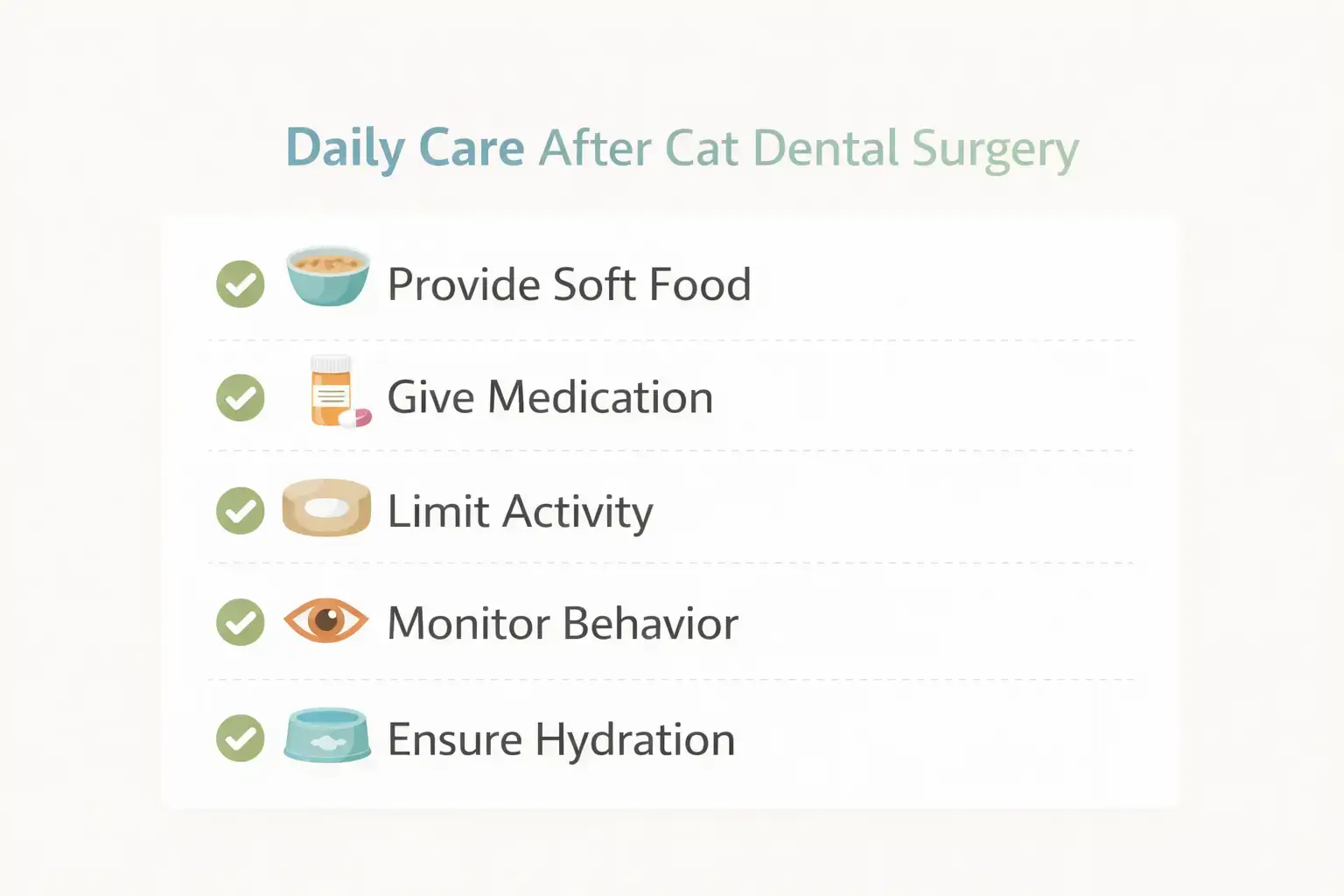
Feeding Routine After Surgery
After a tooth extraction, feeding becomes one of the most important aspects of care:
- Offer soft food only (wet food or softened kibble)
- Serve small, frequent meals
- Ensure food is at room temperature (not cold)
Grooming And Hygiene Adjustments
Avoid brushing your cat’s teeth or disturbing the mouth during healing. Light grooming like brushing fur is fine if your cat tolerates it.
Calm breeds like the British Shorthair Chinchilla Cat tend to handle recovery more quietly, often resting more and showing subtle signs of discomfort.
Rest And Comfort Requirements
Provide a quiet, warm space where your cat can rest without being disturbed. Limit jumping or rough activity for a few days.
Social Interaction And Monitoring
Spend time observing your cat rather than actively engaging. Watch for subtle signs of discomfort or behavioral changes.
Diet & Nutrition Guide
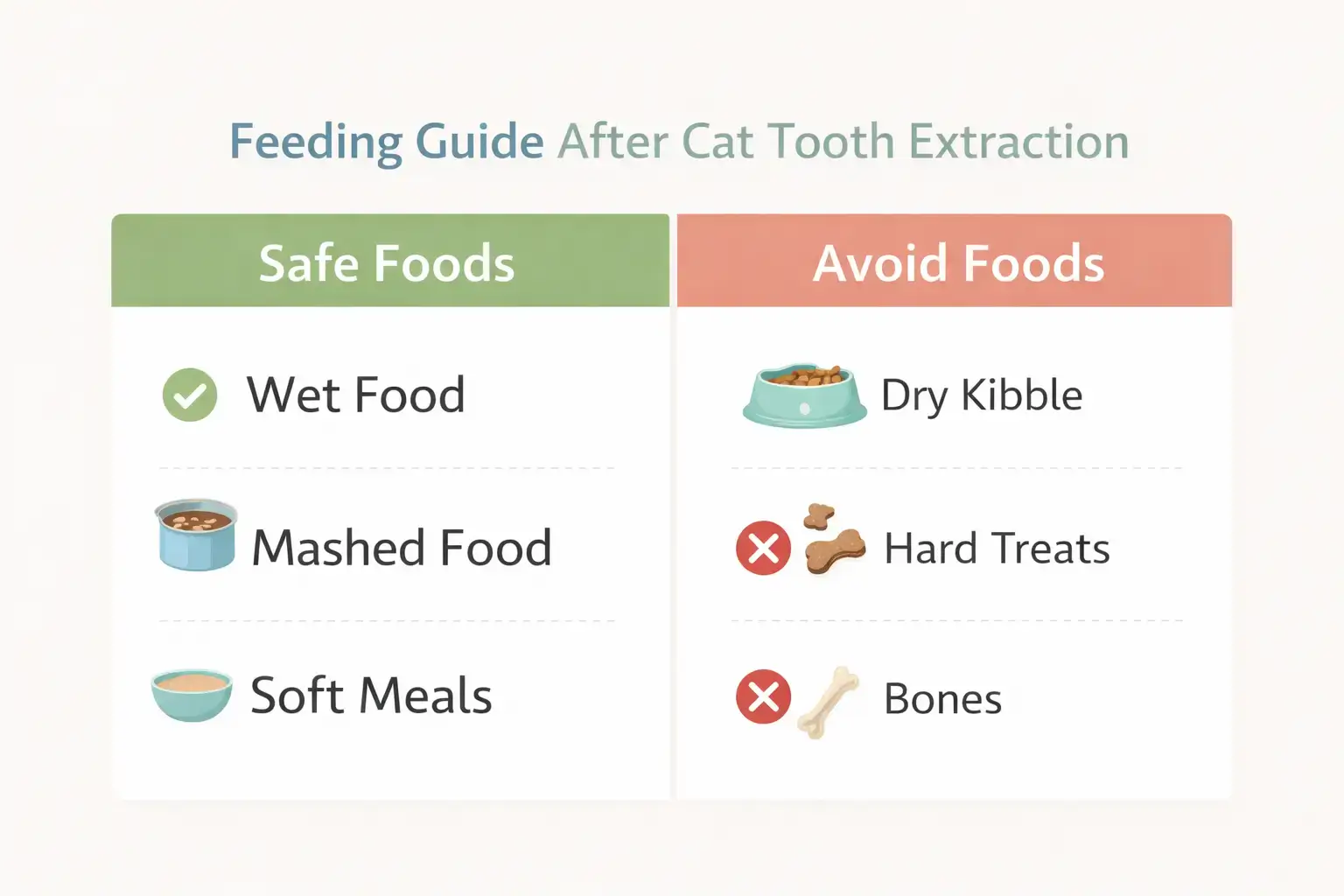
Feeding Soft Foods During Recovery
Soft diets are essential for proper cat tooth extraction recovery:
- Wet canned food
- Blended or mashed food
- Vet-recommended recovery diets
Avoid dry kibble until your vet confirms healing.
Hydration And Water Intake
Make sure your cat drinks enough water. You can:
- Add water to food
- Provide fresh water in multiple locations
Nutrition For Different Life Stages
- Kittens: Require more frequent meals and high-protein diets
- Adults: Balanced wet food supports healing
- Seniors: Softer foods are often already part of routine
Foods To Avoid After Extraction
- Hard treats or kibble
- Bones or chew toys
- Sticky foods
These can disrupt healing and cause complications.
Exercise & Mental Stimulation
Limiting Physical Activity Initially
For the first few days after cat dental surgery recovery:
- Avoid jumping or climbing
- Keep activity minimal
Gentle Play And Engagement
After a few days, light play can resume:
- Soft toys
- Slow interactive play
Mental Enrichment Without Strain
Use puzzle feeders with soft food or simple scent-based games to keep your cat engaged without physical stress.
Training & Behavior Guidance
Managing Post Surgery Behavior Changes
Your cat may:
- Hide more than usual
- Be less social
- Show reduced appetite
This is normal during early cat tooth extraction healing stages.
Encouraging Calm And Safe Habits
Keep routines consistent:
- Feed at the same time daily
- Maintain a quiet environment
Preventing Negative Associations
Avoid forcing medication or food aggressively. Use gentle handling to maintain trust.
Health & Climate Considerations
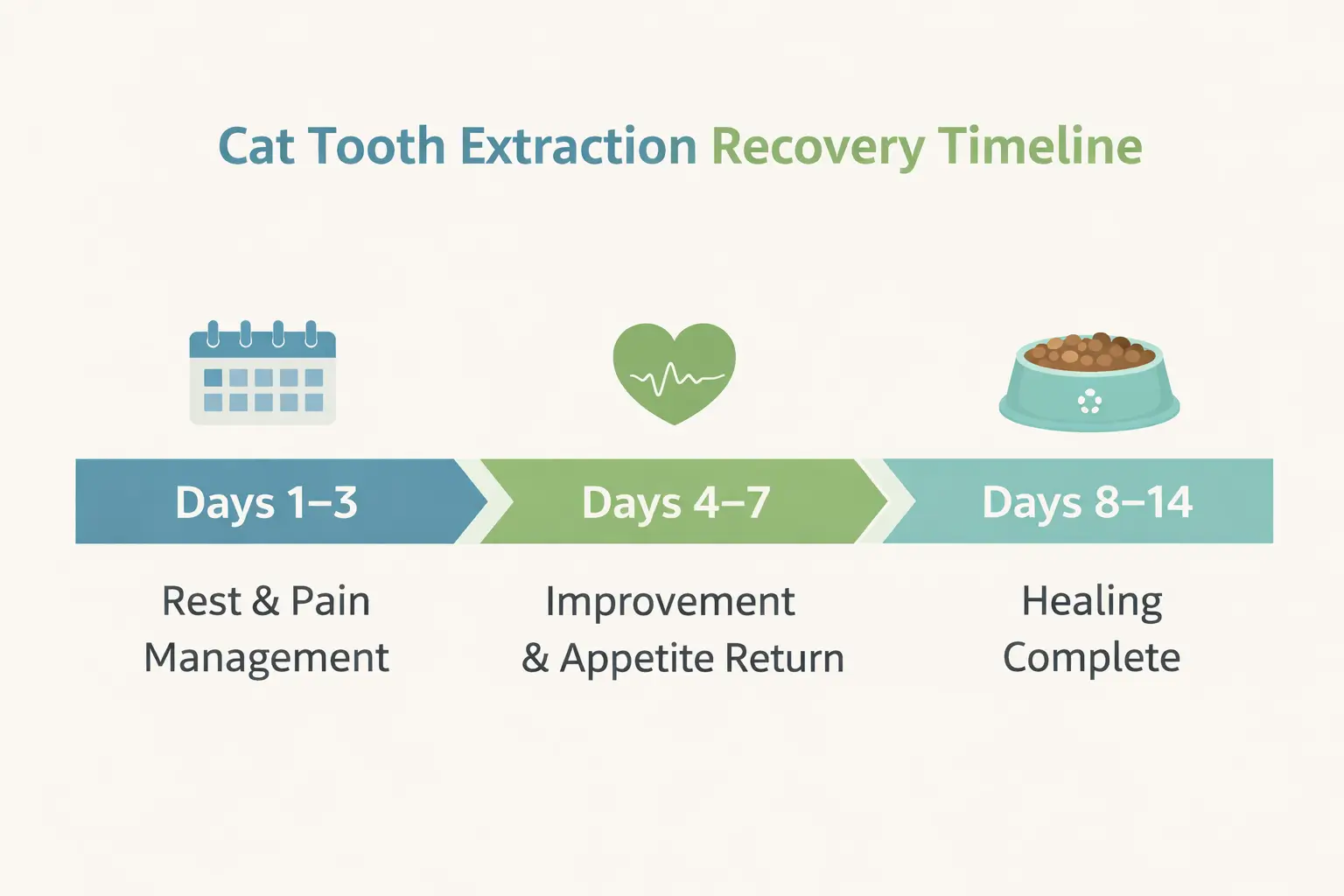
Understanding Recovery Timeline
Typical cat tooth extraction recovery time:
- 3–5 days: Initial discomfort and reduced activity
- 7–10 days: Noticeable improvement
- 2 weeks: Most healing complete
Full recovery depends on whether it was a single or multiple tooth extraction.
Pain Management And Medication
Many owners ask how long do cats need pain meds after tooth extraction. Usually:
- 3–5 days of prescribed pain relief
- Follow your vet strictly
Climate And Comfort Factors
In warmer climates:
- Ensure hydration
- Keep recovery area cool
In colder environments:
- Provide warm bedding
- Avoid drafts
Monitoring Healing Progress
Look for:
- Improved appetite
- Normal grooming behavior
- Reduced swelling
For more detailed veterinary insights on feline health and recovery, you can refer to the Cornell Feline Health Center.
Common Problems & Troubleshooting
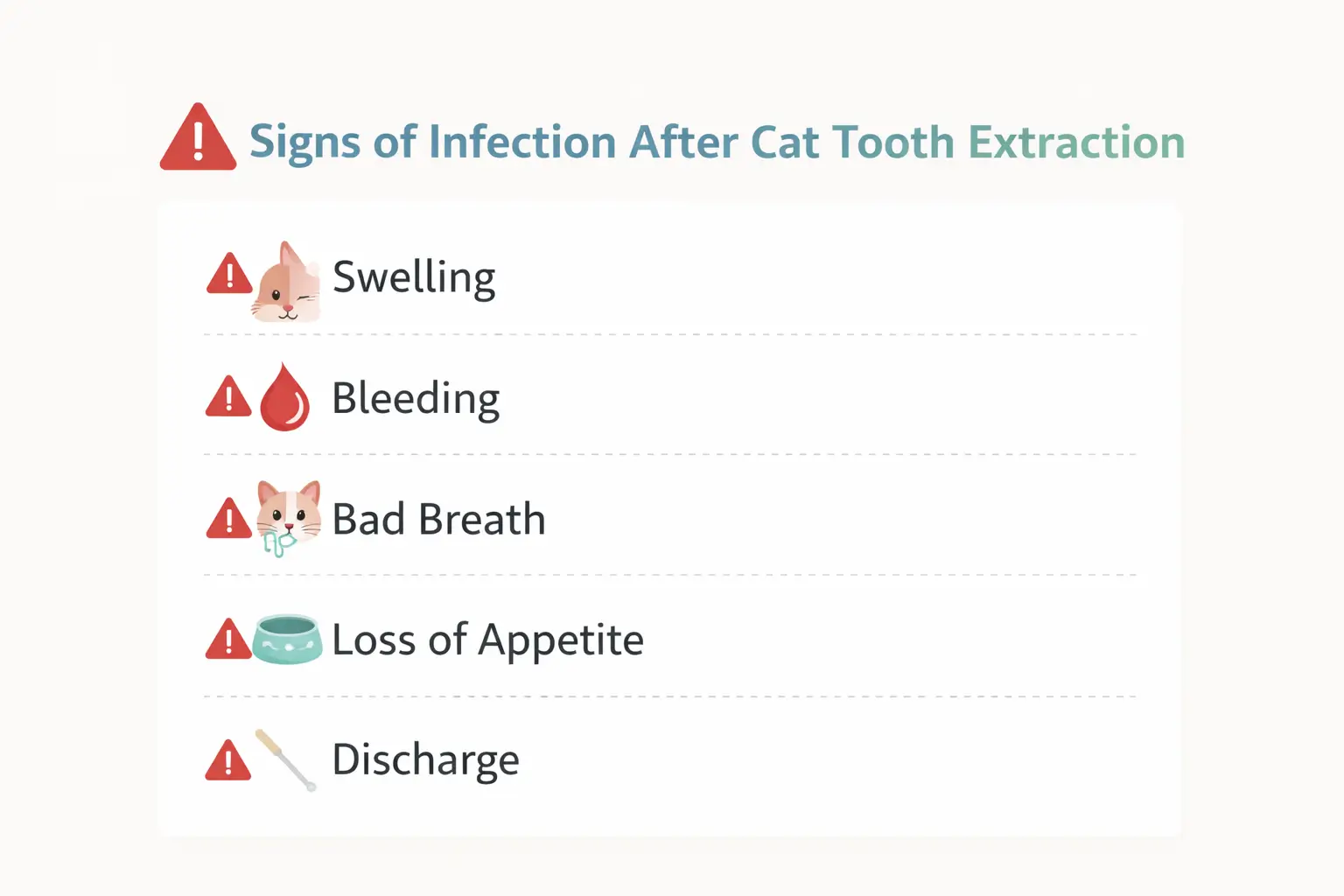
Signs Of Infection After Extraction
Watch closely for signs of infection after cat tooth extraction:
- Bad breath worsening over time
- Swelling or discharge
- Bleeding that doesn’t stop
- Loss of appetite beyond 48 hours
If you notice these, contact your vet immediately.
Complications After Tooth Extraction In Cats
Possible complications include:
- Dry socket (rare but painful)
- Gum inflammation
- Difficulty eating
Solution: Prompt veterinary follow-up.
Cat Refusing To Eat
Cause: Pain or nausea
Solution:
- Offer softer, more palatable food
- Warm food slightly to enhance smell
Excessive Drooling Or Pawing Mouth
Cause: Discomfort or irritation
Solution:
- Monitor closely
- Contact vet if persistent
Seasonal Pet Care Tips
Summer Recovery Care Tips
- Keep your cat cool and hydrated
- Avoid heat stress
Winter Recovery Care Tips
- Provide warm resting areas
- Encourage hydration despite colder weather
Spring And Fall Considerations
- Watch for seasonal allergies affecting healing
- Maintain consistent indoor environment
Additional Expert Tips
Avoid Common Recovery Mistakes
- Don’t reintroduce dry food too early
- Don’t skip medications
- Don’t ignore subtle behavior changes
Long Term Dental Care Habits
Once healed:
- Introduce dental-friendly diets
- Schedule regular vet checkups
- Consider dental treats approved by vets
Supporting Cats After Multiple Extractions
Cats adapt surprisingly well—even after full tooth extraction recovery. Many eat normally with soft or adjusted diets.
Conclusion
Cat tooth extraction recovery is usually smooth when handled with patience and attention. The key is gentle care, proper feeding, and close observation during the first two weeks. Most cats bounce back quickly and often feel better than they did before surgery—especially if dental pain was present.
Avoid rushing the recovery process, stick to your vet’s advice, and watch for any warning signs. With the right approach, your cat will return to normal life comfortably and confidently.
FAQs
-
How long for cat to recover from tooth extraction?
Most cats recover within 10–14 days, though initial improvement is seen within a few days.
-
What to expect after cat tooth extraction?
Mild swelling, reduced appetite, and lower activity are normal for the first few days.
-
Can cats eat normally after tooth removal?
Yes, but soft food is required during recovery. Many cats adapt well long-term.
-
Is it normal for cats to be quiet after dental surgery?
Yes, reduced activity is common due to discomfort and healing.
-
How do I know if my cat is in pain after extraction?
Look for hiding, reduced eating, drooling, or pawing at the mouth.
-
When should I worry after cat dental surgery?
If symptoms like swelling, bleeding, or refusal to eat last more than 48 hours, consult your vet.
-
Can a cat live normally after full tooth extraction?
Yes, cats adapt very well and can live healthy, comfortable lives with proper diet adjustments.




6 Responses