

Many people fall in love with photos of serval cat kittens without understanding the massive responsibility involved. The common mistake is treating them like large domestic cats—a dangerous misunderstanding that leads to surrendered animals and tragic accidents.
Table of Contents
ToggleQuick Summary
-
Owning a serval
Serval cat kittens grow into powerful, high-energy wild animals, not house pets. They require acres of space, a specialized raw diet, and expert handling.
-
Legal reality
Owning a serval is illegal or requires a dangerous wild animal license in most regions, including many US states and the UK.
-
Are serval cats dangerous?
Yes. Even hand-raised, they are unpredictable, retain strong hunting instincts, and can inflict severe bites.
-
Can a serval cat kill a human?
While rare for adults, they can seriously injure or kill small children and pets.
-
Are servals aggressive?
Not out of malice, but their natural behaviors (pouncing, biting the neck) are dangerous in a home. They do not get along with other cats or small animals.
Pet Care Insight
This guide is based on exotic animal veterinary guidelines, legal statutes, and firsthand accounts from licensed sanctuaries and experienced exotic animal keepers. The goal is to provide honest, practical advice to help you make an informed decision—and to steer you toward safer, legal alternatives if a serval isn’t right for you (which it almost never is).
Pet Overview
Serval Cat Temperament & Behavior
Servals are solitary, territorial hunters in the wild. Unlike domestic cats, they do not seek human companionship as pack animals. A “friendly” serval may still suddenly bite or claw with no warning signs a dog or housecat would show. The serval is a wild cat native to Africa, it is a solitary, territorial hunter by nature. For those seeking a legal alternative, the Savannah cat is a hybrid cross between a serval and a domestic cat. Even later-generation Savannahs retain strong prey drives and high energy, but they are far safer.
Lifespan & Physical Traits
-
Lifespan:
12–22 years in captivity.
-
Size:
20–40 lbs, up to 24 inches at the shoulder.
-
Key traits:
Massive ears (for hunting in tall grass), extremely long legs, incredible jumping ability (10+ feet high).
Family & Pet Suitability
-
Families with young kids:
No – too unpredictable and dangerous.
-
Homes with other cats:
No – servals see them as prey or rivals.
-
Homes with dogs:
Risky – only large, same-sized dogs might coexist with extreme caution.
-
Apartment living:
No – needs acres of secure outdoor enclosure.
-
First-time exotic owner:
No – requires years of large wild cat experience.
Daily Care Essentials (The Reality)
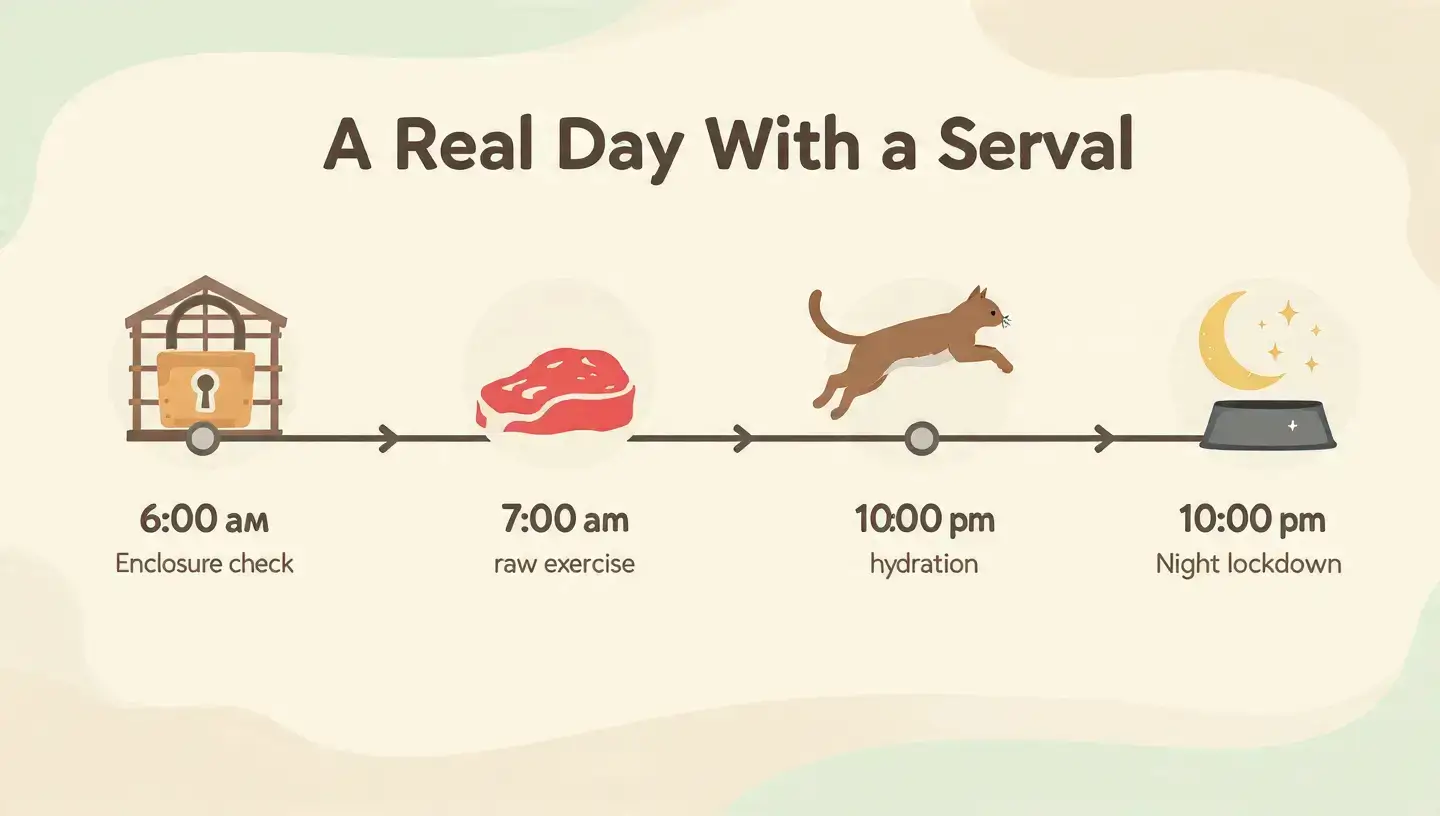
Owning serval cat kittens means building your life around their needs—not the other way around.
A Real Daily Routine (From an experienced keeper)
6:00 AM:
Morning enclosure patrol (check for escape attempts, remove overnight kills like birds or rodents).
7:00 AM:
Feed raw whole prey (quail, mice, or specialized carnivore diet). No bowls—scatter feeding for enrichment.
8:00 AM – 12:00 PM:
Serval is most active. You must supervise outdoor time or provide a massive, secure run.
12:00 PM:
Second small meal.
2:00 PM – 5:00 PM:
They often rest, but any noise (dog, child) triggers alert/stalking mode.
6:00 PM:
Major exercise session (lure pole, swimming pool, climbing structures).
8:00 PM:
Final meal.
10:00 PM:
Lockdown enclosure check. They are crepuscular (dawn/dusk hunters), so nighttime activity is normal.
Common Beginner Mistakes
-
Hand-feeding a serval kitten:
This teaches them hands = food, leading to severe biting as adults.
-
Using a standard cat door:
A serval can squeeze through surprisingly small gaps.
-
Declawing:
Inhumane and illegal in many places. It causes lifelong pain and aggression.
Diet & Nutrition Guide
Serval cat kittens need a diet replicating wild prey, not commercial cat food.
Feeding Schedule by Age
-
Kittens (under 1 year):
4x/day – whole ground mice, day-old chicks, calcium supplement.
-
Adults (1+ year):
2x/day – whole quail, rats, rabbit, plus a commercial raw carnivore diet (e.g., Darwin’s or Hare Today).
-
Foods to Avoid
Never feed: Dog food, cooked bones, pork, or any plant-based filler. Servals are obligate carnivores.
-
Portion Control
Adults eat 5–10% of body weight daily (approx. 1.5–3 lbs of meat/whole prey).
Exercise & Mental Stimulation
A bored serval destroys property, escapes, or becomes aggressive. Minimum daily requirements:
-
Daily active interaction:
2+ hours (lure pole chasing, swimming in a kiddie pool, climbing 8+ foot structures).
-
Enrichment rotation:
Hidden meat scents, puzzle boxes with live insects, frozen blood treats.
-
Outdoor enclosure specs:
Minimum 20’ x 40’ x 10’ high, with dig-proof flooring (concrete or heavy gauge wire buried 2’ deep).
Training & Behavior Guidance
You cannot “train out” wild instincts. You can only manage them.
Basic Handling Safety
-
Target training:
Use a long stick and target ball to move your serval without contact.
-
Crate training:
Essential for vet visits (most vets will not see servals; you need an exotic specialist).
-
Never use punishment:
It triggers defensive aggression. Use redirection and environmental controls.
-
Socialization Limits
Even if raised from serval cat kittens, they typically become aggressive toward humans around sexual maturity (12–18 months). This is not a failure—it is biology.
Health & Climate Considerations
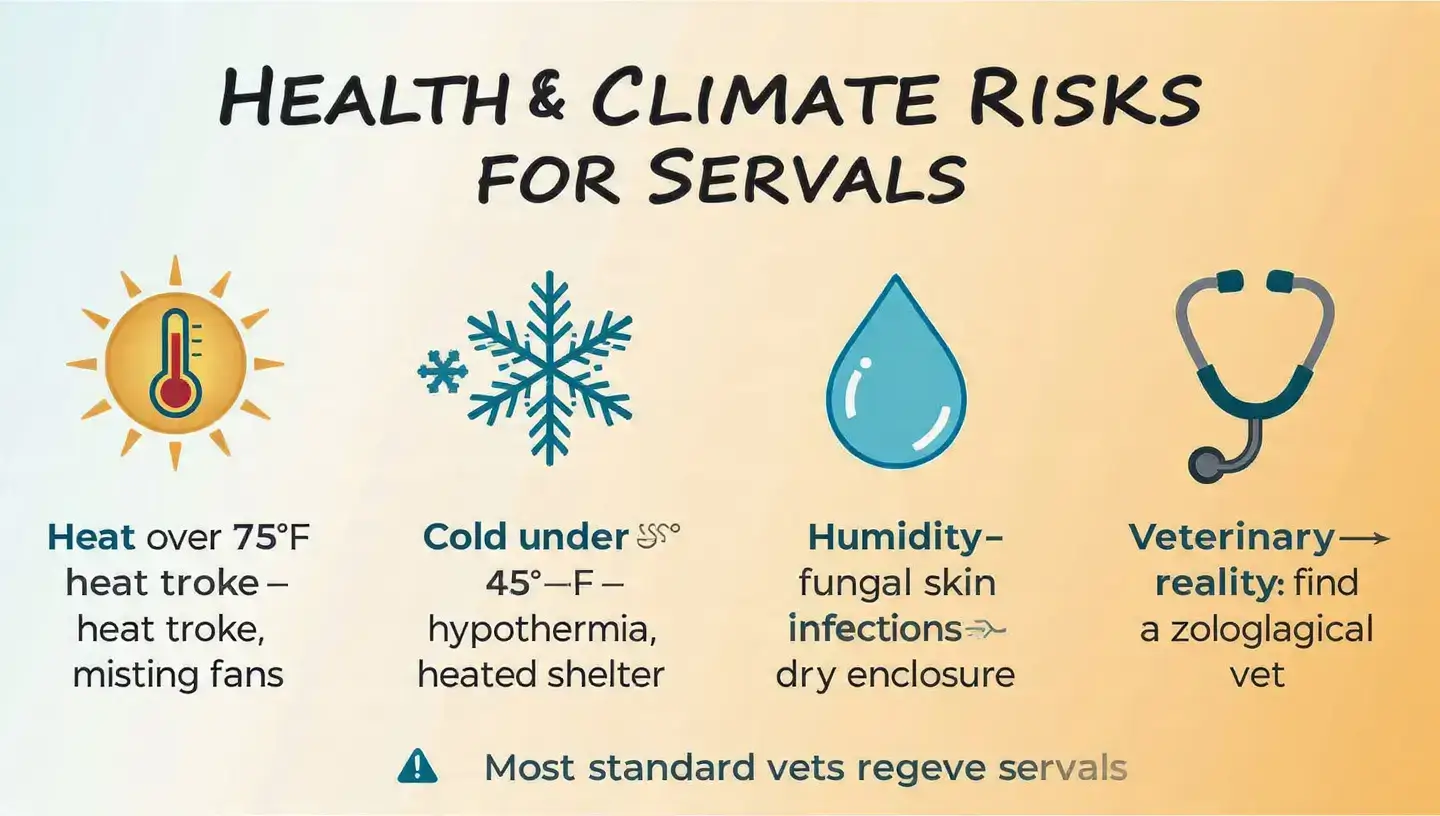
Servals rarely need routine dental cleanings, any captive wild cat can develop a cracked tooth from chewing bones, and recovery from a cat tooth extraction recovery is a complex, specialist-only procedure.
-
Heat (over 75°F):
Risk of heat stroke. Provide misting fans, shallow pools, indoor A/C.
-
Cold (under 45°F):
Risk of hypothermia. Use heated shelter, though servals tolerate cold better than heat.
-
Humidity:
Risk of fungal skin infections. Ensure dry, well-ventilated enclosure.
-
Veterinary reality:
Most standard vets will refuse treatment. Find a board-certified zoological veterinarian before acquiring a serval.
Comparison Section:
Serval vs. F1 Savannah vs. F2 Savannah
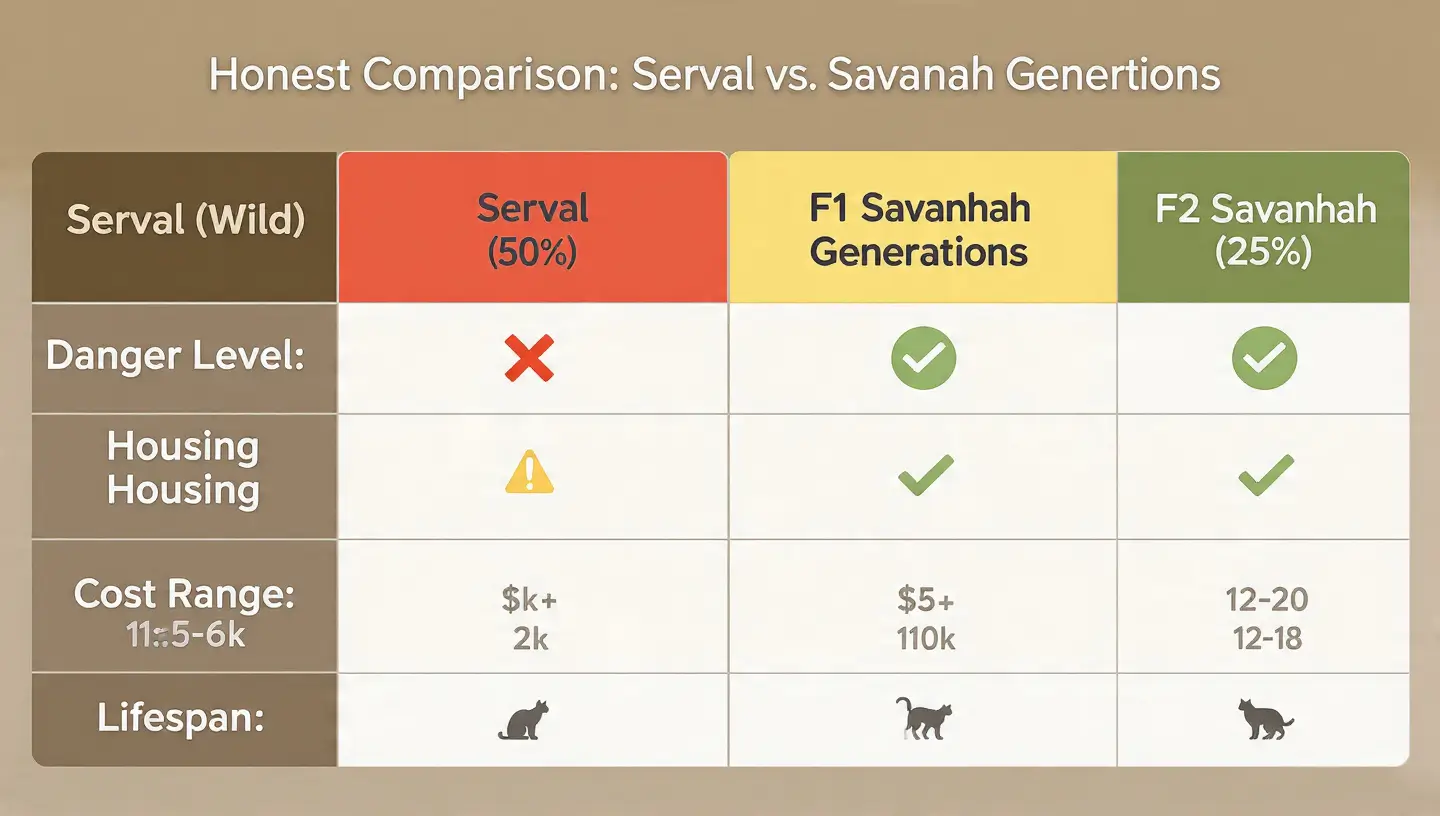
Many people search for “f1 savannah cat for sale” or “savannah cat breeder” as an alternative. Here is the honest comparison.
| Feature | Serval (Wild) | F1 Savannah (50% Serval) | F2 Savannah (25% Serval) |
|---|---|---|---|
| Legal in most areas? | No (illegal in 20+ US states, banned in UK) | Limited (check local laws) | Usually yes (like a domestic cat) |
| Danger level | Extreme – can kill a human child | High – unpredictable, strong prey drive | Moderate – similar to high-energy Bengal |
| Housing needs | Outdoor zoo-grade enclosure | Large indoor + outdoor run | Large house + catio |
| Cost | $5,000–$15,000+ | $2,000–$10,000 | $1,500–$6,000 |
| Lifespan | 12–22 years | 12–20 years | 12–18 years |
If you want a large, exotic-looking cat, get an F2 or F3 Savannah from a reputable savannah cat breeder. Never buy a serval.
To understand the vast difference in temperament, compare a serval’s wild instincts to the calm, quiet nature of a British Shorthair Chinchilla Cat, a breed genuinely suited for home life.
Recommendation:
If you want a large, exotic-looking cat, get an F2 or F3 Savannah from a reputable savannah cat breeder. Never buy a serval.
Common Problems & Troubleshooting
Problem: Your serval hisses, lunges, or swats at family members.
Cause:
Sexual maturity, territoriality, or a perceived threat.
Solution:
Immediate separation. Never punish. Consult an exotic animal behaviorist. Often, permanent rehoming to a sanctuary is the only safe option.
When to see a vet:
Rule out illness or injury causing pain-aggression.
Problem: Escaping enclosure repeatedly.
Cause:
Weak points (doors, roof corners) or boredom.
Solution:
Double-door airlock entry system. Bury wire 2 feet deep outward. Add more climbing and hunting enrichment.
Prevention:
Build for a “master escape artist” from day one.
Seasonal Pet Care Tips
-
Spring
Allergies: Servals can get seasonal skin itching. Watch for overgrooming. Escape risk: Mating season increases roaming attempts. Reinforce fences.
-
Summer
Heat protection: Provide multiple shaded pools. Servals cool through their paws and ears. Hydration: Add water cubes (frozen broth) to their enclosure.
-
Fall
Routine changes: As temperatures drop, they may become more active and aggressive (preparation for winter hunting). Rodent control: Never use poison near their enclosure—servals will eat poisoned rodents.
-
Winter
Indoor care: If temps drop below 45°F, they need a heated indoor space (barn with heat lamp). Exercise adjustment: Move play indoors with large PVC tunnels and hanging prey toys.
Additional Expert Tips
-
Hidden mistake:
Buying serval cat kittens that are too young (under 12 weeks). Ethical breeders (rare) keep kittens with the mother until 16 weeks for proper socialization.
-
Simple habit:
Record daily weight and food intake. Sudden loss indicates illness or stress.
-
Long-term care advice:
Have a legally binding plan for the serval if you become ill or die. Most sanctuaries are full and will not take new animals.
Conclusion
Serval cat kittens are breathtakingly beautiful, but they grow into wild predators that do not belong in homes. The core mistake is believing love and training can override 10,000 years of evolution. Responsible ownership means providing zoo-grade housing, a whole-prey diet, and expert veterinary care—or, even better, choosing a legal, safer alternative like a Savannah cat from a reputable savannah cat breeder. If you already own a serval, your first call should be to a licensed exotic animal sanctuary for rehoming guidance.
FAQs
-
Can a serval cat kill a human?
Yes, a full-grown serval can kill a small child (via neck bite) and cause fatal wounds to an adult through massive blood loss or infection. Several attacks have been documented.
-
Are serval cats dangerous to own?
Extremely. Even hand-raised servals have sent owners to the ER with bites requiring surgery. They are wild animals, not pets.
-
Do servals get along with cats?
No. Servals view domestic cats as prey. They will stalk, kill, and eat a house cat.
-
How much is a serval kitten?
Prices range from $5,000 to $15,000, but the cost of a legal, zoo-quality enclosure, raw diet, and exotic vet care exceeds $20,000+ over their lifetime.
-
Can you own a serval cat in the UK?
No. Under the Dangerous Wild Animals Act 1976, servals require a license that is almost never granted to private owners. Serval kittens UK sales are effectively illegal.
-
Are servals aggressive by nature?
They are not “aggressive” like a fighting dog. They are predators. Pouncing, biting the neck, and clawing are normal hunting behaviors—deadly in a home.
-
How much is a savannah cat kitten compared to a serval?
An F1 savannah cat kitten costs $2,000–$10,000 (less than a serval), is legal in more areas, and is safer—though still challenging for most homes.