
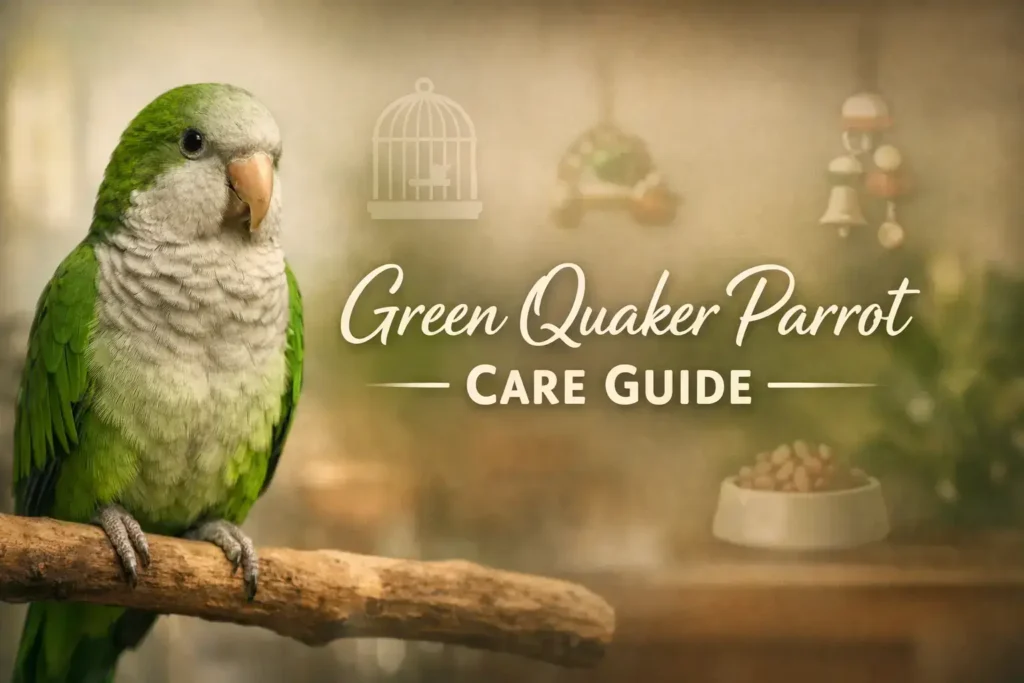
Green quaker parrots, also known as monk parakeets, have become incredibly popular among bird lovers because of their intelligence, playful nature, and strong ability to talk. They’re small enough to manage easily but smart enough to form deep bonds with their owners.
The green quaker parrot, also known as the monk parakeet, is a highly intelligent bird species widely recognized for its social behavior and adaptability.
What makes caring for them unique is their personality—they’re social, vocal, and sometimes a bit stubborn. Many first-time owners underestimate how much attention and mental stimulation they need. A common mistake is treating them like low-maintenance cage birds, when in reality they behave more like tiny, feathered companions that need daily interaction.
Pet Care Insight
This guide is based on widely accepted pet care practices, veterinary guidance, and common experiences shared by responsible pet owners. The goal is to provide practical, easy-to-follow advice that helps owners keep their pets healthy, comfortable, and well cared for.
Pet Overview
Temperament And Personality Traits
Green quaker parrots are bold, curious, and highly social. They love interacting with humans and can become very attached to their primary caregiver. They’re known for their “big bird personality” in a small body.
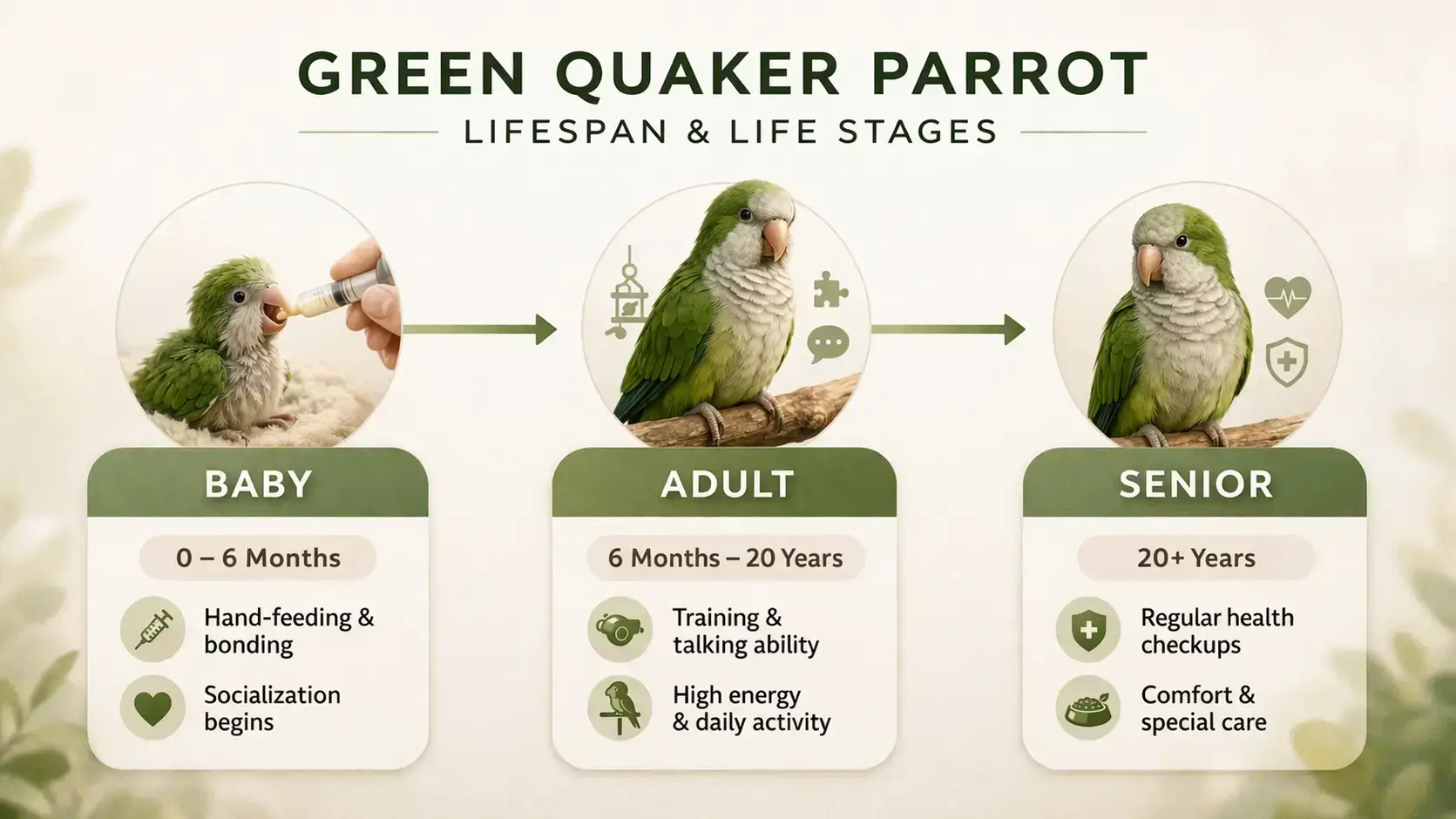
Lifespan And Longevity
The green quaker parrot lifespan typically ranges from 20 to 30 years with proper care. Some live even longer in well-managed home environments.
Lifespan is generally consistent across color variations, including rarer types like yellow quaker parrots.
Physical Size And Appearance
They are small to medium parrots, usually around 11–12 inches in length. Their bright green feathers, gray chest, and expressive eyes make them easy to recognize.
While the green variety is the most common, color mutations like the blue quaker are also popular—learn more in this detailed guide on blue quaker parrots.
Suitability For Families
They can do well in families, but they bond strongly with one person. Supervision is important around young children due to their tendency to nip when overstimulated.
Activity Level And Energy
These birds are very active and require daily out-of-cage time. Without enough stimulation, they can become noisy or develop behavioral issues.
Daily Care Essentials
Feeding Routine Basics
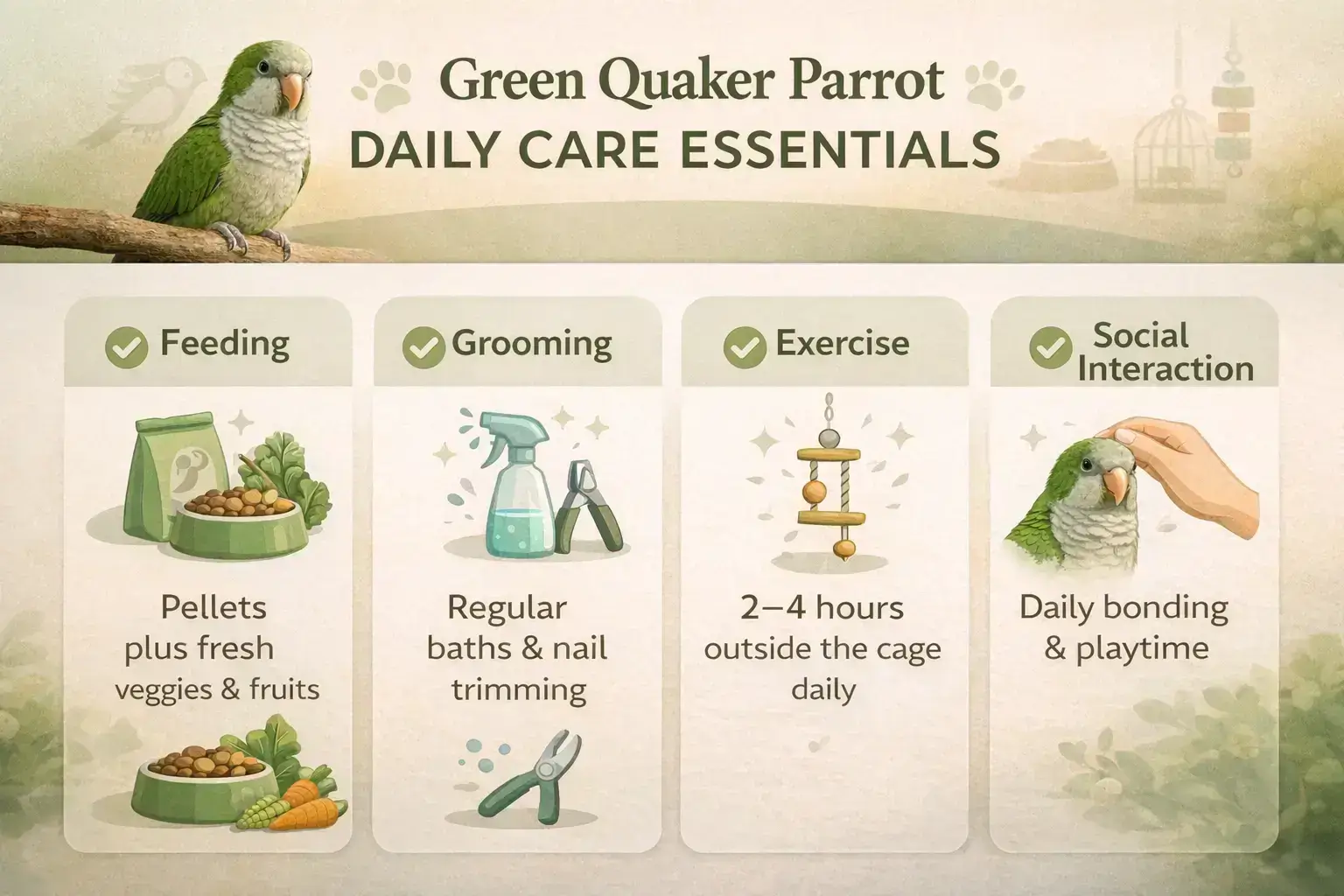
Feed your green quaker parrot twice daily with a mix of pellets, fresh vegetables, and occasional fruits. Avoid overfeeding seeds.
Grooming And Hygiene Needs
They require minimal grooming but benefit from:
- Regular bathing (mist spray or shallow dish)
- Nail trimming when needed
- Clean cage environment daily
Exercise And Movement Needs
Allow at least 2–4 hours outside the cage daily. They enjoy climbing, flying short distances, and exploring.
Social Interaction Requirements
Quaker parrots need consistent interaction. Talk to them, handle them gently, and include them in your daily routine.
Diet & Nutrition Guide
Balanced Diet Essentials
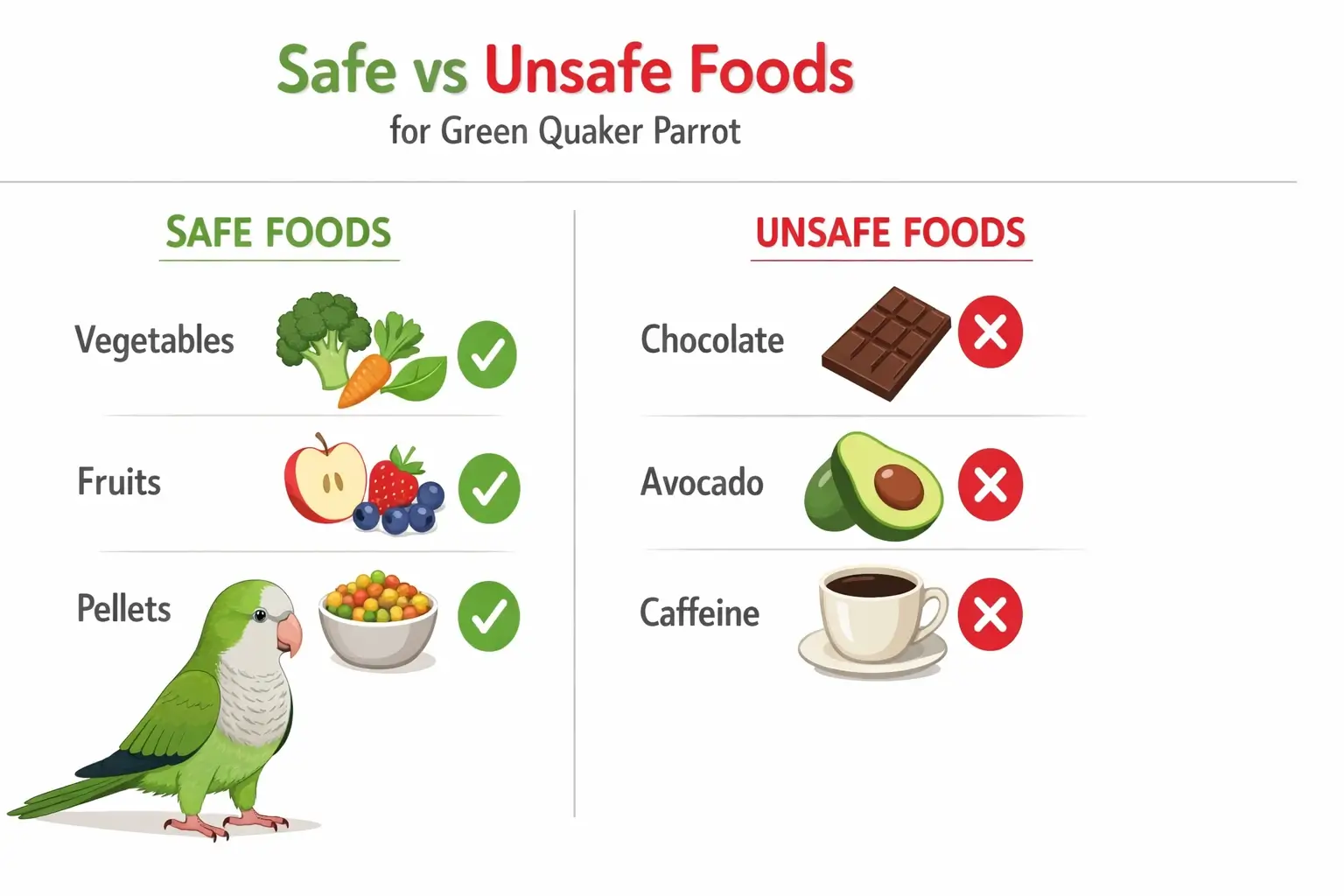
A healthy green quaker parrot food plan includes:
- High-quality pellets (main diet)
- Fresh vegetables (spinach, carrots, broccoli)
- Fruits (apple, banana in moderation)
- Limited seeds and nuts
Feeding Schedule By Age
- Young birds: 3–4 small meals daily
- Adults: 2 balanced meals daily
- Seniors: Smaller, frequent meals with softer foods
Safe Foods For Quaker Parrots
- Leafy greens
- Cooked grains (rice, quinoa)
- Fresh fruits
Foods To Avoid
- Chocolate
- Avocado
- Caffeine
- Alcohol
- Salty or sugary foods
Proper portion control is key—overfeeding can lead to obesity, a common issue in captive parrots.
Exercise & Mental Stimulation
Daily Activity Needs
Quaker parrots require both physical and mental stimulation every day.
Enrichment Ideas At Home
- Puzzle toys
- Foraging activities
- Mirror play (limited use)
- Rotating toys weekly
Interactive Playtime Ideas
- Teaching simple tricks
- Talking sessions
- Shoulder time with supervision
Mental stimulation is especially important because green quaker parrot talking ability develops with regular interaction.
Training & Behavior Guidance
Basic Training Approach
Start with simple commands like “step up.” Use positive reinforcement such as treats and praise.
Socialization Tips
Expose your bird to different environments and people gradually to prevent fearfulness.
Preventing Behavior Problems
Common issues include biting and screaming. Prevent them by:
- Providing enough attention
- Avoiding sudden movements
- Not reinforcing bad behavior
Consistency is key when training quaker parrots.
Health & Climate Considerations
Common Health Concerns
- Obesity
- Feather plucking
- Respiratory infections
Climate Sensitivity
Quaker parrots are sensitive to extreme temperatures.
Hot Weather Care
- Keep them in a cool, ventilated area
- Provide fresh water constantly
- Avoid direct sunlight exposure
Cold Weather Care
- Maintain indoor warmth
- Avoid drafts
- Use safe heating if necessary
Common Problems & Troubleshooting
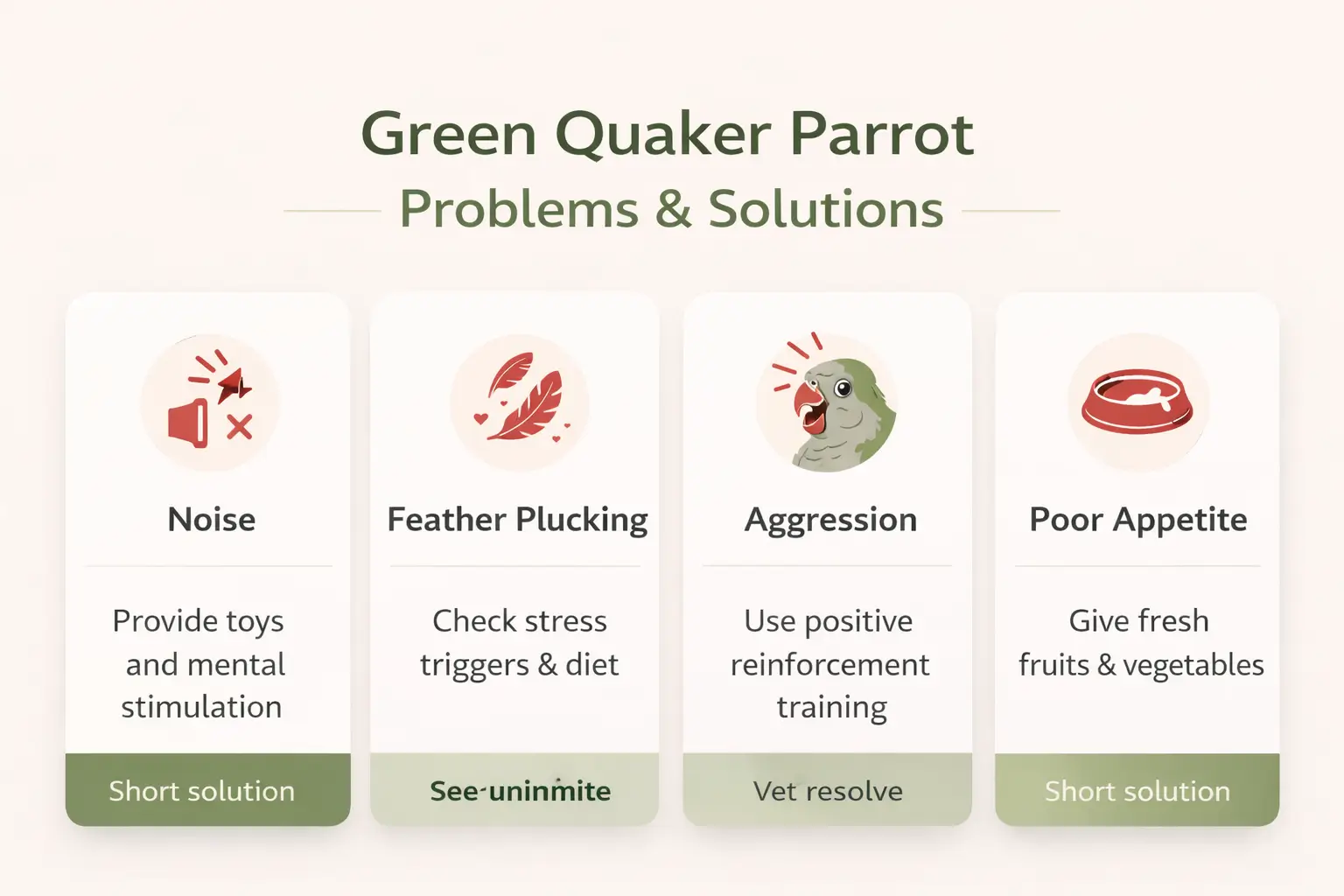
Excessive Noise
Cause: Boredom or lack of attention
Solution: Increase interaction and provide toys
Prevention: Maintain a consistent routine
Feather Plucking
Cause: Stress, poor diet, or boredom
Solution: Improve diet and enrichment
Prevention: Regular engagement and mental stimulation
Aggressive Behavior
Cause: Hormonal changes or fear
Solution: Gentle handling and training
Prevention: Early socialization
Poor Appetite
Cause: Stress or illness
Solution: Offer fresh food and monitor closely
Prevention: Maintain a stable environment
Seasonal Pet Care Tips
Spring Season Care Tips
- Increase enrichment as activity rises
- Watch for allergies or dust sensitivity
Summer Season Care Tips
- Ensure hydration at all times
- Avoid overheating
Fall Season Care Tips
- Adjust diet slightly for energy needs
- Monitor feather molting
Winter Season Care Tips
- Keep bird warm indoors
- Increase indoor playtime
Additional Expert Tips
Common Beginner Mistakes
- Keeping them caged too long
- Feeding too many seeds
- Ignoring mental stimulation needs
Simple Habits For Better Health
- Clean cage daily
- Rotate toys weekly
- Talk to your bird regularly
Long Term Care Considerations
These birds can live decades, so commitment is long-term. Plan for time, cost, and lifestyle adjustments.
This long-term commitment applies to all variations, including less common types like white quaker parrots.
Conclusion
Caring for a green quaker parrot is rewarding but requires dedication. Their intelligence, social nature, and talking ability make them amazing companions, but they demand time, attention, and proper care.
The most important things to focus on are a balanced diet, daily interaction, mental stimulation, and a safe environment. Avoid common mistakes like neglecting social needs or overfeeding seeds, and you’ll have a happy, healthy bird for years to come.
FAQs
-
How long do green quaker parrots live?
They typically live 20–30 years with proper care.
-
Do green quaker parrots talk well?
Yes, they are excellent talkers and can learn many words and phrases.
-
How big is a quaker parrot?
They are about 11–12 inches long and considered small to medium parrots.
-
Why are quaker parrots illegal in some places?
They are banned in certain regions because they can survive in the wild and damage crops or ecosystems.
-
What do green quaker parrots eat daily?
A mix of pellets, vegetables, fruits, and limited seeds.
-
Are quaker parrots good for beginners?
They can be, but only if the owner is ready to provide daily interaction and care.
-
How much attention does a quaker parrot need?
At least a few hours of interaction and out-of-cage time every day.



One Response