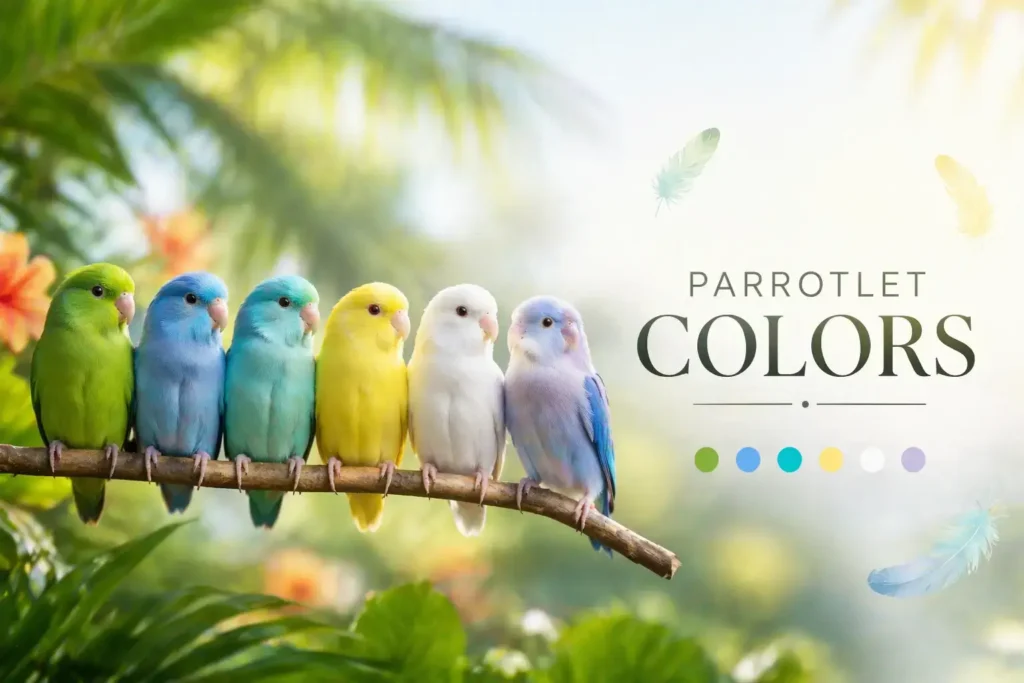
Parrotlet Colors Guide
Parrotlets are among the smallest parrots in the world, but their colors are surprisingly rich and diverse. From bright greens in the wild to rare blues, violets, and lutino mutations in captivity, these tiny birds show an impressive range of shades.
In this guide, you’ll learn about all parrotlet colors, how they develop, the most common and rare parrotlet color mutations, and how they differ from similar birds like lovebirds.
🎨 What are parrotlet colors?
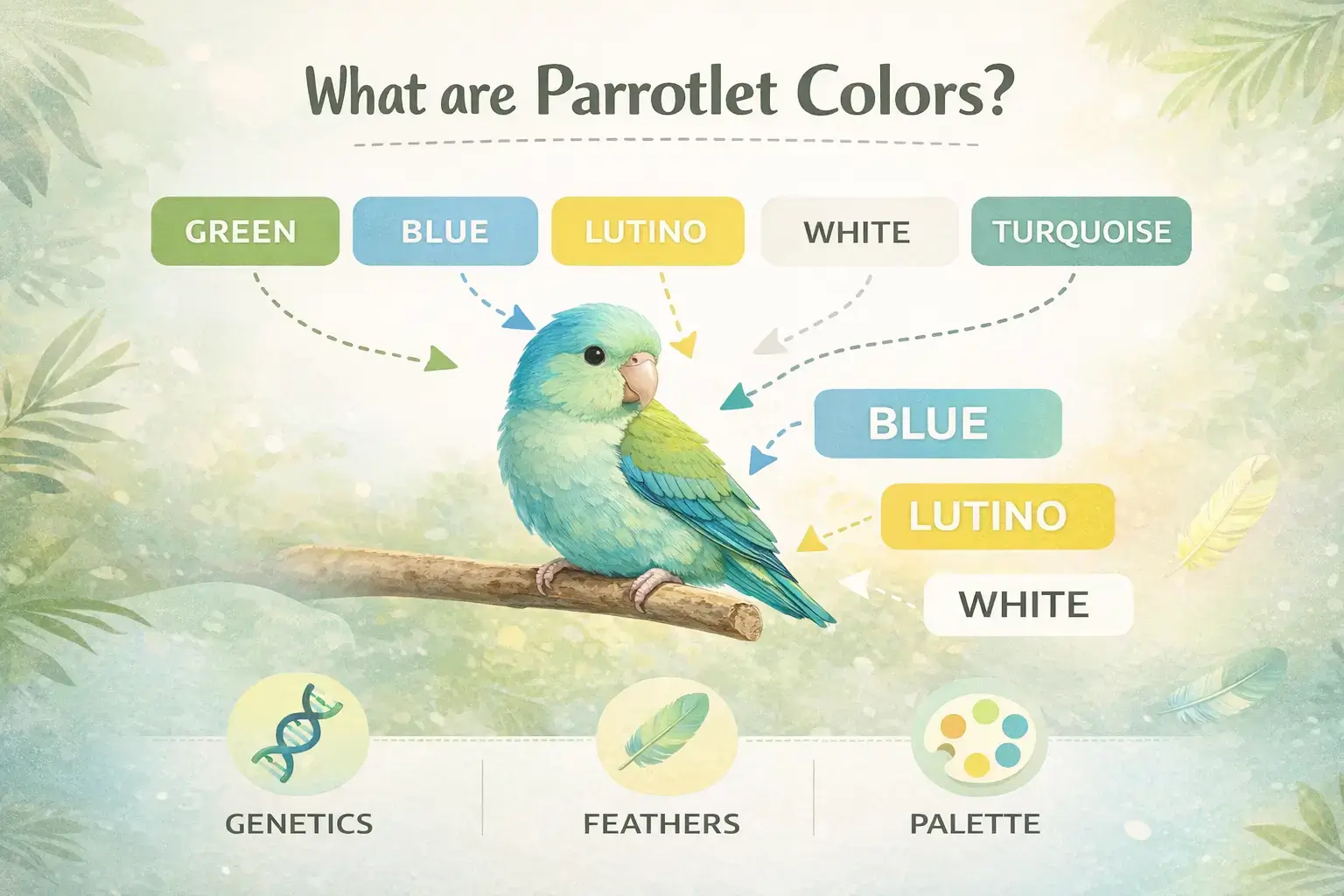
Parrotlet colors refer to the natural and genetically influenced feather shades found in different parrotlet species and mutations. These colors are mainly influenced by genetics, pigments, and selective breeding.
Most wild parrotlets, especially Pacific parrotlets, are green-based. However, captive breeding has introduced many new variations such as blue parrotlet colors, white parrotlet colors, turquoise, lutino, and fallow shades.
In simple terms:
Parrotlet colors = natural greens + genetic mutations + selective breeding outcomes.
🐦 What does a parrotlet look like?
Parrotlets are tiny parrots with compact bodies, short tails, and a strong beak. Despite their size, they often look bold due to their bright feather colors.
Most parrotlets measure around 4–5 inches in length. Their appearance changes mainly based on color mutation rather than body shape.
Key visual traits:
- Small parrot body with chunky shape
- Short, straight tail feathers
- Strong hooked beak
- Bright or pastel-colored plumage depending on mutation
🌿 Common parrotlet colors in nature and captivity
Parrotlet colors vary widely depending on species and breeding. Below are the most recognized shades:
💚 Green parrotlet colors
Green is the most natural and common color, especially in wild Pacific parrotlets.
- Olive or bright green body
- Slight blue markings under wings
- Natural camouflage in forests
Green parrotlets are considered the “wild type” color.
💙 Blue parrotlet colors
Blue parrotlets are one of the most popular captive mutations.
- Light sky blue to deep cobalt shades
- Lack of yellow pigment
- Often paired with white or pale facial tones
Blue parrotlets are highly sought after due to their striking appearance.
🤍 White parrotlet colors
White parrotlets are usually produced through dilute or albino-related mutations.
- Mostly white or very pale body
- Sometimes faint blue or grey hints
- Red or pinkish eyes in some mutations
White parrotlets are rare and visually very soft-looking.
💛 Yellow / Lutino parrotlet colors
Lutino parrotlets are bright yellow with red eyes caused by reduced melanin.
- Bright yellow feathers
- Red or pink eyes
- No blue pigment
Lutino is one of the most visually dramatic mutations.
🩵 Turquoise parrotlet colors
Turquoise is a blend of blue and green mutations.
- Aqua or sea-green tones
- Slight yellow mixing depending on genetics
- Very vibrant and rare
Turquoise fallow parrotlet variations also exist with lighter, washed-out tones.
🔴 Red parrotlet colors (rare mention)
Parrotlets do not naturally produce true red feathers. However:
- Some mutations may show reddish or warm tones
- Lighting can make green or yellow appear reddish
- True red parrotlet coloration does not naturally exist
🧬 Pacific parrotlet and its color varieties
The Pacific parrotlet is the most common species in captivity and the main source of color mutations.
Pacific parrotlet colors include:
- Wild green (natural type)
- Blue mutations
- American white parrotlet (rare dilute form)
- Lutino and yellow variants
- Pastel and fallow mutations
Because of selective breeding, Pacific parrotlets have the widest color range of all parrotlet species.
👩 Female parrotlet colors vs male colors
Female parrotlets often look slightly different from males, but the differences depend on mutation.
Key points:
- In wild green types, females may show duller shades
- In blue and lutino mutations, sex differences are minimal
- DNA testing is often needed for accurate gender identification
Unlike some parrots, parrotlets are not strongly sexually dimorphic in color.
🌈 Rare parrotlet colors and mutations
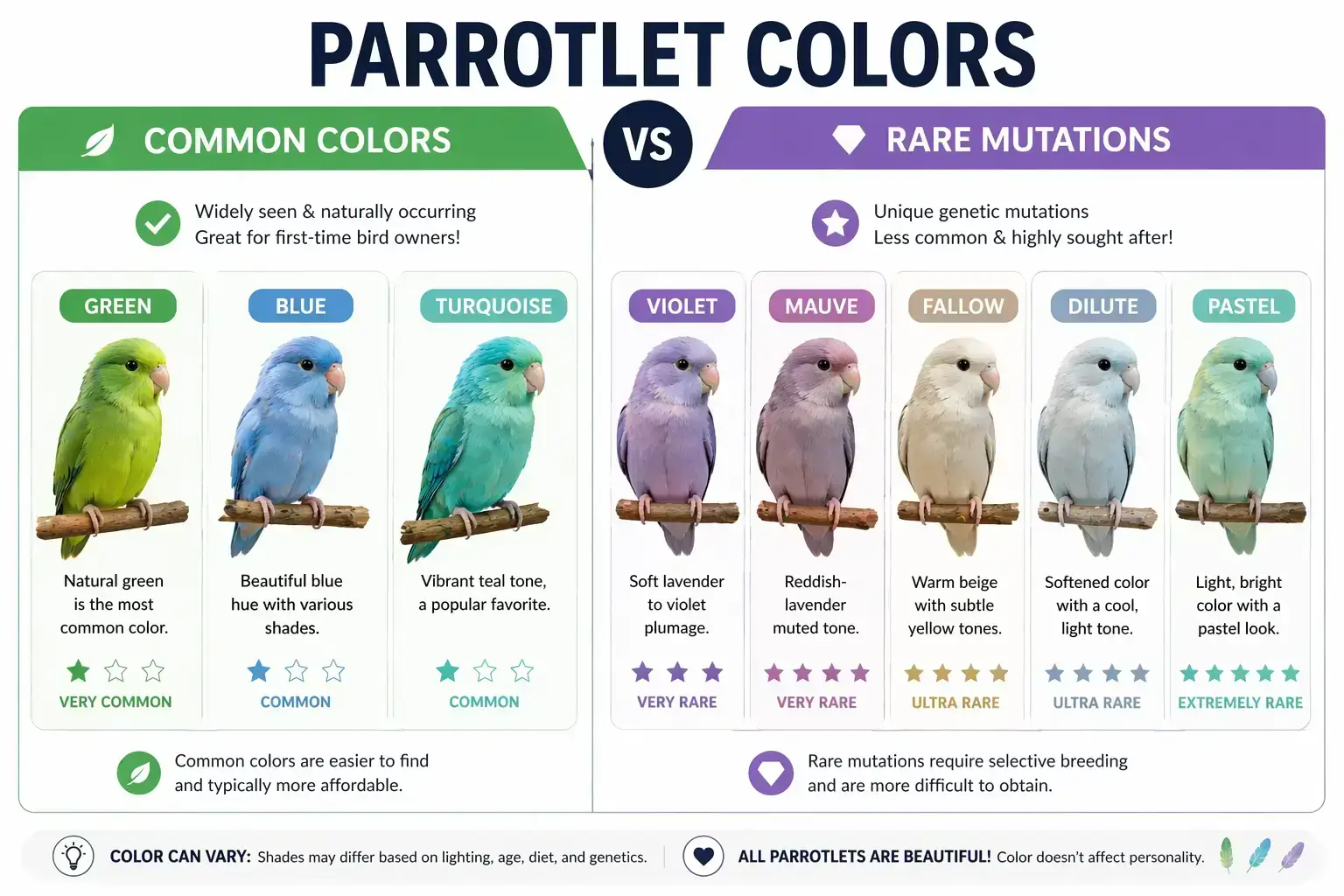
Rare parrotlet colors are highly valued by breeders and collectors. These mutations occur due to selective breeding or genetic variation.
Rare types include:
- Violet parrotlet
- Lutino Cockatiel
- Mauve parrotlet
- Dilute parrotlet
- Blue fallow parrotlet
- Green fallow parrotlet
- Turquoise fallow parrotlet
- Cinnamon Cockatiel
- Pastel blue parrotlet
- Celestial parrotlet
These colors are less common because they require specific genetic pairings.
For a deeper genetic breakdown of each rare variant, check our full parrotlet color mutation reference chart — it visually maps how mutations like violet, mauve, and fallow combine at the gene level.
🧬 How do parrotlets get their colors?
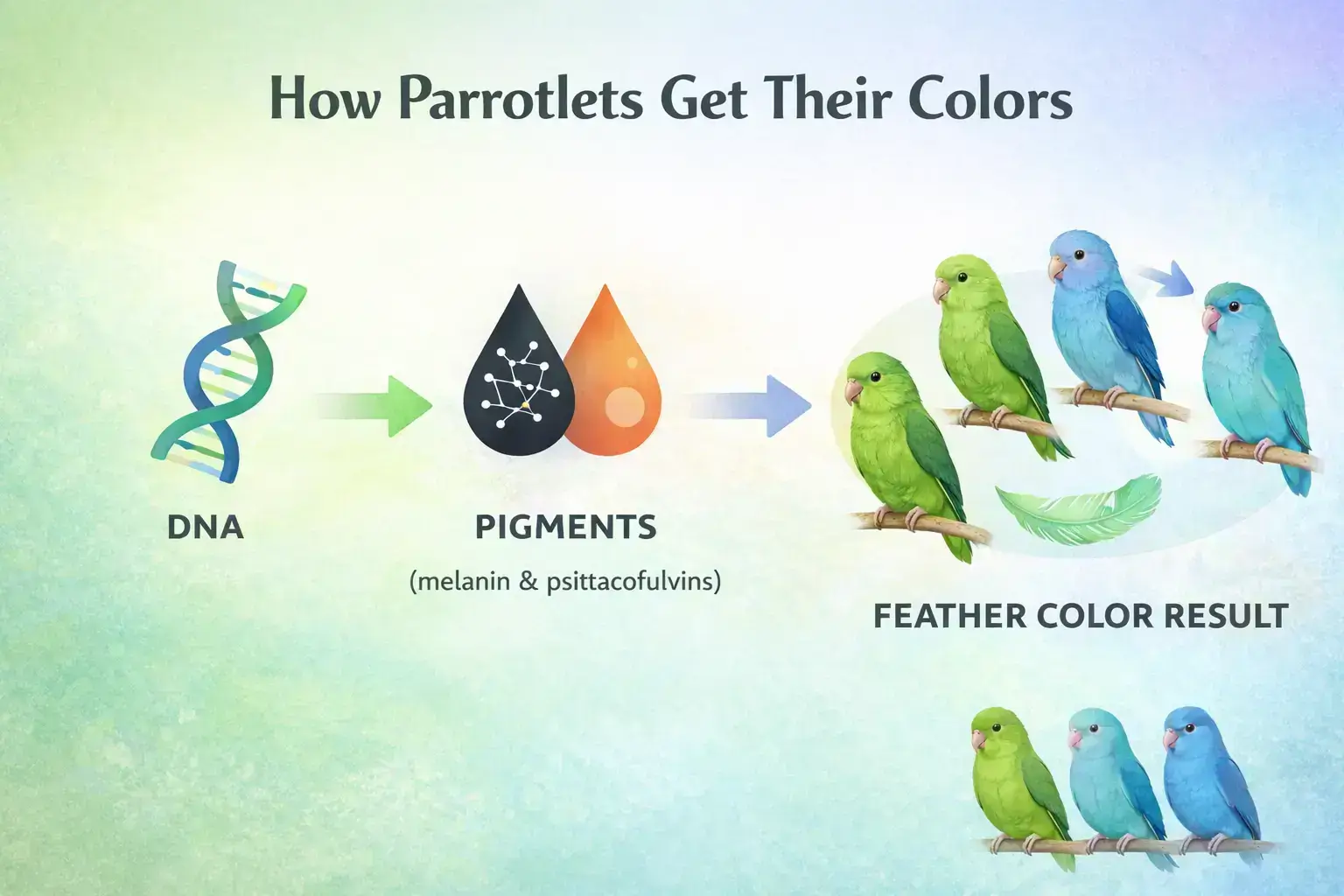
Parrotlet colors come from two main pigments:
1. Melanin
- Produces black, grey, and darker tones
- Influences shading and depth
2. Psittacofulvins
- Unique pigments found in parrots
- Responsible for red, yellow, and green tones
Fact-based insight:
Bird coloration is scientifically influenced by both genetics and diet, but in parrots, most color variation is genetic rather than dietary. If you want to explore each mutation’s inheritance pattern in detail, our Parrotlet Color Mutation Database breaks down dominant, recessive, and sex-linked traits for every known variant.
It’s a handy resource if you’re planning a breeding pair and want to predict possible chick colors.
📊 Parrotlet color chart (simplified guide)
| Color Type | Appearance | Rarity |
|---|---|---|
| Green (wild type) | Bright green body | Common |
| Blue | Sky to cobalt blue | Common |
| Turquoise | Blue-green mix | Uncommon |
| Lutino | Bright yellow, red eyes | Rare |
| White (dilute) | Pale or white plumage | Rare |
| Fallow | Soft washed colors | Very rare |
| Violet | Deep bluish-purple tones | Rare |
| Mauve | Grey-purple mix | Very rare |
| Pastel | Soft diluted shades | Uncommon |
Want the extended version with more mutations and side-by-side comparisons? View our full parrotlet color comparison spreadsheet for a sortable, printable data reference.
It includes additional columns for eye color, pigment type, and typical price range per mutation.
🐥 Parrotlet types and species overview
Parrotlets belong to several species and varieties:
Common types:
- Pacific parrotlet (most popular in captivity)
- Celestial parrotlet (color mutation line)
- Green-rumped parrotlet (less common in trade)
Varieties:
- Color mutations (blue, lutino, fallow)
- Breeding lines (pastel, dilute, violet)
These types mainly differ in coloration rather than behavior.
🆚 Difference between parrotlet and lovebird
Parrotlets and lovebirds are often confused because both are small and colorful.
Key differences:
- Parrotlets are smaller and more compact
- Lovebirds usually have brighter, more uniform colors
- Lovebirds are more social in flocks
- Parrotlets can be more independent and territorial
Lovebird colors:
Lovebirds come in green, peach, blue, yellow, and mixed mutations, but they differ genetically from parrotlets.
💰 Parrotlet for sale and price considerations
Parrotlets are commonly available through breeders and pet stores.
Important facts:
- Prices vary depending on color mutation
- Rare parrotlet colors (like violet or fallow) cost more
- Standard green or blue parrotlets are usually more affordable
- Ethical breeders focus on health and genetics, not just color
Always choose responsible breeders to ensure healthy birds.
📌 Interesting facts about parrotlet colors
Here are some verified and useful insights:
- Wild parrotlets are almost always green-based.
- Blue parrotlets lack yellow pigment due to genetic mutation.
- Lutino mutations remove melanin, producing yellow feathers.
- Parrotlet colors do not depend on diet in adulthood.
- Pacific parrotlets are the main species used in color breeding.
- Rare colors like violet and mauve come from complex genetic combinations.
- Parrotlets are among the smallest parrot species with the widest mutation range.
- White parrotlets often appear due to dilute or albino genetics.
- Sexing parrotlets by color alone is unreliable in most mutations.
- Color mutations are stable genetic traits passed through breeding.
🧾 Conclusion
Parrotlet colors are one of the most fascinating aspects of these tiny parrots. From natural green Pacific parrotlets to rare violet, lutino, and fallow mutations, their color diversity is the result of genetics and selective breeding over time.
Whether you are interested in blue parrotlet colors, white parrotlet colors, or rare parrotlet colors, understanding their genetics helps you appreciate how unique each bird truly is.
These small parrots may be tiny in size, but their color spectrum is anything but small.
❓ Frequently Asked Questions (FAQs)
Table of Contents
ToggleWhat are female parrotlet colors?
Female parrotlets usually show similar colors to males, but in wild green types they can appear slightly duller or less bright. In blue, white, and lutino mutations, female parrotlet colors are almost identical to males, so DNA testing is often needed for accurate sex identification.
What are blue parrotlet colors?
Blue parrotlet colors range from light sky blue to deep cobalt shades. These birds lack yellow pigment due to genetic mutation, which creates their clean blue appearance. They are one of the most popular color mutations in captivity.
What are green parrotlet colors?
Green parrotlet colors are the natural wild-type coloration, especially in Pacific parrotlets. They usually have bright or olive-green feathers with slight blue hints under the wings, helping them blend into forest environments.
What are white parrotlet colors?
White parrotlet colors come from dilute or genetic mutations that reduce pigment. These birds often appear pure white or very pale with possible faint grey or blue tones. Some may also have red or pink eyes depending on the mutation.
Do red parrotlet colors exist?
True red parrotlet colors do not naturally exist. However, some birds may show warm reddish or orange tones due to lighting or genetic variation, but parrots do not produce true red feather pigmentation.
What is a Pacific parrotlet?
The Pacific parrotlet is the most common parrotlet species kept as a pet. It is the main species used in breeding color mutations like blue, lutino, white, and fallow variations. Wild Pacific parrotlets are typically green in color.
What are parrotlets?
Parrotlets are tiny parrots known for their strong personality and bright feather colors. They are one of the smallest parrot species in the world and come in many color mutations due to selective breeding.
What is a turquoise fallow parrotlet?
A turquoise fallow parrotlet is a rare color mutation that combines turquoise (blue-green) tones with a fallow gene, resulting in softer, washed-out pastel-like shades. This makes them highly rare and visually unique compared to standard parrotlets.